
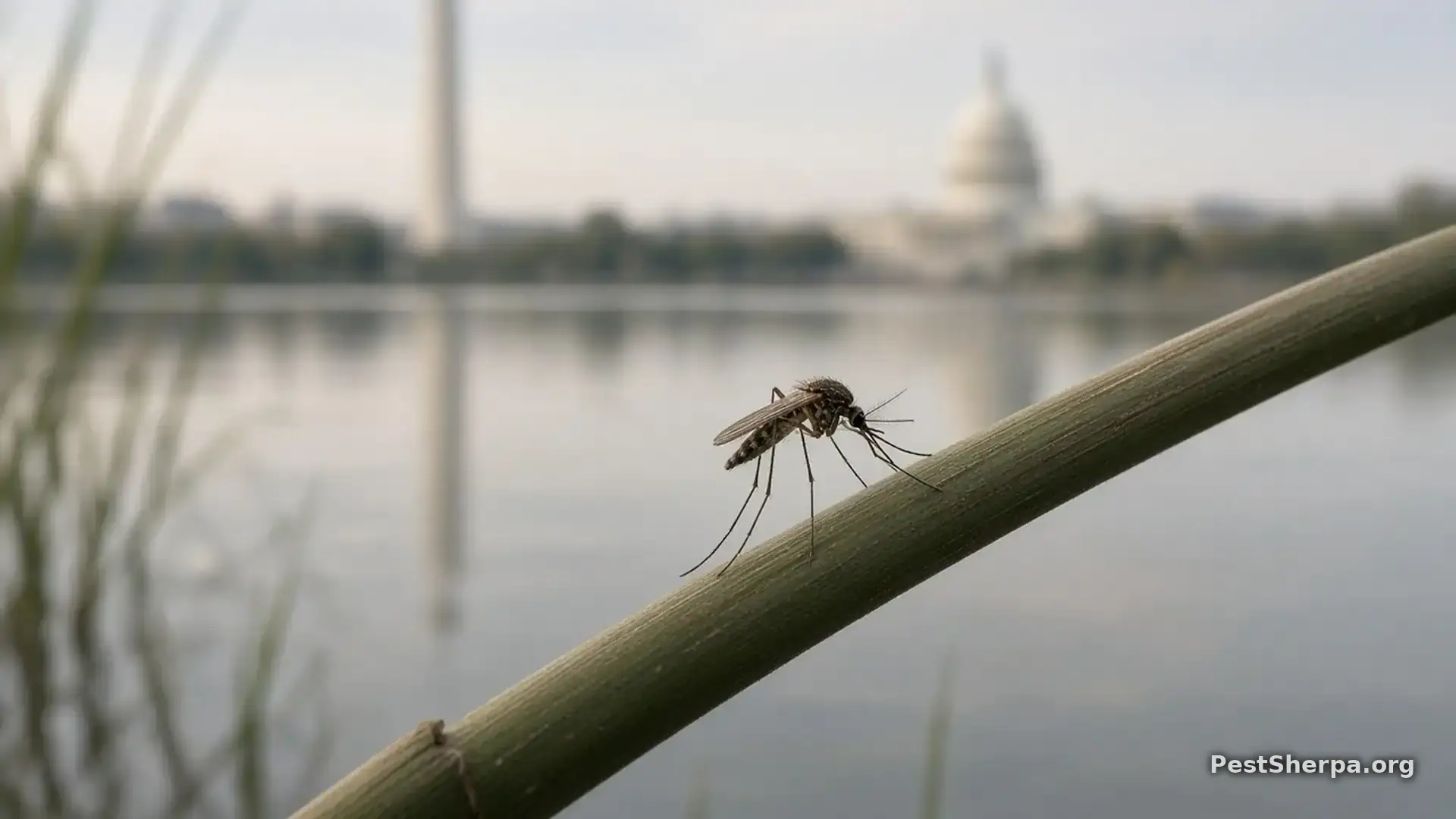
Mosquitoes in the Nation’s Capital: A History of Disease and Public Health
Last updated October 19, 2026
Top image: Greg Baumann original illustration (AI-assisted)
From malaria in the White House to the discovery of yellow fever transmission, mosquitoes have played a surprising role in American history.
Summary: Malaria was a real public health problem in early Washington, D.C., and in 1881 it struck the White House itself when First Lady Lucretia Garfield fell seriously ill. Residents blamed “bad air” from the marshy Potomac Flats until science proved mosquitoes spread malaria and yellow fever. Drainage, screens and a national eradication program eliminated endemic malaria by 1951, but West Nile virus and the Asian tiger mosquito keep mosquito management on the capital’s agenda today, now including a 2026 federal order aimed squarely at D.C.
Timeline: mosquitoes and Washington, 1790 to today
- 1790Congress selects the Potomac site for the new federal capital.
- 1880Alphonse Laveran finds malaria parasites in human blood.
- 1881Carlos Finlay proposes mosquitoes spread yellow fever. In May, First Lady Lucretia Garfield falls ill with what her doctors call malaria.
- 1882 to 1890Army Corps of Engineers dredges the Potomac and fills the Potomac Flats, creating about 628 acres of new land.
- 1883Washington physician A. F. A. King argues mosquitoes may spread malaria.
- 1897Ronald Ross shows mosquitoes are involved in malaria transmission.
- 1900Walter Reed’s Yellow Fever Commission confirms mosquito transmission in Cuba.
- 1902 and 1909Reed dies in Washington (1902); Walter Reed General Hospital opens (1909).
- 1942Office of Malaria Control in War Areas, a CDC predecessor, is established.
- 1947 to 1951National Malaria Eradication Program; malaria considered eliminated in the U.S. by 1951.
- 1980sAsian tiger mosquito becomes established in the continental U.S.
- 1999 and 2002West Nile virus recognized in New York City (1999); first D.C. human case (2002).
- 2026Executive Order 14433 targets invasive mosquitoes and ticks across D.C.
Malaria in the White House
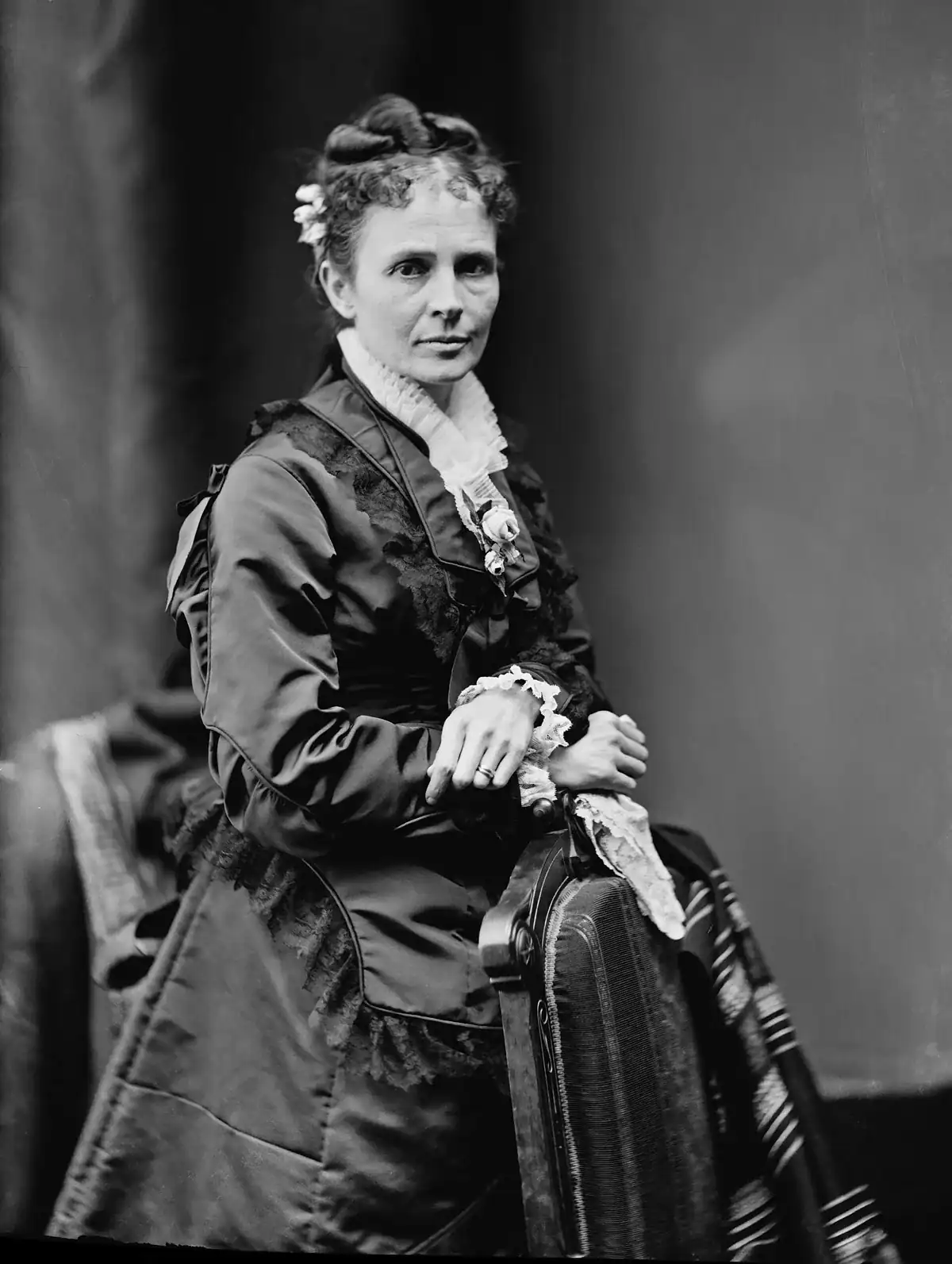
In May 1881, First Lady Lucretia Garfield became seriously ill while living in the White House. She suffered recurring fevers, chills, and extreme weakness. Her physicians diagnosed malaria, a disease familiar to residents of Washington, D.C.
President James A. Garfield became increasingly concerned as his wife’s condition deteriorated. Her temperature reportedly reached 104°F. Newspaper accounts followed her illness, while the president recorded his worries in his diary. The First Lady eventually improved, but her recovery was slow. In June, she traveled to Long Branch, New Jersey, hoping the cooler coastal environment would restore her health.
While she was recovering, President Garfield was shot by an assassin on July 2, 1881. Lucretia returned to Washington to be at her husband’s bedside. The president died on September 19.
The National Park Service has documented Lucretia Garfield’s illness and the unhealthy environmental conditions surrounding the White House during this period. Although malaria was the contemporary medical diagnosis, laboratory confirmation was not available at the time. [1, 2, 3]
Her experience provides a remarkable connection between American presidential history and a mosquito-borne disease that was once common in the nation’s capital. Today, malaria is no longer endemic in the United States. But during Washington’s early history, the disease was a recurring public health concern, and its method of transmission remained a mystery.
Was Washington Built on a Swamp?
Washington is frequently described as a city built on a swamp. Although the story has become part of American political folklore, it is not entirely accurate. Much of the original city occupied relatively dry ground, including the elevated locations selected for the Capitol and the President’s House. However, the surrounding landscape contained streams, tidal flats, wetlands, and poorly drained areas that could provide suitable breeding habitats for mosquitoes.
One prominent waterway was Tiber Creek, which flowed through portions of what is now central Washington. The creek was incorporated into the Washington City Canal, and sections were eventually enclosed within the city’s drainage and sewer systems.
Another troublesome area was the Potomac Flats, located near what would eventually become the Tidal Basin and East and West Potomac Parks. By the nineteenth century, sewage and sediment had accumulated in portions of the flats, creating unpleasant and unsanitary conditions. Residents complained about foul odors rising from the waterways.
At the time, physicians frequently attributed malaria and other illnesses to unhealthy air produced by decaying organic material. This explanation was known as the miasma theory. The theory was incorrect, but the association between wetlands and malaria was not entirely coincidental. Certain wetlands and poorly drained environments could support mosquitoes capable of transmitting the disease. The distinction was not understood until much later. [2, 4]
Malaria in Early Washington
Malaria was once widespread in portions of the eastern United States, including the Chesapeake Bay region. The disease is caused by parasites of the genus Plasmodium, which are transmitted through the bites of infected female Anopheles mosquitoes.
During the eighteenth and nineteenth centuries, physicians commonly described malaria-like illnesses as intermittent fever, remittent fever, or ague. Symptoms included recurring fever, chills, sweating, weakness, and fatigue. Not every historical diagnosis can be confirmed as malaria. Other infections could produce similar symptoms, and laboratory testing was unavailable. Nevertheless, malaria was an established disease in the region.
Washington’s hot summers, waterways, and poorly drained areas contributed to its reputation as an unhealthy place during portions of the year. The experience of Lucretia Garfield was not unique, although her position as First Lady brought national attention to the disease.
The National Park Service notes that physicians treating her believed malaria was responsible for her illness. Contemporary observers also associated the White House’s location with unhealthy conditions arising from nearby waterways. The concern was sufficiently widespread that some residents sought relief from Washington’s summer conditions by traveling to cooler locations. [1, 2]
An Early Physician Suspects Mosquitoes
In 1883, Washington physician Albert Freeman Africanus King published an article titled Insects and Disease: Mosquitoes and Malaria in Popular Science Monthly. King proposed that mosquitoes might play a role in transmitting malaria.
His hypothesis drew upon several observations, including the seasonal relationship between mosquito abundance and malaria, the association of malaria with mosquito breeding habitats, and the increased exposure of certain occupations to mosquitoes. King also recognized that avoiding mosquito exposure might help prevent disease.
His publication preceded the definitive scientific demonstration of mosquito transmission by more than a decade. Although King did not experimentally prove the relationship, his observations helped challenge traditional explanations of malaria. His article remains an important historical example of physicians beginning to recognize the relationship between insects and infectious disease. [5]
Changing Washington’s Landscape
By the middle of the nineteenth century, Washington faced serious sanitation and drainage problems. The growing city discharged sewage and other waste into waterways. Flooding and poor drainage contributed to unsanitary conditions.
One of the most significant improvements involved reclaiming the Potomac Flats. In 1882, the U.S. Army Corps of Engineers began dredging portions of the Potomac River and using the excavated material to fill low-lying areas. The work continued through 1890 and created approximately 628 acres of new land. Much of this land eventually became East and West Potomac Parks.
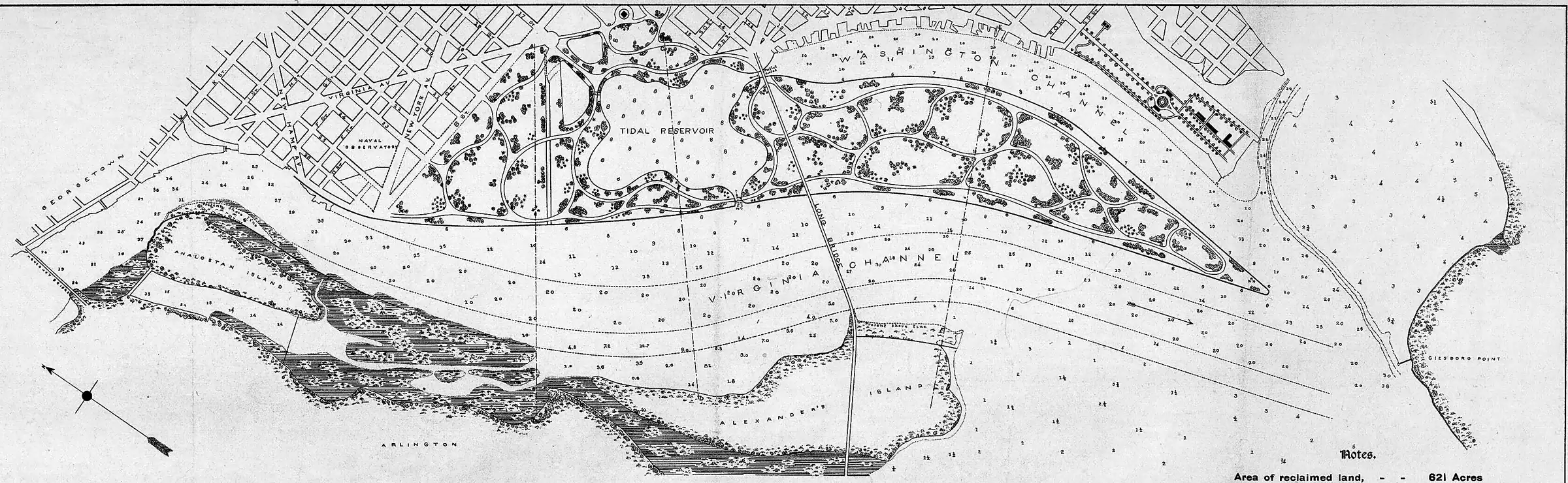
The project improved navigation, reclaimed land, and addressed longstanding sanitation problems. It also dramatically changed the shoreline near the White House and National Mall. These changes altered aquatic habitats, including some environments potentially suitable for mosquito development.
However, the reclamation project should not be characterized primarily as a mosquito-control program. Its documented objectives included navigation improvements, land reclamation, and sanitation. The Smithsonian Institution has preserved historical maps and photographs showing the Potomac Flats before and after reclamation. [4]
Discovering the Cause of Malaria
For centuries, malaria had been associated with marshes and unhealthy air. The disease’s name originated from the Italian expression for bad air. That explanation began to change in 1880 when French physician Alphonse Laveran discovered malaria parasites in human blood. His work established that malaria was caused by a living organism rather than poisonous vapors.
In 1897, British physician Ronald Ross demonstrated that mosquitoes were involved in malaria transmission. Additional research by Italian scientists, including Giovanni Battista Grassi, Amico Bignami, and Giuseppe Bastianelli, established the transmission of human malaria by Anopheles mosquitoes.
These discoveries transformed malaria prevention. Public health officials could now focus on reducing mosquito populations and preventing mosquito bites. Drainage, window screens, mosquito netting, larval habitat management, and eventually insecticide applications became important tools. The connection between mosquitoes and malaria also helped establish the scientific foundation for modern medical entomology. [6, 10]
Walter Reed, Carlos Finlay, and Yellow Fever
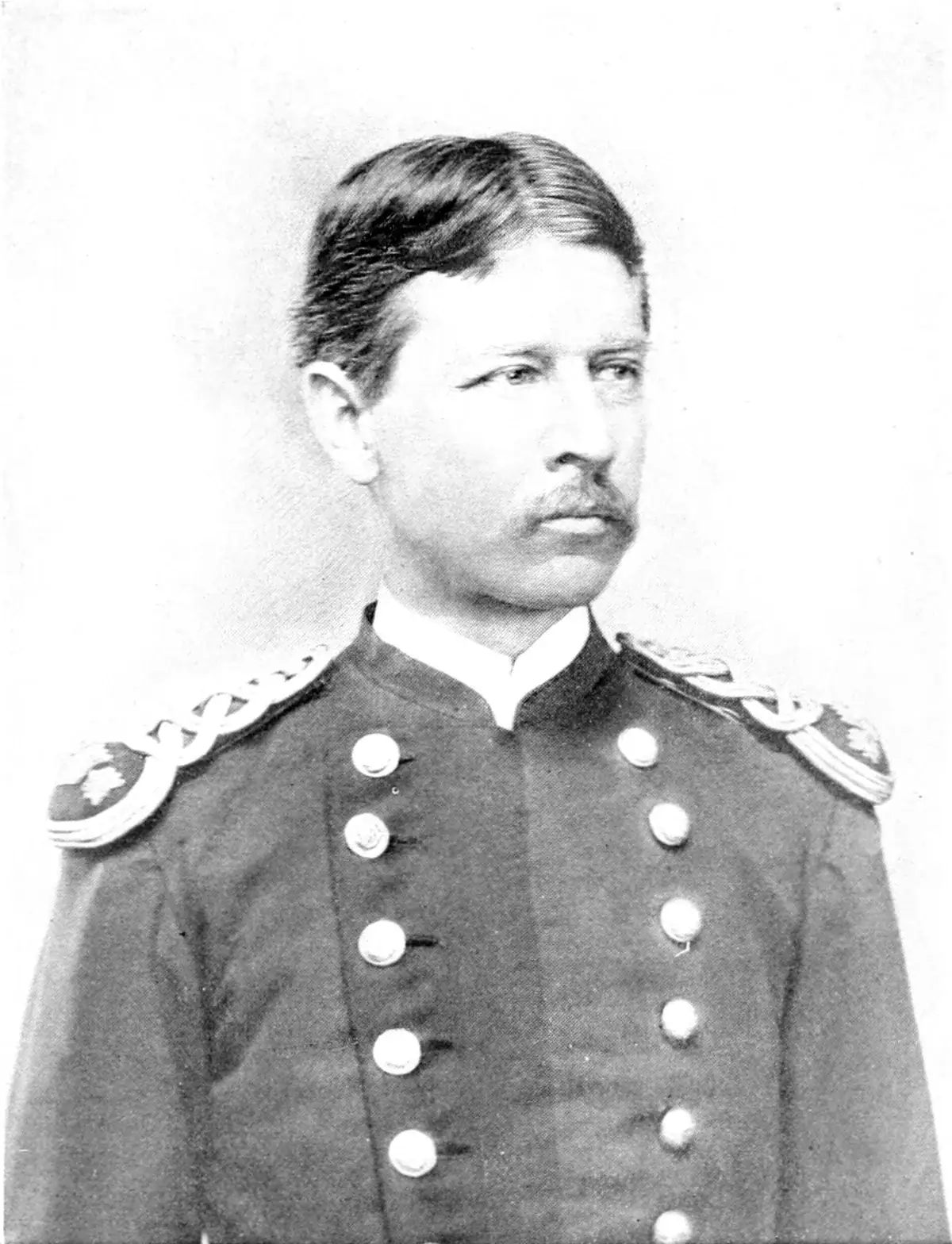
Washington’s connection to mosquito-borne disease extends beyond malaria. One of the most important developments in the history of infectious disease involved U.S. Army physician Major Walter Reed.
During the nineteenth century, yellow fever caused devastating epidemics in several American cities, including Philadelphia, New Orleans, and Memphis. The disease could produce fever, jaundice, bleeding, and severe organ damage. Its method of transmission remained uncertain.
In 1881, Cuban physician Carlos Finlay proposed that mosquitoes were responsible for spreading yellow fever. Finlay’s hypothesis was initially met with skepticism, but his work provided an important foundation for subsequent investigations.
In 1900, the U.S. Army established the Yellow Fever Commission in Cuba. Walter Reed headed the commission, which also included James Carroll, Jesse Lazear, and Aristides Agramonte. The commission built upon Finlay’s hypothesis, earlier malaria research, and observations by physician Henry Rose Carter concerning the interval between yellow fever cases.
Through a series of experiments, the researchers established that yellow fever could be transmitted by mosquitoes. They also demonstrated that contaminated clothing and bedding were not responsible for transmission in the manner previously believed. The principal mosquito involved was Aedes aegypti, commonly known as the yellow fever mosquito.
The research came at a considerable human cost. James Carroll developed yellow fever after participating in an experiment but survived. Jesse Lazear contracted the disease during the investigation and died in September 1900.
The commission’s findings changed public health practices. Rather than concentrating primarily on disinfecting clothing and possessions, health officials could focus on preventing mosquito bites and eliminating breeding sites. These discoveries contributed to successful yellow fever control programs in Cuba and later Panama.
Walter Reed died in Washington in 1902. In 1909, Walter Reed General Hospital opened in the nation’s capital, permanently associating his name with military medicine. Although the Yellow Fever Commission conducted its famous investigations in Cuba rather than Washington, its discoveries became an important part of American medical history. The contributions of Finlay, Carter, Carroll, Lazear, Agramonte, and Reed illustrate how scientific progress often depends upon the work of multiple researchers. [7, 8, 9]
Malaria Disappears From the United States
During the early twentieth century, malaria gradually declined across much of the United States. Several changes contributed to this improvement. Better housing construction and window screens reduced contact between people and mosquitoes. Drainage projects and changes in land use eliminated some mosquito breeding habitats. Improved medical treatment and organized mosquito-control programs also played important roles.
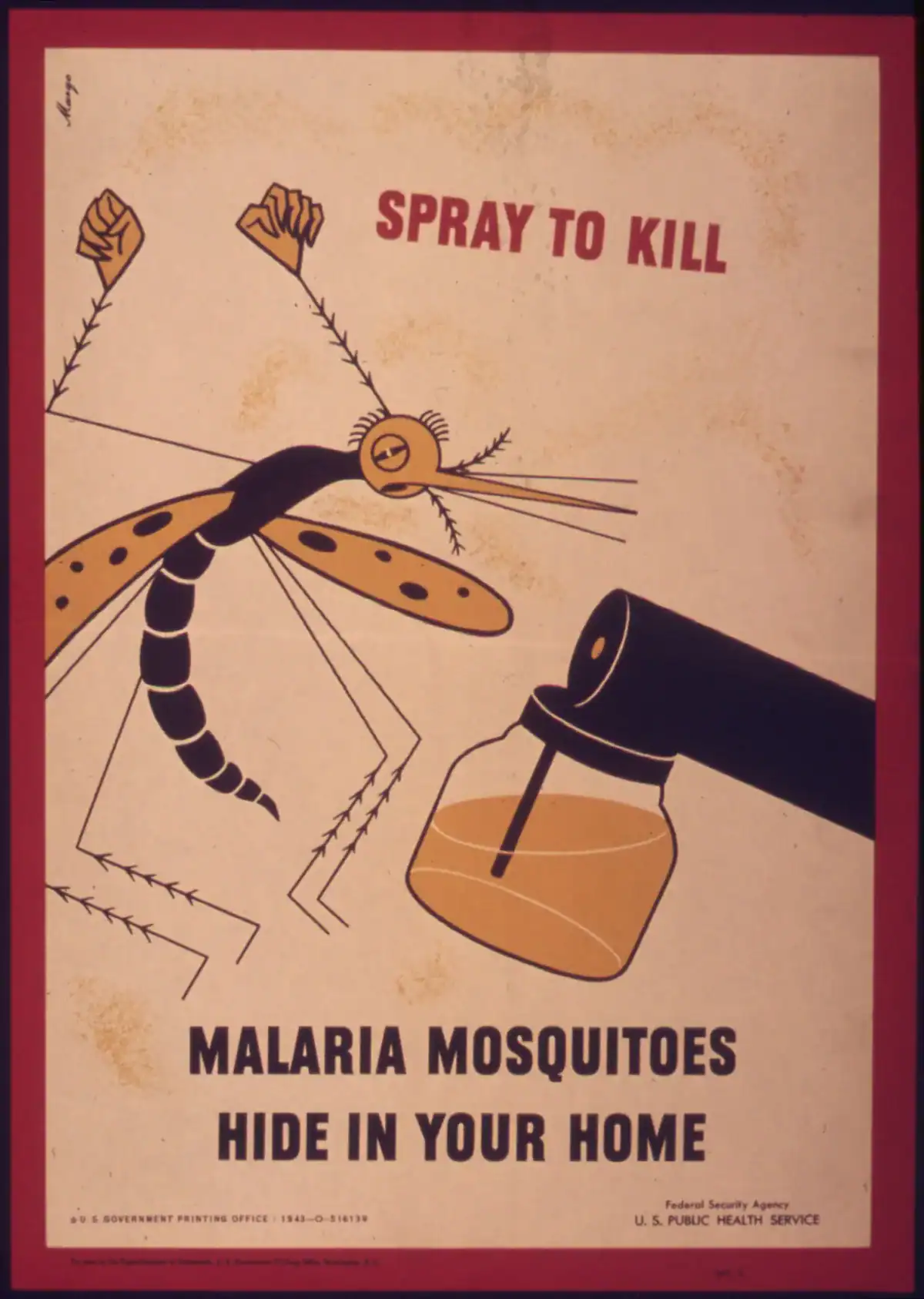
However, malaria remained a significant problem in portions of the southern United States. During World War II, the federal government established the Office of Malaria Control in War Areas to reduce malaria transmission near military installations. The organization was an important predecessor of the Centers for Disease Control and Prevention.
In 1947, the National Malaria Eradication Program began a coordinated effort to eliminate domestic malaria transmission. The program included insecticide applications, mosquito habitat management, and disease surveillance. According to the CDC, more than 4.6 million houses had been treated with insecticides by the end of 1949. By 1951, malaria was considered eliminated as an endemic disease in the United States.
That achievement did not mean that Anopheles mosquitoes had disappeared. Several species remain present throughout the country, and occasional locally acquired malaria infections can still occur. Eliminating a disease is not the same as eliminating the insects capable of transmitting it. [10, 11]
West Nile Virus Reaches Washington
For several decades, mosquito-borne diseases attracted less public attention in many American communities. That changed in 1999 when West Nile virus was first recognized in the United States during an outbreak in New York City. The virus subsequently spread across the country. According to the District of Columbia Department of Health, the first reported human case of West Nile virus in Washington, D.C., occurred in 2002. The disease has continued to be reported in the District since that time.
Unlike malaria, which is caused by parasites, West Nile disease is caused by a virus. The transmission cycle primarily involves birds and Culex mosquitoes. Humans and horses can become infected when bitten by infected mosquitoes, but they generally do not contribute to further transmission. Most infected people experience no symptoms. Others develop fever, headache, muscle aches, and fatigue. A small percentage develop serious neurological illness, including meningitis or encephalitis.
The northern house mosquito, Culex pipiens, is an important West Nile virus vector in the northeastern United States, including the Washington region. This species can develop in water-holding environments associated with urban infrastructure, including storm drains, catch basins, and neglected containers. The District of Columbia Department of Health conducts mosquito surveillance and provides public education about preventing mosquito bites and eliminating breeding habitats. More than two centuries after Washington became the nation’s capital, mosquito-borne disease remains a public health concern. [12, 13]
The Arrival of the Asian Tiger Mosquito
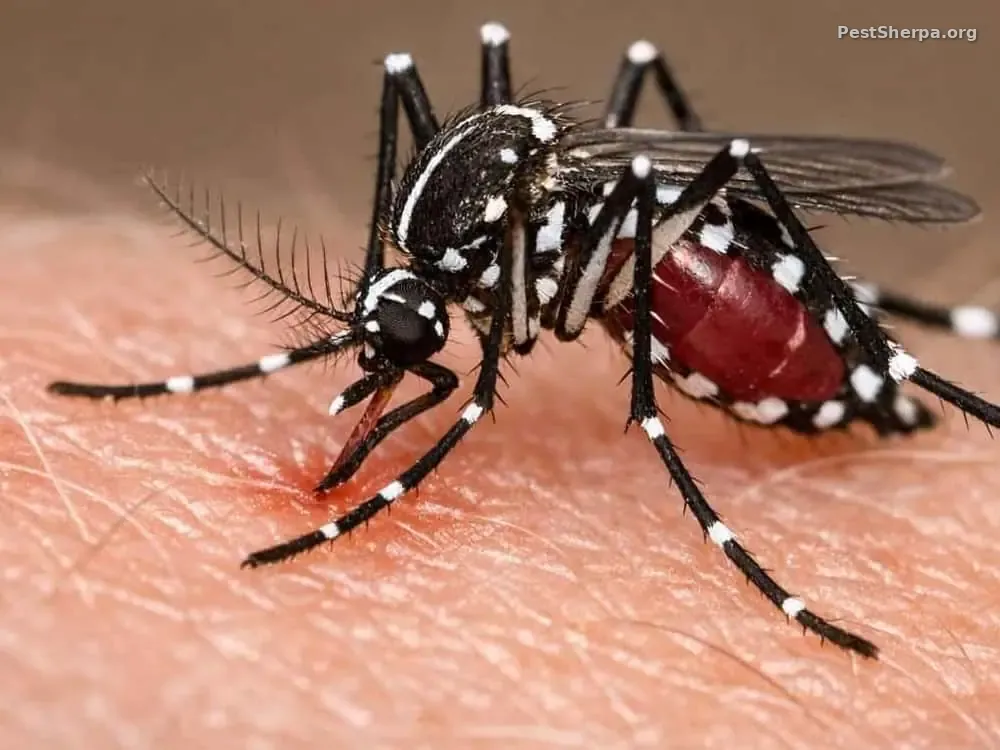
Another important change occurred with the establishment of the Asian tiger mosquito, Aedes albopictus. The species became established in the continental United States during the 1980s and subsequently spread throughout much of the eastern country. Today, it is common in the Washington metropolitan region.
The Asian tiger mosquito is recognized by its black body, contrasting white markings, and a distinctive white stripe along the upper surface of its thorax. Unlike many mosquitoes associated with nighttime biting, Aedes albopictus frequently bites during daylight hours. It is particularly well adapted to residential environments. Female mosquitoes deposit eggs in containers that periodically hold water, including buckets, discarded tires, flowerpot saucers, and other artificial receptacles.
The species is capable of transmitting several viruses, including dengue, chikungunya, and Zika. However, the presence of a mosquito capable of transmitting a disease does not establish that the disease is circulating locally. The Asian tiger mosquito’s establishment demonstrates how international commerce, transportation, and changing environments can introduce new mosquito-management challenges. In 2026, it became one of two species named in Executive Order 14433, which sets a goal of a 90% reduction in invasive mosquitoes across D.C. by 2028. [14]
From Swamp Drainage to Integrated Mosquito Management
Modern mosquito control differs considerably from the approaches used during Washington’s early history. Public health officials no longer rely on theories about poisonous air. Instead, mosquito management is based on identifying species, understanding breeding habitats, monitoring disease activity, and selecting appropriate control methods.
For homeowners, eliminating water-holding containers remains one of the most effective ways to reduce populations of container-breeding mosquitoes. However, not all mosquito species develop in the same environments. Removing buckets and flowerpot saucers will not necessarily control mosquitoes developing in wetlands, stormwater systems, or other aquatic habitats. Effective management requires understanding the species involved.
Modern integrated mosquito management may include surveillance, habitat modification, larval control, targeted adult mosquito treatments, and public education. As discussed in Pest Sherpa’s mosquito management guidance, adult mosquito spraying alone may provide temporary relief but will not necessarily resolve a continuing problem when breeding habitats remain. If you are considering a service, our guide to hiring a pro for mosquitoes explains what a solid plan should include. The underlying principle is straightforward: mosquito management must address the insect’s biology and life cycle. [14, 15]
What Washington’s History Teaches Us
The history of Washington, D.C., provides an interesting example of how scientific understanding changes public health practices. During the nineteenth century, residents blamed malaria on unhealthy air rising from marshes and polluted waterways. Some of their sanitation improvements may have reduced mosquito breeding habitats, even though the connection between mosquitoes and disease was not yet understood.
Physicians such as Albert Freeman Africanus King began questioning traditional explanations. The discoveries of Laveran, Ross, Grassi, Finlay, Reed, and other researchers eventually established the scientific basis for understanding mosquito-borne diseases. The elimination of endemic malaria from the United States demonstrated the value of coordinated public health efforts.
Today, West Nile virus and invasive mosquito species present different challenges. Washington’s landscape has changed dramatically since 1790, but mosquitoes remain part of the city’s environment.
The lesson from more than two centuries of experience is that successful mosquito management requires more than killing the insects people see. It requires understanding where mosquitoes develop, how they transmit disease, and which control measures are appropriate for the species involved. That principle was important in the nineteenth century, and it remains just as relevant today.
References
- National Park Service. (2021). Malaria: The Evil Spirit of the White House. James A. Garfield National Historic Site.
- National Park Service. (2021). Malaria: The Evil Spirit of the White House, The First Lady’s Illness, Part Two. James A. Garfield National Historic Site.
- National Park Service. Lucretia Garfield’s Perilous Journey. James A. Garfield National Historic Site.
- Robarge, D. (2011, March 27). Making Room for Blossoms and Monuments. Smithsonian Institution, National Museum of American History.
- King, A. F. A. (1883). Insects and Disease: Mosquitoes and Malaria. Popular Science Monthly, 23, 644 to 658.
- Ross, R. (1897). On Some Peculiar Pigmented Cells Found in Two Mosquitos Fed on Malarial Blood. British Medical Journal, 2, 1786 to 1788.
- Reed, W., Carroll, J., Agramonte, A., & Lazear, J. W. (1900). The Etiology of Yellow Fever: A Preliminary Note. Public Health Papers and Reports, 26, 37 to 53.
- Reed, W. (1902). Recent Researches concerning the Etiology, Propagation, and Prevention of Yellow Fever, by the United States Army Commission. Journal of Hygiene, 2(2), 101 to 119.
- Clements, A. N., & Harbach, R. E. (2017). History of the Discovery of the Mode of Transmission of Yellow Fever Virus. Journal of Vector Ecology, 42(2), 208 to 222.
- Centers for Disease Control and Prevention. (2024). The History of Malaria in the United States.
- Centers for Disease Control and Prevention. (2018). Elimination of Malaria in the United States (1947 to 1951).
- District of Columbia Department of Health. West Nile Virus.
- District of Columbia Department of Health. Mosquito-Borne Diseases (West Nile virus surveillance campaign).
- Baumann, G. Mosquito Guide: Identification, Bite Risk, and Yard Control. Pest Sherpa.
- Baumann, G. (2026, October 9). What to Look for When Hiring a Pro for Mosquitoes. Pest Sherpa.
This article was written by Greg Baumann, founder of Pest Sherpa, and reflects more than 40 years of professional pest management experience.
About the Author

Greg Baumann | Pest Control Expert
Greg Baumann is the founder of Pest Sherpa and a Pest Control Expert with more than 40 years of professional pest management experience. His articles combine decades of field experience, technical expertise, and science-based guidance to help homeowners identify pests correctly, understand real-world risks, and make informed pest management decisions.
Mission: Identify the pest. Understand the risk. Stop the problem. Prevent the comeback. Know when it’s time to call a professional.