
Moth Flies (Drain Flies): Identification, Causes, and Prevention
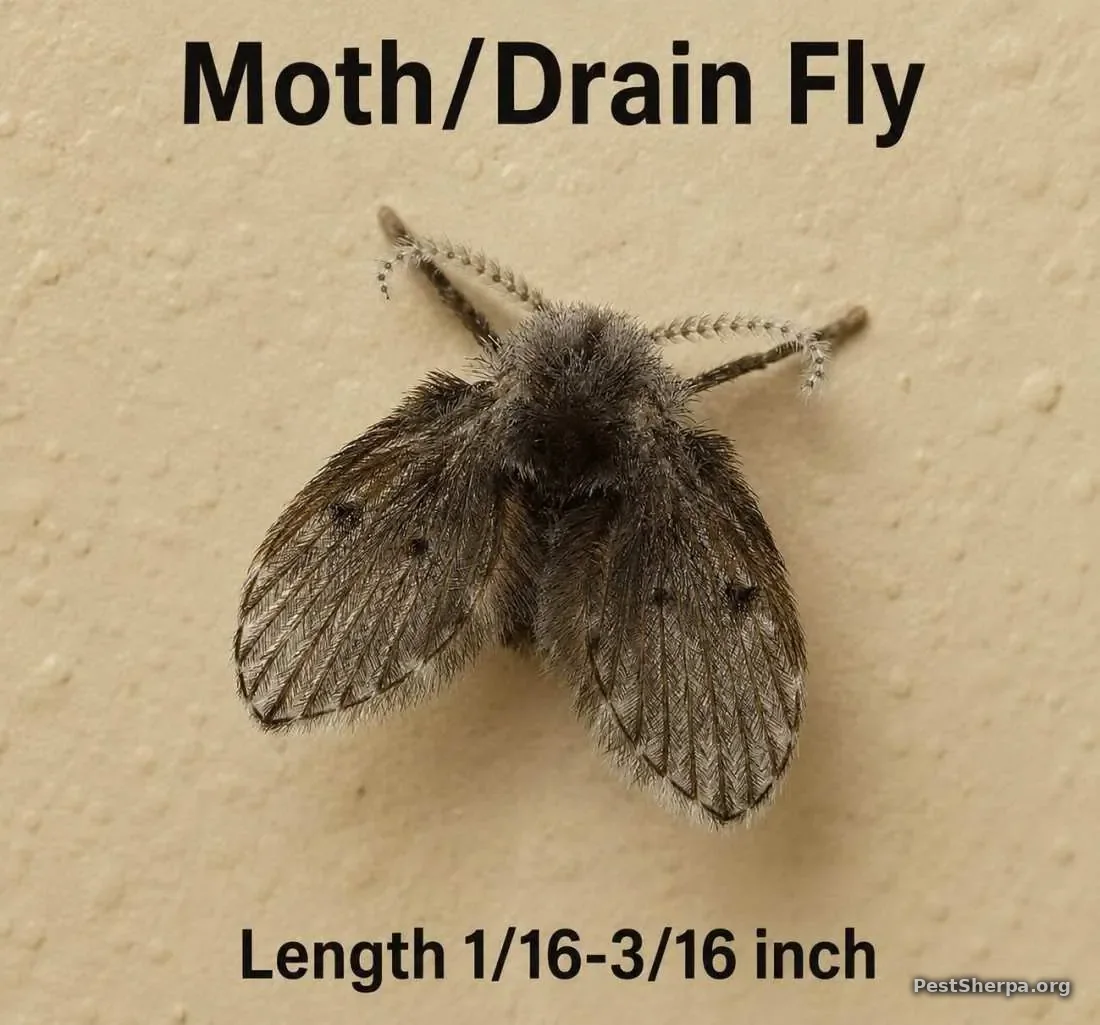
Drain flies, also called moth flies, sewer flies, or filter flies, are small fuzzy insects. They are often found around sinks, floor drains, showers, sewage areas, and other damp locations with organic buildup. They are usually more of a nuisance than a dangerous pest. Still, their presence often signals moisture problems, drain sludge, or sanitation issues that let larvae develop. Correct identification matters. Drain flies are often confused with fruit flies, phorid flies, and other small flies that need different control approaches.
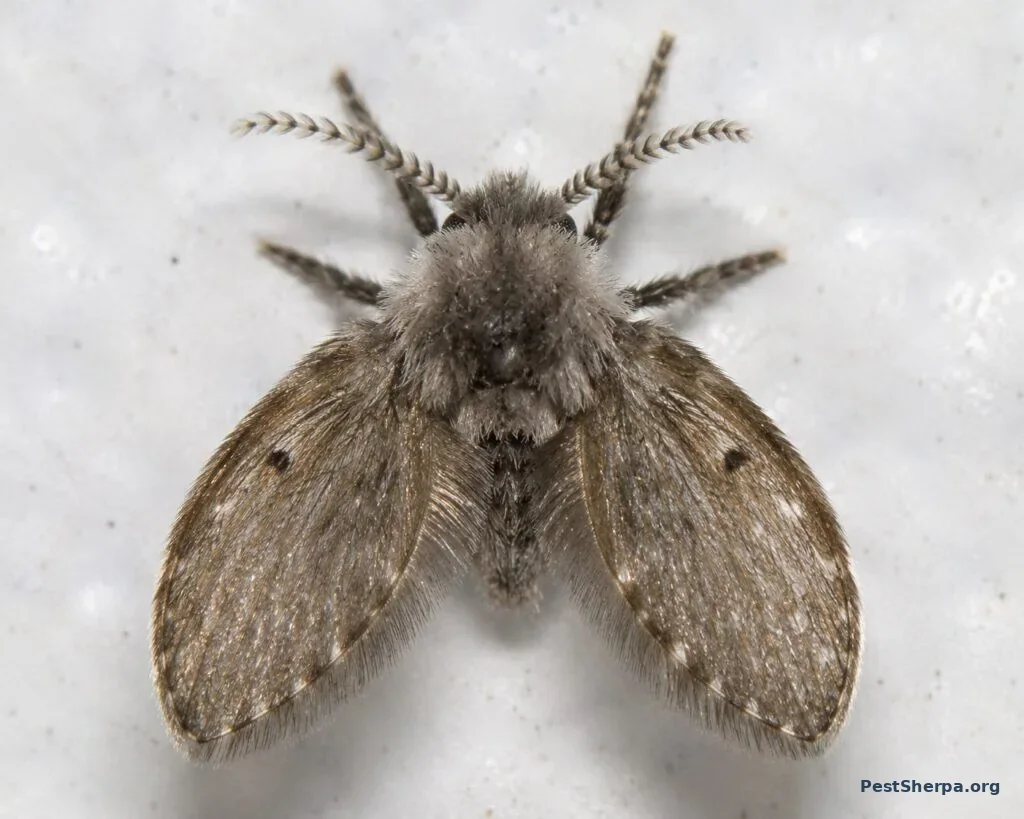
Adult drain flies are fuzzy, weak-flying insects often associated with drains, sewage residue, and wet organic buildup.
Reference: University of California IPM: Moth or Drain Flies
TL;DR: Drain Flies Mean Moist Organic Buildup Nearby
- Drain flies are tiny, fuzzy, moth-like flies usually found near drains, floor drains, sump areas, sewage residue, or other wet organic buildup.
- They do not bite and are usually a nuisance pest, but they can point to sanitation, moisture, or plumbing problems.
- The real fix is finding and removing the breeding material. Sprays, bleach, and killing adults rarely solve the source.
- Misidentification is common. Compare them with vinegar flies / fruit flies and dark-eyed vinegar flies before treating.
Quick navigation: Identification | Why It Matters | What To Do | When To Call a Pro | Similar Pests | Common Questions | References
Identification
Moth flies, more often called drain flies, are small flies in the family Psychodidae. They are often about 1/8 inch long, dark gray to blackish, and noticeably fuzzy. Their wings are covered with fine hairs. At rest, the fly usually holds them roof-like over the body, which gives it a moth-like look. UC IPM notes that they are weak flyers and often move in short, hopping flights rather than strong, direct flight.
What They Look Like
- Small, fuzzy, moth-like body
- Broad wings held roof-like over the back
- Gray, tan, brown, or blackish color
- Short, fluttering, hopping flight
- Often resting on bathroom, kitchen, basement, or utility-room walls
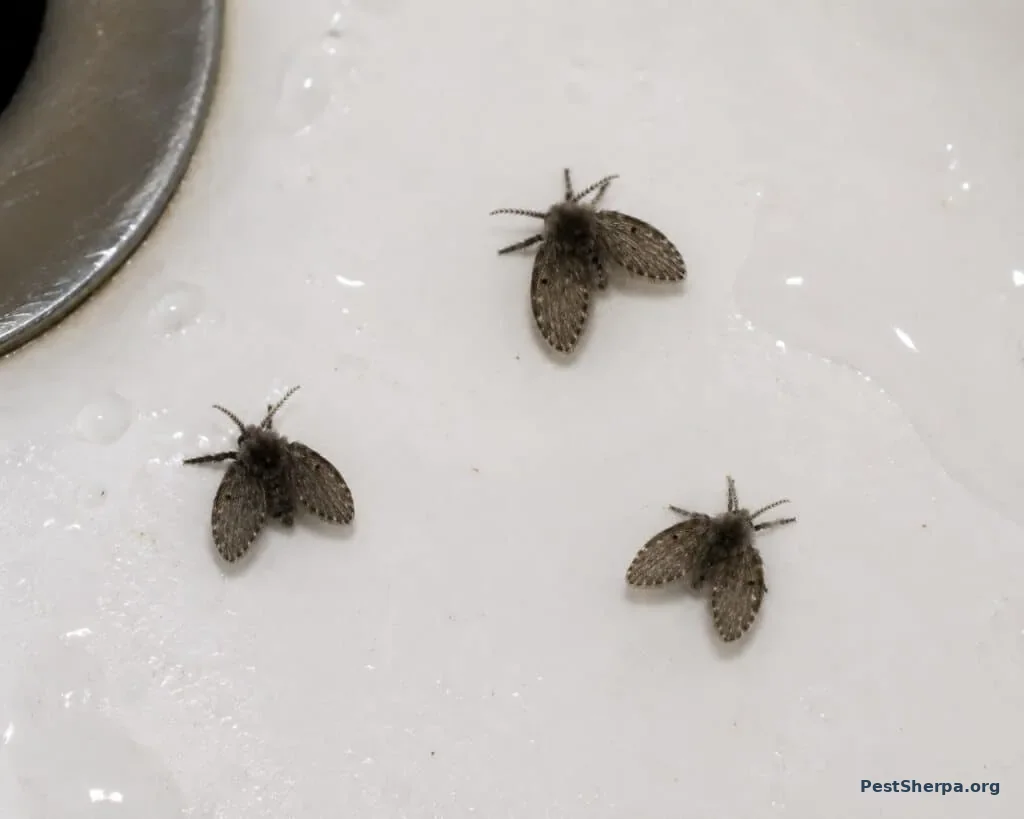
Drain flies are often identified by their hairy wings and roof-like resting posture.
References: UC IPM and Ohio State University Extension
Where They Are Commonly Found
Drain flies develop in wet organic film, sewage residue, and decaying material. Common sources include sink drains, shower drains, floor drains, garbage disposals, and sump pits. Others are condensate lines, grease traps, wet mops, clogged gutters, septic areas, and sewage leaks. The University of Arkansas Extension notes that they are common in drains that are rarely used. There, water and organic sludge sit long enough for larvae to develop.
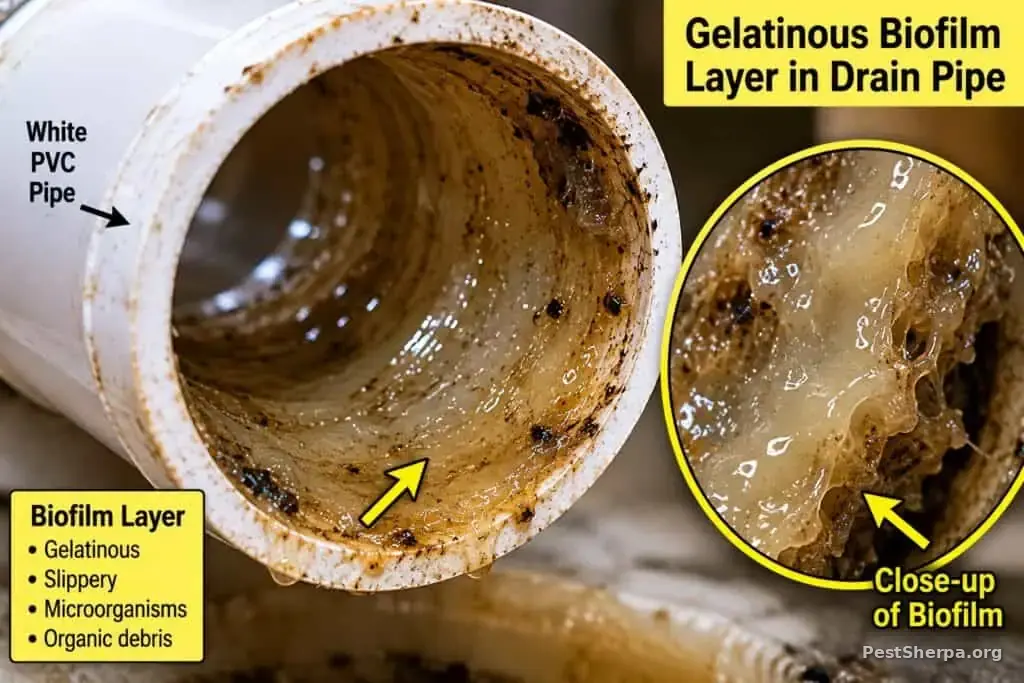
Drain fly larvae develop in wet organic film and sludge lining drain interiors.
References: Purdue Extension: Small Flies and University of Arkansas Extension
What Confirms the ID
The strongest clue is location plus appearance. Is a fuzzy, weak-flying insect resting near a drain, floor drain, or damp wall? It is much more likely to be a drain fly than a typical fruit fly. To confirm a suspected drain source, place clear tape loosely over part of the drain opening overnight. If adult flies are trapped on the tape, that drain may be an active emergence point.
What Misleads Homeowners
Homeowners often assume every small fly near a sink is a drain fly. That is not always true. Fruit flies are usually tied to fermenting produce, beverage residue, recycling, or sugary spills. Dark-eyed vinegar flies can also breed in drains and wet organic buildup, especially in bars, restaurants, and commercial kitchens. A broader fly identification guide can help narrow the source before treatment.
Why It Matters
Drain flies are usually a nuisance pest, not a structural pest. They do not chew wood, damage wiring, or infest stored food. They also do not bite people or pets. The concern is what their presence may indicate: wet organic buildup, stagnant drains, sewage residue, plumbing defects, or chronic moisture.
Realistic Risk Level
- Nuisance: High when adults keep appearing on walls, sinks, tubs, or food-contact areas.
- Contamination: Possible where flies emerge from sewage, drains, or decaying organic matter and then land on surfaces.
- Structural damage: Low. Drain flies themselves do not damage structures.
- Health concern: Usually low in homes, but higher concern in healthcare, food-handling, or heavy-infestation settings.
What To Do
1. Find the Breeding Source
Do not start by spraying adults. Start by locating where larvae are developing. Check drains, overflow openings, garbage disposals, floor drains, sump pits, and condensate pans. Also check wet crawl spaces, leaking pipes, mop buckets, trash containers, and any area with standing water or decaying organic residue.
2. Use the Tape Test
Place clear tape over part of the suspected drain opening before bed, leaving some airflow. Check it the next morning. Flies stuck to the underside of the tape suggest that drain is active. Repeat with several drains if activity is scattered.
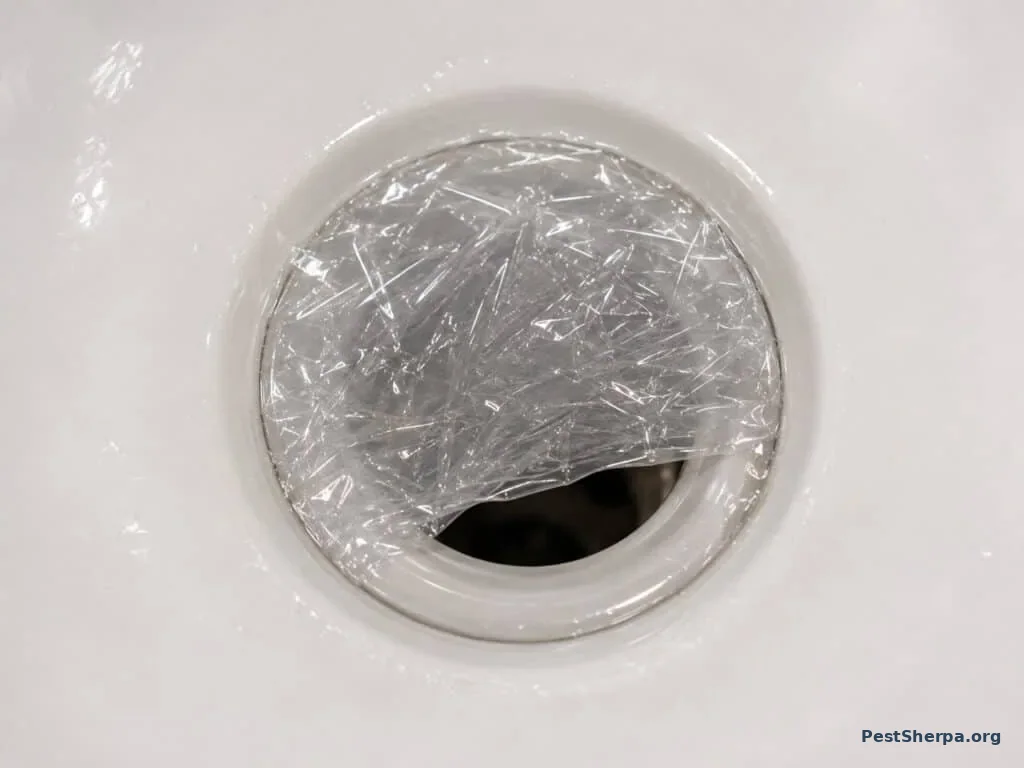
A simple tape test can help confirm whether adult drain flies are emerging from a drain
3. Mechanically Clean the Drain
The most important step is physically removing the biofilm (the slimy film of microbes and residue) and sludge where larvae feed. Purdue Extension warns that bleach and hot water do not eliminate breeding sites in drains. Use a drain brush, pipe brush, or other mechanical cleaning method to scrub the inside walls of the drain and overflow area. Then flush the loosened debris away.
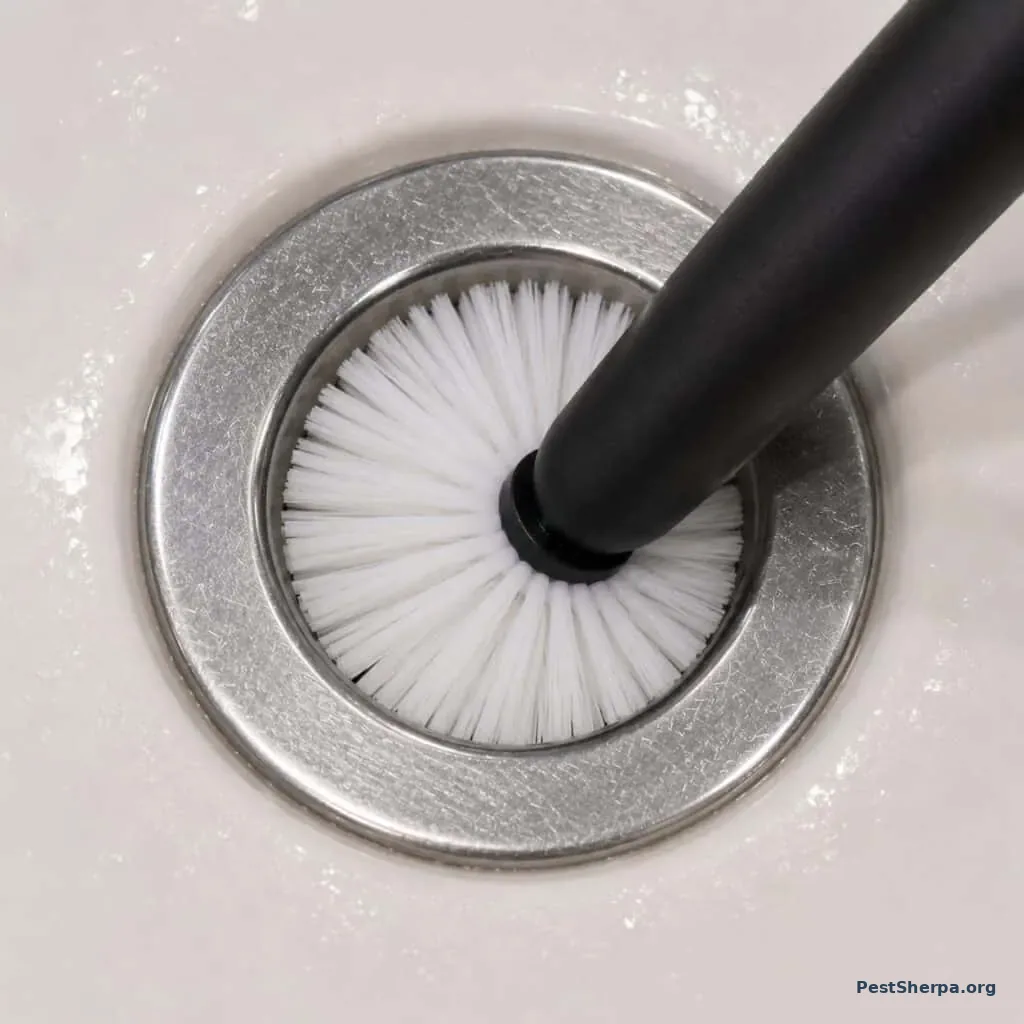
Removing buildup of biofilm from drain using rigid brush
4. Correct Moisture Problems
- Repair leaking pipes and toilet seals.
- Clean condensate lines and pans.
- Remove standing water in crawl spaces or basements.
- Flush rarely used drains to maintain trap water.
- Clean garbage disposals, floor drains, and grease-prone areas.
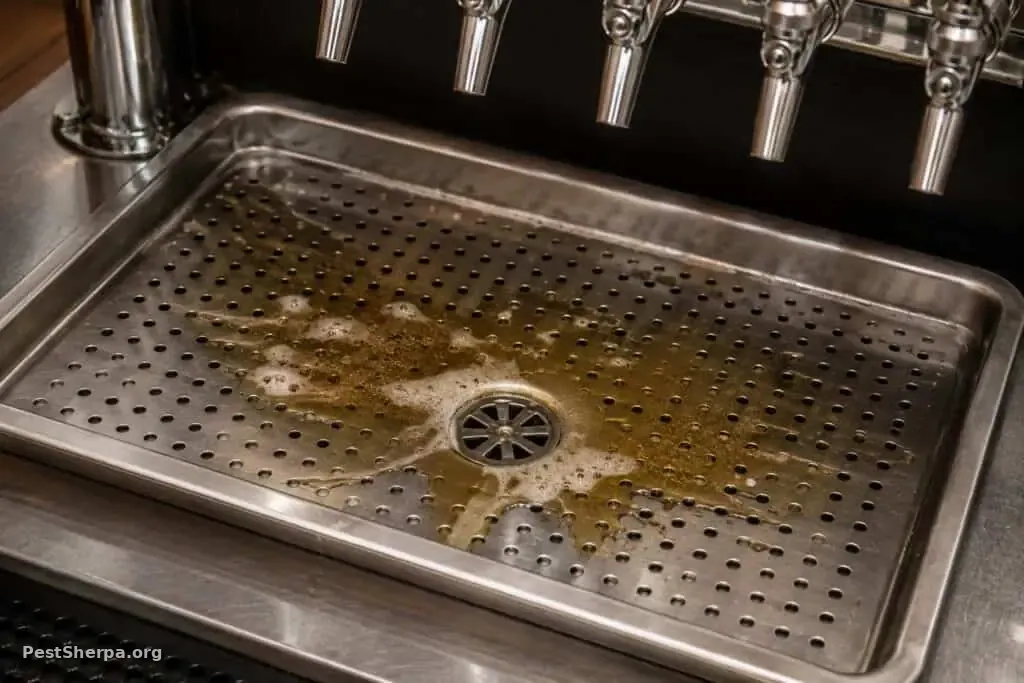
References: EPA IPM guidance and university extension recommendations
What Usually Fails
- Aerosol sprays alone: They may kill adults but do not remove larvae in sludge.
- Bleach alone: It often passes over or around the organic film instead of removing it.
- One-time cleaning: Recurring moisture or sludge allows flies to return.
- Treating the wrong fly: Fruit flies, phorid flies, fungus gnats, and drain flies require different source checks.
When To Call a Pro
Call a pest professional, plumber, or both when:
- Flies continue after thorough drain cleaning.
- You cannot identify the breeding source.
- Activity is coming from a floor drain, sump pit, crawl space, or wall void.
- There is a sewage odor, drain backup, cracked pipe, or suspected slab leak.
- The problem is in a restaurant, healthcare facility, commercial kitchen, or multi-unit building.
- You need help deciding whether the fly is a drain fly, phorid fly, or dark-eyed vinegar fly.
For a pest question that needs case-specific review, use Ask the Sherpa.
Similar Pests / Misidentification Comparison
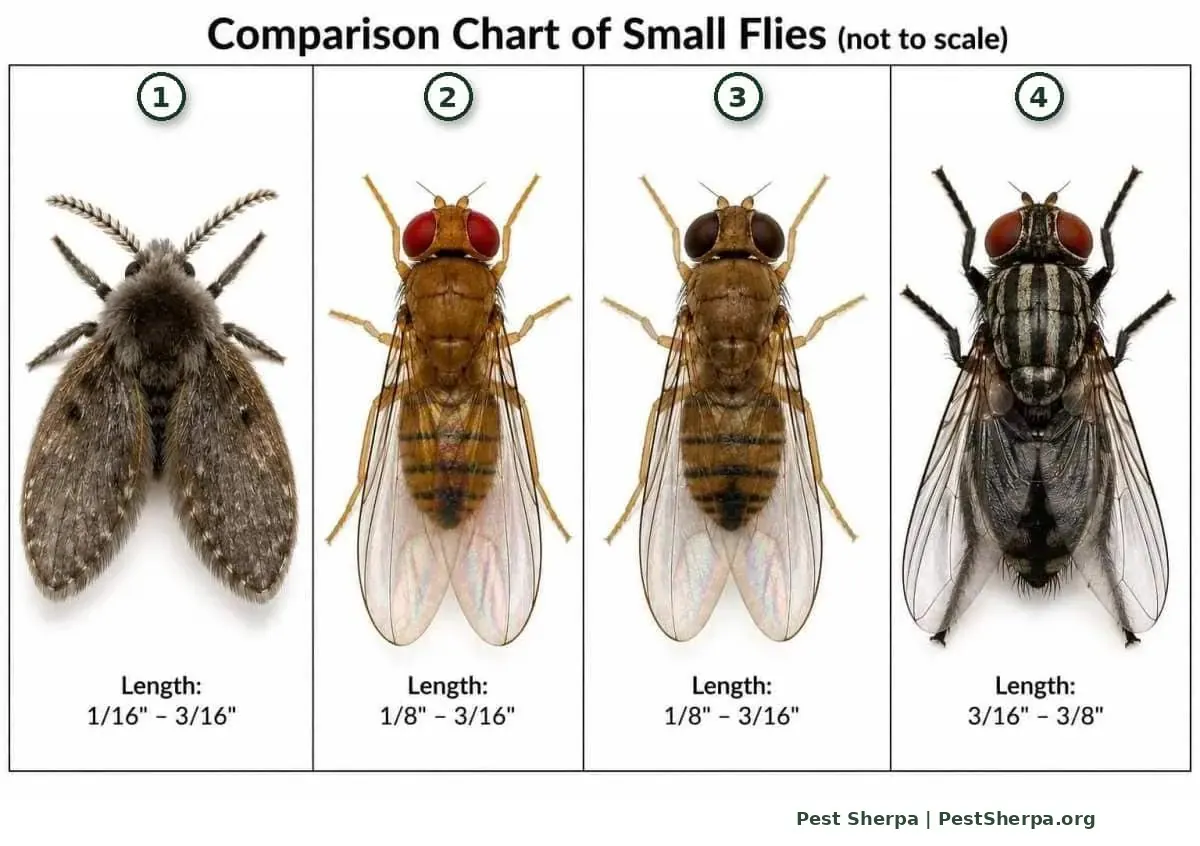
Which one do you see? Match the number:
- Moth fly (drain fly): 1/16 to 3/16 inch, fuzzy gray body and broad, hairy, moth-like wings.
- Vinegar fly (fruit fly): 1/8 to 3/16 inch, tan body with bright red eyes.
- Dark-eyed vinegar fly: 1/8 to 3/16 inch, tan body like number 2 but with dark eyes.
- House fly: 3/16 to 3/8 inch, gray with four dark stripes on the thorax.
| Pest | How It Looks | Common Source | Key Difference |
|---|---|---|---|
| Drain flies / moth flies | Fuzzy, moth-like, broad wings | Drain slime, sewage residue, wet organic buildup | Weak hopping flight and rests near drains or damp walls |
| Vinegar flies / fruit flies | Smooth-bodied, tan, often red-eyed | Fruit, fermenting liquids, recycling, spills | More likely around produce, beverages, or fermenting food |
| Dark-eyed vinegar flies | Small tan flies with dark eyes | Drains, wet organic debris, commercial kitchen buildup | Often mistaken for drain flies in bars and food facilities |
| House flies | Larger, gray, strong flying | Trash, manure, food waste | Much larger and not fuzzy or moth-like |
Common Question
- Do fly sprays actually work?
- What attracts house flies?
- Why do I keep finding flies near my windows?
References
- UC IPM: Moth or Drain Flies
- Purdue Extension: Small Flies
- University of Arkansas Extension: Drain Flies
- EPA: Integrated Pest Management Principles
This article was written by Greg Baumann, founder of Pest Sherpa, and reflects more than 40 years of professional pest management experience.
About the Author

Greg Baumann | Pest Control Expert
Greg Baumann is the founder of Pest Sherpa and a Pest Control Expert with more than 40 years of professional pest management experience. His articles combine decades of field experience, technical expertise, and science-based guidance to help homeowners identify pests correctly, understand real-world risks, and make informed pest management decisions.
Mission: Identify the pest. Understand the risk. Stop the problem. Prevent the comeback. Know when it’s time to call a professional.