
What is the difference between fruit flies and drain flies?
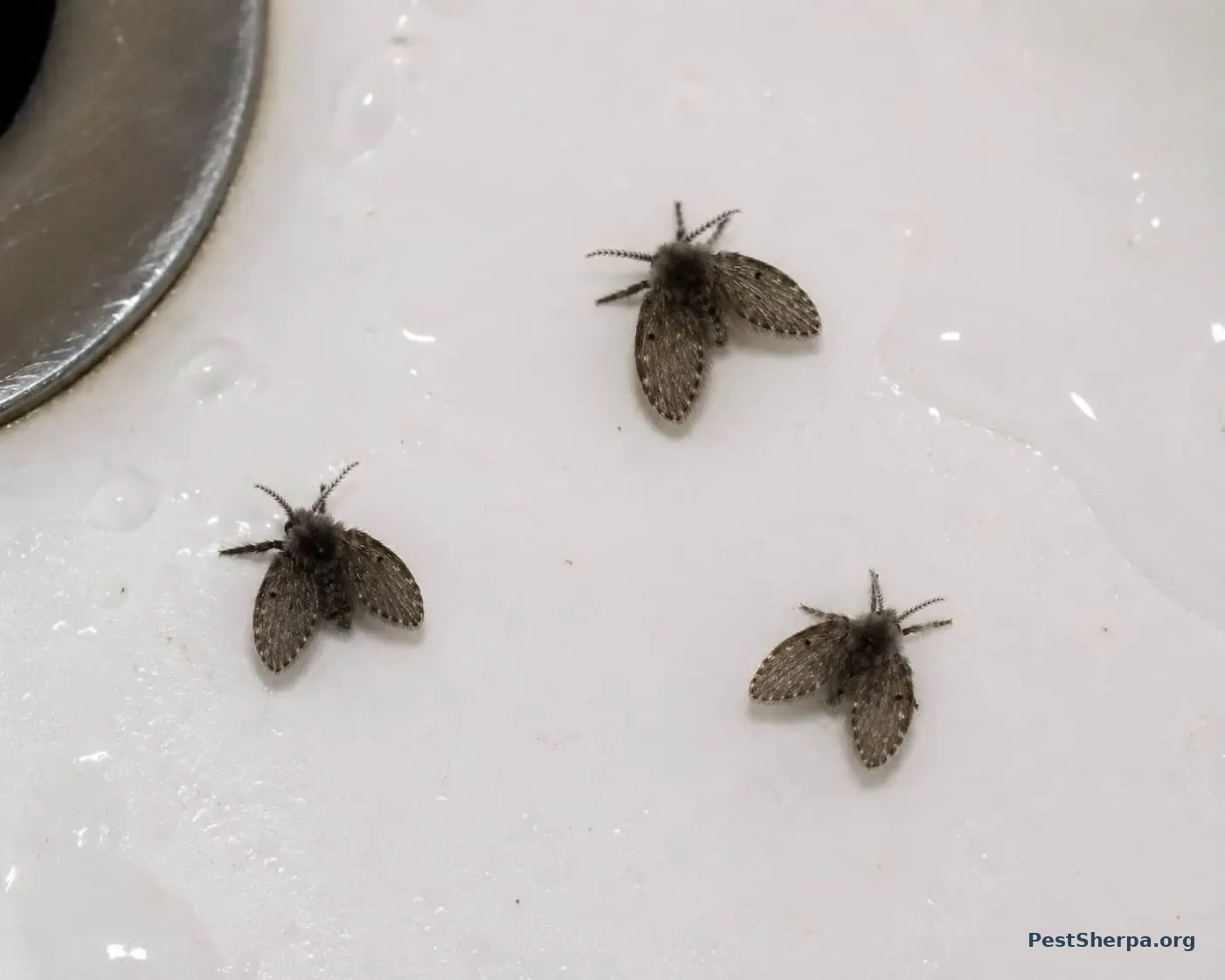
Short answer: Fruit flies and drain flies are different insects with different breeding sites. Fruit flies (often Drosophila) are small, tan or yellowish, and breed in fermenting fruit, sugary spills, and recycling. Drain flies (moth flies) are fuzzy, moth-like, and breed in the gelatinous film inside drains and wet organic sludge. Matching the fly tells you what to clean.
Side-by-side field clues
- Fruit flies: tiny, smooth-looking, hover around bananas, beer, wine, vinegar, and compost caddies.
- Drain flies: larger relative to fruit flies, hairy wings held roof-like, rest on bathroom or kitchen walls near sinks and floor drains.
- Fruit fly larvae: in wet fermenting food. Drain fly larvae: in drain slime, not in a fresh apple on the counter.
- Both can explode after a few warm days if the source stays wet.
What to do for each
For fruit flies, remove overripe produce, rinse bottles, clean under fridge seals, and use a simple vinegar trap only as a monitor after sanitation. For drain flies, scrub the drain film mechanically (brush plus labeled cleaner as directed). Pouring perfume or a quick bleach splash rarely removes the entire breeding mat.
When numbers stay high
Check secondary sites: garbage disposals, rarely used floor drains, pet bowls, mop buckets, and wet mops. If blow flies or cluster flies are in the mix, habits change again. Our Fly Guide covers the wider group. Call for help when you cannot locate the source or a wall void may hide decaying material.
Why ID saves money
Buying another aerosol without knowing the fly is how people stay stuck. Ten minutes of careful watching at dusk near the sink often answers the fruit-vs-drain question before you spend on products.
A two-minute kitchen test
Set out a scrap of banana in a cup across the room from the sink, and watch where new adults gather. Heavy traffic to the fruit points to fruit flies. Adults resting on bathroom tile near the drain, with little interest in the banana, point to drain flies. Then clean the matching source first.
Related guides
References
This article was written by Greg Baumann, founder of Pest Sherpa, and reflects more than 40 years of professional pest management experience.
About the Author

Greg Baumann | Pest Control Expert
Greg Baumann is the founder of Pest Sherpa and a Pest Control Expert with more than 40 years of professional pest management experience. His articles combine decades of field experience, technical expertise, and science-based guidance to help homeowners identify pests correctly, understand real-world risks, and make informed pest management decisions.
Mission: Identify the pest. Understand the risk. Stop the problem. Prevent the comeback. Know when it’s time to call a professional.