
Carpet Beetle Guide: Identification, Damage Risk, and What to Do
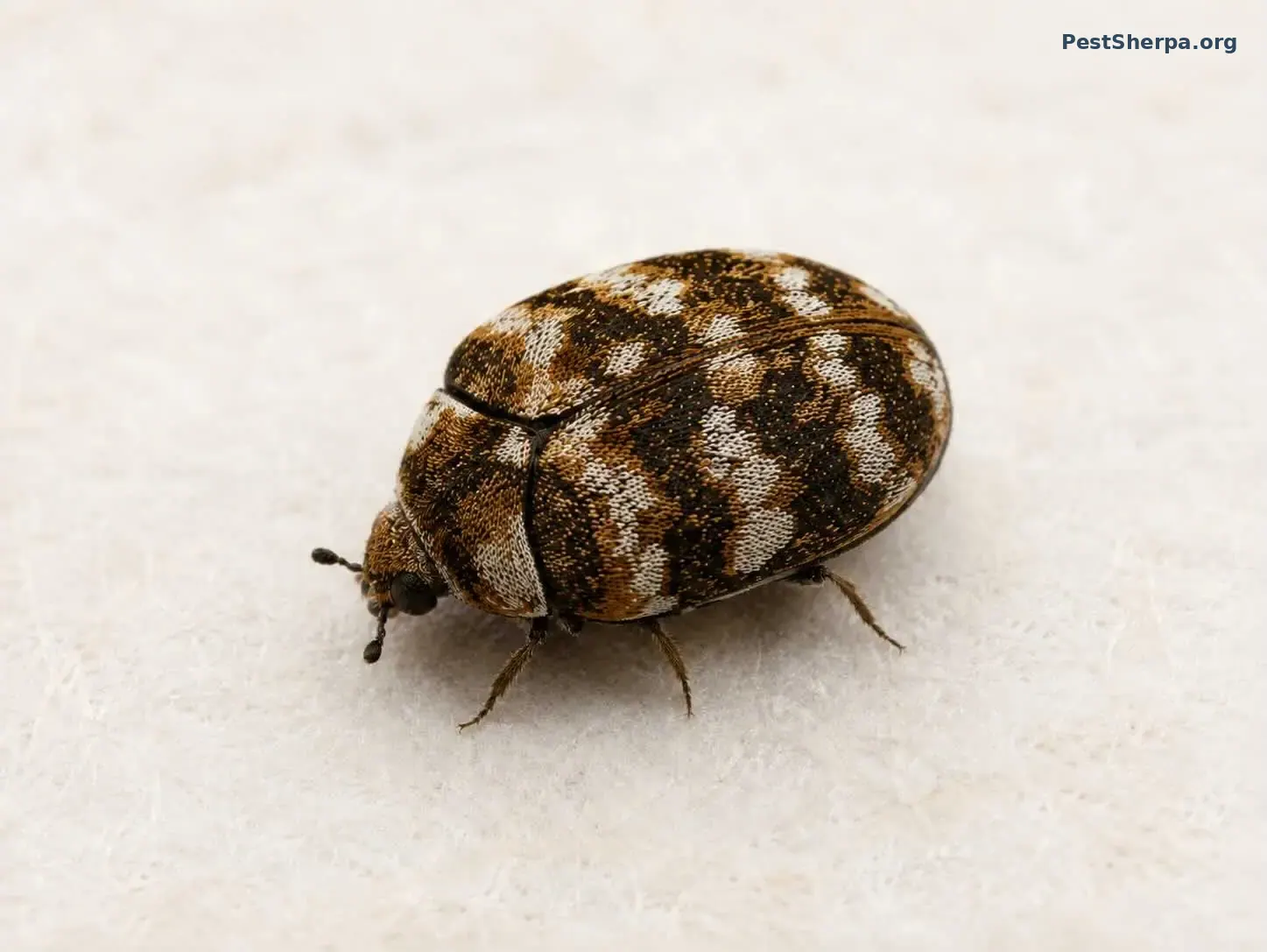
Carpet beetles are common fabric and stored-product pests in the dermestid family. The three species homeowners meet most often are the black carpet beetle (Attagenus unicolor; older labels may say Attagenus megatoma, a historical synonym), the furniture carpet beetle (Anthrenus flavipes), and the varied carpet beetle (Anthrenus verbasci). Larvae do the damage to wool, silk, fur, feathers, and similar materials; adults feed on pollen outdoors and often turn up on windowsills. This hub explains how to identify them, what the signs mean, and what to do using university IPM guidance, without panic or product pitches.
TL;DR: Confirm Larvae Before You Treat
- Larvae damage fabrics; adults do not. Adults seek pollen and nectar outdoors and are drawn to light indoors.
- A few beetles on a windowsill are not proof of an active fabric infestation. Look for cast skins, salt-sized frass, and irregular holes in dark storage areas.
- Black carpet beetle adults are shiny black to dark brown; Anthrenus adults are mottled (scales can wear off and look solid dark).
- IPM first: find the source, vacuum and dispose of the bag, wash or dry-clean, store clean items airtight; pesticides are a last resort and never on clothing or bedding.
- Itchy skin from larval hairs can be mistaken for bed bug bites: pair symptoms with fabric damage and shed skins, not mattress fecal spots alone.
How to Identify Carpet Beetles
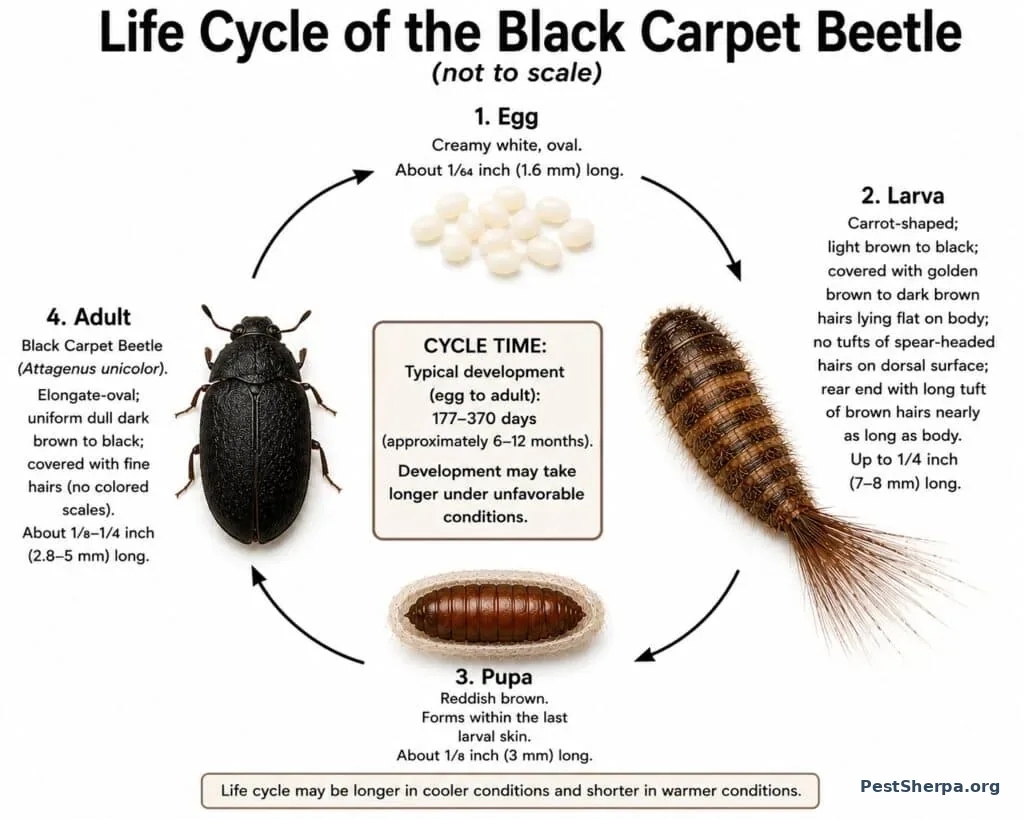
All three species have complete metamorphosis: egg, larva, pupa, adult. Size and longevity vary with temperature and food, so use shape and pattern more than a single millimeter figure.
Black carpet beetle (Attagenus unicolor)
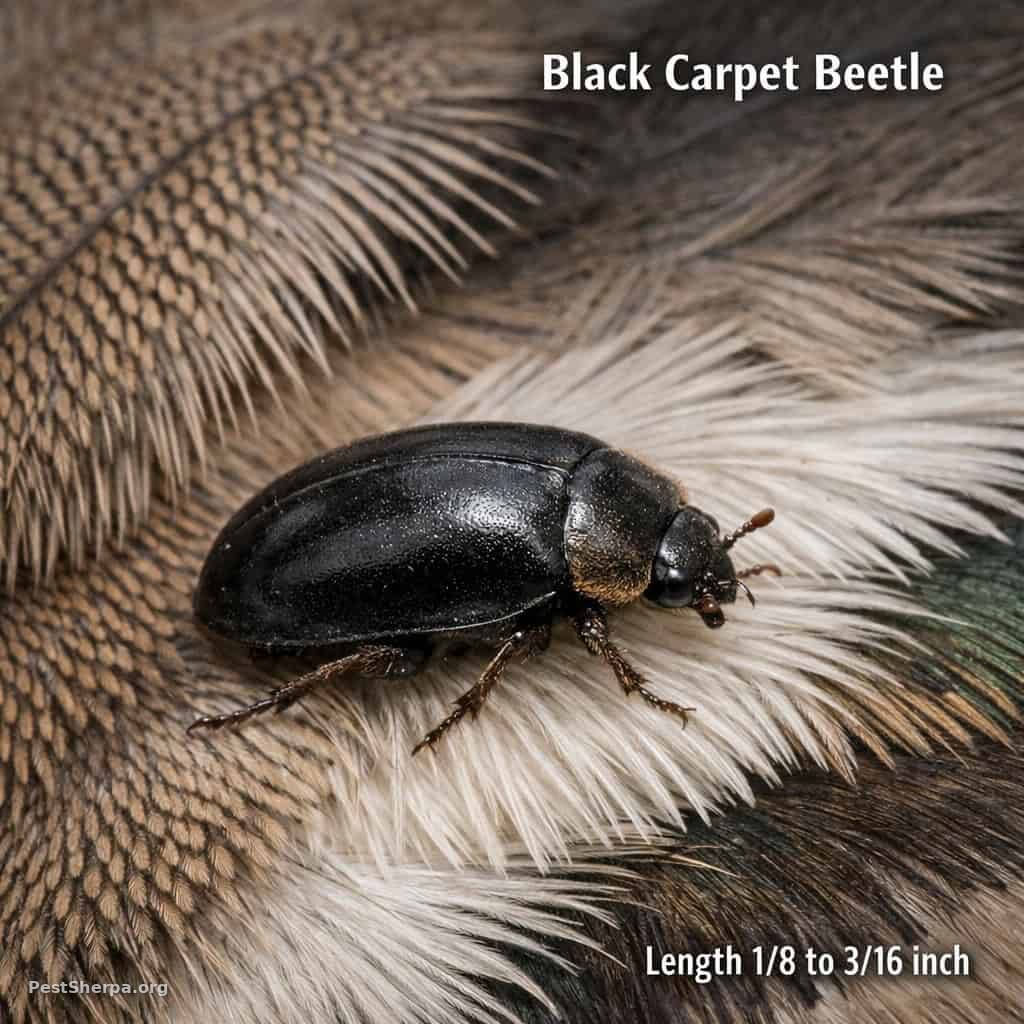
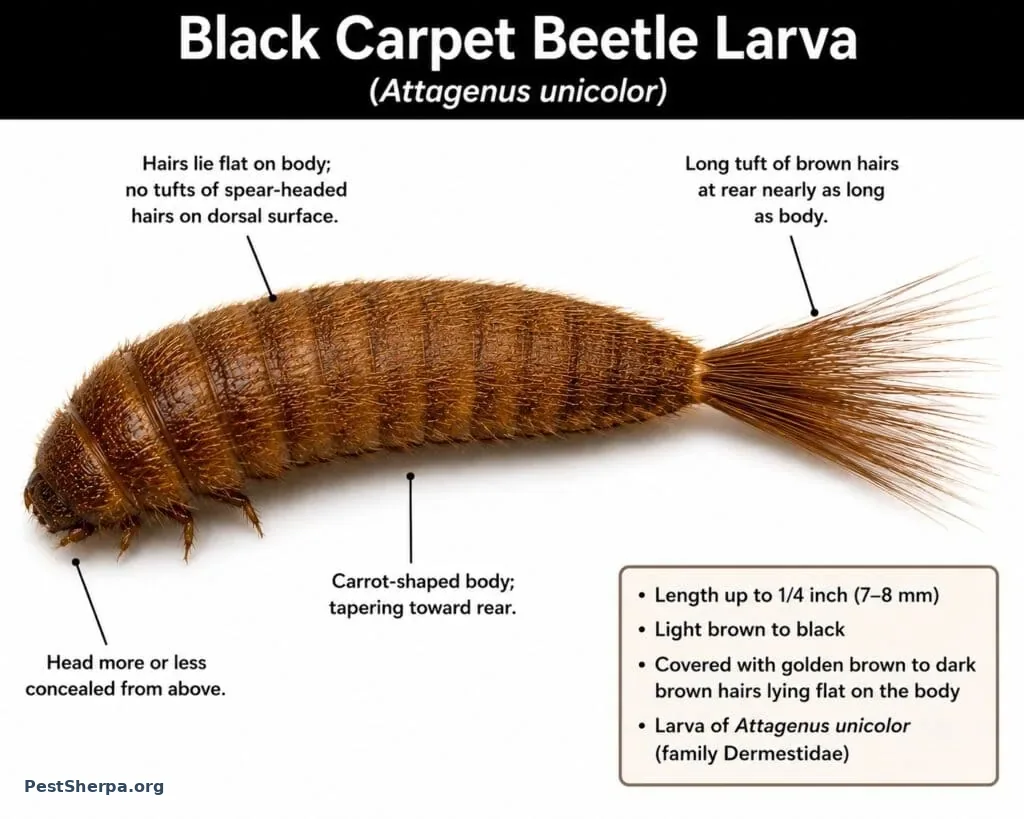
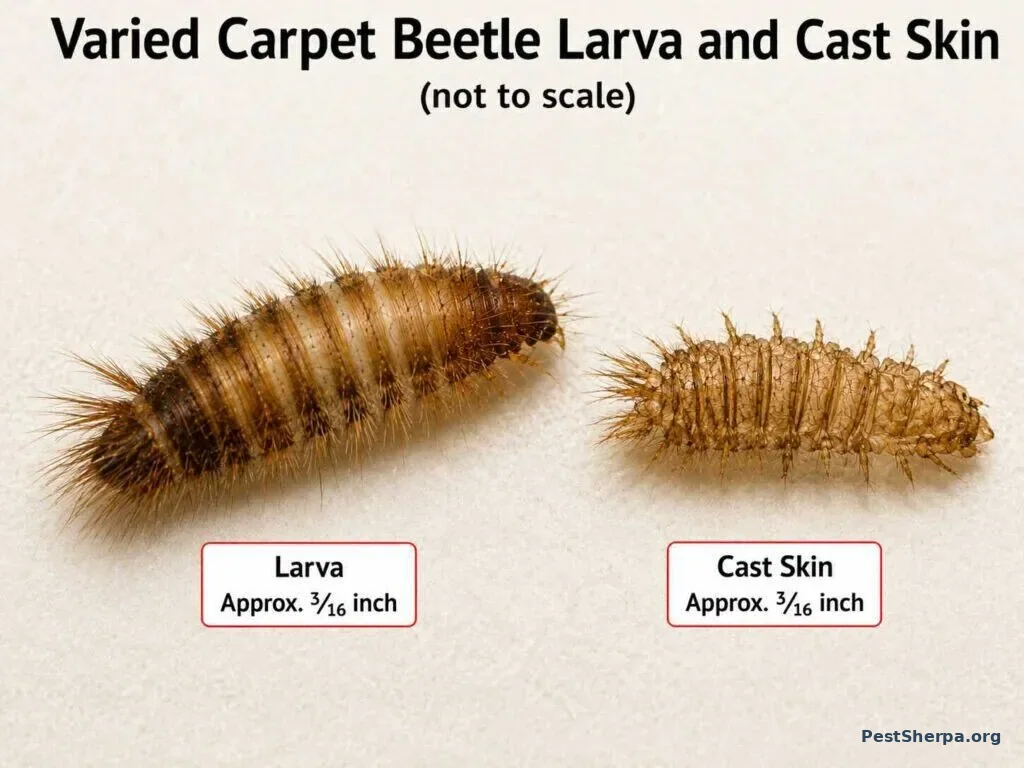
Adults are oval, shiny black to dark brown with brownish legs, not mottled with colored scales. Extension sources place adults roughly in the 1/8 to 1/4 inch range. Larvae are elongate and carrot- or cigar-shaped, tapering to a rear tuft or brush of long hairs; mature larvae may reach about 5/16 to 1/2 inch depending on the source. Cast skins are often mistaken for living larvae.
Furniture carpet beetle (Anthrenus flavipes)
Adults are nearly round, about 1/8 inch, with black spots mixed with white and dark yellow to orange scales; the underside is white. Worn adults can look solid black. Larvae are about 3/16 inch, thickly hairy, and broader toward the front and narrower at the rear, the opposite profile of varied carpet beetle larvae.
Varied carpet beetle (Anthrenus verbasci)
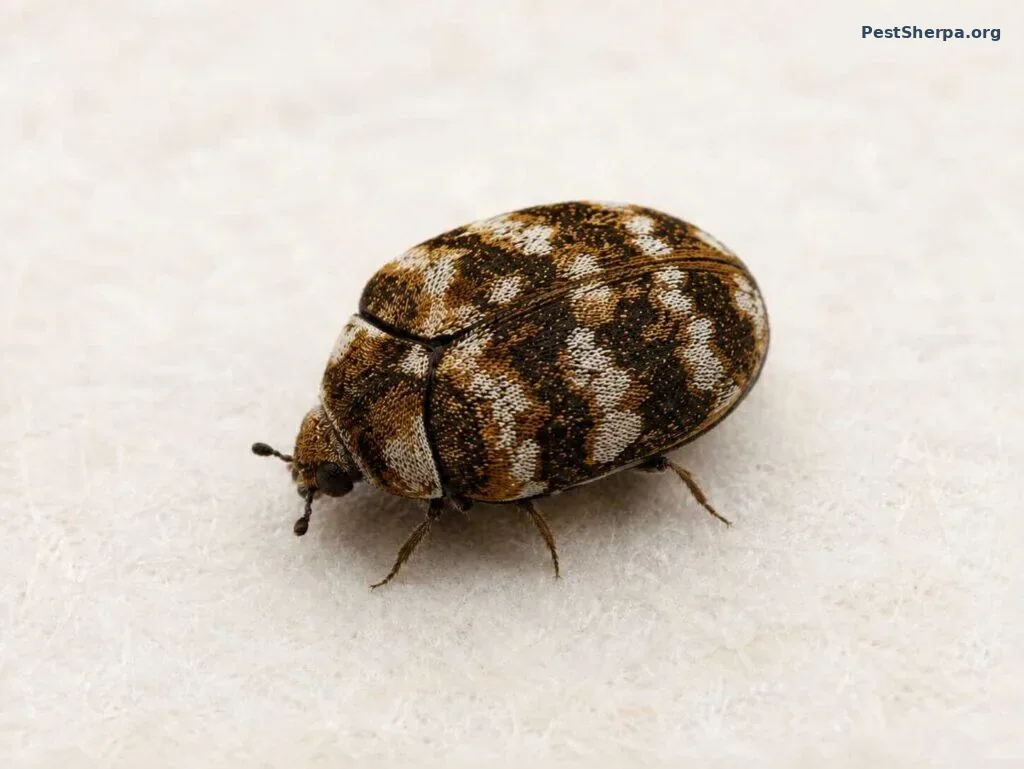
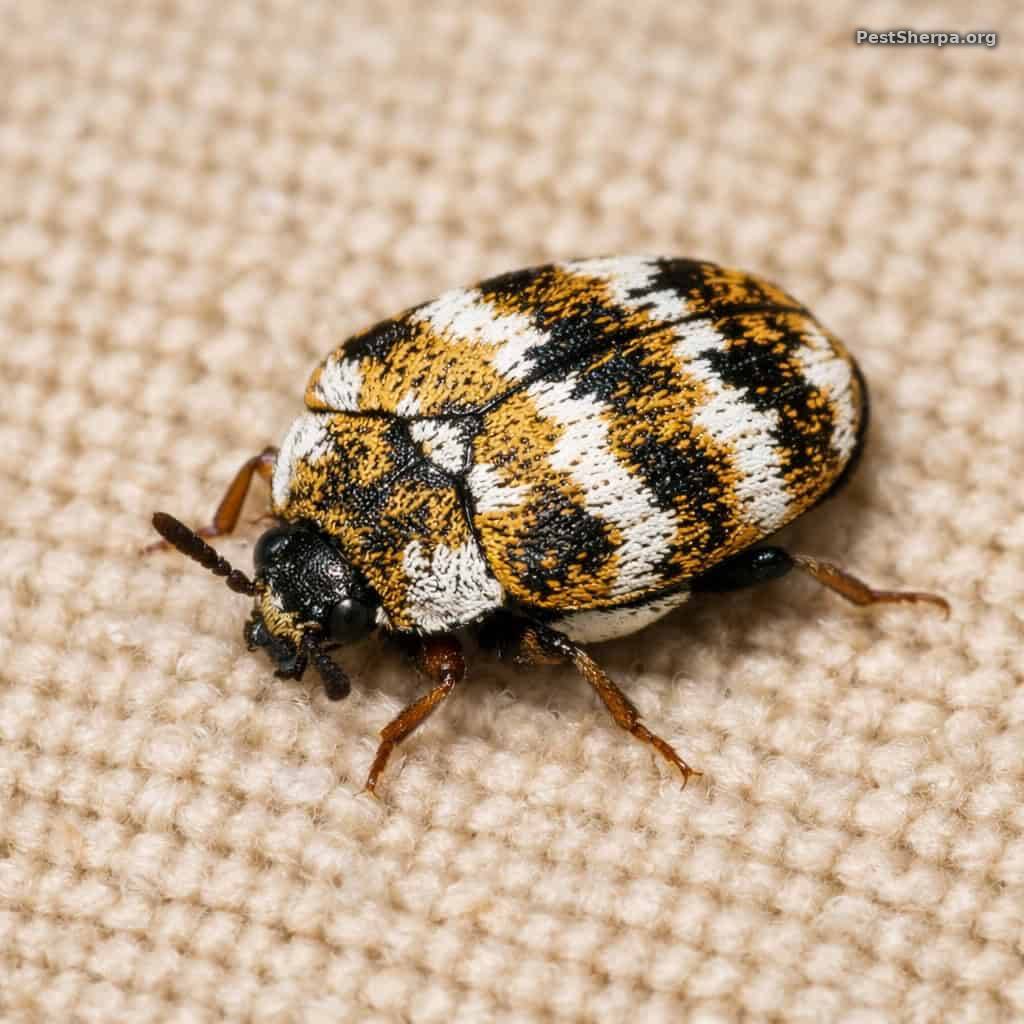
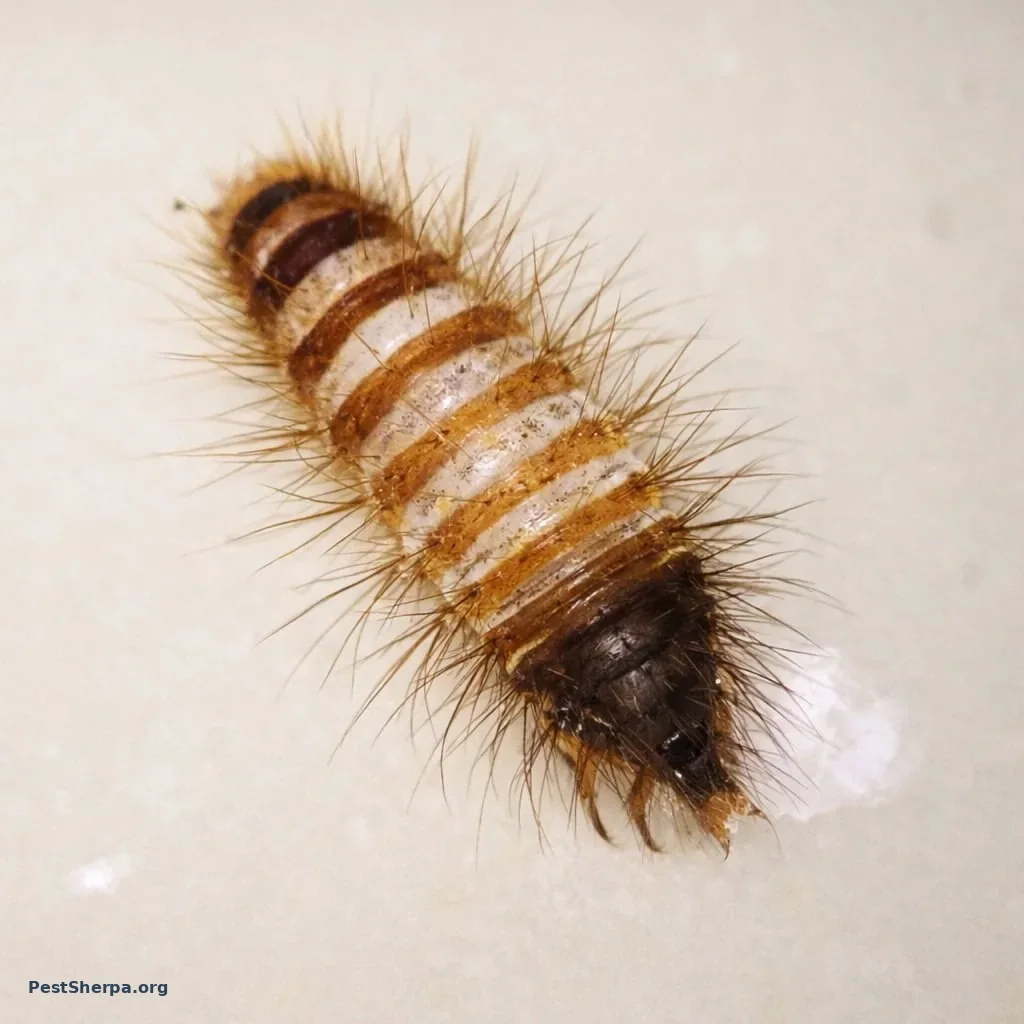
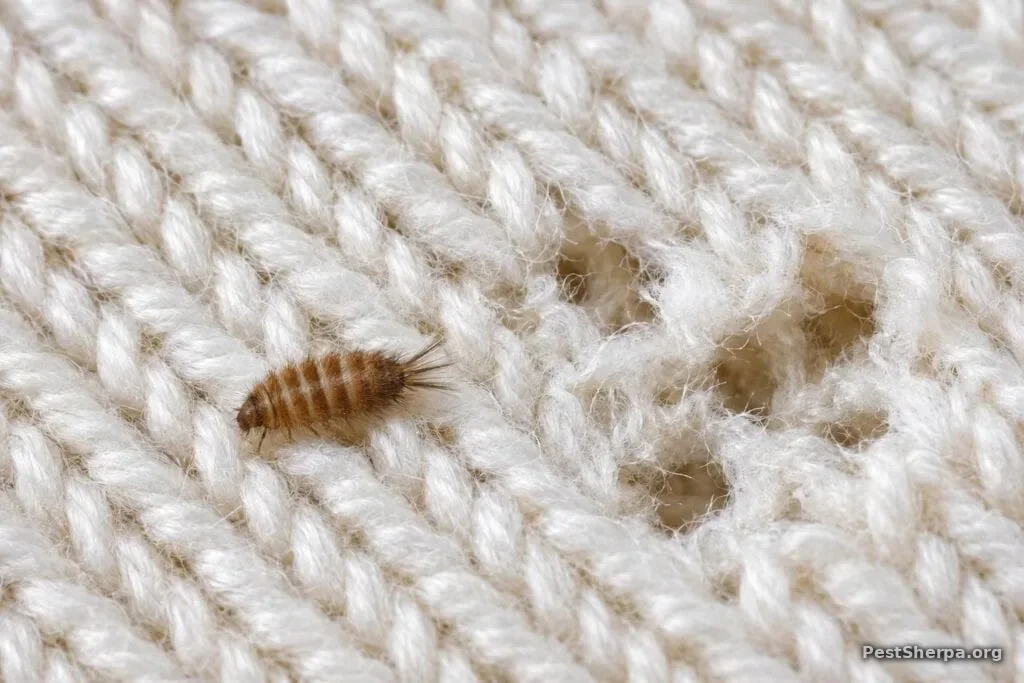
Adults are about 1/10 to 1/8 inch with irregular white, brown, and yellowish scales on the wing covers. Older adults may appear solid brown or black after scales wear off. Larvae are banded light and dark brown, about 3/16 inch, denser toward the rear and narrower toward the front; hair tufts may rise into a plume when disturbed. Spring adults on windowsills are classic for this species.
Why It Matters
Damage is from larvae feeding on keratin and animal products: wool, silk, leather, fur, feathers, pet hair, felt, taxidermy, natural-bristle brushes, and similar items. Cotton, linen, rayon, and many synthetics are generally resistant unless stained with animal oils or blended with animal fibers. Black carpet beetles can also infest stored grains, bird seed, cereals, and pet food, especially in arid regions, so the same insect may show up as a fabric pest or a pantry problem.
Adults do not eat fabrics. They feed on pollen and nectar outdoors, then may enter through open windows, doors, or on cut flowers to lay eggs. Life cycles can run from a few months to well over a year depending on species and conditions, which is why source removal matters more than chasing a few flying adults.
Signs and Where to Look
- Cast larval skins: brown, shell-like, bristly shed skins.
- Frass: fecal pellets about the size of a grain of salt.
- Fabric damage: irregular holes or a worn patch on one area of a garment or carpet; on wool, nap may be eaten leaving base threads; on fur, bare spots at the base of hairs.
- Adults at windows: common, but inspect for larvae before assuming a fabric infestation.
Check closets, drawers, under furniture, carpet edges and baseboards, vents and air returns, attics, bird or rodent nests, wasp nests under eaves, spider webs with dead insects, stored woolens and linens, piano felts, and dry pet food or bird seed. Sticky traps on windowsills can help monitor; pheromone traps exist for serious monitoring but do not replace sanitation.
What To Do (IPM)
Prefer sanitation and exclusion. Insecticides are a last resort, label-only, and never a substitute for finding the source.
- Remove the source. Discard badly infested low-value items; clear nests, webs, lint, hair, and dead insects that feed larvae.
- Vacuum thoroughly rugs, upholstery, closets, and edges; dispose of the bag promptly so eggs and larvae do not crawl back out.
- Launder or dry-clean. Hot-water wash or dry-cleaning kills stages on garments; clean stained fabrics that attract larvae.
- Heat, freeze, or sun for valued items. Extension guidance includes freezing (often about 10 to 14 days, or shorter at very low temperatures per UF) and heat only when the item can tolerate it. Brush and air stored woolens annually.
- Store clean items airtight in glass, metal, or heavy plastic. Cedar chests are not reliable long-term; mothballs or PDB belong only in sealed containers per label and away from food, plastics, children, and pets, and they offer little protection against black and furniture carpet beetles.
- Exclude. Intact screens, tight doors, and inspecting cut flowers before bringing them indoors reduce new adults.
- If pesticides are used: choose a product labeled for carpet beetles; spot-treat edges, cracks, and undersides only. Do not spray clothing or bedding. Often unnecessary once food sources are gone and cleaning continues.
When to Call a Professional
Consider expert help when larvae are deep in furniture stuffing you cannot clean, when infestation is widespread with no clear source (wall voids or attics), when valuable rugs or upholstery could be stained by DIY sprays, or when you cannot tell carpet beetles from bed bugs. Correct identification comes first; treatment follows the pest you actually have.
Misidentification vs Bed Bugs
Bed bug adults are flat, broadly oval, roughly apple-seed sized, tan to brown, and wingless. They walk only. Their signs cluster around sleeping areas: dark fecal spots on mattress seams, eggs, and shed skins. Carpet beetle larvae are hairy and segmented and become winged adult beetles. Larval hairs can irritate skin and feel like “bites,” especially after long exposure. Fabric damage, cast skins, and salt-sized frass in closets or rugs point to carpet beetles; mattress-seam fecal spotting points toward bed bugs. Adult carpet beetles fly to light; bed bugs do not.
Carpet Beetle Species Guides
Species pages for deeper identification, biology, and professional control notes:
- Black carpet beetle: identification, biology, habits, and professional control
- Furniture carpet beetle: identification, biology, habits, and professional control
- Varied carpet beetle (Anthrenus verbasci): identification, biology, habits, and professional control
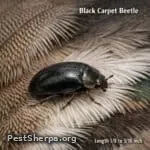
Black Carpet Beetles: Identification, Damage, and What to Do
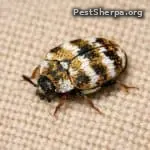
Furniture Carpet Beetles: Identification, Damage, and What to Do
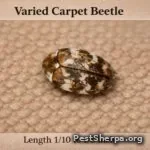
Varied Carpet Beetles: Identification, Damage, and What to Do
Common Questions
Do adult carpet beetles eat my clothes?
No. UC IPM is explicit: adults do not feed on fabrics. Larvae cause fabric and stored-product damage; adults feed on pollen and nectar outdoors.
I found beetles on the windowsill: is my closet infested?
Not necessarily. A few indoor adults are often accidental entrants attracted to light. Management is needed when larvae are developing in fabrics or other sources. Confirm with cast skins, frass, and damage in dark storage areas.
Why does my skin itch if they do not bite like bed bugs?
Larval hairs and fragments can trigger allergic skin or respiratory reactions in sensitized people. That itch or rash is sometimes described as being “bitten,” which adds to bed-bug confusion.
Will mothballs stop carpet beetles?
UF Featured Creatures notes paradichlorobenzene and naphthalene offer little protection against black and furniture carpet beetles. Clean storage and airtight containers matter more.
References
- UC Statewide IPM Program: Carpet Beetles (Pest Notes Pub. 7436)
- University of Florida / IFAS: ENY-204/IG089 Carpet Beetles
- University of Florida / IFAS Featured Creatures: Black Carpet Beetle, Attagenus unicolor (EENY-018/IN144)
- University of Florida / IFAS Featured Creatures: Furniture Carpet Beetle, Anthrenus flavipes (EENY-019/IN145)
- Penn State Extension: Carpet Beetle Dermatitis
- Connecticut Agricultural Experiment Station: Bed Bugs and Lookalikes
This article was written by Greg Baumann, founder of Pest Sherpa, and reflects more than 40 years of professional pest management experience.
About the Author

Greg Baumann | Pest Control Expert
Greg Baumann is the founder of Pest Sherpa and a Pest Control Expert with more than 40 years of professional pest management experience. His articles combine decades of field experience, technical expertise, and science-based guidance to help homeowners identify pests correctly, understand real-world risks, and make informed pest management decisions.
Mission: Identify the pest. Understand the risk. Stop the problem. Prevent the comeback. Know when it’s time to call a professional.