
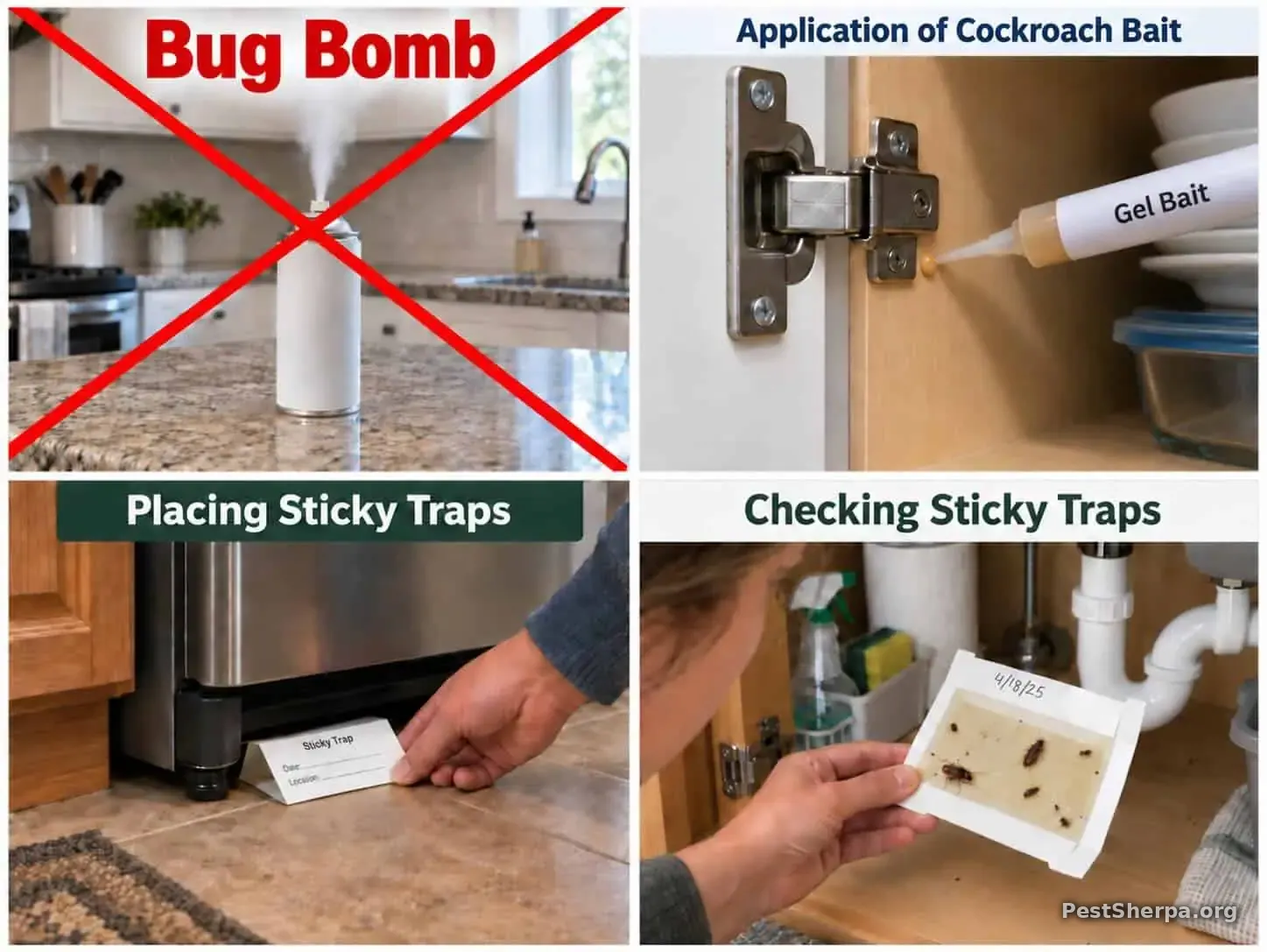
What to Look for When Hiring a Pro for German Cockroaches
German cockroaches (Blattella germanica) are the small indoor specialists that live with people, in kitchens, bathrooms, and the warm voids behind appliances. They do not establish from the yard the way American or Oriental cockroaches often do; they hitchhike and thrive where food, water, and cracks meet. University of California Statewide IPM (UC IPM), University of Florida IFAS, and NC State Extension agree on the hiring target: sanitation, sticky-monitor mapping, gel or paste baits as the primary pesticide tool, insect growth regulators (IGRs) when appropriate, and follow-up, not fogger bombs or old school scheduled baseboard sprays. Illinois Extension’s 2024 summary of university research is blunt about DIY pyrethroid sprays: wild German mortality stayed under 20% after limited exposure in tested consumer residuals, so knockdown can look successful while hidden populations rebound. Further, roaches which are exposed to broad chemical treatments that are not lethal to them might develop a resistance to that pesticide.
Confirm German Cockroaches, Not Just “a Roach”
Adults are about one-half to five-eighths of an inch, light brown or tan, with two dark stripes on the pronotum. Females often carry a light-colored egg case until near hatch (UC IPM; UF/IFAS). Sticky monitors along walls, under appliances, and in cabinets help confirm: multiple life stages mean an established infestation; a few adults may be a new introduction. Daytime open-area sightings often signal a large population.
Use our German cockroaches guide and the broader cockroach hub if outdoor invaders are possible. Those species change the treatment map. See also One roach = infestation? and why fogging is a poor next step.
UC IPM and related Extension materials also note cockroach allergens (feces, shed skins, saliva) as asthma-relevant, especially in multi-unit housing. That is public-health context, not a diagnosis.
DIY Versus Professional Help
Light, new introductions can sometimes be managed with rigorous sanitation, correctly placed consumer gel baits or child-resistant stations, and monitors (UC IPM; NC State). DIY often fails because consumer residual sprays underperform against resistant field populations (Illinois Extension), because sprays can repel roaches away from baits (UC IPM, UF, NC State), and because biology favors rebound: multiple generations per year and egg cases that protect the next wave. Multifamily buildings add unit-to-unit movement through shared walls and plumbing; Illinois Extension notes that cheap spray contracts and underreporting leave infestations uncontrolled. Unit-level DIY frequently cannot finish a building-wide problem.
UC IPM advises contacting a licensed professional for serious infestations. EPA hiring guidance: hire when the problem is extensive or difficult, prefer IPM-experienced firms, and verify state licensing.
What Good German Cockroach Treatment Means
- Sanitation / survival triangle. Cut food, water, and harborage; sealed food, trash lids, leak repairs, and less cardboard make baits work better (UC IPM; UF/IFAS; NC State; EPA).
- Monitoring. Sticky traps before, during, and after to guide placements and prove decline, not “we sprayed” as the scoreboard.
- Gel / paste baits (primary tool). UC IPM: baits are the primary pesticides for cockroach infestations; gels are very effective for German cockroaches in or near harborages; results often take at least seven days. Many small placements beat a few large blobs; secondary kill via feces and cannibalism reaches hidden nymphs. Do not spray over baits.
- IGRs. UF/IFAS preferred chemical options are baits plus IGRs that disrupt immature development and can push gravid females back toward feeding.
- HEPA vacuuming. UF lists HEPA vacuuming with baits/IGRs among effective suppression tools; it also reduces allergen load (UC IPM notes HEPA when vacuuming for allergy reasons).
- Selective void dusts. Thin films of labeled dusts in dry, undisturbed voids, not a fogger substitute.
- Follow-up and rotation. Refresh bait; rotate active-ingredient classes (IRAC) to slow resistance and bait aversion, including documented glucose aversion (UF; NC State often cites rotating modes of action every few months as best practice). UF: reapply about every 1 to 2 weeks as needed until monitors are clear.
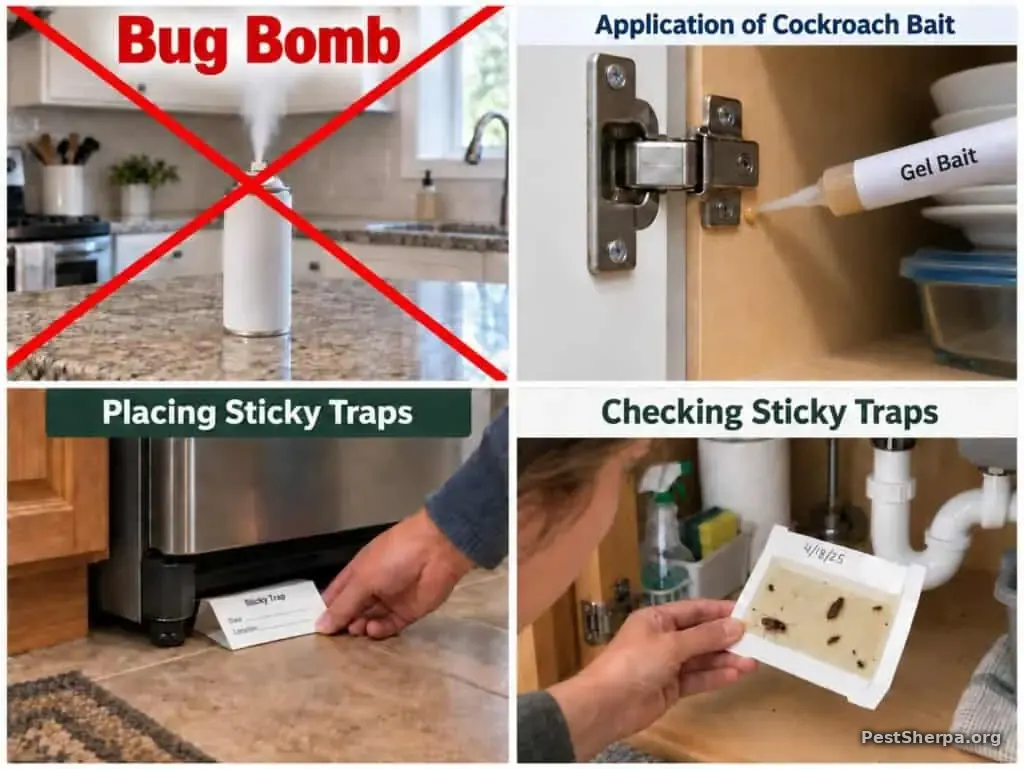
Say no to these approaches
- Total-release foggers. UC IPM: avoid, hazardous and may disperse without killing harborages. UF: generally ineffective. NC State: poor crevice penetration plus flammability/exposure risks. Nebraska Extension: not recommended; research finds little population decline with higher human exposure. EPA fogger safety pages cover vacate times and ignition hazards. Pair that with Extension consensus that foggers are the wrong German-roach tool.
- Baseboard / broadcast residual sprays as the whole program. Temporary knockdown; can disperse roaches and ruin bait programs (UC IPM; UF; NC State). The regular spraying of baseboards with no other inspection, identification, control, and monitoring is an outdated archaic service.
- Calendar spraying without monitors. UF: baits/IGRs should not be calendar-based; EPA home-contract guidance emphasizes inspection and treating when pests are present. While regularly scheduled visits are fine by a professional, routine same treatment should be avoided and be based on inspection findings during the visit.
- Ultrasonics and unsupported folk remedies. Not supported in the UC IPM/EPA/UF/NC State pages used for this series.
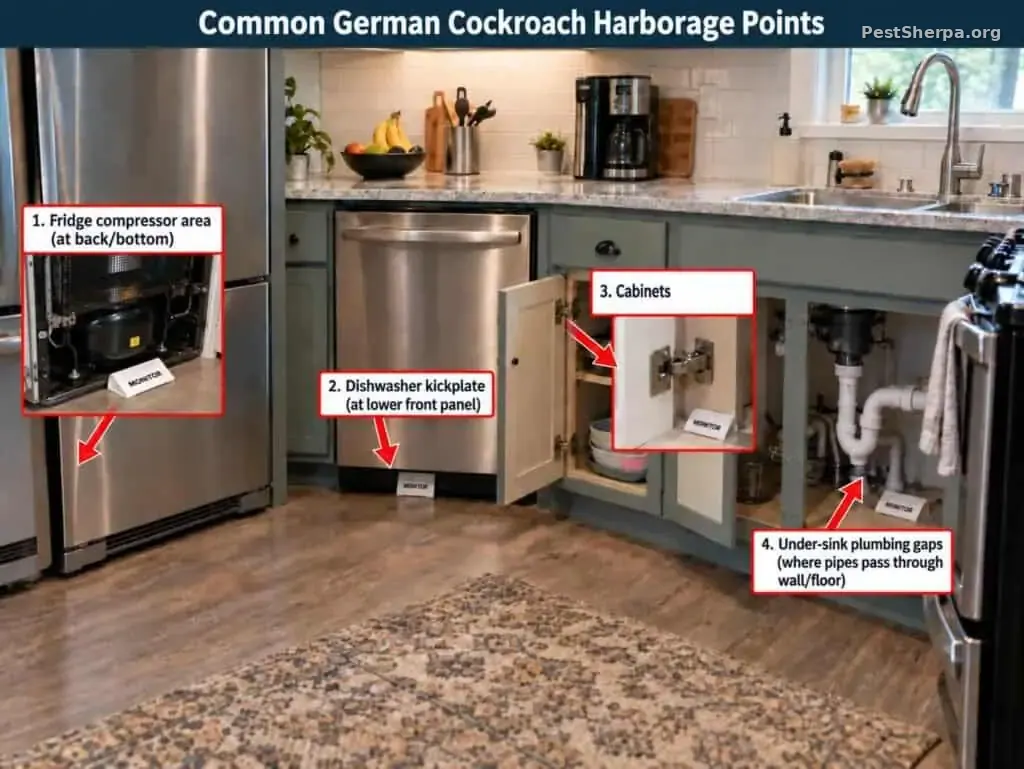
Common German cockroach hiding places in a kitchen.
Credentials, Questions, and Bids
Verify state pest-control licensing and insurance (EPA Tips for Selecting a Pest Control Service). Ask for active ingredients, formulations, and labels/SDS. Prefer firms that will explain why they are not fogging.
- Will you confirm German cockroaches vs. outdoor invaders?
- Will you use gel bait plus Insect Growth Regulators (IGRs) as appropriate) be primary tools?
- How will sticky monitors guide placements and measure success?
- How often will you return, refresh bait, and rotate bait to prevent resistance? Note: borate-based baits have no known resistance, but rotation is still a good idea to vary food choices for the roaches.
- In apartments/condos, how do you address adjoining units and common walls?
- What sanitation and prep steps are required of me?
- What does any guarantee cover in multi-family housing if neighbors spread their infestation after yours is solved? Get it in writing?
- May I see license, insurance, and product names before signing?
Compare bids on assessment depth, baiting density, follow-up intervals, and multi-unit coordination, not on who sprays the kitchen cheapest each month.
Treatment Day, Safety, and Aftercare
Pull appliances if asked, empty under-sink areas, and secure pets. Follow label and applicator re-entry guidance. Baits and IGRs in cracks typically mean less broadcast residue than fogging, but instructions still rule. Disclose asthma or chemical sensitivities (EPA choosing-company guidance).
Leave bait placements undisturbed. Expect some activity as insects feed; monitor counts should fall across visits. If counts stall, reassess competing food, placement, resistance/aversion, or reintroduction, not “spray more.” When monitors show zero cockroaches and no nymphs or egg cases, baiting can step down while monitoring continues (UF/UC IPM framing).
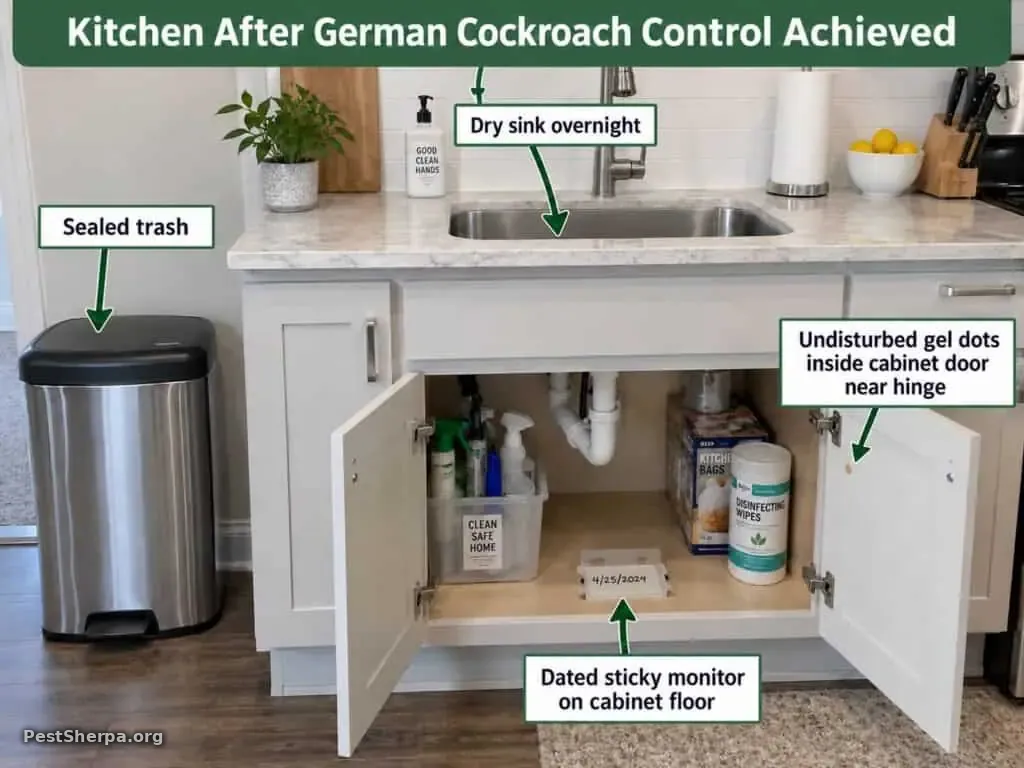
German cockroaches will find this kitchen difficult to thrive in if these measures are followed.
Hiring Checklist: German Cockroaches
- Confirm species with the German cockroach guide.
- Demand gel bait + IGR + monitors, not fogger/baseboard-only plans.
- Know DIY sprays often fail against resistant Germans (Illinois Extension summary).
- Plan for multifamily unit-to-unit movement.
- Rotate bait classes; measure success with sticky-trap counts.
- Verify license/insurance; get follow-ups and guarantee language in writing.
- More help: Ask the Sherpa.
German cockroach work is won in the cracks, by technicians who measure, bait precisely, rotate thoughtfully, and return. Hire that mindset.
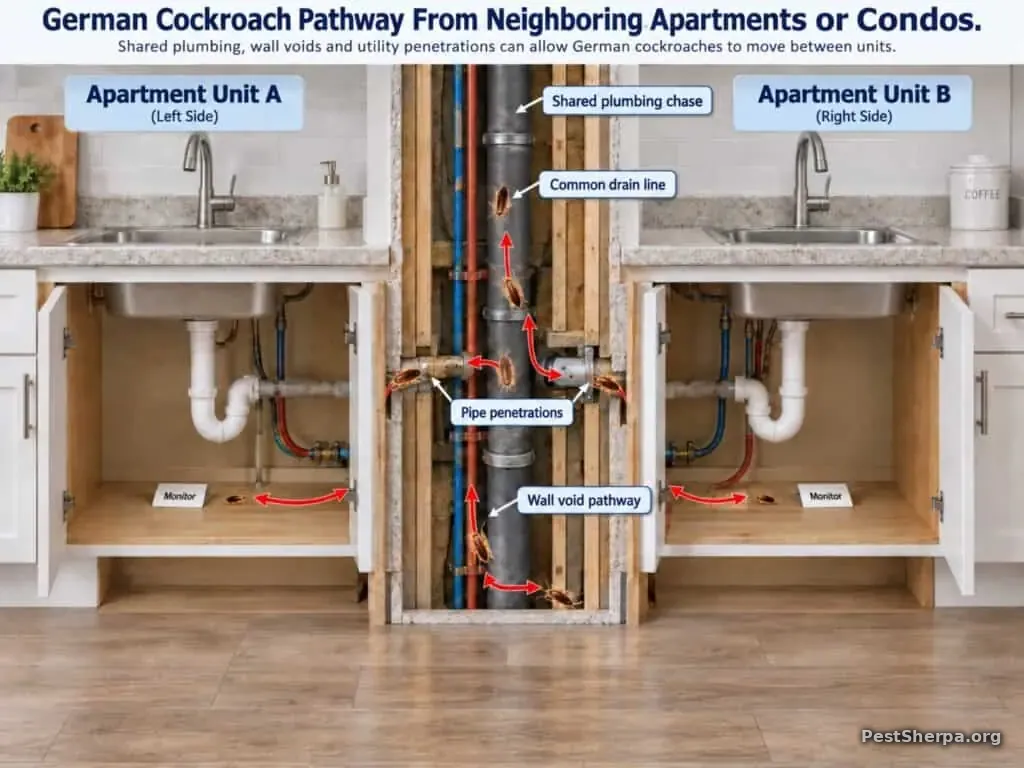
Multifamily housing units have shared plumbing areas which can lead to German cockroach infestation from unit to unit.
Sources & Further Reading
Selected public authorities used to check the hiring guidance above (not an exhaustive bibliography):
- UC IPM: Cockroaches
- NC State Extension: German Cockroach Surveillance and Management
- UF/IFAS: Assessment-Based Pest Management of German Cockroaches (IN1190)
- Illinois Extension: DIY Spray and Aerosol Products Likely Fail Against German Cockroaches
- EPA: Tips for Selecting a Pest Control Service
This article was written by Greg Baumann, founder of Pest Sherpa, and reflects more than 40 years of professional pest management experience.
About the Author

Greg Baumann | Pest Control Expert
Greg Baumann is the founder of Pest Sherpa and a Pest Control Expert with more than 40 years of professional pest management experience. His articles combine decades of field experience, technical expertise, and science-based guidance to help homeowners identify pests correctly, understand real-world risks, and make informed pest management decisions.
Mission: Identify the pest. Understand the risk. Stop the problem. Prevent the comeback. Know when it’s time to call a professional.