
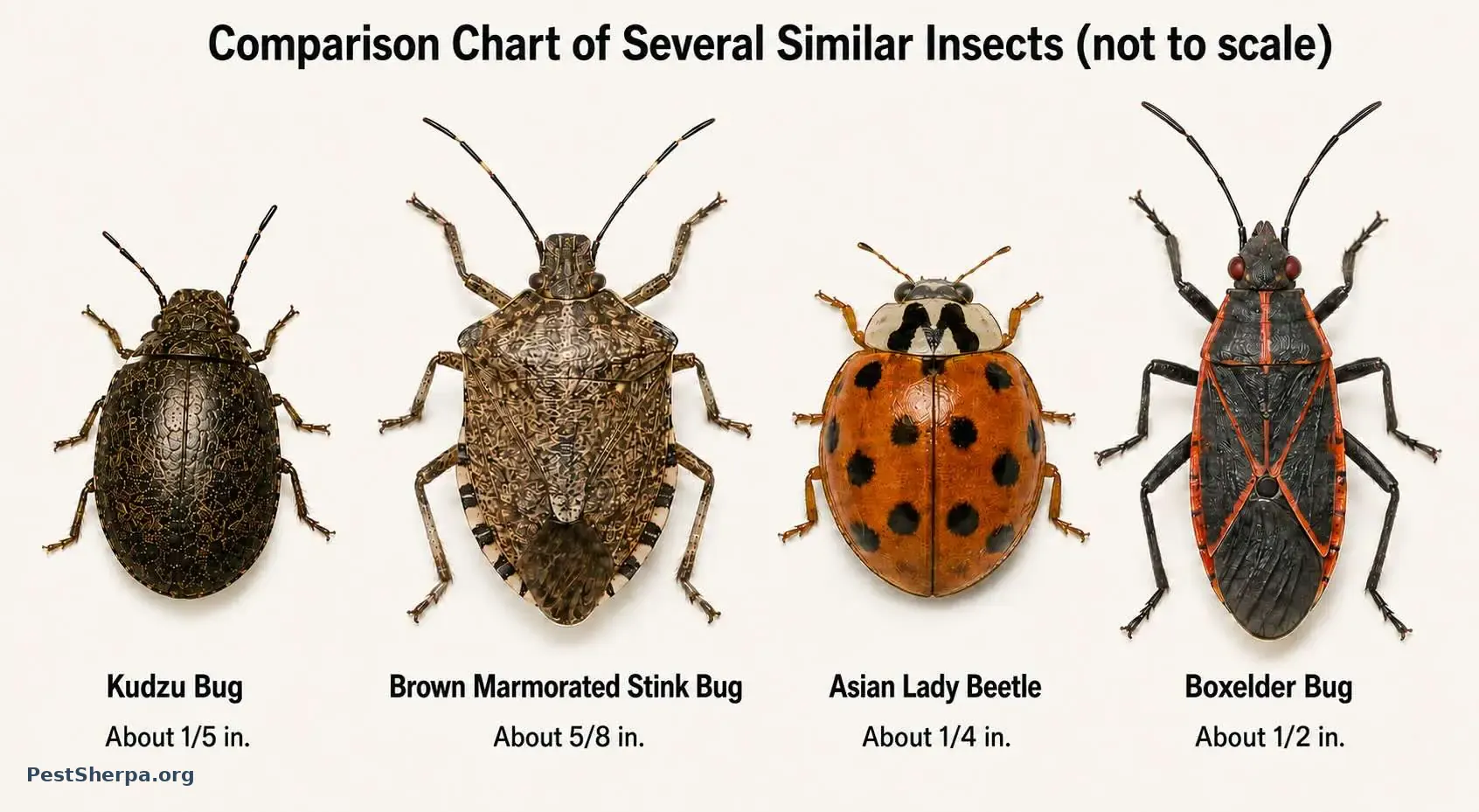
Are Asian lady beetles and boxelder bugs dangerous, and how do I keep them out?
Short answer: Neither spreads disease or bites. The main risk from Asian lady beetles is staining fabric if you crush them. Both seek warm winter harborage in fall, often on sunny south exposures. Exclusion (caulk, weatherstripping, door sweeps) beats indoor pesticides. Leave brick weep holes open.
Are Asian lady beetles dangerous?
No. Several species are beneficial outdoors because they feed on pest insects. In fall they become a nuisance when they get inside. They do not spread disease or bite. The biggest problem is staining drapes and carpets if they are crushed.
Do boxelder bugs pose a threat?
Also no disease and no bite. Most of the summer they go unnoticed on trees, shrubs, fences, and foundations. They look intimidating when dozens cluster on exterior walls looking for winter protection. Indoors they are more noticeable than Asian lady beetles because of size (often about 1/2 inch), but you are more likely to find Asian lady beetles inside than a large indoor population of boxelder bugs.
Why do they show up in fall?
They are seeking winter harborage as nights cool. They gather on warm sides of siding, especially southern exposures. Cracks in foundations, uncaulked window trim, and gaps around or under doors let them into garages and living spaces. Asian lady beetles often enter a few at a time. Boxelder bugs are less solitary: you may see twenty or more on a sunny wall, with a few finding a way inside.
How to get rid of them and keep them out
The same small gaps that admit these insects also invite rodents, outdoor cockroaches in some regions, and stink bugs. Caulk and weatherstrip gaps. Inspect windows and doors, plumbing and electrical penetrations, basement and crawlspace windows, and damaged siding. If you have brick and see small, regular vertical gaps between some bricks, leave those weep holes open so condensation can leave the wall.
Indoors, scoop them onto cardboard or vacuum, then empty and discard the vacuum contents outdoors. There is generally no need for indoor pesticides. Outdoor siding treatments for heavy clusters are optional if openings are sealed. For species detail, see the Asian lady beetle guide and the boxelder bug guide.
Related guides
References
- University of Minnesota Extension: Multicolored Asian lady beetles
- Penn State Extension: Boxelder Bug
- UC IPM: Boxelder Bug
This article was written by Greg Baumann, founder of Pest Sherpa, and reflects more than 40 years of professional pest management experience.
About the Author

Greg Baumann | Pest Control Expert
Greg Baumann is the founder of Pest Sherpa and a Pest Control Expert with more than 40 years of professional pest management experience. His articles combine decades of field experience, technical expertise, and science-based guidance to help homeowners identify pests correctly, understand real-world risks, and make informed pest management decisions.
Mission: Identify the pest. Understand the risk. Stop the problem. Prevent the comeback. Know when it’s time to call a professional.