
Ladybugs / Lady Beetles: Benefits, Problems, and What to Do
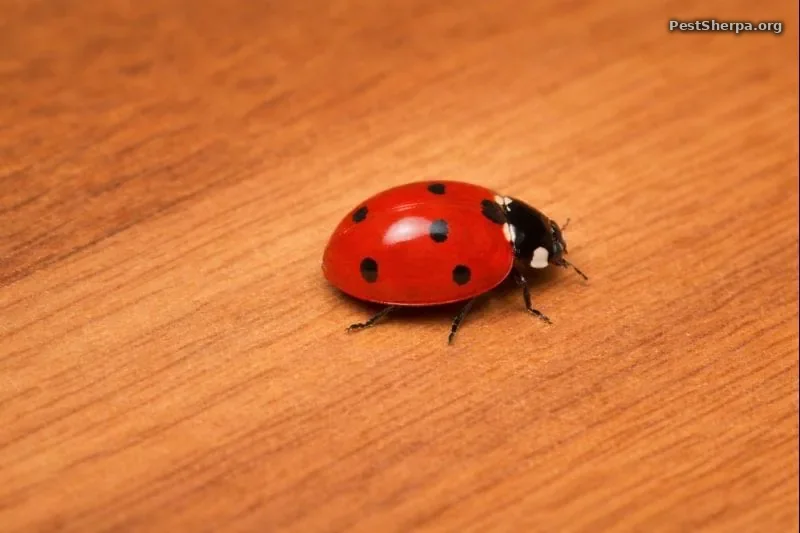
Ladybugs, more accurately called lady beetles, are usually beneficial insects in gardens, landscapes, farms, and greenhouses. Many species feed on aphids, scale insects, mites, insect eggs, and other soft-bodied pests. That makes them valuable natural enemies in an integrated pest management approach.
They can also become a nuisance indoors, especially the multicolored Asian lady beetle (Harmonia axyridis). This species may gather on sunny building exteriors in fall, slip through gaps, and overwinter in wall voids, attics, or living spaces. The right response depends on knowing whether you are seeing ordinary garden predators, a seasonal indoor invader, or another small beetle altogether.
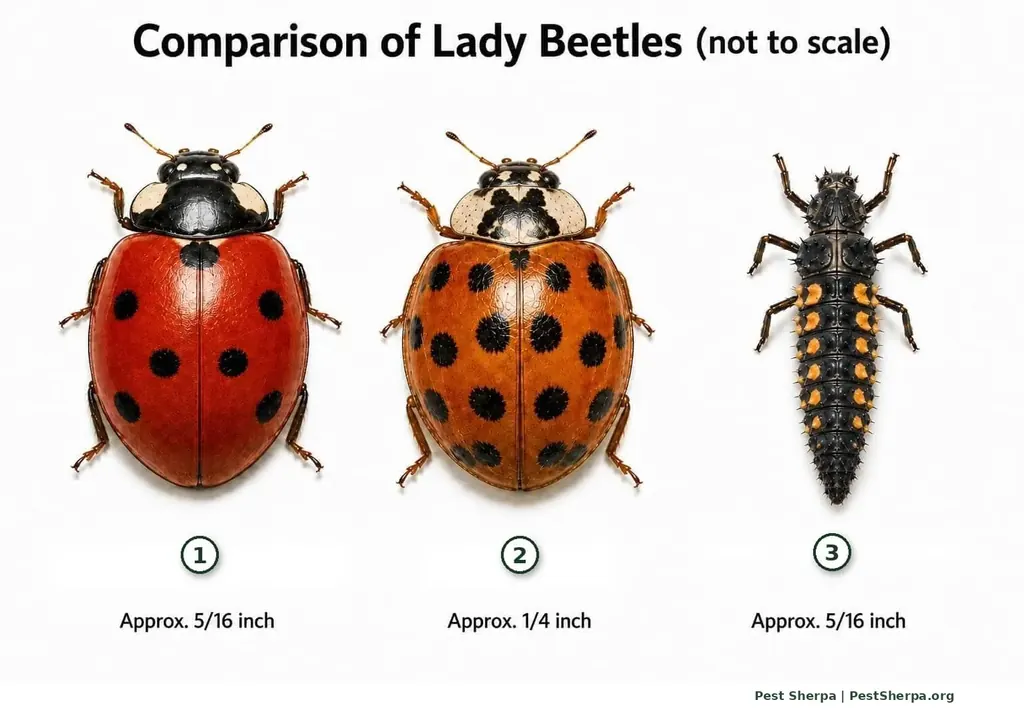
Which one do you see? Match the number:
- Seven-spotted lady beetle: red with seven black spots and a black and white shield behind the head. About 5/16 inch.
- Asian lady beetle (multicolored Asian lady beetle): orange with many black spots and a mostly pale shield behind the head with a dark M or W shaped mark. About 1/4 inch. This is the one that gathers in homes in fall.
- Asian lady beetle larva: long, spiny and black with orange patches. It eats aphids and is not a home pest.
Lady beetle adult and larva comparison for identification.
TL;DR
- Ladybugs are beetles, not true bugs in the entomological organization of arthropods. The more accurate name is lady beetles.
- Most lady beetles are beneficial predators that help reduce aphids and other soft-bodied plant pests.
- The multicolored Asian lady beetle can become a fall and winter nuisance when adults enter buildings to overwinter.
- Lady beetles do not damage structures, reproduce indoors in typical home situations, or feed on people.
- Indoor problems are best handled with exclusion, vacuuming, and source/entry-point investigation, not routine indoor spraying.
Quick Navigation
- What Are Ladybugs?
- Quick Identification
- Life Cycle and Feeding Habits
- Why Lady Beetles Are Beneficial
- When Lady Beetles Become a Problem
- Why They Enter Homes
- Do Lady Beetles Bite or Spread Disease?
- Should You Buy Ladybugs for Release?
- How to Encourage Native Lady Beetles
- Managing Lady Beetles Indoors
- What Does Not Work Well
- How Long Indoor Activity Lasts
- When Professional Help May Be Worth Considering
- Lookalikes and Common Misidentifications
- Frequently Asked Questions
- References
What Are Ladybugs?
Ladybugs are small beetles in the family Coccinellidae. Entomologists often use the names lady beetles or ladybird beetles because these insects are beetles, not true bugs. Like other beetles, adults have hardened front wings called elytra that protect the folded hind wings underneath.
Most familiar lady beetles are oval, dome-shaped, and red, orange, yellow, or black. Many have spots, but spot number is not always reliable for identification. Some species have no spots, and the multicolored Asian lady beetle can vary from yellow-orange to red with many spots, few spots, or no obvious spots.
Globally, thousands of lady beetle species have been described. In North America, homeowners may encounter both native species and introduced species. Most are beneficial outdoors, but a few are more noticeable because they gather around buildings or appear indoors during cooler seasons.
Quick Identification: What Lady Beetles Look Like
| Feature | Typical Lady Beetle Clue | Important Note |
|---|---|---|
| Body shape | Small, oval, rounded, dome-like beetle | Shape is often more useful than color alone. |
| Color | Red, orange, yellow, black, or combinations | Some species are spotless or highly variable. |
| Wings | Hard wing covers meet in a straight line down the back | This is a beetle clue. |
| Larvae | Elongated, active, somewhat alligator-shaped | Larvae often look nothing like adult lady beetles. |
| Behavior outdoors | Often found near aphids or other soft-bodied plant pests | Adults and larvae may both be predators. |
| Behavior indoors | Adults may gather at windows, lights, ceilings, or sunny walls | Usually tied to overwintering, not indoor feeding. |
Expert Insight: Do not rely only on the number of spots. Color and spot patterns can vary, especially in multicolored Asian lady beetles. Body shape, season, location, and behavior usually tell a clearer story.
Life Cycle and Feeding Habits
Lady beetles develop through complete metamorphosis: egg, larva, pupa, and adult. Females often place clusters of yellow or orange eggs on plants near prey. After hatching, larvae actively search for food before pupating and emerging as adults.
Many lady beetles feed on soft-bodied plant pests, including:
- Aphids
- Scale insects
- Mealybugs
- Whiteflies
- Spider mites and other small mites
- Small insect eggs
Some lady beetles are more specialized than others, and not every species behaves the same way. For homeowners, the main point is simple: lady beetles outdoors are usually helpful when they are feeding on aphids and similar pests. Lady beetles indoors are usually a nuisance issue related to shelter-seeking behavior.
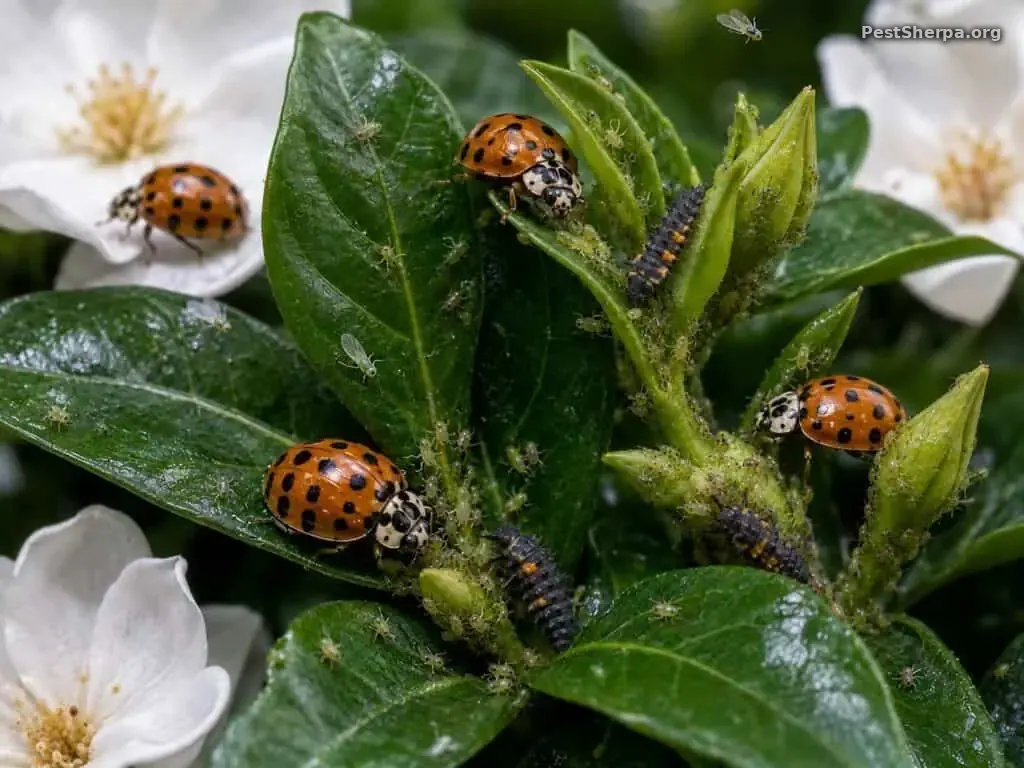
Lady beetle larva feeding on aphids on a garden plant.
Why Lady Beetles Are Beneficial
Lady beetles are among the most recognizable beneficial insects because both adults and larvae may feed on plant pests. They are part of the natural enemy community that helps keep pest populations from increasing unchecked.
Aphid and Soft-Bodied Pest Suppression
Aphids weaken plants by removing sap and may contribute to sticky honeydew, sooty mold, plant stress, and virus transmission in some plant systems. Lady beetles help by feeding directly on aphids and other small, soft-bodied insects.
Support for Lower-Impact Pest Management
Protecting natural enemies can reduce the need for repeated broad-spectrum pesticide use. That does not mean lady beetles solve every garden pest problem, but they are an important reason to identify insects before spraying.
A Healthier Garden Food Web
Lady beetles work alongside lacewings, syrphid fly larvae, parasitic wasps, spiders, and other predators. A diverse garden with flowering plants, shelter, and limited broad-spectrum insecticide use is more likely to support these helpful organisms.
When Lady Beetles Become a Problem
The species most associated with indoor nuisance problems is the multicolored Asian lady beetle (Harmonia axyridis). It was introduced and used in biological control programs because it feeds on aphids and scale insects, but it also became well known for entering buildings in fall to stay in a warm and safe place for winter (overwinter).
These beetles do not enter homes to eat fabric, wood, stored food, or houseplants. They are usually looking for protected overwintering sites. Once inside, they may remain hidden until warmth or light causes them to become active.
Common indoor complaints include:
- Large numbers of beetles on walls, ceilings, windows, or light fixtures
- Yellowish stains from defensive secretions when beetles are crushed or disturbed
- A noticeable odor when many beetles are present or crushed
- Occasional mild pinching or biting behavior
- Repeated seasonal activity on warm, sunny sides of the structure
Large numbers can be frustrating, but they are not a sign that the house is being eaten or structurally damaged.
Why Lady Beetles Enter Homes
In fall, overwintering adults may gather on exposed, sun-warmed exterior surfaces. Light-colored buildings, south- and west-facing walls, upper stories, attics, soffits, fascia gaps, window frames, door frames, and utility penetrations can all become entry points.
| What You See | What It Usually Means | Best First Step |
|---|---|---|
| One or two beetles indoors | Occasional entry | Vacuum or remove and inspect nearby gaps. |
| Many beetles on sunny exterior walls | Seasonal aggregation before overwintering | Check siding, soffits, windows, doors, and attic vents. |
| Beetles at windows in winter | Hidden beetles becoming active and moving toward light | Vacuum visible beetles and improve exclusion before next fall. |
| Recurring fall invasion each year | Established entry pattern | Prioritize exterior sealing and seasonal prevention. |
| Small beetles in pantry, carpet, or fabrics | May be a different beetle | Compare with pantry and carpet beetle lookalikes. |
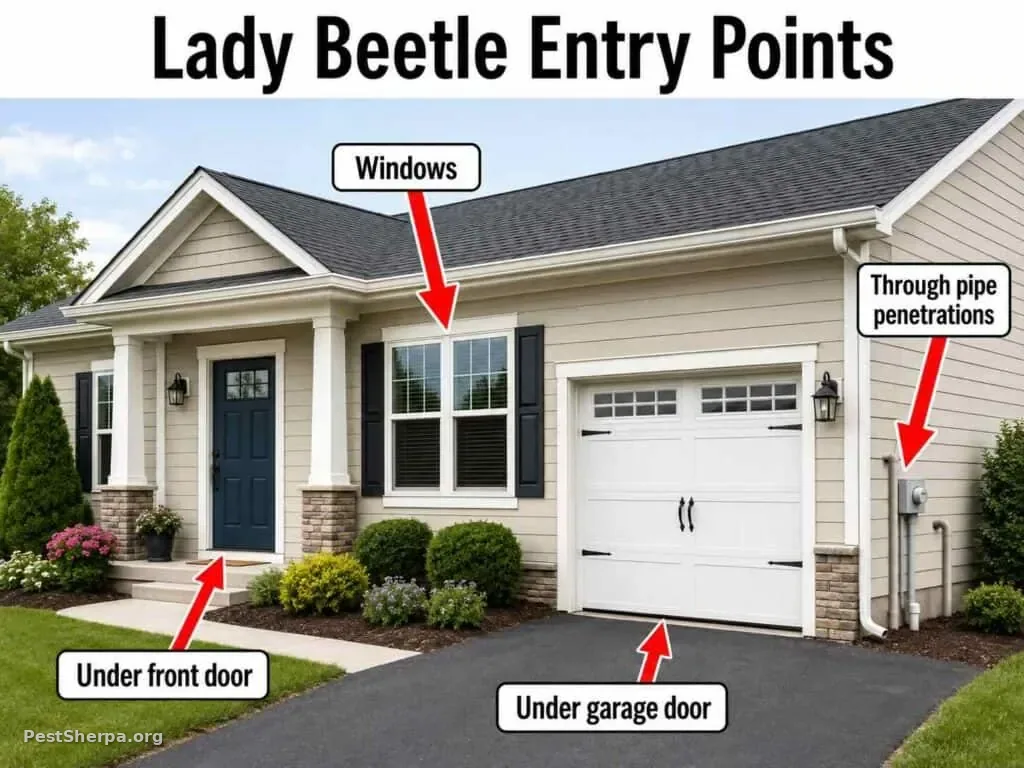
Common lady beetle entry points around a home exterior.
Do Lady Beetles Bite or Spread Disease?
Lady beetles are not blood-feeding insects. They do not feed on people, and they are not known as important human disease vectors in homes.
Multicolored Asian lady beetles may occasionally pinch or bite exposed skin, but this is not the same as feeding behavior from mosquitoes, fleas, lice, or ticks. Some people may also notice irritation or allergic-type reactions around large indoor aggregations. When sensitivities are a concern, avoid crushing beetles, use a vacuum with a disposable bag or container, and reduce indoor exposure by improving exclusion.
Should You Buy Ladybugs for Release?
Buying lady beetles for garden release sounds simple, but results are often disappointing in home landscapes. Many commercially sold lady beetles disperse quickly after release, especially if prey, moisture, shade, and habitat conditions are not ideal.
There are also ecological and practical concerns. Some commercially sold beetles are collected from wild overwintering aggregations rather than produced in controlled rearing systems. Released beetles may leave the property, fail to reproduce, or provide only short-term suppression unless conditions are carefully managed.
For most homeowners, a better long-term approach is to attract and conserve naturally occurring predators instead of relying on repeated purchased releases.
How to Encourage Native Lady Beetles
Habitat management is usually more reliable than buying beetles and hoping they stay. The goal is to make the landscape useful for lady beetles and other natural enemies throughout the season.
- Grow a variety of flowering plants that provide nectar and pollen for adult beneficial insects.
- Allow some low-level prey populations when plants can tolerate them, because predators need food.
- Avoid unnecessary broad-spectrum insecticide applications.
- Learn to recognize lady beetle larvae so they are not mistaken for pests.
- Reduce ant activity on aphid-infested plants when ants are protecting aphids from predators.
- Keep some undisturbed garden areas, leaf litter, or shelter where appropriate for beneficial insects.
If pesticide use is necessary for a plant problem, identify the pest first, choose the least disruptive option that fits the situation, and read and follow the product label. Keep pesticides away from children, pets, food-contact surfaces, pollinator activity, and water sources unless the label specifically allows that use.
Managing Lady Beetles Indoors
Indoor lady beetle management works best when it focuses on removal and exclusion. Spraying visible beetles indoors may kill some adults, but it usually does not address the hidden entry points that allowed the problem to happen.
1. Remove Visible Beetles Without Crushing Them
Use a vacuum, soft brush, or container to collect beetles. Avoid crushing them on walls, curtains, or furniture because defensive fluids can stain surfaces and create odor.
2. Check Where Activity Is Concentrated
Look around windows, skylights, attic access points, ceiling lights, exterior doors, upper-story rooms, and sunny sides of the building. Beetles gathering at a window are usually trying to move toward light; the window may not be the original entry point.
3. Seal Entry Points Before the Next Fall Season
- Seal cracks around window and door frames.
- Repair damaged screens.
- Replace worn door sweeps and weatherstripping.
- Screen attic vents where appropriate.
- Seal gaps around utility lines, siding transitions, fascia, soffits, and trim.
4. Use Pesticides Carefully, If Used at All
Pesticides are not usually necessary for lady beetles. If a product is used, the label is the law and must be followed exactly. Avoid foggers or broad indoor applications for routine lady beetle problems, and do not apply products into vents, wall voids, food areas, or pet/child-accessible spaces unless the label specifically allows that use. Remember, even if a nuisance indoors, these insects are beneficial.
What Does Not Work Well
- Crushing beetles: This can leave stains and odor.
- Relying only on indoor sprays: This does not seal entry points or stop future seasonal entry.
- Bug bombs or foggers: These are poorly matched to hidden overwintering beetles and can create avoidable exposure risks.
- Killing every lady beetle outdoors: Many are beneficial predators and should be conserved when they are not causing a structural nuisance.
- Assuming every small beetle indoors is a lady beetle: Some small beetles are pantry pests, carpet beetles, or unrelated seasonal invaders.
How Long Will Indoor Lady Beetle Activity Last?
Indoor activity depends on how many beetles entered, where they are sheltering, and how quickly they can exit or be removed. One or two beetles may be a short-term annoyance. Larger overwintering groups may appear in waves during warm spells or when indoor heat causes hidden beetles to become active.
| Situation | Likely Pattern | What Helps Most |
|---|---|---|
| Single beetle indoors | Usually short-lived | Remove it and inspect nearby openings. |
| Repeated beetles at windows | Hidden adults moving toward light | Vacuum adults and plan exterior sealing. |
| Large fall exterior aggregation | Seasonal overwintering pressure | Seal entry points before peak fall movement. |
| Yearly recurring problem | Same entry routes may be used repeatedly | Detailed exterior inspection and exclusion. |
When Professional Help May Be Worth Considering
Many small lady beetle problems can be handled with vacuuming and exclusion. Professional help may be worth considering when the problem is large, repeated, difficult to access, or complicated by sensitive occupants or building features.
- Large numbers appear indoors every fall or winter.
- Beetles are entering from high rooflines, soffits, attic vents, or hard-to-reach gaps.
- There are staining, odor, or allergy concerns.
- You are unsure whether the insects are lady beetles, carpet beetles, pantry beetles, or another pest.
- A commercial, school, healthcare, or food-handling setting needs a documented prevention plan.
A useful assessment should focus on identification, entry points, seasonal timing, exclusion options, and whether any treatment is actually needed.
Lookalikes and Common Misidentifications
Several insects can be confused with lady beetles or with a seasonal lady beetle problem. Use appearance, location, food source, and season to narrow the possibilities.
| Possible Lookalike | How It Differs | Why It Matters |
|---|---|---|
| Native lady beetles | Often similar in shape but may differ in markings, size, and behavior | Most should be protected outdoors when they are feeding on pests. |
| Multicolored Asian lady beetle | Highly variable color and spot pattern; often has a pale area behind the head with dark markings | Most common lady beetle associated with indoor overwintering nuisance issues. |
| Varied carpet beetle | Much smaller, often mottled, and associated with fabrics, lint, hair, feathers, or stored natural materials | Management focuses on finding larval food sources, not sealing fall entry points only. |
| Boxelder bugs | Longer, flatter, black and red true bugs rather than round beetles | Another seasonal wall-and-window invader, but not a lady beetle. |
| Brown marmorated stink bug | Shield-shaped, brown, and larger than a lady beetle | Also seeks overwintering shelter and can appear at windows. |
| Cluster flies | Flies, not beetles; slow-moving and often found at windows in cooler seasons | Window activity can look similar, but biology and prevention differ. |
Frequently Asked Questions
Are ladybugs good or bad?
Outdoors, lady beetles are usually beneficial because many species eat aphids and other soft-bodied pests. Indoors, they can become a nuisance when adults gather to overwinter.
Why are ladybugs called lady beetles?
“Ladybug” is the common name, but these insects are beetles, not true bugs. “Lady beetle” is the more accurate name.
Does one lady beetle indoors mean I have an infestation?
No. One beetle may have wandered in or emerged from a small hidden overwintering group. Repeated sightings, dozens of beetles, or yearly fall activity suggest entry points should be inspected and sealed.
Do lady beetles damage houses?
Lady beetles do not eat wood, wiring, drywall, or insulation. The main indoor concerns are nuisance numbers, staining, odor, and occasional irritation.
Should I spray lady beetles indoors?
Routine indoor spraying is usually not the best first step. Vacuum visible beetles, avoid crushing them, and focus on sealing entry points before the next fall season. If any pesticide is used, read and follow the label exactly.
Will purchased ladybugs stay in my garden?
Often they do not. Purchased lady beetles may disperse quickly unless conditions are very favorable. Habitat improvement usually gives more reliable long-term support for beneficial insects.
How can I keep lady beetles out of my house?
Seal gaps around windows, doors, siding, soffits, fascia, attic vents, and utility penetrations before fall aggregations begin. Repair screens, improve weatherstripping, and vacuum beetles that appear indoors. See also: Are Asian lady beetles and boxelder bugs dangerous, and how do I keep them out?
References
- USDA Agricultural Research Service: Research on the Coccinellidae, Lady(bird) Beetles
- UC IPM: Lady Beetles
- University of Minnesota Extension: Multicolored Asian Lady Beetles
- Penn State Extension: Multicolored Asian Lady Beetle (Ladybug)
- UC Agriculture and Natural Resources: Releasing Ladybugs in the Garden
- Colorado State University Extension: Lady Beetles
This article was written by Greg Baumann, founder of Pest Sherpa, and reflects more than 40 years of professional pest management experience.
About the Author

Greg Baumann | Pest Control Expert
Greg Baumann is the founder of Pest Sherpa and a Pest Control Expert with more than 40 years of professional pest management experience. His articles combine decades of field experience, technical expertise, and science-based guidance to help homeowners identify pests correctly, understand real-world risks, and make informed pest management decisions.
Mission: Identify the pest. Understand the risk. Stop the problem. Prevent the comeback. Know when it’s time to call a professional.