
American Cockroaches: Identification, Health Risks, and Control
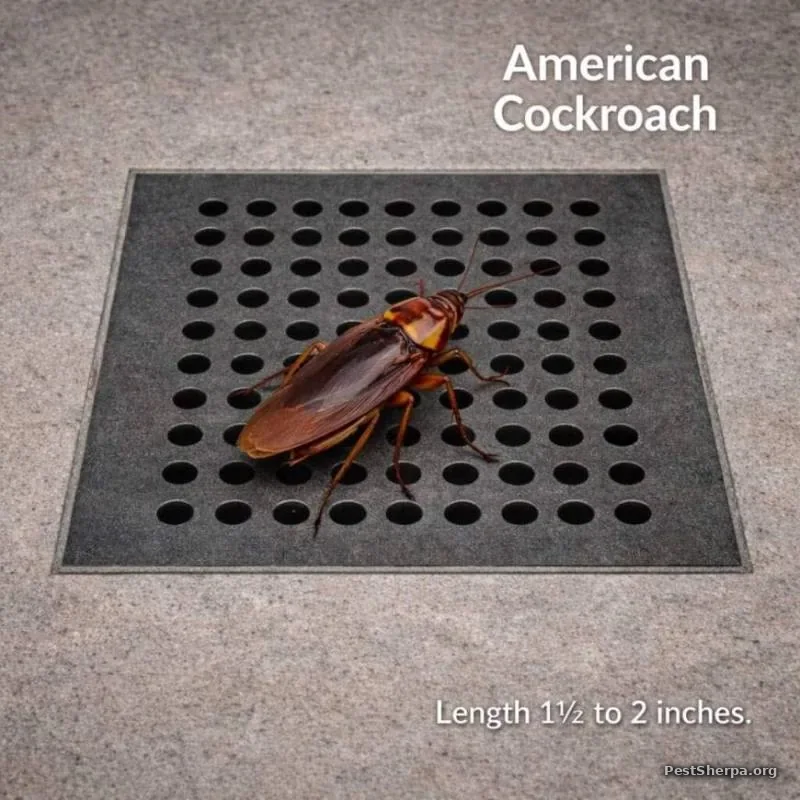
The American cockroach (Periplaneta americana) is one of the largest and most recognizable cockroach species found in North America. Adults commonly reach 1½ to 2 inches in length and are reddish-brown with a distinctive pale yellow marking on the shield-like plate behind the head. Although many people refer to them as “water bugs” or “palmetto bugs,” they are true cockroaches that thrive in warm, humid environments.
Unlike German cockroaches, which typically live and reproduce indoors, American cockroaches are most often associated with sewer systems, crawl spaces, basements, floor drains, utility tunnels, boiler rooms, and other damp structural environments. They frequently invade buildings from these hidden locations, particularly following heavy rainfall or during periods of drought when they search for more favorable conditions.
Because they regularly move between unsanitary environments and occupied buildings, American cockroaches are considered important public health pests. Their presence may indicate excess moisture, plumbing problems, or structural conditions that require correction in addition to insect control.
TL;DR
American cockroaches are large reddish-brown cockroaches commonly associated with sewers, basements, crawl spaces, floor drains, and other damp structural environments. They contaminate food-contact surfaces, contribute to asthma and allergy problems, and often indicate underlying moisture or plumbing issues. Long-term control requires accurate identification, moisture correction, sanitation, exclusion, and a professionally designed Integrated Pest Management (IPM) program.
On This Page
- Identification
- Appearance
- At-a-Glance Facts
- American vs. German Cockroach
- American vs. Oriental vs. Smokybrown Cockroach
- Quick Identification Guide
- Habitat and Distribution
- What Attracts American Cockroaches?
- Life Cycle
- Signs of an Infestation
- Public Health Significance
- Professional Control
- Prevention
- Frequently Asked Questions
- Authoritative References
American Cockroach vs. Oriental vs. Smokybrown Cockroach
American cockroaches are often confused with Oriental and Smokybrown cockroaches because all three species are relatively large and may be found in and around structures. Although they share some habitat preferences, their appearance, biology, and behavior differ enough that proper identification can improve both treatment selection and long-term control.
| Characteristic | American Cockroach | Oriental Cockroach | Smokybrown Cockroach |
|---|---|---|---|
| Scientific Name | Periplaneta americana | Blatta orientalis | Periplaneta fuliginosa |
| Adult Size | 1½ to 2 inches | 1 to 1¼ inches | 1¼ to 1½ inches |
| Color | Reddish-brown | Dark brown to shiny black | Uniform dark mahogany brown |
| Wings | Fully developed | Reduced in females | Fully developed |
| Flight Ability | Can glide and fly short distances | Cannot fly | Strong flyer in warm weather |
| Preferred Habitat | Sewers, basements, crawl spaces | Cool, damp crawl spaces and drains | Trees, mulch, attics, gutters |
| Moisture Requirement | Very High | Very High | High |
| Most Common Entry Point | Drains and utility penetrations | Ground-level openings | Rooflines, soffits, attic vents |
| Likelihood of Outdoor Populations | High | High | Very High |
Expert Interpretation: Greg Baumann
These three large cockroach species often occur in similar environments, but they usually indicate different underlying problems. American cockroaches frequently point to sewer systems or structural moisture, Oriental cockroaches are closely tied to cool, damp ground-level areas, while Smokybrown cockroaches generally originate outdoors in trees, mulch, gutters, and rooflines before wandering inside. Identifying the species helps direct the inspection to the most likely source of the infestation.
Because American, Oriental, and Smokybrown cockroaches often invade from outside the occupied living space, successful management focuses on locating the source population, reducing moisture, sealing structural entry points, and implementing a comprehensive Integrated Pest Management (IPM) program. Simply treating the insects seen indoors rarely eliminates the underlying infestation.
American Cockroach Identification
The American cockroach belongs to the order Blattodea and family Blattidae. It develops through gradual metamorphosis, meaning it has three life stages: egg, nymph, and adult.
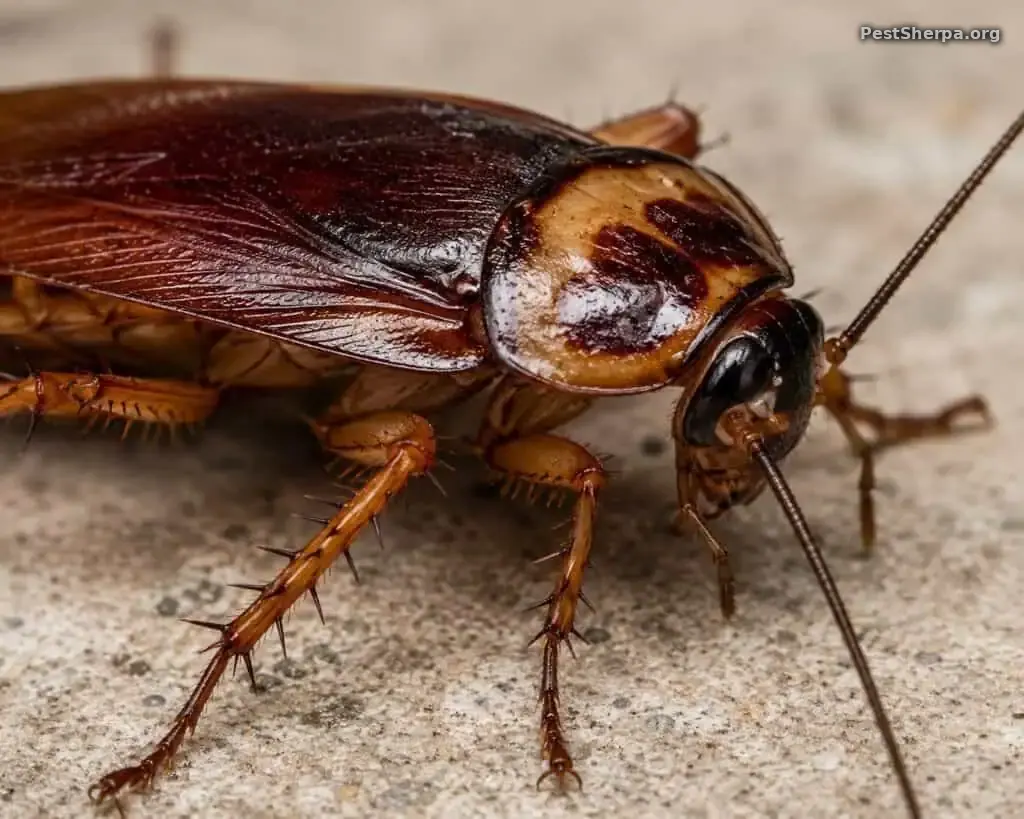
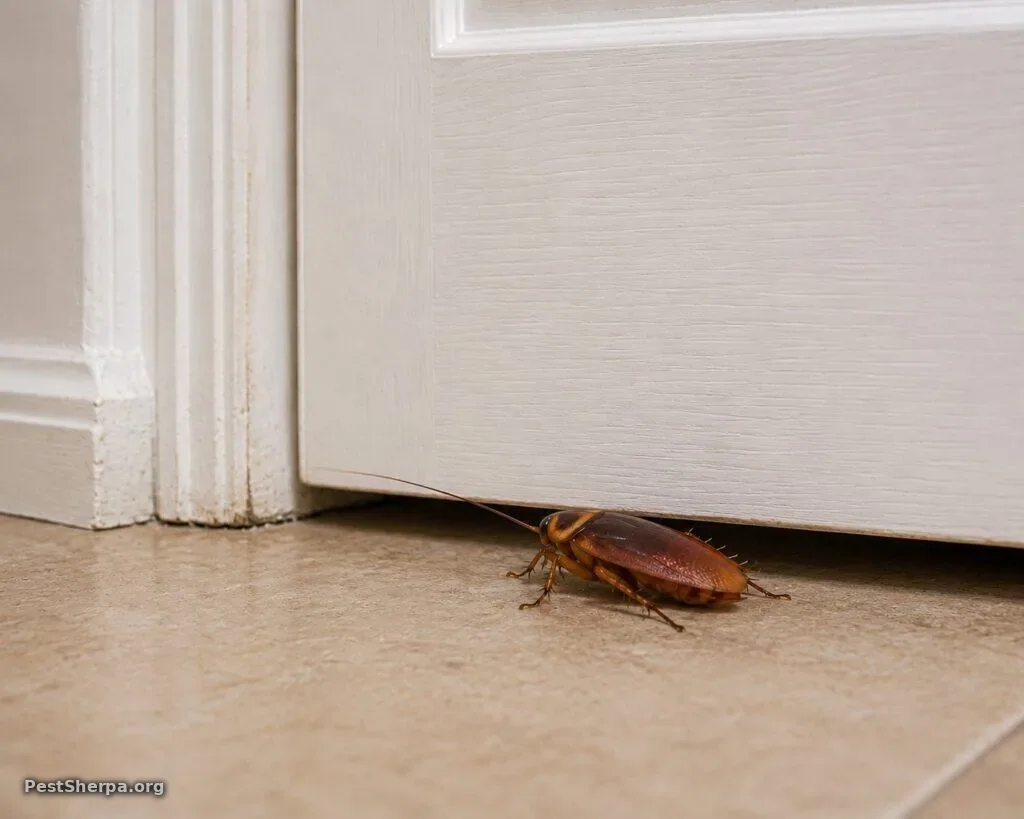
Adults typically measure 1½ to 2 inches long, making them one of the largest cockroaches commonly found in and around buildings. They are reddish-brown with a distinctive pale yellow margin on the pronotum, the shield-like plate directly behind the head.
Both males and females have fully developed wings. American cockroaches can fly or glide short distances, especially in warm conditions, but they more often run rapidly into cracks, drains, voids, or other protected areas when disturbed.
What Does an American Cockroach Look Like?
- Size: Usually 1½ to 2 inches long
- Color: Reddish-brown to mahogany brown
- Pronotum: Pale yellow border behind the head
- Wings: Fully developed in both sexes
- Flight: Capable of gliding or short flights
- Antennae: Very long, thin, and threadlike
- Body shape: Flattened oval body adapted for hiding in cracks and voids
American Cockroach At-a-Glance
| Common Name | American cockroach |
|---|---|
| Scientific Name | Periplaneta americana |
| Adult Size | 1½ to 2 inches |
| Color | Reddish-brown with pale yellow pronotum markings |
| Primary Habitat | Sewers, basements, crawl spaces, floor drains, utility rooms, boiler rooms |
| Activity Pattern | Mostly nocturnal |
| Flight Ability | Can glide or fly short distances |
| Moisture Requirement | High |
| Health Risk | Moderate to high |
| Structural Damage Risk | Low |
| DIY Difficulty | Moderate to high for established infestations |
| Professional Treatment | Recommended when sightings are repeated or sewer/drain sources are suspected |
Expert Interpretation: Greg Baumann
One of the most common mistakes homeowners make is assuming all cockroaches require the same treatment. American cockroaches behave very differently from German cockroaches because they are closely associated with moisture, sewers, crawl spaces, and structural voids. Identifying the species correctly is the first step toward selecting an effective long-term control strategy.
American Cockroach vs. German Cockroach
American and German cockroaches are the two structural cockroach species homeowners most commonly confuse. While both contaminate food and are considered important public health pests, they differ dramatically in size, biology, preferred habitat, and treatment strategy. Correct identification is essential because the most effective control program depends on knowing which species is present.
| Characteristic | American Cockroach | German Cockroach |
|---|---|---|
| Scientific Name | Periplaneta americana | Blattella germanica |
| Adult Size | 1½ to 2 inches | ½ to ⅝ inch |
| Color | Reddish-brown | Tan with two dark stripes |
| Primary Habitat | Sewers, basements, crawl spaces, utility rooms | Kitchens, bathrooms, appliances |
| Flight | Can glide and fly short distances | Rarely flies |
| Primary Entry | Outdoor migration and sewer systems | Boxes, groceries, furniture, deliveries |
| Reproduction | Slower | Very rapid |
| Professional Focus | Moisture correction, exclusion and source reduction | Indoor baiting and sanitation |
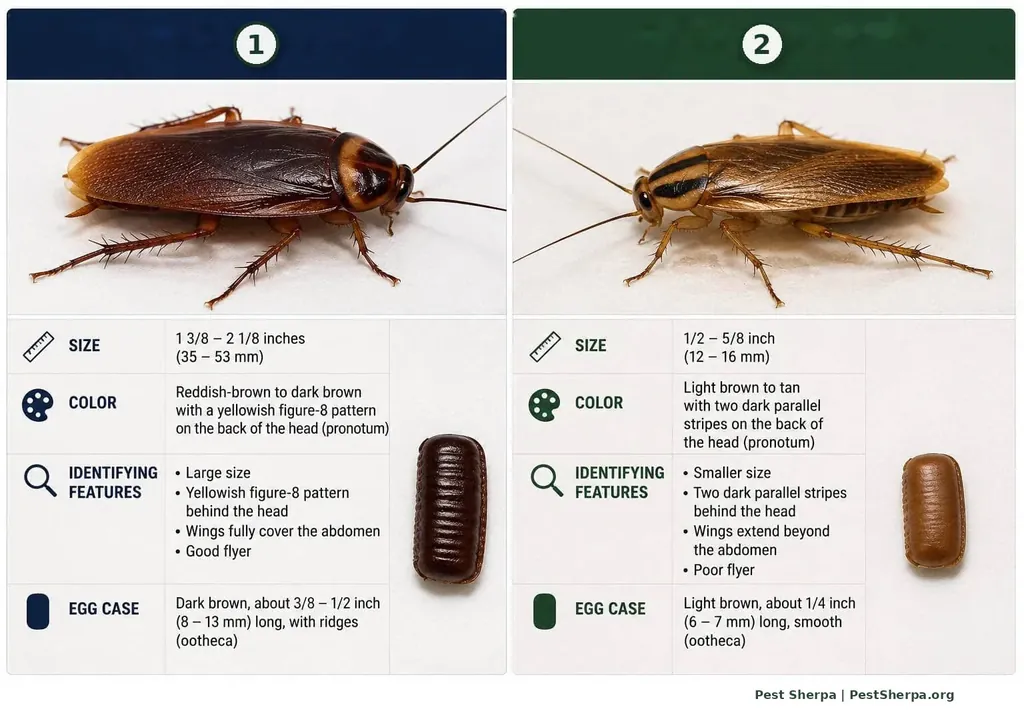
Which one did you find? Match the number:
- American cockroach: large, 1½ to 2 inches, reddish-brown with a yellowish figure-8 pattern behind the head. Ridged dark egg case.
- German cockroach: small, 1/2 to 5/8 inch, tan with two dark parallel stripes behind the head. Smooth light brown egg case.
Expert Interpretation: Greg Baumann
German cockroaches almost always indicate an indoor infestation. American cockroaches frequently indicate a moisture problem or an exterior source such as a sewer, crawl space, utility tunnel, or floor drain. That distinction completely changes how a professional approaches the inspection.
American vs. Oriental vs. Smokybrown Cockroach
American cockroaches are often confused with Oriental and Smokybrown cockroaches because all three are relatively large species that may occur around buildings. Although they share similar environments, each species has unique characteristics that can help identify the source of an infestation.
| Characteristic | American | Oriental | Smokybrown |
|---|---|---|---|
| Adult Size | 1½ to 2 in. | 1 to 1¼ in. | 1¼ to 1½ in. |
| Color | Reddish-brown | Dark brown to black | Uniform mahogany brown |
| Flight | Yes | No | Excellent flyer |
| Moisture Need | Very High | Very High | High |
| Typical Habitat | Sewers and basements | Cool damp crawl spaces | Trees, mulch, gutters, attics |
| Most Common Entry | Drains and utility penetrations | Ground-level openings | Rooflines and soffits |
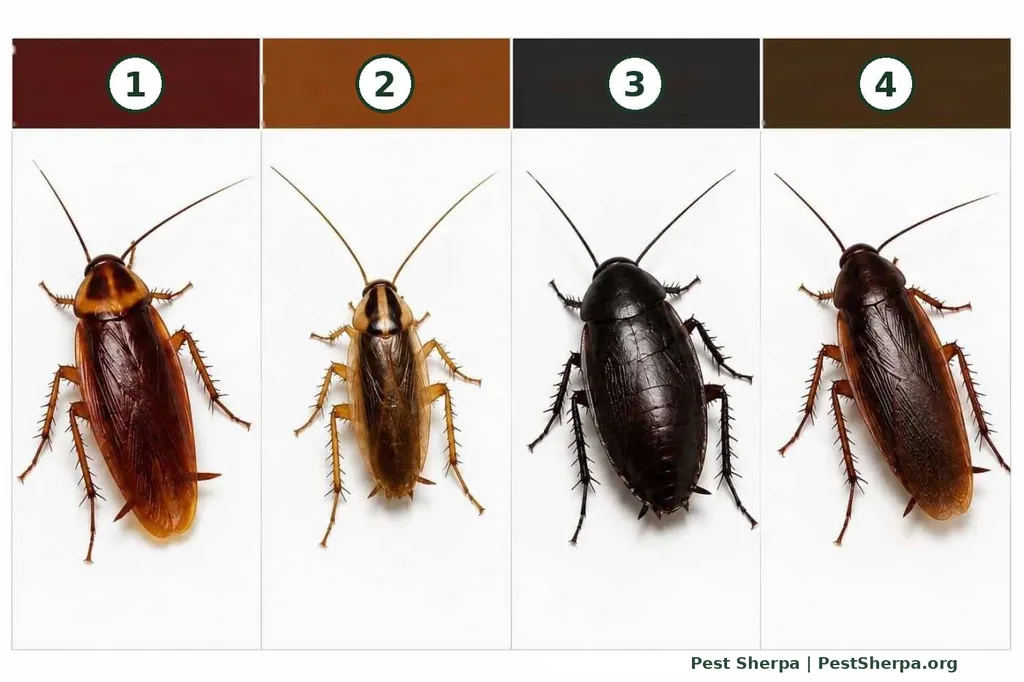
Which one did you find? Match the number:
- American cockroach: the largest, reddish-brown with a pale yellowish band around the shield behind the head.
- German cockroach: small and tan with two dark parallel stripes behind the head.
- Oriental cockroach: shiny black to dark brown with a wide, oval body and short wings.
- Smokybrown cockroach: large and a uniform dark mahogany brown with no pale markings.
Quick Identification Guide
If you are unsure which cockroach you have found, use this quick decision guide. Appearance is important, but where the cockroach was found often provides equally valuable clues.
- Is it 1 inch long or longer?
- Yes → Continue below.
- No → More likely a German or Brown-banded cockroach.
- Is it reddish-brown with a pale yellow marking behind the head?
- Yes → American cockroach.
- Is it shiny black and unable to fly?
- Yes → Oriental cockroach.
- Is it uniformly dark mahogany brown and readily flies on warm evenings?
- Yes → Smokybrown cockroach.
- About one-half inch long with two dark stripes behind the head?
- German cockroach.
Expert Tip: Greg Baumann
Professional identification relies on more than size and color. Where the cockroach is found often tells the story. American cockroaches usually point to moisture, sewer systems, crawl spaces, or utility rooms. Smokybrown cockroaches usually originate outdoors in trees and rooflines. German cockroaches almost always indicate an established indoor infestation near food and water.
Habitat and Distribution
The American cockroach occurs throughout the United States but is most abundant in the South and other warm, humid regions where temperatures remain favorable throughout much of the year. Unlike German cockroaches, American cockroaches frequently live outside occupied buildings and enter structures only when conditions become favorable or environmental pressures force them indoors.
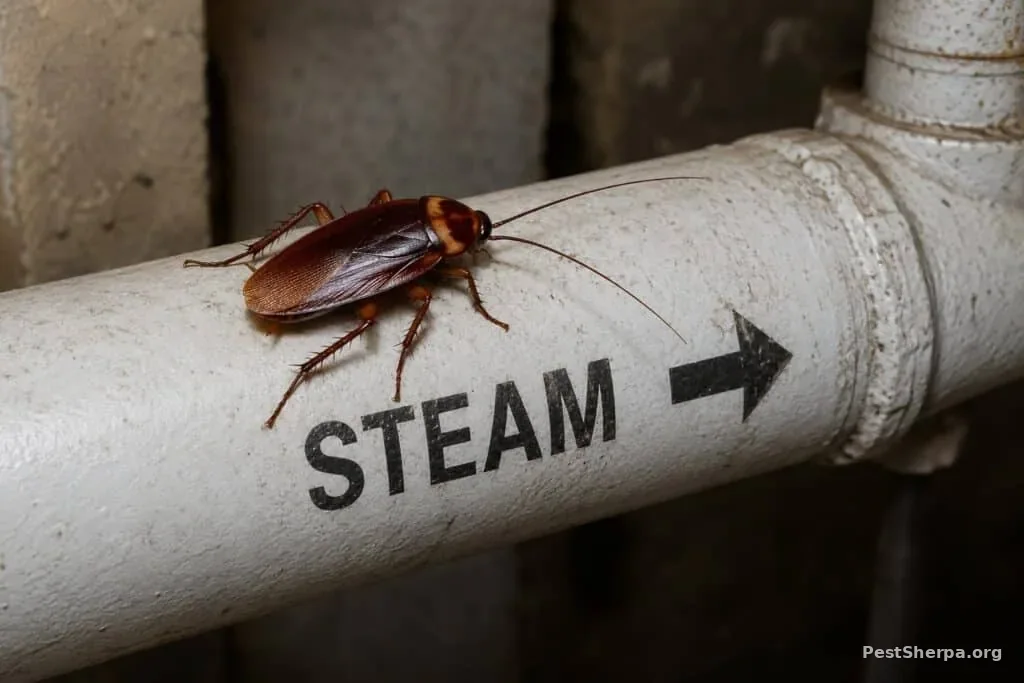
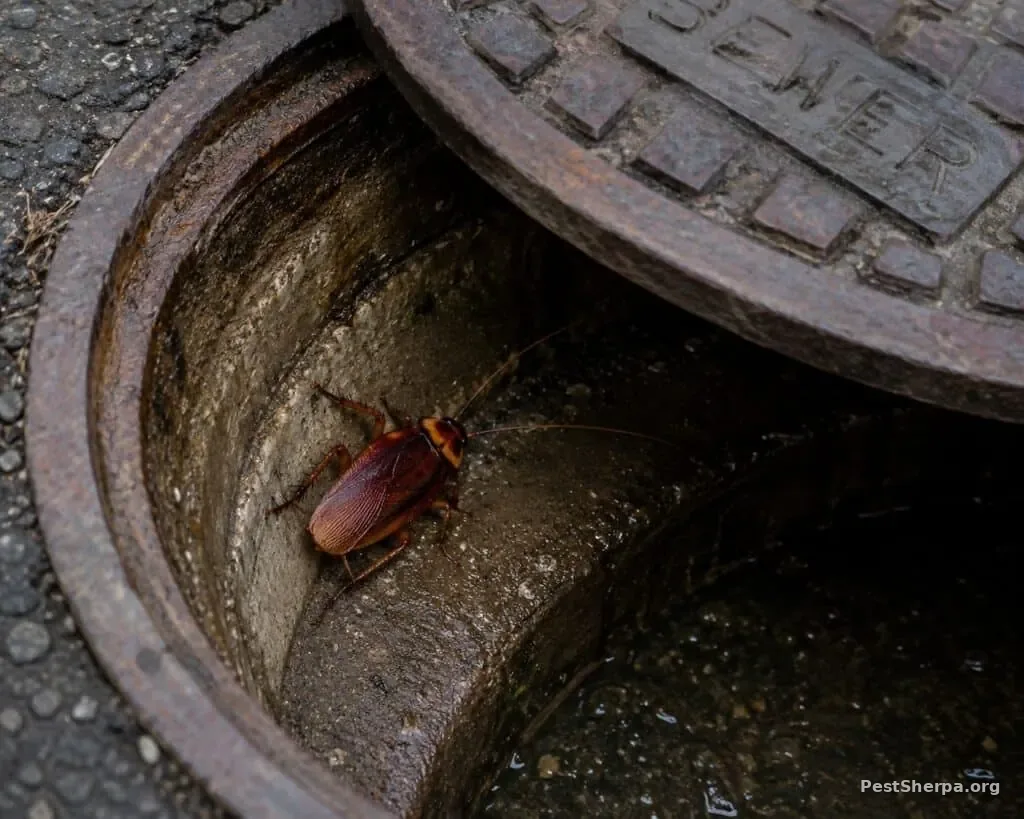
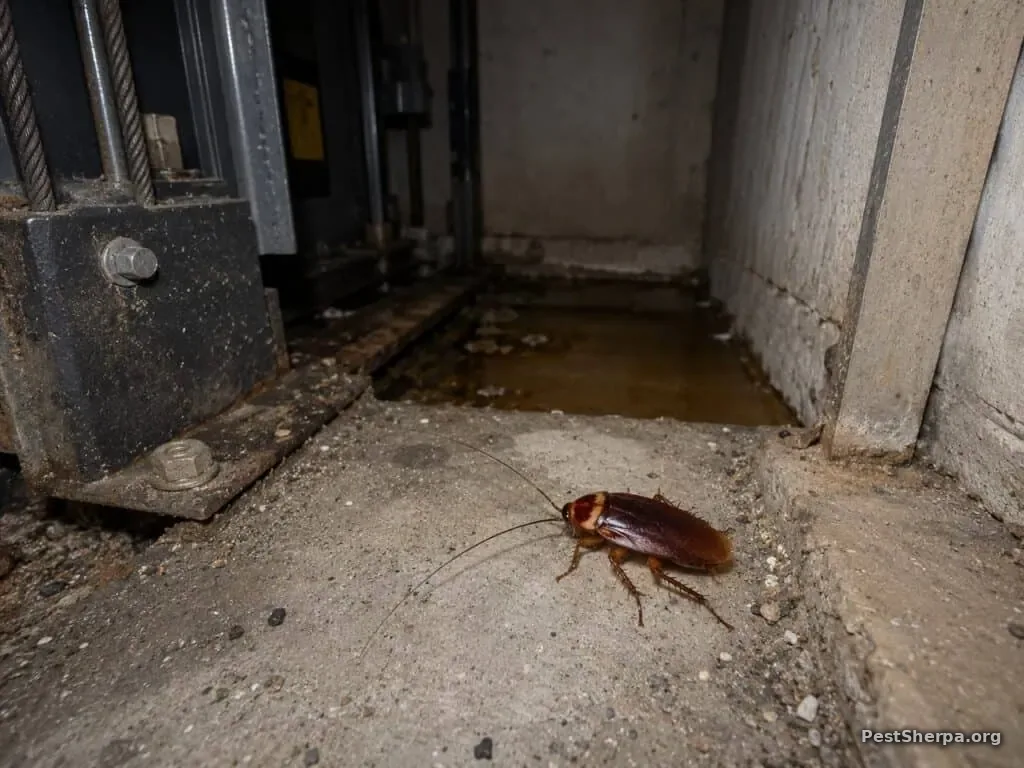
These cockroaches thrive where warmth, moisture, and shelter are consistently available. Municipal sewer systems are one of the largest reservoirs for American cockroach populations, allowing insects to migrate through utility systems into homes, restaurants, hospitals, warehouses, and commercial buildings.
Common Harborages
- Municipal sewer systems
- Storm drains
- Floor drains
- Basements
- Crawl spaces
- Boiler rooms
- Steam tunnels
- Mechanical rooms
- Utility vaults
- Elevator pits
- Sump pits
- Garbage collection areas
Expert Interpretation: Greg Baumann
Finding American cockroaches in an upstairs bedroom is uncommon. Finding them in a basement utility room, crawl space, boiler room, or near floor drains is much more typical and usually provides an important clue about where the infestation originated.
What Attracts American Cockroaches?
American cockroaches are primarily attracted by three things:
- Moisture
- Warm temperatures
- Food sources
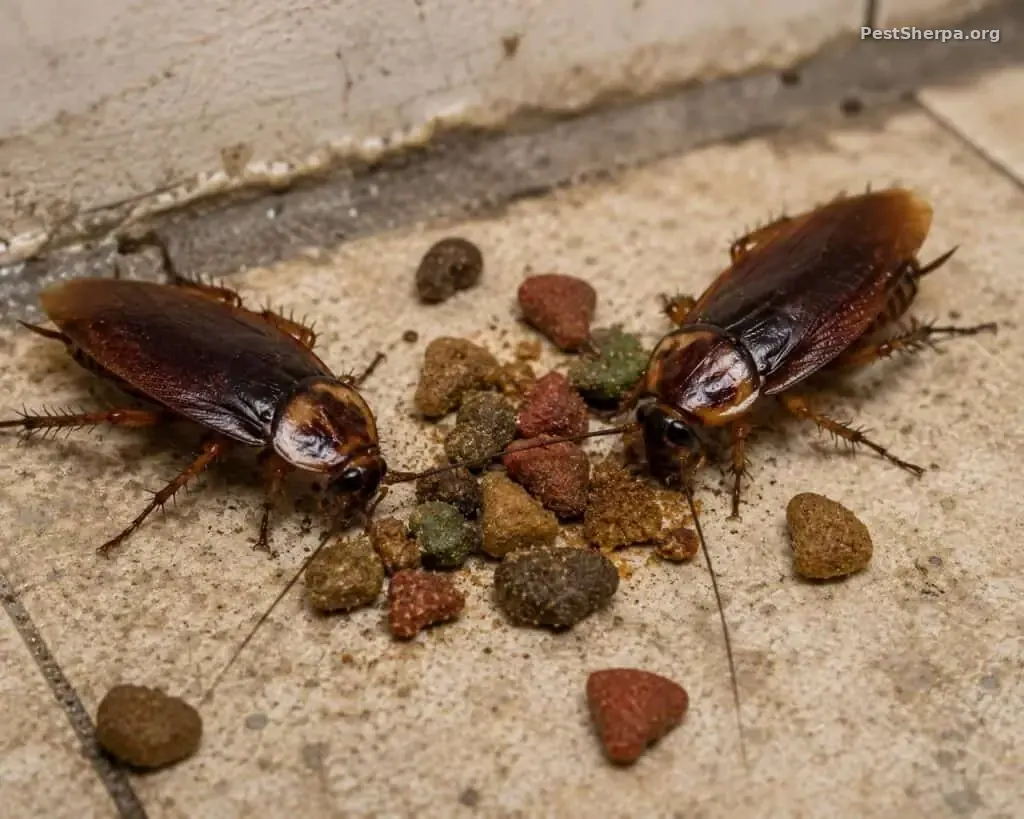
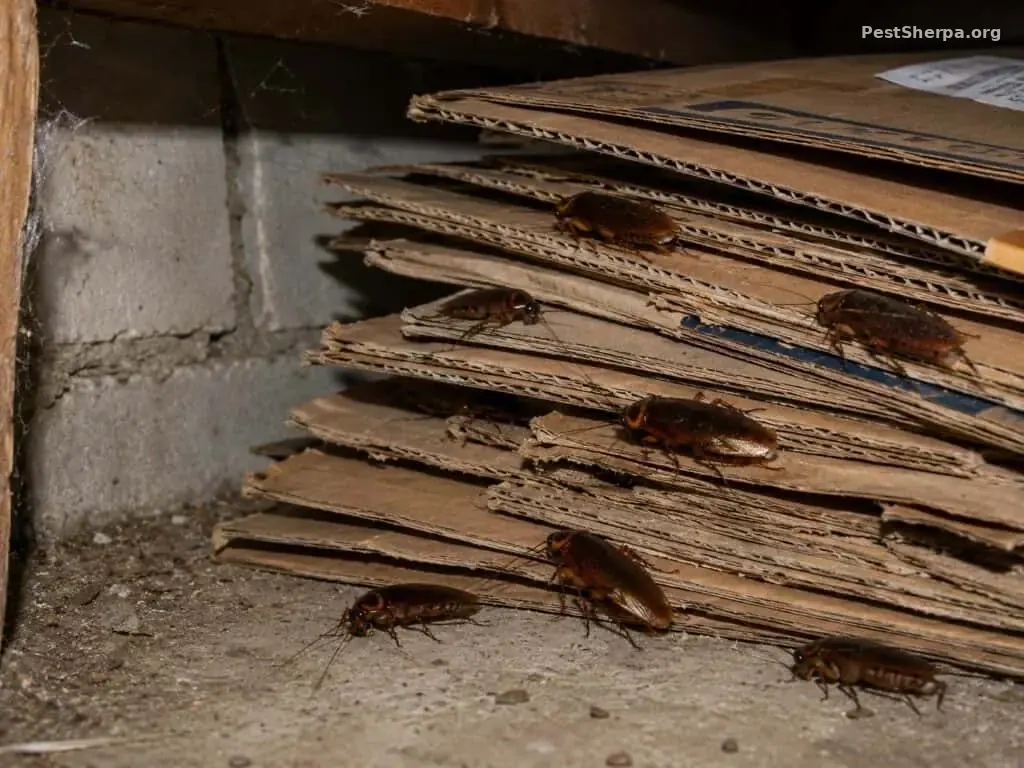
Common attractants include leaking plumbing, condensation around pipes, standing water, clogged floor drains, grease accumulations, food debris, pet food, overflowing trash containers, damp cardboard, leaf litter, mulch, and decaying organic matter. Even a slow plumbing leak inside a wall or beneath a sink can create favorable conditions for long-term survival.
Top Conditions That Support Infestations
- Poor drainage
- High humidity
- Standing water
- Broken drain traps
- Leaking sewer connections
- Heavy mulch against foundations
- Accumulated clutter
- Organic debris
Seasonal Activity
American cockroach activity generally increases as temperatures rise during spring and summer. Populations are often most active during warm, humid weather, particularly following periods of heavy rainfall.
Heavy rain can flood sewer systems and storm drains, forcing cockroaches into nearby buildings through plumbing and utility penetrations. Extended drought can produce similar results as cockroaches search for dependable moisture sources indoors.
In heated commercial buildings, hospitals, apartment complexes, and food processing facilities, American cockroaches may remain active throughout the year regardless of outdoor temperatures.
Life Cycle and Development
American cockroaches undergo gradual (incomplete) metamorphosis, developing through three life stages: egg, nymph, and adult. There is no pupal stage.
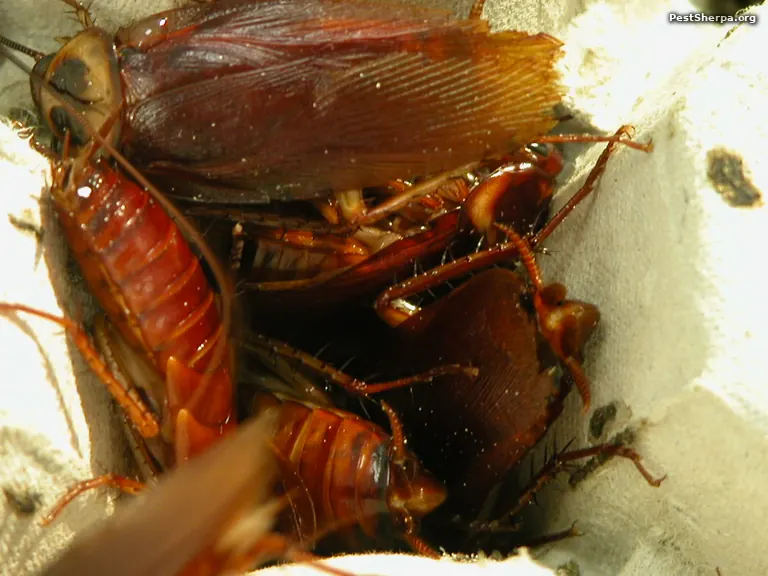
Females produce dark brown egg capsules, known as oothecae, that typically contain 14 to 16 eggs. Egg capsules are deposited in protected locations close to food and moisture. Under favorable conditions, eggs hatch in approximately 6 to 8 weeks.
Nymphs resemble miniature adults but lack wings. They molt numerous times over a period of approximately 6 to 12 months before reaching maturity. Adult cockroaches may survive another 6 to 12 months, allowing infestations to persist for long periods when favorable environmental conditions remain.
Unlike German cockroaches, whose populations often explode rapidly indoors, American cockroach infestations are frequently maintained by continual migration from outdoor populations, sewer systems, crawl spaces, and utility corridors.
Expert Interpretation: Greg Baumann
Many homeowners assume American cockroaches are breeding inside the living space. In reality, many infestations are continuously replenished from outdoor or sewer populations. Eliminating the visible insects without addressing those sources often results in recurring infestations.
Signs of an American Cockroach Infestation
Because American cockroaches are primarily nocturnal, homeowners often discover evidence of an infestation long before they actually see the insects. Learning to recognize these early warning signs can prevent a small problem from becoming a widespread infestation.
Common Signs
- Live cockroaches after dark
- Dead cockroaches in basements or utility rooms
- Dark brown egg capsules (oothecae)
- Shed skins from developing nymphs
- Dark fecal spotting resembling coarse black pepper or coffee grounds
- Persistent musty or oily odor during heavy infestations
- Repeated activity around floor drains, sump pits, or plumbing penetrations
- Cockroaches emerging from drains following heavy rainfall
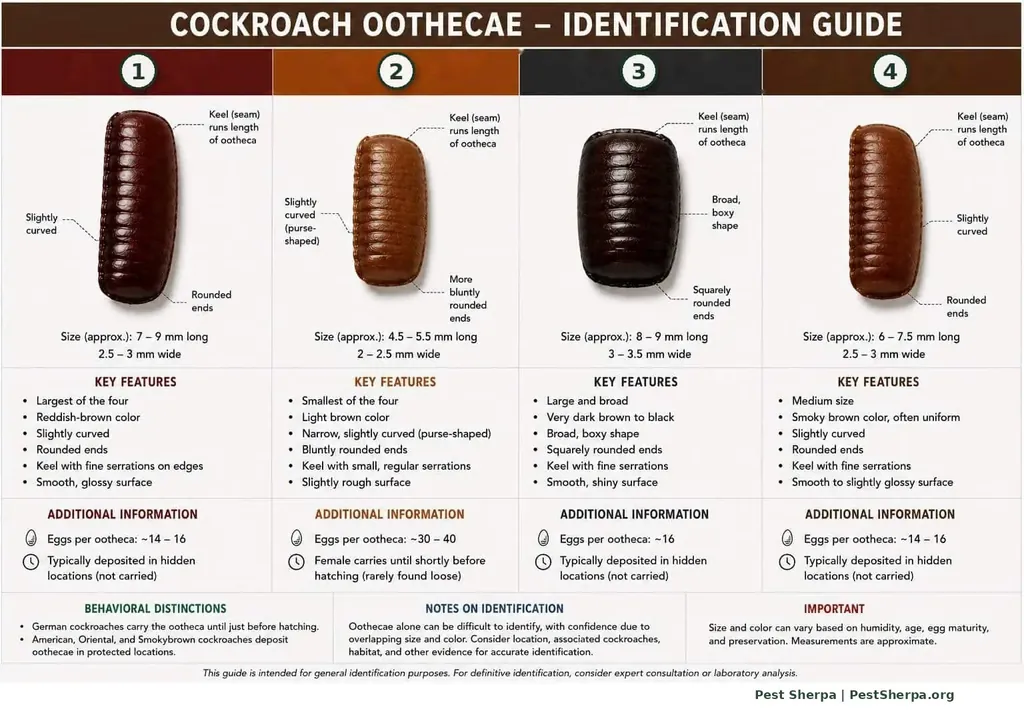
Which one did you find? Match the number:
- American cockroach egg case: largest of the four, dark reddish-brown, slightly curved with rounded ends.
- German cockroach egg case: smallest and light brown. The female carries it until just before hatching.
- Oriental cockroach egg case: very dark, broad and boxy with squared ends.
- Smokybrown cockroach egg case: medium size, uniform smoky brown, slightly curved.
Expert Interpretation: Greg Baumann
Seeing one American cockroach doesn’t always mean you have an established infestation. However, repeated sightings (especially around drains, crawl spaces, basements, or utility rooms) usually indicate an ongoing source that deserves professional investigation.
Public Health Significance
American cockroaches are widely recognized as important public health pests because they regularly move between unsanitary environments and human-occupied structures. As they travel through sewer systems, garbage areas, floor drains, and other contaminated locations, they can mechanically transfer microorganisms to food-contact surfaces.
In addition to contamination concerns, cockroach saliva, feces, shed skins, and decomposing body parts contain potent allergens that have been linked to asthma and allergic reactions, particularly among children and other sensitive individuals.
Commercial food facilities, restaurants, hospitals, schools, apartment buildings, and food-processing plants are especially vulnerable because infestations may result in sanitation violations, product contamination, customer complaints, and damage to business reputation.
Risk Assessment
| Food Contamination Risk | High |
|---|---|
| Asthma & Allergy Risk | High |
| Disease Transmission Potential | Moderate |
| Structural Damage | Low |
| Difficulty for Homeowners | Moderate to High |
| Professional Inspection Recommended | Yes |
Professional American Cockroach Control
Successful American cockroach management follows the principles of Integrated Pest Management (IPM). Rather than relying solely on insecticides, IPM combines inspection, sanitation, exclusion, environmental modification, monitoring, and carefully targeted treatments to provide long-term control.
Step 1: Identify the Source
The first objective is determining where the cockroaches are coming from. Professionals inspect sewer connections, crawl spaces, plumbing penetrations, utility chases, floor drains, boiler rooms, mechanical spaces, and exterior harborage areas before selecting treatment methods.
Step 2: Eliminate Moisture
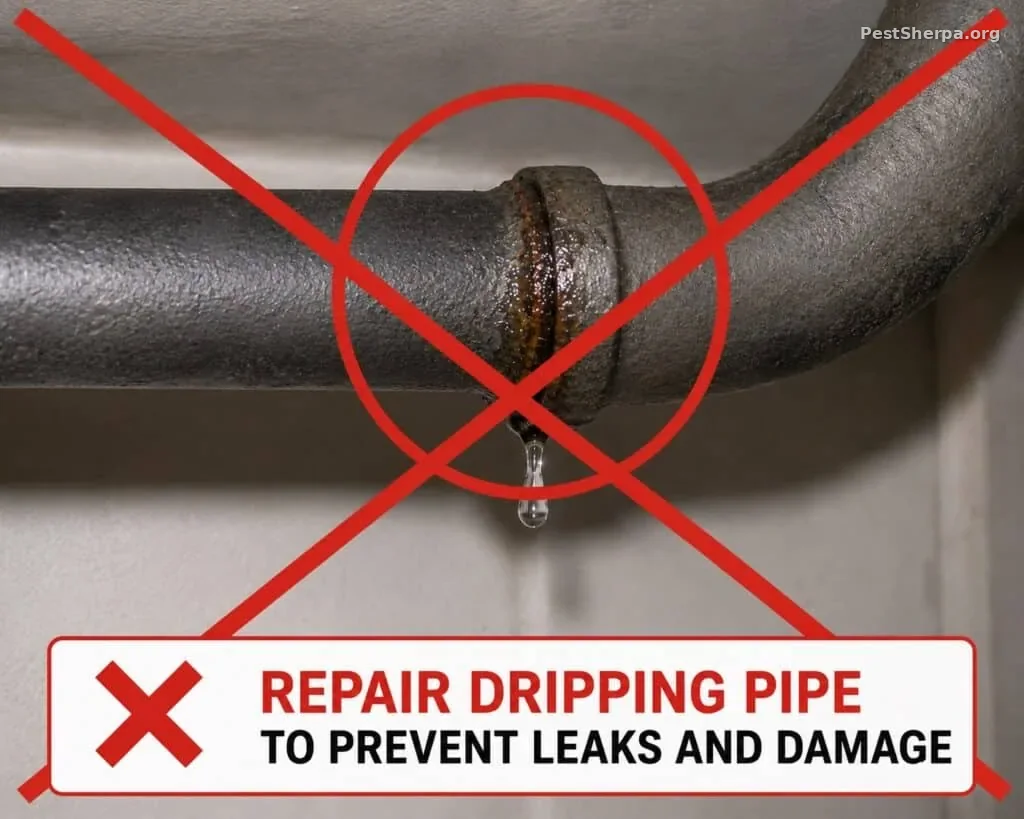
Because American cockroaches depend heavily on moisture, correcting plumbing leaks, reducing humidity, repairing damaged drain traps, improving drainage, and eliminating standing water often produces dramatic improvements before pesticides are even applied.
Step 3: Improve Sanitation
- Remove food debris and grease.
- Store food in sealed containers.
- Reduce clutter and cardboard storage.
- Keep trash containers clean and tightly covered.
- Maintain floor drains and utility areas.
Step 4: Exclude New Invaders
Professionals seal foundation cracks, utility penetrations, pipe chases, damaged door sweeps, and other structural openings that allow cockroaches to move indoors from exterior populations.
Step 5: Targeted Treatment
Once the source has been identified and environmental conditions corrected, targeted treatments may include gel baits, residual insecticides, insect growth regulators (IGRs), dust formulations for wall voids, and monitoring devices. Product selection depends on the location of the infestation, the severity of activity, and the surrounding environment.
Expert Interpretation: Greg Baumann
Products alone rarely solve an American cockroach problem. The most successful programs identify where the insects are coming from, eliminate the moisture that supports them, seal structural entry points, and then apply products only where they will provide the greatest long-term benefit.
Limitations of Do-It-Yourself Control
Many homeowners attempt to control American cockroaches with aerosol sprays purchased from home improvement stores. While these products may kill exposed insects, they rarely eliminate the underlying infestation because most American cockroaches remain hidden inside sewer systems, crawl spaces, floor drains, wall voids, and utility corridors.
Improper pesticide applications may also interfere with bait performance, expose occupants unnecessarily, and provide only temporary relief while the source population continues producing new invaders.
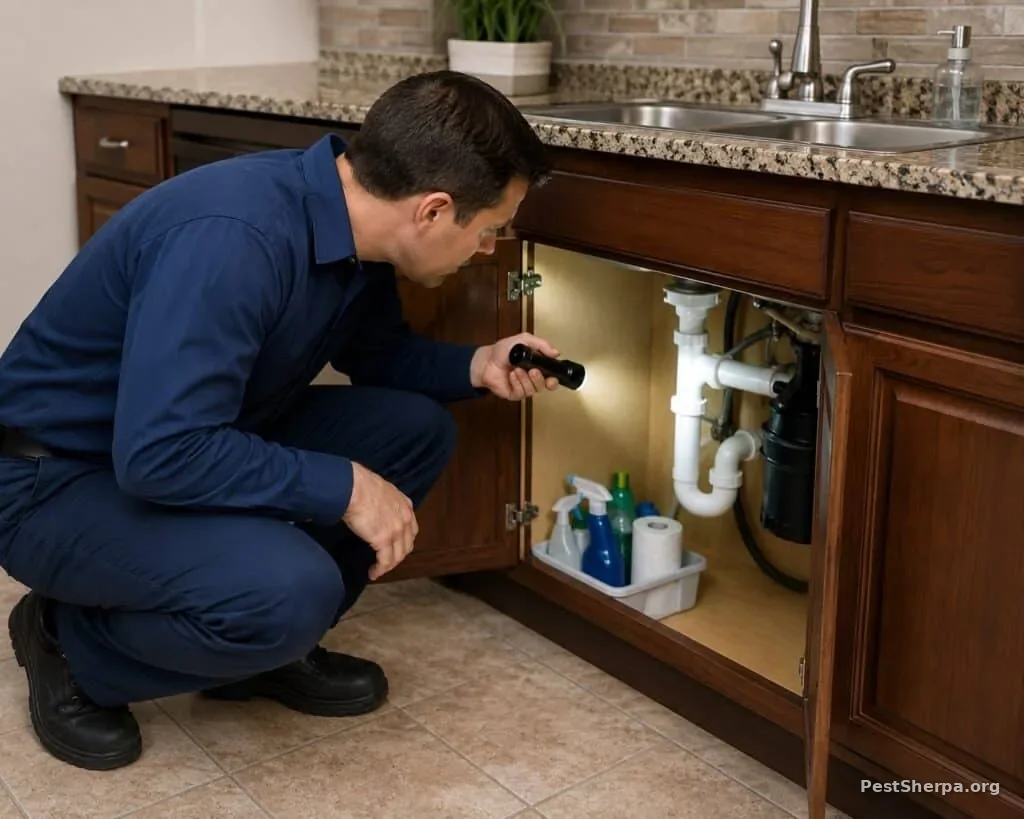
When infestations involve drains, plumbing systems, basements, commercial facilities, or repeated invasions after treatment, professional inspection and Integrated Pest Management (IPM) generally provide far more reliable long-term control.
When Should You Call a Pest Management Professional?
Professional assistance is recommended when:
- You repeatedly find cockroaches over several weeks.
- Cockroaches are emerging from floor drains.
- Activity occurs in multiple rooms.
- You suspect sewer involvement.
- The infestation is in a restaurant, hospital, apartment building, school, warehouse, or food-processing facility.
- DIY treatments have failed.
- A strong musty odor accompanies repeated sightings.
Expert Interpretation: Greg Baumann
Repeated sightings almost always tell me there is a source that hasn’t been discovered. Rather than applying more insecticide, I focus on finding why the cockroaches are there in the first place. Once that question is answered, the treatment plan becomes much more effective.
Preventing American Cockroach Infestations
Long-term prevention depends on making the structure less attractive while eliminating opportunities for cockroaches to enter.
- Repair plumbing leaks promptly.
- Maintain dry crawl spaces and basements.
- Clean floor drains regularly.
- Repair damaged drain traps.
- Improve ventilation in damp areas.
- Seal cracks around utility penetrations.
- Install quality door sweeps.
- Reduce excessive mulch against foundations.
- Store food in sealed containers.
- Remove unnecessary cardboard and clutter.
- Maintain proper exterior drainage.
- Schedule periodic professional inspections.
Lookalikes and Common Misidentifications
American cockroaches are large reddish-brown outdoor-associated roaches. Several other species are routinely confused with them, and the right ID changes where you look and how you treat.
| Possible Lookalike | Key Difference | Useful Next Step |
|---|---|---|
| German cockroach | Much smaller, tan, with two dark stripes behind the head; breeds indoors in kitchens and bathrooms | Inspect warm appliance voids and food areas, not just drains |
| Smokybrown cockroach | Uniform dark mahogany without a pale yellow pronotum margin; strong flier tied to trees, gutters, and attics | Check exterior vegetation, roof voids, and attic moisture |
| Palmetto bug | Regional nickname for large cockroaches; often American, smokybrown, or Florida woods depending on location | Use the palmetto guide Quick ID table before treating |
| Australian cockroach | Similar size and color, but pale yellow margins run along the forewings as well as the pronotum | Compare wing margins under good light |
| Oriental cockroach | Darker, stockier, and less fully winged; strongly tied to cool damp lower levels | Inspect basements, crawlspaces, and exterior moisture |
American Cockroach Frequently Asked Questions
Can American cockroaches fly?
Yes. Adult American cockroaches have wings and are capable of flying or gliding short distances, especially in warm, humid conditions. However, they are more likely to run than fly when disturbed. Because they move quickly and can slip into small cracks, many homeowners see them dart across floors, walls, basements, bathrooms, garages, and utility areas before they disappear into a hiding spot.
Do American cockroaches come from sewers?
Yes, American cockroaches are often associated with sewers, drains, crawl spaces, basements, boiler rooms, and other warm, damp areas. They can enter homes through gaps around plumbing, floor drains, sewer lines, foundation cracks, garage doors, utility penetrations, and exterior openings. Finding one near a bathroom, laundry room, basement, or kitchen drain may indicate that roaches are entering from a moisture-rich area nearby.
Are American cockroaches dangerous?
American cockroaches are not aggressive and do not usually bite people, but they can create health concerns. Because they travel through unsanitary areas such as sewers, drains, garbage areas, and decaying organic matter, they can contaminate food-prep surfaces and stored food. Their droppings, shed skins, and saliva may also trigger allergies or asthma symptoms, especially in sensitive individuals and children.
Why do I see American cockroaches after heavy rain?
Heavy rain can flood or disturb the places where American cockroaches normally hide, including sewers, storm drains, mulch beds, crawl spaces, and other damp outdoor areas. When those areas become saturated, roaches may move indoors looking for drier shelter, food, and warmth. After storms, they are often seen around floor drains, basements, bathrooms, garages, door thresholds, and gaps around plumbing lines.
Can one American cockroach indicate an infestation?
One American cockroach does not always mean there is a full infestation inside the home. A single roach may have wandered in from outside, a sewer line, or a nearby damp area. However, repeated sightings, roaches seen during the day, droppings, egg cases, a musty odor, or roaches appearing in the same area are warning signs that a larger population may be hiding nearby.
What attracts American cockroaches?
American cockroaches are attracted to moisture, warmth, food residue, garbage, grease, pet food, leaky plumbing, dirty drains, clutter, and decaying organic matter. Outdoors, they may live in mulch, leaf litter, sewer systems, wood piles, crawl spaces, and damp landscaping. Indoors, they are commonly drawn to kitchens, bathrooms, basements, laundry rooms, utility closets, and areas where food, water, and shelter are easy to find.
How long do American cockroaches live?
American cockroaches have a relatively long life cycle compared with many other household cockroaches. Development from egg to adult can take many months, and adults may live around a year or longer depending on temperature, humidity, food, and water. Because they can live for a long time and females produce multiple egg cases, a small roach problem can become more difficult to control if it is ignored.
Will bleach kill American cockroaches?
Bleach may kill an American cockroach if it is applied directly to the insect, but it is not a reliable way to eliminate an infestation. Bleach does not reach roaches hiding in wall voids, drains, crawl spaces, sewer lines, cracks, or egg cases. It can also damage surfaces and create safety risks if misused. For long-term control, it is better to remove food and moisture sources, seal entry points, use targeted bait products, and schedule professional treatment when needed.
What is the difference between American and German cockroaches?
American cockroaches are much larger than German cockroaches. Adults are reddish brown, often about 1 1/2 to 2 inches long, and have a yellowish marking behind the head. They are commonly linked to sewers, basements, drains, crawl spaces, and warm, damp areas. German cockroaches are smaller, usually about 1/2 inch long, tan to light brown, and have two dark stripes behind the head. German cockroaches are more likely to infest kitchens and bathrooms and reproduce quickly indoors.
Can homeowners eliminate American cockroaches?
Homeowners can reduce American cockroach activity by fixing leaks, cleaning food debris, storing food in sealed containers, removing garbage regularly, cleaning drains, reducing clutter, sealing cracks, and closing gaps around pipes, doors, and foundations. However, recurring American cockroach sightings often require professional pest control because the source may be in sewers, crawl spaces, wall voids, exterior landscaping, or hard-to-reach moisture areas. A professional inspection can identify where they are coming from and apply the right treatment.
Conclusion
The American cockroach is one of the largest and most recognizable structural cockroach species in North America. Its close association with sewer systems, moisture, and hidden structural voids makes it fundamentally different from German cockroaches and many other household pests.
Successful control begins with accurate identification and a thorough inspection to determine where the insects are originating. Correcting moisture problems, improving sanitation, sealing structural entry points, and implementing a science-based Integrated Pest Management program provide the most effective long-term solution.
For persistent infestations, especially those involving sewer systems, crawl spaces, or commercial facilities, working with a licensed pest management professional offers the greatest likelihood of achieving lasting control.
Authoritative References
The following resources provide science-based information on American cockroach biology, identification, public health importance, and Integrated Pest Management. These references are excellent sources for homeowners, pest management professionals, educators, and students seeking additional technical information.
- University of Florida IFAS Extension: American Cockroach
- University of Kentucky Entomology: Cockroach Management
- Texas A&M AgriLife Extension: Cockroach Resources
- University of California Statewide IPM Program: Cockroach Pest Notes
- Clemson Cooperative Extension: Household Cockroach Information
- National Pest Management Association (PestWorld): Cockroach Information
- U.S. Environmental Protection Agency: Integrated Pest Management (IPM) Principles
This article was written by Greg Baumann, founder of Pest Sherpa, and reflects more than 40 years of professional pest management experience.
About the Author

Greg Baumann | Pest Control Expert
Greg Baumann is the founder of Pest Sherpa and a Pest Control Expert with more than 40 years of professional pest management experience. His articles combine decades of field experience, technical expertise, and science-based guidance to help homeowners identify pests correctly, understand real-world risks, and make informed pest management decisions.
Mission: Identify the pest. Understand the risk. Stop the problem. Prevent the comeback. Know when it’s time to call a professional.