
Oriental Cockroaches: Identification, Risks, Habitat, and Control
Introduction
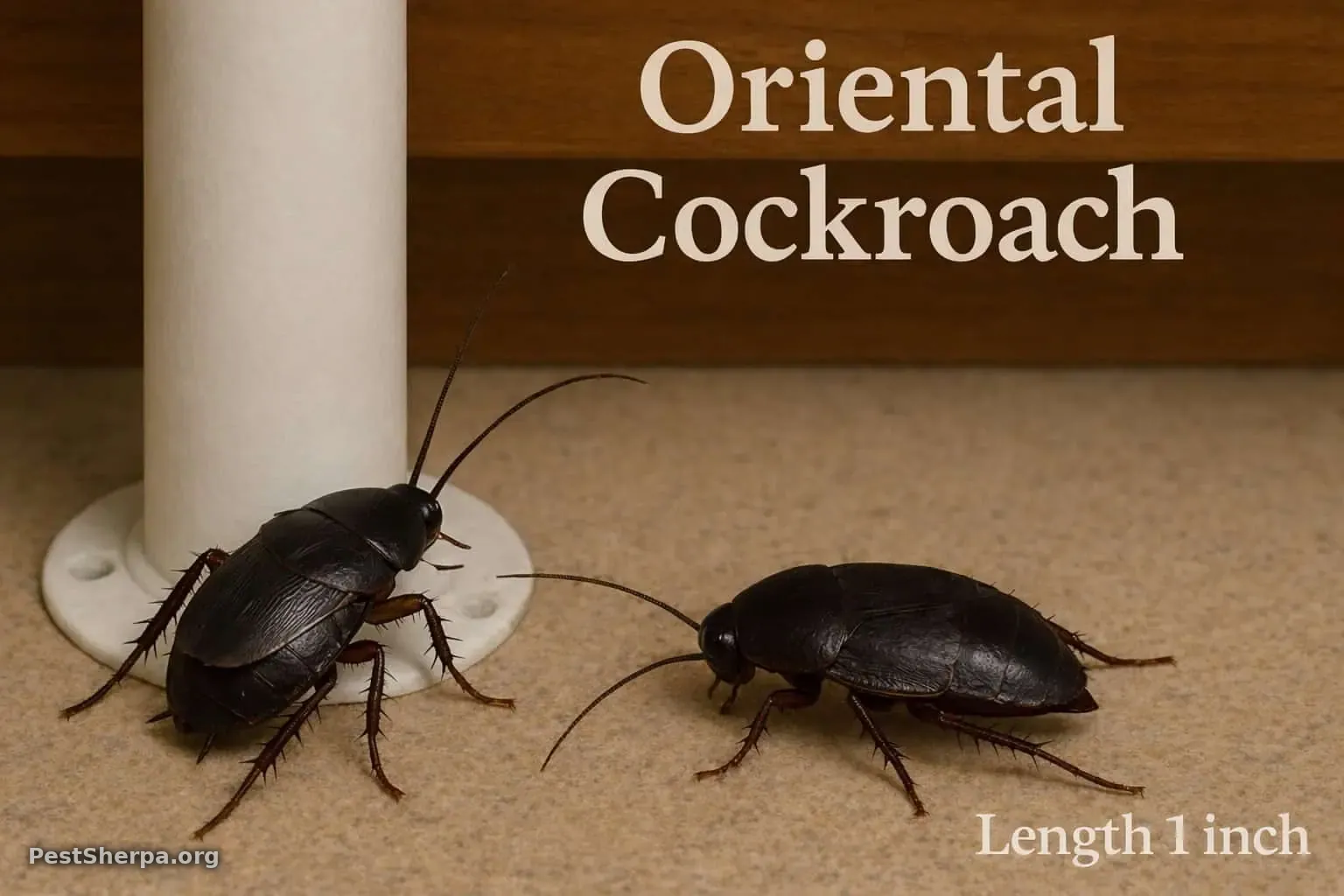
Oriental cockroaches (Blatta orientalis) are dark, moisture-associated cockroaches that are often found in basements, crawl spaces, floor drains, sewer-connected areas, and damp outdoor harborages near foundations. They are sometimes called “waterbugs” or “black beetles” because of their glossy dark color and their strong association with cool, damp places.
Seeing one Oriental cockroach does not always mean there is a large indoor infestation. These cockroaches can move indoors from outdoor sites, especially through gaps, utility openings, drains, and foundation-level entry points. Repeated sightings, adults and nymphs together, egg cases, droppings, or activity in multiple damp areas are stronger signs that conditions are supporting a population.
This guide explains how to identify Oriental cockroaches, what their presence usually means, where to inspect, what does and does not work, and when professional help may be worth considering. For broader comparison across roach species, see the cockroach identification and risk guide.
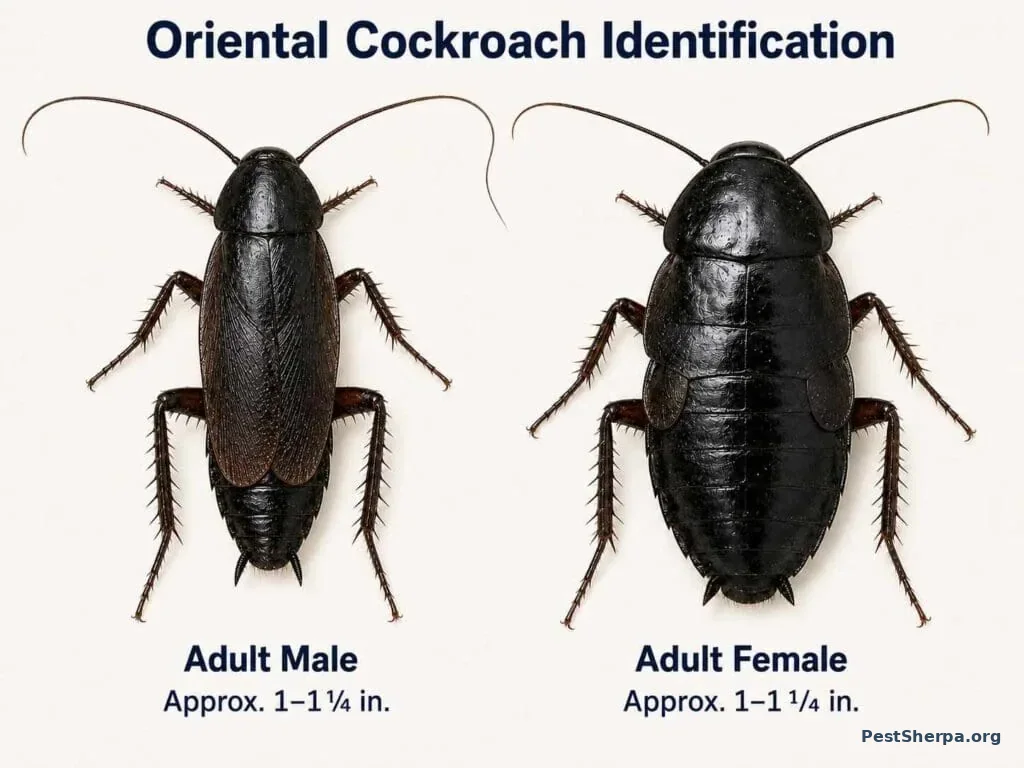
Adult male and female Oriental cockroaches showing dark color and different wing lengths.
TL;DR
- Oriental cockroaches are glossy dark brown to black roaches, usually about 1 inch long.
- They prefer cool, damp areas such as basements, crawl spaces, drains, utility areas, and damp outdoor debris.
- One roach may be an outdoor invader; repeated sightings suggest a nearby moisture, shelter, or entry-point problem.
- The best first steps are identification, moisture correction, sanitation, exclusion, and monitoring with sticky traps.
- Foggers and broad spraying usually miss the source and can create unnecessary exposure risks.
Quick Navigation
- Quick Identification
- What Oriental Cockroaches Mean in Your Home
- Identification and Life Cycle
- Habitat and Signs of Activity
- Source Investigation Checklist
- Health and Allergen Concerns
- What To Do
- What Does Not Work Well
- How Long Activity May Last
- When Professional Help May Be Needed
- Lookalikes and Common Misidentifications
- Frequently Asked Questions
- References
Quick Identification
| Feature | Oriental Cockroach Clue |
|---|---|
| Color | Glossy dark brown to black |
| Adult size | About 1 inch long |
| Female wings | Very short wing pads; female may look wingless at a glance |
| Male wings | Short wings that do not cover the entire abdomen |
| Flight | Adults do not fly |
| Typical locations | Basements, crawl spaces, drains, sewer-connected areas, damp outdoor debris |
| Key clue | Moisture is usually part of the problem |
Quick note: Oriental cockroaches are not the same as German cockroaches. German cockroaches are smaller, tan to light brown, and more strongly associated with kitchens, bathrooms, apartments, and indoor breeding sites.
What Oriental Cockroaches Mean in Your Home
Oriental cockroaches are often a moisture and entry-point clue. They may be living outdoors near the structure and moving inside, or they may be using damp interior areas that provide water, shelter, and food.
| What You See | What It Usually Suggests |
|---|---|
| One adult near a door, garage, or basement | Possible outdoor invader |
| Several adults over multiple nights | Likely nearby harborage or entry point |
| Nymphs indoors | Possible breeding source nearby |
| Activity around drains or plumbing | Check moisture, drain condition, and pipe openings |
| Roaches plus musty odor or droppings | More established activity may be present |
| Activity after rain or irrigation | Outdoor harborage or moisture displacement may be involved |
Expert Insight: Oriental cockroach control usually improves when the inspection focuses on damp harborage, entry routes, and sanitation conditions rather than only on the visible adults.
Identification and Life Cycle
Adult Oriental cockroaches are broad, flattened, and dark brown to nearly black. Their flattened shape helps them hide in cracks, voids, drain areas, and sheltered spaces close to moisture.
Males and females look different. Males have shortened wings that cover much of, but not all of, the abdomen. Females have only small wing pads and can look wingless. Neither sex is capable of sustained flight.
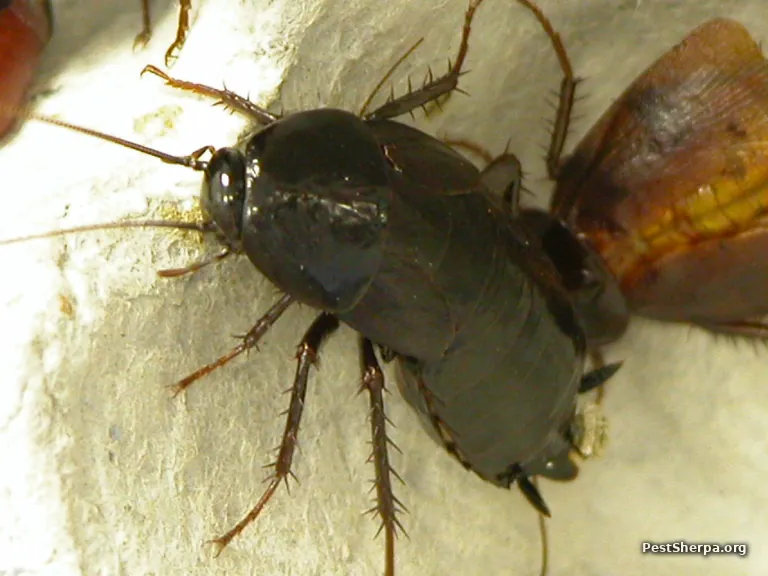
Like other cockroaches, Oriental cockroaches develop through gradual metamorphosis: egg, nymph, and adult. Eggs are contained in a protective case called an ootheca. The female deposits the ootheca in a protected location where food, shelter, and suitable moisture are available.
Nymphs resemble smaller, wingless adults. They grow through a series of molts before reaching adulthood. Development is affected by temperature, humidity, food, and shelter. In many situations, Oriental cockroaches develop slowly compared with faster-breeding indoor cockroaches.
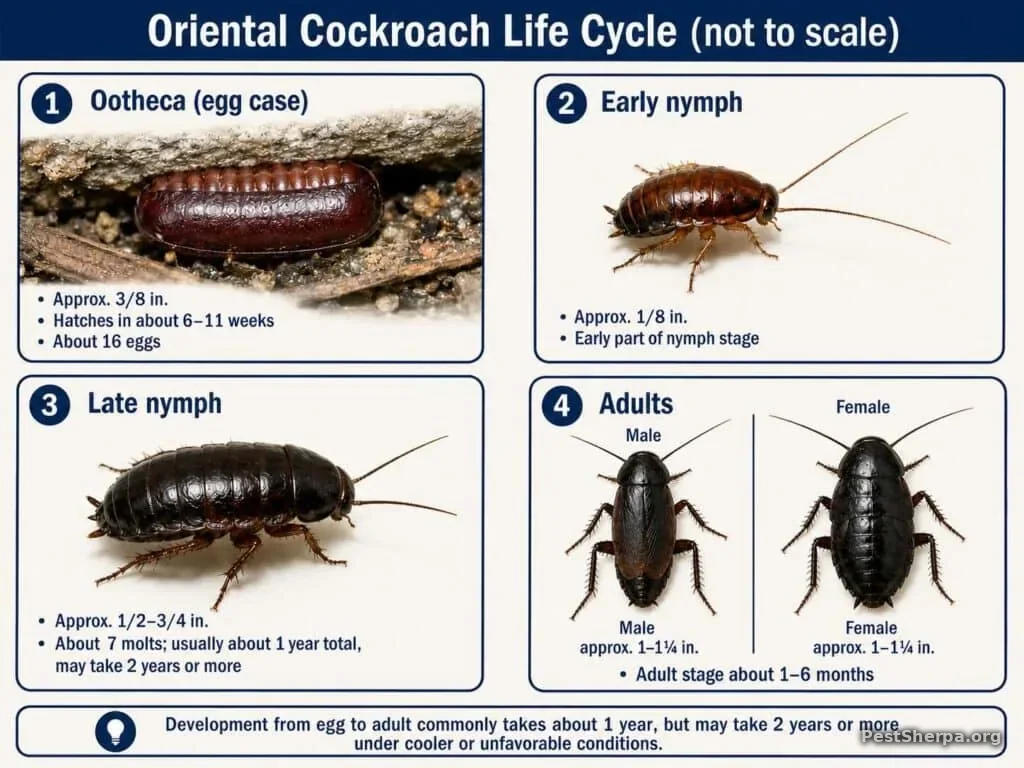
IOriental cockroach life cycle showing egg case, nymph, and adult stages.
Habitat and Signs of Activity
Oriental cockroaches are strongly associated with cool, damp, protected environments. Indoors, they are most often reported from lower-level or moisture-prone areas. Outdoors, they may live beneath debris, mulch, stones, leaf litter, trash containers, slabs, and other sheltered sites near the ground.
Common Indoor Areas
- Basements
- Crawl spaces
- Floor drains
- Utility rooms
- Pipe chases and wall voids near plumbing
- Garages and foundation-level storage areas
- Under sinks or near leaks and condensation
Common Outdoor Areas
- Mulch beds near the foundation
- Leaf litter and damp organic debris
- Spaces under stones, boards, firewood, or landscape materials
- Garbage storage areas
- Meter boxes, drains, and utility openings
- Cracks along slabs, sidewalks, patios, and foundations
Signs To Look For
- Live or dead cockroaches, especially at night
- Nymphs in damp areas
- Egg cases in sheltered cracks or debris
- Dark fecal spots or smears near harborages
- Musty odor during heavier activity
- Sticky trap captures along walls, drains, doors, or utility routes
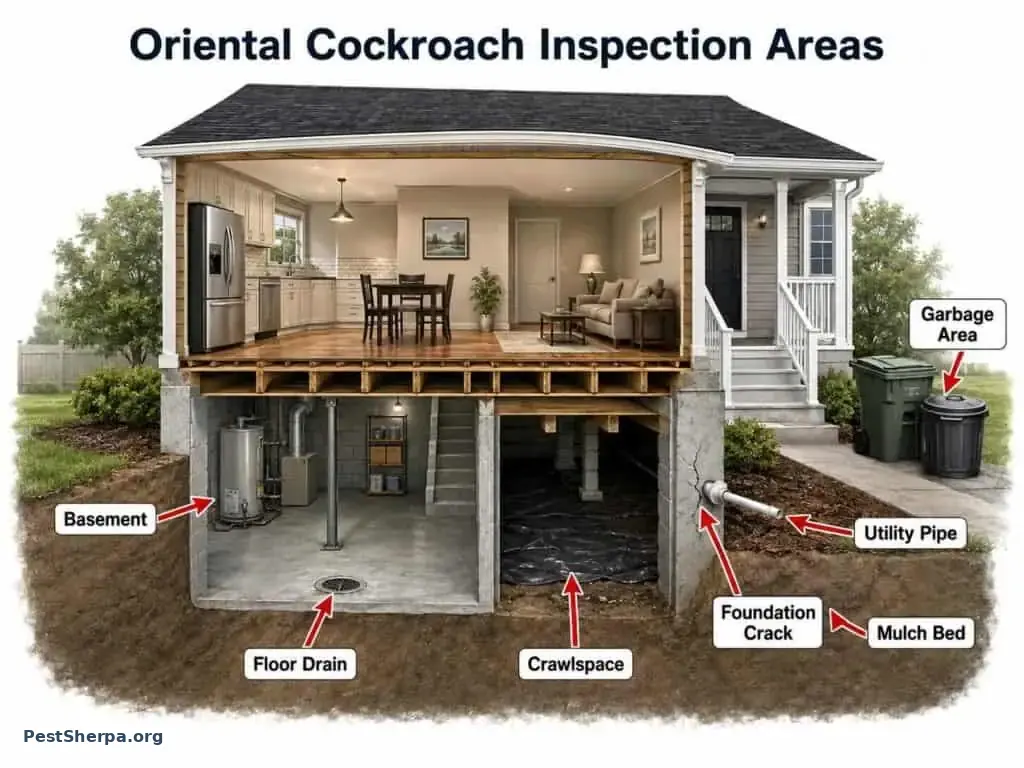
Common Oriental cockroach inspection areas around a home including basement, crawlspace, drains, foundation gaps, and mulch.
Oriental Cockroach Source Investigation Checklist
Use this checklist before choosing a treatment. Finding the source conditions is usually more useful than reacting to a single visible roach.
Step 1: Confirm the Cockroach Type
Check color, size, wing length, and location. If the roach is small, tan, and seen near kitchen appliances or cabinets, compare it with the German cockroach guide before assuming it is Oriental.
Step 2: Inspect Moisture Sources
- Leaking pipes
- Sweating pipes or condensation
- Damp crawlspace soil
- Floor drains and drain traps
- Poorly ventilated basements
- Irrigation or drainage that keeps foundation areas wet
Step 3: Inspect Entry Points
- Gaps under exterior doors
- Damaged weather stripping
- Foundation cracks
- Openings around pipes, vents, cables, and utility lines
- Broken or poorly fitting screens
- Unsealed crawlspace or basement access points
Step 4: Inspect Outdoor Harborage
- Wet mulch against the foundation
- Leaf litter and organic debris
- Trash cans stored near doors
- Wood piles, boards, stones, and stored landscape materials
- Low areas where water collects
- Cracks around patios, sidewalks, and slabs
Step 5: Use Sticky Traps To Map Activity
Place sticky traps along walls, near drains, near exterior doors, under sinks, in basement corners, and near suspected travel routes. Do not place traps randomly in the middle of rooms. Check them regularly and use the capture pattern to focus inspection and correction.
Health and Allergen Concerns
Oriental cockroaches do not bite or sting in ordinary household encounters, but cockroaches are still sanitation pests. They may move through drains, garbage, sewage, decaying organic matter, and other unsanitary areas before entering living spaces.
Cockroaches can mechanically carry bacteria on their bodies and may contaminate food-contact surfaces, stored foods, and utensils when infestations occur in food areas. The risk depends on where the cockroaches are moving, the level of activity, and whether sanitation problems are present.
Cockroach droppings, shed skins, saliva, and body fragments can also contribute to indoor allergens. For people with asthma or allergies, reducing cockroach activity and cleaning accumulated debris can be an important part of improving indoor conditions.
Safety note: Avoid sweeping or blowing heavy accumulations of cockroach debris into the air. Use careful cleaning methods, gloves when appropriate, and good ventilation. People with asthma, allergies, or immune concerns may need extra caution when cleaning areas with heavy pest debris.
What To Do About Oriental Cockroaches
1. Identify the Species First
Control decisions depend on the cockroach species. Oriental cockroaches often require moisture correction, outdoor harborage reduction, and foundation-level exclusion. German or brownbanded cockroaches often require a different indoor-focused plan.
2. Reduce Moisture
- Repair plumbing leaks.
- Improve crawlspace and basement ventilation where appropriate.
- Keep drain traps maintained according to plumbing needs.
- Redirect irrigation and drainage away from the foundation.
- Use a dehumidifier in persistently damp interior areas when suitable.
3. Remove Food and Shelter
- Store food in sealed containers.
- Clean spills and crumbs promptly.
- Keep trash sealed and remove it regularly.
- Reduce cardboard, paper clutter, and stored items in damp areas.
- Remove damp leaf litter, heavy mulch buildup, and debris near the foundation.
4. Exclude Outdoor Roaches
- Install or repair door sweeps.
- Replace damaged weather stripping.
- Seal gaps around pipes, utility penetrations, and foundation openings.
- Repair screens and vent covers.
- Reduce harborage immediately outside entry points.
5. Monitor Before and After Corrections
Sticky traps can show whether activity is concentrated near a drain, door, crawlspace access point, utility chase, or outdoor wall. Continue monitoring after moisture and exclusion corrections to confirm that activity is declining.
6. Use Pesticides Carefully, If Needed
Pesticides are not always necessary, especially when the issue is occasional outdoor entry. If a product is used, read and follow the label, keep products away from children, pets, food, dishes, and food-preparation surfaces, and avoid applying products into drains, vents, or inaccessible voids unless the label specifically allows that use.
Baits, dusts, or other targeted products may be part of an integrated plan in some situations, but product choice and placement depend on the site, the label, and the species involved. Avoid mixing products or using off-label methods.
What Does Not Work Well
- Bug bombs or foggers: They often fail to reach hidden harborages and can create unnecessary exposure risk.
- Only spraying visible roaches: This does not correct moisture, entry points, or hidden shelter.
- Ignoring outdoor conditions: Oriental cockroaches often come from damp exterior harborages.
- Endless trapping without inspection: Traps are useful for monitoring, but they do not fix the source conditions by themselves.
- Assuming every roach is German: Misidentification can lead to the wrong control plan.
How Long Will Oriental Cockroach Activity Last?
The timeline depends on the source. If one adult entered from outdoors, activity may stop quickly. If damp harborage, entry gaps, or an indoor moisture problem remains, sightings may continue or return.
| Situation | Expected Pattern |
|---|---|
| One accidental invader | May be short-lived if entry is corrected |
| Damp outdoor harborage | May continue until harborage and entry points are addressed |
| Indoor moisture source | May persist until leaks, drains, or humidity problems are corrected |
| Established activity with nymphs | Usually requires a more complete inspection and monitoring plan |
When Professional Help May Be Needed
Professional help may be worth considering when the source is unclear, activity continues after moisture and exclusion corrections, or the problem involves shared walls, crawlspaces, sewer-connected areas, food-handling spaces, or repeated captures of nymphs.
- Roaches are appearing in multiple rooms or multiple units.
- Sticky traps keep catching nymphs.
- Activity is linked to crawlspaces, sewer areas, floor drains, or utility chases.
- Moisture conditions are difficult to correct.
- There are asthma, allergy, sanitation, or food-safety concerns.
- Previous pesticide attempts have not solved the problem.
Lookalikes and Common Misidentifications
Several cockroaches can be mistaken for Oriental cockroaches. Use appearance, location, moisture association, and behavior together instead of relying on color alone.
| Lookalike | How It Differs | Why It Matters |
|---|---|---|
| American cockroach | Larger, reddish brown, often associated with sewers, drains, and warm utility areas | May require drain, sewer, and utility-route inspection |
| Smokybrown cockroach | Dark brown, fully winged, commonly associated with humid outdoor areas in warmer regions | Outdoor lighting, vegetation, and attic entry points may matter |
| Turkestan cockroach | Males are often lighter and more mobile; outdoor populations can be common in some regions | Can be confused with Oriental cockroaches around outdoor harborages |
| German cockroach | Smaller, tan to light brown, with two dark stripes behind the head | Usually requires indoor-focused inspection and baiting strategy |
| Brownbanded cockroach | Smaller and less moisture-dependent; often found higher in rooms or furniture | Control focus differs from damp-area Oriental cockroach control |
| Ground beetles | Hard-bodied beetles with chewing mouthparts and no cockroach-style flattened oval body | Often occasional invaders, not indoor roach infestations |
Frequently Asked Questions
Does one Oriental cockroach mean I have an infestation?
Not always. One adult may have entered from outdoors. Repeated sightings, nymphs, egg cases, droppings, or captures in multiple sticky traps are stronger signs of a nearby source. For a broader explanation, see this Q&A on whether one roach means an infestation.
Why am I seeing Oriental cockroaches in my basement?
Basements often provide the cool, damp, protected conditions Oriental cockroaches prefer. Check leaks, condensation, floor drains, clutter, foundation gaps, and damp exterior areas near basement walls.
Do Oriental cockroaches come from drains?
They may be found near drains or sewer-connected areas, but the drain itself is not always the source. Inspect nearby moisture, pipe openings, floor-wall gaps, drain traps, and sewer or utility access routes.
Do Oriental cockroaches fly?
No. Males have shortened wings and females have very short wing pads, but adults do not fly.
Are Oriental cockroaches dangerous?
They are not dangerous in the sense of biting or stinging, but they are sanitation pests. They can move through unsanitary areas and cockroach debris can contribute to allergen exposure, especially for sensitive people.
Will cleaning alone get rid of Oriental cockroaches?
Cleaning helps by reducing food and shelter, but it may not solve the problem by itself if moisture, entry gaps, drains, crawlspaces, or outdoor harborages remain untreated.
Should I use a fogger for Oriental cockroaches?
Foggers are usually a poor choice for cockroach problems because they may not reach hidden harborages and can create unnecessary exposure risk. Source correction, monitoring, exclusion, sanitation, and targeted methods are usually more useful.
References
- UF/IFAS Extension: Oriental Cockroach, Blatta orientalis Linnaeus
- UC Statewide IPM Program: Cockroaches
- Oklahoma State University Extension: Oriental Cockroach
- U.S. EPA: Cockroaches and Schools
- U.S. EPA: Asthma Triggers: Gain Control
This article was written by Greg Baumann, founder of Pest Sherpa, and reflects more than 40 years of professional pest management experience.
About the Author

Greg Baumann | Pest Control Expert
Greg Baumann is the founder of Pest Sherpa and a Pest Control Expert with more than 40 years of professional pest management experience. His articles combine decades of field experience, technical expertise, and science-based guidance to help homeowners identify pests correctly, understand real-world risks, and make informed pest management decisions.
Mission: Identify the pest. Understand the risk. Stop the problem. Prevent the comeback. Know when it’s time to call a professional.