
Brownbanded Cockroaches: Identification, Signs, and What to Do
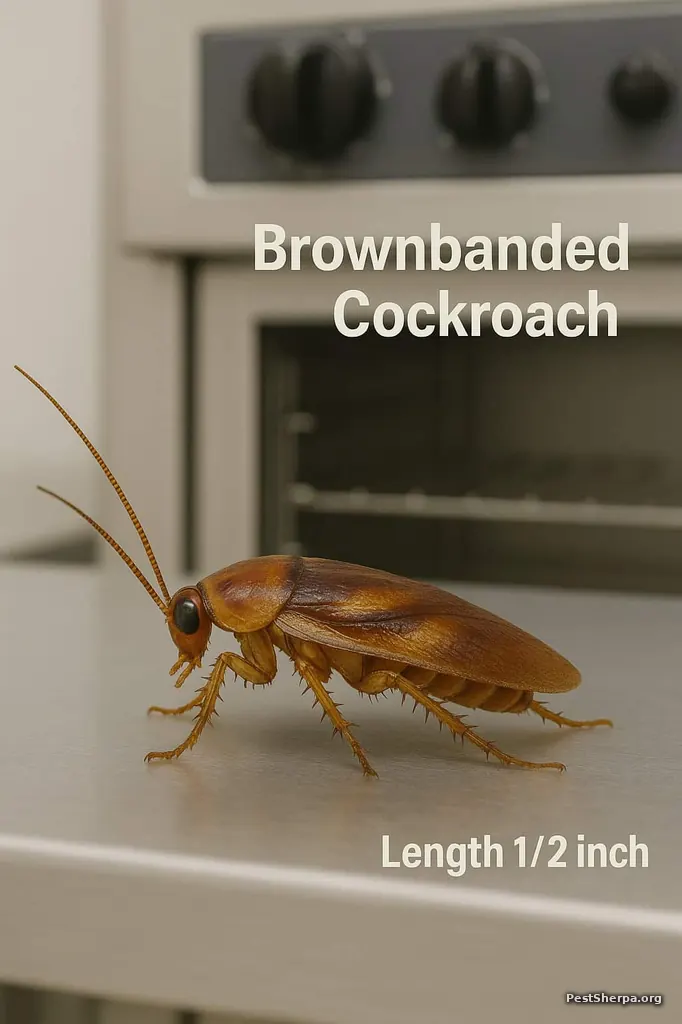
If you are seeing small cockroaches in bedrooms, living rooms, offices, closets, or high on walls instead of only in kitchens and bathrooms, the pest may be the brownbanded cockroach (Supella longipalpa). This small indoor cockroach is easy to confuse with a German cockroach, but its habits are different. Brownbanded cockroaches often hide in warm, dry, elevated places such as picture frames, ceilings, furniture, closets, electronics, and upper cabinets, so a kitchen-only inspection can miss them.
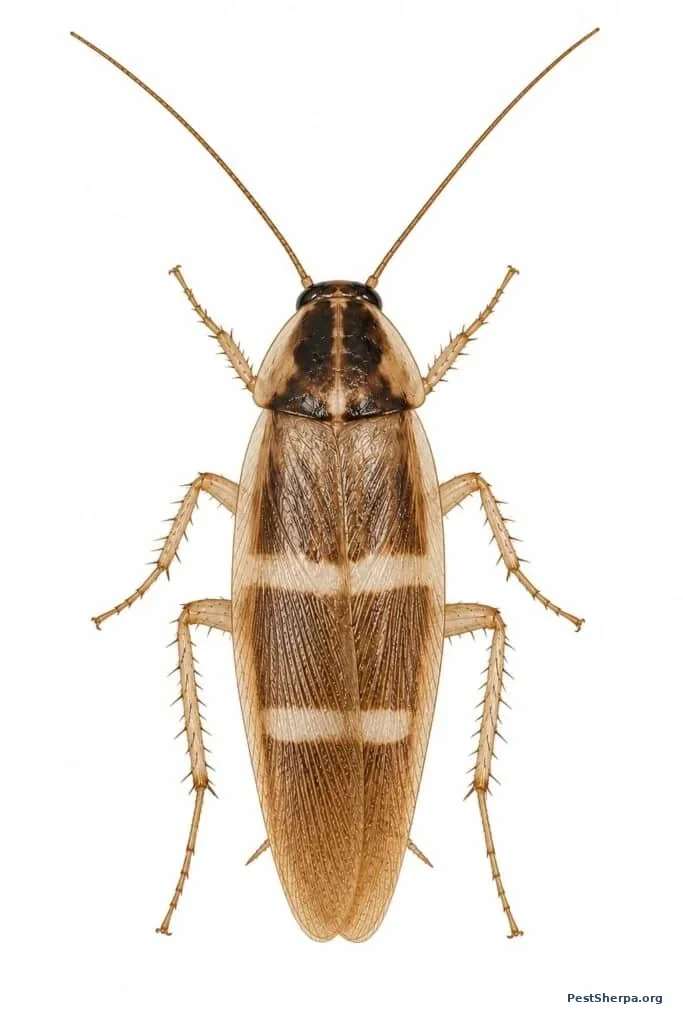
This guide will help you identify brownbanded cockroaches, understand what repeated sightings usually mean, inspect the right places, avoid common control mistakes, and choose safer next steps.
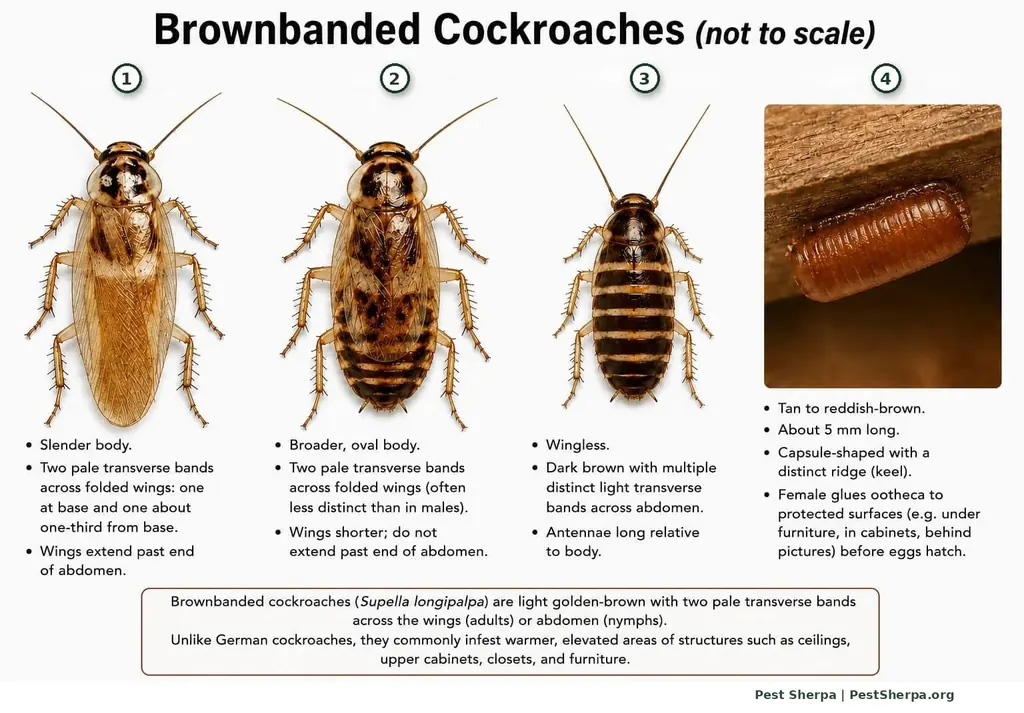
Which stage do you see? Match the number:
- Adult male: slender, with wings that extend past the end of the abdomen.
- Adult female: broader and oval, with shorter wings that do not reach the end of the abdomen.
- Mid-instar nymph: wingless and dark brown with distinct light bands across the abdomen.
- Egg case (ootheca): tan to reddish-brown capsule about 5 mm long, glued by the female to hidden surfaces.
Brownbanded cockroach adult, nymph, and egg case identification comparison.
TL;DR
Brownbanded cockroaches are small indoor roaches, usually about 1/2 inch long, with pale bands across the body or wings. Unlike German cockroaches, they are less tied to moisture and may spread through bedrooms, living rooms, offices, closets, furniture, wall hangings, and electronics.
One roach may have arrived in a box, used item, or piece of furniture. Repeated sightings, nymphs, droppings, egg cases, or roaches in several rooms usually suggest an established indoor infestation. The most useful first step is a careful inspection with sticky traps placed near suspected hiding areas, especially high, warm, and dry locations.
Spraying baseboards or using foggers usually misses the real hiding places and can scatter cockroaches. Better results come from identification, monitoring, sanitation, clutter reduction, targeted bait placement, careful crack-and-crevice work, and follow-up checks.
Quick Navigation
- What Brownbanded Cockroaches Mean in Your Home
- Quick Identification
- Quick Assessment
- Signs of Activity
- Where to Inspect
- Why They Suddenly Appeared
- Life Cycle and Seasonal Context
- What To Do
- What Does Not Work
- How Long It Will Last
- Health, Allergy, and Safety Notes
- When Professional Help May Be Needed
- Lookalikes
- FAQs
- References
What Brownbanded Cockroaches Mean in Your Home
Brownbanded cockroaches are not usually random outdoor invaders. They are indoor-adapted cockroaches that can live and reproduce inside buildings. Finding them does not mean your home is dirty, but it does mean there may be food, warmth, shelter, or transported items helping them survive.
The biggest clue is where you see them. A small cockroach in a bedroom, closet, office, living room, wall hanging, dresser, or electronic device deserves a different inspection than a roach found near a wet sink or drain.
| What You See | What It Usually Means | Best Next Step |
|---|---|---|
| One small banded roach | Possible introduction from furniture, boxes, or another infested area | Capture or photograph it and inspect nearby hiding spots |
| Several roaches in different rooms | Possible established indoor infestation | Use sticky traps in each room to map activity |
| Nymphs or tiny banded roaches | Reproduction is likely occurring indoors | Inspect for egg cases and harborages nearby |
| Roaches high on walls or near ceilings | Typical brownbanded cockroach behavior | Inspect crown molding, picture frames, shelves, and upper cabinets |
| Roaches near electronics | Warm harborage may be supporting activity | Do not spray electronics; inspect vents and surrounding furniture |
| Roaches mostly in kitchen or bathroom cracks | German cockroach or another species may be more likely | Compare markings before choosing control steps |
For a broader comparison of roach types, see the cockroach identification guide.
Quick Identification: What Brownbanded Cockroaches Look Like
Brownbanded cockroaches are small, tan to brown cockroaches. Adults are usually about 1/2 inch long. Their most helpful identification feature is the pair of pale or yellowish-brown bands across the wings or abdomen. These bands may be easier to see on nymphs than on some adults.
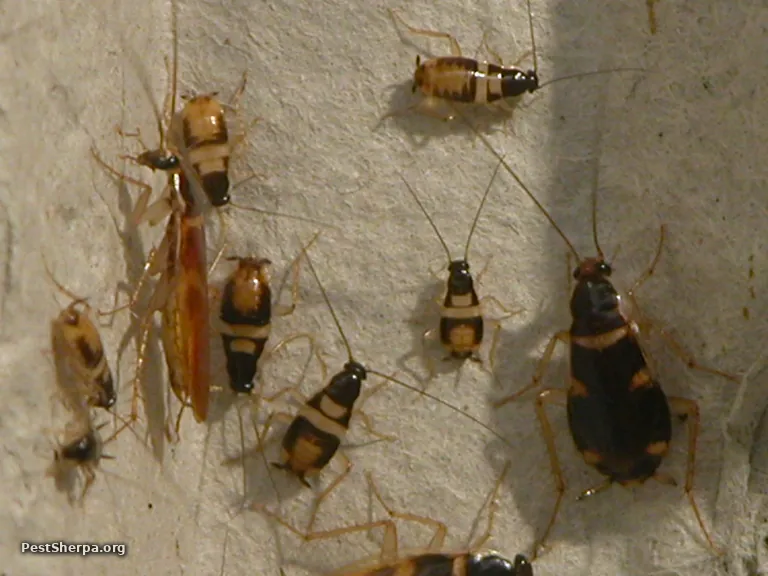
- Size: small, about 1/2 inch as adults
- Color: tan, light brown, or darker brown depending on sex and life stage
- Banding: two pale bands across the body or wings
- Antennae: long and slender
- Male wings: long wings that cover the abdomen; males may fly short distances when disturbed
- Female wings: shorter wings that do not fully cover the abdomen; females do not fly
- Behavior: nocturnal, fast-moving, and often found away from moisture
They are often confused with German cockroaches. German cockroaches usually have two dark lengthwise stripes behind the head and are strongly associated with kitchens, bathrooms, appliances, food, and moisture. Brownbanded cockroaches usually show crosswise bands and may be scattered in drier rooms.
Quick Assessment: How Serious Is It?
Use this table to decide how urgently to investigate. It is not a substitute for identification, but it helps separate an isolated sighting from a likely infestation.
| Situation | Concern Level | What To Do First |
|---|---|---|
| One adult roach after moving furniture, packages, or boxes | Low to moderate | Inspect the item and place sticky traps nearby |
| Roaches seen more than once in the same room | Moderate | Inspect high, dry hiding places and monitor for 1 to 2 weeks |
| Roaches seen in multiple rooms | High | Map activity with labeled sticky traps in each room |
| Nymphs, egg cases, or repeated nighttime sightings | High | Assume reproduction may be occurring indoors |
| Roaches in a multi-unit building | High | Inspect shared walls, utility penetrations, and adjacent rooms |
| Activity continues after DIY sprays or foggers | High | Stop broad spraying and switch to inspection-based control |
Common Signs of Brownbanded Cockroach Activity
Because brownbanded cockroaches avoid light and hide in scattered locations, you may find signs before you find many live insects.
- Live adults or nymphs running at night or when an object is moved
- Small dark fecal specks on walls, shelves, drawer corners, electronics, or furniture
- Egg cases attached to furniture, ceilings, walls, closets, drawers, or hidden surfaces
- Shed skins in drawers, behind frames, or near harborages
- Activity in dry rooms such as bedrooms, living rooms, offices, and closets
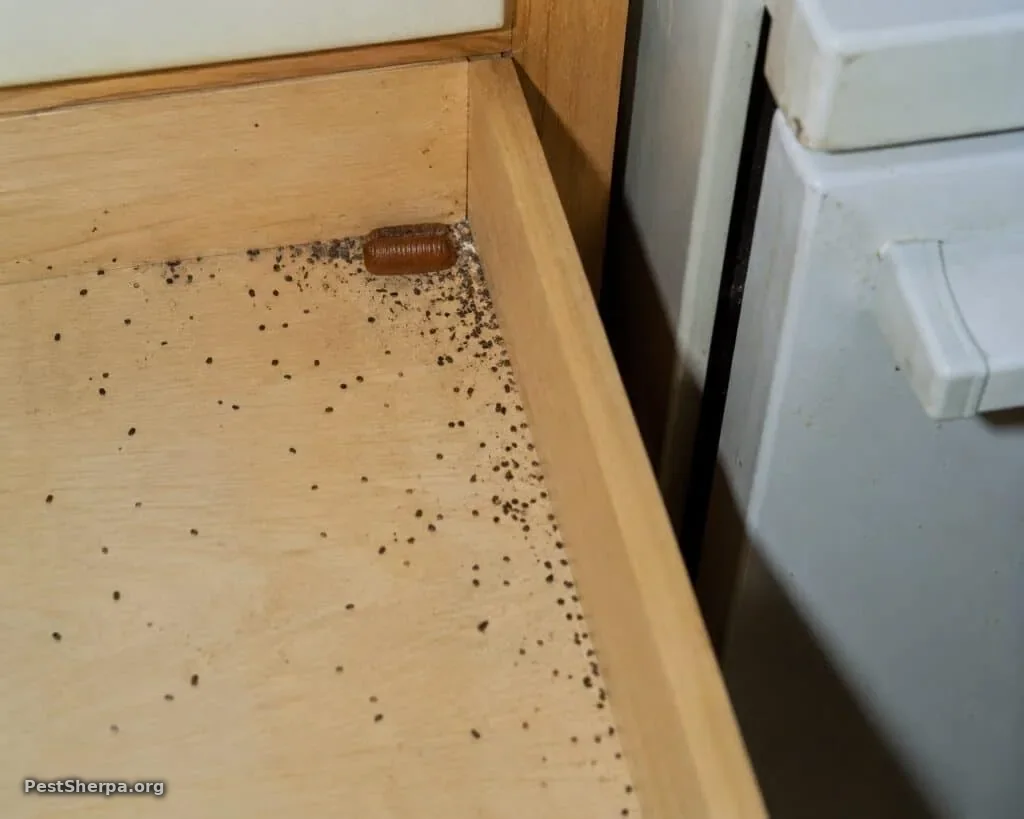
Brownbanded cockroach droppings and egg case on hidden furniture surface.
Where to Inspect for Brownbanded Cockroaches
A standard kitchen-only inspection can miss brownbanded cockroaches. Start where activity has been seen, then inspect nearby warm, dry, elevated, and protected locations.
High and Dry Indoor Hotspots
- Ceilings and crown molding
Check corners, seams, trim gaps, and areas near ceiling lights. - Behind picture frames, mirrors, clocks, and wall hangings
Look for fecal specks, shed skins, or egg cases on the back of the item and on the wall behind it. - Furniture and storage pieces
Inspect desks, dressers, nightstands, bookshelves, cabinets, hollow furniture legs, drawer tracks, and backing boards. - Electronics and warm devices
Inspect around TVs, routers, game consoles, clocks, desktop computers, chargers, and appliance panels. Do not spray liquids into electronics. - Closets and clothing storage
Check shelves, storage boxes, folded paper, rarely moved items, and upper corners. - Upper cabinets and pantry storage
Look above eye level, behind dry goods, around paper products, and along cabinet seams. - Electrical plates and wall void access points
Look for signs around switch plates, outlet covers, cable openings, and utility penetrations. Turn off power before removing covers and avoid unsafe electrical work. - Shared walls in apartments or connected units
Inspect walls adjoining neighboring units, utility chases, pipe openings, and common service areas where movement may occur.
How to Use Sticky Traps for Inspection
Sticky traps help confirm where cockroaches are traveling. Place them near suspected harborages, label each trap with the date and location, and check them regularly. Good locations include closet corners, behind furniture, near picture frames, inside upper cabinets, beside electronics, and along walls where activity has been seen.
Trap counts are most useful when compared by room. One trap with repeated captures is more helpful than several random traps placed where cockroaches are unlikely to travel.
Why Brownbanded Cockroaches Suddenly Appear
Sudden sightings usually happen because a hidden population has grown enough to be noticed, a new item introduced cockroaches, or conditions changed enough to push them into visible areas.
| Possible Cause | Why It Happens | Where to Check |
|---|---|---|
| Used furniture or secondhand items | Egg cases and roaches can be hidden in furniture or boxes | Drawers, backing boards, hollow legs, seams, and underside surfaces |
| Stored boxes or clutter moved | Disturbance exposes hidden cockroaches | Closets, storage rooms, shelves, and paper goods |
| Warm indoor areas | Heat from electronics or upper rooms can support activity | Routers, TVs, office equipment, clocks, and upper wall areas |
| Neighboring unit activity | Roaches may move through shared walls or utility openings | Plumbing penetrations, outlets, cable holes, shared walls |
| Recent spraying or fogging | Repellent products may scatter cockroaches into new areas | Adjacent rooms, upper walls, closets, and furniture |
Life Cycle and Seasonal Context
Brownbanded cockroaches develop through three stages: egg, nymph, and adult. Females produce egg cases, called oothecae, and attach them to protected surfaces rather than carrying them until hatch like German cockroaches often do. Egg cases may be attached to furniture, ceilings, closets, or other hidden surfaces.
- Egg cases may contain roughly 14 to 18 eggs.
- Egg cases are often glued to hidden surfaces.
- Egg incubation and development time vary with temperature and conditions.
- Warm indoor areas can allow activity at many times of year.
Seasonal patterns can be less obvious indoors because heated buildings may provide favorable conditions year-round. However, increased activity may be noticed during warm periods, after furniture is moved, after renovation or cleaning, or after cockroaches are disturbed by sprays.
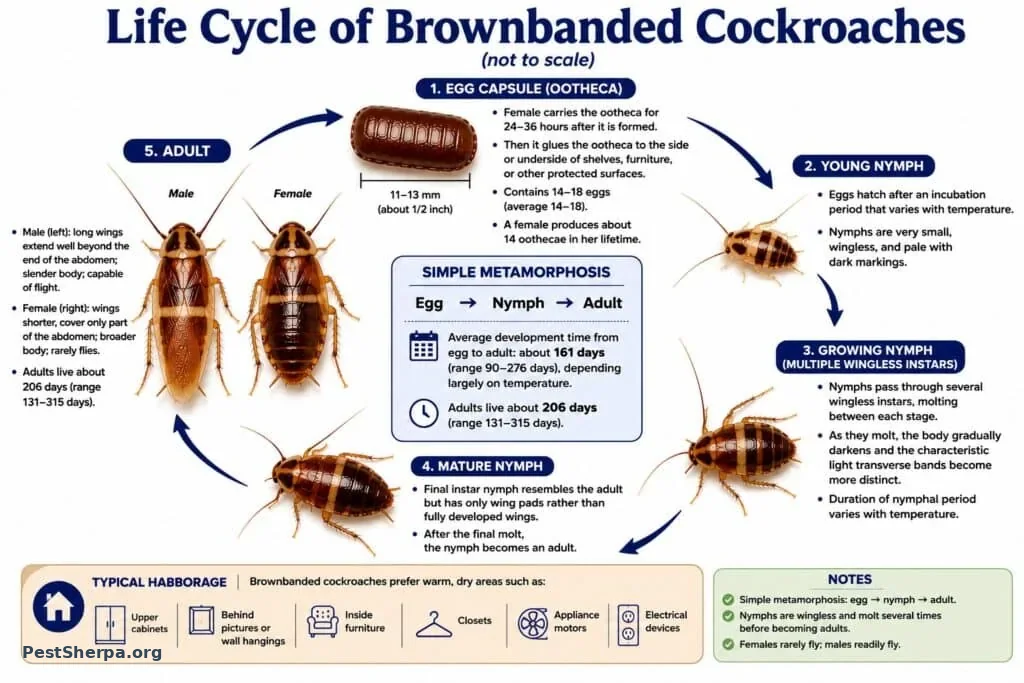
Brownbanded cockroach life cycle from egg case to nymph to adult.
Common Sources, Attractants, and Hiding Places
Brownbanded cockroaches feed on many materials, including crumbs, residues, starches, glue, paper products, and stored foods. They do not need as much moisture as some other indoor cockroaches, which allows them to use drier rooms and elevated hiding places.
| Category | Examples | Why It Matters |
|---|---|---|
| Food residue | Crumbs, grease films, pet food, snack debris | Supports survival and reproduction |
| Starchy materials | Book bindings, wallpaper paste, envelopes, labels, paper goods | Can support activity away from kitchens |
| Clutter | Boxes, papers, stored bags, unused items | Creates protected hiding places |
| Warm equipment | TVs, routers, chargers, clocks, computers | Provides heat and undisturbed harborage |
| Transported items | Used furniture, moving boxes, stored belongings | Can introduce egg cases or hidden roaches |
What To Do About Brownbanded Cockroaches
1. Confirm the Species
Capture a specimen if possible, photograph it from above, and compare the markings. The difference between brownbanded and German cockroaches matters because the hiding places and treatment focus are different.
2. Map Activity with Sticky Traps
Place traps in suspected rooms and label them by location. Focus on elevated, warm, dry, and protected areas instead of only the kitchen floor. Trap results help show whether the activity is isolated or spread through multiple rooms.
3. Inspect and Remove Harborages
Reduce unnecessary paper, cardboard, and clutter. Inspect used furniture, storage boxes, desk drawers, picture frames, closets, and electronics. Vacuum visible roaches, shed skins, and egg cases when accessible, then empty the vacuum contents into a sealed bag.
4. Improve Sanitation Without Relying on Cleaning Alone
Clean food residue, store food in pest-resistant containers, remove trash regularly, and avoid leaving pet food out overnight. Sanitation helps reduce survival, but it rarely solves an established infestation by itself because brownbanded cockroaches can hide far from kitchens.
5. Seal Cracks and Utility Openings
Seal gaps around wall penetrations, cabinet seams, baseboards, molding, pipe openings, cable holes, and shared-wall openings where practical. In multi-unit buildings, sealing helps reduce movement between spaces, but it should be paired with monitoring and treatment where activity is confirmed.
6. Use Baits Carefully and Where Roaches Actually Travel
Cockroach baits can be useful when placed close to confirmed hiding or travel areas. Follow the product label exactly. Do not place bait on food-contact surfaces, inside electronics, where children or pets can access it, or where cleaning products and sprays may contaminate it.
Baits do not pull cockroaches from long distances, so placement matters. For brownbanded cockroaches, useful areas may include upper cabinets, closet corners, furniture voids, wall-adjacent travel paths, and areas near droppings or captures.
7. Recheck and Adjust
Continue checking traps and inspection areas after cleanup and treatment. If activity shifts to another room, adjust the inspection rather than repeatedly treating the same visible location.
What Does Not Work Well
- Foggers or bug bombs: They often fail to reach cockroaches hidden in cracks, furniture, wall voids, and electronics.
- Spraying only the roaches you see: Visible roaches are only part of the problem; egg cases and hidden harborages remain.
- Baseboard-only treatment: Brownbanded cockroaches often live above floor level, so baseboards alone may miss the main activity.
- Cleaning without inspection: Cleaning helps, but it does not remove egg cases hidden behind frames, inside furniture, or in upper areas.
- Spraying electronics: Liquid sprays can damage devices and create safety risks. Inspect around electronics instead and follow label directions for any product used nearby.
- Using too many products at once: Repellent sprays can interfere with bait performance and may scatter activity.
How Long Will Brownbanded Cockroaches Last?
The timeline depends on whether the infestation is isolated, whether egg cases are present, and whether hidden harborages are found. Adult sightings may decline before the problem is fully solved, especially if egg cases remain hidden.
| Situation | Likely Timeline | What to Watch |
|---|---|---|
| Single introduced roach | May end quickly if no egg cases or mates are present | No additional trap captures or sightings |
| Small localized infestation | Often requires repeated monitoring and follow-up | Trap captures should decline over time |
| Egg cases hidden in furniture or closets | Activity may continue as eggs hatch | New nymphs after adult numbers drop |
| Multi-room or multi-unit activity | Longer and more complex | Captures in several rooms or shared-wall areas |
If captures continue after several weeks of careful inspection, sanitation, clutter reduction, and targeted baiting, the source may be hidden, spread out, or connected to another unit.
Health, Allergy, and Safety Notes
Brownbanded cockroaches do not sting, and they are not wood-destroying insects. The main concerns are sanitation, allergen exposure, and contamination of surfaces or stored items. Cockroach droppings, shed skins, saliva, and body fragments can contribute to indoor allergens, especially where infestations are heavy or persistent.
Extra caution is appropriate in homes with children, older adults, respiratory sensitivities, asthma, pets, or food-preparation concerns. Vacuuming with a well-filtered vacuum, reducing dust and clutter, and avoiding broad indoor pesticide use can help reduce exposure.
When using any pesticide, read and follow the label. Keep products away from children, pets, food, dishes, bedding, toys, and electronics unless the label specifically allows that use. Do not combine products or use outdoor-only products indoors.
When Professional Help May Be Needed
Professional help may be worth considering when the infestation is difficult to locate, spread across multiple rooms, associated with a multi-unit building, or continuing after careful monitoring and targeted steps.
- Roaches are appearing in several rooms
- Nymphs or egg cases are found
- Sticky traps keep catching roaches after cleanup and baiting
- Activity is linked to shared walls, neighboring units, or utility chases
- Roaches are suspected inside electronics, wall voids, or inaccessible furniture
- The property is a school, healthcare setting, food facility, office, or other sensitive environment
A good inspection should identify the species, map activity, locate harborages, and explain why specific treatment locations were chosen.
Lookalikes and Common Misidentifications
Correct identification matters because cockroach species use different hiding places. A plan that works for a sewer-associated roach or a kitchen-focused German cockroach may miss brownbanded cockroaches hiding in high, dry areas.
| Pest | How It Differs | Common Location Clue |
|---|---|---|
| German cockroach | Two dark lengthwise stripes behind the head; usually no pale cross-bands across the wings | Kitchens, bathrooms, appliances, cabinets, food and moisture areas |
| American cockroach | Much larger, reddish-brown, with pale marking behind the head | Basements, drains, crawlspaces, sewers, utility areas |
| Oriental cockroach | Dark brown to black, larger and slower; strongly tied to moisture | Damp basements, crawlspaces, drains, ground-level areas |
| Smokybrown cockroach | Larger, glossy dark mahogany-brown, often associated with outdoor moisture | Attics, soffits, gutters, trees, mulch, exterior lights |
| Beetles | Hard wing covers and different body shape; not flat, fast-running roaches | Windows, stored foods, fabrics, or outdoor entry points depending on species |
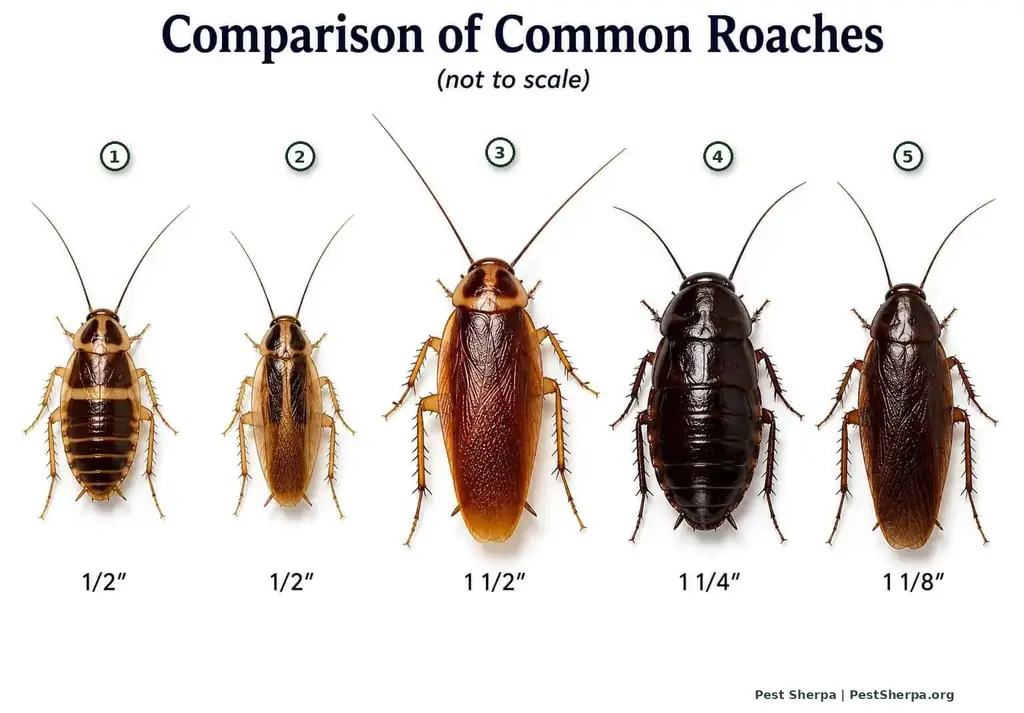
Which one do you see? Match the number:
- Brownbanded cockroach: about 1/2 inch, light brown with two pale bands across the wings or body.
- German cockroach: about 1/2 inch, light brown with two dark parallel stripes on the shield behind the head.
- American cockroach: about 1 1/2 inch, reddish-brown with a pale yellowish band on the shield behind the head.
- Oriental cockroach: about 1 1/4 inch, shiny black to very dark brown with short wings.
- Smokybrown cockroach: about 1 1/8 inch, uniformly dark smoky brown and glossy.
Brownbanded cockroach compared with German, American, Oriental, and smokybrown cockroaches.
FAQs About Brownbanded Cockroaches
Are brownbanded cockroaches the same as German cockroaches?
No. They are different species. German cockroaches usually have two dark stripes behind the head and are strongly tied to kitchens, bathrooms, food, and moisture. Brownbanded cockroaches have pale bands across the body or wings and often hide in warmer, drier, higher locations.
Why am I seeing roaches in my bedroom or living room?
Brownbanded cockroaches can live away from kitchens because they tolerate drier conditions and may feed on small residues, starches, paper-related materials, and hidden debris. Bedrooms, living rooms, closets, and offices can provide warmth, clutter, furniture voids, and undisturbed hiding places.
Do brownbanded cockroaches infest electronics?
They may hide in or around warm electronics and appliances. Do not spray liquids into electronics. Inspect vents, nearby furniture, wall areas, and surrounding cracks instead. If the device is valuable or heavily infested, consider safe handling and inspection options before moving it through the home.
Does one brownbanded cockroach mean an infestation?
Not always. One roach may have been introduced in furniture, a box, or another item. Repeated sightings, nymphs, egg cases, droppings, or captures in sticky traps are stronger signs of an established infestation.
Where do brownbanded cockroaches lay egg cases?
Females attach egg cases to protected surfaces such as furniture, ceilings, closets, walls, drawers, or hidden areas. This is why moving or inspecting furniture can be important.
Will cleaning get rid of brownbanded cockroaches?
Cleaning helps reduce food and shelter, but it may not eliminate hidden egg cases or scattered harborages. Pair sanitation with inspection, sticky traps, clutter reduction, sealing, and targeted bait placement where activity is confirmed.
Are bug bombs a good idea for brownbanded cockroaches?
Usually no. Foggers and broad sprays often fail to reach hidden cockroaches and may scatter activity. They can also create unnecessary exposure risks. Inspection-based control is usually more effective.
Can brownbanded cockroaches come from neighbors?
In apartments, condos, dorms, offices, and other connected buildings, cockroaches may move through shared walls, utility lines, cracks, and service areas. Monitoring near shared walls and utility penetrations can help identify this pattern.
Bottom Line
Brownbanded cockroaches require a different mindset than kitchen-focused roaches. Look high, dry, warm, and hidden. Confirm the species, use sticky traps to map activity, inspect furniture and wall items, reduce clutter, use labeled baits carefully near confirmed activity, and avoid foggers or broad spraying that misses the real harborages.
References
- UC Statewide IPM Program: Cockroaches
- Oklahoma State University Extension: Brownbanded Cockroach
- Utah State University Extension: Brown Banded Cockroach
- LSU AgCenter: Supella longipalpa (Fabricius), Brown-banded Cockroach
- Cockroach Species File: Supella longipalpa
This article was written by Greg Baumann, founder of Pest Sherpa, and reflects more than 40 years of professional pest management experience.
About the Author

Greg Baumann | Pest Control Expert
Greg Baumann is the founder of Pest Sherpa and a Pest Control Expert with more than 40 years of professional pest management experience. His articles combine decades of field experience, technical expertise, and science-based guidance to help homeowners identify pests correctly, understand real-world risks, and make informed pest management decisions.
Mission: Identify the pest. Understand the risk. Stop the problem. Prevent the comeback. Know when it’s time to call a professional.