
Nuisance Wildlife Guide: Identification, Damage, and Exclusion Around Homes
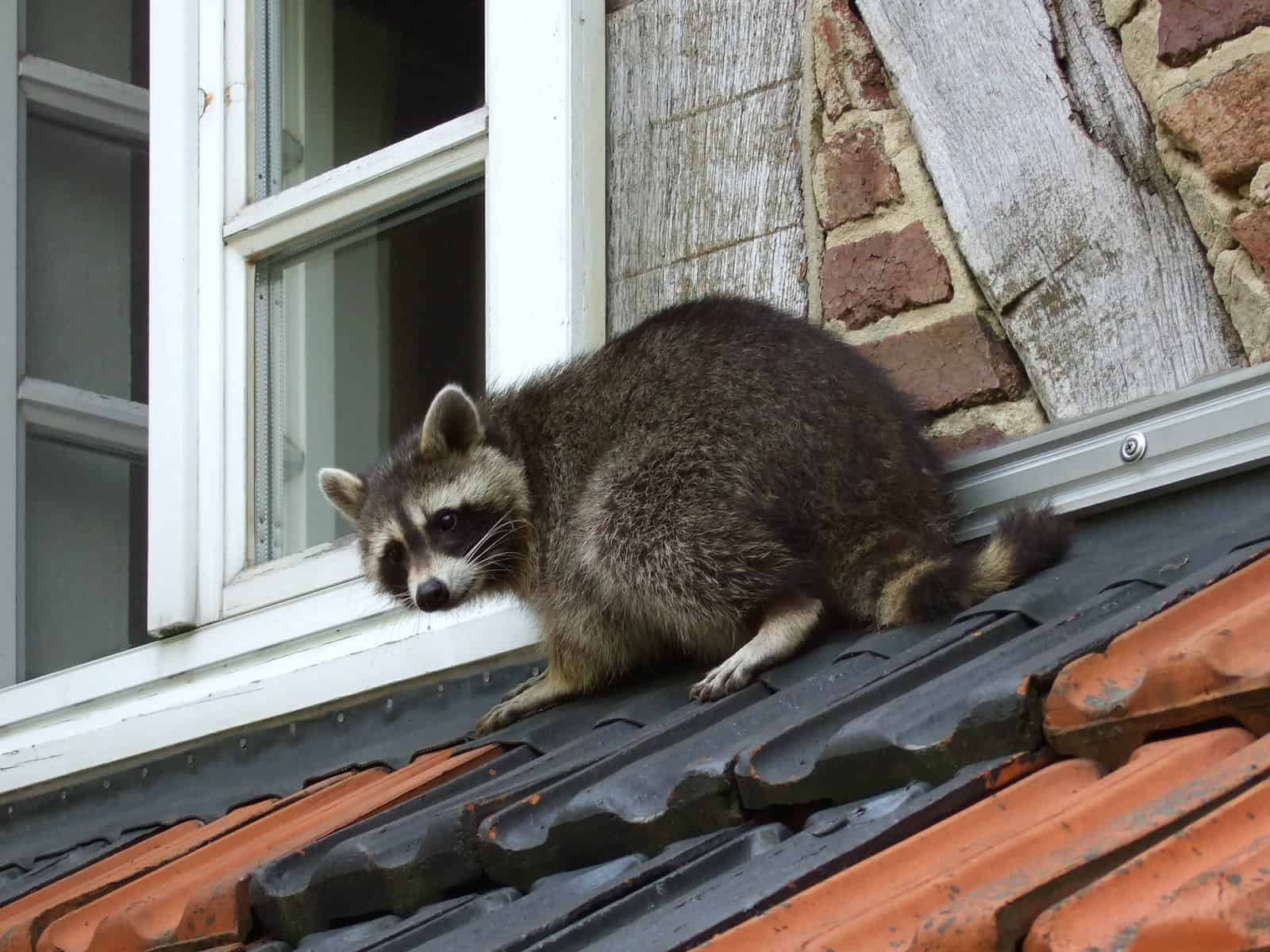
Heavy footsteps in the attic, tipped trash cans, dens in chimneys, torn soffits, mounds in the lawn, and droppings along a roofline usually indicate nuisance wildlife rather than rats. This hub covers the wildlife problems most common around homes and yards in the United States, which call for exclusion, sanitation, and, where state or local regulations require it, licensed wildlife control. Start with the species guide that matches what you are seeing: raccoons, squirrels in the attic, bats in the attic, skunks, opossums, groundhogs, moles and voles, snakes, and pest birds. For mice and rats, use the separate rodents hub.
Key Points: Exclusion Accomplishes More Than Capture Alone
- Nuisance wildlife are not rodents. Raccoons and similar denning mammals require different tools, regulations, and timing than work on mice or rats.
- Begin with food sources and entry points. Unsecured trash, pet food, bird seed, uncapped chimneys, and soft soffits invite animals to den repeatedly.
- Never seal an occupied den. Confirm that the animals, and any young, have left before making permanent repairs, or hire someone who will.
- Know the law before you trap. Trapping, relocation, and lethal control are regulated by state wildlife agencies, and bats and most native birds have special protections. [Association of Fish and Wildlife Agencies] [U.S. Fish and Wildlife Service]
- Take rabies seriously. The CDC lists bats, skunks, raccoons, and foxes as the animals most frequently found with rabies in the United States. [CDC]
- Mice and rats are covered separately on this site. Smaller droppings, greasy rub marks, and a light pattering sound belong under the rodents guide.
Start here based on what you are seeing:
- Heavy night footsteps in the attic, chimney, or under a deck; black mask and ringed tail; trash raids
- Scratching and running in the attic at dawn and dusk; chewed fascia, vents, or soffits
- Squeaking or rustling at dusk; dark droppings piled below a gap; bats exiting at sunset
- Strong musk odor; a hole under a porch, deck, or shed; small cone-shaped holes in the lawn
- A gray, pointed-faced animal under a deck or in a garage; pet food disappearing overnight
- Large burrow openings near foundations, sheds, or gardens; chewed vegetables
- Raised ridges and volcano-shaped mounds, or runways and girdled plants in the lawn
- A snake in the garage, basement, or yard, and whether it might be venomous
- Pigeons or starlings nesting in vents and on ledges; woodpecker holes in siding
- Smaller droppings, greasy rub marks, light scurrying: start with the rodents hub (mice and rats)
Wildlife Species Guides
These are the species pages under this hub.
In This Guide
- When wildlife becomes a home problem
- Exclusion-first principle
- Rabies and other health risks
- Laws, relocation, and protected species
- DIY vs licensed wildlife control
- What a pro visit looks like
- What wildlife removal costs
- Relationship to rodents
- Common questions
- Ask the Sherpa
- References
When wildlife becomes a home problem
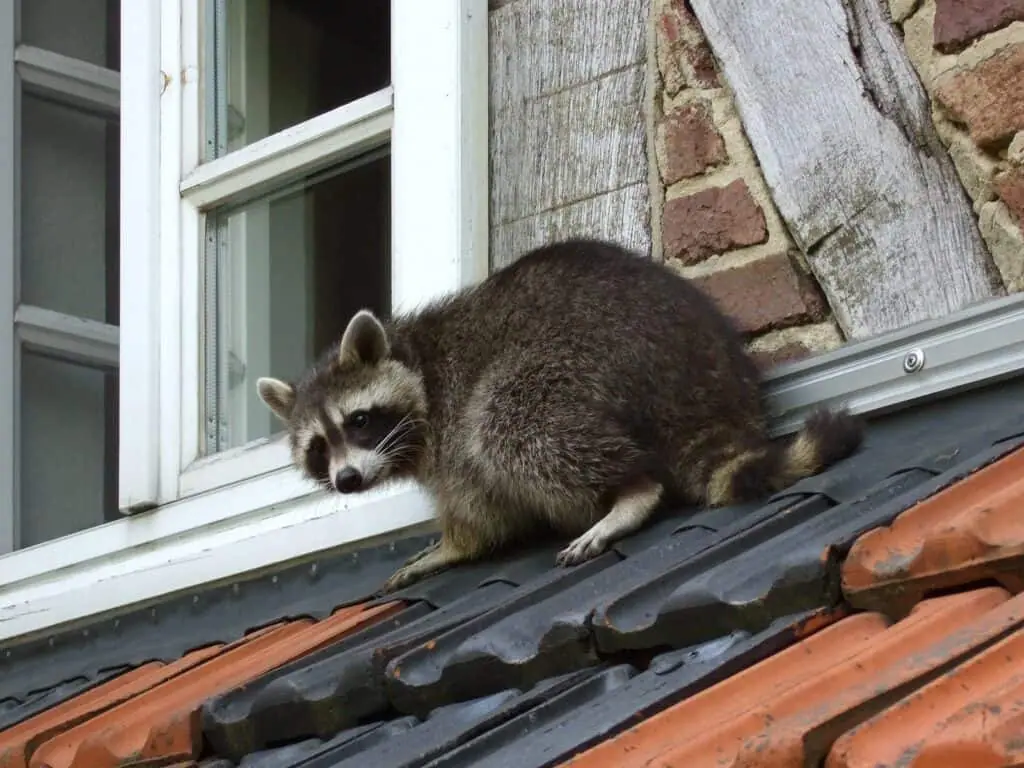
Wildlife becomes a problem for a home when animals den in the structure, damage roofs or vents, leave latrines in attics, become conditioned to trash or pet food, threaten pets, or create a risk of exposure through bites or feces. A raccoon crossing the backyard at dusk is normal. A raccoon raising young in the chimney is a control job governed by timing.
The common points of pressure are uncapped chimneys, torn roof vents, open soffit returns, gaps at roof returns and gable vents, pet doors, tree limbs touching the roof, open crawl space vents, unsecured trash, outdoor pet feeding, bird feeders, and fallen fruit. Correct those, and you prevent most repeat visits before traps ever enter the discussion.
| Animal | Where it causes trouble | Guide |
|---|---|---|
| Raccoons | Attics, chimneys, under decks; trash and latrines | Raccoons |
| Tree squirrels | Attics, soffits, fascia, wiring | Squirrels in the attic |
| Bats | Attics, wall voids, behind shutters | Bats in the attic |
| Skunks | Under porches, decks, sheds; lawn digging | Skunks |
| Opossums | Under decks and sheds, garages, crawl spaces | Opossums |
| Groundhogs | Burrows at foundations, sheds, gardens | Groundhogs |
| Moles and voles | Lawn tunnels, mounds, runways, plant damage | Moles vs voles |
| Snakes | Garages, basements, woodpiles, yards | Snakes |
| Pest birds | Vents, gutters, ledges, siding | Pest birds |
The principle of exclusion first
Removing an animal without repairing the opening simply announces a vacancy to the next one. I advise homeowners to think of the home as a fortress: durable exclusion, such as chimney caps, hardware cloth over vents, rebuilt soffits, and skirting beneath decks, is the real solution. One-way doors can help at some openings when no dependent young are present and local regulations allow them, but misused, they trap young inside or provoke destructive attempts to break out.
- Confirm whether animals and young are present before sealing permanently.
- Use materials that climbing animals cannot peel away: metal flashing, heavy hardware cloth, and solid fastenings.
- Remove the food supply: use locking trash containers, do not leave pet food out overnight, and manage bird seed and fallen fruit.
- Approach wildlife work in the attic with the same exclusion thinking you would apply to any structural pest.
Rabies and other health risks
Do not handle nuisance wildlife with bare hands. Rabies is a viral disease that is deadly if people do not receive medical care before symptoms start, and it spreads mainly through bites and scratches. In the United States, more than 90 percent of reported animal rabies cases occur in wildlife, and the CDC lists bats, skunks, raccoons, and foxes as the animals most frequently found with rabies. Contact with bats is the leading cause of human rabies deaths in this country. [CDC]
After any bite or scratch, wash the wound immediately with soap and water and seek medical care urgently; post-exposure treatment is nearly 100 percent effective when given promptly. [CDC] Bat bites can be so small that you may not know you were bitten. If you find a bat in your home, the CDC advises contacting animal control or your health department to capture it safely for rabies testing, and not releasing it until you talk with a public health expert. [CDC] See our bats in the attic guide for safe handling.
Raccoon latrines can contain the eggs of Baylisascaris procyonis, the raccoon roundworm. Do not dry sweep feces in the attic; use personal protective equipment, wet methods, and careful disposal. The details of safe cleanup are covered on the raccoons page and in the CDC Baylisascaris guidance. Accumulated bat and bird droppings can harbor the fungus that causes histoplasmosis, so large deposits call for careful cleanup. [CDC]
This hub provides general information for homeowners, not medical advice. Decisions about exposure belong to local health departments and physicians.
Laws, relocation, and protected species
Wildlife is managed by state agencies, and the rules for trapping, relocating, and killing nuisance animals differ from state to state and sometimes city to city. Find your state fish and wildlife agency through the Association of Fish and Wildlife Agencies member list before you set a trap or hire someone. [Association of Fish and Wildlife Agencies]
- Relocation is often restricted. California requires written permission from the state wildlife agency to relocate skunks, Virginia prohibits trapping and relocating animals to another area, and Penn State notes that skunks may not be relocated because they are rabies vectors. [UC IPM Pest Notes] [Virginia DWR] [Penn State Extension] Relocation also moves disease and transfers the problem to a neighbor.
- Bats need special care. Some bat species are endangered, local rules govern removal, and the CDC advises against bat-proofing between May and August, when young bats can be trapped inside. [CDC] Our bats guide explains the timing.
- Most native birds are federally protected. The Migratory Bird Treaty Act covers most native species, their nests, and eggs; feral pigeons, European starlings, and house sparrows are not covered. [U.S. Fish and Wildlife Service] See pest birds.
- Venomous snakes should be left to professionals, and some snake species are protected. See snakes.
- Any pesticides have EPA labels which must be followed exactly; however, rarely if ever are pesticides valuable. You cannot use rat blocks against squirrels, for example. Using a product outside its label directions is illegal. Mothballs, for example, are labeled for use against clothes moths in clean, airtight containers, not as an animal repellent in attics or crawl spaces. [U.S. EPA Pesticide Product Label]
What homeowners can do, and when to call licensed wildlife control
Homeowners can often secure their trash, trim limbs that bridge to the roof, install chimney caps on cool, unused flues, screen obvious vents, and close gaps under decks and sheds once they are sure no animals are inside. Removals from attics where young may be present, active dens in chimneys, bats, venomous snakes, and cleanup of contaminated latrines are where licensed wildlife or pest control operators earn their fee. Regulations on trapping, relocation, and lethal control vary by state and municipality, and relocation may be restricted because it spreads disease and transfers the problem to a neighbor.
Ask who will seal the roof, not only who will remove the animal. How to hire a licensed pest control company is a useful checklist, and our guide to hiring a pro for wildlife covers questions specific to wildlife work. Confirm the operator’s authority to handle wildlife and the warranty on exclusion work in your county. Rarely if ever is wildlife removal effective or safe for the do it yourselfer. Call a wildlife control company or a pest control company that also provides wildlife removal services.
What a pro visit looks like
A professional wildlife job has three parts: find every opening, get the animals out humanely and legally, and seal the house so it stays that way. These trained professionals do this work each day so they are very skilled and effective in wildlife removal and further prevention.
The inspection
Expect a full exterior inspection from the foundation to the roofline, including chimneys, vents, soffits, roof returns, and decks, plus an attic or crawl space check for droppings, nesting, and damage. The technician should identify the species and tell you whether young are likely present.
Your prep before the visit
- Note when and where you hear or see activity, including time of day.
- Keep pets inside and away from traps and work areas.
- Clear access to the attic stairs, pulldown or scuttle, crawl space, and any outbuildings.
- Do not seal holes before the visit; the technician needs to see the active entry.
The treatment
- Removal by one-way doors, live traps, or hand removal, following state rules and timed around young.
- Exclusion repairs with metal flashing, hardware cloth, chimney caps, vent guards, and deck or shed skirting.
- Cleanup and decontamination of droppings and latrines with proper protective equipment, when needed.
- A written list of what was sealed and any remaining vulnerabilities.
Follow-up
Expect a return visit to check traps or one-way doors and confirm that no animals remain before final sealing. Ask how long the exclusion warranty lasts.
Questions to ask before you book
- Is your company licensed or permitted for wildlife work in this state?
- How will you handle young animals?
- What happens to trapped animals, and is that legal here?
- Is exclusion repair included, and what is the warranty?
- Is cleanup or insulation replacement quoted separately?
What it costs
Angi’s September 2026 data puts the national average cost of wildlife removal at $402, with most homeowners paying $198 to $636. This does not include whole house prevention after removal. Repairs such as drywall or insulation after removal can add $300 to $6,000.[14] HomeGuide’s January 2026 price list puts general wildlife removal at $200 to $600 for a one-time visit.[15]
For animal-by-animal ranges in one place, see nuisance wildlife removal prices in our national pest control cost guide.
Typical national ranges (according to published references only; this is not a suggested price list)
- Wildlife removal, national average: $402; most pay $198 to $636 (Angi, 2026)[14]
- Repairs after removal: $300 to $6,000 (Angi, 2026)[14]
- Bats: $230 to $700 (Angi, 2026)[14]
- Raccoons: $400 to $600 (Angi, 2026)[14]
- Squirrels: $200 to $600 (Angi, 2026)[14]
- Skunks: $300 to $600 (Angi, 2026)[14]
- Opossums: $250 to $500 (Angi, 2026)[14]
- Groundhogs: $150 to $200 (Angi, 2026)[14]
- Moles: $100 to $550 (Angi, 2026)[14]
- Birds: $100 to $300 (Angi, 2026)[14]
- Snakes: $150 to $600 (HomeGuide, 2026)[15]
These are national figures from consumer cost surveys, not quotes. Prices vary by region, home, and job, so treat them as a starting point for comparing written estimates.
What moves the price
- The species, and whether it is protected or venomous.
- Where the animal is: an attic, chimney, or wall void costs more than a yard.
- Number of entry points and the height and difficulty of exclusion repairs.
- Young present, which can require timed or repeated visits.
- Cleanup, decontamination, and insulation replacement.
One-time job or ongoing plan
Most wildlife problems are one-time projects: removal, exclusion, and a follow-up check. Ongoing service makes sense mainly for properties with constant pressure, such as homes on wooded lots or near water.
Red flags in a quote
- Removal with no exclusion repairs.
- Relocation offered where your state prohibits it.
- No plan for young animals during birthing season.
- Poison or fumigation offered for mammals or bats.
Each species guide lists its own cost ranges and sources. Compare written quotes on the inspection, removal method, exclusion repairs, warranty, and cleanup.
Relationship to rodents
The Rodent Guide remains a separate top-level hub covering house mice, deer mice, Norway rats, roof rats, and pack rats. Nuisance Wildlife is a parallel hub for larger denning mammals and similar wildlife that occupy structures. The two cross-reference each other where the signs overlap: heavy as opposed to light noise in the attic, latrines as opposed to scattered droppings, or the period after a raccoon eviction, when smaller rodents may still be using the same attic.
Do not place rodents under wildlife, and do not classify raccoons as rodents. Both taxonomy and control practice contradict that shortcut. Some technicians handle both type of pests but rats and mice are generally under pest control rather than wildlife control.
Common questions about nuisance wildlife
Can I trap and relocate a nuisance animal myself?
Often not legally. Rules vary by state: California requires written permission to relocate skunks, Most people are not interested in catch and relocating skunks, anyhow. Virginia prohibits trapping and relocating animals to another area, and Penn State notes that skunks may not be relocated because they are rabies vectors. Check with your state wildlife agency if you insist on trying this work yourself and know the rules, safety, and outcomes, but our advice is to call the professional.
How much does wildlife removal cost?
Angi’s September 2026 data puts the national average at $402, with most homeowners paying $198 to $636. Repairs such as insulation or drywall can add $300 to $6,000.[14] See above reference estimates.
Which wild animals carry rabies?
The CDC lists bats, skunks, raccoons, and foxes as the animals most frequently found with rabies in the United States. Contact with bats is the leading cause of human rabies deaths in the country.
What should I do if I find a bat in the house?
Do not touch it with bare hands and do not release it until you talk with a public health expert. The CDC advises contacting animal control or your health department so the bat can be safely captured and tested for rabies, because bat bites can be so small you may not know you were bitten.
Is it legal to remove bats or bird nests?
Some bat species are endangered, local rules govern bat removal, and the CDC warns that bat-proofing between May and August can trap young bats inside. Most native birds, their nests, and eggs are protected under the Migratory Bird Treaty Act; pigeons, European starlings, and house sparrows are not.
Should I seal a hole as soon as I find it?
Not until you are sure no animals or young are inside. Sealing an occupied den can trap animals, leading to damage, odors, and in many cases violations of state law.
Who should I call for wildlife in my house?
A licensed or permitted wildlife control operator who does both removal and exclusion repairs. Many general pest control companies do not handle wildlife, and requirements vary by state.
Ask the Sherpa
Send attic photographs, questions about chimneys, or recordings of puzzling noises at night to Ask the Sherpa. Clear pictures of droppings, entry holes, and damage are far more useful than general descriptions.
References
- UC IPM: Raccoons
- Virginia Cooperative Extension: Managing Human-Wildlife Interactions: Raccoons
- CDC: About Rabies (January 27, 2026)
- CDC: About Raccoon Roundworm (November 5, 2024)
- Iowa State Extension: Raccoons Damage Management
- CDC: Preventing Rabies from Bats (July 1, 2025)
- U.S. Fish and Wildlife Service: Migratory Bird Treaty Act of 1918
- UC IPM Pest Notes: Skunks
- Penn State Extension: Skunks, Solutions to Common Problems
- Virginia DWR: Problems with Skunks and Opossums
- CDC: About Histoplasmosis
- U.S. EPA Pesticide Product Label: Enoz Old Fashioned Moth Balls, naphthalene (accepted July 2, 2018)
- Association of Fish and Wildlife Agencies: U.S. State and Territorial Fish and Wildlife Agencies (member list)
- Angi, How Much Does Wildlife Removal Cost? [2026 Data], updated September 9, 2026
- HomeGuide, How Much Does an Exterminator Cost?, January 9, 2026
This article was written by Greg Baumann, founder of Pest Sherpa, and reflects more than 40 years of professional pest management experience.
About the Author

Greg Baumann | Pest Control Expert
Greg Baumann is the founder of Pest Sherpa and a Pest Control Expert with more than 40 years of professional pest management experience. His articles combine decades of field experience, technical expertise, and science-based guidance to help homeowners identify pests correctly, understand real-world risks, and make informed pest management decisions.
Mission: Identify the pest. Understand the risk. Stop the problem. Prevent the comeback. Know when it’s time to call a professional.