
Desert Ant Cleaning Symbiosis: When One Ant Species Grooms Another
Desert Ant Cleaning Symbiosis: When One Ant Species Grooms Another
TL;DR: Scientists studying ants in the Arizona desert documented a remarkable behavior in which small cone ants groom larger red harvester ants. The larger ants appear to tolerate, and possibly even seek out, the cleaning. The discovery may represent one of the clearest examples of cleaning symbiosis ever documented among ants and highlights how much remains unknown about insect behavior.
- What Was Discovered?
- Why Is This Behavior So Unusual?
- Who Benefits From the Relationship?
- What This Means for Homeowners
- What Scientists Still Don’t Know
- References
Most people think of ants as relentless competitors. Colonies defend territory, battle rivals, and compete aggressively for food. Yet researchers studying desert ants in Arizona documented a surprising exception: one species appears to clean another.
The behavior was described by ant researcher Mark W. Moffett and published in Ecology and Evolution. Observers watched small cone ants grooming much larger red harvester ants while the larger insects remained unusually calm and cooperative.
The discovery offers a rare glimpse into a form of cooperation that is common in marine ecosystems but seldom documented among terrestrial insects. For more information on ants in general, check out the Pest Sherpa Ant Guide.
What Was Discovered?
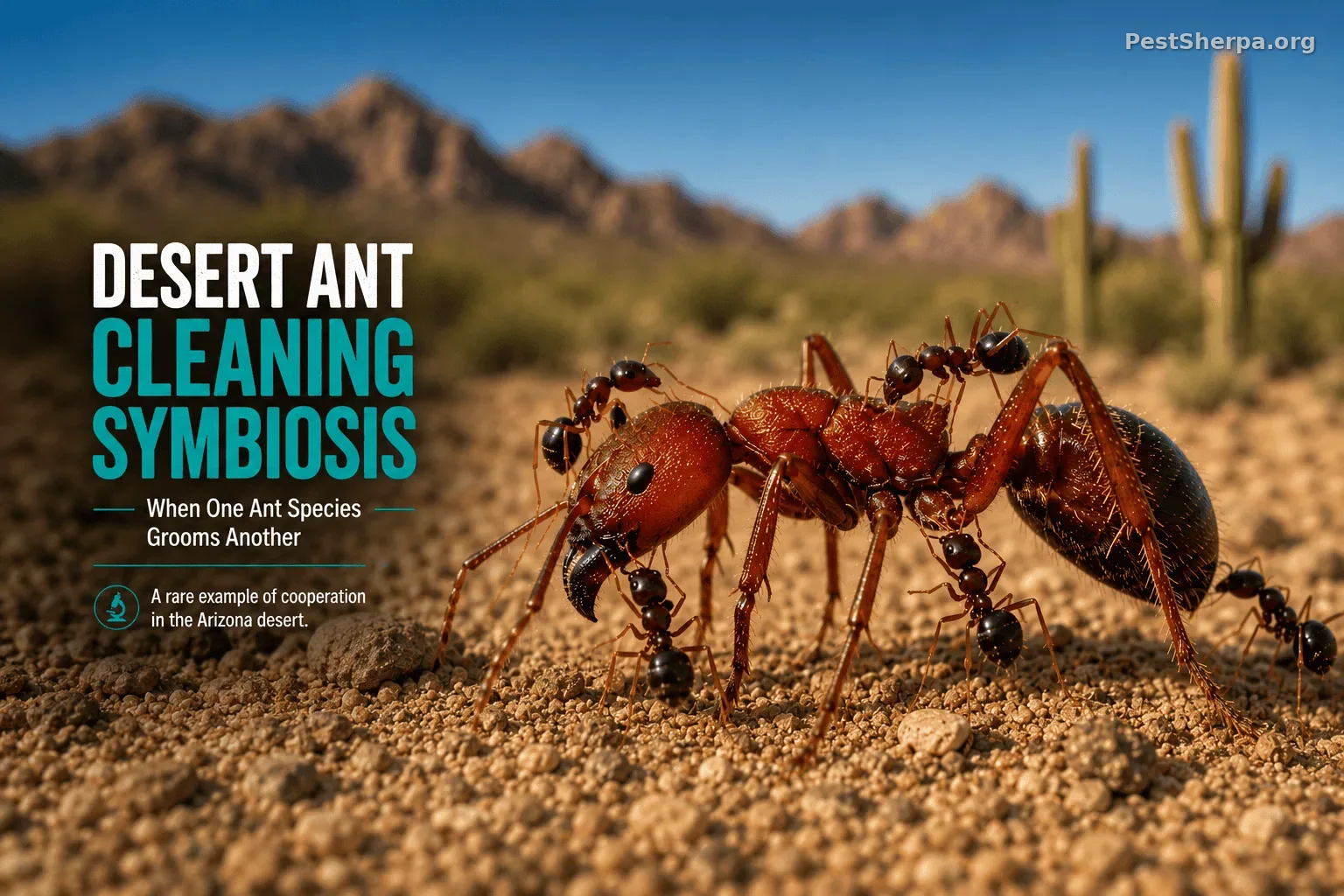
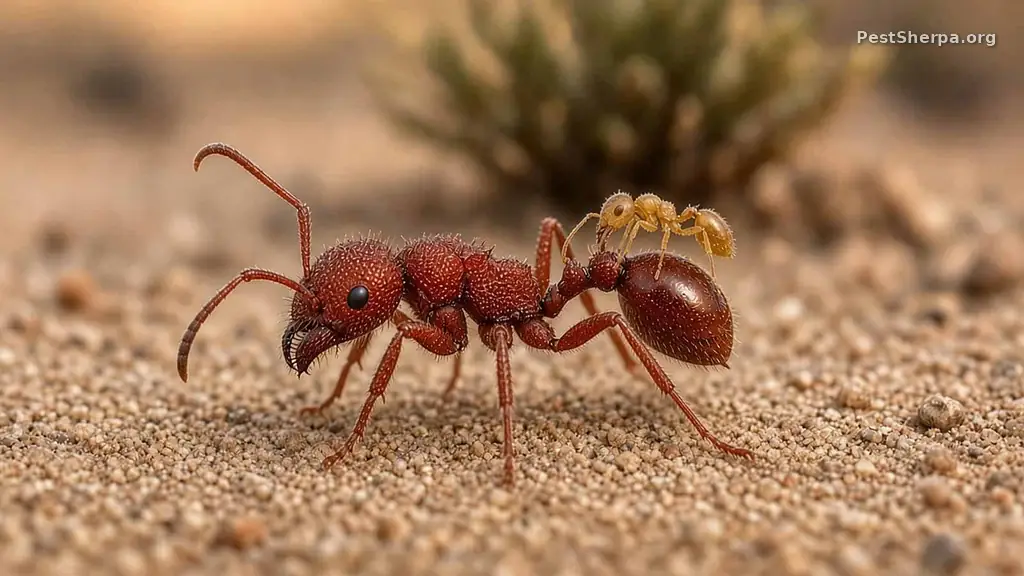
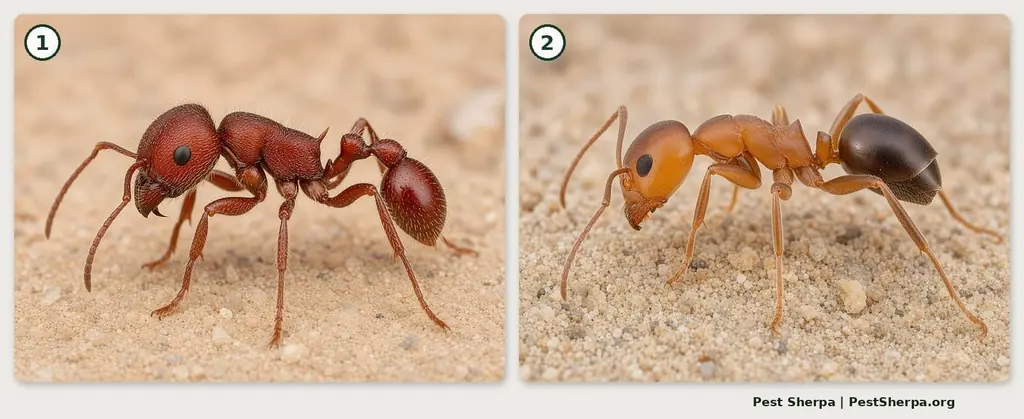
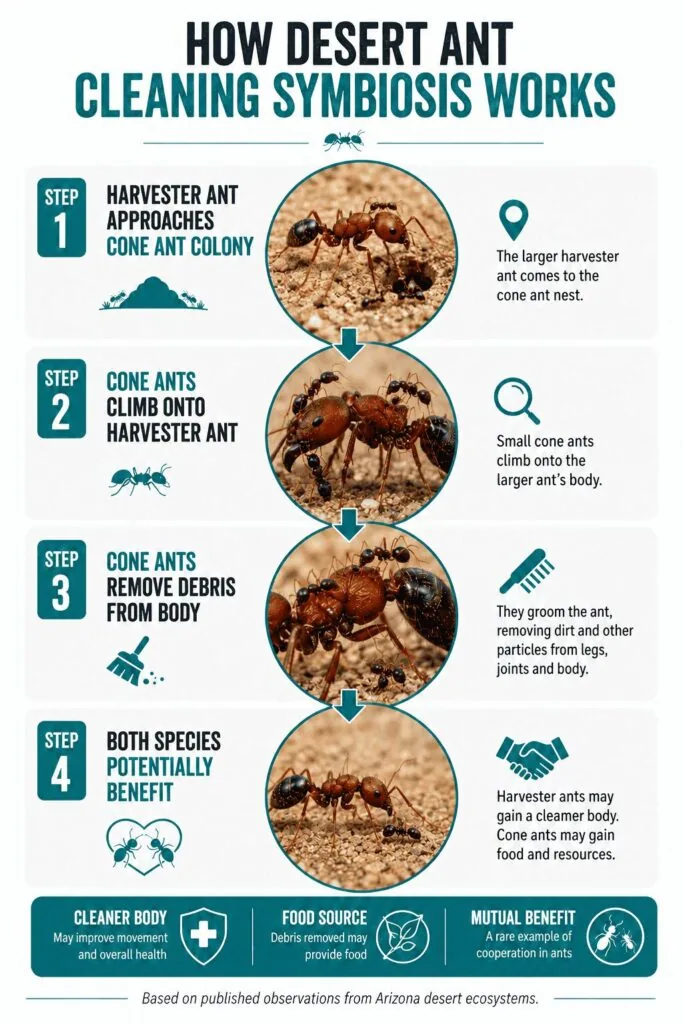
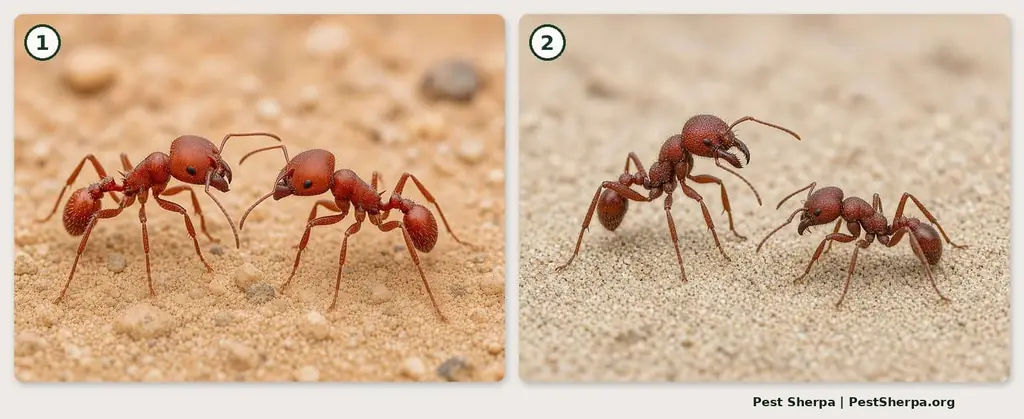
Researchers observed red harvester ants (Pogonomyrmex barbatus) approaching colonies of much smaller cone ants (Dorymyrmex species). Rather than attacking the smaller ants, the harvester ants stood still while the cone ants climbed onto their bodies and groomed them.
The cone ants carefully worked across the legs, joints, body surfaces, and even near the mouthparts of the larger ants. In some observations, the harvester ants appeared to position themselves in ways that made grooming easier.
While scientists have not yet confirmed exactly what the cone ants are removing, the behavior strongly resembles cleaning partnerships seen elsewhere in nature.
Why Is This Behavior So Unusual?
Ant societies depend heavily on chemical recognition. Most ants quickly identify outsiders through chemical compounds called cuticular hydrocarbons that coat the body surface.
When an unfamiliar ant enters a colony’s territory, aggression is often immediate. That is why the observed tolerance between these two species surprised researchers.
Red harvester ants are particularly known for their defensive behavior. Yet during these encounters, they permitted smaller ants to move freely across their bodies without triggering an attack response.
Such tolerance suggests that the larger ants may receive some benefit from the interaction.
Who Benefits From the Relationship?
The exact benefits remain under investigation, but scientists have proposed several possibilities.
Potential Benefits for Harvester Ants
- Removal of dust and environmental debris
- Improved movement around joints and body segments
- Cleaner sensory structures
- Possible reduction of contaminants that accumulate during foraging
Potential Benefits for Cone Ants
- Food obtained during grooming
- Access to organic material removed from the larger ants
- A predictable resource associated with nearby harvester colonies
If both species benefit, the relationship would represent a form of mutualism, a biological interaction in which each participant gains an advantage.
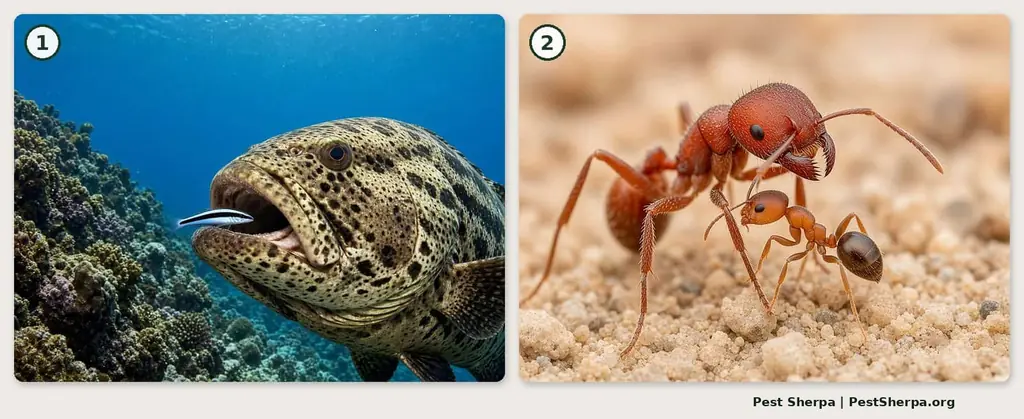
How Does This Compare to Cleaning Symbiosis in Other Animals?
Cleaning relationships are well documented in marine ecosystems. Cleaner wrasses and cleaner shrimp remove parasites and debris from larger fish, often servicing dozens of species.
Comparable relationships on land are much less common and far less studied. That makes the Arizona ant observations particularly important because they suggest complex cleaning partnerships may exist in terrestrial ecosystems but have simply gone unnoticed.
Why This Discovery Matters to Science
Harvester ants are considered important components of desert ecosystems. Their foraging activity influences seed dispersal, plant communities, soil movement, and nutrient cycling.
If grooming improves the health or efficiency of harvester ants, the effects could extend beyond the insects themselves and influence broader ecological processes throughout the desert environment.
What This Means for Homeowners
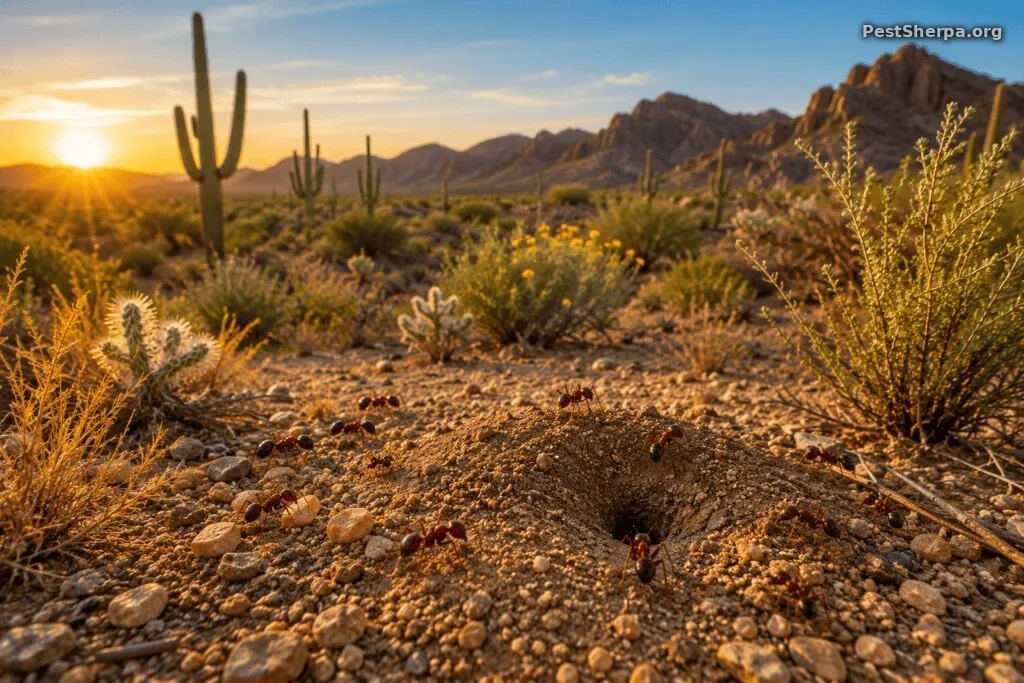
This discovery does not indicate that household ants are cleaning one another inside homes. The observed behavior involves specific desert species living in a natural ecosystem.
However, the finding does reinforce an important pest-management lesson: ant behavior is highly species-specific.
Different ant species can behave dramatically differently. Some are aggressive predators. Some farm aphids. Some collect seeds. Some invade kitchens. And some, apparently, participate in cleaning partnerships.
That is why proper ant identification remains one of the most important first steps in effective pest management.
Sherpa Insight
Many homeowners view ants as simple nuisance pests. Research continues to show they are anything but simple. Ant colonies use sophisticated communication systems, adapt to changing environments, and sometimes engage in behaviors scientists never expected to find.
What Scientists Still Don’t Know
Although the observations are compelling, several important questions remain unanswered:
- Exactly what material is being removed during grooming?
- Do harvester ants actively seek out cleaning services?
- How widespread is the behavior?
- Does the relationship occur year-round or only under certain environmental conditions?
- How do the cone ants avoid triggering aggression from the larger ants?
Future research may reveal whether similar cleaning partnerships occur among other ant species around the world.
Bottom Line
The discovery of desert ant cleaning symbiosis reminds us that even among some of the world’s most studied insects, surprising behaviors remain hidden in plain sight. What appeared at first to be a routine encounter between competing ant species may represent one of the most unusual examples of cooperation yet documented in ants.
References
- Moffett, Mark W. (2026). The First Cleaner Ant? A Novel Partnership in the Arizona Desert. Ecology and Evolution, 16(4).
- National Library of Medicine (PubMed). The First Cleaner Ant? A Novel Partnership in the Arizona Desert.
- Smithsonian Institution. Smithsonian Research Associate Discovers Ants Assemble to Be Picked Clean by Cleaner Ants.
- AntWiki. Pogonomyrmex barbatus (Red Harvester Ant).
- Encyclopaedia Britannica. Harvester Ant.
This article was written by Greg Baumann, founder of Pest Sherpa, and reflects more than 40 years of professional pest management experience.
About the Author

Greg Baumann | Pest Control Expert
Greg Baumann is the founder of Pest Sherpa and a Pest Control Expert with more than 40 years of professional pest management experience. His articles combine decades of field experience, technical expertise, and science-based guidance to help homeowners identify pests correctly, understand real-world risks, and make informed pest management decisions.
Mission: Identify the pest. Understand the risk. Stop the problem. Prevent the comeback. Know when it’s time to call a professional.