
Palmetto Bugs: Identification, Meaning, and How to Keep Them Out
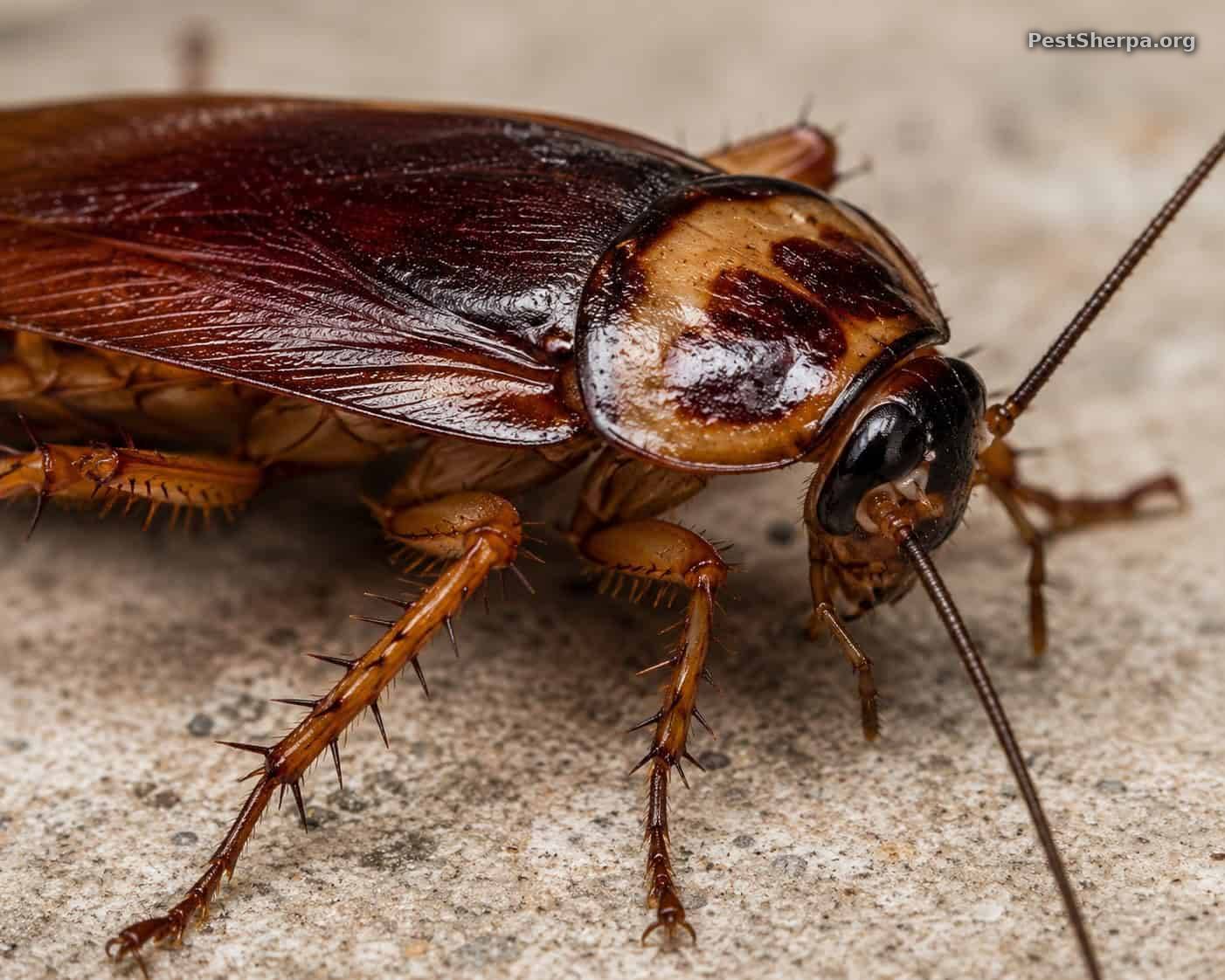
Palmetto bug = cockroach nickname. It is a regional name, not a separate species for most homeowners. In the southeastern United States, people most often use it for large outdoor-leaning cockroaches such as the American cockroach (Periplaneta americana), the smokybrown cockroach (Periplaneta fuliginosa), and, in Florida and nearby coastal areas, the Florida woods cockroach (Eurycotis floridana). If you searched “palmetto bug or cockroach,” the short answer is: you are usually talking about a cockroach. Correct identification still matters because these insects do not all behave the same way.
For broader cockroach identification and comparison, see the Pest Sherpa Cockroach Guide.
TL;DR: Palmetto Bug or Cockroach?
A palmetto bug (also called a palmetto roach) is usually a large cockroach nickname, often for American or similar outdoor-associated species. One large cockroach indoors does not always mean an infestation, especially in warm, humid areas. Repeated sightings, nymphs, egg cases, droppings, activity in multiple rooms, or roaches from drains, crawlspaces, attics, or wall voids are stronger signs that moisture and entry points need work. Compare species in the Quick ID table, then read the American cockroach guide and the cockroaches hub.
The most useful next steps are identification, moisture correction, exclusion, sanitation, and source investigation. Pesticides are not always necessary, and foggers or “bug bombs” are usually a poor first choice for cockroach problems because they often miss hidden harborages.
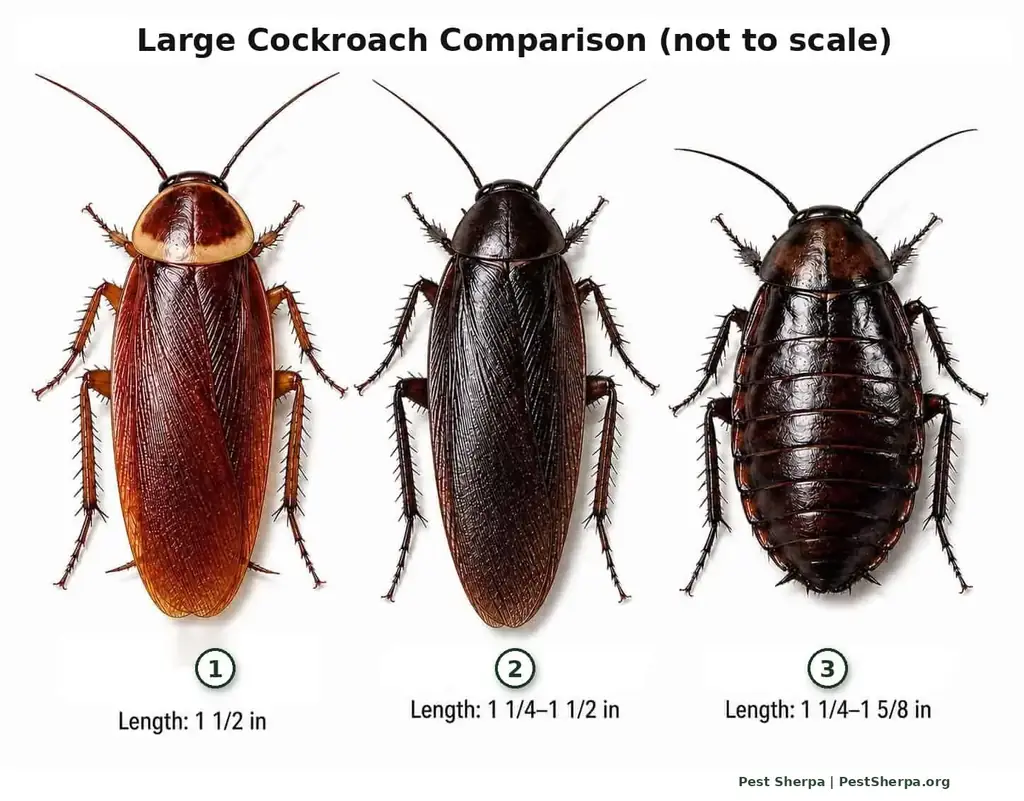
Which one did you find? Match the number:
- American cockroach (the usual “palmetto bug”): reddish-brown with a pale yellowish band around the shield behind the head. About 1 1/2 inches.
- Smokybrown cockroach: a uniform dark mahogany brown with no pale markings. About 1 1/4 to 1 1/2 inches.
- Florida woods roach: broad, dark reddish-brown to black, with very short wings. Slow moving and can give off a strong odor when disturbed.
Comparison of three cockroaches commonly called palmetto bugs.
Quick Navigation
- What Is a Palmetto Bug?
- Quick Identification Table
- American Cockroach
- Smokybrown Cockroach
- Florida Woods Cockroach
- What a Palmetto Bug Indoors Usually Means
- Signs of a Larger Cockroach Problem
- Source Investigation Checklist
- Health and Sanitation Concerns
- What To Do
- What Does Not Work Well
- When Professional Help May Be Worth Considering
- Lookalikes and Common Misidentifications
- Frequently Asked Questions
- References
What Is a Palmetto Bug?
A palmetto bug is usually a large cockroach, but the exact species depends on where you live and what the insect looks like. In everyday use, the nickname may refer to cockroaches found around palmetto fronds, leaf litter, mulch, damp crawlspaces, drains, sewers, attics, and outdoor vegetation.
The three most common possibilities are:
- American cockroach
- Smokybrown cockroach
- Florida woods cockroach
These species overlap in size and color, but their habits differ. American cockroaches are often tied to damp indoor or sewer-associated areas. Smokybrown cockroaches are commonly associated with exterior moisture, trees, attics, gutters, and roofline voids. Florida woods cockroaches are mostly outdoor decomposer cockroaches that may wander inside but usually do not persist indoors.
Quick Identification Table: Palmetto Bug or Cockroach?
Use this table when someone says “palmetto bug” and you need the cockroach answer. American, smokybrown, and Florida woods are the usual candidates behind the nickname.
| Common “Palmetto Bug” Candidate | Typical Adult Size | Color and Shape | Wings and Flight | Most Likely Source |
|---|---|---|---|---|
| American cockroach | About 1½ to 2 inches | Reddish brown with a pale yellow margin behind the head | Fully winged; may glide or fly short distances but is most likely to run | Drains, sewers, basements, crawlspaces, utility areas, damp voids |
| Smokybrown cockroach | About 1-1/4 to 1½ inches | Uniform dark mahogany to smoky brown | Strong flier; often attracted to lights | Mulch, trees, gutters, attics, roof voids, dense vegetation |
| Florida woods cockroach | About 1-1/4 to 1-5/8 inches | Broad, dark reddish brown to nearly black | Short wing pads; does not fly | Leaf litter, palmetto fronds, rotting logs, stumps, damp outdoor debris |
Tip: If the cockroach is small, tan, and reproducing in kitchens or bathrooms, it may not be a palmetto bug at all. Compare it with the German cockroach guide, because German cockroaches require a different response.
American Cockroach
The American cockroach is one of the most recognized insects called a palmetto bug. Adults are large, reddish brown, and usually have a pale yellowish border or marking on the shield-like area behind the head. They have fully developed wings and may glide or fly, especially in warm conditions.
American cockroaches are strongly associated with dark, damp environments. Common locations include basements, crawlspaces, sewer systems, floor drains, sump areas, utility rooms, steam tunnels, and storage areas. In homes, repeated sightings may be connected to plumbing systems, damaged drain traps, gaps around utility lines, crawlspace moisture, or exterior openings near the foundation.
Seeing one American cockroach indoors can happen after heavy rain, outdoor disturbance, or nighttime entry. Repeated sightings near drains, lower levels, or utility penetrations deserve closer inspection.
Smokybrown Cockroach
The smokybrown cockroach is another large cockroach frequently labeled as a palmetto bug. It is usually slightly smaller than the American cockroach and has a more uniform dark brown to mahogany color, without the pale yellow pronotal marking typical of the American cockroach.
Smokybrown cockroaches are more closely associated with outdoor and upper-structure moisture. Common sources include mulch beds, leaf litter, wood piles, tree holes, dense vegetation, gutters, soffits, attic spaces, roofline voids, and areas around exterior lighting. They are strong fliers and may enter at night through open doors, torn screens, gaps around vents, attic openings, or poorly sealed roofline areas.
If large dark cockroaches are appearing upstairs, around lights, near attic access points, or close to eaves and vents, smokybrown cockroaches are a strong possibility.
Florida Woods Cockroach
The Florida woods cockroach is different from the American and smokybrown cockroaches. Adults are broad-bodied, dark reddish brown to nearly black, and have short wing pads rather than full flight wings. They cannot fly.
This species primarily lives outdoors in damp organic debris such as leaf litter, palmetto fronds, rotting logs, stumps, and wooded areas around structures. It may occasionally wander indoors, especially when outdoor conditions change, but it is not usually a cockroach that establishes long-term indoor infestations.
When disturbed, Florida woods cockroaches may release a strong defensive odor. This odor can be alarming, but the more important clue is where the insect came from: damp outdoor debris, mulch, leaf litter, or vegetation close to the structure.
What a Palmetto Bug Indoors Usually Means
A large cockroach indoors is a clue, not a diagnosis by itself. The meaning depends on the species, the number of sightings, the location, and whether immature cockroaches or other signs are present. Quick moisture scan: leaks, damp crawlspaces, wet mulch against the foundation, clogged gutters, and door or pipe gaps.
| What You See | What It May Mean | What To Check First |
|---|---|---|
| One large cockroach | Possible outdoor invader | Door gaps, screens, recent rain, nearby mulch or vegetation |
| Repeated large cockroaches near drains | Possible American cockroach source | Floor drains, plumbing gaps, crawlspace, basement, sewer access points |
| Large dark roaches upstairs or near lights | Possible smokybrown cockroach source | Attic, gutters, soffits, vents, roofline gaps, exterior lights |
| Broad, dark roach near a door or garage | Possible Florida woods cockroach wanderer | Leaf litter, palmetto fronds, mulch, logs, damp outdoor debris |
| Nymphs, egg cases, droppings, or multiple rooms | Possible established cockroach problem | Moisture, food residue, hidden harborages, entry points, wall voids |
Expert Insight: Do not assume every large cockroach indoors means the same thing. A bathroom sighting near a drain points to different inspection priorities than a flying cockroach at an upstairs window or a broad outdoor roach found near a garage door.
Signs of a Larger Cockroach Problem
One large cockroach may be an isolated event. The following signs are stronger indicators that cockroaches are living or repeatedly entering nearby:
- Repeated sightings over several days or weeks
- Live cockroaches seen at night in kitchens, bathrooms, basements, crawlspaces, attics, or utility rooms
- Nymphs, which indicate reproduction nearby
- Egg cases, also called oothecae
- Fecal spotting that may resemble coarse pepper, coffee grounds, or dark smears
- Shed skins in protected areas
- A musty or unpleasant odor in areas with heavier activity
- Cockroaches appearing in multiple rooms or from consistent locations
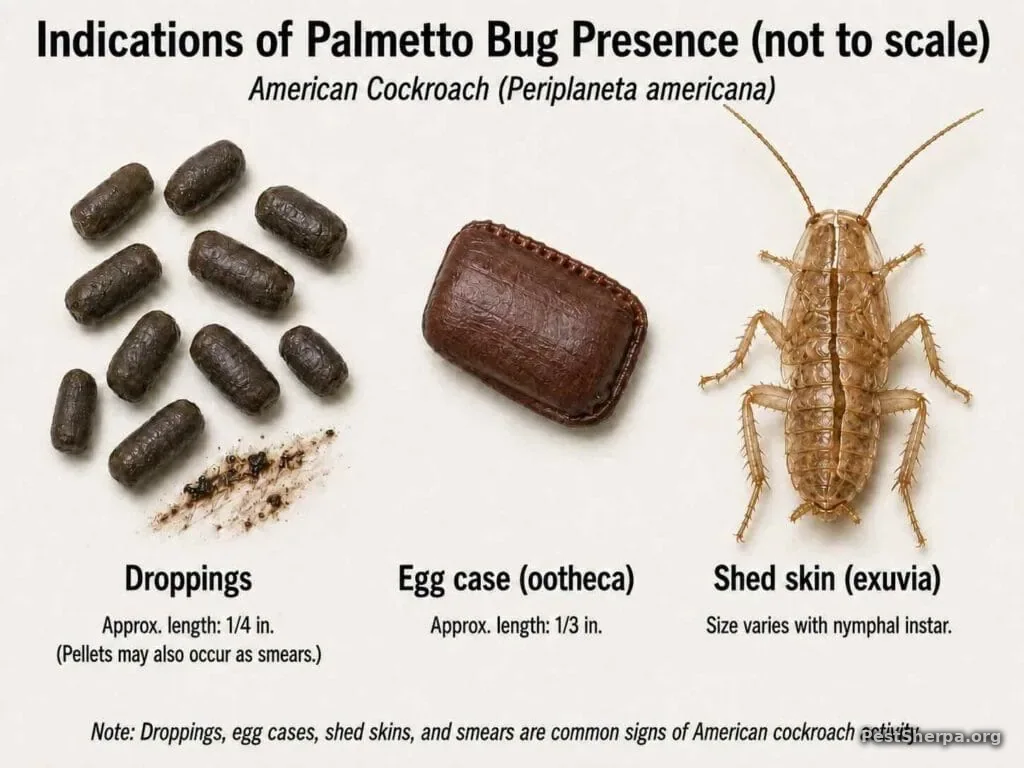
Signs of cockroach activity including droppings, egg case, shed skin, and adult cockroach.
Palmetto Bug Source Investigation Checklist
Step 1: Identify Where You See Them
Location helps narrow the source. Bathrooms, laundry rooms, basements, and floor drains point toward moisture and plumbing. Attics, upstairs rooms, windows, soffits, and exterior lights point more toward flying outdoor cockroaches such as smokybrown cockroaches.
Step 2: Check Moisture
Look for plumbing leaks, condensation, wet crawlspace soil, standing water, poor drainage, clogged gutters, damp mulch, and areas where irrigation keeps the foundation wet. Large cockroaches are strongly influenced by moisture.
Step 3: Inspect Entry Points
Check door thresholds, garage doors, torn screens, weep holes, attic vents, crawlspace vents, utility penetrations, gaps around pipes, and openings around rooflines or soffits. Even large cockroaches can enter through surprisingly narrow gaps.
Step 4: Look Outside the Wall
Inspect mulch beds, leaf litter, palmetto fronds, wood piles, dense vegetation, tree holes, stumps, compost, trash storage, pet feeding areas, and damp debris close to the home. Many palmetto bug complaints begin outdoors.
Step 5: Check Indoor Harborage Areas
Inspect behind appliances, under sinks, around water heaters, near sump pits, inside utility rooms, around floor drains, in crawlspace access areas, and along basement walls. Use a flashlight and avoid reaching blindly into dark voids.
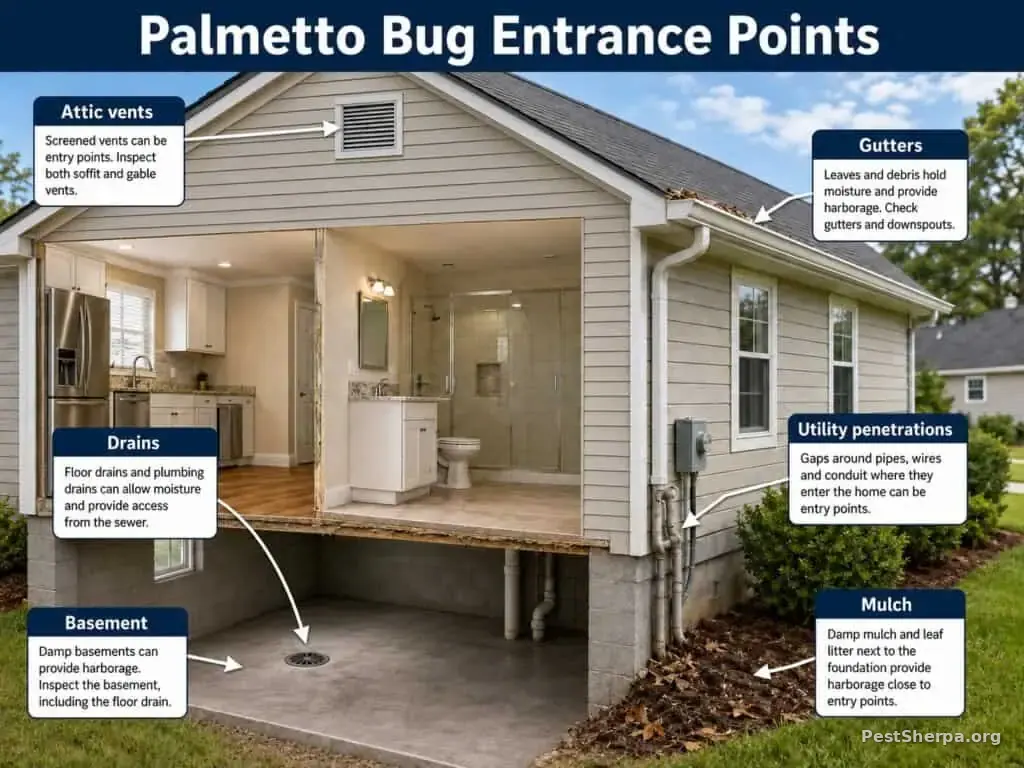
Common palmetto bug entry points and hiding places around a home.
Health and Sanitation Concerns
Large cockroaches do not usually bite people, but they can still matter from a sanitation and allergy standpoint. Cockroaches may move through drains, sewers, garbage areas, decaying organic material, and damp voids before entering living spaces. Their bodies, droppings, shed skins, and saliva can also contribute to indoor allergens.
Risk is higher when cockroaches are repeatedly seen in kitchens, food-storage areas, food-handling facilities, schools, childcare spaces, healthcare settings, or homes with asthma-sensitive occupants. Clean food-contact surfaces if cockroaches have been active nearby, store food in sealed containers, and avoid leaving pet food or water out overnight when cockroach activity is present.
What To Do
1. Confirm the Type of Cockroach
Try to note size, color, location, whether it flew, and whether there are nymphs or egg cases. A clear photo can help with comparison. The species matters because American cockroaches, smokybrown cockroaches, Florida woods cockroaches, and German cockroaches require different inspection priorities.
2. Reduce Moisture
Repair plumbing leaks, improve drainage, clean gutters, reduce crawlspace dampness, fix irrigation overspray, and avoid keeping thick mulch directly against the foundation. Moisture correction is one of the most important long-term steps for large cockroach pressure.
3. Remove Outdoor Harborage
Move firewood off the ground and away from the structure, rake leaf litter, thin dense vegetation, remove unnecessary debris, and avoid excessive mulch near walls. These changes make the area around the home less attractive to outdoor cockroaches.
4. Improve Exclusion
Install door sweeps, repair damaged screens, seal gaps around utility penetrations, close openings around pipes, and repair vents or soffit gaps. Exclusion is especially useful when cockroaches are entering from outdoor populations.
5. Support Control With Sanitation
Sanitation helps reduce food sources, but it is rarely enough by itself if moisture, entry points, and outdoor harborage remain. Store food in sealed containers, clean crumbs and grease, remove trash regularly, rinse recyclables, and avoid leaving pet food out overnight.
6. Use Pesticides Carefully, If Used
Pesticides are not always necessary for occasional invaders. When products are used, read and follow the label, keep products away from children, pets, food, dishes, drains, and ventilation pathways unless the label specifically allows that use, and avoid applying products in ways that could contaminate surfaces people touch.
What Does Not Work Well
- Relying on bug bombs: Foggers often fail to reach cracks, voids, drains, attics, crawlspaces, and other cockroach harborages.
- Spraying without inspection: Broad spraying may kill visible insects but leave the source untouched.
- Ignoring moisture: Large cockroach problems often continue when damp conditions remain.
- Only cleaning indoors: Cleaning helps, but outdoor populations, entry points, and damp harborages may still drive sightings.
- Assuming every cockroach is German: Large outdoor cockroaches behave differently from small indoor-infesting German cockroaches.
When Professional Help May Be Worth Considering
Professional evaluation may be worth considering when sightings are repeated, the source is unclear, cockroaches are appearing from drains or wall voids, nymphs or egg cases are present, activity occurs in food-handling areas, or moisture and entry points are difficult to locate. A careful inspection can help determine whether the issue is linked to American cockroaches in damp lower areas, smokybrown cockroaches in exterior or attic areas, or occasional Florida woods cockroaches wandering in from outdoors.
For readers wondering whether a single roach is enough to panic, see the related Q&A: Does one roach mean an infestation?
Lookalikes and Common Misidentifications
| Possible Lookalike | How It Differs | Why It Matters |
|---|---|---|
| Oriental cockroach | Dark, shiny, and often associated with damp areas; adults are usually shorter and less reddish than American cockroaches | May point to damp exterior, basement, or crawlspace conditions |
| Australian cockroach | Similar to American cockroach but usually has yellowish markings along the front wing edges | More common in warm climates and greenhouse-like environments |
| German cockroach | Much smaller, tan to light brown, with two dark stripes behind the head | Often indicates an indoor breeding infestation that needs a different response |
| Cuban cockroach | Green adult cockroach, usually outdoor-associated | May be mistaken for a strange “palmetto bug” in warm regions |
| Ground beetle | Hard-bodied beetle with chewing mouthparts; not flattened like a cockroach | Often an accidental invader rather than a cockroach problem |
Frequently Asked Questions
Is a palmetto bug the same as a cockroach?
In most household situations, yes. “Palmetto bug” is a nickname commonly used for certain large cockroaches, especially in the southeastern United States, and is most often used for American cockroaches.
Why do people search palmeto bug or other spellings?
Common misspellings include palmeto bug, palmetoo bug, and similar typos for palmetto. They all point to the same regional cockroach nickname. Focus on size, color, and where you found it rather than spelling.
Does one palmetto bug mean I have an infestation?
Not necessarily. One large cockroach may have wandered in from outdoors. Repeated sightings, nymphs, egg cases, droppings, or activity in multiple areas are stronger signs of a larger issue.
Why do palmetto bugs come inside after rain?
Heavy rain can flood outdoor harborages, saturate mulch and leaf litter, or disturb sewer and drainage areas. Cockroaches may move into drier or more protected spaces through gaps around doors, vents, pipes, drains, or the foundation.
Can palmetto bugs fly?
Some can. American cockroaches have wings and may glide or fly short distances. Smokybrown cockroaches are stronger fliers. Florida woods cockroaches have short wing pads and do not fly.
Are palmetto bugs dangerous?
They are not usually dangerous in the way stinging insects or biting pests can be, but they can create sanitation and allergen concerns. This is especially important when cockroaches are active around food, dishes, drains, schools, childcare areas, healthcare settings, or people with asthma or allergies.
What is the fastest way to reduce palmetto bug sightings?
Start by finding the source. Reduce moisture, remove outdoor hiding places, seal entry points, clean food and water sources, and inspect the areas where sightings occur. Killing visible cockroaches without correcting the source usually gives only temporary relief.
Do bug bombs work for palmetto bugs?
They are usually not a good first choice. Foggers may not reach the hidden areas where cockroaches shelter, and they can leave pesticide residue on exposed surfaces. Inspection, moisture correction, exclusion, sanitation, and targeted methods are usually more useful.
How do I keep palmetto bugs out of my house?
Keep the foundation area drier, clean gutters, move mulch and firewood away from the structure, trim vegetation, repair screens, install door sweeps, seal utility gaps, and reduce indoor food and water sources. These steps work best together.
References
- UF/IFAS Extension: Cockroaches and Their Management
- UF/IFAS Extension: American Cockroach, Periplaneta americana
- UF/IFAS Extension: Florida Woods Cockroach, Eurycotis floridana
- Texas A&M AgriLife Urban Entomology: Smoky Brown Cockroach, Periplaneta fuliginosa
- Purdue Extension: Cockroaches
- U.S. Environmental Protection Agency: Cockroaches and Schools
- North Carolina State University: Bug Bombs Are Ineffective Killing Roaches Indoors
This article was written by Greg Baumann, founder of Pest Sherpa, and reflects more than 40 years of professional pest management experience.
About the Author

Greg Baumann | Pest Control Expert
Greg Baumann is the founder of Pest Sherpa and a Pest Control Expert with more than 40 years of professional pest management experience. His articles combine decades of field experience, technical expertise, and science-based guidance to help homeowners identify pests correctly, understand real-world risks, and make informed pest management decisions.
Mission: Identify the pest. Understand the risk. Stop the problem. Prevent the comeback. Know when it’s time to call a professional.