
Tawny Crazy Ants: Identification, Risks, and When to Call a Pro
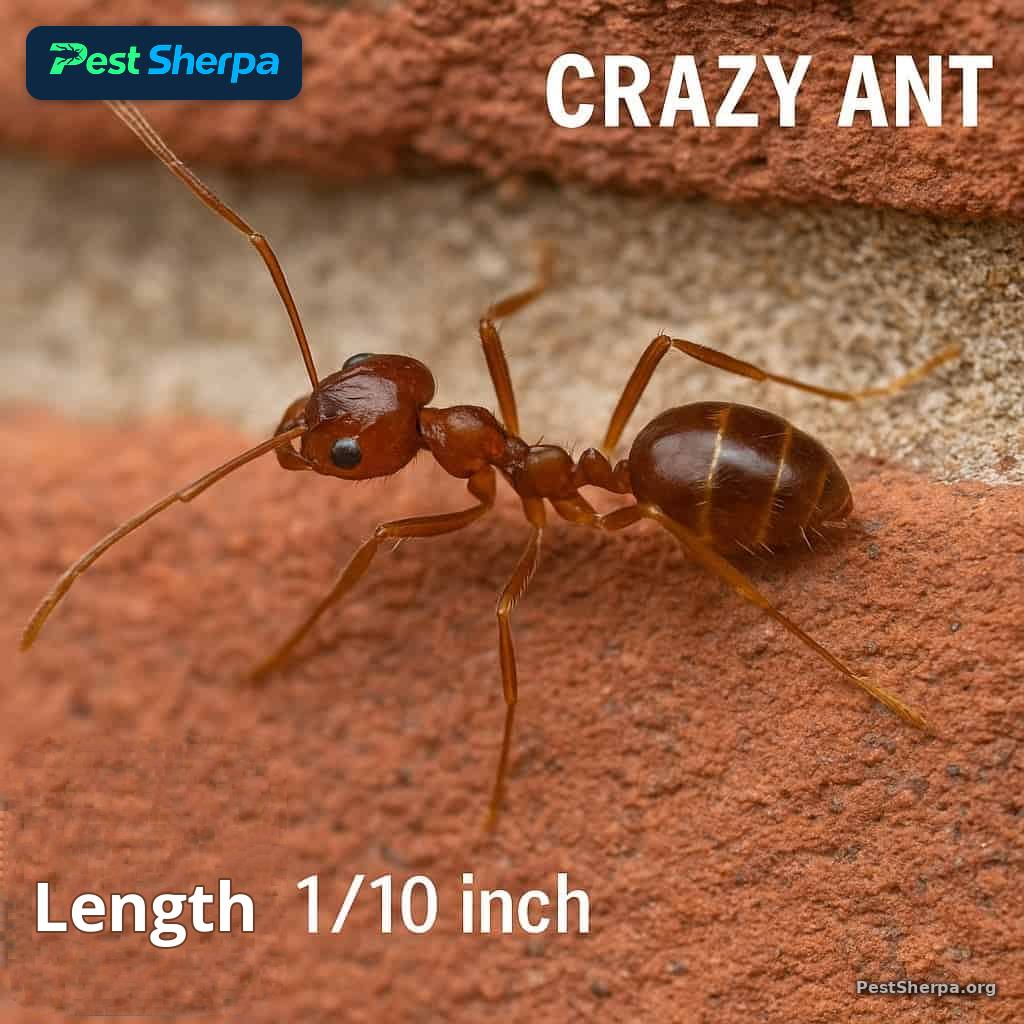
Tawny crazy ants (Nylanderia fulva) are invasive nuisance ants known for their fast, erratic movement and their ability to build enormous, multi-queen populations. Around homes, they can cover patios, foundations, landscape beds, and utility areas in startling numbers. They do not have a stinger, but heavy infestations can still become a serious property problem because these ants are difficult to suppress, quick to spread, and sometimes associated with electrical equipment issues.
This species was once widely called the Rasberry crazy ant, named after a Texas pest management professional who drew attention to unusual infestations in the early 2000s. Today, tawny crazy ant is the more widely accepted common name in extension and scientific sources.
TL;DR
- What to look for: Fast, erratic, reddish-brown ants in large numbers → Identification
- Main red flag: Sudden population explosions and widespread activity → Infestation Signs
- Biggest risk: Overwhelming outdoor areas + possible electrical issues → Property Risks
- DIY reality: Often limited due to multi-queen, multi-nest colonies → Control Options
- When to act fast: Activity near home, equipment, or recurring infestations → Call a Pro
- Best prevention: Reduce moisture, clutter, and nesting sites → Prevention Steps
Quick Answer
If you are seeing large numbers of uniformly sized, reddish-brown ants moving rapidly in no obvious trail pattern, especially around mulch, leaf litter, walls, potted plants, outdoor equipment, or electrical boxes, tawny crazy ants are worth considering. Because they form interconnected colonies with multiple queens and many nesting sites, control is often more complicated than it is with more familiar household ants.
What this means right now
As of November 6, 2026: Mississippi’s tawny crazy ant map has reached 10 confirmed counties. Joe MacGown, ant curator at the Mississippi Entomological Museum, told WDAM that Jones County was confirmed on November 4 and that colonies now reach as far north as Madison. The six counties added in 2026 are Marion, Lamar, Perry, Jones, Wilkinson, and Madison. These ants do not sting, but they nest in leaf litter, mulch, wall voids, and even parked vehicles, and they can short out electrical equipment. Santos Portugal of MSU Extension says success should be measured by keeping them out of the house, not by wiping out an established outdoor population. If you live outside the 10 confirmed counties and suddenly see huge numbers of fast, erratic reddish brown ants, MSU Extension still asks that you send samples to its Insect ID Lab. Large colonies usually take repeat professional treatment.
Why Tawny Crazy Ants Matter
Many ants are mostly an annoyance. Tawny crazy ants can become more than that. Established infestations may involve very large populations spread across many small nesting sites, which makes them harder to suppress with simple spot treatment. In residential settings, homeowners often notice them covering sidewalks, foundations, shrubs, walls, patios, and utility areas.
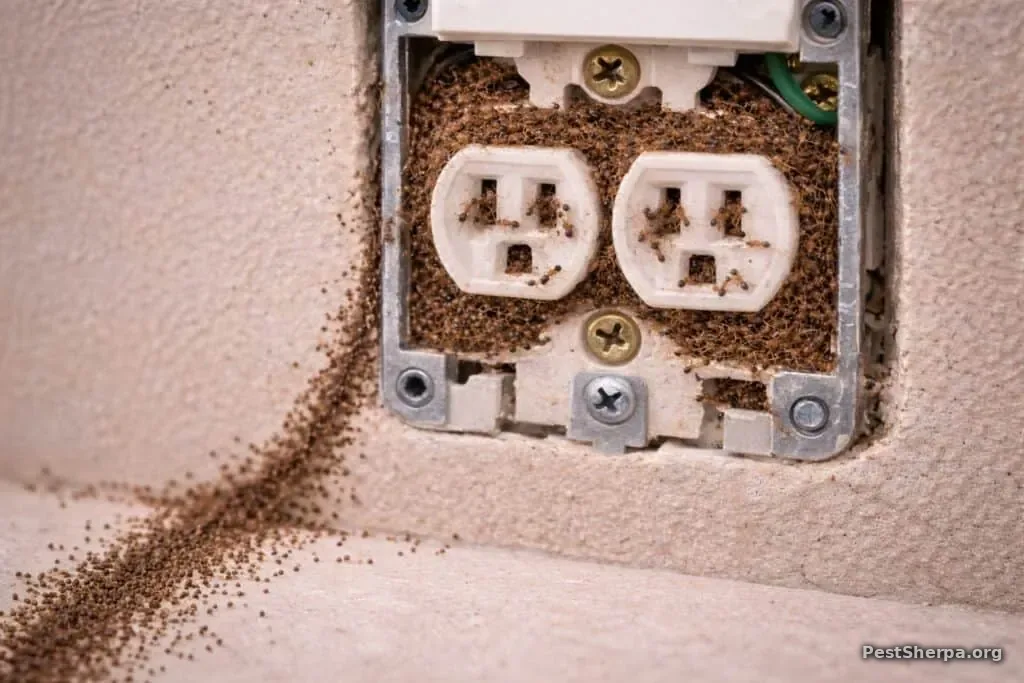
In severe infestations, property owners may also find large piles of dead ants collecting along edges, thresholds, and foraging routes. These ants are also known for entering electrical boxes, HVAC components, utility enclosures, and other sheltered equipment, where heavy accumulations can contribute to malfunctions or short circuits.
Beyond the nuisance factor, tawny crazy ants are also an invasive species. In some areas, they have displaced native ants and altered local insect communities, which is one reason extension services take them seriously.
How to Identify Tawny Crazy Ants
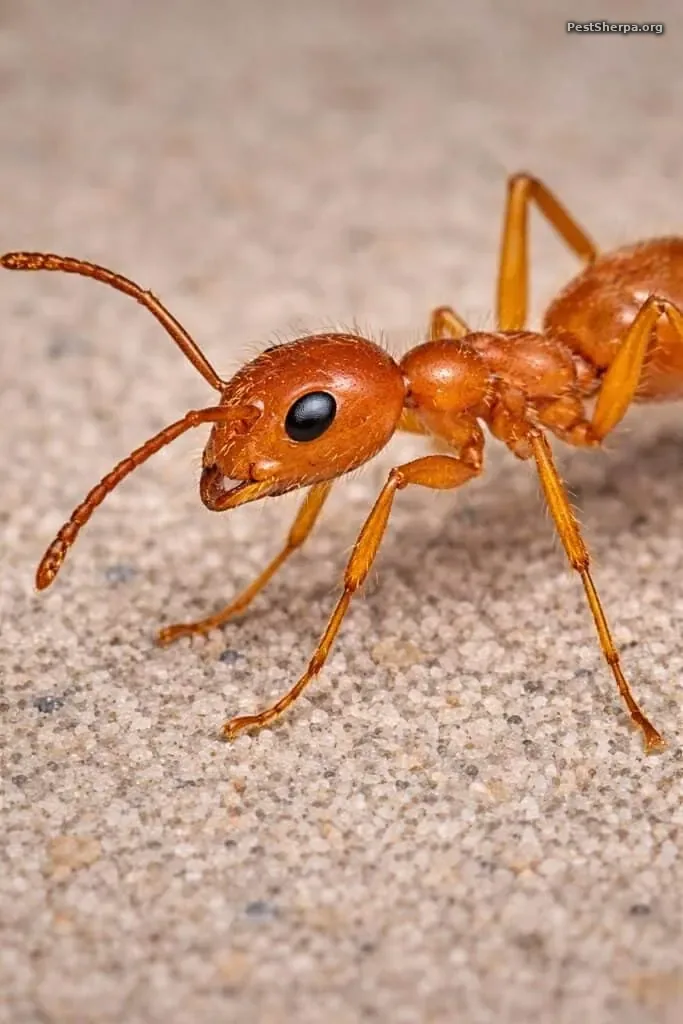
Adult workers are small, typically around 1/8 inch long. Their color usually ranges from yellowish-brown to reddish-brown. Under close inspection, the body appears somewhat fuzzy because of the many fine hairs. Like other ants, they have elbowed antennae and a narrow waist, but a useful structural detail is the presence of a single petiole node between the thorax and abdomen.
Workers do not have a stinger. They may bite, and they can release a small amount of formic acid, which may irritate sensitive skin or eyes.
The feature most homeowners notice first is their movement. Tawny crazy ants run rapidly and change direction often, giving them the erratic behavior behind the “crazy ant” name.
What Homeowners Often Notice First
- Fast-moving ants that seem to wander in every direction
- Uniformly small workers appearing in high numbers
- Activity around mulch, leaf litter, potted plants, and outdoor clutter
- Ants showing up around foundations, wall voids, siding gaps, and utility areas
Tip: If you’re trying to confirm what you’re seeing, comparing tawny crazy ants to similar species can help narrow it down quickly.
Commonly Confused Ants
Tawny crazy ants are often mistaken for other small brown ants, especially during quick visual inspections. Correct identification matters, because behavior, risk level, and control strategy can vary significantly between species.
- Carpenter ants (wood-damaging ants): Larger ants that move more deliberately and are associated with wood damage rather than widespread nuisance activity.
- Argentine ants: Form massive, interconnected colonies like tawny crazy ants, but typically follow more defined foraging trails.
- Odorous house ants: Small, dark ants commonly found indoors; release a distinct odor when crushed.
- Fire ants: More aggressive and capable of stinging, with visible mound-building behavior that differs from the scattered nesting of crazy ants.
Tawny crazy ants may be mistaken for other small brown ants, especially during a casual inspection. Accurate identification sometimes depends on close examination of body hairs, antennal structure, and waist shape. If the infestation is large or persistent, getting the identification right matters because control expectations and treatment strategy can change significantly from one ant species to another.
Signs of a Tawny Crazy Ant Infestation
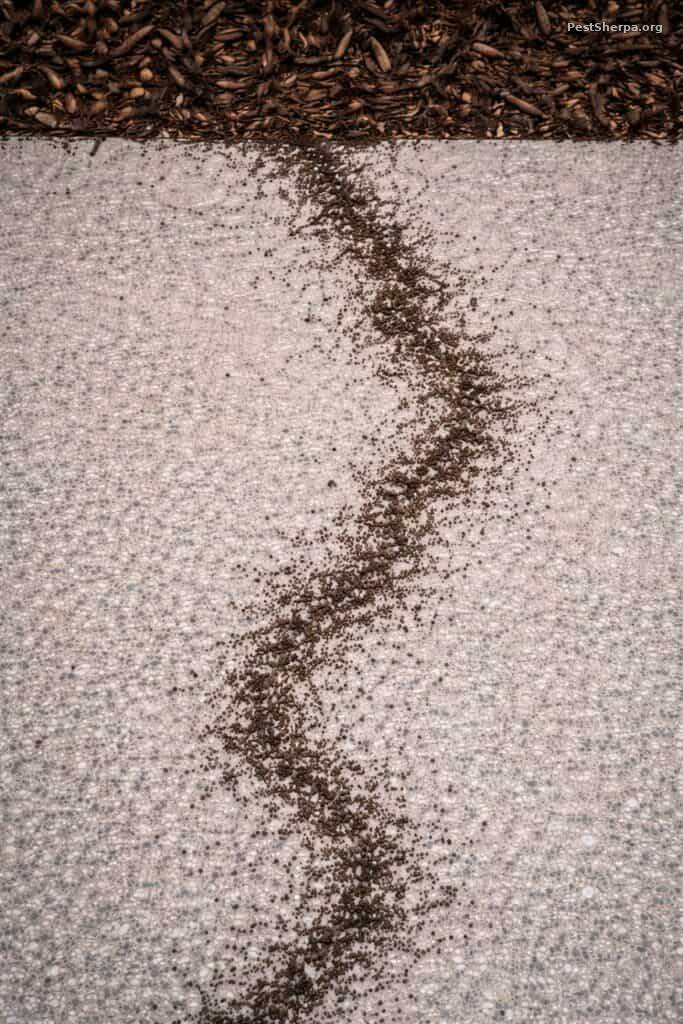
- Large numbers outdoors: ants covering sidewalks, patios, planters, walls, foundations, shrubs, or lawn edges
- Erratic foraging: movement that looks disorganized rather than trail-based
- Sudden population explosions: activity seems minor at first, then becomes overwhelming
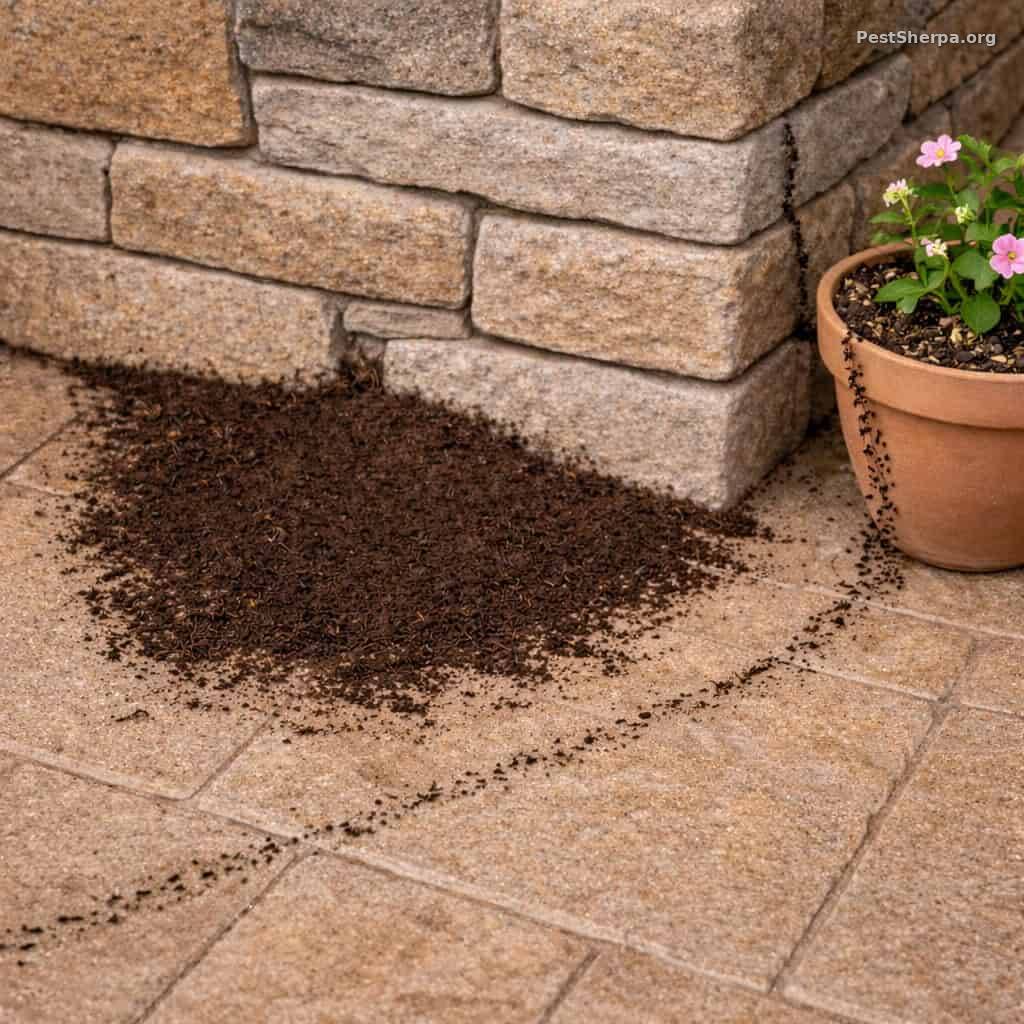
- Dead ant buildup: piles or drifts of dead ants along doors, edges, or heavily traveled routes
- Activity near equipment: ants gathering around AC units, utility boxes, pumps, or electrical enclosures
- Nesting in many places: ants turning up under debris, bark, mulch, potted plants, rocks, rotting wood, stored materials, or sheltered cracks
Related Ant Species & Similar Infestations
If you’re comparing ant activity around your home, these related species can help clarify what you’re dealing with and what level of response is appropriate:
- Argentine ants: Known for large colony systems and persistent reinfestation patterns.
- Allegheny mound ants: Larger, outdoor ants that build visible mounds and behave very differently from the scattered, multi-nest activity of crazy ants.
Biology, Nesting, and Food Sources
Tawny crazy ants form polygynous colonies, meaning they contain multiple queens. They are also polydomous, meaning the colony is spread across many nesting sites rather than centered in one obvious nest. That combination is one reason control can be frustrating. Eliminating one pocket of ants does not necessarily remove the broader infestation.
Nests may be found in soil, leaf litter, mulch, rotting wood, under bark, beneath rocks, inside potted plants, in stored materials, beneath siding, in wall voids, under roof coverings, or inside equipment left outdoors. When disturbed, ants may simply relocate to nearby shelter.
Their diet is broad. Honeydew from aphids, scales, and mealybugs is an important food source, and tawny crazy ants may protect these plant-feeding insects in exchange. They also feed on live insects, dead insects, and other organic matter.
How They Spread
Tawny crazy ants are native to northern South America. In the United States, they were first detected in Texas in 2002 and have since spread into parts of the Gulf Coast and the Southeast. Human movement plays a major role in that spread. Infestations are often transported in potted plants, mulch, yard debris, landscaping supplies, soil, equipment, and other materials that provide shelter.
That is why a property can seem ant-free one month and suddenly develop a major problem after new materials are brought in or disturbed.
Property Risks and Environmental Impact
For most homeowners, the immediate issue is nuisance pressure. The ants can make outdoor living areas unpleasant and may move into voids and sheltered parts of structures. In some cases, they also gather inside electrical equipment, air-conditioning units, and utility enclosures, where large numbers may interfere with normal operation.
They are not considered a structural wood-destroying pest like termites or carpenter ants, but that does not mean they are harmless. Their ability to overwhelm outdoor areas, reinvade treated zones, and exploit many hidden nesting spots makes them a serious management issue.
Ecologically, tawny crazy ants can displace native ant species and disrupt local arthropod communities. In heavily infested areas, they have even been associated with displacement of other invasive ants.
Prevention Steps That Actually Help
Prevention is not always enough by itself, but it can make a property less favorable and reduce the number of hidden nesting sites close to the structure.
- Reduce leaf litter, yard debris, and clutter near the home
- Avoid overly deep mulch and inspect mulch before bringing it onto the property
- Inspect potted plants, stored materials, and landscape supplies before moving them
- Trim vegetation so branches and foliage do not touch the house
- Correct irrigation leaks, drainage problems, and persistent moisture near the foundation
- Seal gaps around utility penetrations, siding openings, and exterior cracks where ants may enter voids
Control Options: What Works, What Doesn’t
DIY Control
DIY treatment usually focuses on outdoor baiting, targeted residual treatments, and habitat reduction. In light infestations, reducing moisture, removing cover, and using labeled ant products in active foraging areas may help lower visible activity.
Why DIY Often Falls Short
- Colonies contain multiple queens
- The infestation is spread across many nest sites, not one central nest
- Ants may relocate when disturbed
- Treating one area may leave many nearby pockets untouched
- Heavy infestations can require repeat treatment and property-wide strategy
- In some situations, neighboring properties may also be contributing to reinfestation
For this species, realistic expectations matter. Property owners are often working toward long-term suppression rather than instant elimination.
Know When to Call a Pro
You should strongly consider professional help when any of the following are true:
- Ants are covering large outdoor areas or returning quickly after treatment
- You are seeing activity in walls, voids, siding gaps, or around entry points
- Ants are showing up around air-conditioning units, pumps, utility boxes, or electrical equipment
- The property has multiple likely nesting zones such as mulch beds, cluttered edges, potted plants, and stored materials
- You are unsure whether the ants are actually tawny crazy ants or another species
- The infestation appears to involve neighboring properties or shared landscape areas
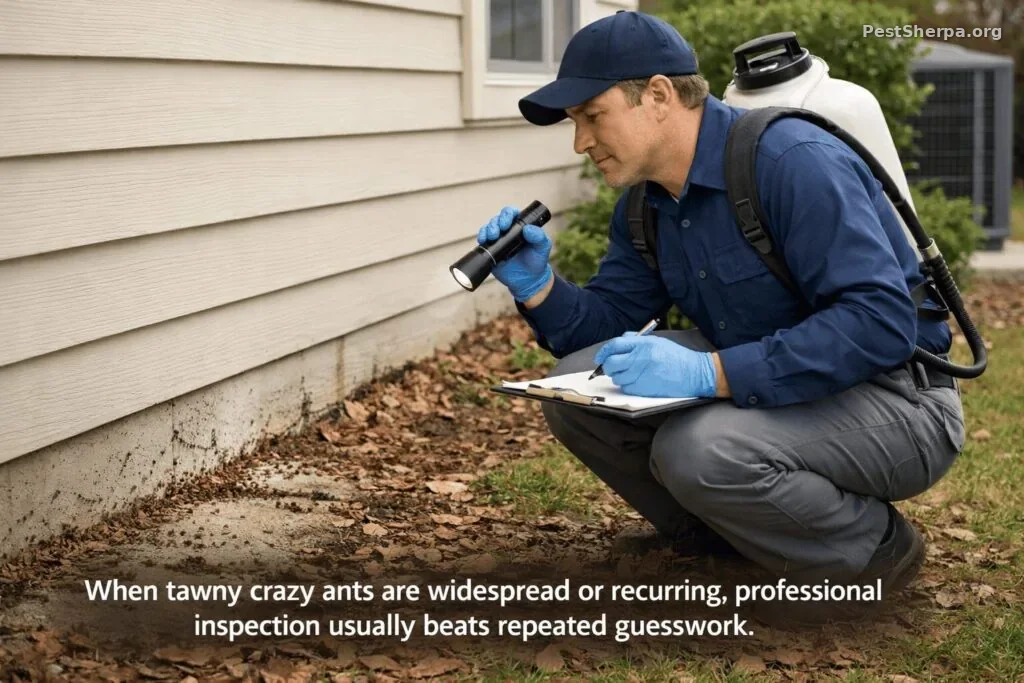
If activity is widespread across multiple areas of the property, especially outdoors near the foundation, this usually indicates a multi-nest colony that won’t be resolved with spot treatments. For heavy infestations, a professional can help with correct identification, property-wide inspection, targeted treatment, and a more realistic suppression plan.
What Professional Treatment Usually Involves
Professional management is usually built around inspection, identification, habitat correction, and repeated outdoor treatment where ants are actively foraging and nesting. The exact approach depends on the product label, local regulations, infestation severity, and site layout.
A strong service plan often includes:
- Mapping the most active foraging and nesting zones
- Reducing conducive conditions around the structure
- Using appropriate labeled products in a way that matches the colony structure
- Monitoring response and adjusting treatment rather than relying on a single visit
Because tawny crazy ants can occupy many protected sites and rebound after incomplete treatment, a professional program is often the most efficient path when populations are already well established.
Frequently Asked Questions
Are tawny crazy ants dangerous to people?
They are mainly considered a nuisance pest. They do not have a stinger, but they may bite and release formic acid, which can irritate sensitive skin or eyes.
Why are they called crazy ants?
The name comes from their rapid, erratic movement. Instead of following neat, obvious trails, workers often dart around unpredictably.
Can tawny crazy ants damage a house?
They are not wood-destroying ants, but they can become a serious property issue because of their huge numbers, their ability to invade sheltered parts of structures, and their association with electrical and utility equipment.
Can I get rid of tawny crazy ants myself?
Light activity may be reduced with habitat correction and carefully chosen labeled products, but established infestations are often difficult to control without a broader strategy. Long-term suppression is usually a more realistic goal than immediate elimination.
What attracts tawny crazy ants?
They are attracted to shelter, moisture, protected nesting sites, and food sources such as honeydew-producing insects. Mulch, leaf litter, potted plants, debris, and dense vegetation can all make an area more favorable.
What is the difference between tawny crazy ants and fire ants?
Tawny crazy ants do not build the same obvious mounds as fire ants, do not have a stinger, and are known for erratic movement and widespread, multi-nest infestations. Fire ants behave differently and require a different identification and control approach.
Related Pest Guidance
For homeowners comparing ant problems, the ant guide covers other nuisance and structural ants, and the fire ants guide explains how fire ants differ. If an infestation is beyond DIY, see how to hire a licensed pest control company.
References
- Gotzek et al. (2012): Rasberry Crazy Ant Identification Study (PLoS ONE)
- University of Florida IFAS: Integrated Pest Management of the Tawny Crazy Ant
- Texas A&M AgriLife Extension: Tawny Crazy Ant Management
- University of Georgia Extension: Managing Tawny Crazy Ants
- Texas Invasive Species Institute: Tawny Crazy Ant Profile
- Wang et al. (2016): Review of Tawny Crazy Ant Biology and Management
Pest Sherpa content is designed to bridge the gap between basic DIY advice and real-world pest control outcomes. Every guide is structured to help you avoid wasted time, unnecessary treatments, and costly misdiagnoses.
This article was written by Greg Baumann, founder of Pest Sherpa, and reflects more than 40 years of professional pest management experience.
About the Author

Greg Baumann | Pest Control Expert
Greg Baumann is the founder of Pest Sherpa and a Pest Control Expert with more than 40 years of professional pest management experience. His articles combine decades of field experience, technical expertise, and science-based guidance to help homeowners identify pests correctly, understand real-world risks, and make informed pest management decisions.
Mission: Identify the pest. Understand the risk. Stop the problem. Prevent the comeback. Know when it’s time to call a professional.