
Mosquito Guide: Identification, Bite Risk, and Yard Control
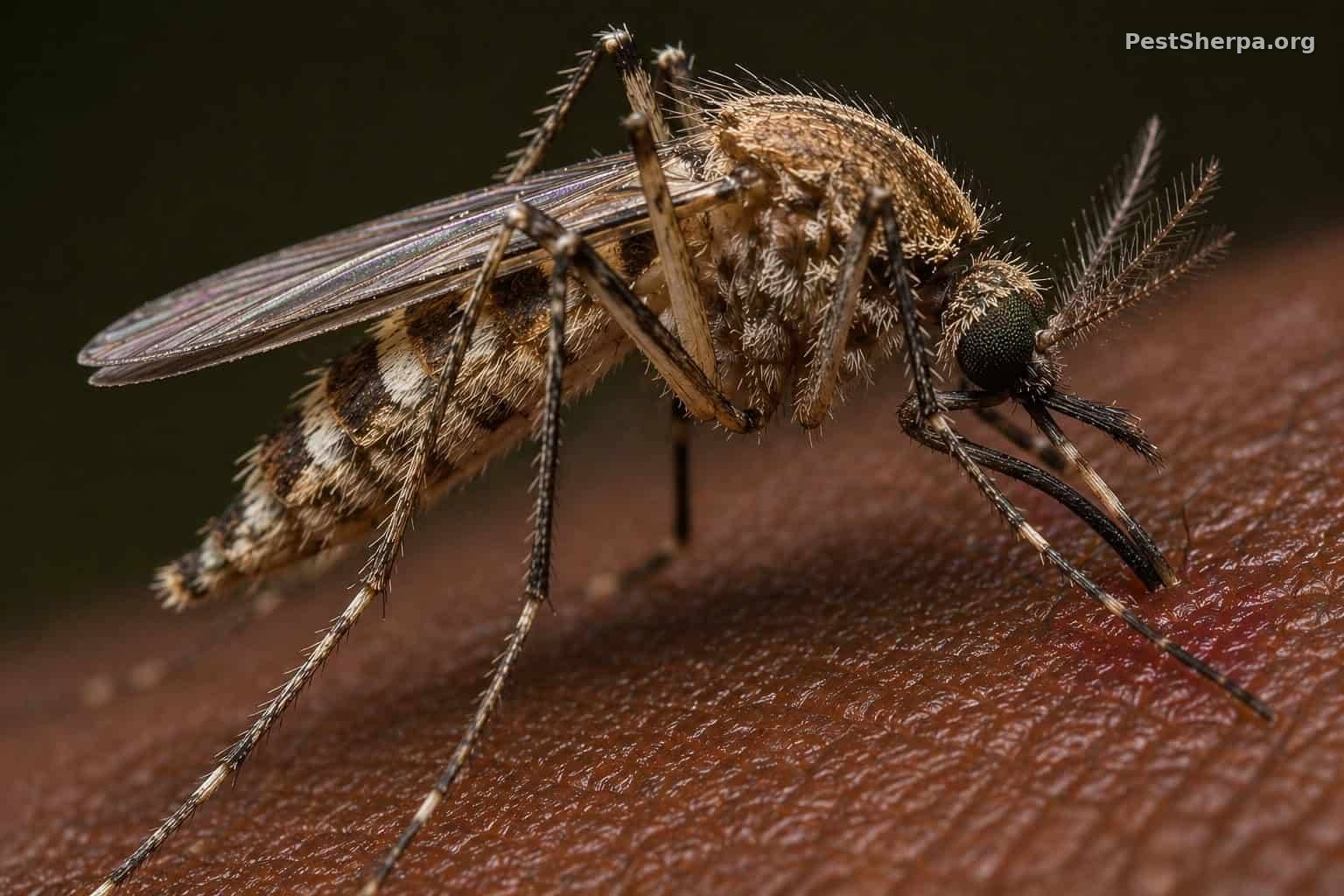
If you’re getting bitten around your home, mosquitoes are almost always breeding nearby. This guide shows you what’s causing the problem and how to fix it quickly.
TL;DR: What to Do About Mosquitoes
- Mosquitoes are breeding close to where you’re being bitten
- Standing or moving water is the root cause and vital for mosquitoes to reproduce
- Sprays alone do not solve the problem
- You must eliminate breeding sources for real control and understand the mosquitoes in your area
Quick Action:
- Dump standing water (gutters, buckets, plant trays)
- Reduce shade and moisture
- Use targeted treatment if needed
- Call a pro if it continues
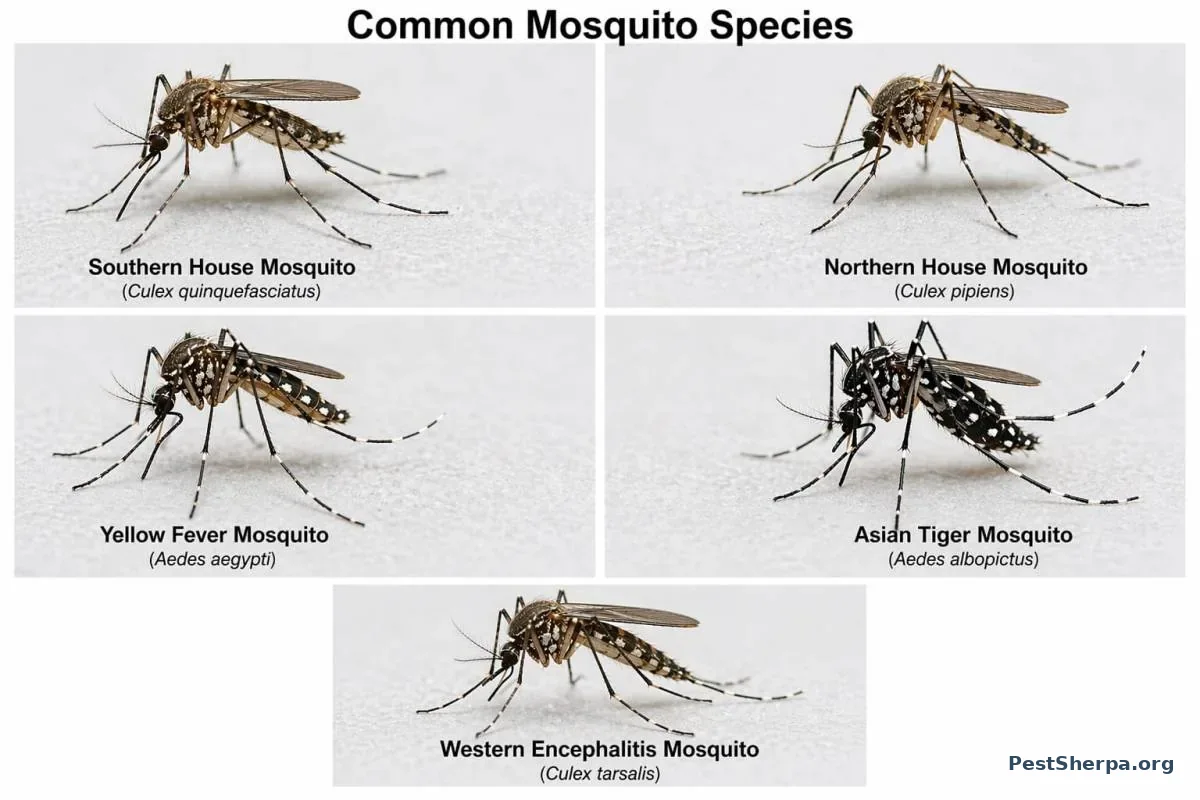
Above: While there are more than 200 species of mosquitoes in the United States, these five species are very common.
Start with the mosquito you actually have. Three species people ask about most often: the western encephalitis mosquito (Culex tarsalis: brown, dusk, white-banded proboscis), the Asian tiger mosquito (Aedes albopictus: black-and-white with one silver stripe), and the yellow fever mosquito (Aedes aegypti: black-and-white with a white lyre on the back). The two Aedes usually breed in cups, trays, and tires a few blocks from where they bite. House Culex, including the northern house mosquito, are the plain brown dusk biters. Use the chart below, then open that species guide. [Oklahoma State Extension] [CDC Aedes life cycle]
What this means right now
As of November 13, 2026: Florida’s Week 44 arbovirus report (Nov 1 to 7) added 100 locally acquired dengue cases, bringing 2026 to 624 across 12 counties, up from 524 a week earlier (FDOH). Hillsborough still carries most of the load with 468, and Pinellas has 109. Hillsborough County has also extended its local state of emergency to Nov. 19 and increased air and ground treatments because surveillance in many neighborhoods is showing dengue virus in mosquitoes (Hillsborough County). Cooler nights slow these mosquitoes down, but they do not stop them, so I would not treat a cold front as the all clear. The Aedes aegypti mosquito that spreads dengue lays eggs in containers as small as a bottle cap and bites during the day. Dump saucers, buckets, toys, and tarps every few days, especially after rain. Keep window and door screens tight. Wear an EPA-registered repellent outdoors, and call your doctor about fever, severe body aches, or pain behind the eyes.
Jump to Sections
- What attracts mosquitoes
- Where they breed
- Are they dangerous?
- Common species
- Asian tiger vs yellow fever vs northern house
- Mosquito species guides
- How to get rid of them
- Why treatments fail
- When to call a pro
- What a Pro Visit Looks Like
- What It Costs
- Common Questions
- References
What Attracts Mosquitoes
Only female mosquitoes bite, and they bite because they need a blood meal to make eggs. Their antennae pick up the carbon dioxide in your breath, which is why a full patio or a backyard party draws them in. [CDC]
What keeps them in your yard is simpler than most people think: water to lay eggs in for most species (some lay eggs where flooding will reach eggs) and shade to rest in. CDC notes that adult mosquitoes rest in dark, humid spots such as under patio furniture, under the carport, or in the garage. [CDC at home]
- Standing water: even a small amount in a saucer, toy, or clogged gutter is enough for egg laying
- Shade and humidity: dense, overgrown plants and cluttered corners give adults a place to wait out the day
- People and pets: the carbon dioxide you breathe out tells a hungry female where to go
Key insight: The two container mosquitoes behind most daytime yard bites, the Asian tiger and the yellow fever mosquito, only fly a few blocks in their lifetime. If they are biting you, they almost certainly hatched on your lot or the one next door. [CDC Aedes life cycle]
Where Mosquitoes Actually Breed
- Clogged gutters
- Plant trays
- Buckets and toys
- Birdbaths
- Children’s pools
- Low spots in yard
- Tarps and containers
Even small amounts of water are enough.
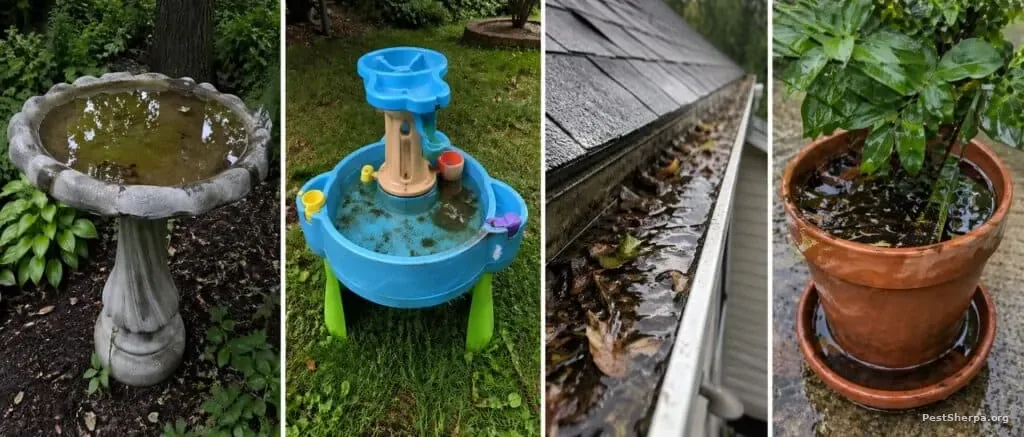
Above: Removing water sources and taking steps to prevent pooling of water will greatly help mosquito control
Federal and university IPM programs treat standing water as the job, not the adult you just slapped. CDC’s home list is the same one already on this page (tires, buckets, planters, toys, pools, birdbaths, flowerpot saucers), emptied and scrubbed once a week, because Asian tiger and yellow fever eggs glue to the wall above the waterline and can wait out a dry spell. Change birdbaths weekly; invert or toss unused containers; keep gutters flowing. For water that must stay, EPA-registered larvicides (often Bti dunks/bits) treat larvae before they fly. Adult sprays and yard misters knock down what is in the air that evening; they do not replace the water hunt, and EPA notes residential misting systems have not been scientifically proven to stop West Nile virus. [CDC] [EPA IPM] [EPA misting] [UF/IFAS IN1045]
Are Mosquito Bites Dangerous?
Most mosquito bites are just itchy. The real concern is that a small number of species can carry germs. CDC counts more than 200 kinds of mosquitoes in the continental United States and U.S. territories, and about 12 of them spread viruses, bacteria, or parasites that can make people sick. [CDC: U.S. mosquitoes]
West Nile virus is one of the most common mosquito-borne diseases in the continental U.S. My West Nile Pest Lab article covers that risk in depth. Dengue is spread by Aedes mosquitoes, and CDC notes the yellow fever mosquito is more likely than the Asian tiger to spread dengue, chikungunya, and Zika. Outbreaks of those viruses have occurred in U.S. states and territories including Florida, Hawaii, Texas, and Puerto Rico, and Florida has reported local dengue cases this fall (see What this means right now above). [CDC Aedes range] [CDC] In 2026, Executive Order 14433 set a federal goal of cutting Asian tiger, yellow fever and other invasive mosquitoes by 90% across Washington, D.C., by 2028.
Fever with pain behind the eyes, muscle or joint aches, nausea, or a rash after mosquito bites is worth a call to your doctor. Belly pain, vomiting at least three times in 24 hours, or bleeding from the nose or gums are dengue warning signs and need a clinic or emergency room right away. [CDC dengue symptoms]
You cannot tell whether a mosquito is carrying anything just by looking at it, so the prevention steps below matter for every species. [CDC]
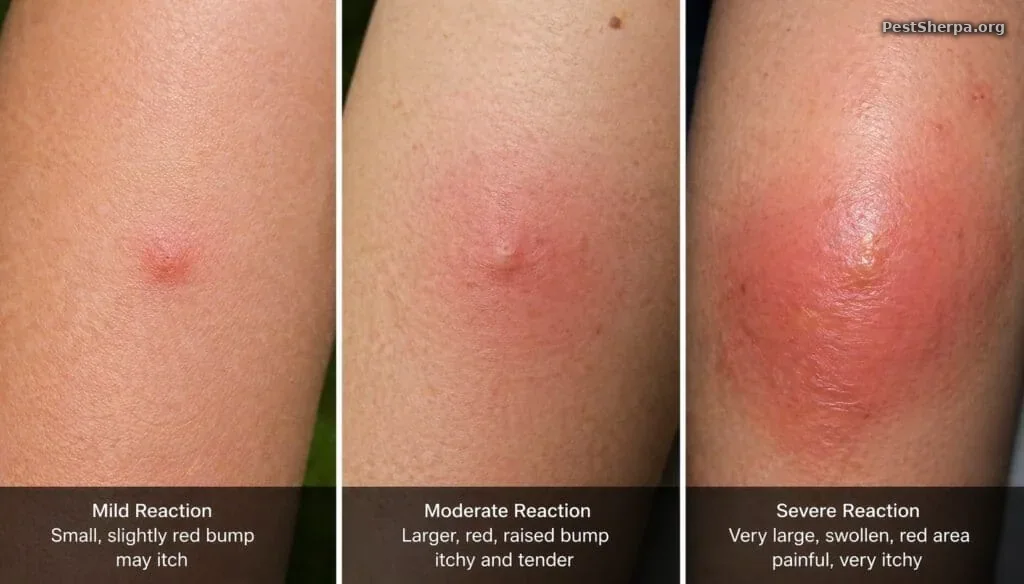
Above: Mosquito bite reactions can vary by individual and even type of mosquito
Common Mosquito Species
While there are more than 200 species of mosquitoes in the United States, a handful drive most yard bites: the Asian tiger (Aedes albopictus), yellow fever (Aedes aegypti), northern house (Culex pipiens), southern house (Culex quinquefasciatus), and western encephalitis mosquito (Culex tarsalis). Use the quick ID table below, then open the matching species guide.
Asian tiger vs yellow fever vs northern house (quick ID)
Striped legs are not enough: both black-and-white mosquitoes have them. Read the thorax, then the time of day. (Not to scale.)
| Cue | Asian tiger | Yellow fever | Northern house |
|---|---|---|---|
| Thorax | One silver-white stripe down the middle of a black back | White lyre / harp / violin on a black back | Brown; no silver thorax mark; cream bent bands on the abdomen |
| When they bite | Day: often morning and late afternoon in the shade | Day: indoors and outdoors, close to people | Dusk and night (typical Culex) |
| Yard water | Small containers: trays, buckets, toys, tires, birdbaths, tree holes | Same containers + stored water; even bottle-cap volumes | Fouled / stagnant water: containers, drains, septic, catch basins |
| Eggs | On container walls; survive drying; hatch when water returns | On walls above the waterline; survive drying for months, so scrub, don’t only dump | Rafts on the water surface (typical Culex) |
| First move | Dump + scrub everything that holds a cup of water within a few blocks | Same container hunt, including indoor vases and plant saucers | Find the dirty standing water; treat what you cannot drain |
Mosquito Species Guides
Browse our expert guides to identify the mosquito species you’re dealing with and learn what actually helps for that species.
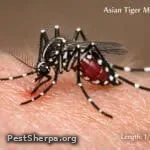
Asian Tiger Mosquito: Identification, Risk, and Control
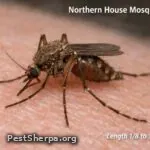
Northern House Mosquito: Identification, Risk, and Control
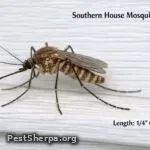
Southern House Mosquito (Culex quinquefasciatus): ID and Risk
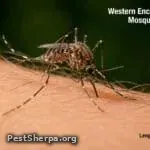
Western Encephalitis Mosquito (Culex tarsalis): ID and Risk
Yellow Fever Mosquito (Aedes aegypti): Identification and Risk
How to Get Rid of Mosquitoes
Here is the order I work in, and it is the same integrated approach CDC and EPA recommend: take away the water first, treat the water you cannot remove, keep mosquitoes off people, and use adult sprays last and sparingly. [EPA IPM] [CDC at home]
1. Do a weekly tip and toss walk
Once a week, walk the yard and empty and scrub, turn over, cover, or throw out anything that holds water. The scrub matters. Aedes eggs stick to container walls above the waterline like glue and can survive drying out for up to 8 months, and an egg can become a biting adult in 7 to 10 days. A quick dump leaves the eggs behind for the next rain. [CDC] [CDC Aedes life cycle]
- Flowerpot saucers, plant trays, and decorative pots
- Buckets, watering cans, wheelbarrows, and kids’ toys
- Old tires: store them under cover or get rid of them
- Birdbaths and outdoor pet bowls: change the water at least weekly. In Florida summers, UF/IFAS recommends flushing birdbaths and bromeliads every three to four days.
- Tarps over boats, grills, firewood, and equipment, which hold puddles in their folds
- Kiddie pools: drain them and turn them over when not in use
- Trash and recycling bins, plus lids that collect rain
- Rain barrels and cisterns: cover them tightly, or use wire mesh with holes smaller than a mosquito
- Tree holes: fill them with sand or mortar so they cannot hold water
[CDC] [UC IPM] [UF/IFAS IN1045]
2. Fix the water that hides
- Gutters and downspouts: leaves and seeds block the flow and leave standing water you cannot see from the ground. Clean them out.
- Low spots: drain or fill areas where water sits for more than a few days after rain or irrigation.
- Irrigation and drains: avoid overwatering, fix leaky spigots, and keep AC and cooler drain lines from pooling.
- Septic systems: repair cracks, and cover open vent or plumbing pipes with fine wire mesh.
- Pools and pool covers: keep water off the cover and keep the water treated. A neglected pool can produce mosquitoes for a whole neighborhood; your local mosquito or vector control program may be able to help, and some programs supply mosquitofish.
3. Treat water you cannot dump with Bti
For water that has to stay, like an ornamental pond, a rain barrel you cannot seal, or a low spot that will not drain, use a larvicide. The homeowner standard is Bacillus thuringiensis subspecies israelensis (Bti), sold as dunks and granules (bits). Larvae have to eat it, and it targets the larvae of mosquitoes, black flies, and fungus gnats. EPA reports no toxicity to people and minimal toxicity to honey bees, and UF/IFAS notes it does not harm butterflies, fish, or frogs. [EPA: Bti] [UF/IFAS]
Two honest limits. Bti does not kill pupae, because pupae do not feed, and dunks last about 30 days in water before you need a new one. Read the label for where it can go, especially for any water used for drinking. Methoprene, an insect growth regulator, is another labeled option that stops larvae from becoming adults. [UC IPM] [EPA: larval control]
4. Keep mosquitoes off people
- Screens and doors: install or repair window and door screens, keep doors closed, and use air conditioning when you can.
- Repellent: use an EPA-registered repellent with DEET, picaridin, IR3535, oil of lemon eucalyptus (OLE), para-menthane-diol (PMD), or 2-undecanone. EPA’s repellent search tool lets you filter by protection time. Not all work equally well. The Aedes mosquitoes that spread dengue bite during the day, so daytime counts.
- Kids: do not use OLE or PMD products on children under 3, and do not put repellent on a child’s hands, eyes, or mouth.
- Order of products: sunscreen first, repellent second.
- Clothing: loose long sleeves and pants help, and permethrin-treated clothing and gear add protection. Permethrin goes on fabric, never on skin.
CDC says the effectiveness of repellents that are not EPA-registered, including many natural products, is not known. UC IPM adds that electric bug zappers are counterproductive, because many of the insects they kill are the ones that eat mosquitoes. [CDC: preventing bites] [UC IPM]
5. Use adult sprays as a short-term tool
Yard sprays, often sold as barrier treatments, are insecticides labeled for the shrubs and shady spots where adult mosquitoes rest. They can give you a temporary drop in biting, which is useful right before a cookout or a party. They do not replace the water work, and every product’s label decides where it can go and how often it can be reapplied. [UF/IFAS] [UC IPM] [CDC]
- They are broad spectrum. Most homeowner adulticides are pyrethrins or pyrethroids, which kill other insects too. UF/IFAS advises applying them at times and in places where other insects are less active. Keep them off flowering plants where bees are working.
- Water and fish: EPA notes permethrin is very highly toxic to fish. Keep sprays away from ponds and drains.
- Automatic misting systems: EPA says outdoor residential misting systems have not been studied enough to document that they control mosquitoes, and have not been proven to prevent West Nile virus or other diseases. The pyrethrins and permethrin they use can kill honey bees, ladybugs, and butterflies. UC IPM does not recommend systems that continuously release insecticide.
- Never improvise. Skin repellents should never be sprayed on soil or water to kill mosquitoes, and using any pesticide against its label is illegal.
[EPA: misting systems] [UF/IFAS] [UC IPM]
6. Know when the source is not your yard
Some mosquito species can fly several miles from where they develop, so even a perfect job on your own lot may not end the biting. If you have cleaned up and the pressure has not changed, the water may be next door, in a storm drain, or in a nearby wetland. That is when your local mosquito control or vector control program, or a licensed pro, earns its keep (see When to Call a Professional). [UC IPM] [CDC: mosquito control programs]
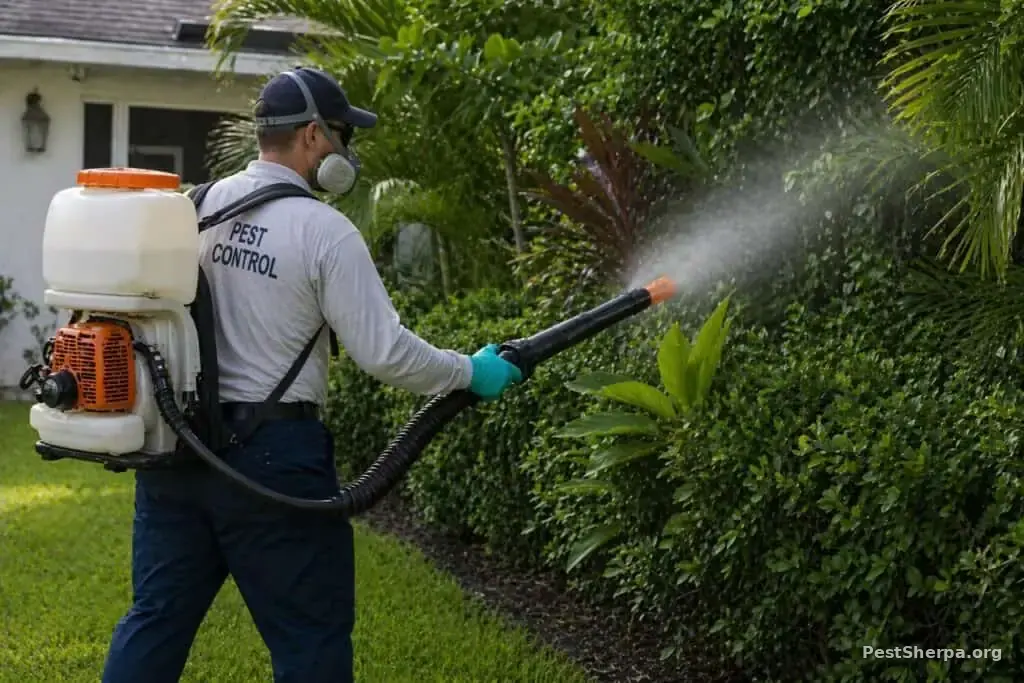
Above: Professional mosquito treatment using a low impact misting unit.
Why Mosquito Treatments Fail
When bites come right back after a spray, it almost always traces to one of these:
- The water was never found. One forgotten saucer, tarp, or clogged gutter keeps producing new adults every week.
- Containers were dumped but not scrubbed. Aedes eggs stay glued to the wall above the waterline and hatch at the next rain. [CDC]
- Rain resets the clock. Eggs hatch when water covers them, and an egg can be a biting adult in 7 to 10 days. [CDC]
- The source is off your property. Neighbors’ containers, storm drains, and wetlands keep supplying adults no matter how clean your yard is. [UC IPM]
- Adult spray alone. Sprays and foggers give temporary relief, and new adults keep emerging from untreated water. [UC IPM]
- Wrong product or wrong use. Skin repellents sprayed on the lawn, or products used off label, do not work and are not legal. [UF/IFAS]
Key truth: Killing adults does not stop the next generation.
When to Call a Professional
Greg Baumann insight: Fogging adults is a weekend-guest tool, not a life-cycle fix. University and federal IPM programs start with water you can dump, then larval products for water that must stay, then a licensed pro or your local mosquito/vector district when the source is hidden, next door, or bigger than a patio. Call for help when weekly dump-and-scrub does not change the bite pressure; when you cannot reach the water (sumps, clogged drains, neglected pools, tree holes); or when day-biting Asian tiger / yellow fever mosquitoes keep coming from containers you have not found. Dusk pressure on a large or woods-edge lot may be a western encephalitis or house-mosquito habitat issue, not a reason to panic, and not something a one-time adult spray finishes. [CDC at home] [UC IPM] [EPA IPM]. Below is when to call the professional. Also, if you live in a mosquito control district (usually southern or coastal areas, learn about the mosquito control program and coordinate your work with the district. You might have a professional pest control company service your home regardless of district activities.
- Bites continue after 1 to 2 weeks of weekly dump, scrub, and gutter/tray work
- Water you cannot dump (ponds, sumps, neglected pool, underground drains)
- Large property, woods, or standing water beyond the patio
- Indoors after screens are tight and indoor containers are empty (CDC: licensed pro for remaining indoor activity)
- Neighbor or community sources: report severe annoyance or breeding sites to local mosquito/vector control when one exists
Professionals can target all life stages, not just adults, depending on their findings.
What a pro visit looks like
Professional mosquito control is yard work: finding breeding water and treating where adults rest. It does not replace removing standing water.
The inspection
Expect a walk of the property for standing water, clogged gutters, containers, drains, and dense shrubs and shady areas where adult mosquitoes rest.
Your prep before the visit
- Dump containers and clear gutters before the first visit.
- Tell the company about ponds, bird baths, fish, bee hives, and vegetable gardens.
- Keep children and pets out of treated areas until sprays are dry, as the label directs.
The treatment
- Larvicide in water that cannot be dumped.
- Misting sprays on shrubs and other resting areas. Never treat flowered vegetation if there is any danger of hurting honeybees.
- Recommendations on drainage and containers.
Follow-up
Barrier sprays need repeat applications during the season; Angi notes they protect for about two to four weeks each. Ask how the company protects pollinators.
Questions to ask before you book
- Which products will you use, and where?
- How often will you treat, and what does the season cost?
- How do you protect pollinating bees and water?
- What do I need to do between visits?
What it costs
Angi’s September 2026 data puts the national average for mosquito control at $350 per single treatment or season, with most homeowners spending $200 to $550.[22] Fixr’s December 2025 data puts a one-time treatment at $135 to $251 and a full season at $373 to $694.[23]
Typical national ranges
- Mosquito control, national average: $350; most spend $200 to $550 (Angi, 2026)[22]
- Barrier spray, per treatment: $70 to $150 (Angi, 2026)[22]
- Larvicide, per treatment: $100 to $300 (Angi, 2026)[22]
- One-time treatment: $150 to $350 (Angi, 2026)[22]
- Seasonal package: $600 to $1,200 (Angi, 2026)[22]
- Misting system: $1,200 to $2,500 to install, plus $400 to $700 a year (Angi, 2026)[22]
- One-time treatment: $135 to $251; full season: $373 to $694 (Fixr, 2025)[23]
These are national figures from consumer cost surveys, not quotes. Prices vary by region, home, and job, so treat them as a starting point for comparing written estimates.
What moves the price
- Yard size.
- Treatment method.
- Visit frequency.
- Standing water and nearby wetlands.
- Sensitive areas where pesticides cannot be used.
One-time job or ongoing plan
One-time treatments suit a single event. Seasonal plans suit yards with steady pressure, but removing breeding water matters more than any plan.
Red flags in a quote
- No inspection for standing water.
- Promises of a mosquito-free yard.
- No answer about pollinator protection.
See what to look for when hiring a pro for mosquitoes.
Final Takeaway
Mosquito control works when you break the life cycle. Do the weekly tip and toss walk, scrub what you dump, treat the water you cannot remove with Bti, and wear an EPA-registered repellent when you are outside, day or night. Save adult sprays for short-term relief, and call your local mosquito program or a licensed pro when the source is hidden, huge, or next door. Remove the water, and you remove the problem.
Common Questions
Is the Asian tiger mosquito the same as the yellow fever mosquito? No. Both are small, black-and-white, and day-biting, and both use backyard containers. The Asian tiger has one silver stripe down the back; the yellow fever mosquito has a white lyre or harp on the thorax. See Asian tiger and yellow fever. [UF/IFAS IN792] [OSU]
Why am I still getting bitten after I sprayed the yard? Killing adults does not stop the next generation. Eggs of the two common Aedes can sit dry on a pot rim and hatch at the next rain. Dump and scrub weekly; treat water you cannot remove; then call a pro or your local mosquito district if the source is hidden or off your lot. [CDC Aedes] [EPA IPM]
References
- CDC Mosquito Info
- EPA Mosquito Control
- CDC: About Mosquitoes
- CDC: Life Cycle of Aedes Mosquitoes
- CDC: Mosquito Control at Home
- CDC: Mosquito Control Programs
- EPA: Success in Mosquito Control: An Integrated Approach
- EPA: Controlling Mosquitoes at the Larval Stage
- EPA: Mosquito Misting Systems
- EPA/CDC: Joint Statement on Mosquito Control
- UC IPM: Mosquitoes
- Oklahoma State Extension: Twelve Most Important Oklahoma Mosquitoes
- UF/IFAS Featured Creatures: Asian Tiger Mosquito (IN594)
- UF/IFAS Featured Creatures: Yellow Fever Mosquito (IN792)
- UF/IFAS: Mosquitoes: How to Control Them (IN1045)
- CDC: About Mosquitoes in the United States
- CDC: Preventing Mosquito Bites
- CDC: Potential Range of Aedes Mosquitoes
- CDC: Symptoms of Dengue and Testing
- EPA: Bti for Mosquito Control
- EPA: Find the Insect Repellent That Is Right for You
- Angi, How Much Does Mosquito Control Service Cost? [2026 Data], updated September 10, 2026
- Fixr, How Much Does It Cost To Get Rid Of Mosquitoes?, updated December 31, 2025
This article was written by Greg Baumann, founder of Pest Sherpa, and reflects more than 40 years of professional pest management experience.
About the Author

Greg Baumann | Pest Control Expert
Greg Baumann is the founder of Pest Sherpa and a Pest Control Expert with more than 40 years of professional pest management experience. His articles combine decades of field experience, technical expertise, and science-based guidance to help homeowners identify pests correctly, understand real-world risks, and make informed pest management decisions.
Mission: Identify the pest. Understand the risk. Stop the problem. Prevent the comeback. Know when it’s time to call a professional.