
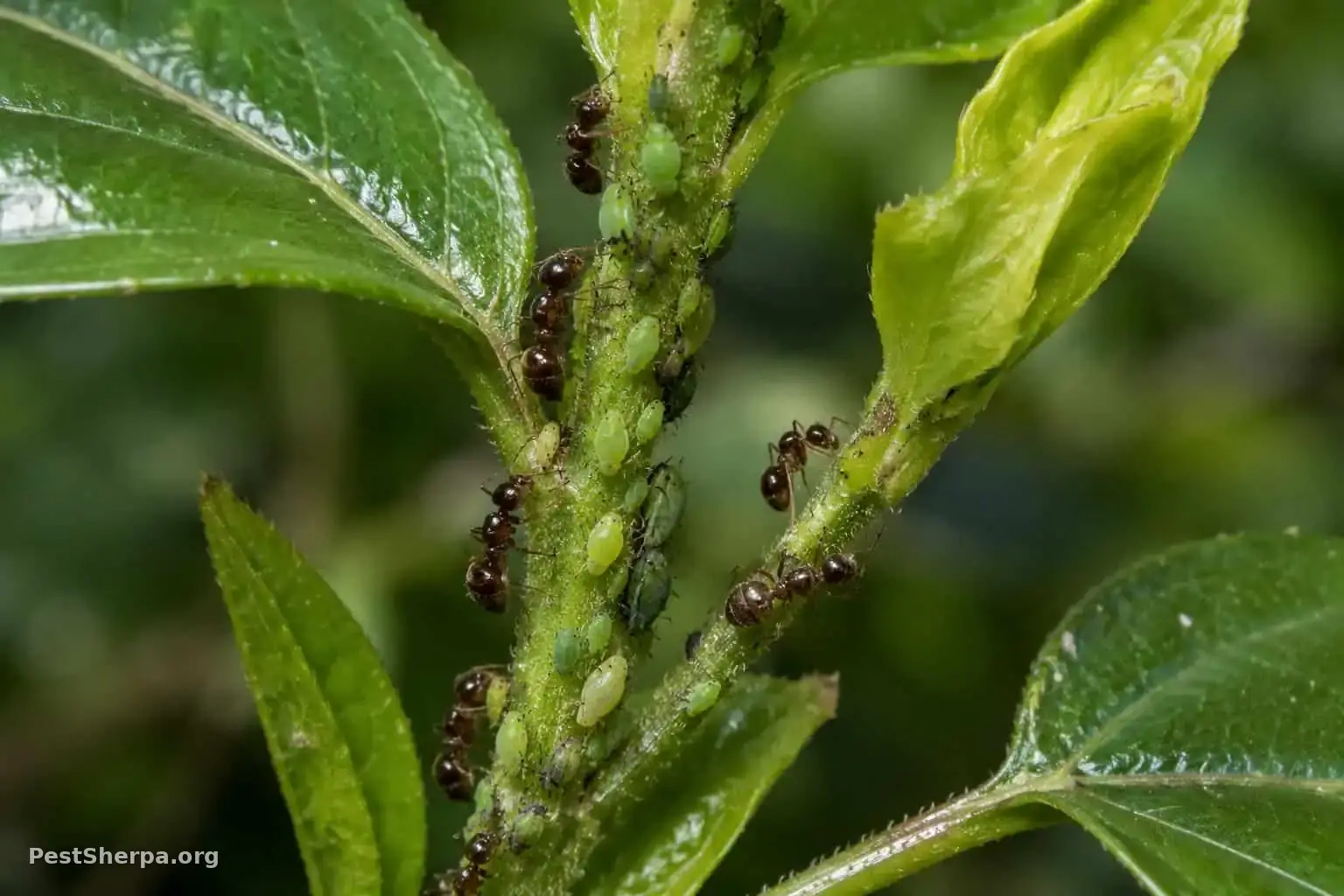
I have ants in my garden and they seem to be coming from flowers. If I spray will it affect my tomato plants?
Short answer: A general insecticide spray on flowers can harm beneficial insects and may not be labeled for food gardens. Ants near tomato plants often farm aphids or seek moisture. Focus on identifying the ant, managing honeydew pests, and using garden-safe tactics. Read every label for “food crop” and bee precautions before you spray anything.
Why ants show up on flowers and tomatoes
Many ants are attracted to honeydew produced by aphids, whiteflies, or soft scales on ornamentals and vegetables. The ants protect those pests in exchange for sugar. Killing ants alone without addressing aphids often brings the trail back. Some ant species also nest in mulch or soil near drip irrigation.
Tomatoes are food crops. Products labeled only for ornamental beds or structural cracks may be illegal or unsafe to use on edible plants. Always match the site on the label.
Safer first steps
- Inspect leaves for aphids or sticky honeydew. A strong water spray or insecticidal soap labeled for the crop can help.
- Wipe or prune heavily infested tips when practical.
- Keep fruit off bare soil with mulch or supports, and water at the base to limit splash and fungus issues.
- If you use an ant bait, choose one labeled for the site and keep it away from edible harvests as directed.
- Avoid blooming sprays that put pollinators at risk.
When ants still win
If the colony is nesting under a walkway or inside a wall and constantly reappears, a licensed technician can help with bait placement that matches the species. Ask what is safe around a vegetable garden. Education-first advice beats a random yard hose-end spray.
Related reading
Our Ant Guide covers indoor and outdoor species themes. Labels and Law explains why the label site matters as much as the pest name.
Food garden label literacy
Look for the crop or site on the label, the pre-harvest interval if listed, and bee precautions. Soap sprays and water blasts for aphids often solve the “ants on tomatoes” complaint without a broad insecticide. When ants nest under hardscape far from the plants, bait placements labeled for that use may help more than spraying blossoms.
Related guides
References
This article was written by Greg Baumann, founder of Pest Sherpa, and reflects more than 40 years of professional pest management experience.
About the Author

Greg Baumann | Pest Control Expert
Greg Baumann is the founder of Pest Sherpa and a Pest Control Expert with more than 40 years of professional pest management experience. His articles combine decades of field experience, technical expertise, and science-based guidance to help homeowners identify pests correctly, understand real-world risks, and make informed pest management decisions.
Mission: Identify the pest. Understand the risk. Stop the problem. Prevent the comeback. Know when it’s time to call a professional.