
Overwintering Invader Guide: Identification, Risk, and What to Do
As days shorten, outdoor insects gather on sun-warmed south- and west-facing walls, then slip into cracks to rest in wall voids, attics, and soffits. They are not indoor breeders. Indoor sightings are stragglers following warmth or light. Moisture-driven crawlers such as millipedes, pillbugs are a related-but-different problem; see the moisture pests guide.
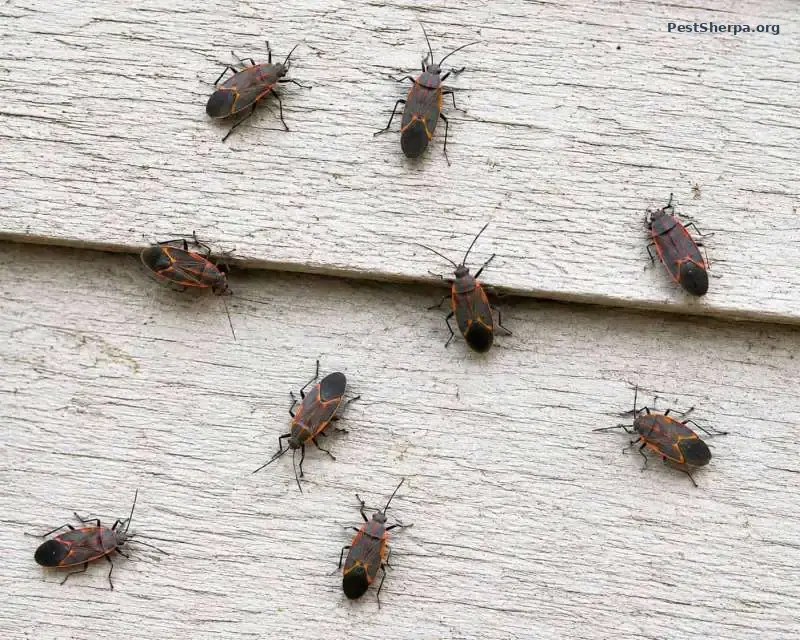
TL;DR: Identify the Invader Before You Treat
- Identify first: red-and-black bugs, shield-shaped brown stink bugs, olive speckled kudzu bugs, and lady beetles differ.
- Risk is nuisance, odor, and stains, not structural damage, pantry infestation, or fabric feeding.
- They do not typically breed indoors; winter bugs entered last fall.
- Seal before fall entry. Vacuum; do not crush. Skip void foggers: dead insects can attract carpet beetles.
Start here based on what you’re seeing:
- Red-and-black bugs on siding or near boxelder trees: boxelder bugs
- Shield-shaped mottled brown with banded antennae: brown marmorated stink bug
- Olive, brown-speckled bugs on light siding near kudzu or soy in the Southeast: kudzu bugs
- Lady beetles clustering on sunny walls (natives usually overwinter outdoors): lady beetles
Species Guides
Species pages hold ID detail:
Assassin Bugs: Beneficial Predators vs Kissing Bugs
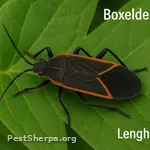
Boxelder Bugs: Identification, Causes, and What to Do
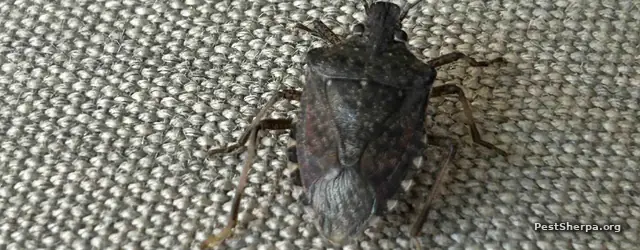
Brown Marmorated Stink Bug: Identification, Invasion Signs, Control
Kudzu Bugs: Identification, Home Entry, and What to Do

Ladybugs / Lady Beetles: Benefits, Problems, and What to Do
Quick Navigation
- How to Identify
- Why It Matters
- What To Do
- When to Call a Professional
- Compare Before You Act
- Prevention
- Common Questions
- References
How to Identify
Confirm the insect before you treat. Shared pattern: fall aggregation on sunny walls, then small-gap entry.
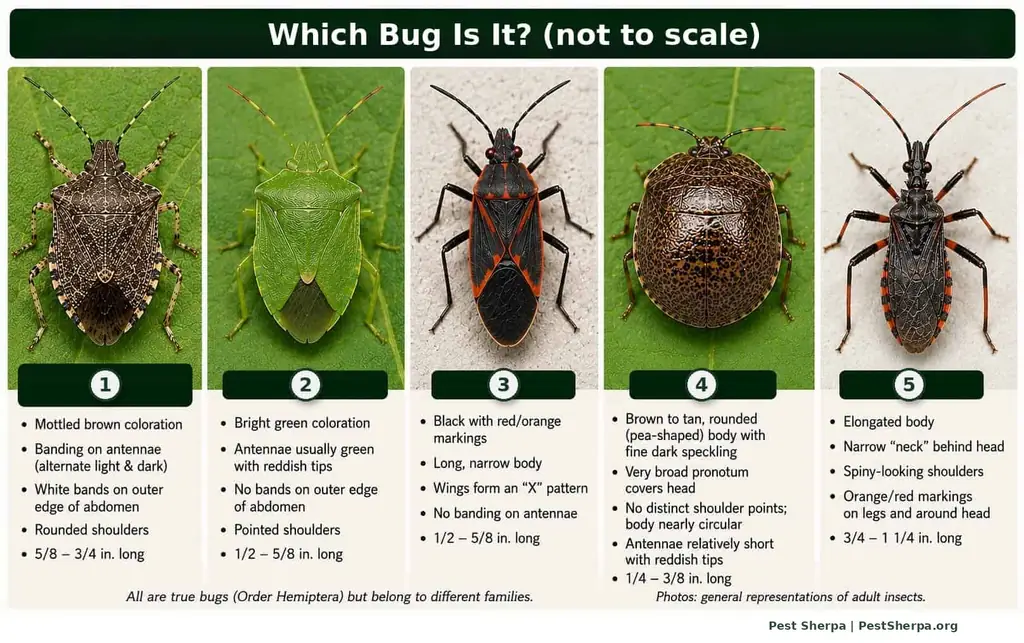
Which one did you find? Match the number:
- Brown marmorated stink bug: mottled brown with light and dark bands on the antennae and white bands along the outer edge of the abdomen. Rounded shoulders, 5/8 to 3/4 inch.
- Green stink bug: bright green with pointed shoulders and no bands on the edge of the abdomen. 1/2 to 5/8 inch.
- Boxelder bug: black with red to orange markings and a long, narrow body. The wings form an X on the back.
- Kudzu bug: small, round and pea-shaped, brown to tan with fine dark speckles. 1/4 to 3/8 inch.
- Assassin bug: long body, a narrow neck behind the head and orange to red markings on the legs.
Number 5 can bite, so do not pick it up with bare hands.
- Boxelder bugs: about ½ inch; black with orange or red; three pronotal stripes. Minnesota Extension uses Boisea trivittatus; NPMA and Illinois DPH use Boisea trivittata. UC IPM covers western Boisea rubrolineata. Do not collapse California notes onto a national ID.
- Brown marmorated stink bug (Halyomorpha halys): mottled brown shield; light bands on antennae and the abdominal edge. Penn State lists adults about 17 mm (0.66 in); University of Tennessee describes about 1 inch long and ¾ inch wide. Quote both. Native browns and the beneficial spined soldier bug lack that banding (StopBMSB.org).
- Kudzu bugs (Megacopta cribraria): 4 to 6 mm, olive-green with brown speckles; plataspids, not true stink bugs. First reported in northeastern Georgia in 2009; NC State notes confirmation in 18 states and kudzu-soybean landscapes, a southeastern problem, not a nationwide fall pest.
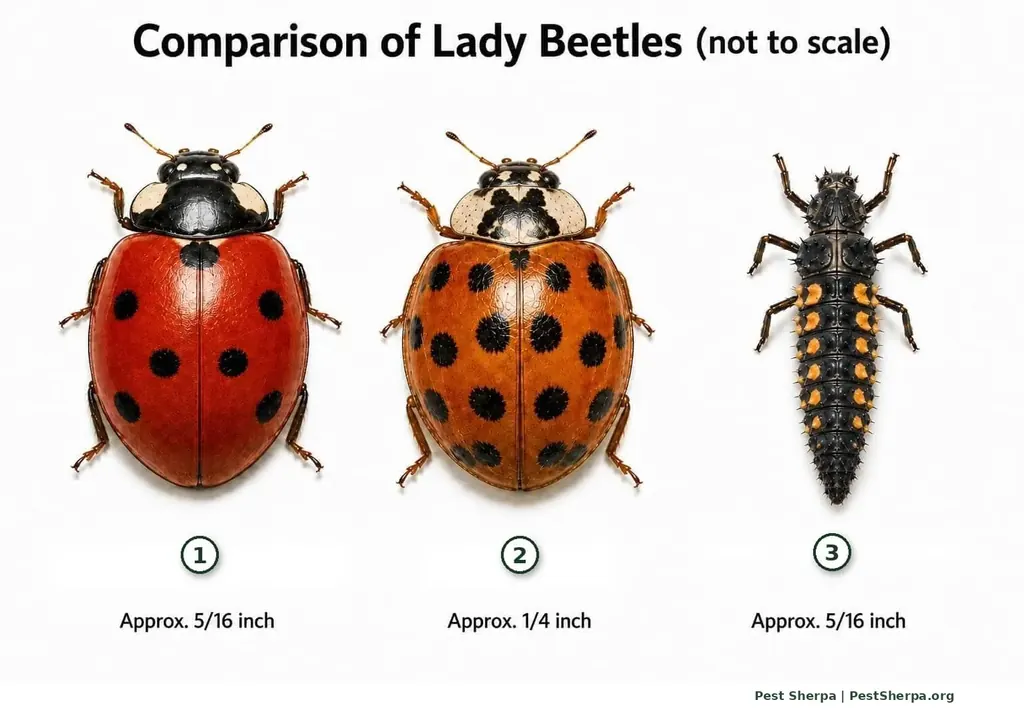
Which one do you see? Match the number:
- Seven-spotted lady beetle: red with seven black spots and a black and white shield behind the head. About 5/16 inch.
- Asian lady beetle (multicolored Asian lady beetle): orange with many black spots and a mostly pale shield behind the head with a dark M or W shaped mark. About 1/4 inch. This is the one that gathers in homes in fall.
- Asian lady beetle larva: long, spiny and black with orange patches. It eats aphids and is not a home pest.
The typical house invader is the multicolored Asian lady beetle (Harmonia axyridis), often with an M or W on the white pronotum. Ohio State, Oregon State, and UAEX: natives typically overwinter outdoors. Illinois DPH lists some natives that invade, but in smaller numbers than Harmonia. If ID is uncertain, treat as beneficial until mark and wall-clustering support Harmonia.
Why It Matters
Risk is nuisance in numbers, odor when crushed, and stains, not wood, stored food, or fabric. Oregon State frames most structure-overwintering insects as nuisance pests, unlike termites, pantry pests, or clothes moths. Minnesota Extension: boxelder bugs and Harmonia do not infest wood, fabrics, or food and do not reproduce indoors. Penn State: BMSB will not reproduce inside or cause structural damage.
NPMA says stink bugs “don’t pose direct health risks.” Penn State and University of Tennessee document odor-triggered rhinitis and/or conjunctivitis in sensitive people, plus contact dermatitis if crushed on skin. Harmonia bites are reported as minor; Minnesota Extension says some can break skin, while Ohio State ENT-44 and Illinois Extension (2024) say they cannot. Kudzu-bug invasions are a southeastern kudzu-and-soybean issue, with fall and spring peaks.
What To Do
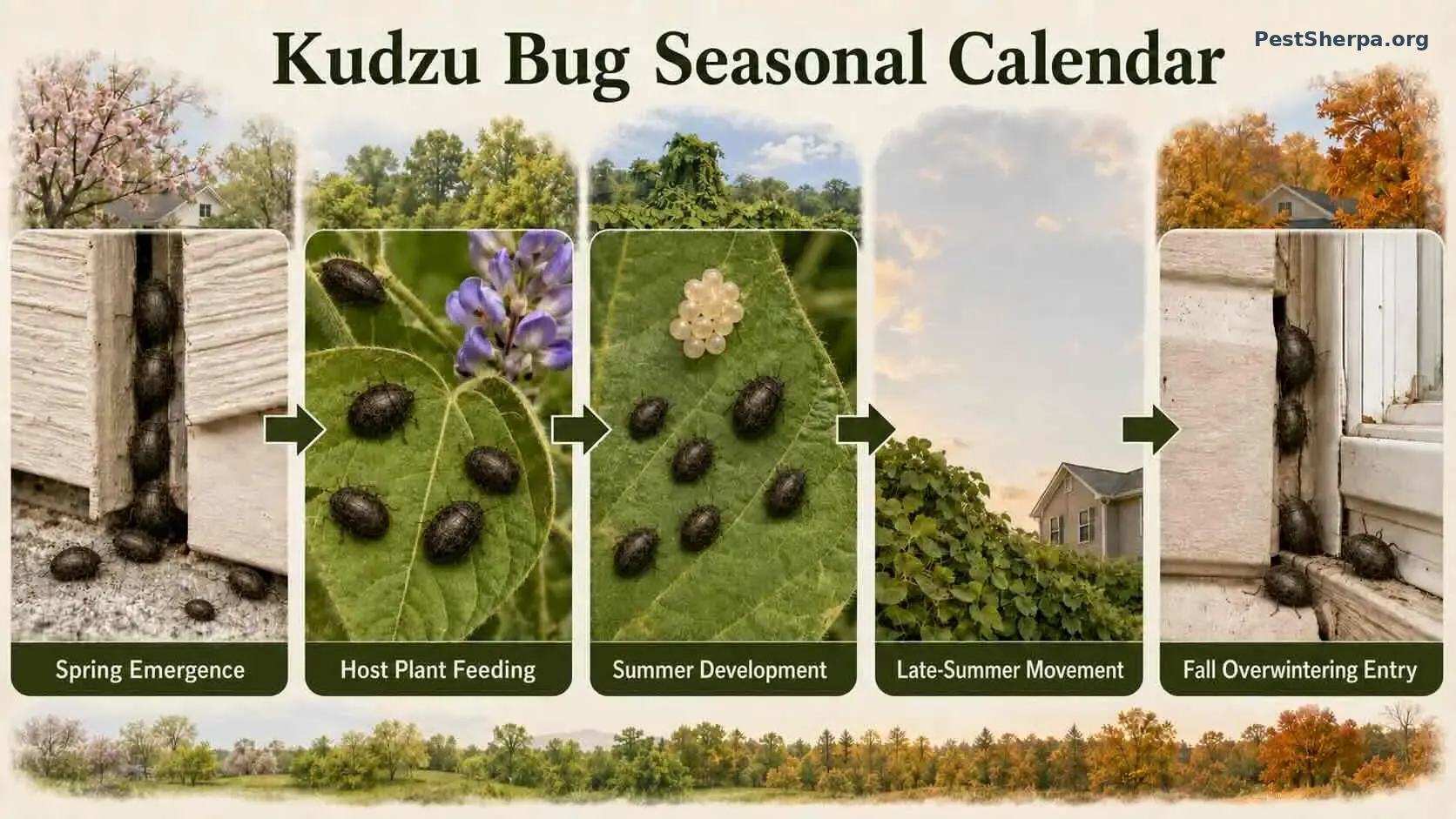
One shared exclusion path covers all four: seal gaps at siding, windows, doors, fascia, soffits, vents, chimneys, and utilities before fall flights. Repair screens and door sweeps. Do not seal brick weep holes solid: Minnesota Extension recommends ventilation plugs. Timing: boxelder before the end of August (UMN); Harmonia by the end of September (UMN); kudzu in late summer (kudzubug.org).

Indoors, vacuum; do not crush (odor and stains). A stocking in the hose keeps insects out of the motor; bag and discard promptly. NC State: do not dump live kudzu bugs outdoors; they come back in. Freeze the bag or use soapy water. If conserving Harmonia, UAEX says hold them with a damp cloth in a protected, unheated space for spring release. Do not dump them into a freeze. Indoor foggers and void sprays are not recommended; dead piles can attract carpet beetles (Penn State, Illinois DPH, and others). Outdoor residuals, if used at all, are last-resort, pre-entry, and label-only.
When to Call a Professional
Call when numbers stay high after exclusion, ID is uncertain, or eaves are multi-story. Minnesota Extension notes a professional may be best for the worst boxelder infestations. NC State: DIY kudzu exterior spray often fails because of height and nearby kudzu. Hire exclusion and outdoor timing, not indoor fogging, void bombing, spring sprays on insects already leaving, or landscape-wide spraying of lady beetles.
Compare Common Overwintering Invaders Before You Act
Boxelder bugs
Red-and-black; three pronotal stripes; associated with female boxelder and related maples. Tree removal is a conflict: UC IPM calls removing female trees most effective; Minnesota Extension says it is not a good method because adults can fly as far as two miles; Illinois DPH says cutting may or may not prevent infestations. Not default advice.
Brown marmorated stink bug
Shield-shaped mottled brown with banded antennae. Indoor role is overwintering nuisance, not crop feeding in the house. Adult size and generations vary by source and region (Penn State vs Tennessee).
Kudzu bugs
Small olive speckled bugs on light siding in the Southeast, especially near kudzu or soybean. Fall and spring peaks. Not a coast-to-coast invader.
Asian lady beetle vs native lady beetles
Wall clusters are characteristically Harmonia. Natives are beneficial aphid predators and usually overwinter outdoors. Vacuum indoor Harmonia; do not kill ladybugs as a class.
Prevention
Finish exclusion before fall aggregation. Keep exterior lighting modest; Illinois DPH and University of Tennessee mention sodium-vapor or yellow “bug light” bulbs as less attractive than mercury vapor. Hose aggregations off walls where extensions recommend it. Removing nearby kudzu may help, but insects fly from other patches (NC State). Do not broadcast landscape insecticides for Harmonia: beetles arrive from distant sites, and natives are beneficial outdoors.
Common Questions
Do these insects breed in the house?
No. Boxelder, BMSB, and Harmonia pages state they do not reproduce indoors. Kudzu bugs overwinter as adults and seek outdoor hosts in spring.
Will they damage wood or stored food?
No. Risk is nuisance, odor, and stains, a different pathway from pantry or fabric pests.
Should I spray wall voids or use a fogger?
No. Dead insects left in voids can attract carpet beetles. Vacuum living-space stragglers and seal the envelope.
References
- University of Minnesota Extension. Boxelder bugs
- Penn State Extension. Brown marmorated stink bug
- NC State Extension. Kudzu bugs: a nuisance and agricultural pest
- Ohio State University Extension. Multicolored Asian lady beetle (ENT-44)
- Illinois Department of Public Health. Occasional Invaders
- UC Statewide IPM Program. Pest Notes: Boxelder Bug (western Boisea rubrolineata)
This article was written by Greg Baumann, founder of Pest Sherpa, and reflects more than 40 years of professional pest management experience.
About the Author

Greg Baumann | Pest Control Expert
Greg Baumann is the founder of Pest Sherpa and a Pest Control Expert with more than 40 years of professional pest management experience. His articles combine decades of field experience, technical expertise, and science-based guidance to help homeowners identify pests correctly, understand real-world risks, and make informed pest management decisions.
Mission: Identify the pest. Understand the risk. Stop the problem. Prevent the comeback. Know when it’s time to call a professional.