
Repairing Termite Damage: Salvage, Replace, and What Comes First
Termite damage rarely appears as a neat package. More often you find hollow wood behind paint that still looks fine, mud tubes on a foundation wall, or soft spots when someone probes a sill during a remodel. This guide is about repairing that damage in a sensible order: confirm what you have, stop the colony, then decide what wood can stay and what has to come out.
For national cost ranges and how big the problem is in the United States, use the companion page on termite damage costs. That page owns the methodology for the big national estimates. This page focuses on salvage, sequencing, and who does which job.
If you are still sorting swarmers, tubes, and lookalikes, start with signs of termites and the termite guide hub.
Quick answer: repairing termite damage
- Order of ops: document evidence, get a licensed inspection, stop the colony and fix moisture, then salvage or replace wood, then finish work.
- Probe before you guess: hollow grain, soft sills, and soil-packed galleries mean replace territory more often than paint-and-pray.
- Insurance: standard homeowners policies usually treat termite damage as maintenance, not a covered sudden loss.
- Who does what: licensed termite company for ID and treatment; GC/carpenter for rebuild; engineer when load-bearing members are soft or floors sag.
- Contracts: retreatment-only is common; repair coverage (if any) is limited, often excludes contents, and is not the same as homeowners insurance.
Bottom line: do not close walls over live termites. See order of operations.
Based on III, UC IPM, Purdue, UGA, Penn State, and other sources in the References below. National damage dollars live on the costs page.
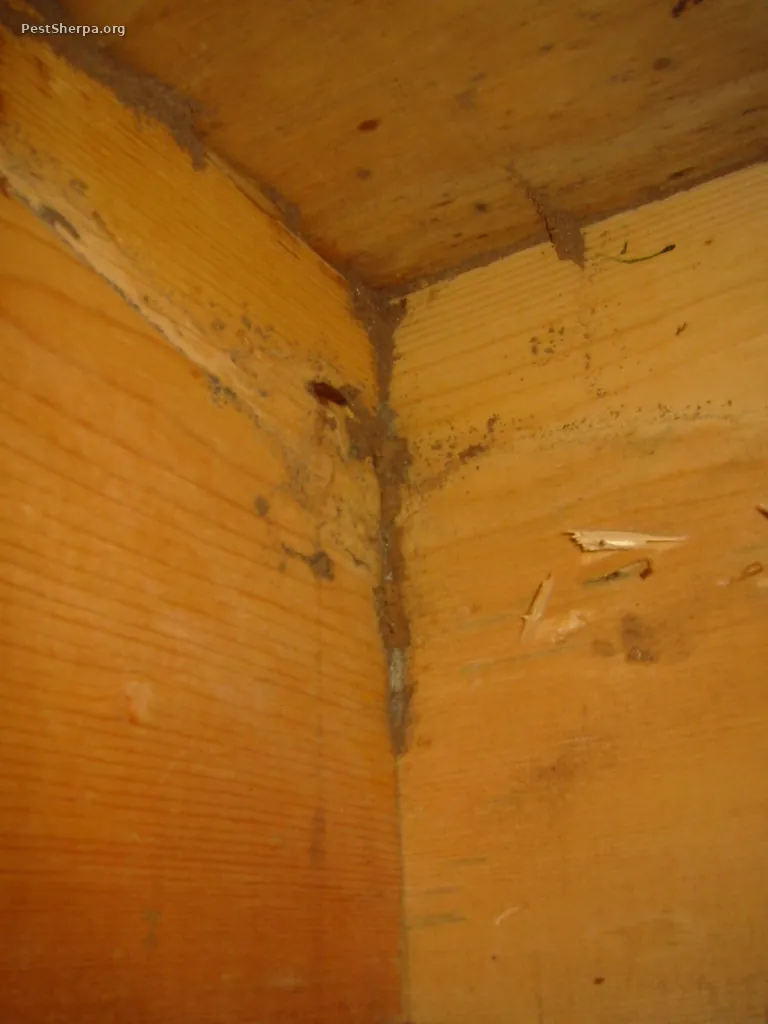
What termite damage looks like by building part
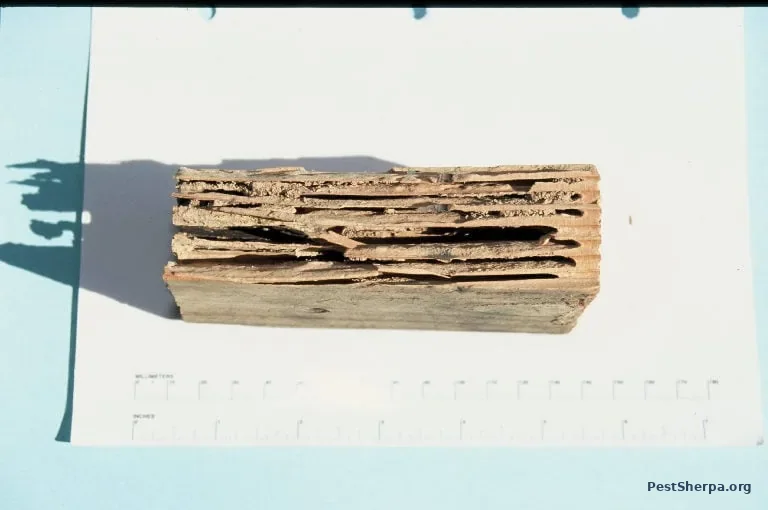
Worker termites eat the soft grain of wood and often leave a thin outer shell with splintered wood inside. From the outside, a board can look intact until you probe it. Purdue Extension describes that hollowed look, and UC IPM notes that subterranean feeding generally follows the grain (softer springwood first), with damaged wood that may darken or blister and puncture easily. Shelter tubes (mud tubes) are still the evidence homeowners see most often around Knoxville and most of the Southeast.
In the field, I want you thinking about where termites usually hit first, then what that means for repair:
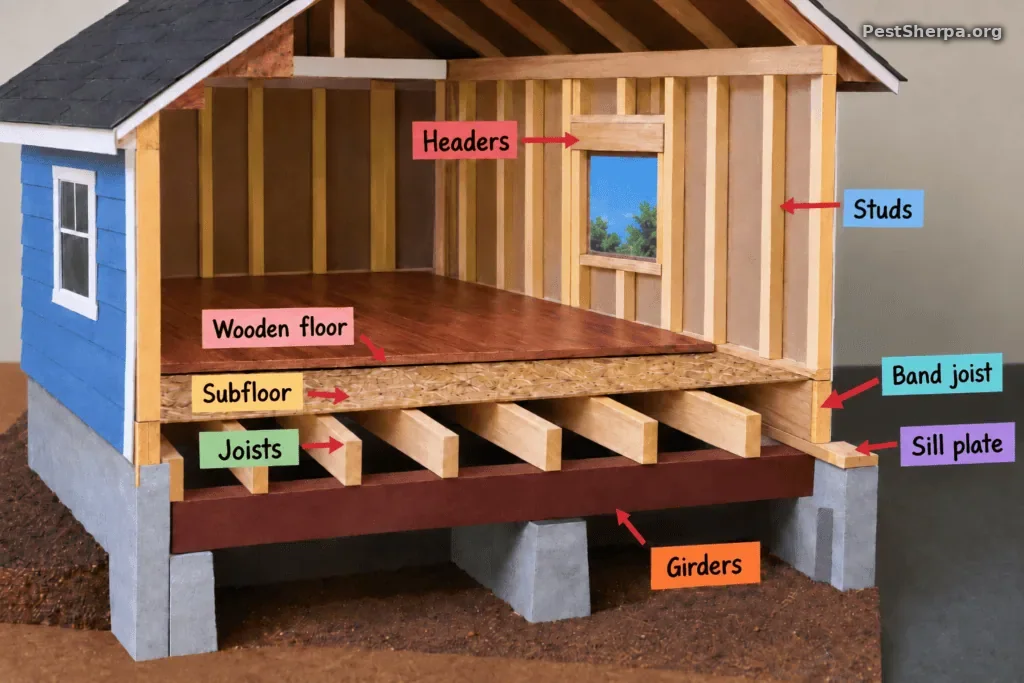
Above: mock up of key parts of wood house construction; names and design might vary by geographical region and construction methods.
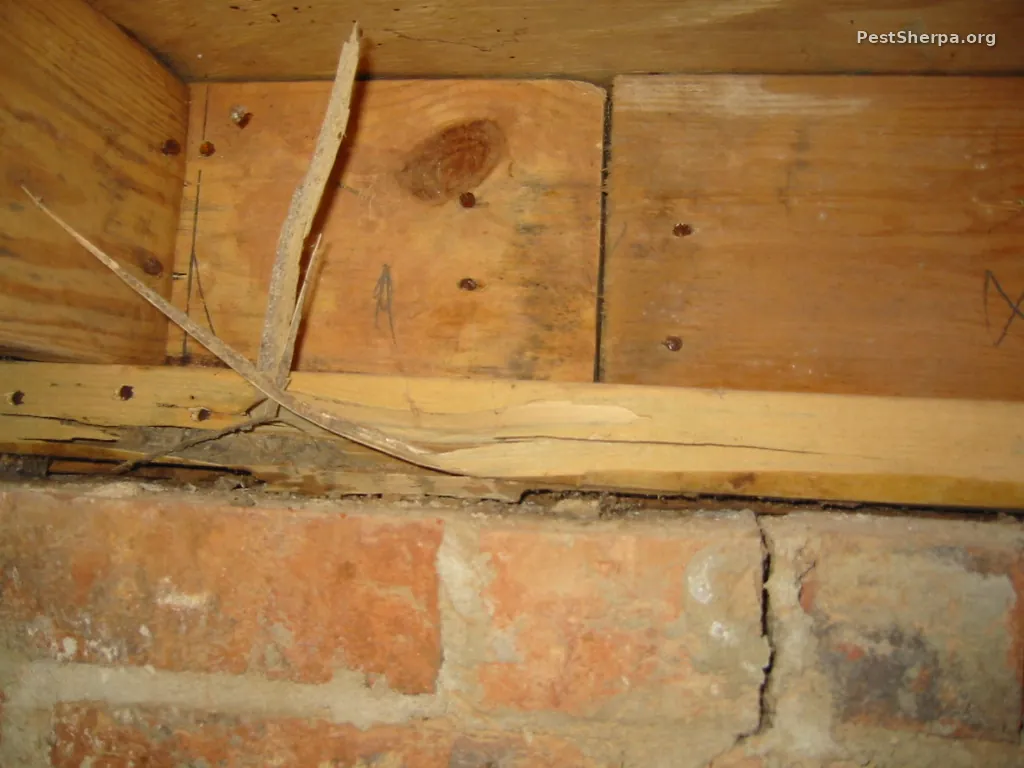
Sill plates and mudsills. These sit right above foundation or cellar walls. Penn State Extension notes that Eastern subterranean jobs often involve structural timbers just above cellar walls (mudsills, studs, joists, subflooring). Soft or hollow sills matter because everything above them depends on that plate.
Floor joists, headers, and ends of joists. Purdue recommends probing wood near foundation and soil contact with an ice pick or screwdriver, especially plates, header joists, ends of floor joists, and hardwood flooring. UGA’s consumer bulletin (B-1241) adds that crawlspace checks should carefully look at wood sills, headers, and joists, often the first wood termites contact.
Wall studs, door and window frames. Same UGA bulletin: structural wood such as wall studs, door and window frames, headers, joists, and sills may show infestation or prior damage. Shelter tubes often follow structural lines (sill plates, frames, cracks in concrete).
Flooring and subfloor. Hollow spots, sagging, or soil-packed galleries under finish floors show up when subterranean termites have been working for a while. Soil inside damaged wood typically points to subterranean termites rather than drywood.
Drywall, paneling, trim, and finish materials. Termites can damage cosmetic materials too (molding, paneling, drywall paper, some carpets, wood flooring, linoleum, baseboards). UC IPM notes shelter tubes may be built with soil mixed with bits of wood or even drywall. Crumbling drywall can be a clue, but a clean finish does not prove the house is clean. Finish work is usually a general contractor job after the structural wood decision and after the infestation is controlled.
Beams, girders and other load-bearing members. If a member carries real load and feels soft, hollow, or has large galleries, do not treat it like trim. UC IPM’s drywood guidance is clear for load-bearing wood: consult an architect, engineer, and/or general contractor; building permits may be required. That same caution applies when subterranean damage has chewed through framing.
Drywood damage looks different. Drywoods feed across the grain, leave chambers that may hold fecal pellets, and push six-sided pellets out through small kickout holes. Pellets alone do not prove the infestation is still active or how far it runs. That is why a licensed inspection still matters before you decide what to cut out. More on that pest family in the drywood termite guide.
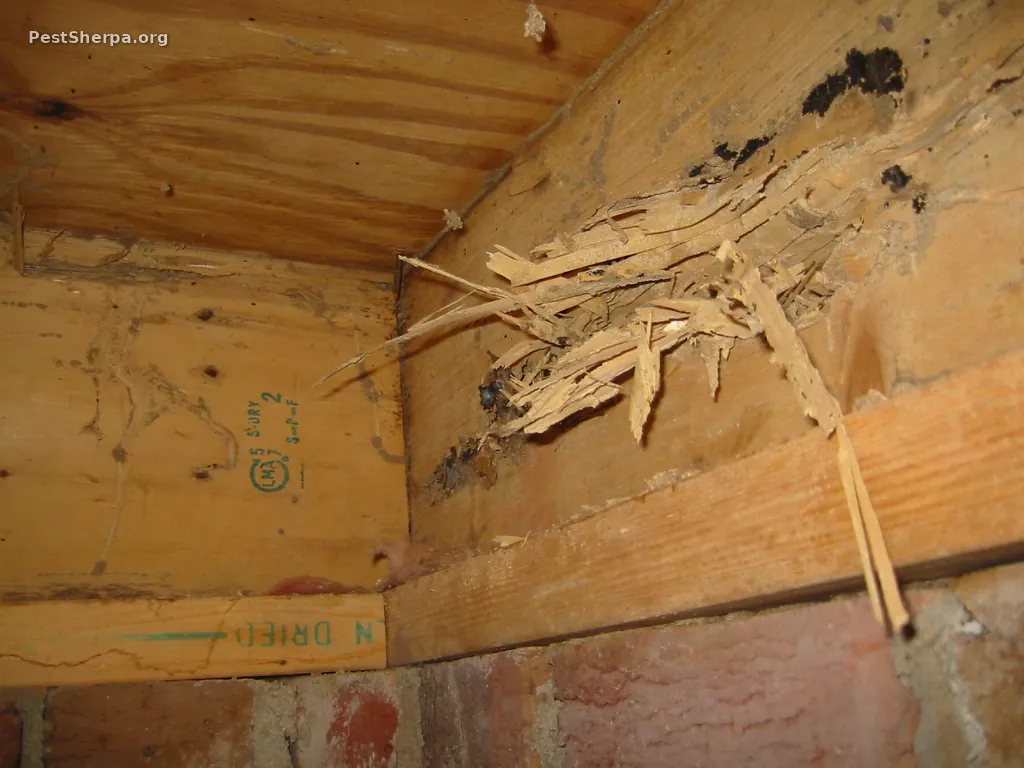
Salvage vs replace (when wood can stay, when it has to go)
There is no magic percentage you can eyeball from a phone photo. After twenty-plus years of looking at southern crawlspaces, I still use a few field rules.
Likely salvage or sister/patch candidates. Localized galleries in non-structural trim, a short run of baseboard, or a board that still feels solid under probe and is not carrying load. Cosmetic members are often cheaper to replace outright than to nurse along. Sistering a joist or stud can make sense when a competent carpenter (and, if needed, an engineer) agrees the remaining wood still carries load safely and the colony has been stopped.
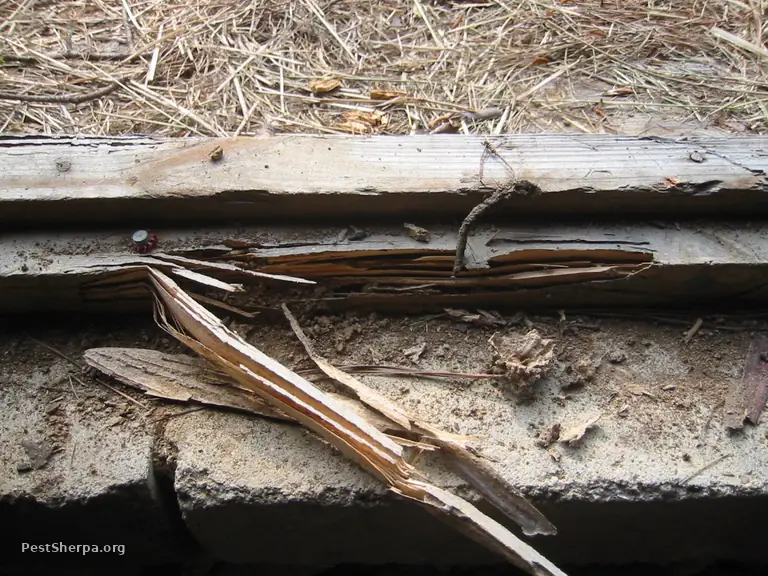
Likely replace. Wood that is largely hollowed, crumbles under a probe, sits in earth or damp contact, or is part of a sill, header, or beam that has lost section or is too complicated to repair. Sometimes, repairs are more expensive than replacing. Penn State’s structural guidance is blunt in spirit: replace badly damaged timbers with sound materials, use pressure-treated wood where wood must contact soil (e.g. deck supports), and keep wood off soil where you can (their guidance mentions about 18 inches of clearance where possible).
Replace alone is not enough. UC IPM’s integrated approach for subterranean termites still includes moisture correction, removal of infested wood, exclusion, and chemical methods to destroy colonies. Oregon State’s termite checklist themes are similar: inspect thoroughly, fix leaks and damp areas, repair and replace damaged wood, seal entry points, remove debris, eliminate the colony, and follow up. If you swap boards and leave the colony, you are paying twice.
Homeowners can replace damaged wood and correct conducive conditions. Pesticide applications for control require a licensed pest control professional (UC IPM). For drywood, wood replacement is a valid remedial option, but success depends on finding the full extent. Hidden galleries behind drywall are why localized wood swaps sometimes fail.
Why homeowners insurance usually will not pay for structural termite repair
Standard homeowners insurance is built for sudden, accidental losses. Termite damage builds slowly, so carriers treat it as a maintenance problem.
The Insurance Information Institute puts it plainly under disasters that are not covered: your policy will not cover damage due to lack of maintenance, mold, or infestation from termites or other pests (III). The Texas Department of Insurance consumer guide likewise lists termites, insects, rats, or mice among risks most home policies do not cover, and reminds readers that coverages vary by company (TDI).
I am not giving insurance advice. Read your own policy and ask your agent. Do not assume a “termite contract” from a pest company is the same as homeowners insurance. An agreement with a pest control company is not insurance under the law. Those are different products with different limits. For dollar ranges and the national damage story, stay on the termite damage costs page.
Inspect and treat before cosmetic fixes
If there is any chance termites are still active, do not close walls over them and do not rush paint and trim.
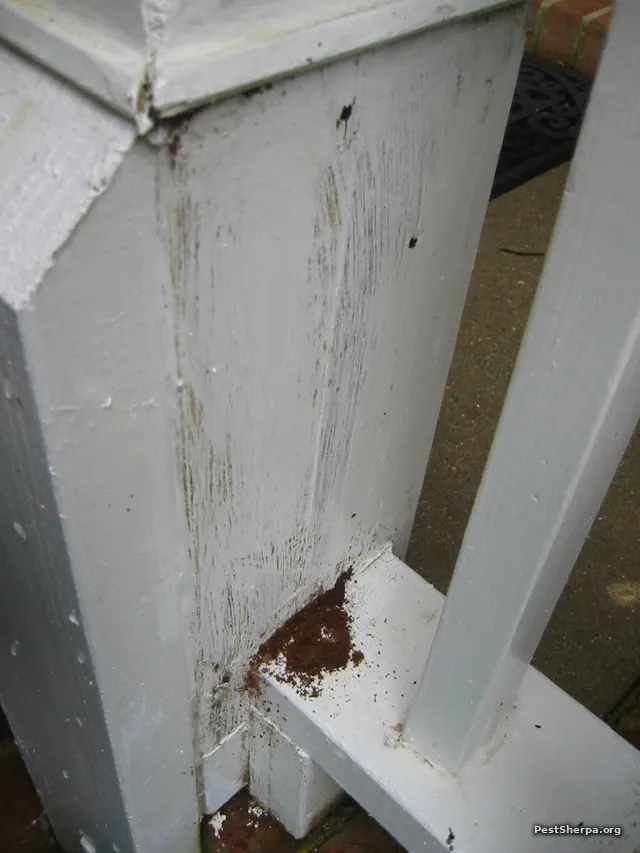
UC IPM is clear that an inspection by a licensed pest management professional is required before treatments can be performed. Damage is often found during a remodel, a real estate inspection, when shelter tubes show up, or when swarmers appear. Their quick guidance when termites invade includes destroying shelter tubes, removing infested wood, draining excess water, and contacting a professional for suspected or confirmed infestation.
Purdue’s calm note still helps homeowners: termites work slowly, so there is usually time to select a company and compare bids and guarantees from at least two firms. University of Maryland Extension says something similar: with an active infestation, do not panic; structural damage usually takes considerable time, and homeowners can take weeks (even a few months) to evaluate and choose a treatment program. That is not permission to ignore active indoor tubes or swarmers. It is permission to shop carefully before you spend.
Species matters for sequencing. Subterranean termites in structures cannot be controlled with drywood methods such as fumigation, heat, freezing, or electrocution, because the nest and most of the colony sit near or below ground (UC IPM). Treating the wrong class before you repair wastes money and delays the real fix. If someone pitches tenting for a typical subterranean job, push back and read the structural fumigation explainer.
LSU AgCenter’s sequencing line is the one I’d like taped to the fridge during a remodel: eliminate the source in the entire structure before you start repairing the damage. A spot treatment may quiet one wall and leave activity elsewhere. A qualified termite specialist also is not the person who certifies structural capacity. If floors sag, doors will not close, or load-bearing members feel soft, bring in a licensed engineer.
Found damage during a remodel? Do this first
- Stop the cosmetic close-up. Do not hang drywall or paint over soft framing until a licensed inspector says the colony is under control.
- Document, then leave evidence. Photograph tubes, galleries, and soft wood. Leave tubes in place for the inspector when you can.
- Confirm species. Subterranean vs drywood changes the treatment (soil/bait programs vs whole-structure options).
- Treat and dry the house. Fix leaks, damp soil contact, and other conducive conditions in the same window as treatment when you can.
- Then rebuild. Salvage or replace with the right people, pull permits if needed, finish last.
Sources: UC IPM, Purdue E-4, LSU AgCenter.
Licensed termite company vs general contractor (and when to call an engineer)
Think of three roles. Mixing them up is how homeowners buy two treatments and still have soft sills.
Licensed termite / pest management professional. Inspection, identification, treatment, and the written service agreement. UC IPM notes that successful termite management needs building-construction knowledge and that pesticide applications are highly regulated. For drywood, DIY whole house treatments are not recommended and the products needed for a thorough job are not available to the general public; except for wood removal, seek professionals. Note: do not remove the wood yourself if you are not familiar with home construction; removing load bearing wood could jeopardize the structural integrity of the house. Shop like you would for other serious home work: compare plans, cost, and warranties, and verify the license with your state’s structural pest or pesticide regulator.
General contractor / carpenter. Rebuild: sill and joist work, studs, subfloor, drywall, trim, finish. Permits for structural work follow local building rules. This is usually where the visible house gets put back together after treatment. Some pest control companies offer this service in conjunction with treatment but it is not required that all companies do this.
Licensed engineer (when needed). Load-bearing questions, severe section loss, or any situation where “does this still carry?” is not obvious. LSU AgCenter is explicit that a termite control specialist cannot assess the structural impact of damage when it seems severe.
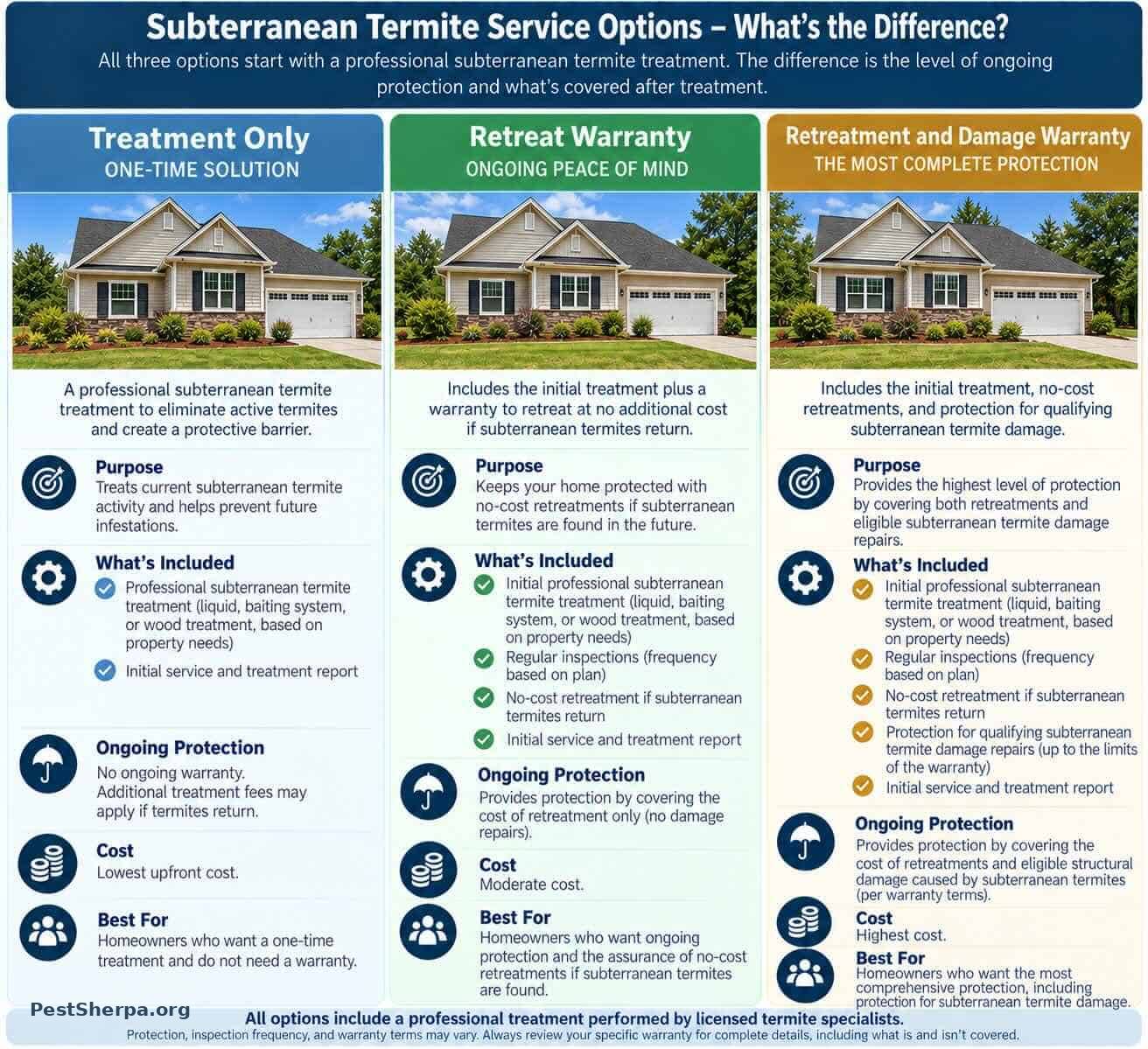
Warranties and contracts deserve a careful read. University of Georgia and North Carolina’s structural pest consumer materials describe two common patterns:
- Re-treatment only: the company retreats if termites return; repair of damage remains the owner’s responsibility (most common).
- Re-treatment and repair (damage repair): the company may repair new structural damage that occurs after the contract starts, usually only when live termites are documented at the damage site, and only up to stated limits.
Some repair contracts still exclude “contents” such as paneling, drywall, flooring, baseboards, and cabinets, even when they cover structural wood like studs, sills, joists, and headers (UGA B-1241). Get everything in writing, including a diagram of active and previous activity when your state requires it. Penn State also reminds shoppers to get estimates from multiple licensed companies and to understand that subterranean termite warranties typically do not cover other wood-destroying organisms.
For hiring help beyond this page, see How to Hire a Pro: Termites, how to hire a licensed termite company, and the broader termite control hub (treatment systems, warranties, and what a good inspection includes).
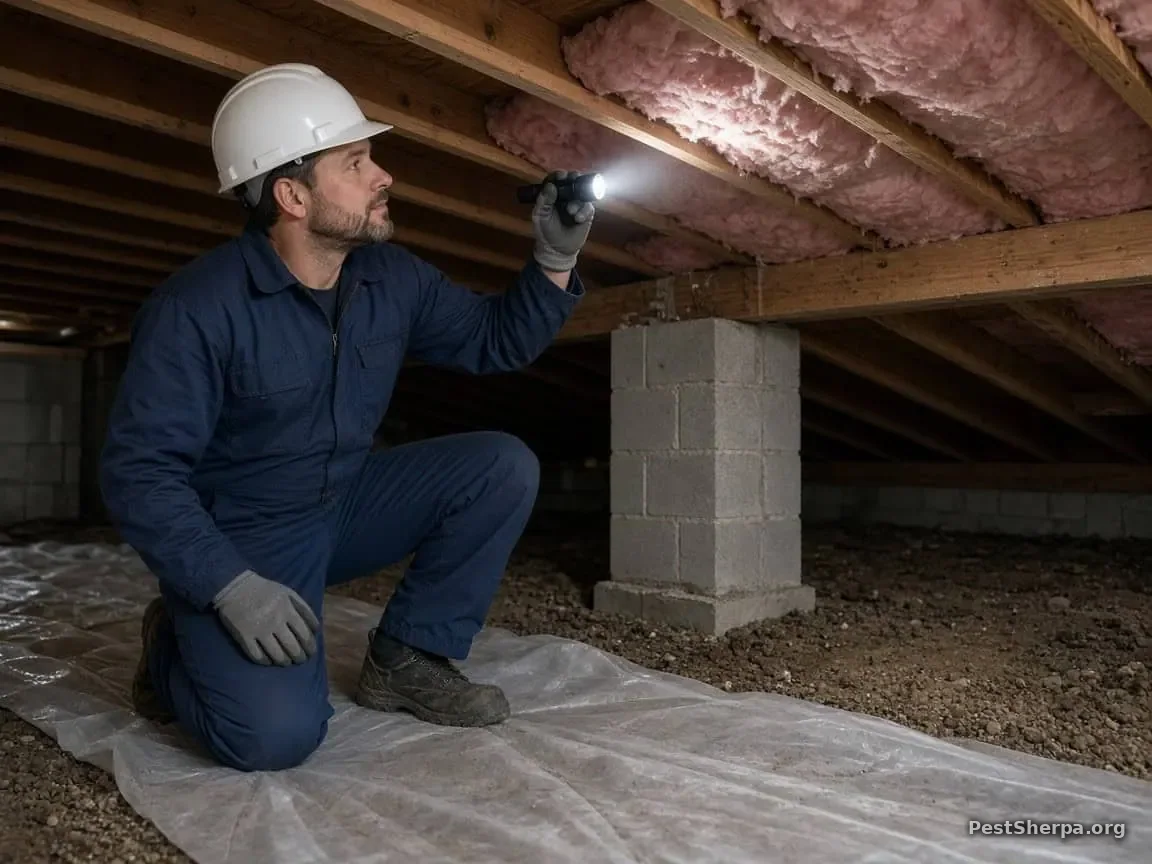
A practical order of operations
- Document. Photograph tubes, damaged wood, swarmers, and pellet piles before anyone scrapes or cleans. Leave evidence in place for the inspector when you can.
- Get a licensed inspection. Confirm termite type (subterranean vs drywood vs other) down to the species if possible and where they are getting in.
- Stop the colony and fix moisture. Treatment plan first. Fix leaks, damp soil contact, and other conducive conditions in the same window when you can. The inspector can provide advice.
- Decide salvage vs replace with the right people. Carpenter for non-structural; GC plus engineer when load-bearing members are in play.
- Pull permits if required. Structural framing work is not a weekend paint job in most jurisdictions.
- Rebuild, then finish. Structure and sheathing before drywall and trim. Do not bury active galleries behind new paint or drywall.
- Keep the paper trail. Service agreement, graph, warranty type (retreat-only vs repair), and any engineer notes. Schedule follow-up inspections the contract calls for.
Common questions about repairing termite damage
Can I just replace the damaged wood and skip treatment?
Not generally. UC IPM’s integrated approach still includes eliminating the colony, fixing moisture, and exclusion. LSU AgCenter is blunt: eliminate the source in the entire structure before you start repairing. Swap boards alone and you often pay twice.
Will my homeowners insurance pay for termite repairs?
Usually not. III lists termite and other pest infestation among disasters that are not covered, and TDI’s consumer guide lists termites among risks most home policies do not cover. Read your policy and ask your agent. A pest company’s repair warranty is a different product.
How do I know if wood can be salvaged?
Probe it. Wood that still feels solid under an ice pick or screwdriver, is not carrying load, and has only localized galleries may be a sister/patch candidate. Wood that is largely hollowed, crumbles, sits in earth contact, or is a soft sill, header, or beam is replace territory. Load-bearing questions need a GC and often an engineer (UC IPM drywood guidance; Penn State structural themes).
Who should I call first, a termite company or a contractor?
Call a licensed termite company first for identification and treatment planning, especially if tubes, swarmers, or soft wood suggest activity. Bring in a GC for rebuild once the control plan is clear. Call an engineer if floors sag, doors will not close, or load-bearing members feel soft (LSU AgCenter: a termite specialist cannot certify structural capacity).
What is the difference between retreatment-only and repair warranties?
Retreatment-only means the company treats again if termites return; you still pay for repair. Retreatment-and-repair may cover new structural damage after the contract starts when live termites are documented at the damage site, up to stated limits. Many repair contracts still exclude contents such as drywall, flooring, and cabinets (UGA B-1241; NCDA&CS consumer guide). Get it in writing.
Should I close the walls while I wait for bids?
Do not bury active galleries behind new drywall or paint. Purdue and Maryland both say termites work slowly enough that you usually have time to compare licensed bids. Use that time; do not use it to hide the evidence. If having open walls is too disruptive and unappealing before work is done, cover openings with plastic at least 4 mil thick to at least give you some sense stability in your lifestyle. Some people find looking at open walls, stressful.
Keep learning
- Termite damage costs (national figures and insurance deep dive)
- Signs of termites
- Termite guide hub
- Drywood termites
- Structural fumigation (tenting)
- Termite Control (treatment systems, warranties, cost drivers)
- Hiring a termite pro
- Ask the Sherpa (send photos of tubes, damage, or a contract you are unsure about)
This page is educational. It is not a structural engineering opinion, a building-code review, or insurance advice for your policy.
References
- Purdue Extension Entomology, Termite Control (E-4)
- UC IPM, Subterranean and Other Termites
- UC IPM, Drywood Termites
- Oregon State Solve Pest Problems, Termites
- Insurance Information Institute, Which disasters are covered by homeowners insurance?
- Texas Department of Insurance, Home insurance guide
- University of Georgia CAES Field Report, What does your termite-control contract provide?
- University of Georgia CAES B-1241, Termite Control Services
- University of Maryland Extension, Termites
- Penn State Extension, Eastern Subterranean Termites
- LSU AgCenter, Decay and Termite Damage
- NCDA&CS, Homeowners Guide to Service Agreements and Warranties
This article was written by Greg Baumann, founder of Pest Sherpa, and reflects more than 40 years of professional pest management experience.
About the Author

Greg Baumann | Pest Control Expert
Greg Baumann is the founder of Pest Sherpa and a Pest Control Expert with more than 40 years of professional pest management experience. His articles combine decades of field experience, technical expertise, and science-based guidance to help homeowners identify pests correctly, understand real-world risks, and make informed pest management decisions.
Mission: Identify the pest. Understand the risk. Stop the problem. Prevent the comeback. Know when it’s time to call a professional.