
Raccoons: Identification, Damage, and Exclusion Around Homes
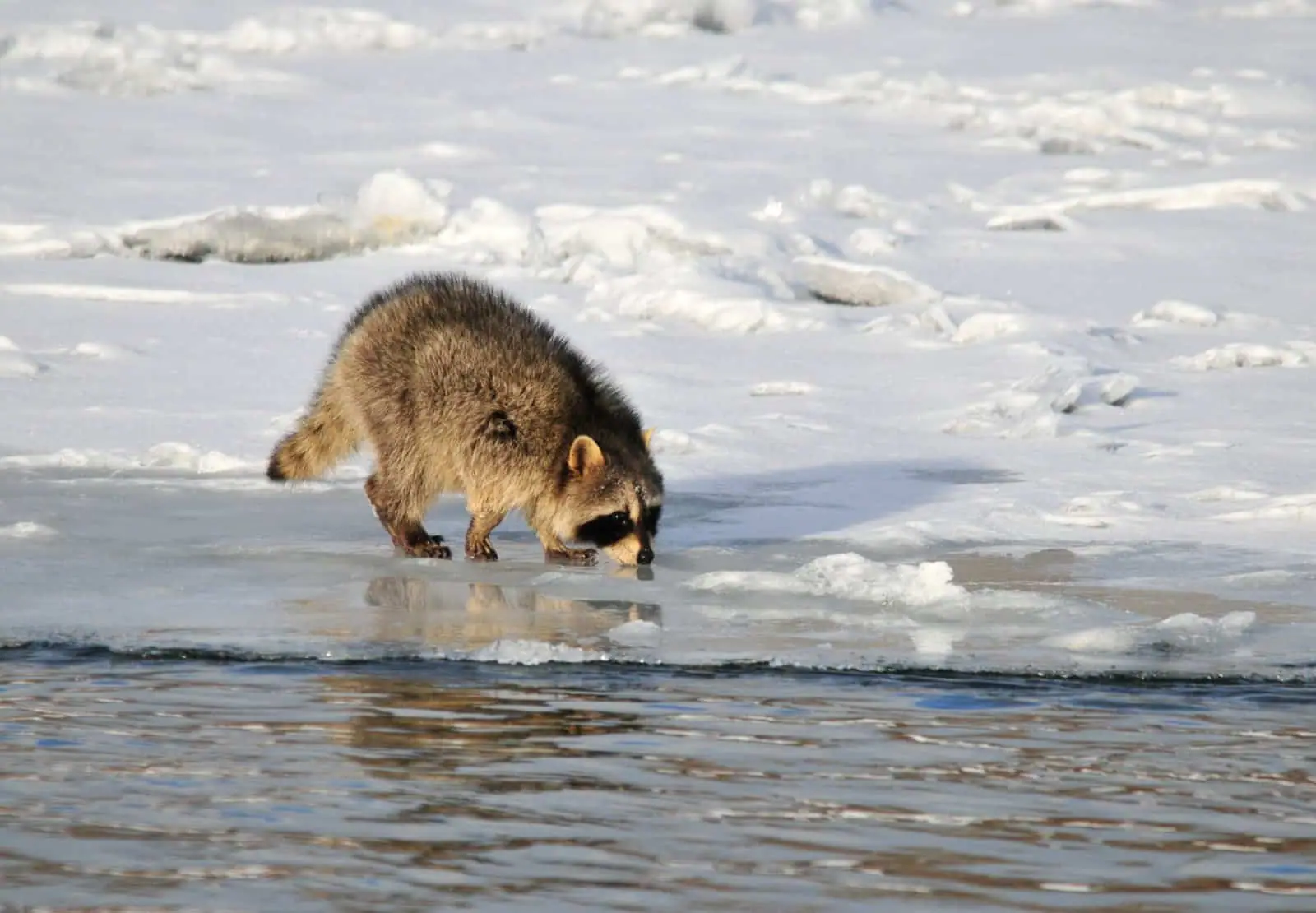
When something heavy walks across the attic at one in the morning, homeowners often assume it is rats. Sometimes it is, and sometimes it is a raccoon. Raccoons are intelligent, strong, and entirely willing to turn a chimney, a gap in the soffit, or a loose roof vent into a den. They are not rodents, but the problems they cause turn up in the same searches. This guide concentrates on identification, damage, the basics of disease risk, and control that begins with exclusion.
Key Points
Raccoons (Procyon lotor) are medium-sized nocturnal mammals with markings resembling a black mask and a ringed tail. Although they are not rodents, they create the same kinds of emergencies for homeowners: dens in the attic, raided trash, occupied chimneys, and frightened pets.
Risks include property damage, rabies exposure through bites or infectious saliva contacting broken skin or mucous membranes, and raccoon roundworm (Baylisascaris procyonis) associated with contaminated feces at latrine sites. Control begins with removing food sources and continues with exclusion. Never seal an occupied den, and do not reach for any type of poison; that approach fails and can create worse problems including violation of the law.
Managing trash and identifying potential entry points are reasonable homeowner tasks. One-way exclusion should only be considered after confirming that no dependent young will be trapped inside. Removing a family with young from an attic, working in a chimney, and handling wildlife under state regulations generally require a licensed operator.
In This Guide
- Identification and Signs
- Damage Around Homes
- Health Risks
- What To Do
- Prevention and Exclusion
- Laws and Professional Lines
- What Raccoon Removal Costs
- Frequently Asked Questions
- References
Identification and signs
Adult raccoons (Procyon lotor) are stocky mammals, commonly weighing about 10 to 30 pounds depending on food supply and region, with a black facial mask, a pointed muzzle, and a bushy ringed tail. Their tracks show hand-like front prints with long fingers. They are normally active at night, and although daytime sightings do occur, they are not automatic evidence of rabies. [UC IPM: Raccoons]
Young are generally born during spring, commonly in April or May in many regions, although breeding and birth dates vary with climate and location. Litters typically contain three to six young. Family groups may den in attics, chimneys, and the voids beneath decks, and an occasional nighttime visit outdoors is a very different matter from a female raising her young in your attic.
Signs and what they suggest
- Heavy footsteps at night in the attic or on the roof: may mean an animal larger than a mouse or rat; consider raccoons, opossums, or squirrels.
- Torn shingles, damaged roof vents, or displaced soffit materials may indicate entry by raccoons or other wildlife. Tracks, photographs, and additional evidence are needed to identify the animal.
- A latrine with piled tubular scat: repeated use of the site; treat the feces as a biohazard (see the section on health).
- Tipped trash cans and torn bags: animals that have become conditioned to a food source available.
- Outdoor pet food disappearing overnight: easy calories that encourage repeated visits.
- Rolled-back sod or raided sweet corn in gardens: classic garden foraging, which does not necessarily mean there is a den in the house.
Damage around homes
Raccoons tear into weak roofing, screened vents, uncapped chimneys, and flimsy pet doors. In attics they crush and displace insulation, tear duct wrap, contaminate areas with latrines, and may den with their young in spring, and urine staining and odor beneath the latrine are common. Beneath decks and in crawlspaces they establish dens they return to repeatedly, and gardens, koi ponds, poultry, and unsecured trash are all at risk. [UC IPM] [Virginia Cooperative Extension]
UC IPM notes that females searching for a nest site may pull away shingles, fascia, or rooftop ventilators, and uncapped chimneys are classic den sites. Unlike skunks, raccoons are not typically associated with neat, conical holes dug in turf for grubs; if you see those, reconsider the species.
Once a den is established, the property damage and sanitation problems usually outweigh any appeal of the masked face. Correct the attractants and seal the openings, or the next raccoon will simply move into the same space.
Health risks
Do not handle raccoons. Raccoons are important wildlife reservoirs of rabies in parts of the United States. Anyone bitten or scratched by a raccoon, or whose broken skin, eyes, nose, or mouth contact its saliva, should promptly seek medical evaluation and guidance from public health authorities. [CDC: About Rabies]
Feces can contain the eggs of Baylisascaris procyonis, the raccoon roundworm. People, and young children in particular, can become infected by accidentally ingesting eggs from contaminated soil, latrine areas, or dust raised during cleanup. The eggs are not infective immediately and typically need about two to four weeks in the environment, so prompt and careful removal lowers the risk. Do not dry sweep latrines in the attic. [CDC: About Raccoon Roundworm] [CDC: Preventing Raccoon Roundworm]
Latrine caution
- Keep children and pets away from known latrines, which may be found on decks and roofs, in attics and woodpiles, and in sandboxes.
- Wear disposable gloves, an N95-rated respirator when working in confined spaces such as attics, and rubber boots or disposable shoe coverings to prevent tracking contamination into living areas.
- Mist dry feces lightly to limit dust, then remove and bag the material for the landfill, or follow local rules for burning or burial where those methods are legal.
- Heat kills the eggs, and the CDC discusses boiling water or appropriate outdoor flame methods for hard surfaces. Ordinary disinfectants do not reliably kill the eggs.
- Afterward, wash your hands, clothing, and tools. When in doubt, hire a cleanup or wildlife professional.
See the CDC’s guidance on preventing Baylisascaris infection. This is general information, not medical advice.
Cover sandboxes when they are not in use, and do not keep or feed wild raccoons. Infected dogs can also shed roundworm eggs, so ask your veterinarian about prevention.
What to do
Work in sequence: remove the food pressure, confirm whether a den is active, exclude the animals correctly, and then clean up. Skipping ahead to poison or indiscriminate trapping results in injured animals, orphaned young, and openings that are reused.
- Remove the food supply. Use locking trash containers, stop feeding pets outdoors overnight, pick up fallen fruit, and ask neighbors to stop intentional feeding. Removing food reduces repeat visits quickly. [UC IPM]
- Confirm occupancy. Listen at dusk, look for fresh latrines, and, if you need proof, spread flour or a tracking patch at a suspected entry point. Dens in spring frequently contain young.
- Never seal an occupied den. Before installing a one-way exclusion device, confirm that no dependent young will be trapped inside. One-way doors may be appropriate when all animals are capable of leaving independently. When dependent young are present, consult a qualified wildlife control professional. Permanently seal entry points only after confirming that all animals have left.
- Cap and screen. Chimney caps, reinforced vents, and hardware cloth skirting are the lasting solution. Removing an animal without sealing the entry only prepares the way for the next raccoon.
- Clean latrines carefully once the animals are gone, following the CDC’s roundworm guidance, and do not dry sweep the attic. [CDC: Preventing Raccoon Roundworm]
- Call a professional for dens in attics or chimneys, aggressive animals, or any situation involving a bite or exposure to saliva. Wildlife control regulations vary by state and locality. Hire a qualified wildlife control operator who holds any licenses or permits required in your jurisdiction and understands applicable trapping and relocation restrictions.
Reasonable homeowner tasks include managing trash, installing simple exterior screening you can reach safely, and sanitation. Tasks a homeowner should not attempt include cornering a raccoon in an attic, relocating animals where it is illegal, or sealing a chimney while young are crying below the damper.
The usual hiring principles still apply: confirm the license and insurance, get the methods in writing, and ask for a warranty on the sealing work. See how to hire a licensed pest control company.
Prevention and exclusion details
Exclusion is the lasting solution. I encourage homeowners to think of the home as a fortress whose walls must hold, and to remove an animal only after they know how it got in and how they will seal that opening without trapping young inside.
- Cap chimneys with a securely fastened, code-compliant spark arrester or cap, after first confirming that the flue is empty.
- Screen roof vents and soffit gaps with sturdy, well-fastened hardware cloth, since raccoons can peel back weak screening.
- Trim overhanging branches that provide easy access to the roof. However, raccoons can also climb building surfaces and downspouts, so trimming alone will not prevent roof access.
- Close crawlspace doors and reinforce the skirting beneath decks, burying hardware cloth so that it extends outward where animals are likely to dig under.
- Use heavy trash containers with locking lids, and secure the cans with bungee cords or racks so they cannot be tipped over.
- Stop feeding pets outdoors overnight, pick up fallen fruit, and secure compost.
- Cover sandboxes, and discourage neighbors from feeding raccoons intentionally.
Ordinary fences rarely stop raccoons on their own, because raccoons climb or dig. Extension literature describes electric fence designs for gardens, but these are specific to the site and not suitable for every suburban yard. Frightening devices and so-called repellents usually fail once the novelty wears off. [UC IPM]
Never seal an occupied den. One-way doors may be used when all animals are capable of leaving independently. When dependent young are present, a qualified wildlife control professional should determine the appropriate removal or exclusion procedure. If you hear young in a chimney or attic, call a wildlife control operator before you try to block the opening.
Raccoons are not rats
Raccoons are procyonids, not rodents. This guide is part of the Nuisance Wildlife hub, alongside other wildlife that dens in structures, which we will add over time. For mice and rats, which leave smaller droppings and greasy rub marks and make a lighter sound at night, use the separate rodents hub, because the biology and the legal rules differ.
- Rats and mice: much smaller, with different droppings and gnaw marks, and controlled with snap traps and bait. See the roof rat and Norway rat guides.
- Opossums: a pale face and a scaly tail; often less destructive in attics, but still requiring exclusion.
- Squirrels: active during the day, with smaller entry holes and a different seasonal timing for their young.
- Skunks: ground dens and the distinctive risk of spray; conical digging in the lawn points more to skunks than to raccoons.
If your problem is in fact rats, putting poison in the attic first is still a poor plan, and if it is raccoons, rodenticides are entirely the wrong tool.
Attic, chimney, and deck den patterns
Raccoons are climbers, and anything that offers a grip up to the roof serves as a ladder: downspouts, corner trim, trellises, and overhanging tree limbs. Once on the roof, they test soft soffits and loose turbine vents, and an uncapped chimney is an open front door. UC IPM and Midwest extension guides all begin with these structural facts before discussing traps. [UC IPM] [Iowa State Extension]
Dens beneath decks remain dry and close to trash or pet food. Hardware cloth skirting that is buried or firmly anchored puts an end to repeated occupancy, while plastic lattice alone is easily torn through.
Laws, relocation, and professional lines
Wildlife regulations vary by state and municipality, so check with your state fish and wildlife agency, which you can find through the Association of Fish and Wildlife Agencies member list, before you trap. Trapping and relocation are regulated differently among states. Relocation may be prohibited or require specific authorization because of disease transmission concerns and the potential to create problems elsewhere. Check applicable wildlife regulations before trapping or moving a raccoon. Lethal options, where legal, still require proper regulation compliance and disposal and still fail without exclusion of future wildlife from the site. Hire operators who explain the legal requirements in your county and who will provide a warranty for the sealing work, not merely the night of removal.
Pest control companies and wildlife specialists sometimes divide the work, so ask who will seal the roof. Capturing a raccoon while leaving the soffit open simply prepares the way for the next one. Our Hiring basics still apply: confirm the license and insurance, get the methods in writing, and accept no unidentified powders in the attic.
What it costs
HomeGuide’s February 2026 cost guide puts removal of one raccoon at $200 to $300, with an inspection at $80 to $150. Attic jobs that include trapping, sealing, and disinfecting run $1,000 to $3,500.[7] Angi’s September 2026 wildlife removal guide lists raccoon removal at $400 to $600 in its cost table, while its raccoon section puts the average at $300 to $450. Its $402 national average covers all wildlife removal, not raccoons alone. These figures reflect different cost summaries and should not be treated as directly interchangeable.[8]
Typical national ranges
- Removal of one raccoon from a yard or accessible location: $200 to $300 (HomeGuide, 2026). [7]
- Each additional raccoon trapped: $100 to $150 (HomeGuide, 2026)[7]
- Manual removal of a raccoon nest: $300 to $750 (HomeGuide, 2026)[7]
- Inspection: $80 to $150 (HomeGuide, 2026)[7]
- By location: roof $350 to $700; chimney $900 to $1,200; attic $350 to $3,500 (HomeGuide, 2026)[7]
- Raccoon removal, Angi national range: $400 to $600[8]
- Repairs after wildlife removal: $300 to $6,000 (Angi, 2026)[8]
These are national figures from consumer cost surveys, not quotes. Prices vary by region, home, and job, so treat them as a starting point for comparing written estimates.
What moves the price
- Location: a yard trap costs far less than an attic or chimney job.
- Kits present, which need hand removal or extra visits.
- Number and height of entry points to seal.
- Latrine cleanup, decontamination, and insulation replacement.
- State rules on what happens to captured animals.
One-time job or ongoing plan
Raccoon work is a one-time project, not a service plan: removal, exclusion repairs, cleanup, and a follow-up check. The repair and cleanup lines, not the trapping, usually drive the total.
Red flags in a quote
- Trapping with no sealing in the quote.
- Relocation offered where your state prohibits it.
- No plan for kits in spring or early summer.
- Poison offered for raccoons.
Get at least two written quotes that list inspection, removal method, sealing, cleanup, and warranty separately. Our guide to hiring a wildlife pro has more questions to ask.
Sanitation details that change pressure
Locking lids are better than bungee cords, and enclosures are better still where bears share the neighborhood, though they help with raccoons as well. Feed pets indoors, and if you compost, use sealed bins. Fallen figs and persimmons, and bird feeders filled with seed, are seasonal attractants. The Commonwealth of Virginia’s materials on human-wildlife conflict emphasize food management for good reason: Reducing accessible food sources can discourage repeated raccoon visits, while repairing and reinforcing vulnerable entry points helps prevent denning. [Virginia Cooperative Extension]
Sanitation aimed at rats helps as well. A property that supports roof rats often offers the same unsecured food that raccoons seek, so remove that food supply once and for all.
After the animals are gone
Once the animals are gone and the openings are sealed, complete the work so that you do not invite the next den:
- Remove and bag latrine material while wearing personal protective equipment, and follow the CDC’s guidance on heat and dust control for contaminated surfaces.
- Replace crushed attic insulation and repair torn duct wrap, since contamination and moisture can persist after the odor fades.
- Wash or replace heavily soiled stored items, and when in doubt, discard porous materials from the area around the latrine.
- Reinspect repaired entry points for fresh damage or signs of activity, and listen for renewed nighttime noises. A follow-up inspection can help confirm that exclusion measures remain effective.
- Maintain discipline with trash and pet food, because exclusion fails if a ready food supply remains on the porch.
Ectoparasites sometimes move out of attics after wildlife dens are vacated. If you see fleas or mites indoors after a raccoon eviction, treat that as a separate pest problem rather than as evidence that the raccoon has returned. If you hear attic noises afterward that resemble rodents, consult the rodents hub and the species guides rather than assuming every scratch is another raccoon.
Common questions about raccoons
Are raccoons rodents?
No. Raccoons are mammals in the family Procyonidae, which is why this guide is part of the Nuisance Wildlife hub rather than the rodent section. Use the rodents hub when the signs point to mice or rats.
Will poison get rid of raccoons?
Do not begin with poison. It is often illegal or inappropriate for raccoons, it creates risks for other animals, and it does nothing to close the entry point. Exclusion and sanitation are the real solution.
How do I know if a raccoon is in my attic?
Common clues include heavy footsteps and thumping at night, latrine piles of tubular scat, torn insulation, and chewed roof vents or soffits. Confirm that an animal is present before you seal anything.
Can I seal the hole while they are inside?
No. Never seal an occupied den, because you can trap young inside or provoke destructive attempts to break out. Wait until the animal and any young have left, or hire a wildlife professional.
Are raccoon droppings dangerous?
Yes. They can contain the eggs of the Baylisascaris roundworm. Do not dry sweep or vacuum raccoon droppings. CDC recommends avoiding dust, lightly misting contaminated material before removal, wearing appropriate protective equipment, and using careful disposal procedures. Most ordinary disinfectants do not reliably kill raccoon roundworm eggs. If you hire a professional, they too must comply with these safety standards.
Do raccoons carry rabies?
Raccoons are an important wildlife reservoir of rabies in parts of the United States, so do not handle them. The CDC’s rabies pages explain how to respond to an exposure.
What attracts raccoons to a house?
Open garbage, pet food, fallen fruit, bird seed, accessible chimneys, uncapped vents, pet doors, and tree limbs that touch the roof all attract raccoons.
How much does raccoon removal cost?
HomeGuide’s February 2026 cost guide puts removal of one raccoon at $200 to $300 and manual removal of a raccoon nest at $300 to $750. Attic jobs that include trapping, sealing, and disinfecting run $1,000 to $3,500.[7] Angi’s September 2026 data lists raccoon removal at $400 to $600.[8]
Send photographs to Ask the Sherpa if you would like help interpreting signs in your attic.
References
- UC IPM: Raccoons
- Virginia Cooperative Extension: Managing Human-Wildlife Interactions: Raccoons
- Iowa State Extension: Raccoons Damage Management
- CDC: About Rabies
- CDC: About Raccoon Roundworm (Baylisascaris)
- Association of Fish and Wildlife Agencies: U.S. State and Territorial Fish and Wildlife Agencies (member list)
- HomeGuide, How Much Does Raccoon Removal Cost?, February 9, 2026
- Angi, How Much Does Wildlife Removal Cost? [2026 Data], updated September 9, 2026
Top photo: Tom Koerner, U.S. Fish and Wildlife Service, public domain (U.S. federal government work), via Wikimedia Commons.
This article was written by Greg Baumann, founder of Pest Sherpa, and reflects more than 40 years of professional pest management experience.
About the Author

Greg Baumann | Pest Control Expert
Greg Baumann is the founder of Pest Sherpa and a Pest Control Expert with more than 40 years of professional pest management experience. His articles combine decades of field experience, technical expertise, and science-based guidance to help homeowners identify pests correctly, understand real-world risks, and make informed pest management decisions.
Mission: Identify the pest. Understand the risk. Stop the problem. Prevent the comeback. Know when it’s time to call a professional.