
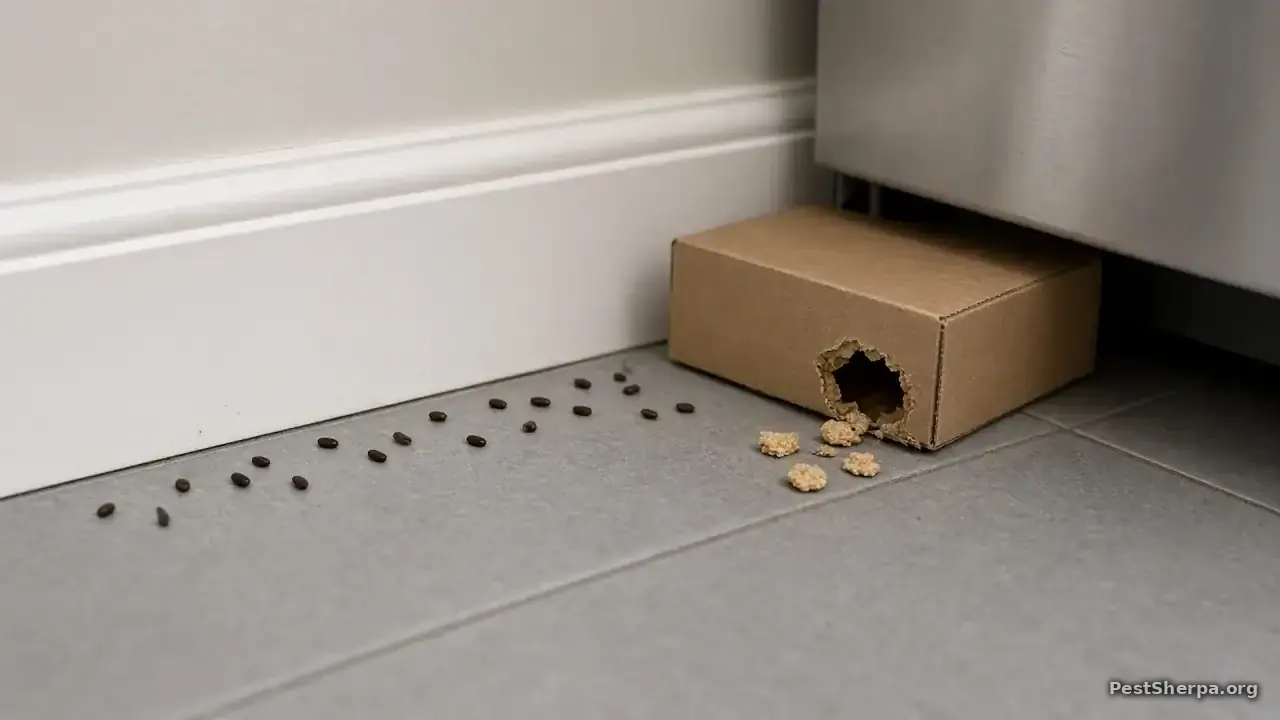
What are the first signs of mice, and how do I keep them out?
Short answer: Most people first notice droppings or damaged pantry packages. Mice need warmth, food, and cover, so garages with pet food or seed are magnets. Seal gaps a pen can pass through, keep garage and exterior doors closed and swept, store food in sealed containers, and prefer snap traps over unproven ultrasonics.
First signs people usually notice
Droppings and damaged packaged goods in the pantry are the common first clues. Holes in walls can show up later. Pantries are quiet, food-rich, and easy for mice to work without being seen. If you already found chewed packages or mice in the pantry, see What should I do if I find mice in my pantry?. If you are sorting pellets by size, see how to identify mouse droppings.
Why your house (and garage) looks good to mice
Mice are more cold-sensitive than rats. A warm, safe structure with food and water is ideal. Bags of pet food and grass seed left in the garage, plus plenty of clutter to hide in, make garages especially hospitable. Once they find that pattern, they treat the garage as a staging area into the kitchen.
Common entry points
- Gaps under garage doors, and leaving a garage door open longer than needed.
- Unsealed spaces under exterior doors into the living space.
- Foundation cracks and unsealed pipe or utility penetrations into crawlspaces or basements.
If you can push a pen through an opening, a mouse can use it. Mice are commensal rodents: they share our table when we leave food, water, and access.
Safe control that works
Big-box shelves are full of glue boards, snap traps, and bait. Most people do best with snap traps because they are efficient and easy to dispose of. Ultrasonic devices have not been scientifically proven to repel mice. After you eliminate the mice you can find, inspect daily for new signs so you know whether control held. If you do not want that chore, a professional can take it on. Work with them by noting where you see fresh activity.
The number one thing to avoid
Do not make the home hospitable. Leave gaps open, leave pet food in dishes overnight, or keep flour and similar staples in paper bags, and you are inviting a return. Put pantry goods in sealed containers, keep garage doors closed when not in use, and seal the pen-sized gaps. Prevention beats cleanup. See also: How do I keep mice out of the pantry?. For trapping layout and biology, use the house mouse guide.
Related guides
References
This article was written by Greg Baumann, founder of Pest Sherpa, and reflects more than 40 years of professional pest management experience.
About the Author

Greg Baumann | Pest Control Expert
Greg Baumann is the founder of Pest Sherpa and a Pest Control Expert with more than 40 years of professional pest management experience. His articles combine decades of field experience, technical expertise, and science-based guidance to help homeowners identify pests correctly, understand real-world risks, and make informed pest management decisions.
Mission: Identify the pest. Understand the risk. Stop the problem. Prevent the comeback. Know when it’s time to call a professional.