
How do I keep mice out of the pantry?
Short answer: Treat the house like a fortress. Fit tight door sweeps, seal any hole larger than a pen, and do not forget the garage. Inside, skip overnight pet food on the floor, clean spills, and keep trash lids tight. Mice often walk under interior pantry door gaps rather than chewing wall holes. Store opened pasta, rice, chocolate, and similar dry goods in durable plastic bins.
Shore up the outer defense
Think of the home as a fortress. Shore up the outer defenses so mice cannot enter in the first place. Make sure every exterior door has a tight fitting sweep at the bottom, and seal any hole larger than the diameter of a pen. That alone greatly reduces the chance a mouse can get inside.
Do not forget the garage
A garage is not open to the living space the way a kitchen is, but many garage doors have large gaps underneath. The big door also opens several times a day or night and can let mice walk right in. Do not store pet food, grass seed, or other food items unless they are in a closed container such as a plastic bin or a small can with a lid. Also inspect the door from the garage into the house for gaps and a working sweep.
Inside habits that remove the foothold
Mice are cautious and mostly nocturnal. Do not leave pet food in dishes on the floor overnight. Clean up food spills, and make sure trash cans have tight fitting lids. If those habits slip, mice get a foothold even when the pantry looks tidy. For trash discipline details, see how to keep pests out of trash cans.
Why pantries are ideal for mice
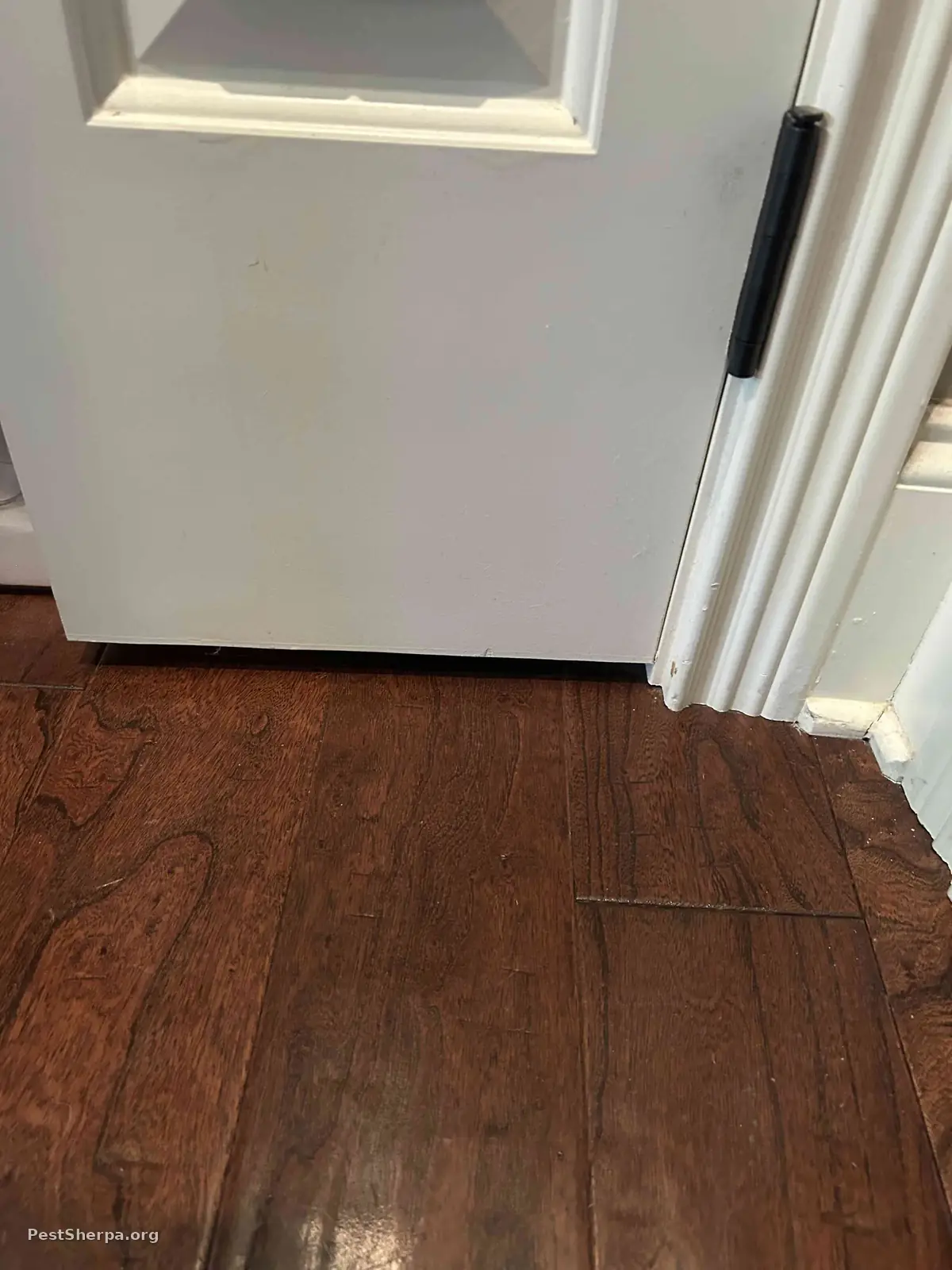
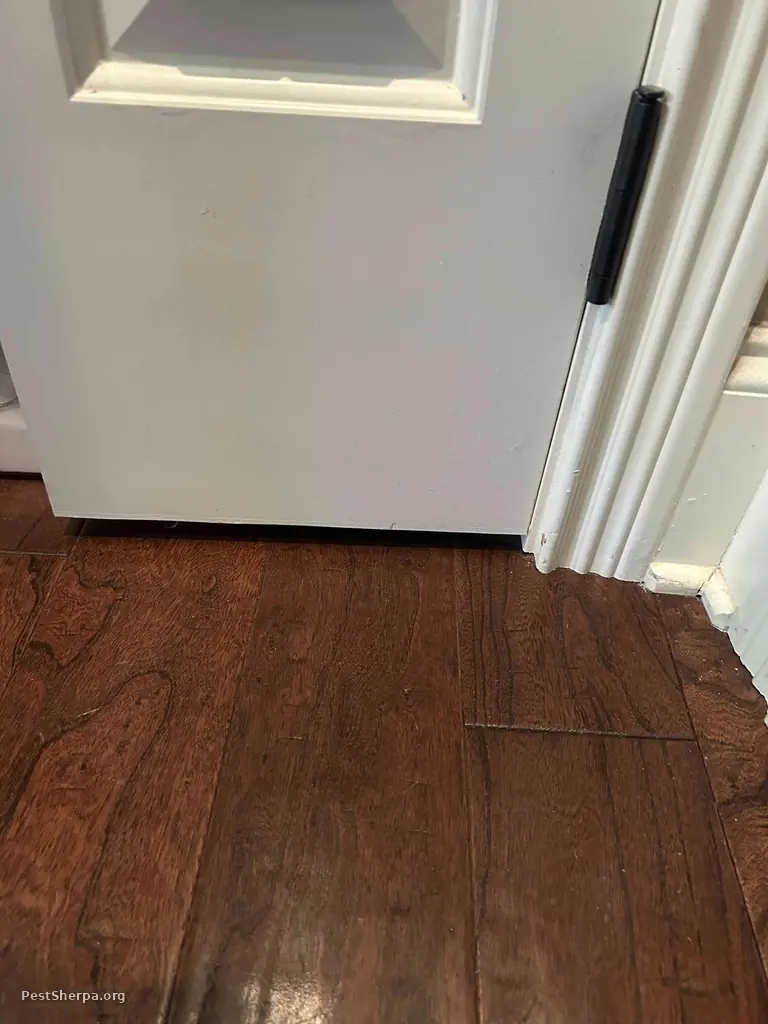
Most interior doors have gaps underneath because there is usually no reason for a tight fitting interior door, except that gap creates an easy entry for mice. That answers how mice get into a pantry. Most people assume mice chewed unseen holes through the wall, but most just walk in under the door. A pantry is ideal: little traffic, dark, plenty of places to hide, and if pet water dishes are nearby, water is easy. Mice need food, water, and harborage. Pantries often supply all three.
Protect the food itself
Protecting the food is often ignored. Leaving unsealed bags or unprotected food gives mice a source that takes little effort. It is common to grab a snack and put the opened bag right back on the shelf.
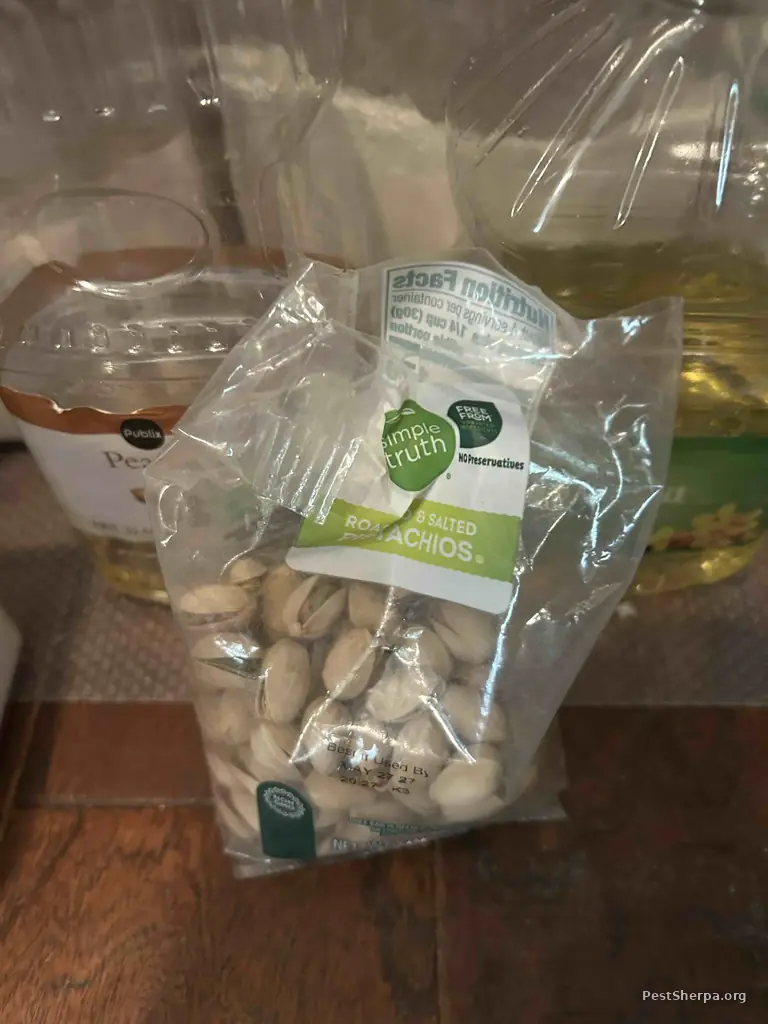
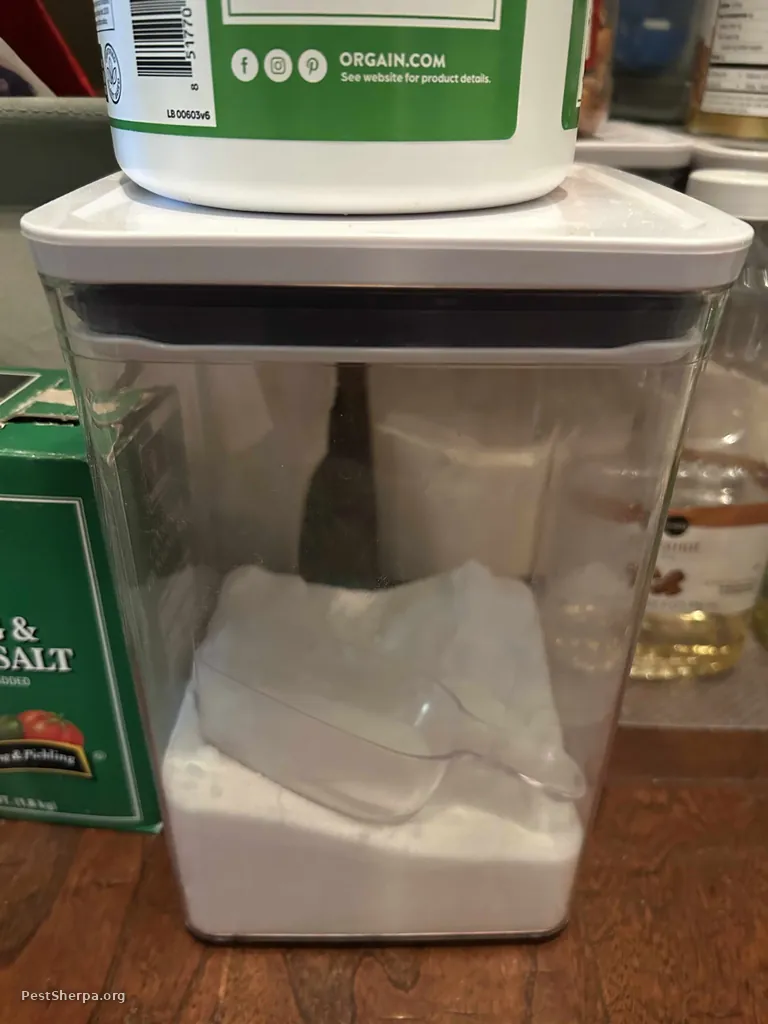
Store opened foods in durable plastic bins. A chocolate chip bag, a bag of beans, or a rice or pasta bag can easily be gnawed open. Bins with tight lids keep the food out of reach and cut the odor trail that draws mice back.
Summary checklist
- Inspect and repair entry points. Door sweeps and seal any hole larger than a pen.
- Do not forget the garage. Gaps under the garage door, closed bins for pet food and grass seed, and the garage-to-house door.
- Do not leave food out. No overnight pet bowls, clean spills, tight trash lids.
- Store opened dry goods in durable plastic containers. Pasta, rice, chocolate, and similar bags go in bins, not back on the shelf open.
- Remember interior door gaps. Mice often walk under pantry doors rather than chewing wall holes.
For species ID, habits, and trapping layout once you need control steps, start with the house mouse guide. If you are already seeing signs around the house, also read the first signs of mice and how to keep them out.
Related guides
- Rodent Guide
- How do I identify mouse droppings?
- How do I keep pests out of trash cans?
- What are the first signs of mice, and how do I keep them out?
- What should I do if I find mice in my pantry?
- More Ask the Sherpa Q&A
References
This article was written by Greg Baumann, founder of Pest Sherpa, and reflects more than 40 years of professional pest management experience.
About the Author

Greg Baumann | Pest Control Expert
Greg Baumann is the founder of Pest Sherpa and a Pest Control Expert with more than 40 years of professional pest management experience. His articles combine decades of field experience, technical expertise, and science-based guidance to help homeowners identify pests correctly, understand real-world risks, and make informed pest management decisions.
Mission: Identify the pest. Understand the risk. Stop the problem. Prevent the comeback. Know when it’s time to call a professional.