
Harvester Ants: Identification, Sting Risk, and Control
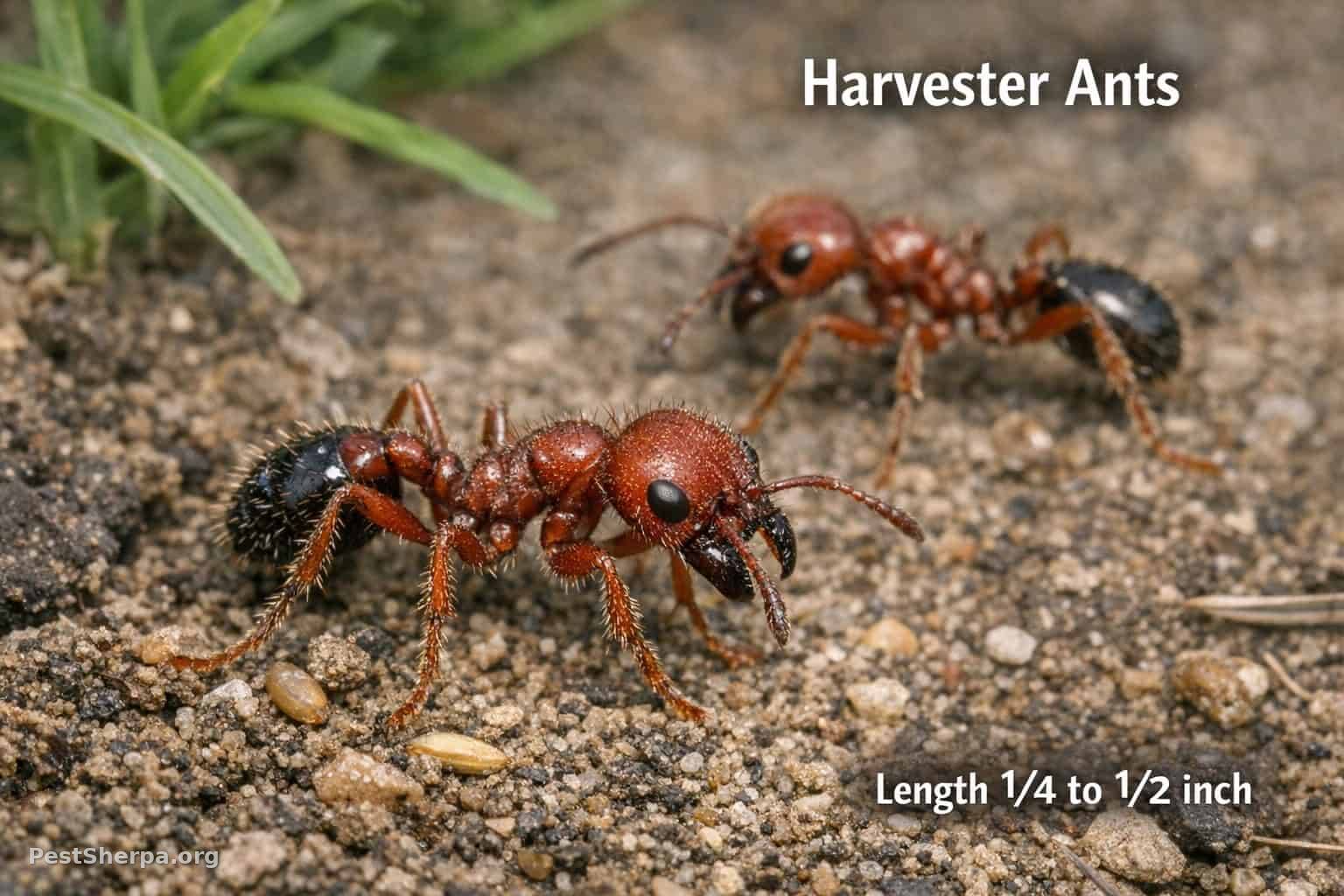
Harvester ants are large, seed-collecting ants in the genus Pogonomyrmex. They are primarily outdoor insects. Their biggest concern is not structural damage but painful stings when nests are disturbed near homes, playgrounds, parks, pet areas, walkways, or other high-use areas.
TL;DR
Harvester ants are large outdoor ants that often nest in sunny, open soil. Many species create a distinctive bare area around the nest entrance and collect seeds as a primary food source. They rarely invade homes and do not damage structures. Most management efforts should focus on reducing sting risk in high-traffic areas rather than eliminating every colony.
- Large outdoor seed collectors in genus Pogonomyrmex; rarely invade kitchens.
- Bare cleared disk around a nest entrance is a strong field clue.
- Main risk is painful stings near play areas, paths, and pet zones, not wood damage.
- Do not flood nests or chase random foragers; use labeled outdoor baits when control is needed.
- Compare carefully with fire ants before treating.
Identification
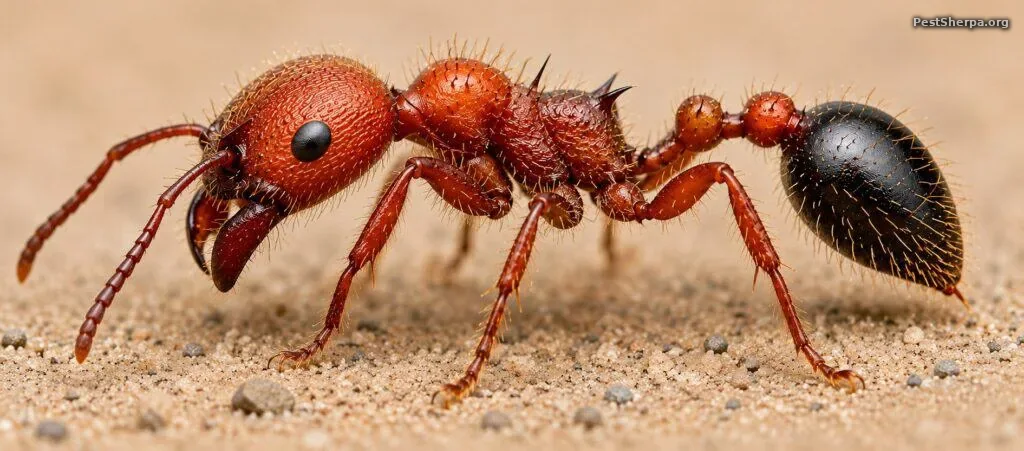
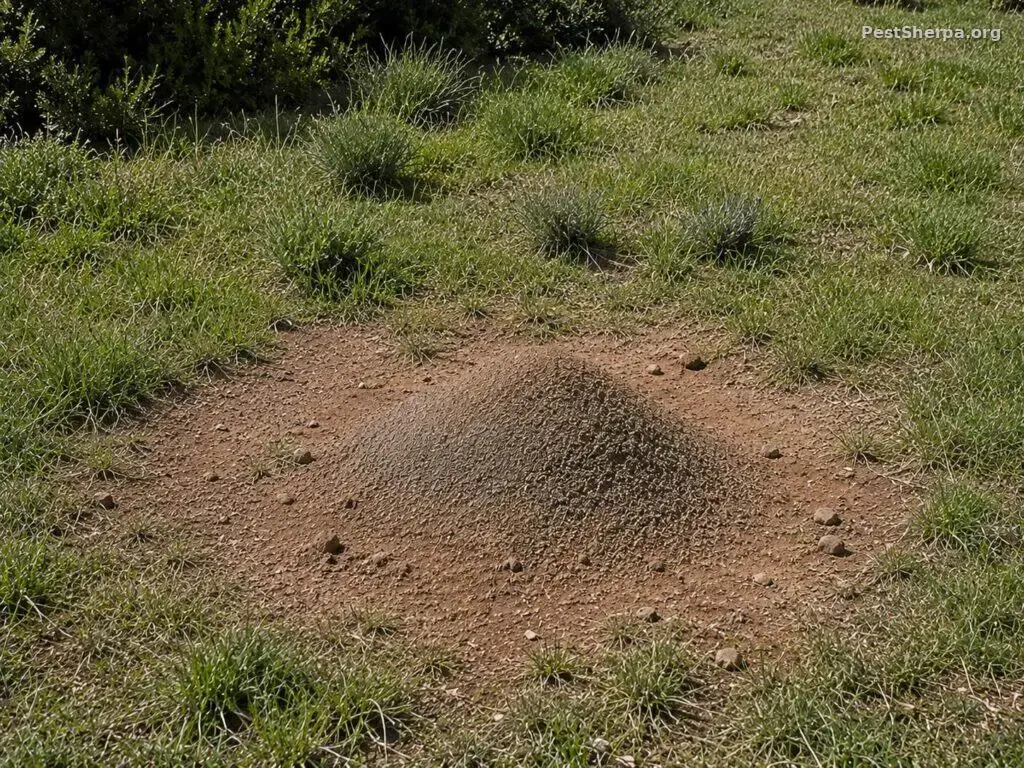
Start with nest context, then worker size. A sunny bare disk with large workers carrying seeds is stronger evidence than color alone. Magnification helps confirm the two-segmented waist and, in many species, the brush of hairs under the head (psammophore).
Harvester ants vary by species but are generally among the larger ants homeowners encounter outdoors. Workers are often between 1/5 and 1/2 inch long and may appear red, reddish-brown, brown, or black. Most species have a two-segmented waist, and many possess a distinctive brush of hairs beneath the head called a psammophore.
Key Identification Features
- Large worker ants compared to most household ant species.
- Two visible waist segments between the thorax and abdomen.
- Often red, reddish-brown, brown, or black depending on species.
- Many species have a brush-like row of hairs beneath the head.
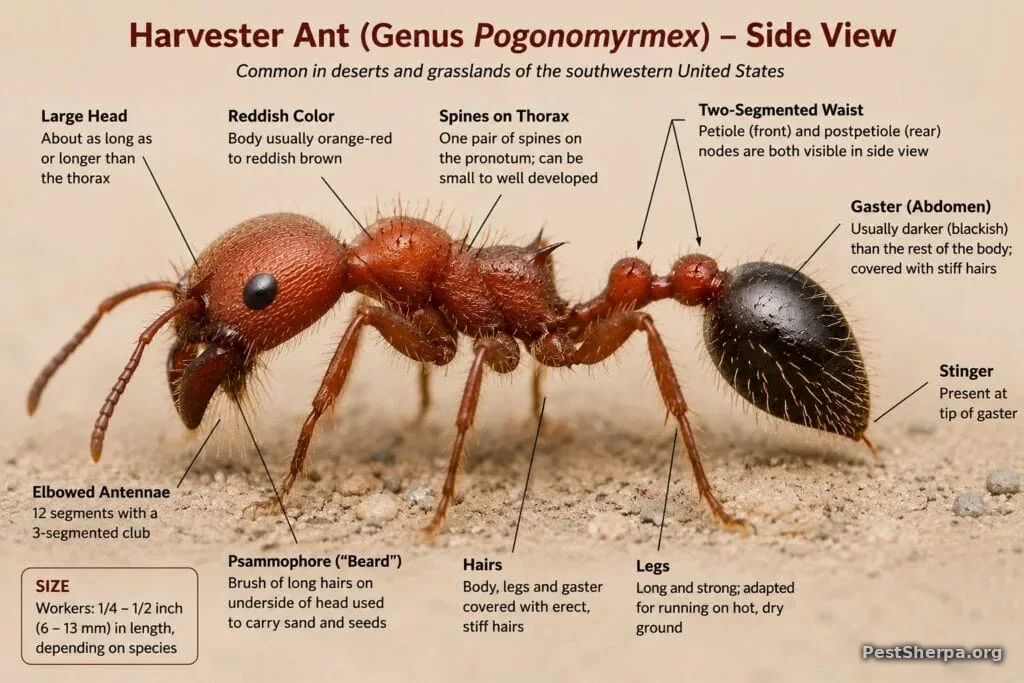
- Nests located in sunny, open soil.
- Bare or sparsely vegetated areas surrounding the nest entrance.
Where Homeowners Usually Find Them
Many western and southwestern species clear vegetation from a circular disk that can span one to several feet. Seed husks and chaff may collect near the entrance. That tidy bare patch is easy to spot from a standing height and is one of the best homeowner ID clues before you pick up a specimen.
Workers forage for seeds and sometimes dead insects. They are not kitchen grease specialists. If you are seeing fine sugar trails on a counter, rethink the ID before you buy an indoor gel bait marketed for pavement or odorous house ants.
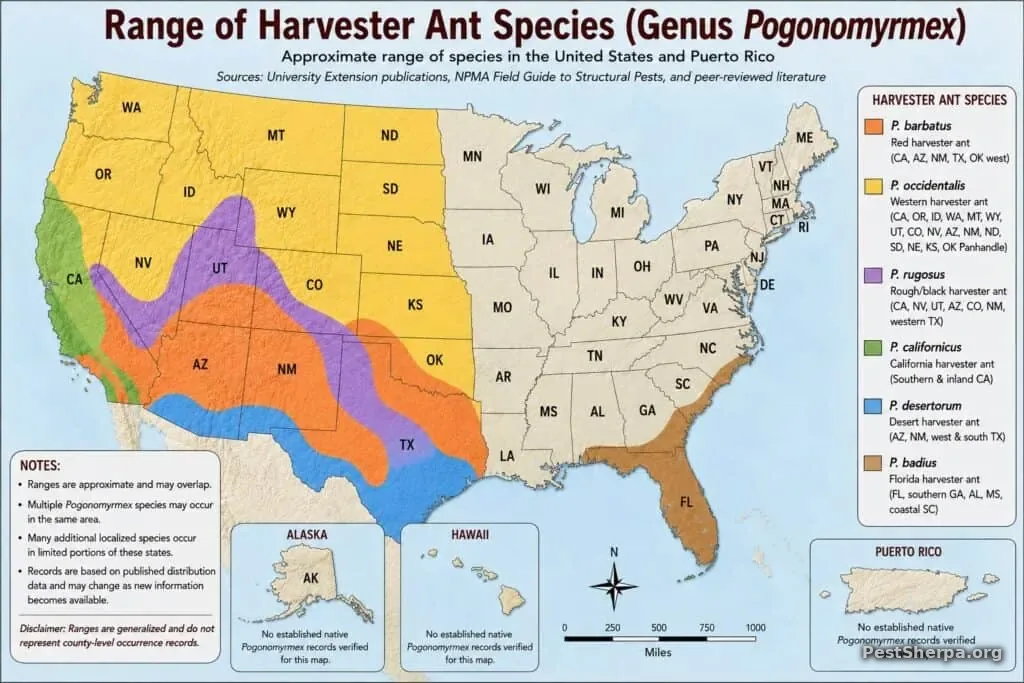
Harvester ants are most common in open landscapes, lawns, roadsides, fields, parks, playgrounds, and areas with well-drained soil. Most species are concentrated in western and southwestern regions of the United States, although the Florida harvester ant occurs in parts of the Southeast.
What Confirms the Identification
- A nest in open soil surrounded by a cleared area with little vegetation.
- Large workers actively carrying seeds or plant material.
- Outdoor activity concentrated around a single nest entrance.
- Painful stings when the colony is disturbed.
Common Misidentifications
Why It Matters
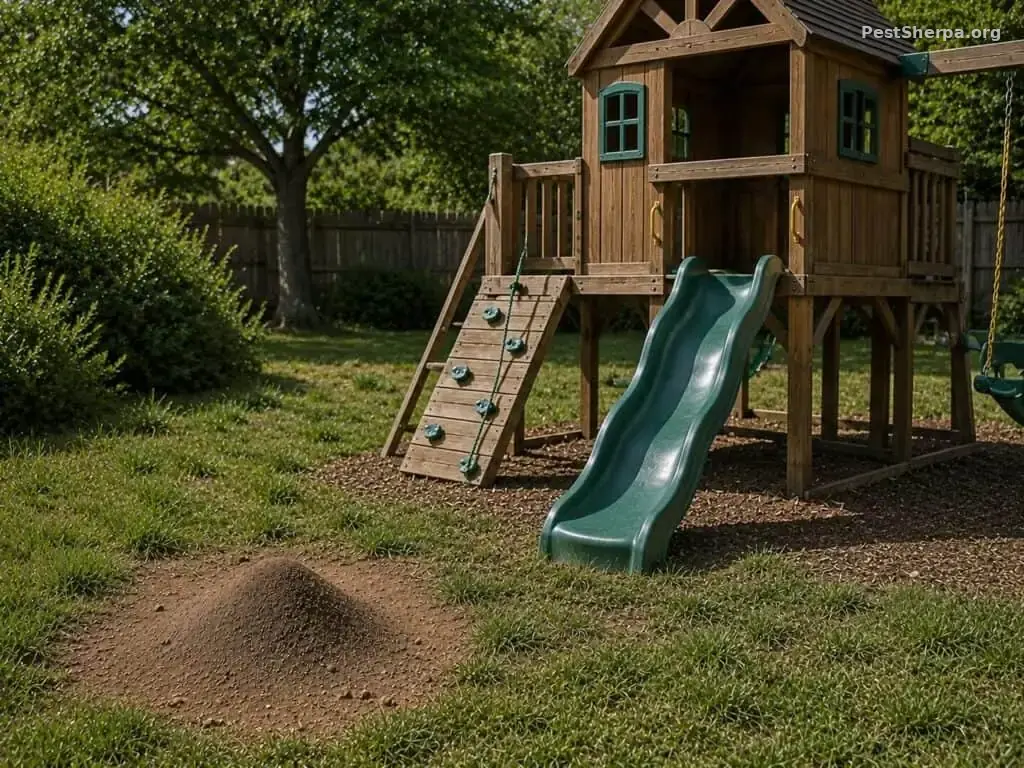
Stings from harvester ants are often described as intense. Nest disturbance can draw multiple workers. That is why playground edges, dog runs, and sidewalk cut-throughs deserve more attention than a remote pasture nest. If children or pets routinely cross a cleared disk, treat location as the priority, not the mere presence of ants on the property.
Harvester ants are also easy to confuse with fire ants at a glance when both are reddish outdoor ants that defend nests. Confirm nest structure and behavior before you pick a product. See fire ants and red imported fire ants when mounds look aggressive and lack a seed-foraging disk.
Harvester ants are generally not considered structural pests. They do not consume wood, tunnel through framing, or damage buildings like termites or carpenter ants. Instead, their importance comes from their ability to sting and their tendency to establish colonies in areas where people and pets spend time.
In natural environments, harvester ants play beneficial ecological roles by dispersing seeds and improving soil structure. However, colonies located in playgrounds, lawns, athletic fields, dog runs, or heavily used landscape areas can create a recurring sting hazard.
For most homeowners, the question is not whether the ants are present but whether the colony’s location creates a realistic risk of human or pet contact.
What To Do
Most successful homeowner programs combine risk assessment with patient outdoor baiting. Quick contact sprays on a few workers rarely solve a nest that sits deeper in soil. Read every product label for outdoor ant use sites, and keep people and pets off treated areas for the stated interval.
1. Determine Whether Control Is Necessary
If a colony is located in an undisturbed area away from people and pets, leaving it alone is often the best approach. Harvester ants are part of the local ecosystem and not every nest requires treatment.
2. Reduce Exposure Risk
Mark or avoid active nests whenever possible. Teach children to avoid disturbing colonies, and keep pets away from active nest sites.
3. Use Labeled Outdoor Ant Baits
Place bait where workers are actively foraging near the nest, not only on a distant patio. Keep competing food sources low. Expect delayed results: slow-acting baits need time to move into the colony. Re-check the nest entrance after the label interval before repeating. If foragers ignore the bait, stop and reassess species ID rather than stacking more products.
When control is warranted, use products specifically labeled for outdoor ant management and follow all label directions. Granular bait products are often more effective than attempting to spray individual workers.
4. Avoid Common DIY Mistakes
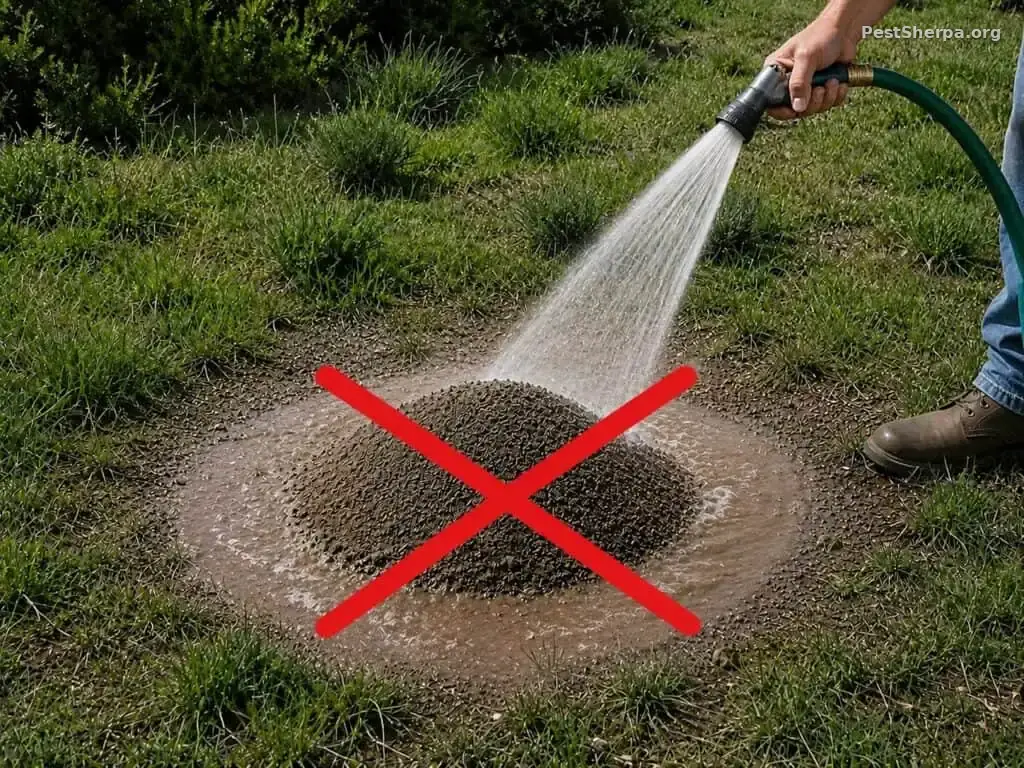
- Flooding the nest.
- Destroying only the visible entrance.
- Spraying random workers away from the colony.
- Treating without first confirming the species.
- Ignoring the actual sting risk created by nest location.
For broader ant identification and treatment guidance, see our Ant Guide.
What Does Not Work
- Flooding or pouring gasoline, oils, or unlabelled solvents into the nest.
- Spraying a few foragers on the patio while leaving the nest entrance untreated and unidentified.
- Assuming every reddish outdoor ant is a fire ant (or every fire ant is a harvester).
- Expecting overnight elimination from a slow-acting bait.
When nest defense looks extreme and mounds lack a seed disk, revisit the fire ant guides before you continue.
When To Call a Pro
Professionals matter most when liability is high or ID is unclear. A misidentified fire ant mound treated like a harvester nest (or the reverse) wastes time and can leave a sting hazard in place. Ask for a plan that covers nest location, product choice, and follow-up rather than a one-visit spray of visible workers.
- The colony is located near playgrounds, schools, patios, pet areas, or athletic fields.
- Multiple colonies are present across the property.
- You are unsure whether the ants are harvester ants or fire ants.
- DIY treatment attempts have failed.
- The property is commercial, institutional, or liability-sensitive.
- Someone on the property has a history of severe insect-sting reactions.
If you need help identifying an ant before treating it, visit Ask the Sherpa.
Similar Pests and Misidentification Comparison
Use nest architecture and foraging behavior together. Cleared seed disks point toward many harvester species; aggressive sunny mounds without that disk more often point toward fire ants.
| Pest | Key Difference |
|---|---|
| Red Imported Fire Ant | Typically forms mounds without a central entrance and stings. |
| Fire ants | Usually smaller workers with aggressive mound defense and stings; mounds lack the cleared seed-foraging disk common to many harvester nests. |
| Allegheny Mound Ant | Creates large dome-shaped mounds and relies on biting and spraying formic acid rather than stinging. |
| Carpenter Ant | Associated with wood and structures and has a single waist node. |
| Pavement Ant | Much smaller and commonly nests along sidewalks, foundations, and pavement cracks. |
Common Questions
Do harvester ants invade kitchens?
Rarely. They are primarily outdoor seed collectors. Indoor trails usually point to other species such as pavement or odorous house ants. Still confirm ID before you bait indoors.
How do I tell harvester ants from fire ants?
Many harvester nests show a bare cleared area and seed foraging. Fire ant mounds are often in sunny soil without that seed disk and workers defend aggressively. Compare our fire ant and red imported fire ant guides when unsure.
Should I flood the nest with water or gasoline?
No. Flooding rarely eliminates deep colonies and can be dangerous. Gasoline and similar solvents are hazardous and not a labeled control method. Use products labeled for outdoor ants, or leave remote nests alone.
When is control necessary?
When the nest sits where people or pets regularly walk, play, or rest. Remote nests with low contact risk can often be left alone as part of the outdoor ecosystem.
What if DIY bait fails?
Re-check the species, move bait into active foraging zones, and allow enough time. Persistent high-risk nests, multi-colony yards, or sting-allergy concerns are good reasons to call a professional.
References
- Utah State University Extension: Harvester Ants
- University of Nevada, Reno Extension: Homeowner’s Guide to Harvester Ants
- University of Florida IFAS Extension: Florida Harvester Ant
- Texas A&M Urban and Structural Entomology: Red Harvester Ants
This article was written by Greg Baumann, founder of Pest Sherpa, and reflects more than 40 years of professional pest management experience.
About the Author

Greg Baumann | Pest Control Expert
Greg Baumann is the founder of Pest Sherpa and a Pest Control Expert with more than 40 years of professional pest management experience. His articles combine decades of field experience, technical expertise, and science-based guidance to help homeowners identify pests correctly, understand real-world risks, and make informed pest management decisions.
Mission: Identify the pest. Understand the risk. Stop the problem. Prevent the comeback. Know when it’s time to call a professional.