
Moles vs Voles: How to Tell Them Apart and Get Rid of Each
Moles or voles? It is one of the most common questions homeowners ask when they discover damaged lawns, raised tunnels, or disappearing garden plants. The names sound alike, and both animals spend much of their time at or below ground level, where they are seldom seen. However, they are very different mammals with different diets, habits, and damage patterns.
Moles feed primarily on earthworms and other soil invertebrates, while voles are rodents that feed mostly on plants. Because their behavior differs, a control method effective against one will be ineffective against the other.
This guide explains how to distinguish mole and vole damage, understand why these animals are in your yard, and choose prevention and control methods supported by university Extension and wildlife management specialists.
Key Points
Moles are small, primarily insectivorous mammals closely related to shrews. They spend most of their lives underground, feeding mainly on earthworms, insects, grubs, and other soil invertebrates. Their tunneling produces raised ridges across lawns and rounded or volcano-shaped piles of excavated soil. Although moles can damage lawns and ornamental plants by disturbing the soil and exposing roots, they rarely feed directly on plant material. [UC IPM Pest Notes: Moles]
Voles, sometimes called meadow mice, are small, plant-eating rodents. They create narrow surface runways through grass and ground cover, often connecting small burrow openings. Voles feed on grasses, roots, bulbs, tubers, and other plant material. They can also gnaw the bark and roots of trees and shrubs, sometimes completely girdling and killing young plants. Voles are considered a garden pest. [UC IPM Pest Notes: Voles]
Correct identification is essential because mole and vole control methods differ. For moles, trapping in an active tunnel is generally the most dependable method. Most traditional home remedies and electronic devices have not demonstrated reliable effectiveness. Removing lawn grubs alone is unlikely to eliminate moles because earthworms and other invertebrates remain available as food. [UC IPM Pest Notes: Moles]
For voles, reducing dense ground cover, protecting vulnerable tree trunks, and setting mouse snap traps along active runways are effective approaches, particularly for small infestations. Toxic baits may have a role in some situations, but EPA product registration, site restrictions, risks to nontarget animals, and applicator requirements must be considered. Gas cartridges and ultrasonic devices are not reliable vole-control methods. [UC IPM Pest Notes: Voles]
Homeowners can often manage limited mole or vole activity themselves. However, a qualified wildlife control professional may be helpful when trapping has failed, damage is extensive, valuable trees or landscape plants are threatened, or the animal responsible cannot be identified confidently. State regulations governing wildlife control and trapping should be checked before beginning.
In This Guide
- How to Tell Moles and Voles Apart
- Moles: Biology and Damage
- Voles: Biology and Damage
- How to Get Rid of Moles
- How to Get Rid of Voles
- What Does Not Work
- Laws and Relocation
- When to Call Licensed Wildlife Control
- What a Pro Visit Looks Like
- What It Costs
- Common Questions
- References
How to Tell Moles and Voles Apart
Homeowners seldom see moles because these animals live almost entirely underground. Voles may occasionally be seen aboveground, but they generally remain concealed by grass, mulch, or other vegetation.
The most practical way to distinguish the two animals is to examine the type of damage and the signs they leave behind.
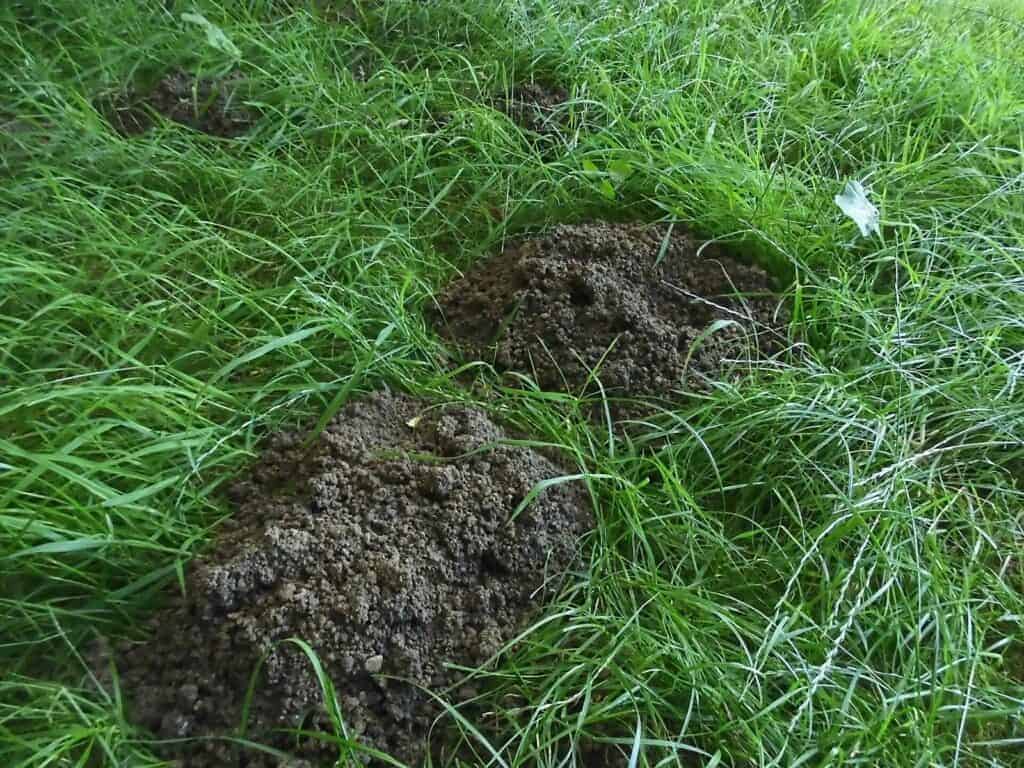
Start by looking at the soil. Raised, winding ridges that can be pressed down with your foot are characteristic of mole activity. Moles create these ridges while pushing through soil just beneath the surface in search of food. They may also leave rounded or roughly volcano-shaped mounds of excavated soil as they construct deeper tunnels.
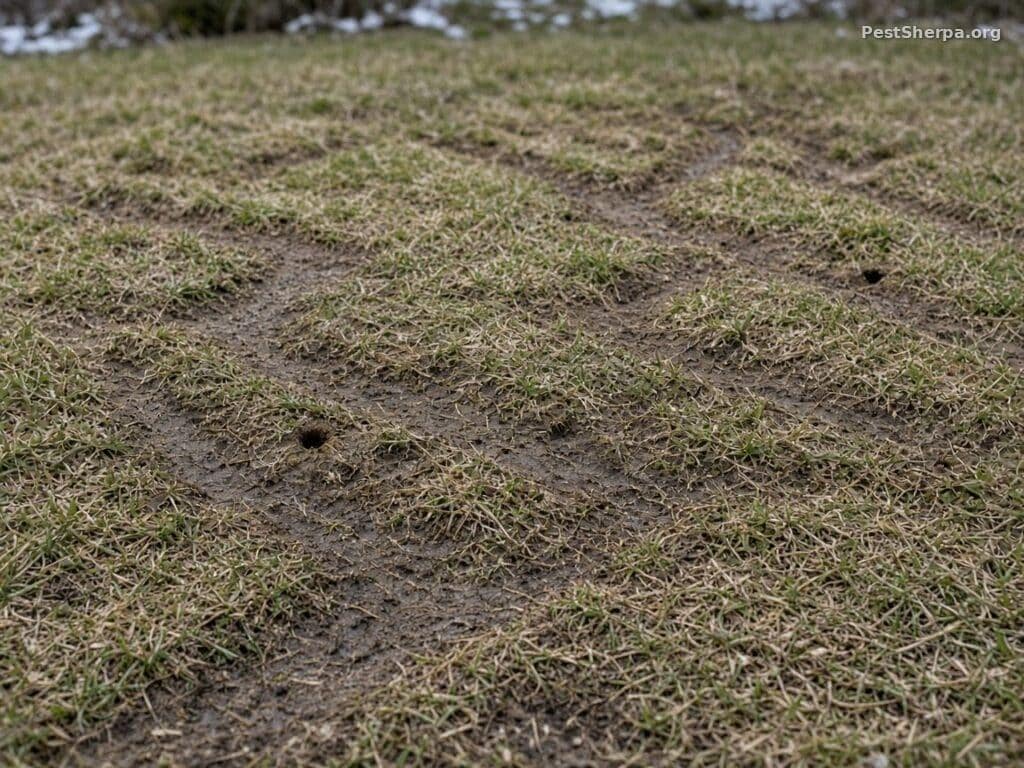
Voles, in contrast, commonly create narrow, well-worn pathways at the soil surface beneath grass and vegetation. These runways are usually about 1 to 2 inches (25 to 50 mm) wide and may connect small, open burrow entrances. Fresh grass clippings and small droppings in the runways provide additional evidence of vole activity.
Plant damage is another important clue. Moles primarily injure plants indirectly by disturbing soil and roots. Voles directly consume plant material and may leave gnaw marks on bulbs, roots, and the bark of trees or shrubs. [UC IPM Pest Notes: Moles] [UC IPM Pest Notes: Voles]
Mole vs. Vole: Identification and Damage
| Feature | Mole | Vole |
|---|---|---|
| Animal type | Primarily insectivorous mammal related to shrews; not a rodent | Rodent; many common damaging species belong to the genus Microtus |
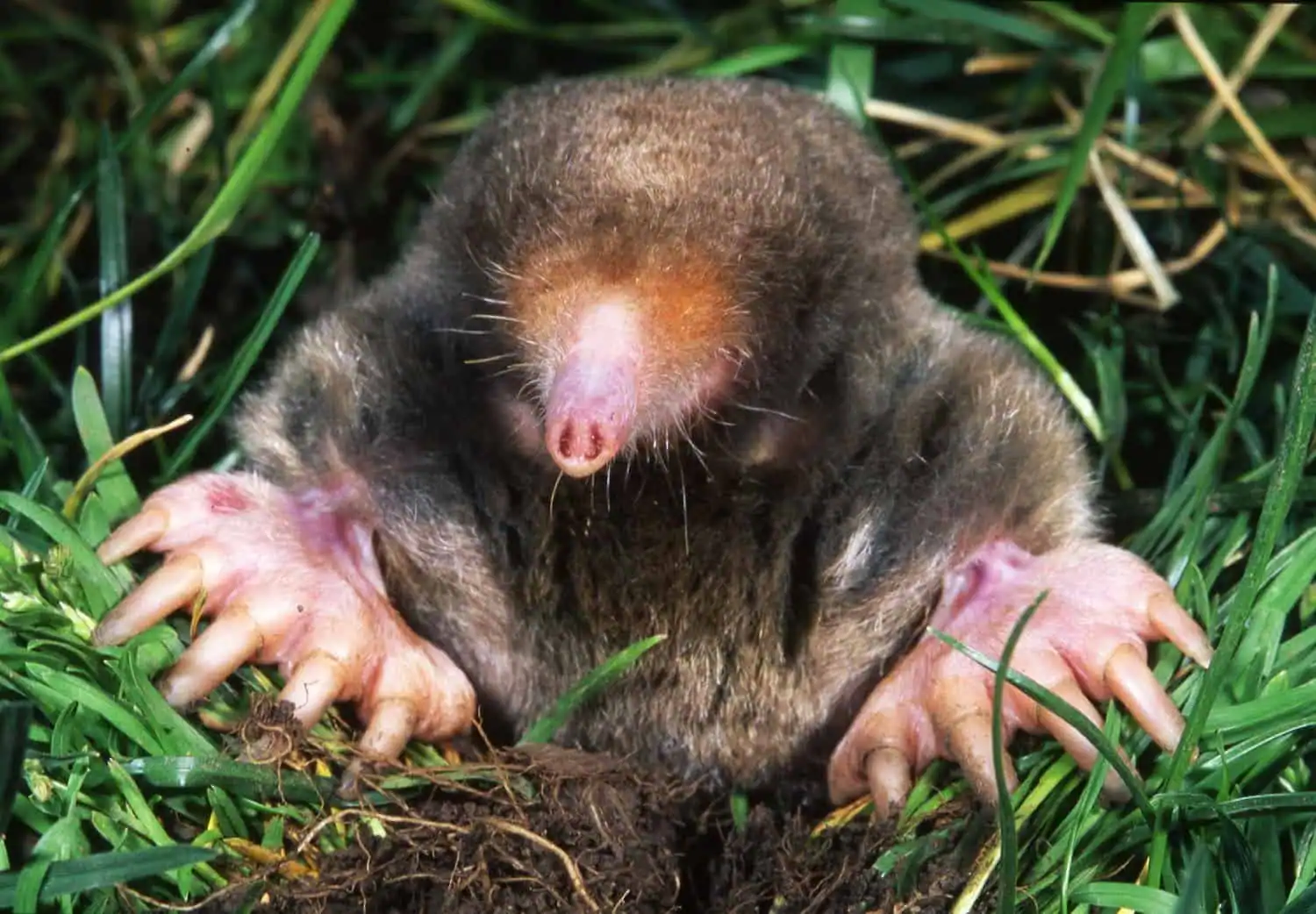
| Appearance | Cylindrical body, short velvety fur, pointed snout, large paddle-shaped front feet, tiny eyes, and no visible external ears | Stocky, mouse-like body, relatively short tail, small eyes and ears, and brownish or grayish fur |
| Diet | Primarily earthworms, insects, grubs, and other soil invertebrates | Grasses, herbaceous plants, roots, bulbs, tubers, seeds, and tree bark |
| Main signs | Raised, winding surface ridges and rounded or conical piles of excavated soil | Surface runways about 1 to 2 inches wide, small open burrow entrances, clipped grass, and small elongated droppings |
| Plant damage | Mostly indirect: tunneling dislodges plants, disturbs roots, and may cause drying | Direct: clipped vegetation, eaten roots and bulbs, and gnawed or girdled tree trunks |
| Primary control | Trapping in actively used tunnels | Reducing protective vegetation, protecting vulnerable plants, and snap trapping along active runways |
[UC IPM Pest Notes: Moles] [UC IPM Pest Notes: Voles] [University of Missouri Extension: Controlling Nuisance Moles]
Other Animals That Can Cause Similar Damage
Two other small mammals can complicate identification: pocket gophers and shrews.
Pocket gophers are burrowing rodents that create underground tunnels and piles of excavated soil. Their mounds are often crescent-shaped or fan-shaped, with a plugged opening located toward one side. Mole mounds are generally more rounded, with soil pushed upward from a tunnel beneath the mound. Unlike moles, pocket gophers feed on plants and can directly damage roots and other underground plant parts.
Shrews are small, primarily insect-eating mammals related to moles. They have pointed snouts and may travel through existing mole tunnels or beneath vegetation. However, shrews do not normally produce the extensive raised surface ridges associated with mole activity.
Another complication is that voles may use tunnels originally constructed by moles. Finding mole tunnels alongside gnawed plant roots or damaged bulbs does not necessarily mean that moles caused the feeding injury. More than one species may be present.
For accurate identification, examine several signs together rather than relying on a single mound, runway, or damaged plant. [University of Missouri Extension: Controlling Nuisance Moles] [Penn State Extension: Identifying Moles, Voles, and Shrews]
Moles: Biology and Damage
Seven mole species occur in North America. The eastern mole (Scalopus aquaticus) is the most common and widespread, occurring across much of the eastern United States and extending west into Wyoming and Colorado. Several other species, including members of the genus Scapanus, occur along the Pacific Coast and in parts of the western United States.
An adult male eastern mole averages approximately 7 inches (18 cm) in total length and weighs about 4 ounces (113 g), while females are generally slightly smaller. Despite their small size, moles are powerful diggers. Their broad, paddle-shaped front feet and strong claws are specially adapted for moving through soil. Their short, velvety fur allows them to travel forward or backward through narrow tunnels with little resistance. [Internet Center for Wildlife Damage Management: Moles]
Moles are generally solitary and territorial animals, except during the breeding season. As a result, a lawn covered with tunnels and soil mounds may contain far fewer moles than the amount of visible damage suggests. Penn State Extension considers three to five moles per acre a high population in most areas, although densities vary with habitat conditions.
Moles have substantial energy requirements and must feed frequently. Penn State reports that moles may consume approximately 70% to 100% of their body weight in food each day. Because their diet is mostly earthworms, grubs, insects, and other soil invertebrates, eating nearly their own body weight each day takes a large volume of prey.
Moles prefer loose, moist soil where earthworms and other prey are abundant. Well-watered lawns, gardens, and landscaped areas can provide favorable feeding conditions, particularly during dry weather when surrounding soils become harder. Mole tunneling activity often increases after rainfall or irrigation because moist soil is easier to excavate and prey may be more accessible.
Moles remain active throughout the year rather than hibernating, although their activity near the surface may decline during periods of extreme heat, cold, or drought. [Penn State Extension: Moles] [UC IPM Pest Notes: Moles]
Mole Tunnels and Soil Mounds
Moles construct interconnected tunnel systems that include shallow feeding tunnels and deeper, more permanent passageways.
Shallow feeding tunnels are located just beneath the soil surface and appear as raised, winding ridges across lawns. Moles construct these tunnels while searching for earthworms and other soil invertebrates. Some feeding tunnels are used only once, while others may be revisited periodically.
Deeper tunnels serve as travel routes between feeding areas and sheltered locations. UC IPM reports that more permanent tunnels commonly occur approximately 8 to 12 inches (20 to 30 cm) below the surface. Penn State notes that tunnels associated with nesting areas may extend 12 to 18 inches (30 to 46 cm) deep.
Mole mounds form when excavated soil from deeper tunnels is pushed to the surface. These mounds are typically rounded or roughly conical and may appear in a line along an underground tunnel.
Because moles do not use every tunnel regularly, locating active tunnels is essential for successful trapping. Frequently used deeper passageways are productive trapping locations, but active, relatively straight surface runways may also be suitable. A common method of checking activity is to flatten short sections of several surface tunnels and inspect them over the following day or two to see which sections have been raised again. [UC IPM Pest Notes: Moles] [Internet Center for Wildlife Damage Management: Moles] [Penn State Extension: Moles]
What Damage Do Moles Cause?
Most mole damage is cosmetic or mechanical rather than the result of feeding on plants.
Shallow tunnels create raised ridges that can make lawns uneven and interfere with mowing. Mowers may scalp elevated turf, exposing soil and damaging grass. Tunneling can also dislodge grass and ornamental plants, disturb their root systems, and expose roots to air, causing wilting or patches of dead turf.
Moles rarely consume roots, bulbs, or other plant material. When plants show obvious chewing or feeding damage, voles, mice, or other rodents may be responsible. These animals sometimes use existing mole tunnels to reach roots, bulbs, and underground plant parts.
Moles also provide ecological benefits. Their tunneling can improve soil aeration, mix soil layers, and help incorporate organic material. They also consume grubs and other soil-dwelling invertebrates.
For these reasons, some homeowners choose to tolerate limited mole activity in wooded areas, naturalized landscapes, or other locations where raised tunnels and soil mounds do not create significant problems. [Penn State Extension: Moles] [UC IPM Pest Notes: Moles]
Voles: Biology and Damage
Several vole species cause damage to lawns, gardens, orchards, and ornamental landscapes in the United States. The meadow vole (Microtus pennsylvanicus) is the most widely distributed species in the genus Microtus in the United States, while the woodland vole (Microtus pinetorum), also called the pine vole, is another important pest in the eastern states.
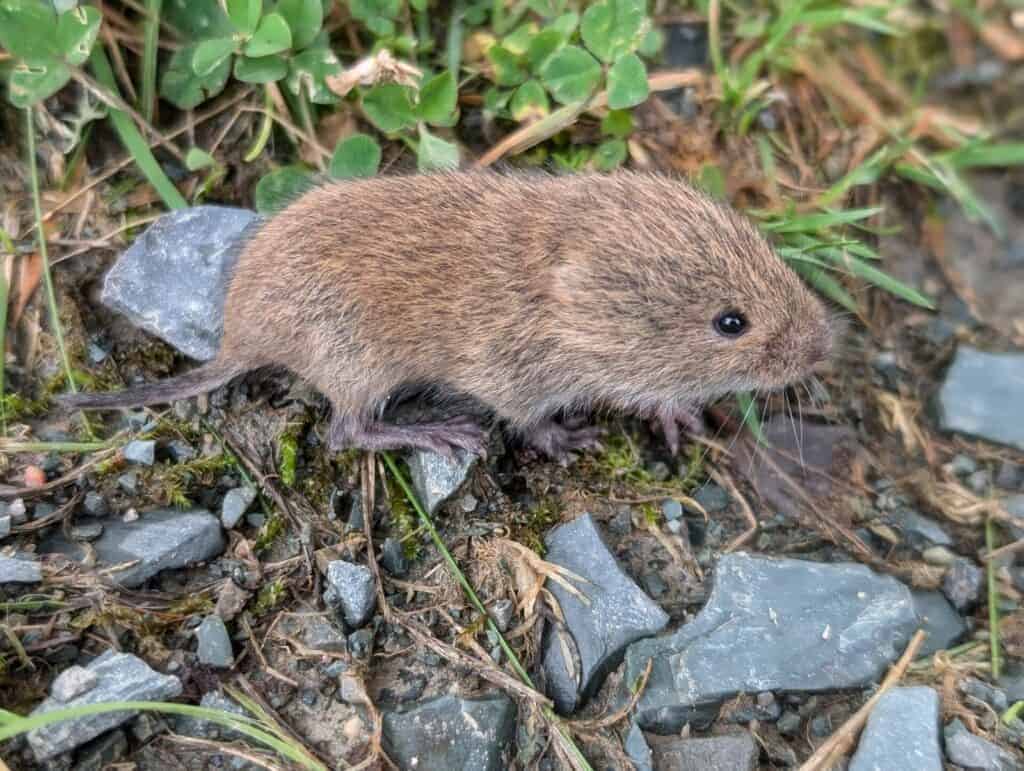
Voles are small, stocky rodents with short legs, relatively short tails, small eyes, and ears that are partly concealed by fur. Their coloring generally ranges from brown to grayish brown. Adult meadow voles are approximately 5½ to 7½ inches (14 to 19 cm) long, including the tail, while woodland voles are smaller, typically measuring 4 to 6 inches (10 to 15 cm). [Internet Center for Wildlife Damage Management: Voles] [UC IPM Pest Notes: Voles]
Voles reproduce rapidly under favorable conditions. Females of some species can become sexually mature in as little as 35 to 40 days and produce multiple litters each year. UC IPM reports that voles may produce 5 to 10 litters annually under favorable conditions, although actual reproductive rates vary by species, habitat, and season.
Vole populations can fluctuate dramatically. In some locations, numbers increase over several years, reach unusually high densities, and then decline. UC IPM reports population cycles of approximately 3 to 6 years in some areas, although these cycles are not consistent everywhere.
Voles remain active throughout the year, both during the day and at night, and do not hibernate. Unlike house mice, they generally remain outdoors, occupying grassy areas, gardens, orchards, and landscaped beds with protective vegetation or ground cover. They rarely invade homes and would generally not do well indoors because of the lack of preferred food. [UC IPM Pest Notes: Voles] [Internet Center for Wildlife Damage Management: Voles]
Vole Runways and Tunnels
Meadow voles create well-worn surface runways through grass and other vegetation. These pathways are typically 1 to 2 inches (25 to 50 mm) wide and may connect multiple burrow openings. Overhanging vegetation, mulch, or ground cover often conceals the runways.
Fresh grass clippings and small, elongated droppings are useful signs of vole activity. Droppings may be greenish when fresh and gradually turn brown or gray as they age.
In regions with winter snow, meadow voles continue traveling and feeding beneath the snow cover. When the snow melts, homeowners may discover a network of narrow, brown trails across the lawn. These trails often represent grass that has been clipped or flattened during winter activity.
Superficial lawn damage from meadow vole runways is usually temporary, and grass often recovers as new growth begins in spring. However, heavily damaged areas may require reseeding or other lawn repairs.
Woodland voles behave differently. They spend most of their time underground, constructing shallow tunnel networks and feeding on roots and other underground plant parts. Their activity may produce small soil mounds, but they generally do not create the conspicuous surface runways characteristic of meadow voles. Because woodland vole damage occurs largely below ground, an infestation can remain unnoticed until plants begin to decline. [Penn State Extension: Voles] [UC IPM Pest Notes: Voles] [Penn State Extension: Integrated Management of Voles in Orchards]
Damage to Trees, Shrubs, and Other Plants
Although vole runways may temporarily disfigure lawns, feeding damage to trees, shrubs, bulbs, and roots can be considerably more serious.
Voles feed primarily on plant material, including grasses, herbaceous vegetation, roots, bulbs, tubers, and seeds. They also gnaw the bark of trees and shrubs, particularly during fall and winter when other food sources may be less available.
Meadow voles commonly gnaw bark at or near ground level. During periods of snow cover, they may feed on trunks beneath the snow, sometimes causing injury a foot or more above the soil surface.
Woodland voles primarily damage plants below ground by consuming small roots, gnawing larger roots, and feeding on bark around the root collar or base of a tree.
When gnawing completely encircles a trunk or major root, the injury is called girdling. Girdling damages the tissues that transport sugars and other nutrients through the plant and can eventually kill the tree or shrub. Young trees are particularly vulnerable because relatively little bark must be removed to girdle the trunk completely.
Woodland vole damage may be especially difficult to detect. Affected trees may show reduced growth, yellowing foliage, poor vigor, or decline before the underground feeding injury is discovered.
Vole gnaw marks are typically small and irregular, often occurring at different angles on damaged bark. However, other animals, including rabbits and pocket gophers, can produce somewhat similar injuries. Runways, burrow openings, droppings, and the location of feeding damage should be considered together when identifying the responsible animal.
The most serious vole damage often occurs during fall and winter, but feeding injury can occur at any time of year. [Penn State Extension: Voles] [UC IPM Pest Notes: Voles] [Penn State Extension: Integrated Management of Voles in Orchards]
How to Get Rid of Moles
University Extension specialists generally agree that trapping is the most dependable method of mole control. Unlike ordinary mouse traps, mole traps are designed to intercept an animal traveling through an underground tunnel. Successful trapping depends on locating tunnels that are actively used and positioning the trap correctly.
Mole traps differ from those designed for pocket gophers, and most traps are not interchangeable between the two animals. [UC IPM Pest Notes: Moles] [Penn State Extension: Moles]
Steps for Trapping Moles
- Locate active tunnels. Press down short sections of several raised surface ridges and mark their locations. Check them daily for a day or two. Sections that are raised again indicate recent activity. Deeper travel tunnels can be located by carefully probing the soil between or near fresh mounds with a slender rod. Take care to avoid buried utilities and irrigation lines. [UC IPM Pest Notes: Moles]
- Choose an appropriate mole trap. Scissor-jaw, harpoon, and pincer-style traps are commonly used. Each operates differently and requires a particular placement method. Follow the manufacturer’s instructions and safety procedures. Keep children, pets, and other nontarget animals away from set traps.
- Set traps in frequently used tunnels. UC IPM recommends placing mole traps at least 18 inches (46 cm) from a mound and selecting tunnels that show repeated activity. Frequently used deeper tunnels are productive locations, although some harpoon traps can also be set over active surface ridges. A tunnel immediately adjacent to a fresh mound may not be part of a regularly used travel route. [UC IPM Pest Notes: Moles]
- Set the trap correctly for its design. Some mole traps require a small plug of compacted soil beneath the trigger, while others are installed within or over the tunnel. When a tunnel must be opened, cover the excavation with loose soil, a board, or another suitable material to exclude light and air without interfering with trap operation. Follow the specific manufacturer’s directions rather than applying one setting method to every trap design.
- Check traps regularly and adjust placement. A mole may take several days to travel through a selected tunnel. Using several traps in different active tunnels can improve the chances of success. If a location produces no activity, confirm that the tunnel is still being used and move the trap when appropriate. Inspect traps according to manufacturer instructions and applicable state regulations.
- Monitor for renewed activity. After trapping, flatten or mark existing ridges so new tunneling can be recognized. Moles from surrounding areas may eventually occupy suitable habitat, making continued observation useful.
Trapping may require patience because a surprisingly extensive tunnel system can be maintained by only one or two animals. Most homeowners with a mole problem hire a professional pest control or wildlife control company, because trapping takes skill and a working knowledge of mole habits.
Excluding Moles from Valuable Plantings
Physical barriers can protect small gardens, raised beds, and high-value planting areas.
UC IPM describes installing 1/4-inch (6-mm) wire mesh or hardware cloth in a trench at least 2 feet (61 cm) deep. The barrier should include a 6-inch (15-cm) horizontal lip bent outward at the bottom to discourage digging beneath it. Approximately 6 inches of the barrier should extend above ground.
Galvanized or stainless-steel mesh is recommended because underground moisture can corrode unprotected metal.
Wire-mesh baskets can also protect bulbs from being displaced by tunneling, while properly constructed wire bottoms can prevent moles from entering raised beds.
These barriers can be useful for limited areas but are expensive and labor-intensive for large lawns. They are not guaranteed to exclude every mole. [UC IPM Pest Notes: Moles]
Are Mole Baits Effective?
Traditional poisoned grain baits are generally ineffective against moles because moles primarily eat earthworms, insects, and other soil invertebrates rather than grain.
Some registered toxic baits are formulated to resemble earthworms. UC IPM reports that though limited, research has shown certain worm-shaped gel baits to be more effective than conventional grain baits.
However, additional research is needed to establish their effectiveness under different field conditions. These products also pose potential risks to children, pets, and nontarget wildlife if improperly used. All labels must be followed exactly.
Any pesticide used for mole control must be registered for the intended use and applied according to its current label, including placement restrictions. Never substitute ordinary mouse or rat bait unless the label specifically permits its use against moles. [UC IPM Pest Notes: Moles] [Penn State Extension: Moles]
Check Your State’s Trapping Rules
Moles are classified as nongame mammals in many states. Some states permit property owners to control moles causing damage, while others regulate trapping methods, equipment, seasons, and pesticide use.
- Verify that the proposed trap type and method are legal in your state.
- Check whether any special requirements apply to body-gripping traps or traps accessible to people and pets.
- Use only pesticides specifically labeled for mole control at the application site.
- Keep traps and toxic baits away from children, pets, and nontarget wildlife.
Pennsylvania, for example, classifies moles as protected nongame mammals but permits their control when they cause damage, subject to applicable laws. [Penn State Extension: Moles] [Internet Center for Wildlife Damage Management: Moles]
How to Get Rid of Voles
Vole management begins with reducing the food and protective cover that allow these small rodents to survive and reproduce.
Unlike moles, voles feed directly on plants. Dense vegetation, deep mulch, and ground cover provide food and shelter while protecting them from predators.
UC IPM and Penn State Extension recommend habitat modification, exclusion, and trapping as effective approaches, particularly when vole populations are small. Large populations may require additional management. [UC IPM Pest Notes: Voles] [Penn State Extension: Voles]
Steps for Controlling Voles
- Remove protective vegetation. Mow regularly and eliminate unnecessary tall grass, weeds, and dense ground cover near gardens, young trees, and ornamental plantings. UC IPM recommends maintaining a vegetation-free circle approximately 4 feet (1.2 m) in diameter around young trees or vines, or a vegetation-free buffer strip at least 4 feet wide along planted rows. These open areas make the habitat less attractive to voles.
- Reduce heavy mulch near plants. Pull mulch away from tree trunks and avoid excessive mulch accumulation around shrubs and foundation plantings. Thick mulch can conceal runways and provide protective cover. Penn State recommends clearing mulch at least 2 feet (61 cm) from the bases of trees where vole damage is a concern.
- Protect vulnerable trunks. Install cylinders of 1/4-inch (6-mm) hardware cloth around young trees and shrubs. Penn State recommends guards approximately 18 to 24 inches (46 to 61 cm) high, with the lower edge buried 4 to 6 inches (10 to 15 cm) below the soil surface. Leave sufficient space for trunk growth and inspect the guards periodically. Where snow accumulates, extend the guards above the expected snow depth. [Penn State Extension: Voles]
- Set snap traps along active runways. Ordinary mouse-sized snap traps can be effective for small vole populations. Place traps perpendicular to active surface runways, with the trigger end directly in the travel path. Voles may encounter unbaited traps while moving along the runway. Peanut butter mixed with oats or small apple pieces can also be used. UC IPM suggests that approximately 12 traps may be needed even for a small garden. [UC IPM Pest Notes: Voles]
- Protect traps from nontarget animals. Place traps beneath a suitable protective cover, such as a section of rain gutter or an appropriately designed enclosure that allows voles to enter while restricting access by birds, pets, and children. Ensure the enclosure does not interfere with trap operation. Check traps daily, or more frequently when required by state law or trap instructions.
- Move traps and disrupt inactive runways. Continue trapping until captures stop. UC IPM recommends moving traps approximately 15 to 20 feet (4.6 to 6.1 m) to another area of activity when captures cease. Old runways and burrow openings can be disturbed with a rake or shovel to discourage continued use. Avoid damaging plant roots, irrigation systems, or buried utilities.
- Handle captured animals safely. Wear disposable or rubber gloves when handling trapped voles or contaminated equipment. Voles may carry parasites or infectious pathogens. Place carcasses in sealed plastic bags for disposal in accordance with local regulations, and wash hands thoroughly afterward. [UC IPM Pest Notes: Voles]
Garden Fencing and Other Exclusion
Small gardens and valuable planting areas can be protected with properly constructed barriers.
UC IPM recommends fencing with mesh openings no larger than 1/4 inch (6 mm). The fence should extend at least 12 inches (30 cm) above the ground, with the bottom buried 6 to 10 inches (15 to 25 cm) to discourage voles from tunneling underneath.
A vegetation-free strip outside the barrier can improve its effectiveness.
Large-scale fencing may be too expensive for extensive landscapes, orchards, or fields. In these settings, protecting individual trunks and managing vegetation may be more practical. [UC IPM Pest Notes: Voles]
Are Rodenticides Effective Against Voles?
Rodenticide baits registered for vole control can be effective, particularly where populations are high and habitat modification or trapping alone is insufficient.
However, rodenticides can present significant hazards to pets, children, birds, and other wildlife. Some active ingredients or formulations or quantities are restricted to certified applicators, while others may be available for particular uses by homeowners.
Application methods vary by product. Depending on its label, a bait may be permitted in designated runways, burrows, or approved bait stations. Do not assume that instructions for ordinary house-mouse or rat baits also apply to voles.
For extensive infestations, especially in orchards and commercial landscapes, professional evaluation may be needed.
Pesticide applications must comply with current product labeling and all applicable state and federal regulations. [Penn State Extension: Voles] [UC IPM Pest Notes: Voles]
What Does Not Work
Home remedies and advertised control devices are common in mole and vole management, but many have little scientific support.
- Sonic spikes, vibrating stakes, and pinwheels: Electronic, magnetic, and vibration devices have not demonstrated reliable effectiveness against moles. Similar frightening devices have not consistently reduced vole damage.
- Broken glass, razor blades, chewing gum, hair, bleach, and mothballs: Placing these materials in mole tunnels has not been shown to provide dependable control. Some materials create physical or chemical hazards, and using mothballs as an outdoor animal repellent is not an authorized use under ordinary mothball labeling.
- Flooding mole tunnels: Flooding is generally ineffective because mole tunnel systems may be extensive, interconnected, and difficult to fill. It also wastes water and may damage landscaping.
- Treating lawn grubs solely to remove moles: Grubs are only one component of a mole’s diet. Earthworms and other invertebrates remain available even after grubs are reduced. UC IPM reports that grub control has not been established as a reliable mole-management method. Treat lawn grubs when their populations and turf damage justify treatment, not simply because moles are present.
- Mole plants and castor bean plants: Plants advertised as natural mole repellents have not demonstrated reliable effectiveness. Mole plant (Euphorbia lathyris) and castor bean (Ricinus communis) also contain toxic substances and should not be planted as pest-control measures.
- Cats and dogs: Pets may occasionally catch a mole or vole, but they generally do not provide dependable population control. Predators can contribute to natural mortality, although vole reproduction may exceed the level of control predators provide.
- Gas cartridges and fumigants: Burrow fumigation is generally unreliable for moles and voles because their tunnel systems may be shallow, extensive, or easily sealed off by the animals. Some fumigants are highly toxic or present fire hazards. Only products specifically registered and labeled for the target animal and application site may be used. Fumigants should never be used near buildings or other restricted locations contrary to labeling.
[UC IPM Pest Notes: Moles] [Penn State Extension: Moles] [UC IPM Pest Notes: Voles] [Penn State Extension: Voles]
What About Castor Oil Repellents?
Commercial repellents containing castor oil are a partial exception to the generally poor performance of mole repellents.
UC IPM reports that limited research has demonstrated some effectiveness against eastern moles. However, published research has not established comparable effectiveness against western mole species.
Repellents primarily attempt to discourage animals from occupying treated areas rather than removing them from the surrounding environment. Displaced moles may simply move into neighboring lawns or gardens.
Castor oil repellents therefore should not be considered a dependable permanent solution. Trapping remains the most consistently supported method of mole control. [UC IPM Pest Notes: Moles]
Laws and Relocation
Moles and voles are classified as nongame mammals in many states. Property owners may be permitted to control them when they cause damage, but the applicable rules differ by jurisdiction.
Some states regulate trap designs, trapping locations, methods of dispatch, pesticide use, and the handling or relocation of live-captured animals.
For example, Pennsylvania classifies moles and voles as protected nongame mammals while allowing control when they cause property damage. California also provides specific authority for controlling damaging moles and voles under its nongame mammal regulations.
Live relocation is not automatically legal or appropriate. Moles and voles depend on suitable habitat and may have difficulty surviving after being moved. Releasing animals onto another property without permission may also create a new nuisance problem.
Before trapping, transporting, or relocating either animal, consult your state fish and wildlife agency.
[Internet Center for Wildlife Damage Management: Moles] [Internet Center for Wildlife Damage Management: Voles] [Penn State Extension: Moles] [Penn State Extension: Voles]
When to Call a Qualified Wildlife Control Professional
Moles and voles are often manageable by homeowners, especially when only a small area is affected. However, professional assistance may be worthwhile when:
- You have tried properly placed traps in confirmed active mole tunnels for one to two weeks without success.
- Voles are damaging several valuable trees, shrubs, or orchard plantings.
- Damage is extensive or continues despite habitat modification and trapping.
- You suspect woodland voles, pocket gophers, or another burrowing animal and cannot confidently identify the cause.
- You are considering a restricted-use pesticide or a control method requiring specialized training or certification.
Choose a wildlife control operator or pest management company experienced with the particular animal and verify that it holds any licenses or permits required by your state.
What a Professional Visit Looks Like
Effective mole and vole control begins with identification and inspection rather than immediately applying a pesticide or setting traps.
The Inspection
A qualified technician should examine the yard for raised ridges, soil mounds, open burrows, surface runways, and evidence of plant feeding.
For suspected mole activity, the technician may flatten selected tunnel sections to determine which are still being used. Deeper tunnels may be located with a suitable probe.
For suspected voles, the inspection should concentrate on grassy borders, mulch beds, ground cover, the bases of trees, and areas where roots or bark are damaged.
A thorough inspection should distinguish mole damage from that caused by voles, pocket gophers, chipmunks, or other animals before a control method is selected.
The technician may also ask when the damage first appeared, whether it followed irrigation or rainfall, and whether plants are being eaten or merely displaced by tunneling.
Your Preparation Before the Visit
- Leave recent mole ridges and soil mounds undisturbed, when practical, so the technician can examine activity patterns.
- Mark where new ridges, mounds, runways, or damaged plants have appeared.
- Record when the damage was first noticed and whether it appears to be spreading.
- Keep children and pets away from areas where traps may be installed.
- Identify known irrigation lines, underground utilities, and other concealed systems before digging begins.
- For projects involving excavation or buried barriers, have underground public utilities located through 811 and identify private lines that may not be covered by the utility-marking service.
The Control Program
A professional program should be based on the animal involved and the conditions found during inspection.
For moles: Control usually involves traps installed in confirmed active tunnels. Several traps may be used, with locations adjusted according to activity and results.
For voles: Recommendations may include mowing, vegetation removal, mulch management, trunk guards, and properly covered mouse snap traps along active runways.
Pesticides: When appropriate, registered toxic baits may be considered. The professional should explain the product, target animal, application site, placement method, and precautions for people, pets, and wildlife.
Exclusion: Buried wire barriers for valuable gardens, protected raised beds, and trunk guards for young trees may be recommended. These repairs should be identified and priced separately when they are not included in the trapping service.
Follow-Up
Mole trapping often requires several visits over approximately one to two weeks, although the actual schedule depends on mole activity, trap success, and the service agreement.
Success should be evaluated by the absence of new activity in monitored tunnels, rather than simply by the number of animals captured.
Vole programs may require additional inspection during fall or before winter, particularly where young trees are vulnerable to bark and root damage.
Because new animals can move into suitable habitat, no responsible company should promise that mole or vole activity can never return.
Questions to Ask Before You Agree to Professional Service
- How will you confirm whether moles, voles, or another animal are responsible?
- How do you determine which tunnels or runways are active?
- What type of traps will you use, and are they permitted under state law?
- How many trap checks and visits are included?
- Will any toxic baits, repellents, or fumigants be used? If so, what are the product names and active ingredients?
- Are habitat modification and exclusion included in the price?
- How will you determine when the control program is complete?
- What happens if animal activity returns during the agreed service period?
Our guide to hiring a wildlife professional provides additional information about licensing, estimates, contracts, and service guarantees.
What Does Mole or Vole Control Cost?
Professional mole removal is often less complicated than removing wildlife from walls, attics, or other inaccessible portions of buildings. However, the total cost depends on the size of the property, the extent of tunneling, trap placement, and the number of return visits required.
Vole management is often priced according to the trapping, habitat modification, and exclusion services required. Reliable national pricing specifically for vole control is limited.
For additional context, see our pest and wildlife control cost guide.
Typical National Price Ranges
Angi’s published 2026 estimates provide the following general ranges:
| Service | Estimated Cost |
|---|---|
| Professional mole removal | $100 to $550 |
| Mole removal when charged per animal | Approximately $50 to $80 per mole |
| General wildlife removal, across multiple species | $198 to $636 |
Sources: Angi, How Much Does a Mole Exterminator Cost? (updated October 13, 2026); Angi, How Much Does Wildlife Removal Cost? (updated September 9, 2026). These are not suggested prices or industry standards, only data reported by these sources.
The general wildlife removal figures include many species and situations that are substantially different from mole or vole control. They should not be interpreted as a specific price range for vole removal.
These are published national cost estimates rather than local contractor quotes. Prices vary by region and the work performed.
What Affects the Price?
- Property size: Larger lawns, orchards, or landscapes may require additional inspection and more traps.
- Number of active tunnel systems: Several activity areas may require more trap placements and monitoring.
- Trap checks and return visits: Companies may charge by visit, by animal captured, or for a defined service period.
- Exclusion work: Buried barriers, raised-bed protection, and tree guards generally add to the cost.
- Lawn and landscape repairs: Reseeding, leveling ridges, and repairing damaged irrigation components may be separate expenses.
- Monitoring and guarantees: Some companies include limited follow-up service, while others charge separately.
One-Time Service or Ongoing Plan?
Most mole problems can be addressed through a defined trapping program that ends when active damage stops.
New moles may eventually move into a favorable area from neighboring properties. Consequently, some companies offer seasonal monitoring or recurring services for large landscapes or properties next to fields and wooded areas.
Recurring services may be useful where damage repeatedly occurs, but they should not be considered necessary for every homeowner.
For voles, ongoing prevention often depends more on maintaining vegetation-free areas, protecting trees, and monitoring for renewed activity than on repeated trapping alone.
Ask about cancellation terms, service frequency, and what constitutes a completed job before entering a recurring agreement.
Red Flags in a Quote
Be cautious if a company:
- Recommends sonic devices, repellents, or grub treatments as a guaranteed solution to mole damage.
- Cannot explain how it identifies active mole tunnels or vole runways.
- Does not specify the number of visits or trap inspections included.
- Proposes pesticides without identifying the product or explaining the intended use.
- Offers live capture and relocation but is not knowledgeable about state regulations.
- Guarantees that moles or voles will never return.
- Pressures you into a long-term contract for limited damage caused by one animal.
Request a written scope of work identifying the proposed methods, service period, number of visits, exclusion repairs, and any pesticide applications.
Common Questions About Moles and Voles
What Is the Difference Between a Mole and a Vole?
A mole is a small, primarily insectivorous mammal related to shrews. It lives almost entirely underground and produces raised surface ridges and soil mounds while searching for earthworms and other soil invertebrates.
A vole is a small, stocky rodent that feeds on plants. Meadow voles create narrow surface runways through grass and other vegetation, while woodland voles spend much of their time in underground tunnels.
Moles primarily disturb soil; voles directly damage vegetation, roots, bulbs, and tree bark.
Do Moles Eat Plant Roots and Bulbs?
Moles rarely feed on roots, bulbs, or other plant material. Their diet consists mainly of earthworms, insect larvae, and other soil invertebrates.
Moles can damage plants indirectly by dislodging roots, disturbing soil, and causing plants to dry out.
When roots or bulbs have been visibly gnawed or consumed, voles, pocket gophers, or other rodents are more likely responsible. Some of these animals may use existing mole tunnels.
Will Killing Lawn Grubs Get Rid of Moles?
Not reliably.
Although moles consume grubs, earthworms and other soil invertebrates are important food sources. Reducing grubs does not eliminate the mole’s food supply.
UC IPM reports that grub control has not been demonstrated to provide dependable mole management.
Apply lawn insecticides for grubs only when the grub population and damage justify treatment, rather than simply because mole tunnels are present.
Do Sonic Spikes, Vibrating Stakes, or Castor Oil Repellents Work?
Electronic and vibration devices have not demonstrated consistent effectiveness in preventing mole damage.
Castor oil-based repellents have shown some effectiveness against eastern moles in limited studies, but results are not established for all mole species.
Repellents may temporarily shift mole activity to nearby areas rather than permanently eliminate the problem. Trapping in active tunnels remains the most dependable control method.
What Is the Best Way to Get Rid of Voles?
Begin by reducing protective vegetation and mulch, particularly around gardens and vulnerable trees.
Keep grass mowed, remove dense weeds, and protect young tree trunks with correctly installed guards. These measures reduce cover and prevent some of the most serious feeding damage.
For small vole populations, mouse-sized snap traps placed at right angles to active runways can be effective. Enclose traps to reduce access by birds, pets, and children.
Larger populations, particularly those damaging orchards or commercial plantings, may require additional professional management.
Are Moles and Voles Protected?
Their legal status varies by state.
Many states classify moles and voles as nongame mammals and permit control when they damage property. However, trapping methods, pesticide use, and relocation may be regulated.
For example, Pennsylvania protects both groups as nongame wildlife but allows control when they cause damage.
Check with your state wildlife agency before trapping, relocating, or using restricted control methods.
How Much Does Mole Removal Cost?
Angi’s October 2026 cost guide estimates professional mole removal at approximately $100 to $550.
Some companies charge about $50 to $80 per mole, often with an additional setup fee.
The total cost depends on property size, the number of active tunnel systems, trap checks, and any exclusion or landscape repairs.
[Angi: Mole Removal Cost, 2026]
Should I Call a Professional for Moles?
Professional assistance is worth considering if you have placed traps in confirmed active tunnels for one to two weeks without success, if damage is extensive, or if you cannot identify the responsible animal.
Experienced mole trappers understand how to distinguish temporary feeding tunnels from regularly used travel routes and how to position different trap designs correctly.
A professional inspection can also help identify whether the apparent mole problem is actually caused by voles, pocket gophers, or another animal.
This guide is part of our Nuisance Wildlife guide. If you are hearing animals in the walls or attic instead of seeing damage in the lawn, see the rodents hub, and for help reading damage in your own yard, send photos to Ask the Sherpa.
References
- UC IPM Pest Notes: Moles
- UC IPM Pest Notes: Voles
- Penn State Extension: Moles
- Penn State Extension: Voles
- Internet Center for Wildlife Damage Management: Moles
- Internet Center for Wildlife Damage Management: Voles
- Association of Fish and Wildlife Agencies: U.S. State and Territorial Fish and Wildlife Agencies (member list)
- Angi, How Much Does a Mole Exterminator Cost? [2026 Data], updated October 13, 2026
- Angi, How Much Does Wildlife Removal Cost? [2026 Data], updated September 9, 2026
Top photo: Kenneth Catania, Vanderbilt University, CC BY-SA 3.0, via Wikimedia Commons.
This article was written by Greg Baumann, founder of Pest Sherpa, and reflects more than 40 years of professional pest management experience.
About the Author

Greg Baumann | Pest Control Expert
Greg Baumann is the founder of Pest Sherpa and a Pest Control Expert with more than 40 years of professional pest management experience. His articles combine decades of field experience, technical expertise, and science-based guidance to help homeowners identify pests correctly, understand real-world risks, and make informed pest management decisions.
Mission: Identify the pest. Understand the risk. Stop the problem. Prevent the comeback. Know when it’s time to call a professional.