
How Much Does Pest Control Cost? 2026 Prices by Pest, Visit, and Plan
Pest control pricing is confusing because companies are not selling one product. A single wasp nest, a German cockroach cleanout in a busy kitchen, and a whole-house termite job are all called pest control, and they can differ in price by thousands of dollars. This guide pulls together current national cost data, notes the year next to every figure, and shows you what drives the price, what a fair quote looks like, and when a service plan makes sense. Use these figures to judge written estimates. They do not set prices for the industry. They are published survey data collected by the sources named, not by Pest Sherpa, reported here so you have solid information when you start looking for the right pest control service.
Key Points
A typical pest control visit averages about $172, with most homeowners paying $50 to $500, according to Angi’s October 2026 data. A full one-time service on a 1,500-square-foot home averages $300 to $550.[1] HomeGuide’s January 2026 data puts a one-time exterminator visit at $100 to $600 and an annual plan at $300 to $900.[2]
The pest is the biggest price driver. Ants, spiders, and occasional invaders are at the low end; termites and bed bugs at the high end, from a few hundred dollars for a localized termite treatment to several thousand for whole-home bed bug or fumigation work. (Angi, 2026)[1] (HomeGuide, 2026)[2]
Compare quotes on what is included: the inspection, the identification, the treatment areas, the product, follow-up visits, and any guarantee. A cheaper quote that skips follow-up often costs more in the end. Our guide to hiring a licensed pest control company covers licensing and contracts.
In This Guide
- Average Pest Control Costs in 2026
- Cost by Pest
- One-Time Service vs Ongoing Plans
- What Drives the Price
- Extra Fees to Expect
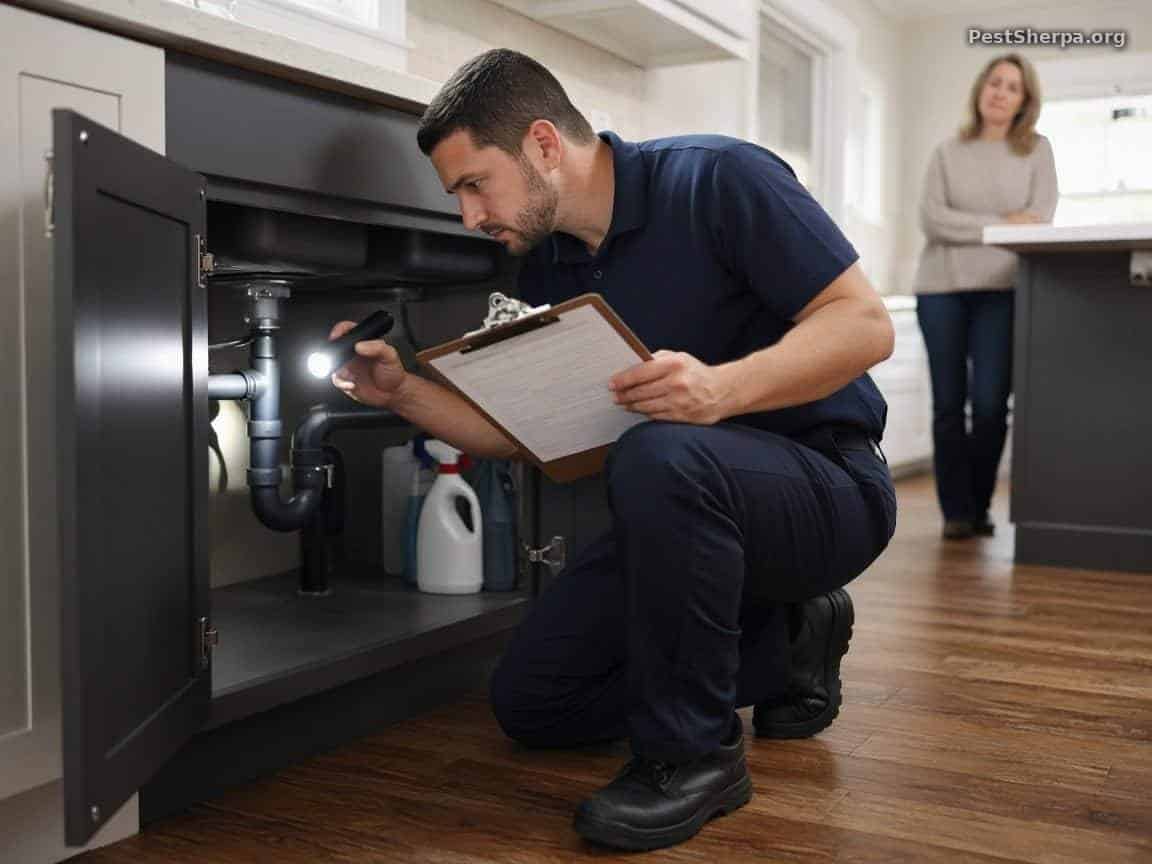
- What a Pro Visit Looks Like
- How to Compare Quotes
- When DIY Makes Sense
- Common Questions
- References
Average pest control costs in 2026
| Service | National range | Source |
|---|---|---|
| Average pest control visit | About $172; most pay $50 to $500[1] | Angi, 2026 |
| One-time service, 1,500 sq ft home | $300 to $550[1] | Angi, 2026 |
| One-time exterminator visit | $100 to $600[2] | HomeGuide, 2026 |
| Full-service job such as a wasp or roach infestation, 1,500 sq ft | $200 to $600[1] | Angi, 2026 |
| Termite tent fumigation | Up to about $8,000[1] | Angi, 2026 |
These are national figures from consumer cost surveys, not quotes. Prices vary by region, home, and job, so treat them as a starting point for comparing written estimates.
By home size
Angi’s October 2026 figures for a one-time service scale with square footage:[1]
| Home size | One-time service |
|---|---|
| 1,000 sq ft | $250 to $450[1] |
| 1,500 sq ft | $300 to $550[1] |
| 2,000 sq ft | $350 to $600[1] |
| 2,500 sq ft | $400 to $675[1] |
| 3,000 sq ft | $450 to $750[1] |
| 3,500 sq ft | $500 to $825[1] |
| 4,000 sq ft | $550 to $900[1] |
By severity
| Infestation | Cost range (Angi, 2026) |
|---|---|
| Small or mild | $100 to $500[1] |
| Moderate | $300 to $700[1] |
| Large or severe | $1,000 to $8,000[1] |
Source: Angi, 2026[1]
Cost by pest
The two largest consumer cost surveys report somewhat different ranges because they draw on different quotes and define jobs differently. Both are shown so you can see the spread.
| Pest | Angi (October 2026) | HomeGuide (January 2026) | Pest Sherpa guides |
|---|---|---|---|
| Ants | $100 to $500[1] | $200 to $300[2] | Ant guide |
| Bed bugs | $1,000 to $4,000[1] | $300 to $500 per room; $2,500 to $5,000 per home[2] | Hiring a pro for bed bugs |
| Cockroaches | $100 to $600[1] | $100 to $600[2] | Hiring a pro for German cockroaches |
| Fleas | $100 to $400[1] | $200 to $400[2] | Flea guide |
| Mice and rats | $180 to $600[1] | $150 to $600[2] | Hiring a pro for rodents |
| Spiders | $100 to $500[1] | $100 to $300[2] | Spider guide |
| Wasps and hornets | $300 to $700[1] | $300 to $700[2] | Bees and wasps guide |
| Mosquitoes | $350 to $500[1] | $80 to $150 per visit; $350 to $1,000 per season[2] | Hiring a pro for mosquitoes |
| Ticks | Not listed in this table | $100 to $250[2] | Tick guide |
| Termites | $250 to $1,000[1] | $225 to $2,500 exterior barrier; $2,000 to $8,000 tenting[2] | Termite damage and treatment costs |
| Bats | $230 to $700[1] | $200 to $600[2] | Bats in the attic |
| Snakes | $130 to $600[1] | $150 to $600[2] | Hiring a pro for wildlife |
| General wildlife | Varies by animal | $200 to $600[2] | Hiring a pro for wildlife |
Sources: Angi, 2026[1]; HomeGuide, 2026[2]. Angi’s separate September 2026 tick data puts a one-time tick treatment at $50 to $150 for a mild problem. [3]
Angi’s dedicated pages for a few pests report different figures than its summary table above, because they draw on separate project data. Its bat removal page puts most jobs at $232 to $754 with a $490 average.[4] Its termite page puts most treatments at $263 to $1,033 with a $621 average.[6] Its mosquito page puts the average at $350 per treatment or season, with most homeowners spending $200 to $550.[5] Where they differ, our pest guides cite the dedicated page.
One-time service vs ongoing plans
| Visit type | Angi (October 2026) | HomeGuide (January 2026) |
|---|---|---|
| One-time service | $300 to $550 (1,500 sq ft)[1] | $100 to $600[2] |
| Initial visit on a plan | $150 to $300[1] | Not listed |
| Monthly visit | $40 to $70[1] | $40 to $75[2] |
| Quarterly visit | $100 to $300[1] | $100 to $300[2] |
| Annual plan or visit | $300 to $550[1] | $300 to $900[2] |
Sources: Angi, 2026[1]; HomeGuide, 2026[2]
A one-time service fits a single, defined problem: a wasp nest, a pantry pest outbreak, or a few wandering spiders. A recurring plan makes sense when pressure is constant, such as homes next to woods or water, multi-unit buildings, or regions with heavy ant, cockroach, or scorpion activity. Before you sign, ask what each visit includes, whether interior service is part of it, whether callbacks between visits are free, and how to cancel.
What drives the price
- The pest. Each pest takes different labor and materials. Bed bugs can reach $6,000 at the high end, while ants typically cost $500 or less. (Angi, 2026)[1]
- Treatment method. Angi lists physical trapping at $100 to $600, chemical treatments at $100 to $3,000, and fumigation at $1,500 to $8,000.[1]
- Severity. Larger infestations need more time, more material, and more visits. (Angi, 2026)[1]
- Home and yard size. More square footage means more to inspect and treat. (Angi, 2026)[1]
- Access. Cabinets and open yards are quicker; attics, crawl spaces, and wall voids take longer and cost more, and complex attic removals for multiple animals can reach $1,500. (Angi, 2026)[1]
- Follow-up. Pests such as German cockroaches, bed bugs, and rodents usually need return visits. A quote that includes them is not comparable to one that does not.
- Repairs and exclusion. Sealing entry points, replacing insulation, and repairing damage are often priced separately.
Extra fees to expect
- Inspection fees (not real estate WDI inspections): free in many cases, or $125 to $450 on average when a written report is issued; the fee is often waived or credited if you buy treatment. (Angi, 2026)[1]
- Wood-destroying insect reports for real estate transactions, priced separately from treatment.
- Cleanup and restoration after rodents, bats, or birds, such as removing droppings and contaminated insulation.
- Exclusion work such as sealing gaps, installing door sweeps, or screening vents.
- Tips: not standard; Angi notes some homeowners tip $10 to $20 per technician for difficult one-time jobs.[1]
What a pro visit looks like
Whatever the pest, a professional visit should follow the same basic sequence. If a company skips the first step, be cautious.
The inspection
The technician should ask about what you have seen and where, then inspect the areas that matter for that pest: kitchens and bathrooms for cockroaches, beds and furniture for bed bugs, foundations and crawl spaces for termites, attics and entry points for rodents and wildlife. A good inspection ends with a clear identification and an explanation of why the pest is there.
Your prep before the visit
- Clear access to the areas to be treated, such as under sinks, closets, or the garage perimeter.
- Follow any prep sheet exactly; bed bug and cockroach treatments in particular depend on it.
- Arrange for children and pets to be out of treated areas for the time the label requires.
- Write down where and when you have seen activity.
The treatment
- A treatment matched to the pest: baits or targeted treatments for ants and cockroaches, targeted crack and crevice applications, exterior liquid treatments, wood treatments, traps and exclusion for rodents, or specialized fumigation for drywood termites.
- A written service report listing what was applied, where, and any re-entry or safety instructions.
- Recommendations on sanitation, moisture, and sealing that reduce the need for repeat treatment.
Follow-up
Expect at least one follow-up for pests that need it. A service plan should explain how often visits occur and whether callbacks between visits cost extra.
Questions to ask before you book
- What pest did you find, and how sure are you?
- What product will you use, where, and what precautions should we take?
- How many visits are included, and what happens if the pest comes back?
- Is there a written guarantee, and what does it require of me?
- Is your company and technician licensed in this state?
Our guides on hiring a pro for termites, bed bugs, German cockroaches, rodents, mosquitoes, and wildlife explain what a good job looks like for each.
How to compare quotes
- Get at least two or three written quotes after an in-person inspection. Take your time if it is not urgent; most pest problems are not emergencies.
- Confirm each company names the same pest and the same treatment areas.
- Compare what is included: inspection, treatment, follow-up visits, exclusion, and cleanup.
- Ask for the product names and labels.
- Read the guarantee and the cancellation terms before signing any plan.
- Verify the company’s license with your state pest control regulatory agency. See how to hire a licensed pest control company.
Red flags in a pest control quote
- A price given over the phone with no inspection for termites, bed bugs, or wildlife, beyond a basic trip charge.
- Pressure to sign today, or a scare tactic about structural collapse.
- An uninvited salesperson who says termites were just treated next door and will move to your house unless you buy a treatment.
- No identification of the pest, or a generic spray-everything plan.
- Unusually long contracts with automatic renewal and no clear cancellation.
- No written report of what was applied.
Get every quote in writing, after an in-person inspection, before you agree to treatment.
When DIY makes sense
Do-it-yourself control is reasonable for occasional invaders and small, clearly identified problems: a few spiders, a short ant trail you can bait, pantry moths in one cabinet. Most people want to handle minor problems on their own. Professional help pays off for termites, bed bugs, cockroaches, rodents in walls or attics, stinging insect nests in walls, and wildlife, where mistakes are expensive or dangerous. Our when to hire a pest pro vs DIY guide walks through the decision pest by pest.
If you want to try first, our step-by-step treatment guides cover spiders, fleas, cockroaches, and bed bugs. Each one walks through what works, what wastes money, and the point where a pro visit pays for itself. Some people want to do the whole job themselves, and others would rather leave it to a professional.
Common questions about pest control costs
How much does a pest control visit cost?
Angi’s October 2026 data puts the average at about $172, with most homeowners paying $50 to $500.[1] A full one-time service on a 1,500-square-foot home averages $300 to $550,[1] and HomeGuide’s January 2026 data puts a one-time exterminator visit at $100 to $600.[2]
Is a monthly or quarterly plan cheaper?
Per visit, yes. Angi lists monthly visits at $40 to $70 and quarterly visits at $100 to $300 after an initial visit of $150 to $300.[1] HomeGuide puts annual plans at $300 to $900.[2] A plan only saves money if you actually need recurring service.
Which pests cost the most to treat?
Termites and bed bugs. HomeGuide’s January 2026 list puts whole-home bed bug treatment at $2,500 to $5,000 and termite tenting at $2,000 to $8,000,[2] while Angi lists bed bugs at $1,000 to $4,000.[1]
Do pest control companies charge for inspections?
Many do not for general pests, but specialty inspections that come with a written report usually are not free. Angi reports inspection fees of $125 to $450 on average,[1] often waived or credited if you buy treatment. Prices for wood-destroying insect inspections in real estate sales vary.
Why do quotes vary so much?
Price depends on the pest, how severe the infestation is, home and yard size, access, treatment method, and whether follow-up visits are included. Two quotes can describe very different amounts of work.
Should I tip the technician?
Tipping is not standard. Angi notes some homeowners tip $10 to $20 per technician[1] for difficult one-time jobs such as attic or crawl space work.
Is DIY cheaper than hiring a pro?
For a few ants or an occasional spider, often yes. For termites, bed bugs, cockroaches, rodents in walls, and wildlife, mistakes usually cost more than the service. Our guide to when to hire a pro versus DIY walks through the decision. Some people prefer to hire a pro for any pest they see.
References
- Angi, How Much Does Pest Control Cost? [2026 Data], updated October 9, 2026
- HomeGuide, How Much Does an Exterminator Cost?, January 9, 2026
- Angi, Tick Extermination Cost [2026 Data], updated September 17, 2026
- Angi, How Much Does Bat Removal Cost? [2026 Data], updated September 7, 2026
- Angi, How Much Does Mosquito Control Service Cost? [2026 Data], updated September 10, 2026
- Angi, Termite Treatment Cost: A Comprehensive Breakdown [2026 Data], updated September 25, 2026
This article was written by Greg Baumann, founder of Pest Sherpa, and reflects more than 40 years of professional pest management experience.
About the Author

Greg Baumann | Pest Control Expert
Greg Baumann is the founder of Pest Sherpa and a Pest Control Expert with more than 40 years of professional pest management experience. His articles combine decades of field experience, technical expertise, and science-based guidance to help homeowners identify pests correctly, understand real-world risks, and make informed pest management decisions.
Mission: Identify the pest. Understand the risk. Stop the problem. Prevent the comeback. Know when it’s time to call a professional.