
Sawtoothed Grain Beetles: Identification, Sources, and Control
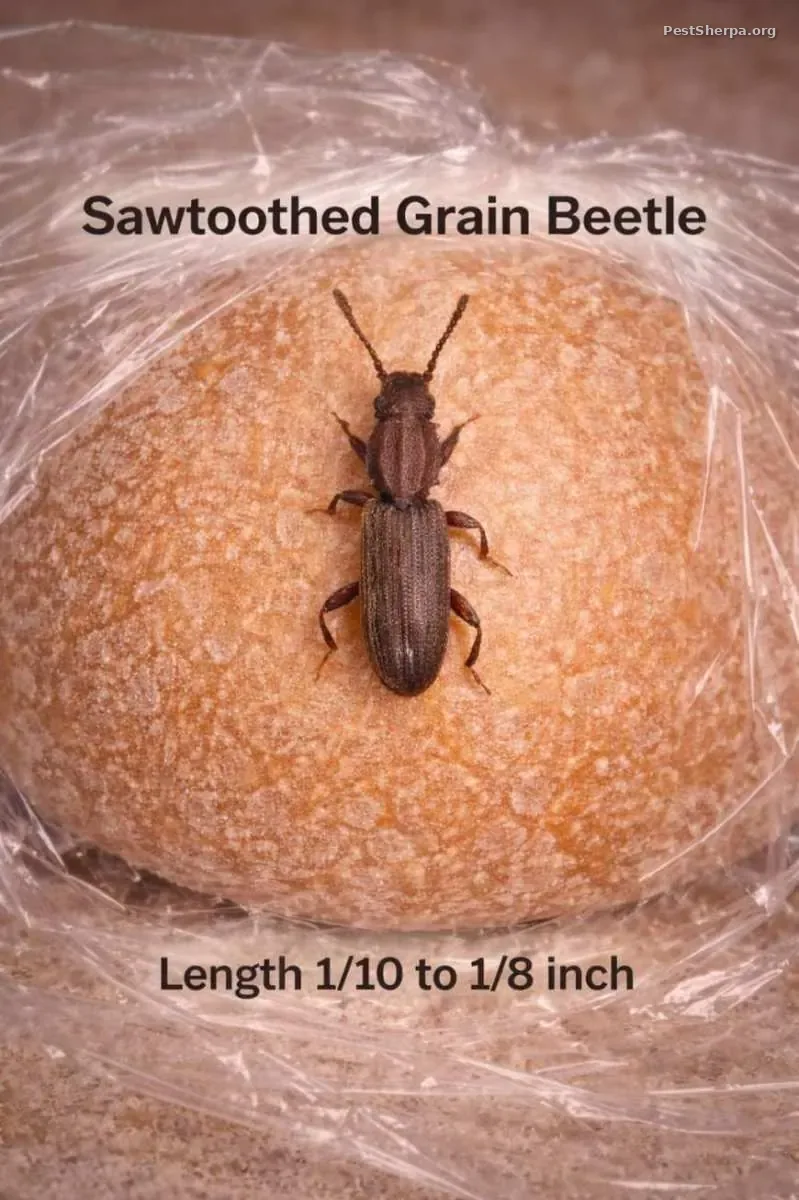
Sawtoothed grain beetles (Oryzaephilus surinamensis) are small, flattened pantry beetles that infest stored dry foods such as cereals, flour, pasta, nuts, dried fruit, pet food, bird seed, and other grain-based products. They are common in homes, grocery stores, warehouses, mills, and food-processing environments because they can move through tiny cracks, packaging folds, shelf joints, and spilled food debris.
These beetles do not bite, sting, or damage the structure of a home. The main problem is food contamination. If they are allowed to remain in a pantry or storage room, adults and larvae can spread from one package to another and continue developing in hidden food sources.
The most effective response is not spraying shelves first. It is careful identification, finding the infested food source, removing contaminated products, cleaning cracks and shelf seams, and storing uninfested dry goods in tight containers.
TL;DR
If you are seeing tiny brown, flattened beetles in flour, cereal, pasta, pet food, bird seed, or pantry shelves, sawtoothed grain beetles are a strong possibility. Look for the six saw-like “teeth” on each side of the body segment directly behind the head. They are food-contamination pests, not biting pests.
One beetle may come from a single infested product. Repeated sightings usually mean there is still an infested food item, spilled grain, pet food, bird seed, old grain-based rodent bait, or another dry organic source nearby. Removal and cleanup solve most household infestations faster than insecticides.
Quick Navigation
- What Sawtoothed Grain Beetles Mean in Your Home
- Identification
- Sawtoothed Grain Beetle vs. Merchant Grain Beetle
- Life Cycle and Why They Spread
- Foods and Sources to Inspect
- Signs of Infestation
- Source Investigation Checklist
- What To Do
- What Does Not Work
- How Long They Last
- Health, Food, and Safety Risk
- When Professional Help May Be Worth Considering
- Lookalikes and Common Misidentifications
- Frequently Asked Questions
- References
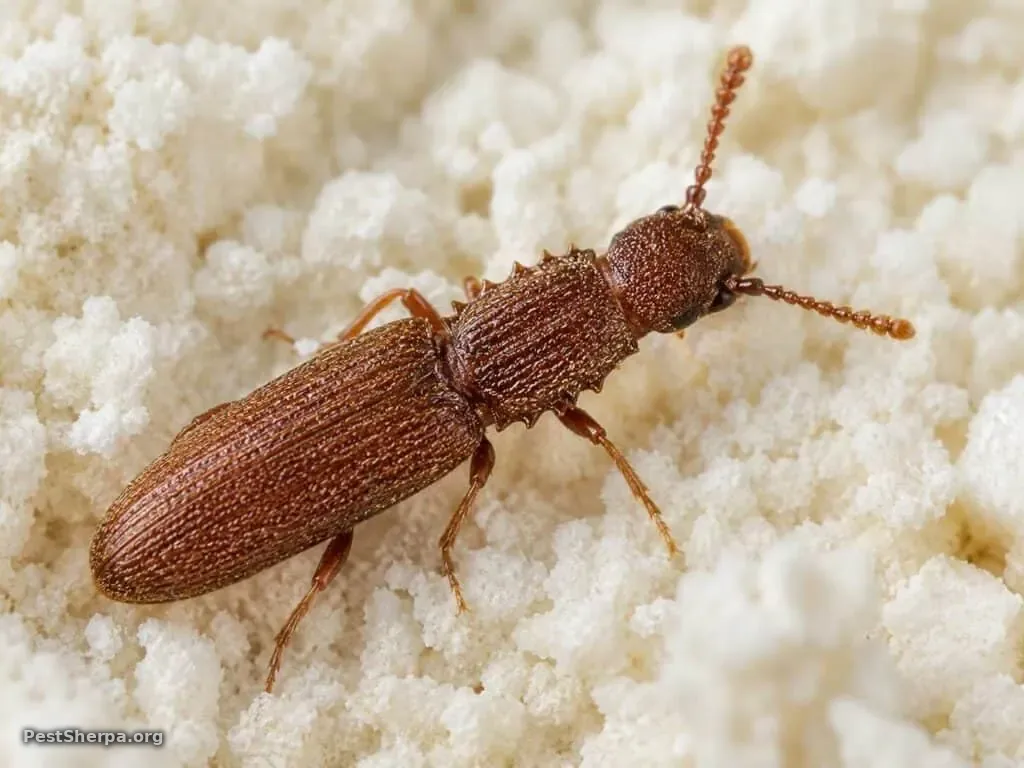
Adult sawtoothed grain beetle showing six saw-like projections on each side of the thorax.
What Sawtoothed Grain Beetles Mean in Your Home
Sawtoothed grain beetles usually mean that one or more dry food products have become infested. The source may be a recently purchased package, an older pantry item, pet food stored in a bag, bird seed in a garage, or food debris hidden in cracks and shelf seams.
Adults are often seen crawling on shelves, inside cabinets, around pantry doors, or inside food containers. Larvae usually stay inside the food source, so the visible adult beetles may be only part of the problem.
| What You See | What It Usually Means |
|---|---|
| One beetle on a shelf | Possible introduction from one package |
| Several beetles in the pantry | Likely infested dry food source nearby |
| Beetles in multiple cabinets | Infestation may have spread between products |
| Larvae inside food | Active breeding source |
| Beetles after cleanup | Another source may still be present |
Expert Insight: Sawtoothed grain beetles are often a source-finding problem. Adult beetles on shelves are clues. The real target is the infested food, spilled material, or hidden dry organic source supporting their development.
Identification: What Sawtoothed Grain Beetles Look Like
Adult sawtoothed grain beetles are small, narrow, flattened beetles. They are usually brown to reddish-brown and measure about 1/10 inch long, or roughly 2.5 to 3 mm.
The key identification feature is a row of six saw-like projections on each side of the prothorax, the body segment directly behind the head. These “teeth” give the beetle its common name.
- Small, slender, flattened body
- Brown to reddish-brown color
- Six saw-like teeth on each side behind the head
- Long antennae with a small club near the tip
- Fast crawling movement through cracks, seams, and packaging folds
Larvae are small, pale cream to yellowish-white, and worm-like, with a light brown head. They are usually found inside infested food rather than wandering openly across walls or floors.
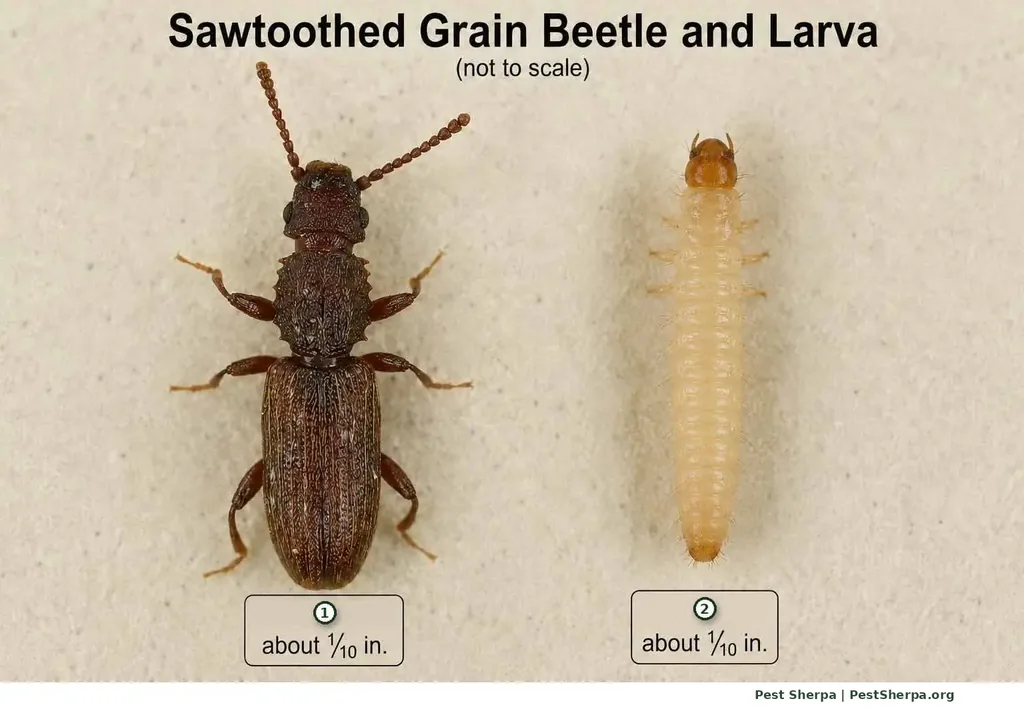
Which stage do you see? Match the number:
- Adult beetle: about 1/10 inch, slender and dark brown, with sawtooth-like points along each side of the thorax.
- Larva: about 1/10 inch, pale yellowish-white, soft and worm-like with a darker head.
Sawtoothed grain beetle adult and larva shown side by side.
Sawtoothed Grain Beetle vs. Merchant Grain Beetle
Sawtoothed grain beetles are closely related to merchant grain beetles (Oryzaephilus mercator). The two species look very similar and are managed in much the same way in homes.
| Feature | Sawtoothed Grain Beetle | Merchant Grain Beetle |
|---|---|---|
| Scientific name | Oryzaephilus surinamensis | Oryzaephilus mercator |
| Body shape | Small, flat, narrow | Small, flat, narrow |
| Saw-like teeth | Six on each side behind the head | Six on each side behind the head |
| Flight | Generally not seen flying | Can fly and may be found near lights |
| Food preference | Often grain-based processed foods | Often associated with nuts and other higher-oil foods, but also infests cereals and other stored products |
For most household situations, exact separation is less important than finding and removing the infested source. If you need a confirmed identification, use a clear close-up photo or a specimen and compare the head and eye area under magnification.
Life Cycle and Why They Spread
Sawtoothed grain beetles develop through complete metamorphosis: egg, larva, pupa, and adult. Females place eggs in or near food materials, and larvae feed within the product after hatching.
- Egg: Laid in food or small crevices near food.
- Larva: Feeds inside stored dry products.
- Pupa: Forms in food material or nearby protected spaces.
- Adult: Crawls actively, spreads to other packages, and reproduces.
In warm indoor conditions, development can be relatively fast, sometimes around a month. Adults may live for months, which means an overlooked source can keep producing beetles long after the first few adults are noticed.
Because the beetles are flat and mobile, they can move from one package to another through small openings, folded seams, torn corners, or loose closures. This is why an infestation that begins in one package can later appear in several pantry items.
Foods and Sources to Inspect
Sawtoothed grain beetles are usually considered secondary stored-product pests. They commonly infest processed foods, cracked grain, and damaged kernels, although some whole grains may also support development depending on the commodity and condition.
Inspect opened and unopened packages, especially if the packaging is thin, folded, torn, poorly sealed, or stored for a long time.
- Flour, meal, baking mixes, and pancake mix
- Breakfast cereal, oats, crackers, bread crumbs, and granola
- Pasta, macaroni, rice products, and grain-based mixes
- Dried fruit, nuts, coconut, seeds, and trail mixes
- Chocolate, candy, spices, dried herbs, and dry mixes
- Dry pet food, bird seed, poultry feed, and animal feed
- Old rodent bait, decorative dried flowers, potpourri, and forgotten dry organic materials
Do not stop at the kitchen pantry. Check garages, laundry rooms, basements, utility rooms, closets, pet feeding areas, bird seed storage, and any room where dry food or seed products are stored.
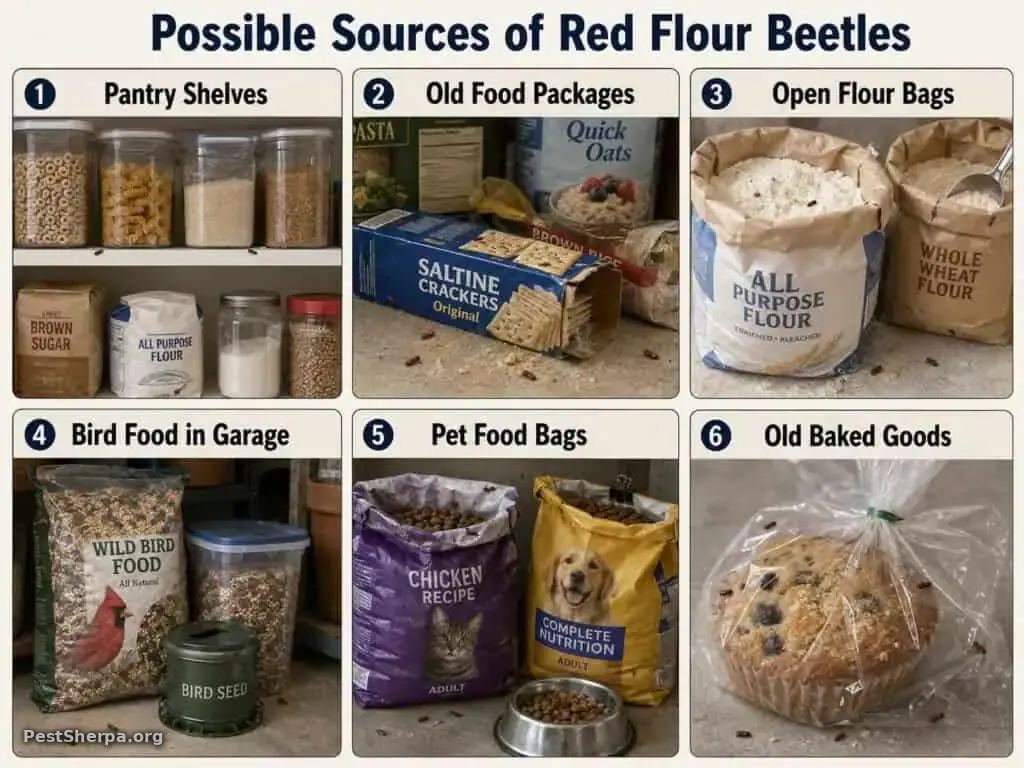
“Dry pantry foods, pet food, and bird seed being inspected for sawtoothed grain beetles.
Signs of a Sawtoothed Grain Beetle Infestation
Infestations are often discovered when adults are seen crawling on shelves or when beetles are found inside a food package. Larvae and pupae may be harder to see because they remain in the food source or protected crevices.
- Small brown beetles crawling in pantry shelves or cabinets
- Beetles inside cereal, flour, pasta, nuts, or pet food
- Pale larvae inside stored food products
- Food dust, fragments, shed skins, or insect waste inside packages
- Beetles hiding in packaging seams, shelf cracks, and cabinet corners
Silk webbing is not typical of sawtoothed grain beetles. Webbing in stored food is more typical of Indianmeal moths, a different pantry pest.
Sawtoothed Grain Beetle Source Investigation Checklist
Step 1: Empty the Affected Shelf or Cabinet
Remove every package from the shelf where beetles are seen. Do not assume only opened packages are affected. Beetles can enter imperfect packaging and may hide along folded seams.
Step 2: Inspect Each Product Closely
Look for live adults, larvae, pupae, cast skins, food dust, clumping, holes, or debris. For small grains, cereal, seeds, or flour, pour the product onto a light-colored tray or baking sheet so movement is easier to see.
Step 3: Check Nearby and Forgotten Sources
Inspect adjacent cabinets, the pantry floor, pet feeding areas, bird seed, garage storage, old holiday baking supplies, forgotten bags of flour, and shelf liners where crumbs can collect.
Step 4: Vacuum Cracks and Shelf Joints
Use a crevice attachment along shelf edges, peg holes, cabinet corners, hinges, drawer tracks, and the space where shelves meet cabinet walls. Seal and discard vacuum contents outside the home.
Step 5: Monitor After Cleanup
A few remaining adults may appear shortly after cleanup. Continued activity after a couple of weeks often means another source was missed.
What To Do About Sawtoothed Grain Beetles
1. Confirm the Pest
Use the flattened body, small size, and six saw-like projections on each side behind the head as the main clues. Compare with other pantry pests if you are unsure.
2. Remove Infested Food
Seal infested food in a bag and remove it from the home. Heavily infested foods should be discarded. Food that contains insects, larvae, shed skins, or waste is generally not worth keeping in a household setting.
3. Clean the Storage Area Thoroughly
- Vacuum shelf cracks, corners, peg holes, and seams
- Remove spilled flour, cereal, pet food, and seed
- Wash hard surfaces with soapy water after vacuuming
- Let surfaces dry before returning food
- Discard vacuum contents outside the structure
4. Protect Uninfested Foods
Move uninfested dry goods into tight containers made of glass, metal, or heavy plastic. Thin bags, paper packaging, cardboard boxes, and loose clips are often not enough for long-term pantry pest prevention.
5. Use Temperature Carefully for Small Items
Freezing can be useful for small, dry items when disposal is not preferred, but cold exposure depends on package size, freezer temperature, product density, and pest life stage. For heavily infested foods, disposal is usually the cleaner and simpler choice.
6. Monitor With Traps if Needed
Pantry pest traps can help monitor beetle activity after cleanup, but traps do not replace source removal. If traps keep catching beetles, inspect again for hidden food sources.
What Does Not Work
- Spraying shelves before finding the source: This may kill exposed adults but does not solve insects developing inside food.
- Keeping questionable packages: One overlooked source can restart the problem.
- Relying only on sticky traps: Traps monitor activity; they do not remove infested food.
- Ignoring pet food and bird seed: These are common hidden sources outside the main kitchen pantry.
- Using bug bombs or foggers: Foggers are generally a poor choice for pantry infestations because they do not eliminate insects developing inside food products and may create unnecessary pesticide exposure or residue concerns.
Insecticides are usually not necessary for household pantry infestations. Never apply a pesticide to food or food-contact surfaces unless the product label specifically permits that use. If any pesticide is considered for cracks or crevices, use only a product labeled for that site, remove food and dishes first, follow the label exactly, keep children and pets away during use, and allow treated areas to dry before replacing items.
How Long Will Sawtoothed Grain Beetles Last?
The timeline depends on whether the source has been found and removed.
| Situation | Expected Pattern |
|---|---|
| Single infested package removed early | Activity may decline quickly |
| Multiple products affected | Beetles may continue until all sources are found |
| Food debris remains in cracks | Low-level activity may persist |
| Pet food, bird seed, or garage source missed | Beetles may keep appearing away from the pantry |
| Adults seen after cleanup | Monitor, but reinspect if activity continues |
If beetles continue appearing after a careful cleanup, repeat the inspection more broadly. The remaining source may be outside the kitchen.
Health, Food, and Safety Risk
Sawtoothed grain beetles are not considered medical pests. They do not bite, sting, or spread disease in the way blood-feeding pests can. Their importance is mainly as a food-contamination pest.
Infested foods may contain adult beetles, larvae, pupae, shed skins, insect waste, and damaged food particles. In most homes, the practical response is to discard infested products, clean the storage area, and prevent spread to uninfested foods.
For commercial kitchens, grocery storage, warehouses, mills, or food-processing areas, sawtoothed grain beetles can have greater economic and regulatory importance because contamination may affect larger quantities of product.
When Professional Help May Be Worth Considering
Many household pantry infestations can be handled with inspection, disposal, cleaning, and improved storage. Professional help may be worth considering when the source cannot be found, beetles persist after repeated cleanup, or the infestation involves a larger storage area.
- Beetles continue appearing after all obvious food products were inspected
- Activity appears in several rooms or storage areas
- Pet food, bird seed, animal feed, or stored bulk foods are involved
- The infestation is in a restaurant, grocery store, warehouse, mill, or food-handling facility
- Identification is uncertain and treatment decisions depend on the pest species
In larger facilities, an integrated pest management approach may include identification, inspection, sanitation, product rotation, packaging review, monitoring traps, structural maintenance, and carefully selected treatments only where appropriate and labeled.
Lookalikes and Common Misidentifications
Several pantry pests can look similar at a glance. Identification matters because different pests may point to different food sources.
| Pest | Key Difference | Common Source Clue |
|---|---|---|
| Merchant grain beetle | Very similar; can fly and may be found near lights | Nuts, oily foods, some grain products |
| Red flour beetle | Reddish-brown, flattened, but lacks the six saw-like side teeth | Flour, meal, cereal products |
| Indianmeal moth | Adult is a moth; larvae produce webbing in food | Cereal, nuts, dried fruit, pet food, bird seed |
| Warehouse beetle | Oval beetle; larvae are hairy | Dry foods, pet foods, seeds, animal products |
| Drugstore beetle or cigarette beetle | Small oval brown beetles with a humped appearance | Spices, dried herbs, pet food, dry plant products |
| Foreign grain beetle | Small flattened beetle associated with moldy or damp materials | Damp grain, moisture, mold, new construction moisture issues |
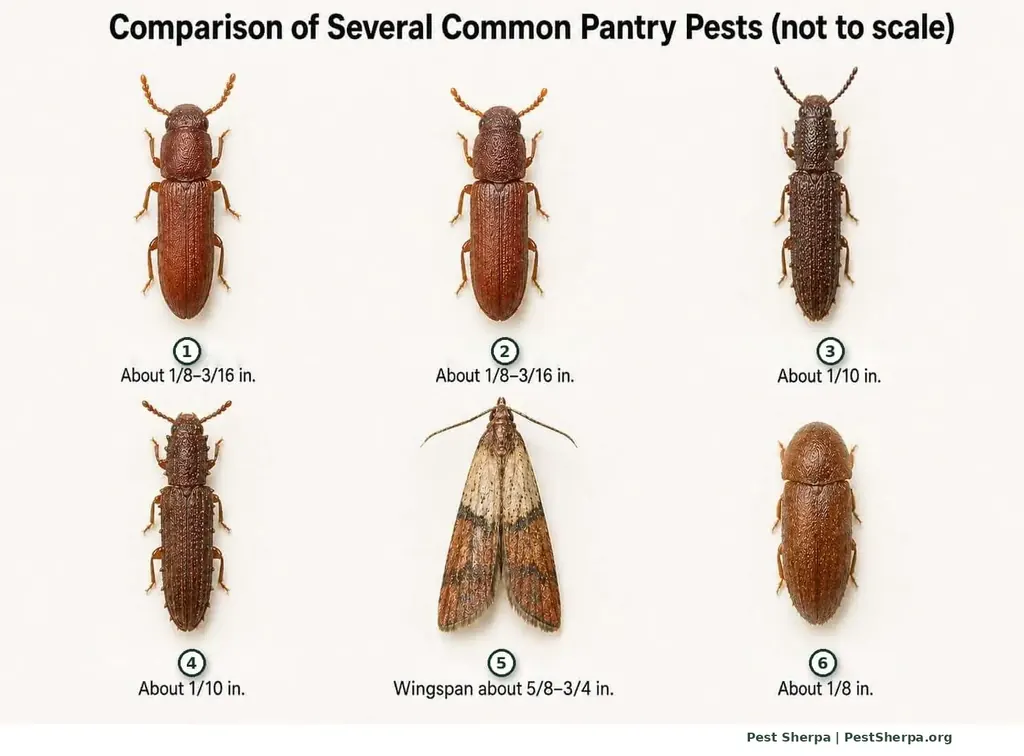
Which one do you see? Match the number:
- Red flour beetle: about 1/8 to 3/16 inch, reddish-brown, with the last few antenna segments forming a sudden club.
- Confused flour beetle: about 1/8 to 3/16 inch, reddish-brown, with antennae that thicken gradually toward the tip.
- Sawtoothed grain beetle: about 1/10 inch, slender and dark brown, with six sawtooth-like points on each side of the thorax.
- Merchant grain beetle: about 1/10 inch, very similar to number 3 but with larger eyes.
- Indianmeal moth: wingspan about 5/8 to 3/4 inch, wings pale at the base and coppery toward the tips.
- Drugstore beetle: about 1/8 inch, oval and reddish-brown, with the head tucked under the thorax.
Common pantry pests compared with sawtoothed grain beetle for identification.
Frequently Asked Questions
Do sawtoothed grain beetles bite?
No. Sawtoothed grain beetles do not bite or sting people. Their main concern is contamination of stored dry foods.
Does one sawtoothed grain beetle mean I have an infestation?
Not always. One beetle may come from a single package or may be noticed early. Repeated sightings, beetles inside food, or larvae in a package strongly suggest an active source.
Can sawtoothed grain beetles get into unopened food?
They can enter imperfectly sealed, damaged, folded, or thin packaging. Check unopened boxes and bags if beetles are active nearby, especially along seams and corners.
Why do I keep finding beetles after throwing away one bad package?
Another source may still be present. Inspect nearby foods, pet food, bird seed, garage storage, old rodent bait, decorative dried plant materials, and spilled food debris in cracks.
Are pantry sprays needed?
Usually not. Source removal, cleaning, and better storage are the main steps. Sprays do not kill insects protected inside food packages and should never be applied to food or food-contact surfaces.
What is the best way to prevent sawtoothed grain beetles from returning?
Buy dry goods in amounts you will use, rotate older items first, clean spills quickly, inspect pet food and bird seed, and store susceptible foods in tight glass, metal, or heavy plastic containers.
References
- Purdue Extension: Sawtoothed Grain Beetle Oryzaephilus surinamensis (L.)
- Michigan State University Plant & Pest Diagnostics: Sawtoothed Grain Beetle
- University of Maryland Extension: Kitchen and Pantry Pests
- University of Minnesota Extension: Pantry Pests: Insects Found in Stored Food
- NC State Extension: Common Pantry Pests and Their Management
- Oregon State University Solve Pest Problems: Insects in Stored Food
- University of Kentucky Entomology: Stored Product Pests in the Pantry
- USDA Agricultural Research Service: Susceptibility of Different Life Stages of Tribolium confusum and Oryzaephilus surinamensis to Cold Treatment
This article was written by Greg Baumann, founder of Pest Sherpa, and reflects more than 40 years of professional pest management experience.
About the Author

Greg Baumann | Pest Control Expert
Greg Baumann is the founder of Pest Sherpa and a Pest Control Expert with more than 40 years of professional pest management experience. His articles combine decades of field experience, technical expertise, and science-based guidance to help homeowners identify pests correctly, understand real-world risks, and make informed pest management decisions.
Mission: Identify the pest. Understand the risk. Stop the problem. Prevent the comeback. Know when it’s time to call a professional.