
Carpenter Ants: Identification, Biology, and Control
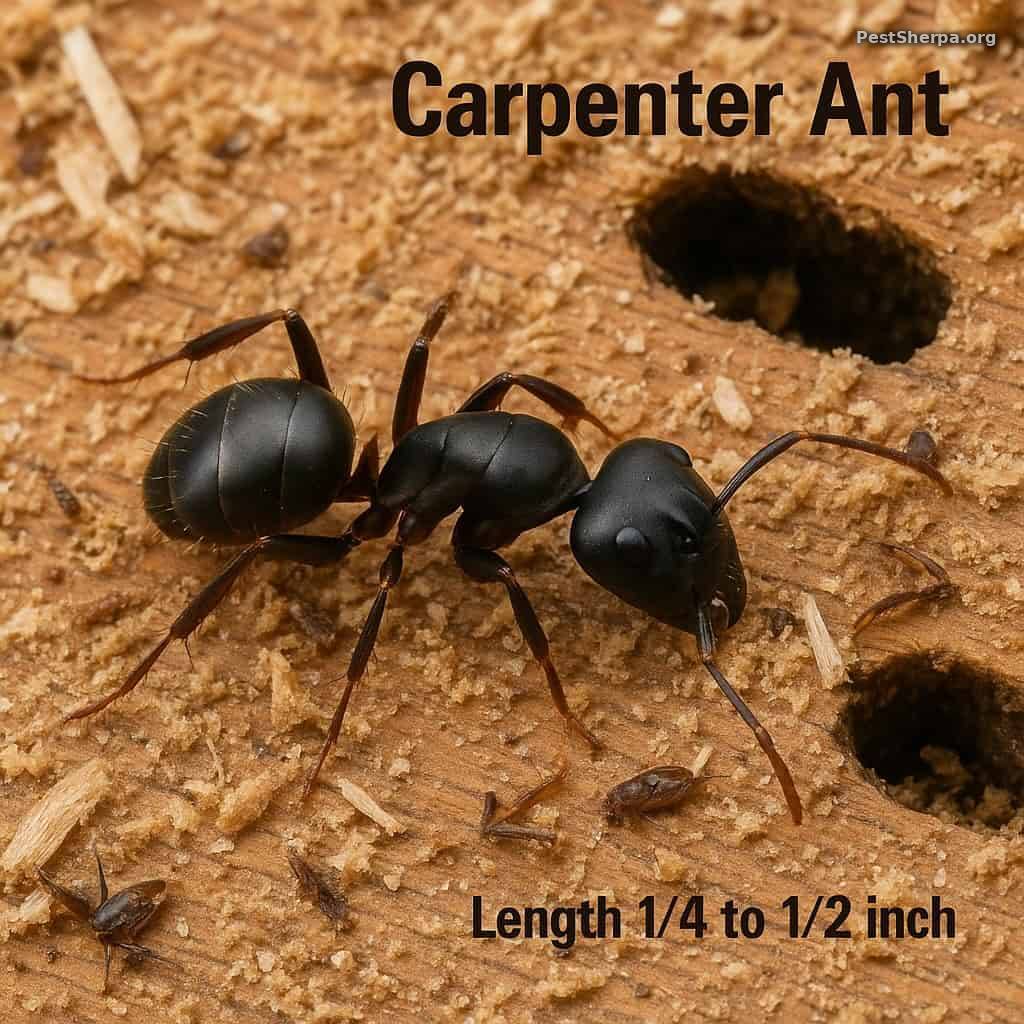
Carpenter ants are large ants that can become a concern when they nest in damp, decayed, or moisture-damaged wood. They do not eat wood the way termites do. Instead, they excavate galleries inside wood to make room for the colony. A few ants indoors may be foragers that came in from outside, but repeated sightings, winged ants indoors, piles of sawdust-like debris, or activity near damp wood can point to a nest that needs closer investigation.
This guide explains how to identify carpenter ants, how to tell them apart from termites and other ants, what signs matter most, where to inspect, what usually does and does not work, and when professional help may be worth considering. For broader ant comparisons, see the Pest Sherpa ant guide.
TL;DR
Carpenter ants are usually a moisture and nesting clue, not just a “spray the ants you see” problem. The key is to identify the ant, follow trails, look for damp or decayed wood, and determine whether the ants are nesting indoors or only foraging inside from an outdoor nest.
- Most important ID clues: one-segmented waist, elbowed antennae, and a smoothly rounded thorax when viewed from the side.
- Most important signs: repeated nighttime trails, winged ants indoors, sawdust-like frass, faint rustling in walls, and activity near moisture-damaged wood.
- Most important next step: find the nest or moisture source, not just the visible ants.
- Most common mistake: spraying foraging ants without locating the colony, which may leave hidden nests untouched.
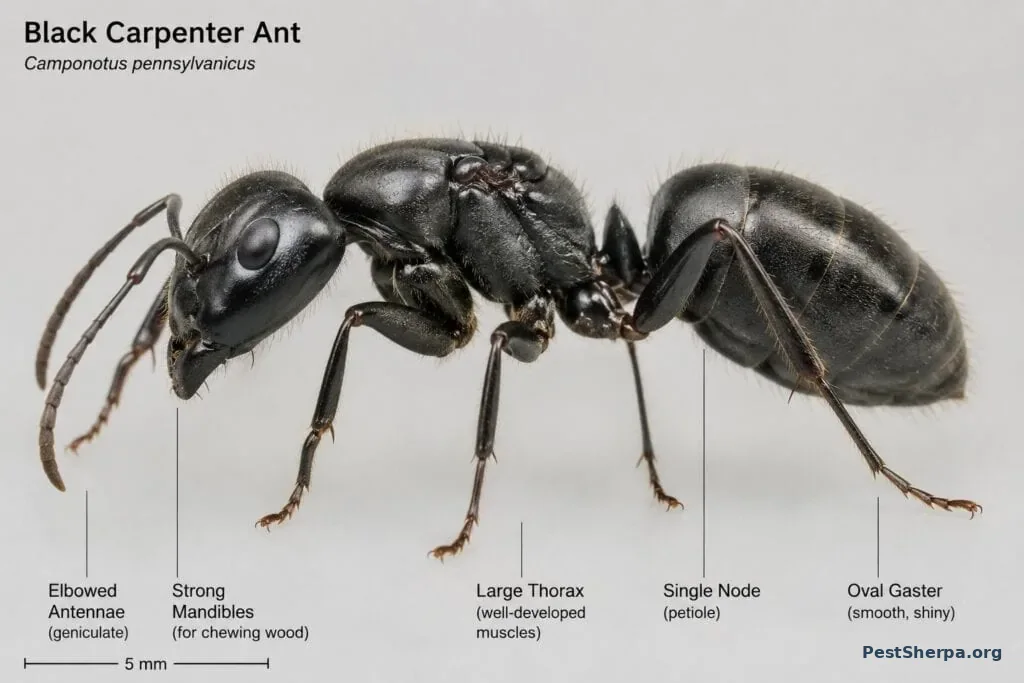
Carpenter ant side view showing one waist node and rounded thorax.
Quick Navigation
- Quick Identification
- How Serious Is It?
- Signs of Carpenter Ant Activity
- Nest and Source Investigation Checklist
- Food and Foraging
- Carpenter Ants vs. Termites
- What To Do
- What Does Not Work Well
- How Long It May Take
- Health, Damage, and Safety Notes
- When Professional Help May Be Needed
- Lookalikes and Common Misidentifications
- Frequently Asked Questions
- References
Quick Identification
Carpenter ants belong to the genus Camponotus. They are often black, red and black, brownish, or a mix depending on species and region. Size alone is not enough for a confident identification because carpenter ant workers can vary within the same colony.
| Feature | What To Look For | Why It Matters |
|---|---|---|
| Size | Usually medium to large; many workers are about 1/4 to 1/2 inch long | Large size is a clue, but not proof by itself |
| Waist | One petiole node between the thorax and abdomen | Helps separate carpenter ants from many two-node ants |
| Thorax | Smoothly rounded when viewed from the side | One of the best field clues for carpenter ants |
| Antennae | Elbowed | Helps separate ants from termite swarmers |
| Color | Black, reddish, brownish, or bicolored | Color varies, so do not rely on color alone |
| Activity | Often forage at night, sometimes in trails | Nighttime trails may help locate entry points or nests |
Important: A photo from the side is often more useful than a top-down photo. Try to capture the waist and the top outline of the thorax.
How Serious Is It?
Carpenter ants can damage wood over time, especially when colonies nest inside structural wood. However, not every carpenter ant sighting means a serious infestation. The pattern of activity matters.
| What You See | Likely Meaning | Suggested Next Step |
|---|---|---|
| One large ant indoors | May be an outdoor forager | Monitor, check nearby doors/windows, and inspect for moisture |
| Several ants in the same area repeatedly | Possible trail, entry point, or nearby nest | Observe at dusk or night and follow the trail if possible |
| Winged ants indoors in spring or early summer | Possible indoor or nearby nest | Collect a sample and inspect carefully for nesting signs |
| Sawdust-like debris below wood, trim, or wall voids | Possible carpenter ant frass | Inspect above the debris and nearby damp wood |
| Ants plus soft, damp, or rotted wood | Higher concern for nesting conditions | Correct moisture and evaluate the wood |
| Persistent activity after cleaning and exclusion | Hidden nest may remain | Consider a more detailed inspection |
Carpenter ants are often a sign that moisture, decay, or wood-to-soil contact should be corrected. In many cases, reducing moisture and removing damaged wood are just as important as ant control.
Signs of Carpenter Ant Activity
- Large ants indoors: especially repeated sightings in kitchens, bathrooms, basements, crawlspaces, attics, or near windows.
- Nighttime trails: carpenter ants often forage after dark. Following a trail may reveal an entry point, tree, stump, deck, wall void, or moisture source.
- Frass: sawdust-like debris that may include wood fragments and insect parts. This is different from the pellet-like frass of some termites.
- Faint rustling sounds: sometimes heard from active wall voids or wood members, especially at night.
- Winged ants indoors: reproductive ants inside the home can be a stronger clue than a single worker ant.
- Moisture damage: leaking plumbing, roof leaks, condensation, damp crawlspaces, and decayed trim can create favorable nesting conditions.
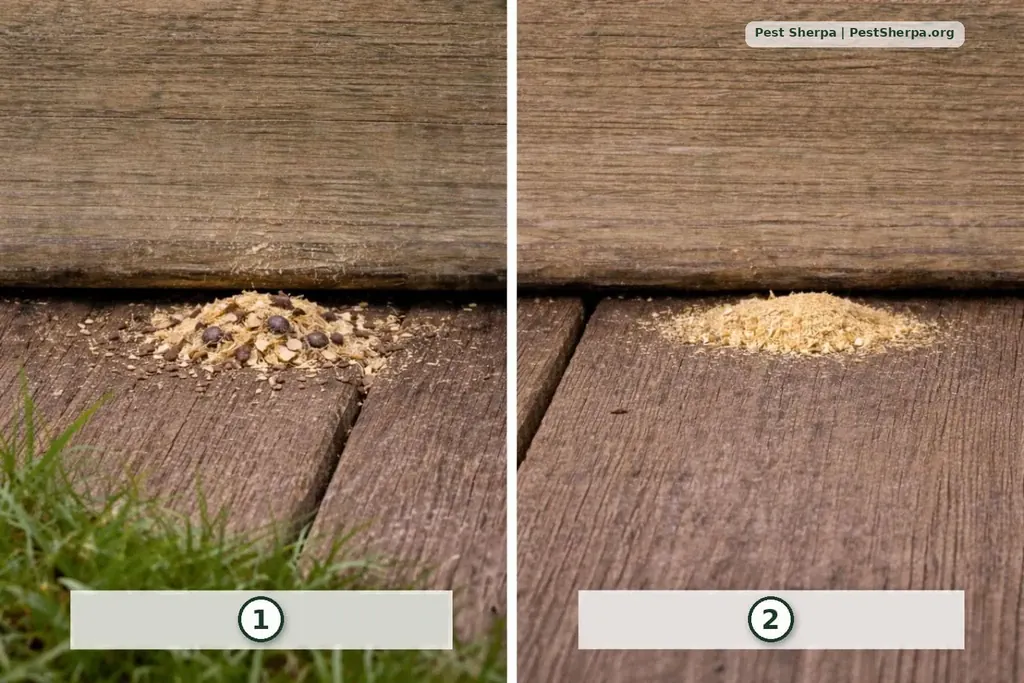
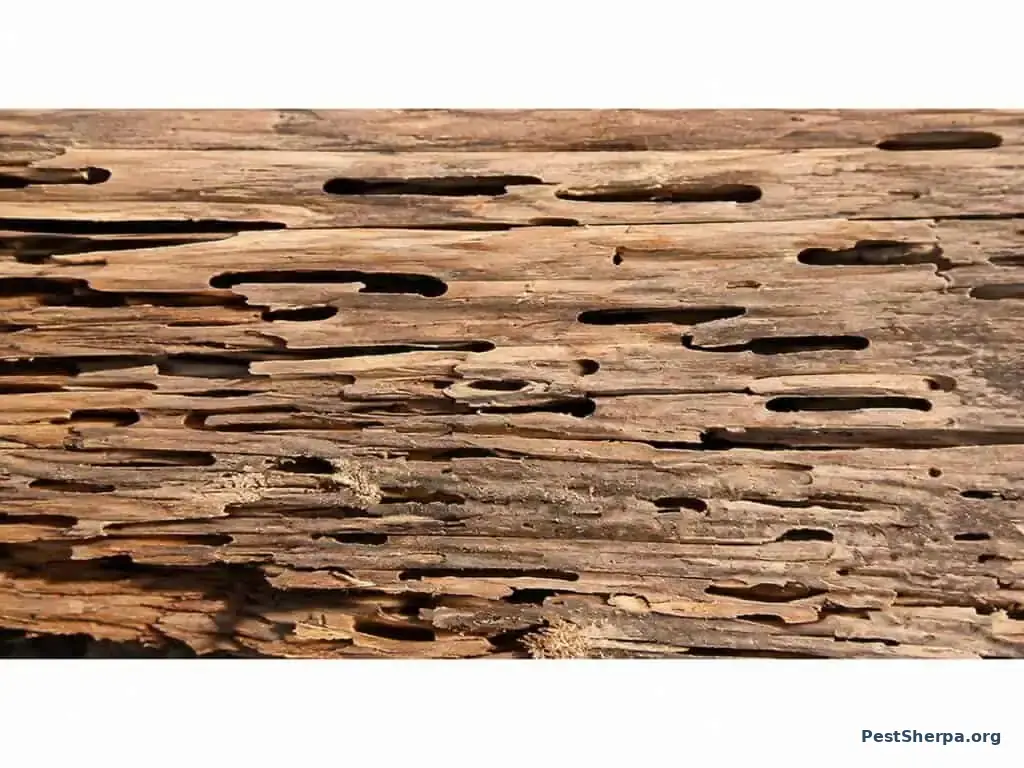
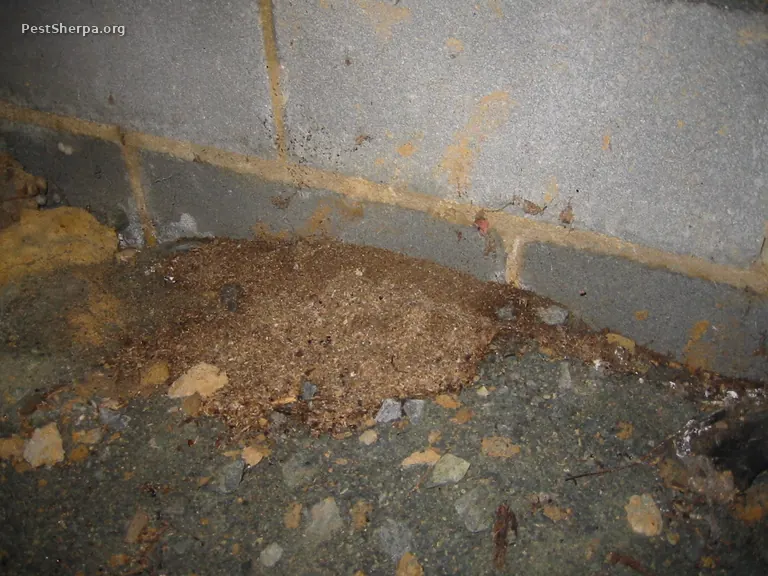
Which frass do you see? Match the number:
- Carpenter ant frass: coarse, shredded wood fibers mixed with dark bits of insect parts and debris.
- Carpenter bee frass: fine, pale, uniform sawdust with no insect parts, usually below a round hole about 1/2 inch wide.
Winged Carpenter Ants Indoors
Winged carpenter ants, also called alates or swarmers, are reproductive ants. They are most often noticed in spring or early summer, though timing varies by region, building temperature, and species.
Finding a winged ant indoors does not automatically prove a severe infestation, but repeated indoor winged ants deserve attention. They may indicate a nest indoors, in a wall void, in damp structural wood, or very close to the building.
| Winged Insect Feature | Carpenter Ant | Termite Swarmer |
|---|---|---|
| Antennae | Elbowed | Straight or bead-like |
| Waist | Narrow, pinched waist | Broad waist |
| Wings | Front wings usually longer than hind wings | Both pairs of wings about equal length |
| Body | Distinct head, thorax, and abdomen | More uniform body shape |
For a broader wood-damaging pest comparison, see the termite identification and damage guide.
Nest and Source Investigation Checklist
The best carpenter ant inspection starts with moisture, wood condition, and ant trails. Visible ants may be far from the main nest, so avoid assuming the kitchen or bathroom is the source just because ants are found there.
Step 1: Watch the Ants at the Right Time
Check activity at dusk, after dark, or early morning. Use a flashlight and look for trails along baseboards, plumbing lines, tree branches, deck rails, foundation edges, utility lines, and exterior siding.
Step 2: Follow Trails Both Directions
One direction may lead to food or water. The other may lead toward an entry point or nest. Outdoor trails may connect to a tree, stump, log, fence, woodpile, deck, or landscape timber.
Step 3: Inspect Moisture-Prone Areas
- Window and door frames
- Roof edges, soffits, fascia, and gutters
- Bathrooms, kitchens, and laundry rooms
- Plumbing penetrations and water-damaged cabinets
- Basements, crawlspaces, and sill plates
- Attics, roof leaks, and condensation areas
- Decks, porches, steps, and wood-to-soil contact
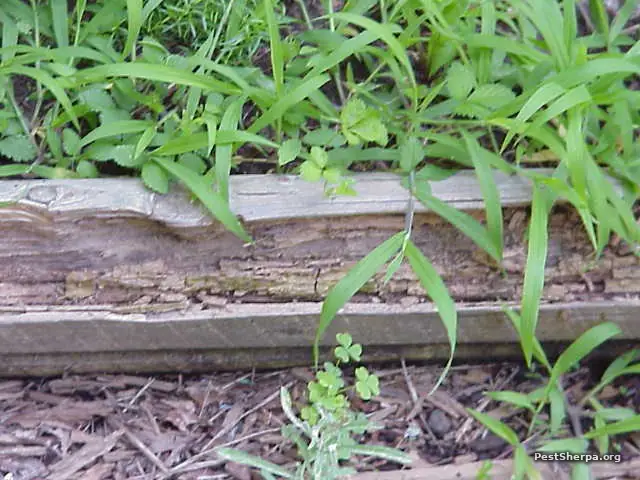
Step 4: Look for Frass and Damaged Wood
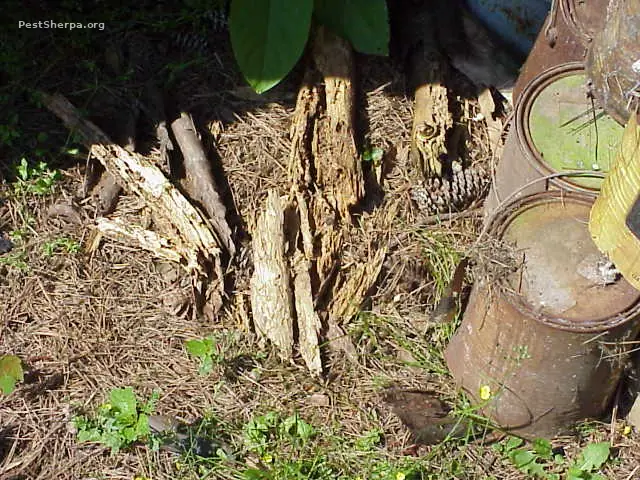
Carpenter ant galleries are usually clean and smooth inside because workers remove debris from the nest. Frass may appear below kick-out openings, cracks, trim, beams, or wall voids.
Step 5: Decide Whether the Nest Is Likely Indoors or Outdoors
| Clue | More Consistent With Indoor Nest | More Consistent With Outdoor Nest/Foraging |
|---|---|---|
| Ants seen only occasionally | Less likely | More likely |
| Large numbers indoors repeatedly | More likely | Possible but less certain |
| Winged ants indoors | More concerning | Possible if entry occurred from outside |
| Frass indoors | More likely | Less likely |
| Trail leads outside to a tree or stump | Less likely | More likely |
| Activity near wet wood or leaks | More likely | Still possible nearby |
Food and Foraging
Carpenter ants do not eat wood. They feed on a variety of sweets, proteins, fats, and natural outdoor foods. Indoors, they may visit kitchens, pet feeding areas, trash containers, sinks, and sticky spills. Outdoors, they may feed on honeydew from aphids and scale insects, plant juices, and other insects.
| Food or Attractant | Why It Matters | Practical Check |
|---|---|---|
| Sugary spills and drinks | Can support indoor foraging | Clean under appliances, counters, and trash areas |
| Pet food | Can attract foragers at night | Remove leftovers and clean bowls regularly |
| Grease and proteins | May attract ants depending on colony needs | Clean cooking residue and garbage containers |
| Water and moisture | Often more important than food | Check leaks, condensation, and damp wood |
| Honeydew outdoors | Can support trails on plants and trees | Inspect shrubs, tree limbs, and plants touching the house |
If ants are appearing in a kitchen after rainy weather, the ants may be responding to moisture changes, food, or both. Clean food sources, but do not stop the inspection there. Moisture and nesting conditions are often the larger issue.
Carpenter Ants vs. Termites
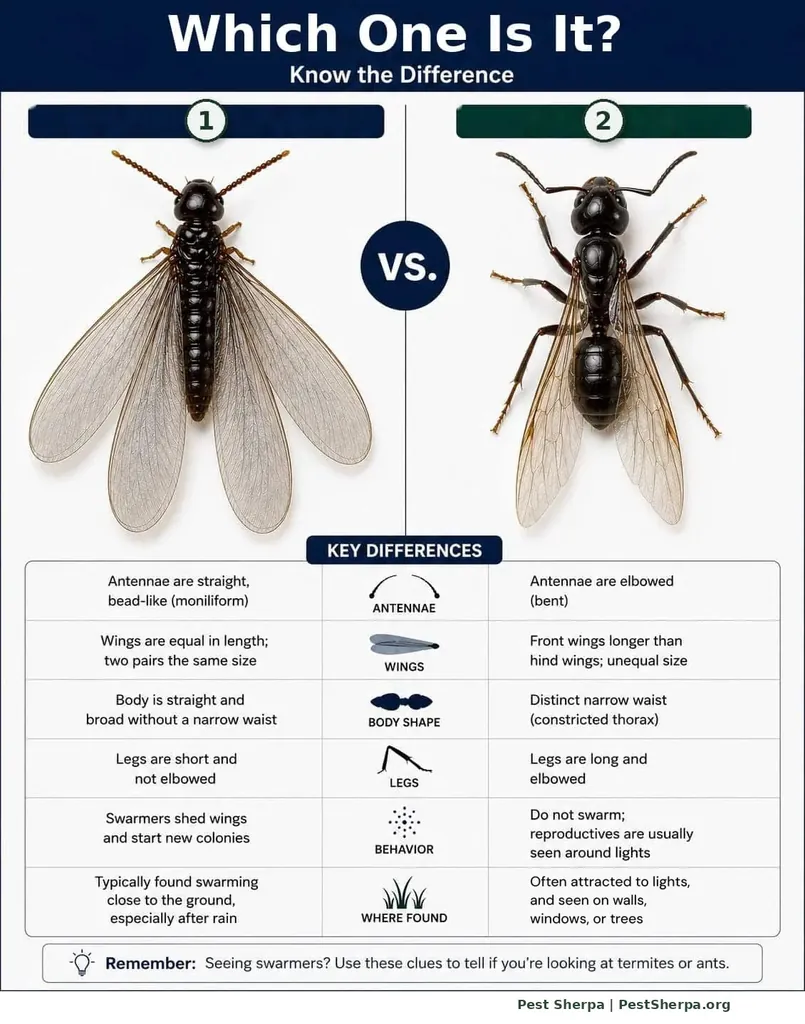
Which one did you find? Match the number:
- Subterranean termite swarmer: straight, beaded antennae, a thick body with no pinched waist, and four wings of equal length.
- Winged carpenter ant: bent (elbowed) antennae, a narrow pinched waist, and front wings longer than the hind wings.
Number 1 swarming inside the house is a reason to call a licensed termite pro for an inspection.
Carpenter ants and termites are often confused because both can be found around wood. The damage pattern, insect body shape, and debris are different.
| Feature | Carpenter Ants | Termites |
|---|---|---|
| Relationship to wood | Excavate wood for nesting | Consume cellulose |
| Galleries | Often smooth and clean | May contain soil or mud-like material, depending on termite type |
| Debris | Sawdust-like frass may include insect parts | Drywood termites may leave hard pellets; subterranean termites often use mud tubes |
| Antennae | Elbowed | Straight |
| Waist | Narrow, pinched | Broad |
| Winged forms | Front wings longer than hind wings | Wings about equal length |
Misidentifying termites as carpenter ants can delay the right response. If you find winged insects, damaged wood, mud tubes, or pellet-like droppings, compare the evidence with the termite guide before choosing next steps. If the evidence points to termites, the Termite Control hub covers treatment systems and warranties.
What To Do
1. Collect or Photograph a Sample
Use a clear container, tape, or a close-up photo. A side-view photo showing the waist and thorax is especially helpful. Avoid crushing the sample if you need identification.
2. Track Activity Before Treating
Watch where ants are coming from and where they are going. Spraying visible workers too early can make trails harder to follow and may not affect the nest.
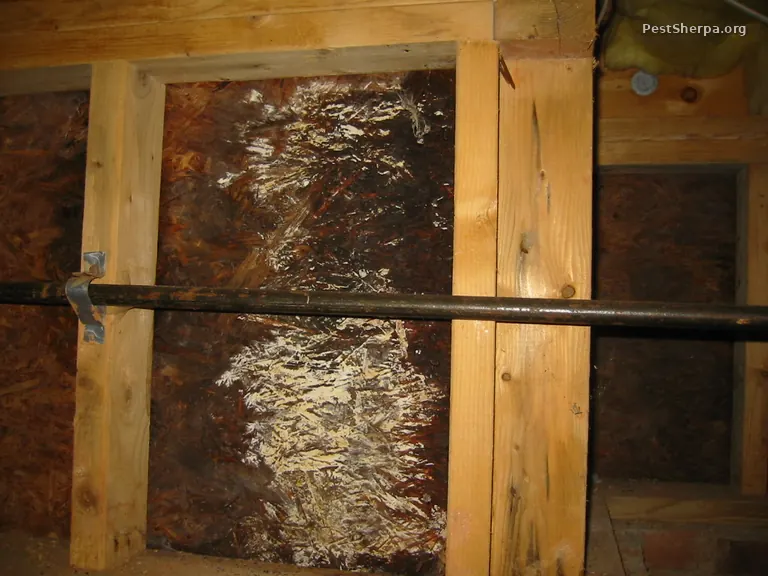
3. Correct Moisture Problems
- Repair plumbing, roof, and window leaks.
- Improve crawlspace, attic, and basement ventilation where needed.
- Clean gutters and direct water away from the foundation.
- Replace severely decayed or water-damaged wood.
- Reduce wood-to-soil contact around steps, decks, siding, and landscape timbers.
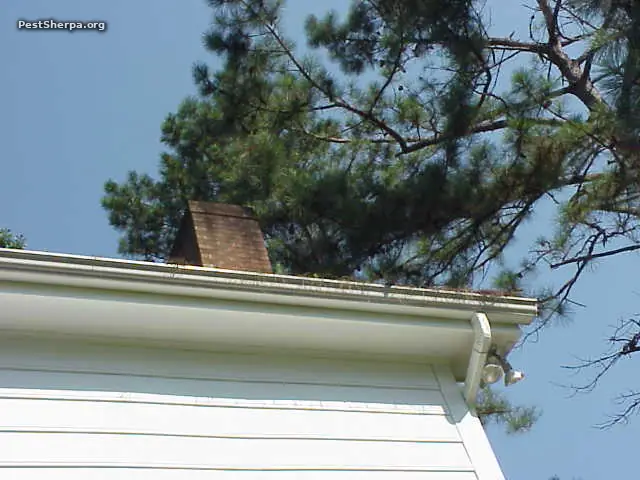
4. Reduce Entry Points
- Seal gaps around utility penetrations.
- Repair damaged screens and door sweeps.
- Trim branches and shrubs touching the building.
- Move firewood and lumber away from the structure and keep it off the ground when possible.
5. Use Pesticides Carefully, If Needed
Pesticides are not always necessary, especially when ants are only foraging indoors from an outdoor source. When pesticides are used, the product must match the pest, site, and label directions. Read and follow the full label, keep products away from children, pets, food-contact surfaces, drains, and ventilation pathways, and avoid applying products into inaccessible voids unless the label allows that use.
Baits may help in some situations, but results depend on correct identification, ant feeding preference, placement, and whether the ants carry the bait back to the colony. Direct nest treatment may be needed when a nest is confirmed, but locating the nest is the key step.
What Does Not Work Well
- Only spraying the ants you see: visible workers may be a small part of the colony.
- Ignoring moisture: leaks, condensation, and decayed wood can keep the problem attractive.
- Assuming all large ants are carpenter ants: several ant species can be mistaken for carpenter ants.
- Using bug bombs or foggers: they usually do not reach hidden nests and can create unnecessary exposure risks.
- Sealing every gap before inspection: sealing can help long term, but first try to learn where the ants are traveling.
- Replacing wood without fixing water: new wood can become vulnerable again if the moisture source remains.
How Long It May Take
The timeline depends on whether the ants are only foraging indoors, whether an indoor satellite nest is present, and whether moisture or damaged wood remains.
| Situation | Expected Pattern | What To Watch |
|---|---|---|
| Outdoor foragers entering occasionally | Activity may drop after exclusion and food cleanup | New trails, entry points, and plants touching the home |
| Moisture source corrected | Conditions become less favorable over time | Continued ant activity after drying and repairs |
| Hidden indoor nest remains | Activity may continue or return in waves | Frass, winged ants, wall sounds, and repeated trails |
| Confirmed nest located and addressed | Activity should decline, but monitoring is still useful | Satellite nests, nearby outdoor nests, and new moisture problems |
Health, Damage, and Safety Notes
Carpenter ants are not considered major disease vectors in homes. The bigger concerns are hidden moisture, wood decay, structural damage over time, and unsafe pesticide use. They can bite if handled or pressed against skin, but they are usually more of a building and nuisance concern than a direct health threat.
If you find soft wood, sagging members, extensive decay, or damage near load-bearing areas, consider having the wood evaluated. Pest identification and structural evaluation are different tasks; both may matter when damage is extensive.
When Professional Help May Be Needed
Professional help may be worth considering when the nest cannot be found, when winged ants are appearing indoors, when frass keeps returning, or when activity is associated with wall voids, attics, crawlspaces, rooflines, or structural wood.
- Repeated carpenter ant sightings in the same room or wall area
- Winged ants emerging indoors
- Frass below trim, beams, windows, or wall voids
- Suspected nests in inaccessible voids
- Moisture damage combined with ongoing ant activity
- Uncertainty about whether the insect is a carpenter ant or termite
- Commercial, food-handling, rental, healthcare, or multi-unit settings where documentation and risk management matter
A careful inspection should focus on identification, nest location, moisture correction, exclusion, and whether any treatment is actually needed.
Lookalikes and Common Misidentifications
Large or dark ants are often assumed to be carpenter ants, but several pests can be confused with them. Use body shape, nesting clues, debris, and behavior instead of relying on size alone.
| Pest | How It Differs | Useful Next Step |
|---|---|---|
| Termites | Swarmers have straight antennae, broad waists, and equal-length wings; damage and debris differ from carpenter ants | Compare with the termite guide |
| Acrobat ants | Smaller ants with a heart-shaped abdomen that may be raised over the body when disturbed | Check waist nodes, abdomen shape, and nesting location |
| Pavement ants | Generally smaller, often associated with pavement cracks, foundations, and soil nesting | Look for soil displacement and outdoor trails |
| Odorous house ants | Smaller ants that may produce a noticeable odor when crushed | Focus on trails, food sources, and moisture |
| Carpenter bees | Bees, not ants; they bore round holes into wood and are often seen hovering near decks, fascia, or trim | Inspect for round entrance holes and coarse sawdust below |
| Velvety tree ants | Outdoor ants that nest in trees and wood; dark velvety appearance can be mistaken for carpenter ants near structures | Check trees, limbs, and outdoor trails before assuming an indoor wood nest |
Frequently Asked Questions
Do carpenter ants eat wood?
No. Carpenter ants excavate wood to create nesting galleries. They do not digest and eat wood the way termites do.
Does one carpenter ant mean I have an infestation?
Not necessarily. One ant may be a forager from outdoors. Repeated indoor sightings, winged ants, frass, wall sounds, or activity near damp wood are more concerning.
Why do I see carpenter ants mostly at night?
Carpenter ants often forage at night. Nighttime observation can make trails easier to follow and may reveal where ants are entering or nesting.
Are carpenter ants worse than termites?
They are different problems. Termites eat cellulose and can be highly destructive. Carpenter ants excavate galleries and are often associated with moisture-damaged wood. Correct identification is important because the inspection and control approach differs.
What is carpenter ant frass?
Frass is debris pushed out of carpenter ant galleries. It often looks like coarse sawdust and may contain insect parts. It is not the same as the hard, pellet-like droppings produced by some termites.
Can I solve carpenter ants with bait?
Sometimes, but not always. Bait success depends on correct identification, ant feeding preference, bait placement, and whether the ants carry it back to the colony. Finding the nest and correcting moisture problems are still important.
Should I spray the trail?
Spraying visible ants may reduce what you see temporarily, but it can also make trails harder to follow and may not reach the nest. First identify the ant, observe the trail, and look for moisture or nesting sources.
Where do carpenter ants usually nest?
Outdoors, they commonly nest in trees, stumps, logs, and decayed wood. Indoors, they may use damp or previously damaged wood around windows, roofs, plumbing, crawlspaces, wall voids, decks, and other moisture-prone areas.
References
- University of Minnesota Extension: Carpenter Ants
- Penn State Extension: Carpenter Ants
- UC Statewide IPM Program: Carpenter Ants
- UC Statewide IPM Program: Key to Identifying Common Household Ants: Carpenter Ant
- Illinois Department of Public Health: Carpenter Ants
- Ohio State University Extension: Carpenter Ants
This article was written by Greg Baumann, founder of Pest Sherpa, and reflects more than 40 years of professional pest management experience.
About the Author

Greg Baumann | Pest Control Expert
Greg Baumann is the founder of Pest Sherpa and a Pest Control Expert with more than 40 years of professional pest management experience. His articles combine decades of field experience, technical expertise, and science-based guidance to help homeowners identify pests correctly, understand real-world risks, and make informed pest management decisions.
Mission: Identify the pest. Understand the risk. Stop the problem. Prevent the comeback. Know when it’s time to call a professional.