
Eastern Subterranean Termites: Identification, Damage, and Control
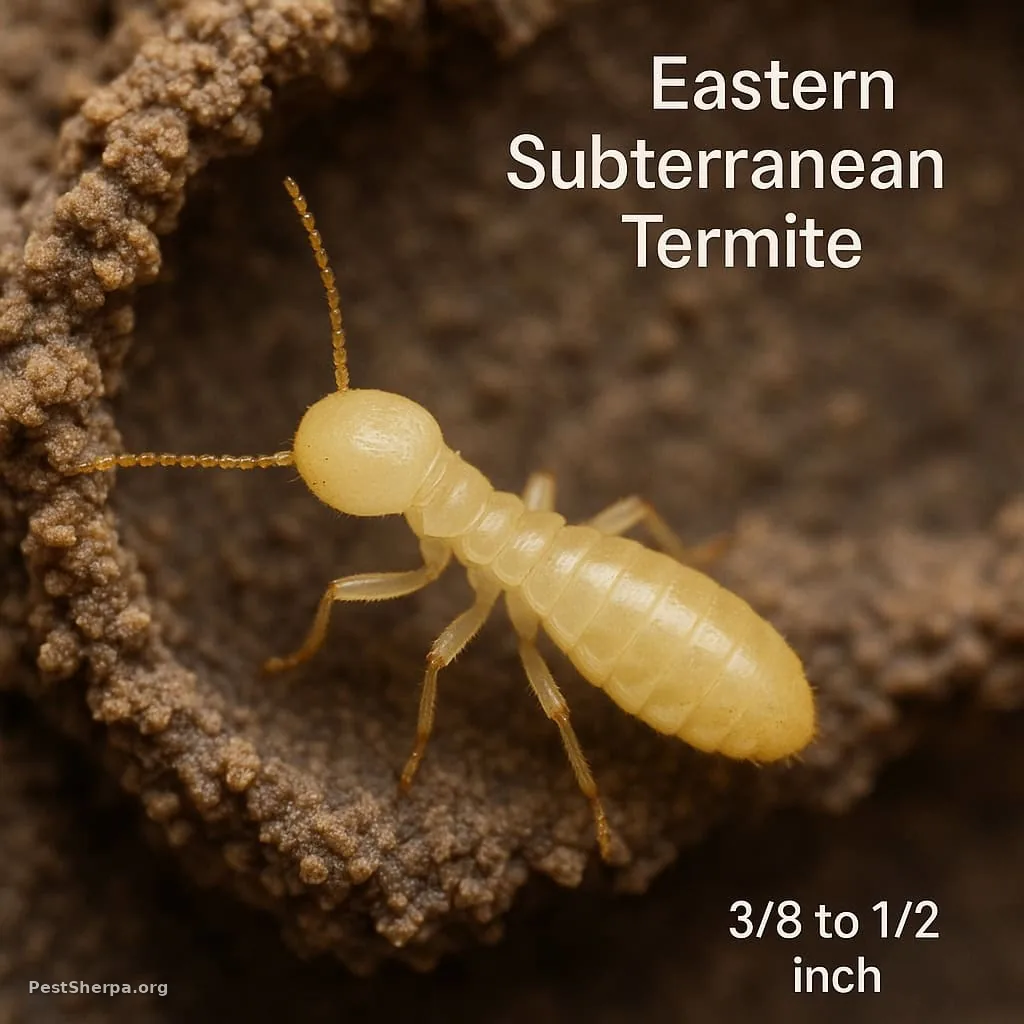
Updated for accuracy: Eastern subterranean termites (Reticulitermes flavipes) are among the most common structural termites in the eastern United States. They live in underground colonies, travel through mud tubes, and can quietly damage structural wood long before homeowners notice obvious signs. If you are searching for eastern subterranean termites in the house, this guide explains what indoor finds usually mean, what evidence to save, and what to do next.
TL;DR
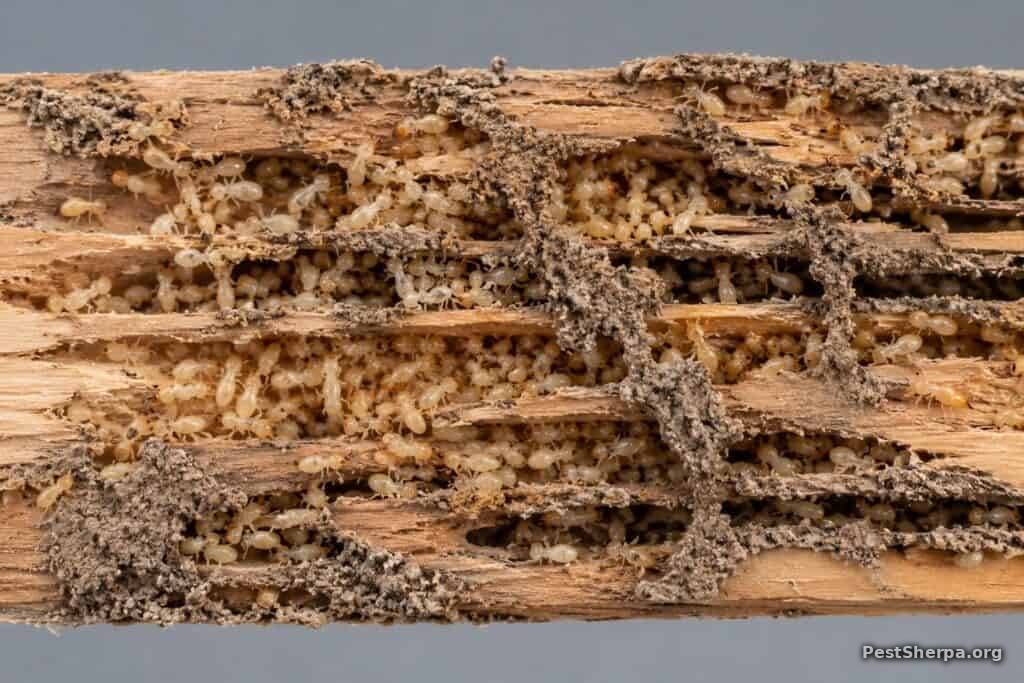
Eastern subterranean termites in the house usually mean a soil-connected colony is feeding on wood through mud tubes, foundation gaps, or moisture-prone areas. Look for pencil-width mud tubes on foundations and sill plates, hollow or blistered wood near soil or plumbing leaks, and discarded equal-length swarmers’ wings near windows or lights. Eastern termites (also called eastern subterranean or subterranean termites in the house) need moisture; indoor activity is evidence of subterranean termites that still depend on soil or a wet indoor site. Active infestations often need a professional inspection rather than DIY foam-everything treatments.
Related reading: the termites hub, drywood termites (frass pellets instead of mud tubes), and Formosan termites for species contrast.
Jump to:
- Identification
- Why It Matters
- If Found Indoors
- When To Call a Pro
- Similar Pests
- Common Questions
- References
Identification: What Eastern Subterranean Termites Look Like
Eastern subterranean termites are social insects that live in underground colonies and feed on cellulose-based materials including framing lumber, subflooring, trim, paper products, and structural wood.
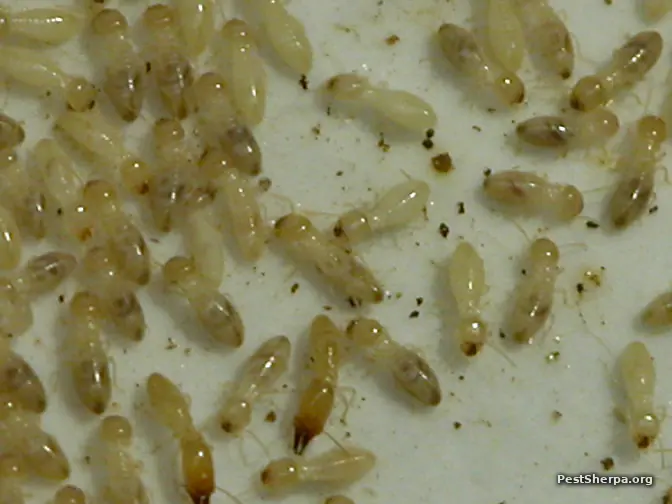
Workers: Cream-colored, soft-bodied termites responsible for feeding and colony maintenance (below).
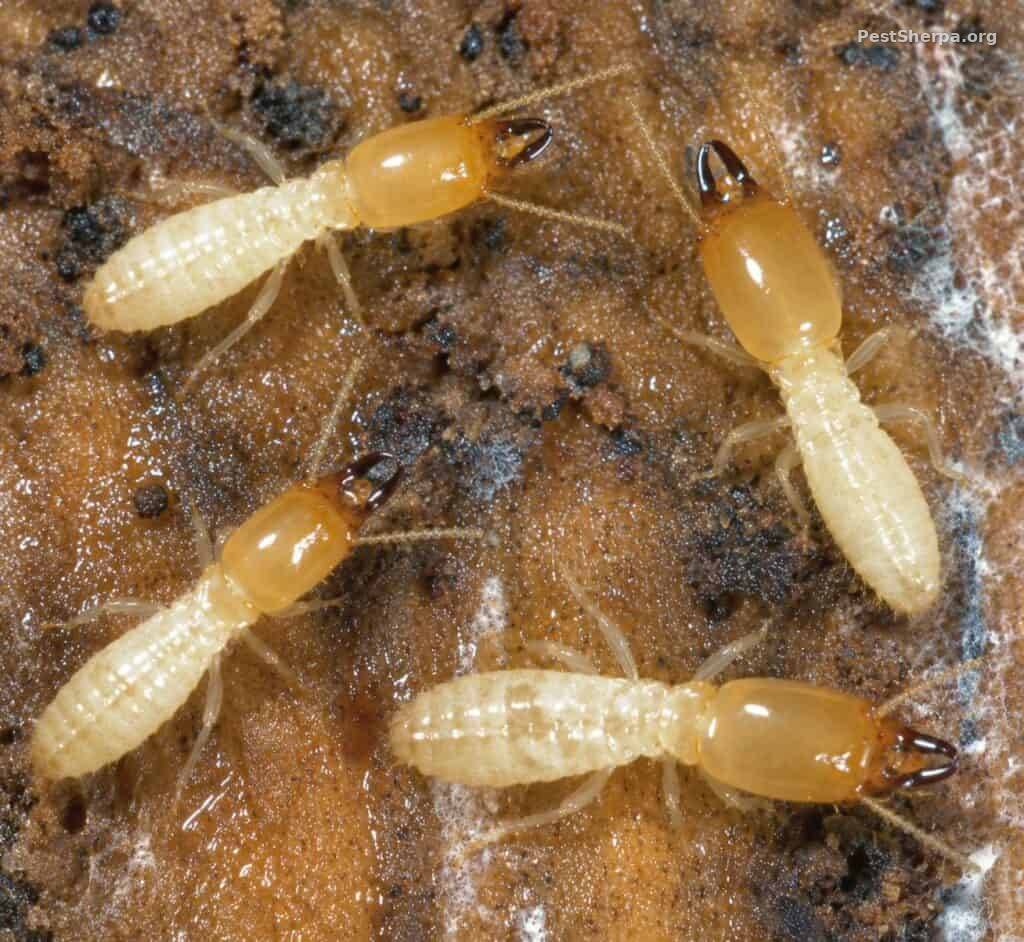
Soldiers: Similar in size to workers but with enlarged yellowish-brown heads and defensive jaws (below).
Swarmers (alates): Dark-bodied reproductive termites with two pairs of equal-length wings. Swarming of Eastern Subterranean Termites commonly occurs during warm, humid periods, generally in early spring (below).
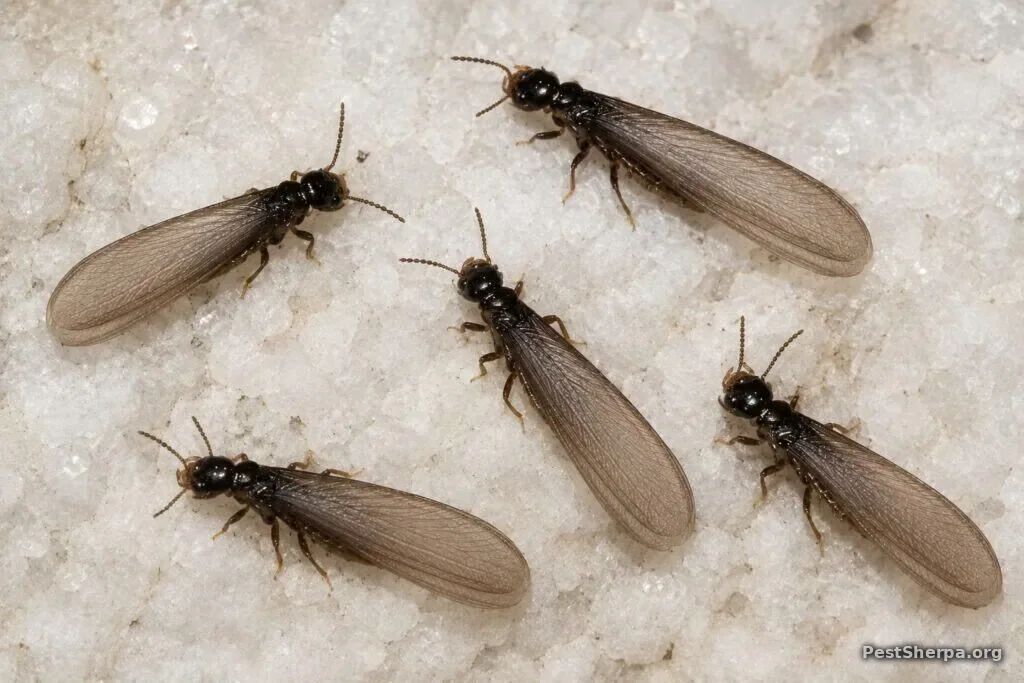
The strongest homeowner identification clues include:
- Mud tubes on foundations, crawl-space walls, piers, support posts, or slab edges.
- Soft or hollow wood that breaks along the grain.
- Discarded equal-sized wings near windows, doors, or light sources.
- Hidden wood damage behind walls, flooring, or trim.
- Soil or mud packed inside damaged wood galleries.
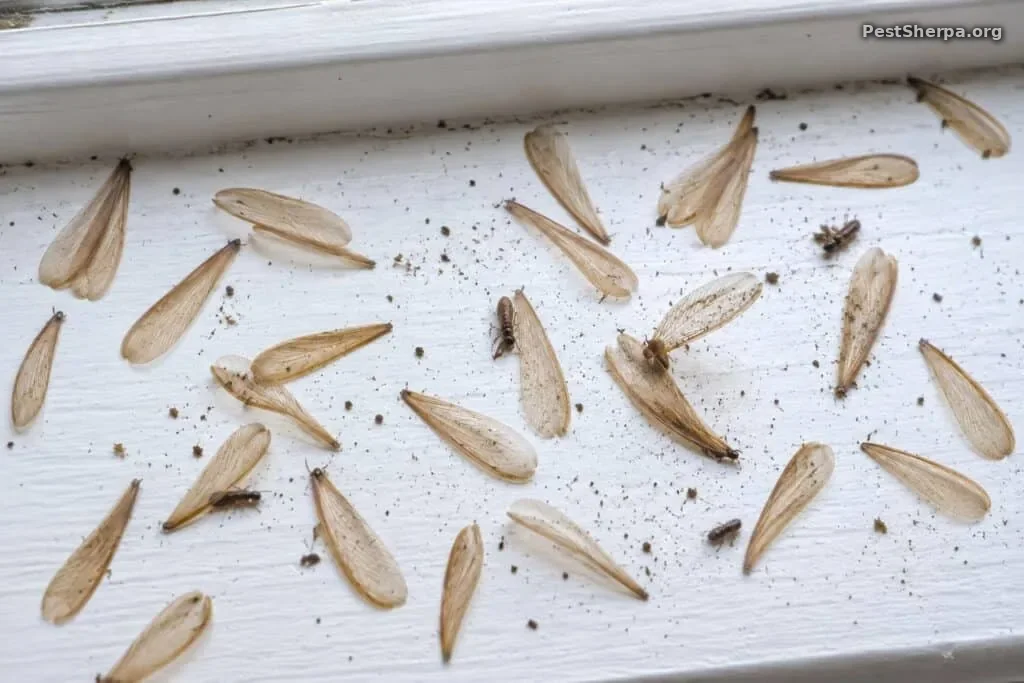
Discarded alate wings
Many homeowners confuse termite swarmers with carpenter ants. Carpenter ants have elbowed antennae, narrow waists, and unequal wing lengths. Termite swarmers have straighter antennae, thicker waists, and wings of equal length.
Eastern subterranean termites are also commonly confused with Formosan subterranean termites. Formosan termites generally form larger colonies and can cause more rapid structural damage.
Why It Matters
Eastern subterranean termites are structural pests capable of causing significant hidden wood damage over time. Because colonies remain underground and termites feed inside wood, infestations may remain unnoticed for years.
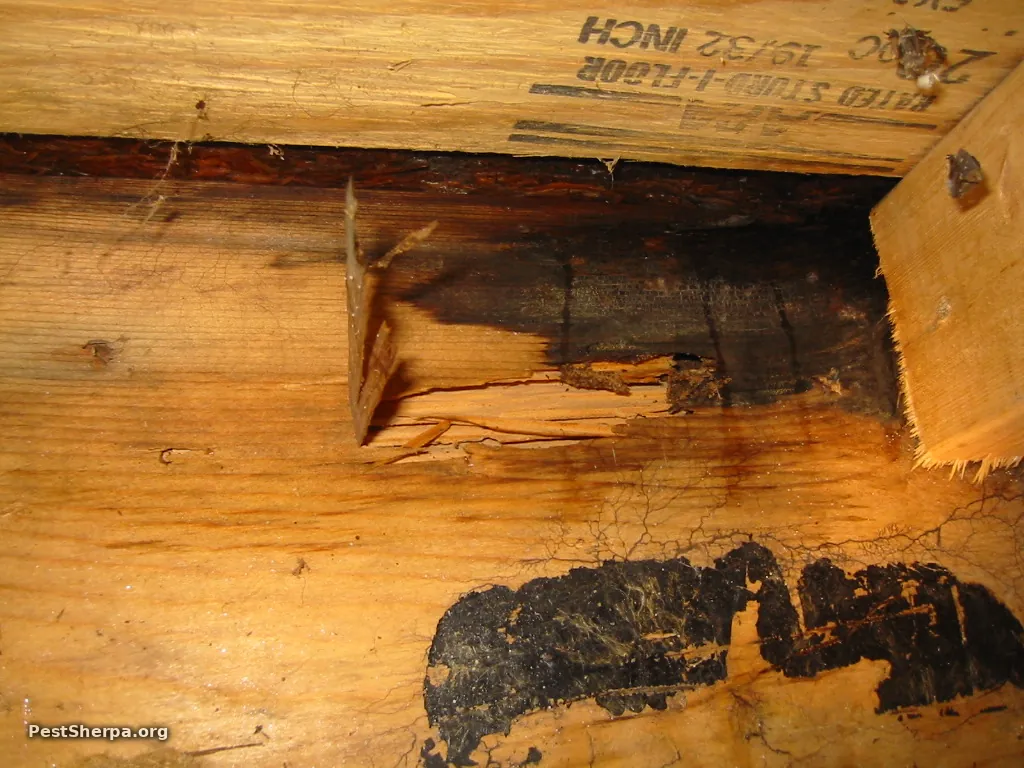
Damage often occurs in:
- Sill plates.
- Floor joists.
- Subflooring.
- Wall framing.
- Crawl-space supports.
- Basement framing.
- Wood touching soil.
The U.S. Environmental Protection Agency notes that termites cause billions of dollars in structural damage annually in the United States. Source: EPA termite guidance. For where the national dollar figures come from and how solid each one is, see my termite damage statistics.
Conditions that increase risk include:
- Wood-to-soil contact.
- Moisture around foundations.
- Leaking plumbing or gutters.
- Poor drainage near the structure.
- Damp crawl spaces.
- Buried wood or cellulose debris.
- Foundation cracks and slab penetrations.
For broader termite prevention and inspection guidance, review the Pest Sherpa termite guide.
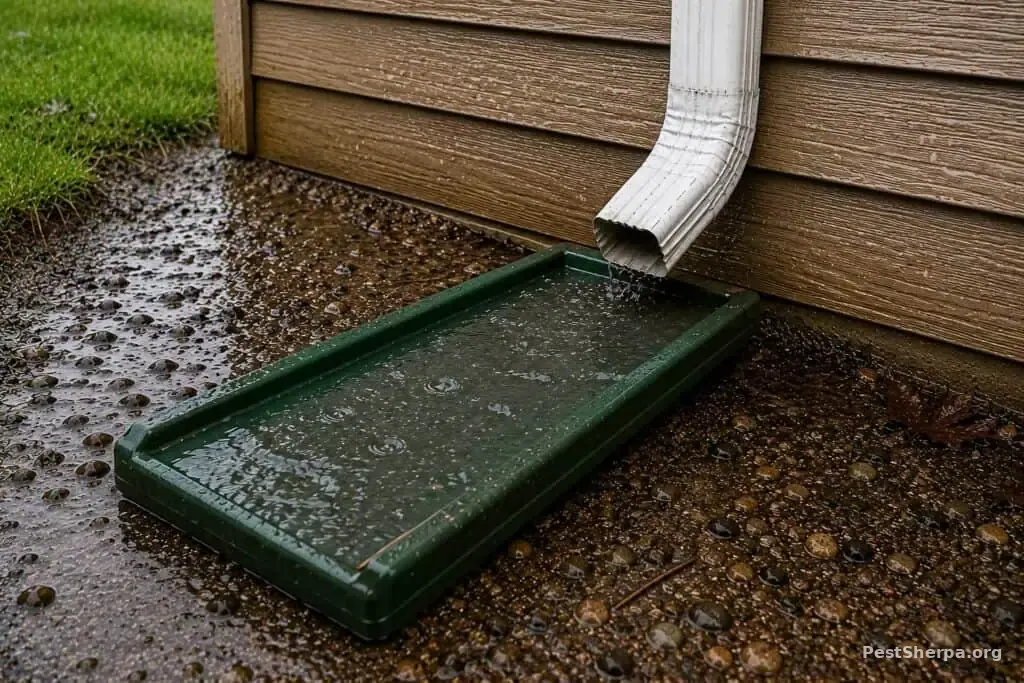
Moisture near the foundation should be directed away from the structure
If You Found Eastern Subterranean Termites Indoors
An indoor find of eastern subterranean termites is not the same as a yard swarmer that never entered the structure. Use this short indoor checklist first, then work the moisture and wood-soil steps below.
- Mud tubes vs drywood frass: Subterranean termites build earthen mud tubes. Drywood termites leave hard fecal pellets (frass) and do not rely on soil tubes. See drywood termite frass if you have piles of pellets and no tubes.
- What to photograph: tubes on foundation or sill, damaged wood, swarmers or equal-length wings, and any wood-to-soil contact or leaks nearby. Do not scrape everything away before documentation.
- Moisture and wood-soil checklist: leaks, poor drainage, high crawl-space humidity, siding or posts touching soil, and cellulose debris near the foundation.
1. Preserve visible evidence
Take clear photos of mud tubes, damaged wood, swarmers, or discarded wings before cleaning or disturbing activity.
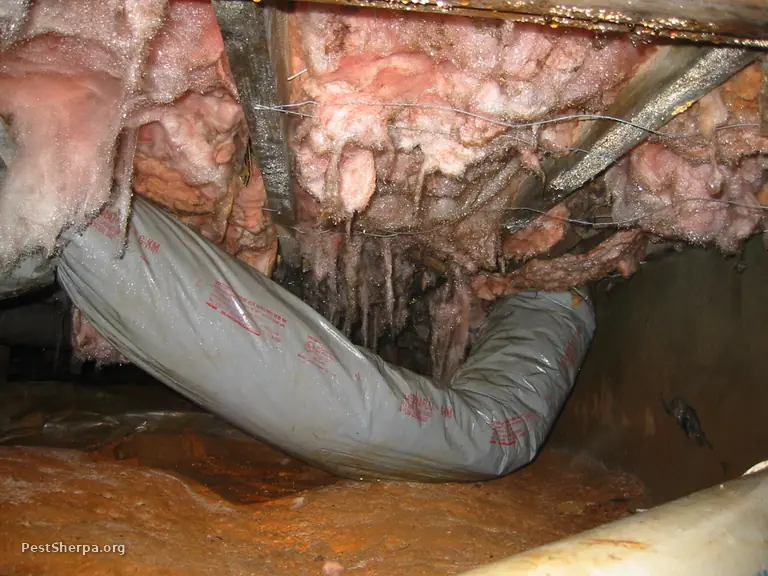
2. Correct moisture problems
Repair leaks, improve drainage, reduce crawl-space humidity, and direct water away from foundations.
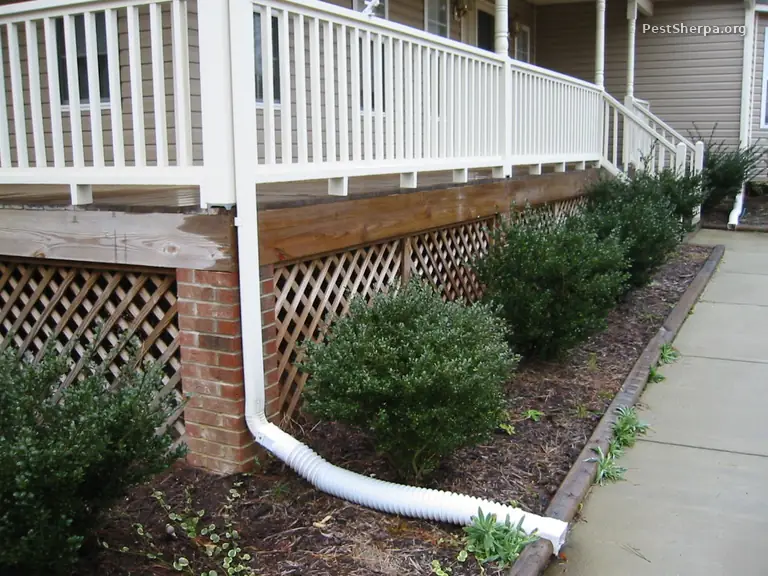
3. Remove wood-to-soil contact
Keep siding, posts, trim, lattice, stair framing, and wooden structural components separated from direct soil contact.
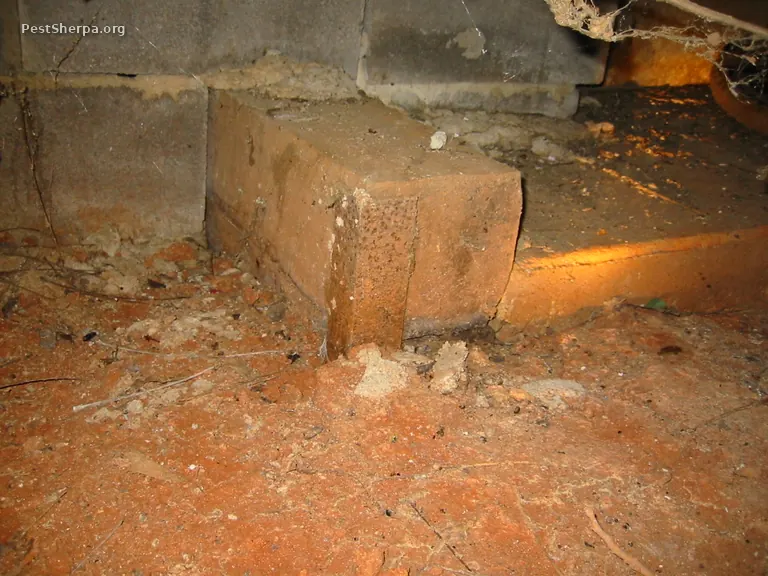
4. Remove cellulose debris
Eliminate buried lumber, cardboard, dead roots, form boards, and wood debris near foundations or crawl spaces.
5. Understand DIY treatment limitations
Over-the-counter sprays rarely eliminate established subterranean termite colonies inside structures. Effective control often requires professionally installed bait systems, soil termiticides, trenching, drilling, or integrated termite management strategies. See bait vs liquid approaches on the Termite Control page.
The National Pesticide Information Center recommends accurate termite identification before treatment decisions are made. Source: NPIC termite information.
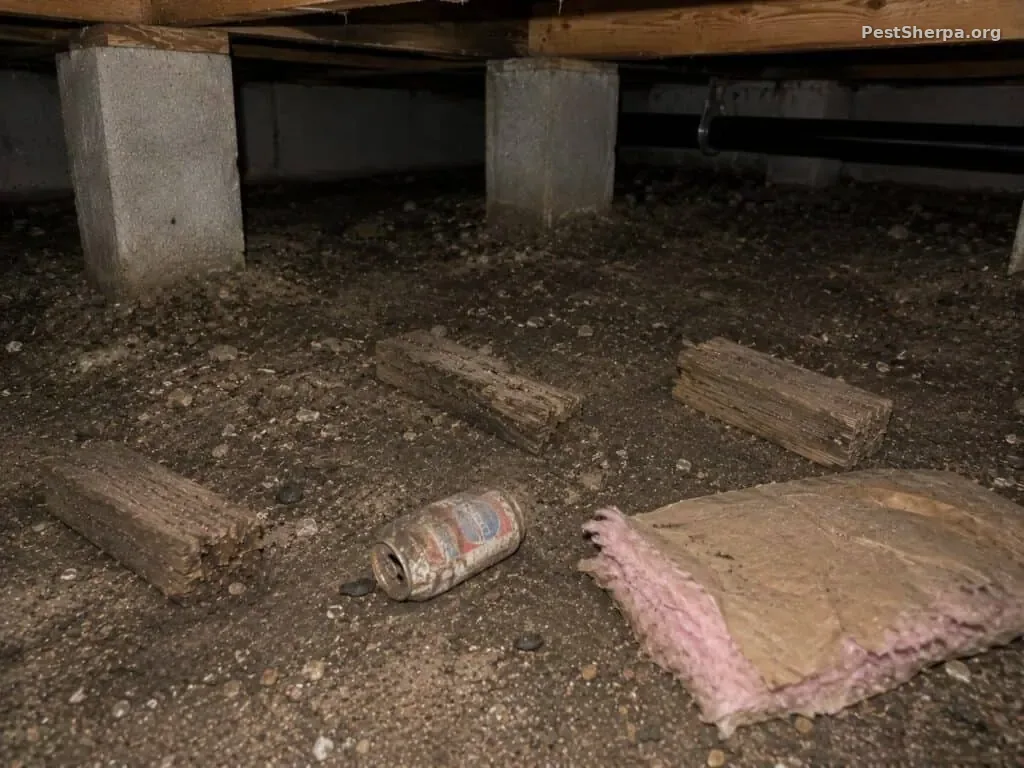
Removing wood debris in crawlspace reduces food sources accessible to termites; removing all debris makes area more accessible.
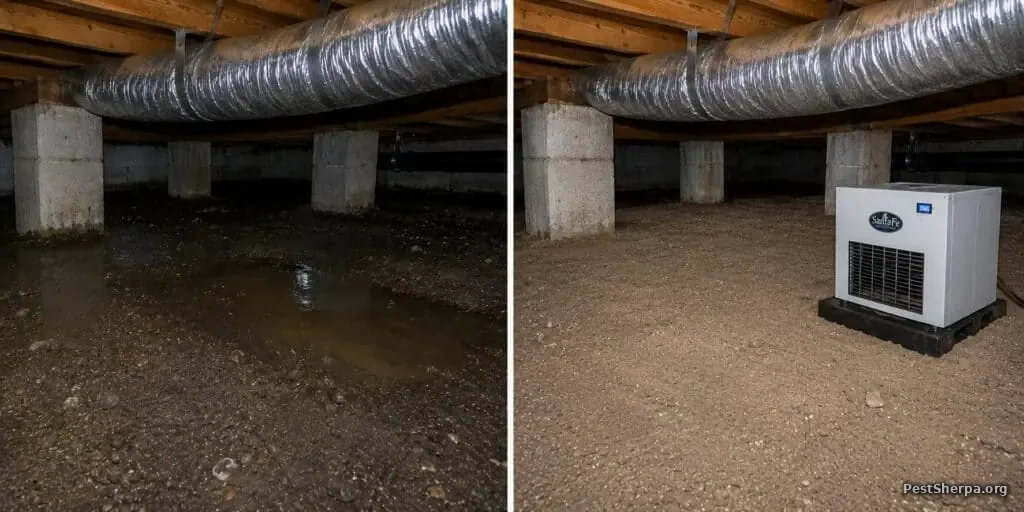
Before: it is common in warm seasons for hot humid air to enter into a crawlspace and condense on air conditioning ductwork (left). After: installing a properly sized dehumidifier with drain dries out the crawlspace and reduces water build up which would be attractive to termites (right).
DIY work is most useful for prevention support and correcting conducive conditions-not replacing structural termite treatment.
When To Call a Pro
Contact a licensed termite professional if you find:
- Active mud tubes attached to the structure.
- Swarming termites indoors.
- Discarded termite wings inside the home.
- Soft, hollow, or blistered structural wood.
- Damage inside framing, subflooring, crawl spaces, or wall voids.
- Repeated termite activity after prior treatment.
- Evidence during home inspection or real estate transactions.
- Uncertainty about whether the infestation involves termites, drywood termites, or carpenter ants.
If you are unsure whether the infestation requires professional treatment, use Ask the Sherpa before spending money on unnecessary or misdirected treatment.
Similar Pests / Misidentification Comparison
Eastern Subterranean Termites vs. Formosan Termites
Formosan termites usually form much larger colonies and can produce more aggressive structural damage.
Eastern Subterranean Termites vs. Western Subterranean Termites
Western subterranean termites are closely related but more common in western regions of the United States.
Eastern Subterranean Termites vs. Drywood Termites
Drywood termites do not require soil contact and commonly leave pelletized frass rather than mud-lined galleries.
Eastern Subterranean Termites vs. Carpenter Ants
Carpenter ants excavate wood but do not consume cellulose like termites do. Carpenter ant debris resembles fibrous sawdust rather than soil-lined termite galleries.
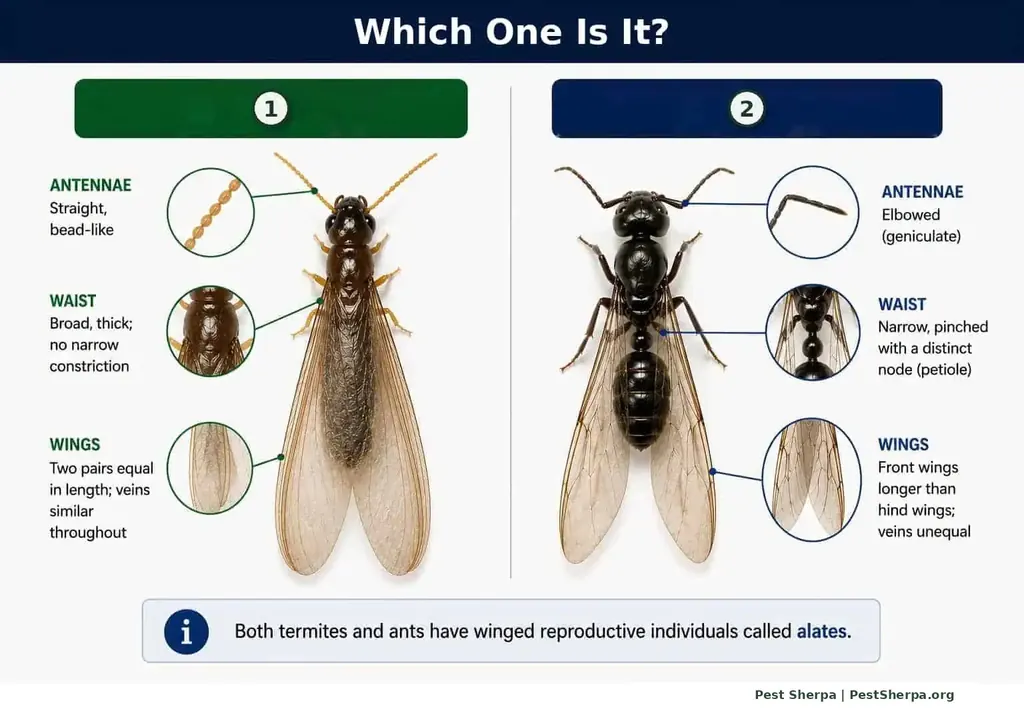
Which one did you find? Match the number:
- Eastern subterranean termite swarmer: straight beaded antennae, a broad thick waist and two pairs of wings of equal length.
- Winged carpenter ant: bent (elbowed) antennae, a narrow pinched waist with a distinct node, and front wings longer than the back wings.
Seeing number 1 indoors? Call a licensed termite pro for an inspection.
Common Questions
Is an in-house sighting the same as yard swarmers?
Not always. Swarmers outside near a stump or landscape wood can be outdoor activity. Eastern subterranean termites in the house, mud tubes on foundation walls, or damaged structural wood point to a building-related infestation that needs inspection. Photograph what you find and note moisture or wood-to-soil contact nearby.
How do I tell mud tubes from drywood frass?
Mud tubes are continuous earthen tunnels on foundations, piers, or sill plates. Drywood evidence is usually piles of hard fecal pellets (frass) near kick-out holes, without soil tubes. That contrast is one of the best homeowner checks for evidence of subterranean termites versus drywood species.
When is a professional inspection warranted?
Call a pro if you find active mud tubes, live workers or soldiers indoors, hollow structural wood, repeated indoor swarmers, or unexplained damage near soil contact or leaks. Spot sprays rarely solve an established colony. Related answers: Do termites bite?, When do termites become active?, and Can a homeowner perform termite control?.
References
- NC State Extension: Biology and Behavior of Eastern Subterranean Termites
- Penn State Extension: Eastern Subterranean Termites
- University of Florida: Eastern Subterranean Termite
- University of California IPM: Subterranean and Other Termites
- U.S. EPA: Termites: How to Identify and Control Them
- National Pesticide Information Center: Termites
- Purdue University Extension: Termites
This article was written by Greg Baumann, founder of Pest Sherpa, and reflects more than 40 years of professional pest management experience.
About the Author

Greg Baumann | Pest Control Expert
Greg Baumann is the founder of Pest Sherpa and a Pest Control Expert with more than 40 years of professional pest management experience. His articles combine decades of field experience, technical expertise, and science-based guidance to help homeowners identify pests correctly, understand real-world risks, and make informed pest management decisions.
Mission: Identify the pest. Understand the risk. Stop the problem. Prevent the comeback. Know when it’s time to call a professional.