
Red Imported Fire Ant (Solenopsis invicta): ID and Control
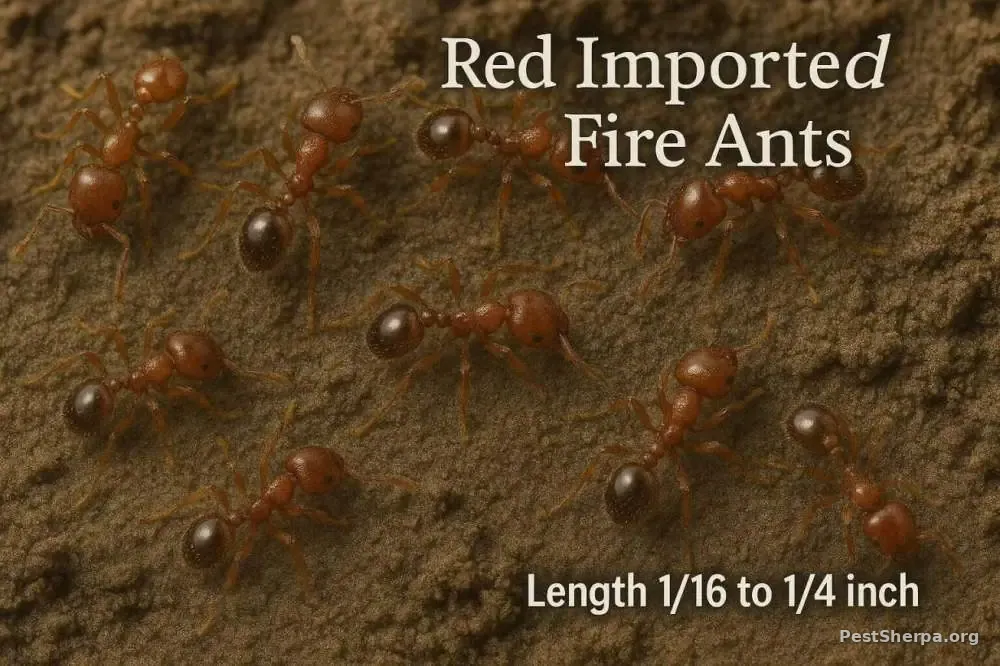
Red imported fire ants (Solenopsis invicta) are invasive stinging ants that build soil mounds, defend nests aggressively, and can affect lawns, parks, pastures, gardens, playgrounds, equipment, pets, livestock, and wildlife. A single mound does not always mean a severe property-wide infestation, but it does deserve careful identification because disturbing a colony can lead to many painful stings within seconds.
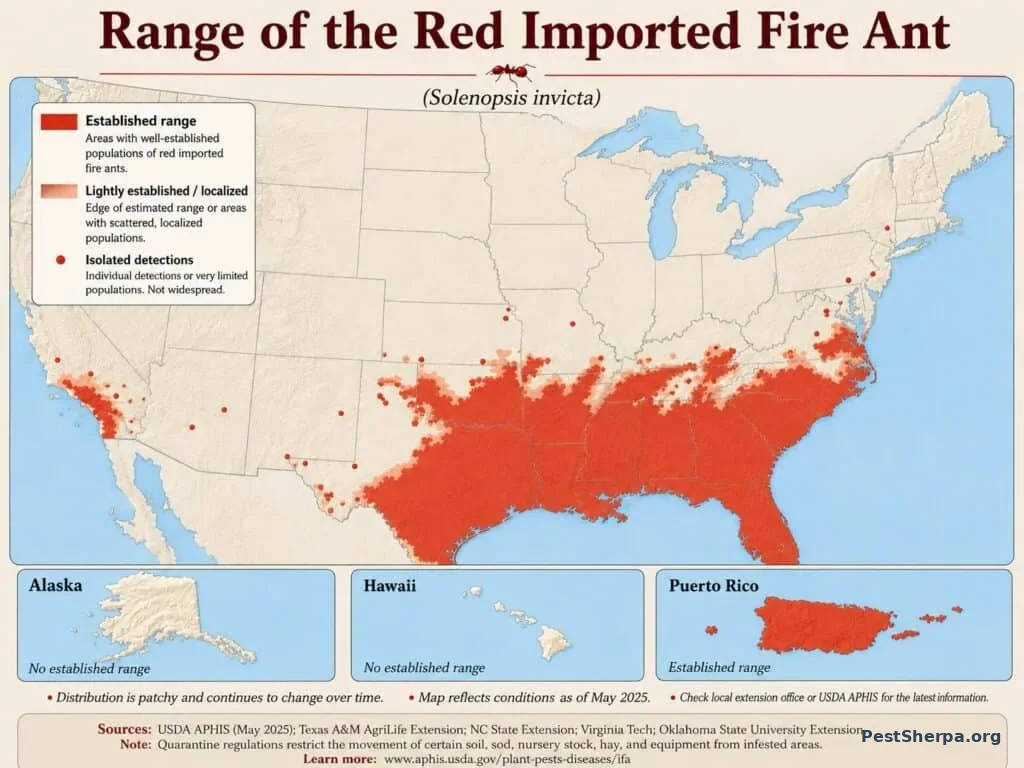
This guide explains how to identify red imported fire ants, what their mounds and stings mean, where colonies are commonly found, what to inspect before treating, which control mistakes to avoid, and when additional help may be worth considering.
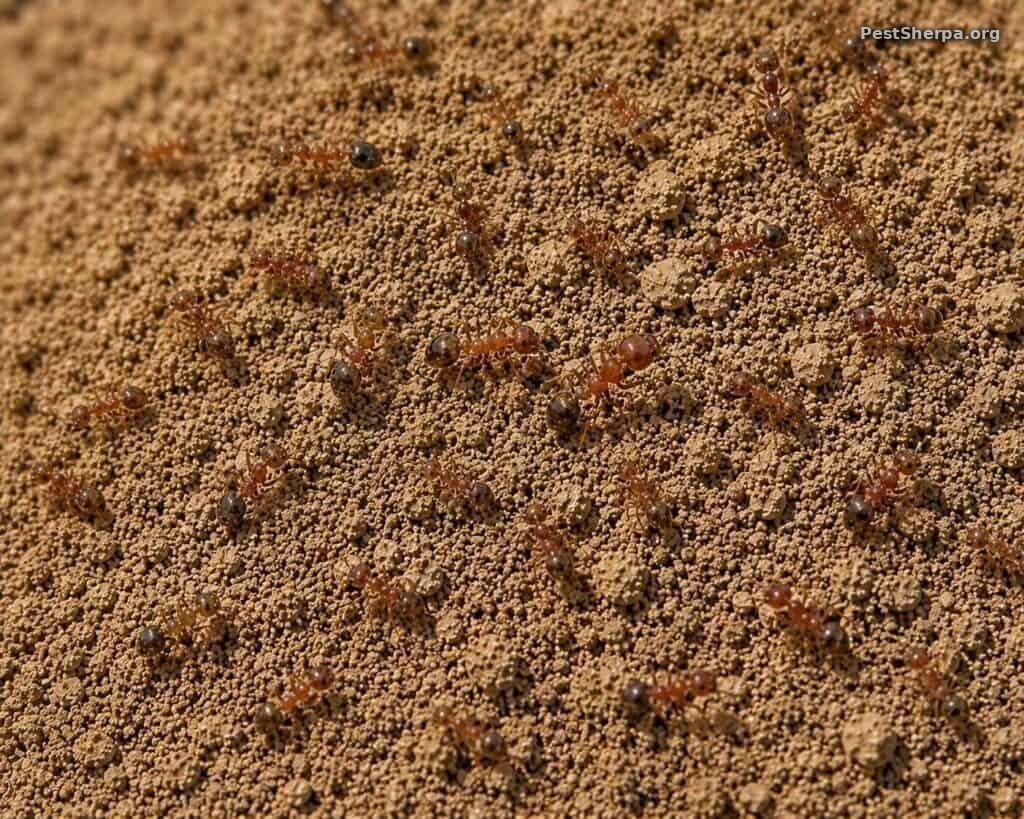
Red imported fire ant workers on a soil mound in a lawn.
TL;DR
Red imported fire ants are reddish brown to reddish black ants that often build flat, low, or dome-shaped soil mounds in sunny open areas. They are best known for rapid defensive swarming and repeated stings that can leave painful, itchy pustules. Accurate identification matters because not every reddish ant or yard mound is a red imported fire ant colony.
The safest first step is to avoid disturbing the mound, keep children and pets away, confirm identification, inspect the surrounding area for more mounds, and check whether your area is under imported fire ant quarantine rules before moving soil, sod, nursery plants, hay, or soil-moving equipment.
For management, broad area baiting, individual mound treatments, or a combination approach may be used depending on the site and label directions. Pesticides are not always necessary for every situation, and unsafe home remedies such as gasoline, bleach, or boiling water should be avoided.
Quick Navigation
- What Red Imported Fire Ants Mean
- Quick ID and Severity Table
- Identification
- Biology and Colony Structure
- Habitat, Range, and Quarantine Context
- Stings, Risk, and First Safety Steps
- Inspection Checklist
- What To Do
- What Does Not Work
- How Long Control Takes
- When Professional Help May Be Worth Considering
- Lookalikes and Common Misidentifications
- Frequently Asked Questions
- References
What Red Imported Fire Ants Mean
Red imported fire ants are more than a nuisance ant because colonies defend mounds aggressively. When a mound is disturbed, workers can rush out, climb onto the disturbance, grip with their jaws, and sting repeatedly. This is why a mound in a play area, garden bed, pasture, dog run, sidewalk edge, or equipment zone deserves more caution than a typical nuisance ant trail.
A mound also means there may be additional colonies nearby. Fire ant activity is often easiest to notice after rain, irrigation, mowing, soil disturbance, or warm weather that brings workers closer to the surface.
For broader ant identification help, compare this issue with the Ant Guide. For regional context and spread concerns, see Fire Ants in North America.
Quick ID and Severity Table
| What You See | What It May Mean | Suggested Next Step |
|---|---|---|
| One or two reddish ants | Could be fire ants or another reddish ant | Collect a clear photo or specimen for identification if activity continues |
| Flat, low, or dome-shaped mound in a sunny lawn | Possible imported fire ant colony | Do not kick, stomp, or probe the mound with bare hands |
| Many workers rush out when soil is disturbed | Fire ant-style defensive response | Step away quickly and keep children and pets out of the area |
| Multiple mounds across a yard or pasture | Wider area activity likely | Consider an area-wide strategy rather than only treating one visible mound |
| Mounds near electrical boxes, irrigation equipment, foundations, or playgrounds | Higher practical risk because people, pets, or equipment may contact nests | Prioritize inspection and safer site-specific planning |
| Stings with burning pain and later white pustules | Consistent with fire ant sting reaction | Monitor for allergic symptoms; seek urgent medical care for systemic reactions |
Important: A mound alone is not a complete identification. Several ants build mounds, and some fire ant colonies can nest in less obvious places.
Identification: What Red Imported Fire Ants Look Like
Red imported fire ant workers are small to medium-sized ants, usually reddish brown to reddish black, with a darker gaster (abdomen). Workers in the same colony vary in size, which is one clue that separates them from many ants whose workers are more uniform.
- Worker size: commonly around 1/8 to 1/4 inch, with smaller and larger workers present in the same colony.
- Color: reddish brown to reddish black, often with a darker rear body segment.
- Waist: two distinct nodes between the thorax and abdomen.
- Antennae: antennae end in a two-segmented club.
- Defense: workers can sting and may sting repeatedly when a colony is disturbed.
Fire ant mounds are usually made of loose soil and often lack a single obvious central entrance hole. Mounds may be flat, low, or dome-shaped depending on soil, weather, mowing, age of the colony, and disturbance.
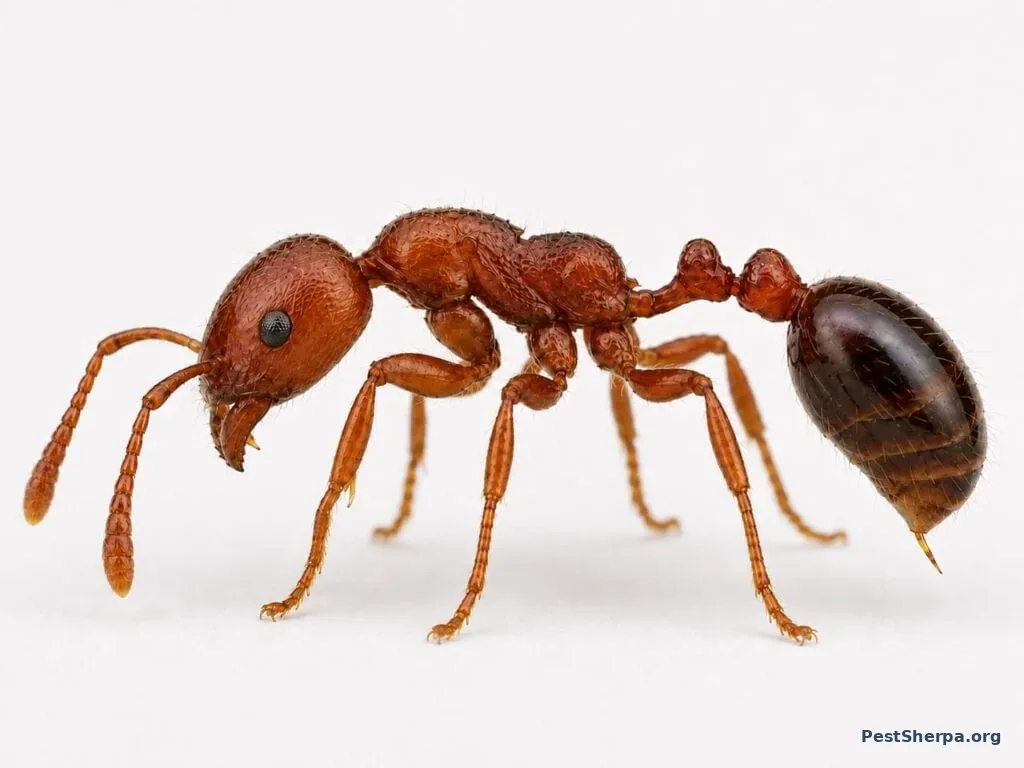
IClose view of red imported fire ant worker showing two waist nodes and antenna club.
Can You Identify Them From a Mound Alone?
Sometimes a mound and defensive response provide strong clues, but they should not be treated as proof by themselves. Native fire ants, harvester ants, Allegheny mound ants, and other mound-building ants can be confused with red imported fire ants. In newly infested regions or quarantine-sensitive areas, identification by an extension office, agricultural agency, or qualified pest professional may be important.
Biology and Colony Structure
Red imported fire ants live in organized colonies with workers, brood, winged reproductives, and one or more queens. The queen is the reproductive center of the colony, which is why management that kills only visible workers may leave the colony active.
Two colony forms are important:
- Monogyne colonies have one reproductive queen and often defend larger territories.
- Polygyne colonies have multiple reproductive queens and can create very high mound densities in a small area.
In warm conditions, development from egg to adult can occur in a few weeks. Mature colonies may contain many thousands of workers, and older or multi-queen colonies can be especially dense.
Colonies can also respond to flooding by forming floating masses or rafts. This behavior allows workers, queens, and brood to stay together until they reach dry ground. Avoid touching floating ant masses after floods; they can still sting.
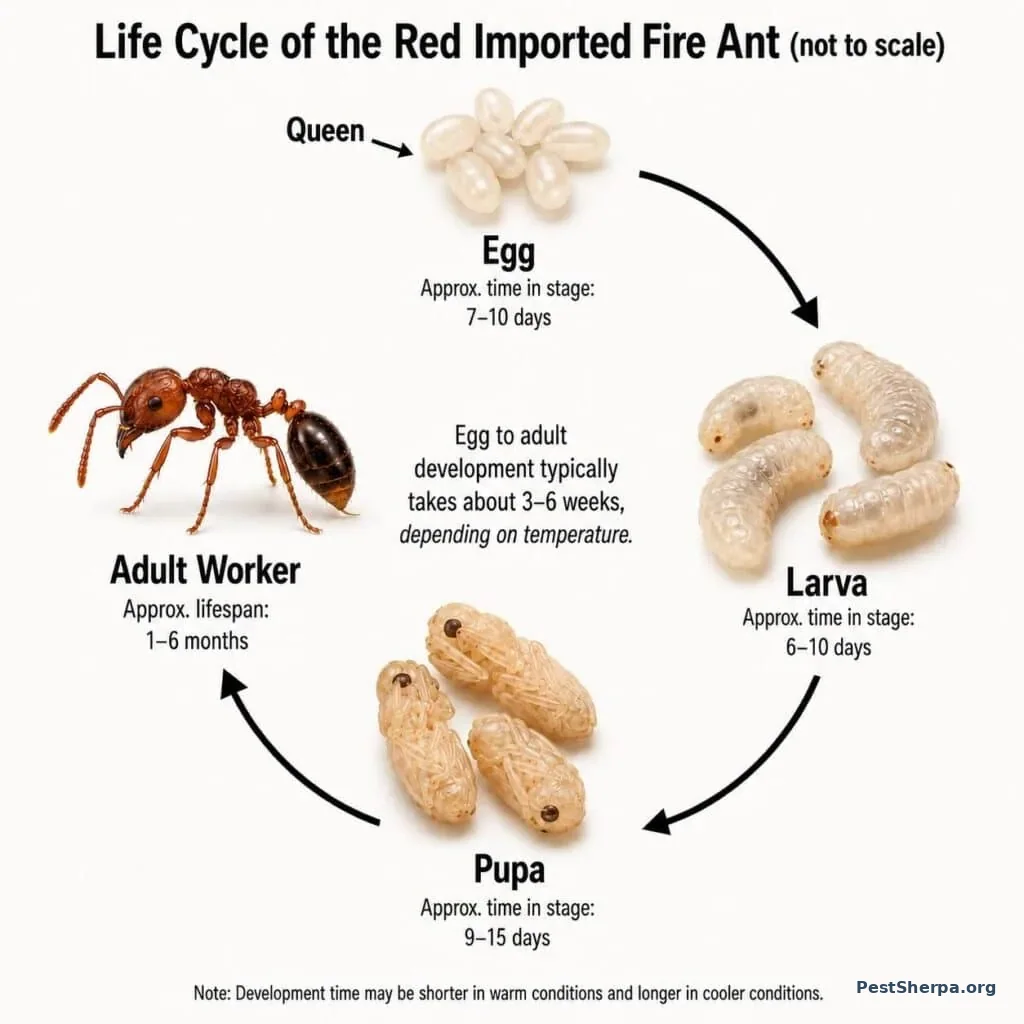
Red imported fire ant life stages from egg to adult worker and reproductive ants.
Habitat, Range, and Quarantine Context
Red imported fire ants favor warm climates and open, sunny, disturbed areas. Common sites include lawns, parks, school grounds, roadsides, athletic fields, pastures, agricultural fields, utility corridors, foundations, and landscaped beds.
- Sunny lawns and turf
- Pastures and agricultural edges
- Playgrounds, parks, and school grounds
- Driveway edges, sidewalks, and curb lines
- Mulch beds, irrigation boxes, electrical equipment, and utility housings
- Recently disturbed soil, construction sites, sod, and nursery stock areas
Imported fire ants can spread naturally, but human movement of soil, sod, nursery plants, hay, and soil-moving equipment is a major regulatory concern. USDA APHIS maintains current imported fire ant quarantine information and maps. Before moving potentially infested materials out of a regulated area, check current rules and follow applicable quarantine requirements.
Stings, Risk, and First Safety Steps
Fire ants do not simply bite once and leave. Workers often use their mandibles to grip the skin and then sting, sometimes repeatedly. Multiple workers can sting at the same time after a mound is disturbed.
Common local symptoms may include burning pain, itching, redness, swelling, and a small white pustule within about a day. These pustules are often described as sterile, but scratching or opening them can increase infection risk.
Most reactions are local, but severe allergic reactions can occur. Seek emergency medical care for signs such as trouble breathing, throat or facial swelling, dizziness, fainting, widespread hives, chest tightness, confusion, or any rapidly worsening whole-body reaction after stings.
Groups That May Need Extra Caution
- Young children playing in turf, sand, mulch, or soil
- Older adults or people with limited mobility
- People with known insect-sting allergies
- Pets and livestock, especially newborn or confined animals
- Outdoor workers, gardeners, landscapers, and utility workers
Red Imported Fire Ant Inspection Checklist
Inspect calmly and from a safe distance. Do not place hands, feet, tools, or pets on suspected mounds to test whether ants are present.
Step 1: Map Visible Mounds
Walk the property and note mound locations, especially near play areas, gates, sidewalks, foundations, gardens, dog runs, patios, and equipment.
Step 2: Look for High-Risk Locations
- Electrical boxes and utility housings
- Irrigation valve boxes
- Playground borders and sand areas
- Fence lines and livestock feeding areas
- Garden beds and raised beds
- Areas recently disturbed by rain, flooding, grading, sod, or landscaping
Step 3: Check the Surrounding Area
One mound may be only the most visible colony. Scan the broader turf and landscape, because unseen or newly forming colonies may be present nearby.
Step 4: Confirm Identification Before Treatment
Use clear photos, specimens in a sealed container, or help from a local extension office when identification is uncertain. This is especially important where imported fire ants are newly reported, regulated, or easy to confuse with native ants.
What To Do About Red Imported Fire Ants
1. Avoid Disturbing the Mound
Do not kick, stomp, flood, dig into, or probe a suspected mound. Keep children, pets, and livestock away from active mound areas until the situation is understood.
2. Decide Whether You Are Managing One Mound or Many
A single high-risk mound near a sidewalk, patio, or play area may call for a different approach than many mounds across a lawn or pasture. Multiple mounds often require a broader area strategy rather than repeated spot treatment alone.
3. Consider Baits for Wider Area Activity
Fire ant baits are designed for foraging workers to collect and carry back to the colony. Baits tend to work more slowly than some direct mound treatments, but they can be useful for managing colonies over a larger area when ants are actively foraging.
Always read and follow the product label. Keep bait products away from children, pets, food-preparation areas, water sources, and non-target locations. Do not apply products where the label does not allow them.
4. Use Individual Mound Treatments Carefully When Needed
Individual mound treatments may be useful for specific mounds in high-traffic or high-risk areas. They do not always solve a larger property-wide problem if many colonies or unseen colonies remain nearby.
Follow label directions exactly. Avoid disturbing the mound before treatment unless the label specifically instructs otherwise. Wear appropriate protective clothing and keep people and pets away from the area according to the label.
5. Reduce Conditions That Create Repeated Contact
- Keep play areas, pet areas, and footpaths regularly inspected.
- Check new sod, soil, nursery plants, hay, and landscaping materials in areas where imported fire ants are established.
- Reduce outdoor food waste and pet food that may support ant foraging near structures.
- Use caution around irrigation boxes, utility housings, and equipment where colonies may be hidden.
- After floods, avoid floating ant rafts and report unusual movement of colonies where appropriate.
What Does Not Work
- Kicking or smashing mounds: this increases sting risk and may scatter workers without eliminating the colony.
- Gasoline, diesel, bleach, or household chemicals: these are unsafe, may contaminate soil or water, and are not appropriate pest-control methods.
- Boiling water: while it might have some effect, but is generally inconsistent and it can cause burns, damage turf or plants, and may not reliably reach the queen.
- Only spraying visible workers: killing surface workers rarely reaches the queen or the rest of the colony.
- Using indoor aerosol sprays outdoors: many products are not labeled for mound or landscape use, and off-label use can create safety and environmental problems.
- Moving infested soil or sod: this can spread fire ants and may violate quarantine rules in regulated areas.
How Long Control Takes
Control timing depends on the method, weather, colony size, queen number, reinfestation pressure, and whether nearby colonies remain untreated.
| Situation | What To Expect |
|---|---|
| One mound treated directly | Activity may decline faster, but nearby colonies can remain |
| Broadcast bait used correctly | Colony decline is usually slower and may take weeks, depending on product and conditions |
| Many mounds across a property | Repeated monitoring may be needed because new mounds can appear |
| After heavy rain or flooding | Colonies may move, raft, or rebuild mounds in new locations |
| Source area remains favorable | Reinfestation can occur even after successful treatment |
No treatment should be expected to permanently eliminate fire ants from a large outdoor area where they are established regionally. The practical goal is usually risk reduction, mound suppression, and ongoing monitoring in places where people, pets, or equipment are likely to contact colonies.
When Professional Help May Be Worth Considering
Professional identification or management may be worth considering when the risk is high, the site is sensitive, or the species is uncertain.
- Multiple mounds are present near playgrounds, schools, parks, athletic fields, or childcare areas.
- Colonies are near electrical equipment, irrigation boxes, utilities, or building foundations.
- A person on the property has a known severe insect-sting allergy.
- Pets, livestock, or newborn animals may contact active mounds.
- The infestation is in a regulated, newly infested, or quarantine-sensitive area.
- Previous attempts reduced activity briefly but mounds quickly returned.
Lookalikes and Common Misidentifications
Several ants can be mistaken for red imported fire ants because they are reddish, build mounds, sting, or occur outdoors. Identification should consider worker size variation, mound structure, behavior, and body features.
| Possible Lookalike | Why It Gets Confused | Key Difference or Caution |
|---|---|---|
| Native fire ants | Similar color and stinging behavior | Species-level identification may require close examination |
| Harvester ants | Outdoor nests and painful stings | Often larger ants; nesting and foraging behavior differ |
| Allegheny mound ants | Large soil mounds outdoors, not generally confused with Red Imported Fire Ants | Different mound shape, behavior, and ant appearance |
| Pavement ants | Can nest near cracks, sidewalks, and foundations | Usually less aggressive and not the same mound-building sting risk |
| Carpenter ants | May be seen around structures and landscapes | Larger ants associated with wood and moisture issues, not fire ant mounds |
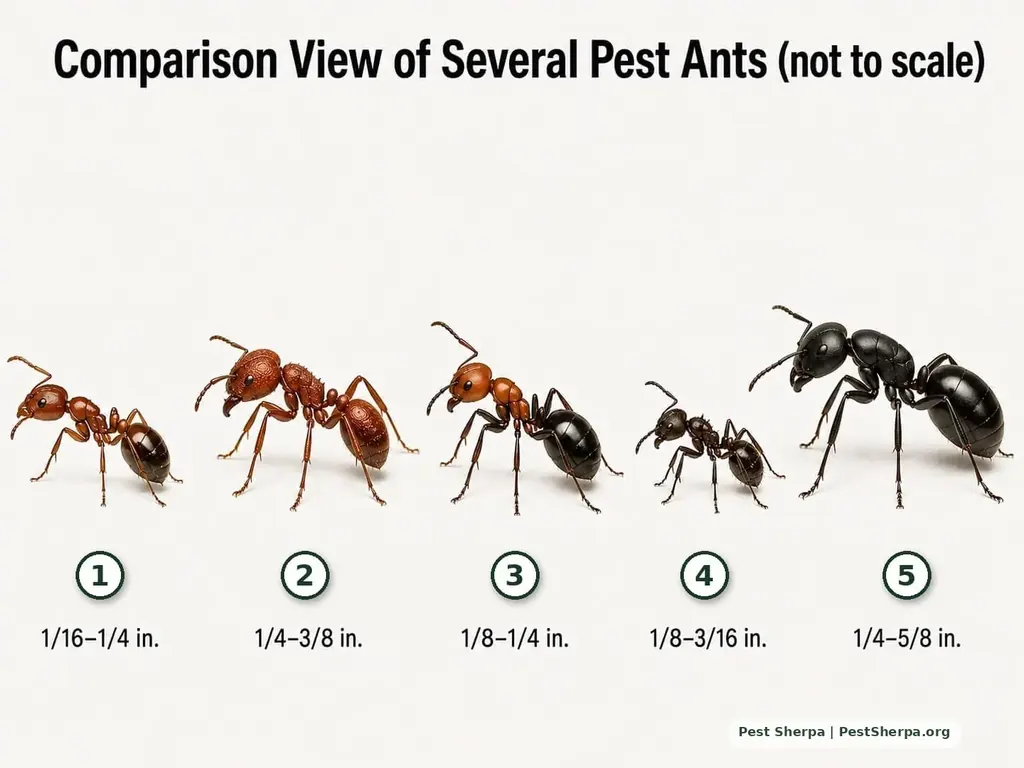
Which one did you find? Match the number:
- Red imported fire ant: small, reddish brown with a darker rear. 1/16 to 1/4 inch.
- Harvester ant: larger, all reddish with a big square head. 1/4 to 3/8 inch.
- Allegheny mound ant: reddish head and thorax with a black rear (gaster).
- Pavement ant: small and dark brown to black.
- Carpenter ant: the largest, black and glossy. 1/4 to 5/8 inch.
Comparison of red imported fire ant and common other pest ants.
Frequently Asked Questions
Do red imported fire ants bite or sting?
They can do both. Workers often grip with their mandibles and then sting. The sting is usually what causes the burning pain and later pustule.
Does one mound mean my whole yard is infested?
Not always. One mound may be isolated, but nearby colonies are common in established areas. Inspect the surrounding turf, landscape edges, and high-traffic zones before deciding on a control plan.
Why do fire ant mounds appear after rain?
Rain and moisture can make mounds more visible as colonies repair tunnels, move soil, or rebuild after disturbance. Flooding can also force colonies to relocate or raft.
Are fire ant pustules infected?
The typical white pustule that forms after a fire ant sting is often sterile at first. Scratching or opening it can increase the risk of secondary infection, so avoid picking at sting sites.
Are pesticides always necessary?
No. Some low-risk outdoor situations may only require monitoring and avoidance. Treatment becomes more important when mounds are in places where people, pets, livestock, or equipment are likely to contact them.
Should I use bait or treat the mound directly?
It depends on the site. Baits can help manage wider activity when ants are foraging, while individual mound treatments may be useful for specific high-risk mounds. In heavily infested areas, a combination approach may be more practical than treating only one visible mound at a time.
Can fire ants get inside buildings?
They are primarily outdoor ants, but they may nest near foundations, under slabs, around utilities, or occasionally inside structures where moisture, warmth, or access points exist. Indoor activity should be investigated carefully because treatment choices differ indoors and outdoors.
Can I move soil or sod from an area with fire ants?
Be careful. Imported fire ants can spread in soil, sod, nursery stock, hay, and equipment. If you are in or near a regulated area, check current USDA APHIS and state rules before moving these materials.
What should I do if someone has a severe reaction after stings?
Seek emergency medical care for breathing trouble, throat or facial swelling, faintness, widespread hives, chest tightness, confusion, or any rapidly worsening whole-body reaction. People with known severe insect-sting allergies should follow the emergency plan provided by their clinician.
References
- USDA APHIS: Imported Fire Ants
- USDA APHIS: Imported Fire Ant Federal Quarantine
- UF/IFAS Extension: Red Imported Fire Ant, Solenopsis invicta Buren
- Texas Imported Fire Ant Research and Management Project: Two-Step Method
- NCBI Bookshelf: Fire Ant Bites
- CDC/NIOSH: Insects and Scorpions at Work
- Proceedings of the National Academy of Sciences: Fire Ants Self-Assemble into Waterproof Rafts to Survive Floods
This article was written by Greg Baumann, founder of Pest Sherpa, and reflects more than 40 years of professional pest management experience.
About the Author

Greg Baumann | Pest Control Expert
Greg Baumann is the founder of Pest Sherpa and a Pest Control Expert with more than 40 years of professional pest management experience. His articles combine decades of field experience, technical expertise, and science-based guidance to help homeowners identify pests correctly, understand real-world risks, and make informed pest management decisions.
Mission: Identify the pest. Understand the risk. Stop the problem. Prevent the comeback. Know when it’s time to call a professional.