
Smokybrown Cockroaches: Identification, Causes, and Control
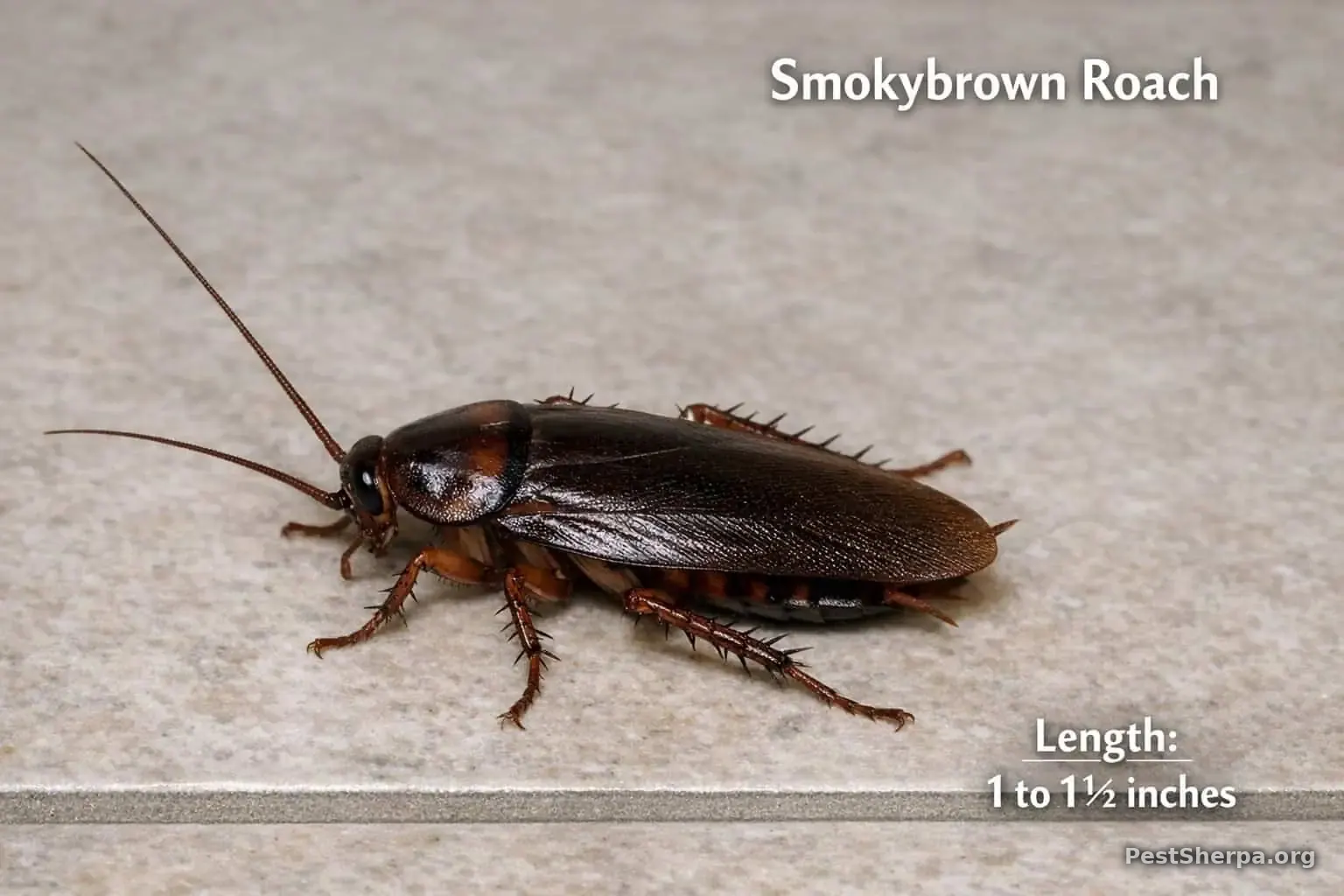
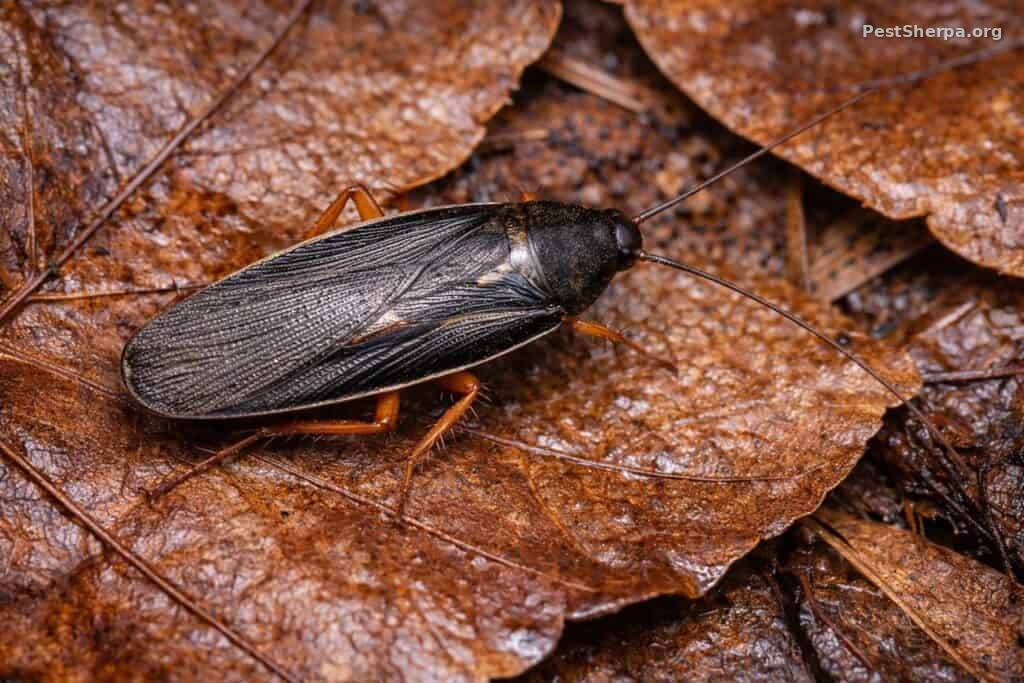
Updated for accuracy: Smokybrown cockroaches are usually an outdoor, moisture-dependent cockroach that wanders or breeds around homes in the South and Southeast. They are often called “palmetto bugs,” but they are still cockroaches.
TL;DR
Smokybrown cockroaches are large, dark, glossy roaches that usually live outside. They hide in humid harborages (sheltered hiding spots) like tree holes, mulch, woodpiles, gutters, soffits, and attics. They are strong fliers drawn to lights on warm nights and are often mislabeled “palmetto bugs.” They are not usually the same kind of indoor breeder as German cockroaches. The best control plan is to dry damp upper spaces, remove outdoor harborage, and seal roof-line and entry gaps. Then use labeled baits where activity is confirmed. Repeated indoor nymph sightings usually mean a nearby breeding source, often along the attic or exterior moisture path.
Jump to: Identification | Attic and Light Habits | Why It Matters | What To Do | Exclusion Checklist | When To Call a Pro | Lookalikes | Common Questions | References
Identification: What a Smokybrown Cockroach Looks Like
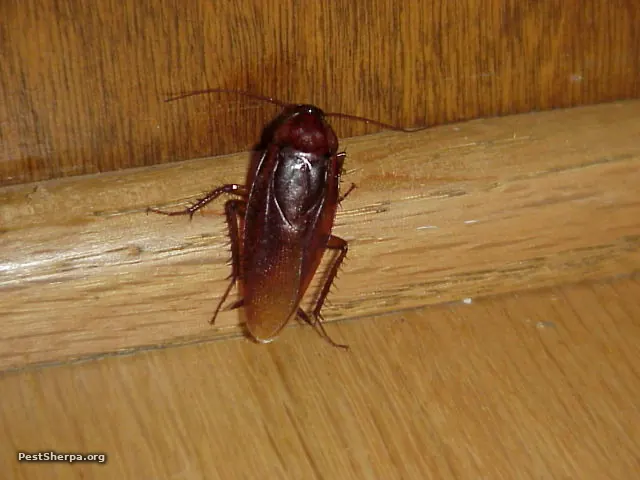
Adult smokybrown cockroaches (Periplaneta fuliginosa) are usually about 1¼ to 1½ inches long. The most useful ID feature for homeowners is that adults are uniformly dark mahogany to dark brown or nearly black. They have a glossy body and no pale yellow margin on the pronotum, the shield-like area behind the head. Both sexes have long wings that extend past the abdomen, and adults may glide or fly on warm, humid nights. These traits are described by university extension and entomology sources including Texas A&M, Oklahoma State, University of Tennessee, and UGA.
Very young nymphs are even more distinctive than adults. Early-stage nymphs are dark with pale bands across the back and pale or white-tipped antennae. Older nymphs become more reddish brown as they mature. If you find tiny banded nymphs indoors, that often points to a nearby hatch site instead of a random adult wandering in.
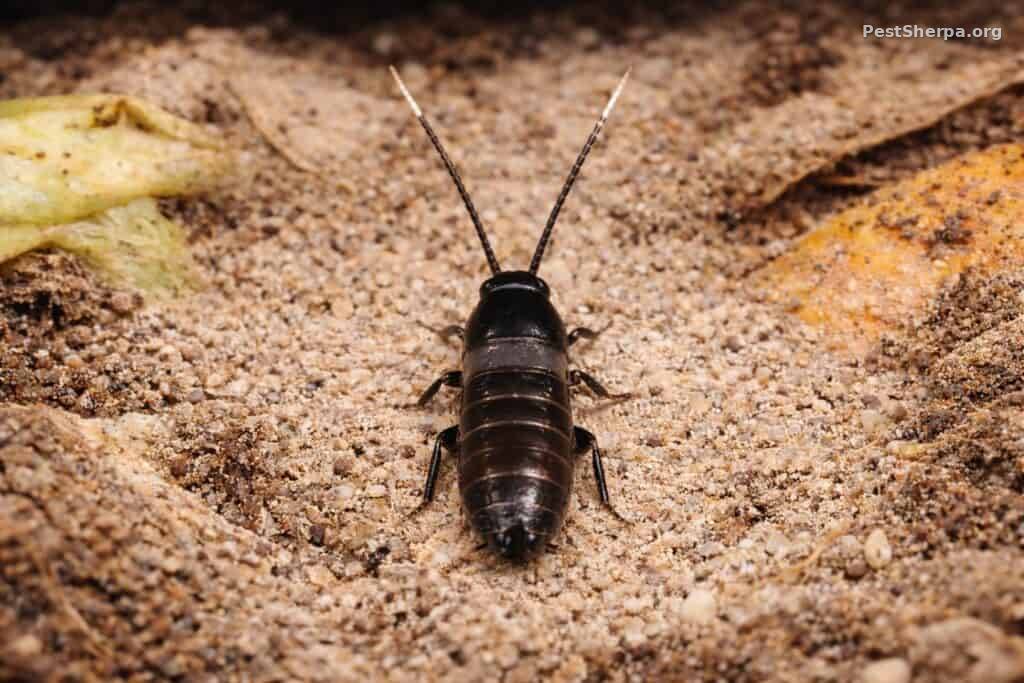
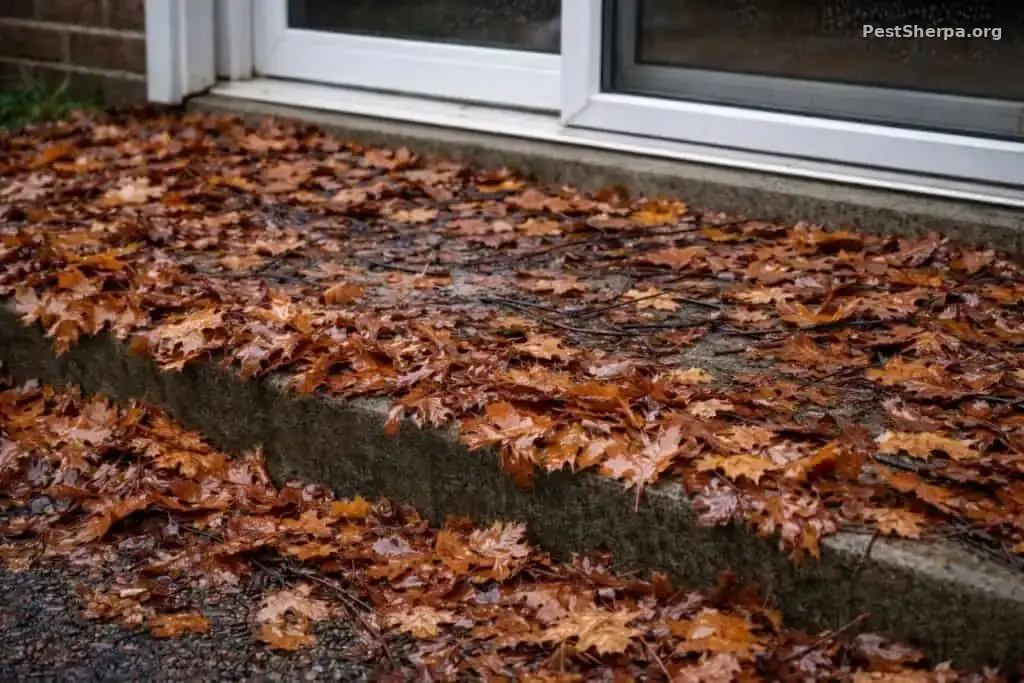
Smokybrown cockroaches are strongly tied to humid, protected harborages. Common places include tree holes, loose bark, mulch, woodpiles, gutters full of debris, soffits, eaves, attics, crawl spaces, sheds, and sheltered areas around mature landscaping. They are especially common in the South and Southeast, where warm temperatures and high humidity support outdoor populations.
What often misleads homeowners:
- Calling every big roach a “palmetto bug” and stopping there.
- Confusing smokybrowns with an American cockroach, which usually shows a pale yellow pronotum border.
- Assuming an indoor sighting means the same kind of infestation pattern seen with German cockroaches.
- Missing the role of attics, soffits, gutters, and nearby trees as breeding or staging areas.
For similar species comparison, please visit the cockroach Lookalikes guide.
Quick ID: Smokybrown vs American vs Australian vs “Palmetto Bug”
“Palmetto bug” is a regional nickname, not a species. In the South and Southeast it often means a large outdoor cockroach. That nickname can point to a smokybrown, an American cockroach, or another large species. Use the table, then read the palmetto bug guide when the nickname is the only clue you have.
| Species / Label | Typical Adult Size | Best Visual Clue | Wings / Flight | Most Likely Places |
|---|---|---|---|---|
| Smokybrown (Periplaneta fuliginosa) | About 1¼ to 1½ inches | Uniform dark mahogany to nearly black; no pale yellow pronotum border | Fully winged; strong flier; often drawn to lights | Trees, mulch, gutters, soffits, attics, roof voids, humid landscaping |
| American cockroach | About 1½ to 2 inches | Reddish brown with a pale yellow margin on the pronotum | Winged; may glide or fly short distances; more runner than flier | Drains, sewers, basements, crawlspaces, damp utility areas |
| Australian cockroach | About 1 to 1⅜ inches | Yellow edging on the pronotum and yellow streaks on the forewings | Fully winged; can fly | Outdoor vegetation, greenhouses, warm humid exteriors; less attic-focused than smokybrown |
| “Palmetto bug” (nickname) | Usually large | Not a single look. Confirm color, pronotum, and where you found it | Depends on the real species | Wherever the underlying species lives; nickname alone is not enough for treatment |
Homeowner tip: Is the adult large, glossy, uniformly dark, and showing up near lights, eaves, or the attic? Then smokybrown is the better working ID than American. If you see a clear yellow “figure-eight” or ring behind the head, start with American. If you also see yellow streaks on the wing bases, check Australian.
Habits: Attics, Lights, and Outdoor-to-Attic Movement
Smokybrown cockroaches are moisture specialists. University extension sources describe them as outdoor or perimeter pests. They use humid, protected harborages and then move onto or into structures when conditions push them. Understanding that path matters more than spraying the one adult you see on the porch.
Why they favor trees, gutters, and the roof line
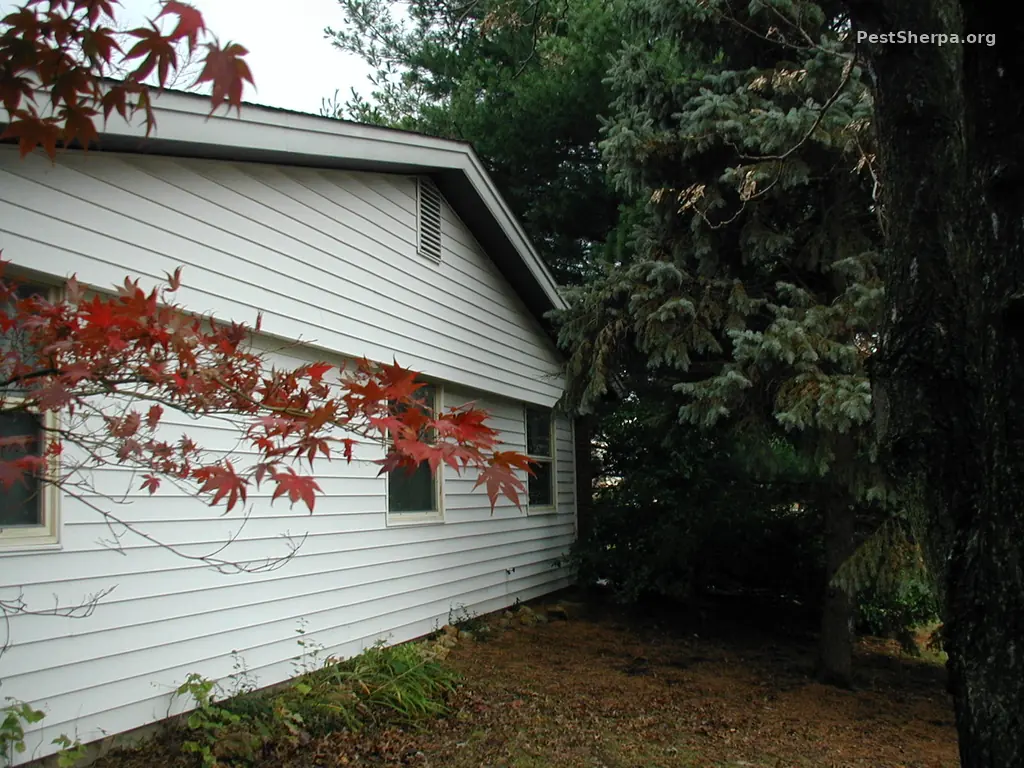
Adults and nymphs (young roaches) often live in tree holes, under loose bark, in leaf litter, and in mulch beds. They also live in woodpiles and in gutters packed with organic debris. From those outdoor reservoirs they climb or fly to soffits, eaves, gable vents, and attic spaces. A limb touching the roof, a clogged gutter holding wet leaves, or a damaged soffit screen can turn the upper story into a staging area.
Light attraction on warm, humid nights
Smokybrowns are among the cockroaches most often noticed at exterior lights. On warm, humid evenings adults may fly or glide to porch lights, entry lights, storefront lighting, and bright windows. Once at the light they can slip through gaps around doors, damaged screens, or unsealed attic vents. A single “flying cockroach at the porch light” report in the Southeast is often a smokybrown, not a German cockroach.
What attic activity usually means
- Occasional adult in living space after a storm or heat wave: often an invader from outside or from the attic, not a kitchen colony.
- Repeated adults near ceiling fixtures, upstairs bathrooms, or attic hatches: check soffits, ridge and gable vents, roof leaks, and tree contact.
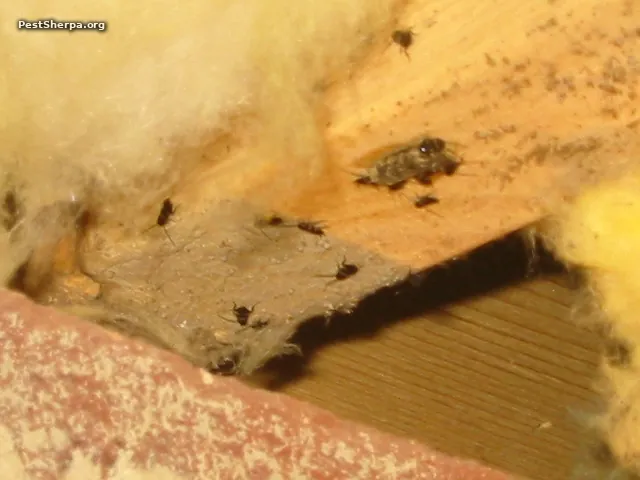
- Small banded nymphs indoors or in the attic: treat that as evidence of a nearby breeding or hatch site, not a random wanderer.
- Droppings, shed skins, or egg cases in attic insulation or along wall tops: a stronger sign that the attic itself is harborage, not just a travel route.
Smokybrowns lose water easily, so chronically damp attics, wet insulation after roof leaks, and humid crawl-to-attic air paths support longer activity. Drying the space and closing the outdoor highway usually does more than indoor kitchen sprays.
Why It Matters
For most homeowners, smokybrown cockroaches are a mixed concern: mainly a nuisance and sanitation/allergen pest, but not a wood-destroying insect. They do not damage framing like termites or carpenter ants. The real issue is that they can move from dirty harborages to indoor surfaces, food areas, and utility spaces.
The U.S. EPA notes that cockroach feces, saliva, shed skins, eggs, and body parts can add to allergen buildup. These allergens can trigger asthma or allergic symptoms, especially in sensitive people and children. EPA also notes cockroaches can mechanically carry bacteria on or within their bodies. That makes smokybrowns a real health-related pest, but not a structural destroyer.
One more reality check. Smokybrown cockroaches are usually closer to an outdoor invasion problem than a classic kitchen infestation problem. UGA specifically notes they are not often found in kitchens the way German cockroaches are. That difference matters because the control strategy is different too.
What To Do: The DIY Steps That Actually Help
1. Correct moisture first
Smokybrowns lose moisture readily and depend on humid shelter. Start by fixing the conditions that keep the exterior or upper parts of the structure damp:
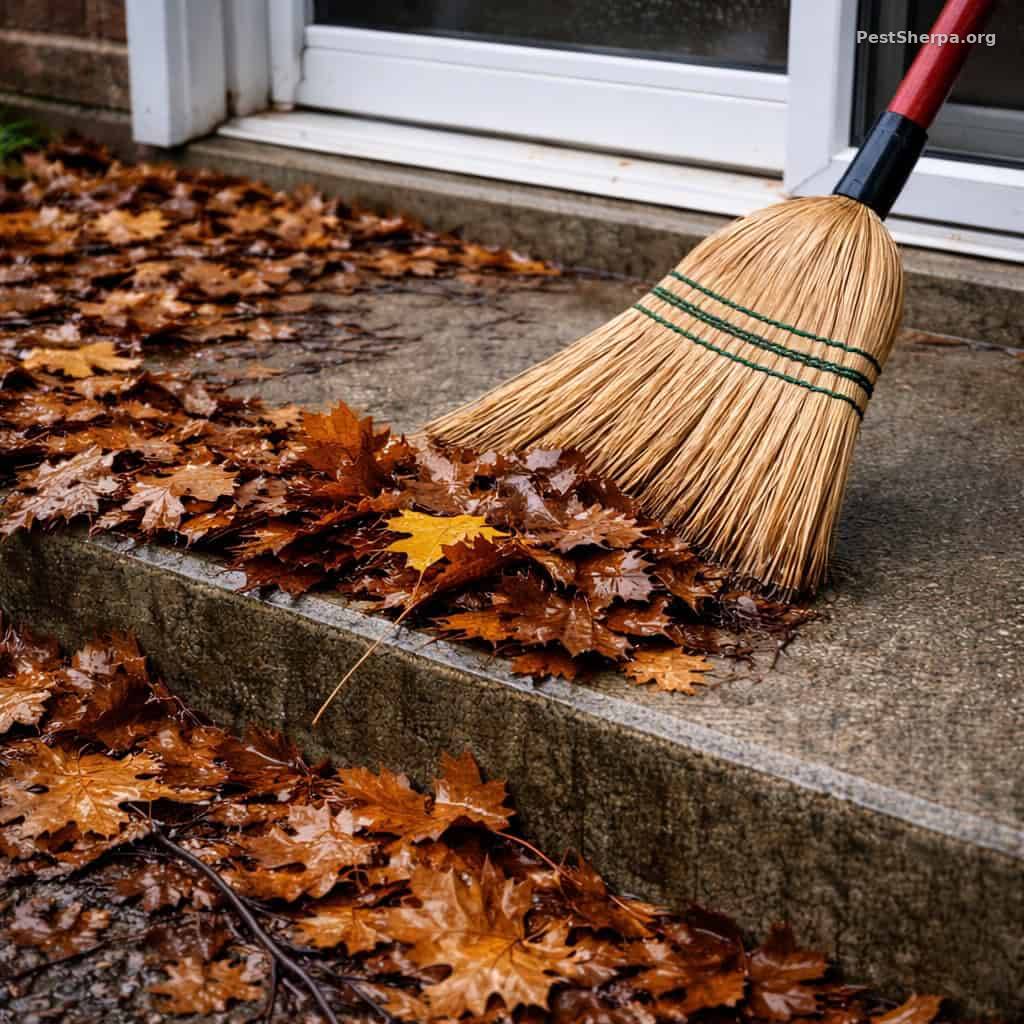
- Clean debris-filled gutters.
- Fix roof leaks and dripping faucets.
- Improve drainage so water moves away from the house.
- Reduce chronic crawl space or attic humidity.
- Address wet soffits, water-damaged voids, and damp storage areas.
2. Remove the outdoor harborage that keeps feeding the problem
- Pull mulch, leaf litter, and dense ground cover back from the foundation.
- Move firewood and stored lumber away from the home.
- Trim shrubs, vines, and tree limbs away from siding and rooflines.
- Reduce clutter in sheds, porches, garages, and exterior storage areas.
- Pay special attention to tree holes, mature hardwoods, and gutters that stay packed with organic debris.
3. Seal the obvious entry routes
Start with door sweeps, intact screens, sealed utility penetrations, and screened soffit or gable vents. For smokybrowns, prioritize the upper story and roof line, not only ground-level gaps. Use the full Exclusion Checklist below so attic vents, tree contact, gutters, and light-attracted entry points are not skipped.
4. Use monitoring correctly
Sticky traps are useful for monitoring, not for solving the problem by themselves. Put them in attics, garages, crawl spaces, utility rooms, and along likely travel routes to confirm where activity is strongest.
5. Use baits strategically
Extension guidance consistently favors labeled baits over random broad spraying. Gel baits and some outdoor granular baits can help when placed in active areas and compatible labeled locations. Small placements are usually better than large blobs, and baiting works best when moisture, harborage, and exclusion issues are being fixed at the same time.
What usually does not work well
- Spraying visible roaches and assuming the job is done.
- Using sticky traps as the main control method.
- Ignoring gutters, soffits, attics, tree holes, or woodpiles.
- Relying on foggers or “bug bombs,” which UF/IFAS notes have limited value for cockroach control.
Your issue may turn out to be a different outdoor invader. If so, compare with Turkestan cockroaches. They are another outdoor-associated species but are more typical of warm, drier regions.
Exclusion Checklist for Smokybrown Cockroaches
Exclusion is the long-term control for an outdoor-to-attic cockroach. Work top-down and outside-in. Check items off in order when you can.
Roof, attic, and upper story
- Trim tree limbs so nothing touches the roof, gutters, or siding.
- Clean gutters and downspouts; remove wet leaf mats that hold moisture against the fascia.
- Repair damaged soffit panels and screen soffit, gable, and ridge vents where practical.
- Seal gaps around attic vents, bath-fan terminations, and roof penetrations with appropriate outdoor sealant or hardware cloth.
- Fix roof leaks and dry wet attic insulation; chronic attic humidity keeps smokybrowns comfortable.
- Check the attic hatch / pull-down stairs for light gaps and weatherstrip if needed.
Doors, windows, and lights
- Install tight door sweeps on exterior doors, including side and garage service doors.
- Repair torn window and porch screens; close gaps in window frames.
- Reduce night attraction: use yellow “bug” bulbs or shielded fixtures at entries when practical. Avoid leaving bright porch lights on all night if activity is high.
- Keep garage and patio doors closed at dusk when adults are flying to lights.
Foundation and exterior harborages
- Pull mulch and leaf litter several inches to a foot back from the foundation.
- Store firewood and lumber away from the house and off the ground.
- Trim shrubs and vines off siding; clear dense ground cover that bridges soil to wall.
- Seal utility penetrations (cables, AC lines, hose bibs, dryer vents) with mesh plus sealant as appropriate.
- Improve grade and drainage so water moves away from the foundation and crawl space.
- Reduce clutter in sheds, under decks, and in exterior storage where humidity stays high.
Exclusion without moisture and harborage work only slows reinvasion. Pair this checklist with the DIY steps above and with monitoring in the attic and garage.
When To Call a Pro
Call a licensed pest professional when the issue is more than occasional adult invaders. This matters most when the activity sits in attics, soffits, or tree-connected roof lines you cannot safely reach. Good triggers include:
- Repeated sightings of nymphs indoors, especially very small nymphs.
- Activity centered in attics, soffits, gutters, or inaccessible wall voids.
- Ongoing reinvasion after you have already improved sanitation, reduced moisture, and sealed entry points.
- Heavy activity around mature trees, rooflines, or upper stories that you cannot safely inspect yourself.
- Multi-unit housing, commercial settings, or situations where species ID is uncertain.
If you want help comparing your situation before hiring anyone, use Ask the Sherpa.
Similar Pests / Misidentification Comparison
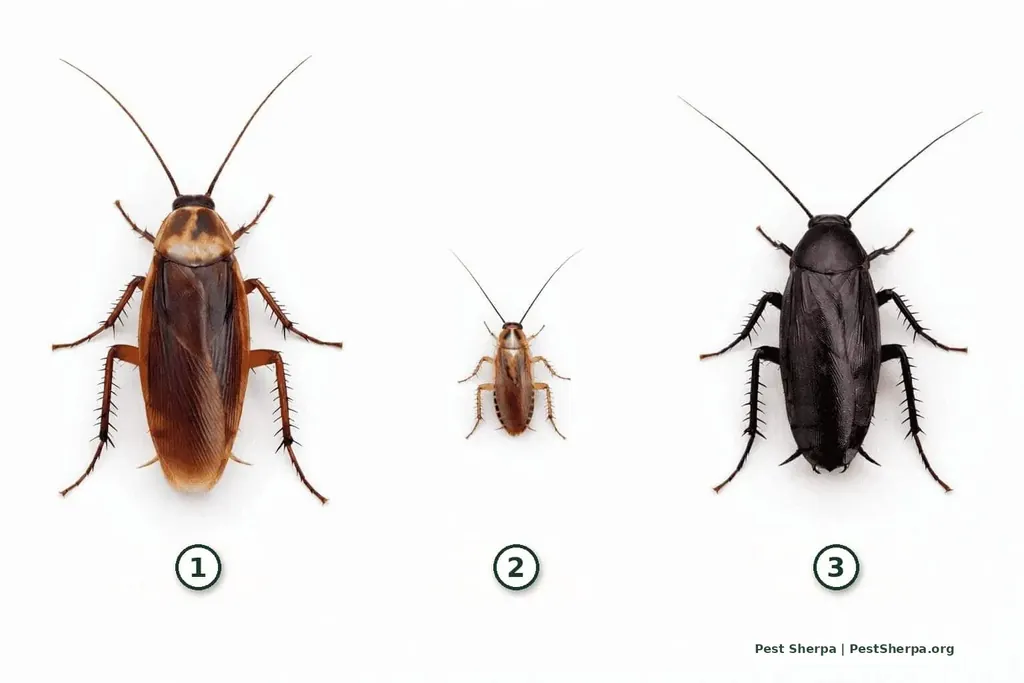
Which one did you find? Match the number:
- American cockroach: the biggest of the three, reddish-brown with a pale yellowish band around the shield behind the head.
- German cockroach: small and tan with two dark stripes behind the head. The one most often found in kitchens.
- Smokybrown cockroach: large and a uniform dark mahogany to nearly black, with no pale markings.
- American cockroach: Usually larger and more reddish brown, with a pale yellow margin around the pronotum. More strongly associated with drains, basements, and sewer-linked environments than smokybrowns.
- Palmetto bugs: A regional nickname for large cockroaches. In many areas the insect people call a palmetto bug is an American or a smokybrown. Use the palmetto guide Quick ID table when the name is the only clue you have.
- Oriental cockroach: Darker, stockier, and less winged. Females are essentially wingless, and males have short wings that do not extend past the body like smokybrowns do. More ground-level and damp-basement associated than attic-flying smokybrowns.
- Australian cockroaches: Another large Periplaneta species, but they show yellow edging on the pronotum and forewings.
- German cockroaches: Much smaller, tan to light brown, with two dark stripes behind the head. These are the classic indoor kitchen and bathroom breeders.
Nickname confusion is the main homeowner trap. If someone only said “palmetto bug,” open the palmetto bug identification table first. Come back here when the insect is uniformly dark, glossy, and tied to trees, lights, or the attic. For the reciprocal American lookalike set, see also the American cockroach guide.
Is the roach large, dark, glossy, and coming from trees, gutters, attics, or humid landscaping outdoors? Then smokybrown is a much better fit than German cockroach.
Common Questions
Is a smokybrown cockroach the same as a palmetto bug?
Sometimes. “Palmetto bug” is a nickname for large cockroaches, not a scientific name. In many southern neighborhoods the insect people call a palmetto bug is an American cockroach or a smokybrown. Confirm with color and habits, and use the palmetto bug guide when the nickname is all you have.
How do I tell a smokybrown from an American cockroach?
Smokybrowns are uniformly dark mahogany to nearly black with no pale yellow border on the shield behind the head. American cockroaches are usually more reddish brown and show a pale yellow pronotum margin. Americans lean toward drains and basements; smokybrowns lean toward trees, gutters, lights, and attics.
Why do smokybrown cockroaches come to lights?
Adults are strong fliers on warm, humid nights and are often attracted to exterior lighting. From the light they can enter through gaps around doors, damaged screens, soffits, or attic vents. Reducing light spill at entries and sealing those gaps cuts down on the “flying cockroach at the porch light” problem.
Does one smokybrown in the house mean I have an infestation?
Not always. One adult may have wandered or flown in. Repeated sightings, especially of small banded nymphs, activity in the attic, or droppings and egg cases in upper voids, point to a nearby breeding or staging source that needs moisture, harborage, and exclusion work.
Will kitchen gel bait alone fix a smokybrown problem?
Usually not by itself. Smokybrowns are not classic kitchen breeders like German cockroaches. Labeled baits can help where activity is confirmed, but moisture correction, outdoor harborage removal, and exclusion at the roof line matter more for lasting control.
Do bug bombs work on smokybrown cockroaches?
They are a poor first choice. Foggers rarely reach attic voids, soffits, tree holes, or outdoor harborages where smokybrowns live, and they can leave residue on exposed surfaces. Extension guidance favors inspection, moisture and harborage fixes, exclusion, and targeted baits over whole-house fogging.
When should I call a professional for smokybrown cockroaches?
Call when nymphs keep appearing indoors, attic or soffit activity continues after DIY moisture and sealing work, tree or roof-line harborages are unsafe to inspect, or you cannot confirm whether you have smokybrowns, Americans, or another species. Ask the Sherpa is available if you want a second set of eyes before you hire.
References
- University of Georgia Integrated Pest Management: Cockroaches
- Texas A&M Urban and Structural Entomology: Smoky Brown Cockroach
- Oklahoma State University: Smokybrown Cockroach
- University of Tennessee: The Smokybrown Cockroach
- University of Arkansas Extension: Cockroach Management for the Homeowner
- UF/IFAS: Cockroaches and Their Management
- Virginia Cooperative Extension: Cockroaches Found in Living Spaces
- U.S. EPA: Cockroaches and Schools
- U.S. EPA: Asthma Triggers: Gain Control
This article was written by Greg Baumann, founder of Pest Sherpa, and reflects more than 40 years of professional pest management experience.
About the Author

Greg Baumann | Pest Control Expert
Greg Baumann is the founder of Pest Sherpa and a Pest Control Expert with more than 40 years of professional pest management experience. His articles combine decades of field experience, technical expertise, and science-based guidance to help homeowners identify pests correctly, understand real-world risks, and make informed pest management decisions.
Mission: Identify the pest. Understand the risk. Stop the problem. Prevent the comeback. Know when it’s time to call a professional.