
Camel Crickets: Identification, Causes, and What to Do
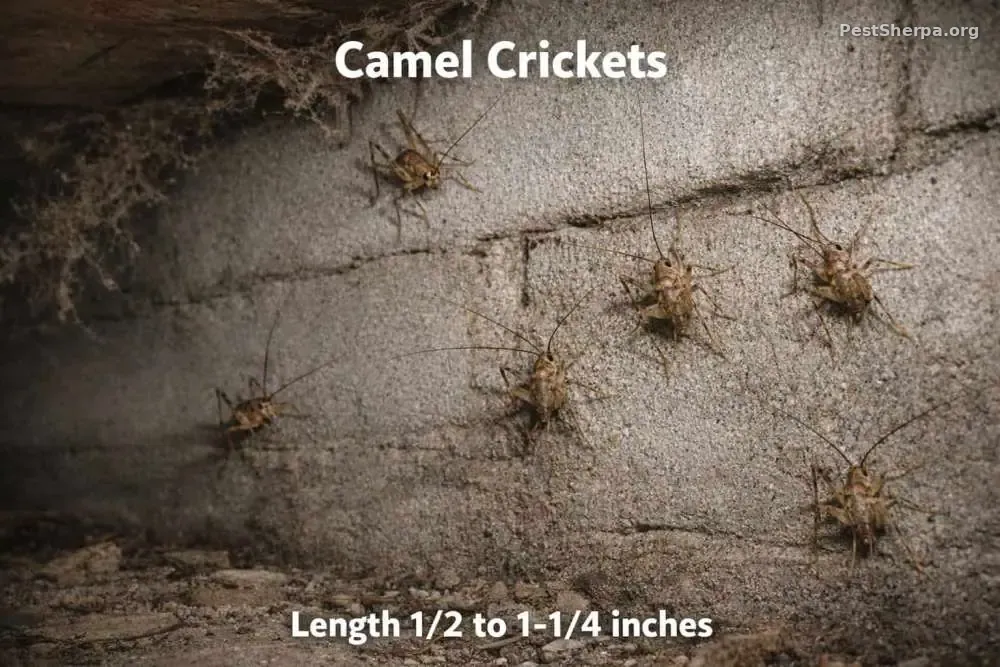
Camel crickets can be startling when they appear in a basement, crawl space, garage, laundry room, or bathroom. Their humpbacked body, very long antennae, and sudden jumping make many people wonder whether they are dealing with spiders, roaches, or a damaging infestation. In most homes, camel crickets are mainly a moisture-and-shelter clue rather than a serious structural pest.
These insects are also called cave crickets, spider crickets, or stone crickets. They usually enter buildings from damp outdoor hiding places. This is especially true when the area around the foundation has shade, mulch, leaf litter, woodpiles, dense vegetation, or poor drainage. Finding one or two is usually a nuisance issue. Finding many, especially in the same damp area, usually means there is moisture, harborage, or an entry-point problem worth correcting.
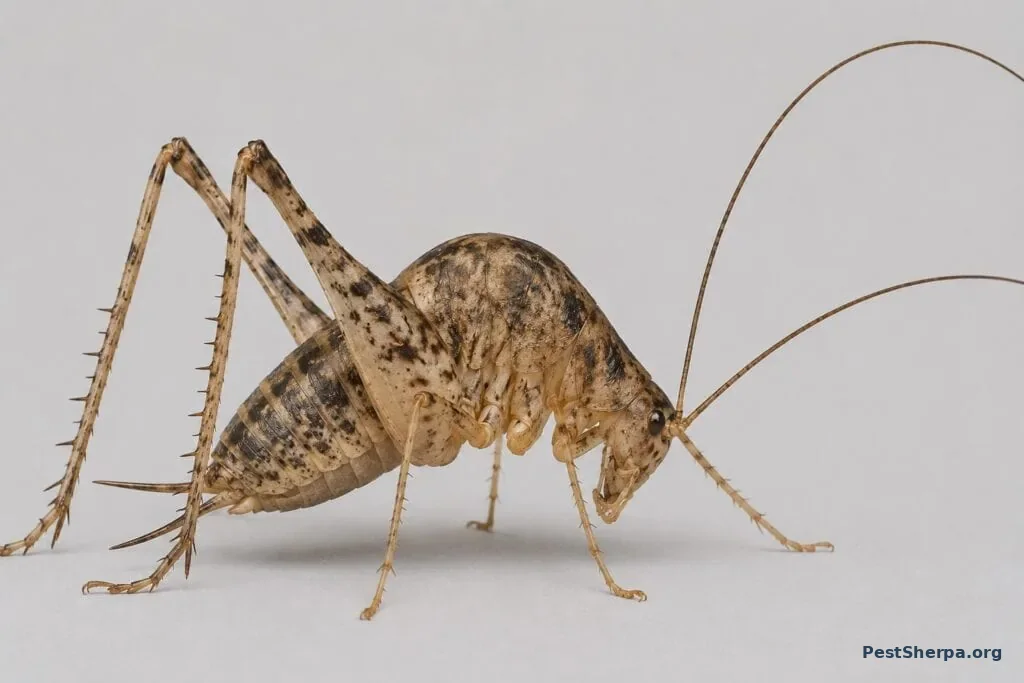
Camel cricket showing humpbacked body, long antennae, and large jumping legs.
TL;DR
Camel crickets are wingless, humpbacked crickets that prefer dark, damp places. They do not chirp, do not bite people, and usually do not cause major structural damage. Indoors, they most often point to moisture, clutter, outdoor hiding places near the foundation, or small entry gaps.
The best first steps are to reduce humidity, improve drainage, and remove leaf litter and debris near the home. Then seal entry points and vacuum or capture indoor crickets. Spraying alone is rarely a long-term fix because the conditions attracting them often remain.
Quick Navigation
- What Camel Crickets Mean in Your Home
- Quick Identification
- Quick Assessment
- Where To Check
- Why They Suddenly Appeared
- Seasonal Activity and Life Cycle
- Common Sources and Attractants
- What To Do
- What Does Not Work
- How Long Will They Last?
- Health, Damage, and Safety Notes
- When Professional Help May Be Needed
- Lookalikes and Misidentifications
- FAQs
- References
What Camel Crickets Mean in Your Home
Camel crickets usually mean the area is dark, sheltered, and humid enough to support them. They are common in crawl spaces, basements, garages, utility rooms, wells, storage spaces, and under outdoor materials that hold moisture. In many cases, the cricket itself is less important than the condition that attracted it.
| What You See | What It Usually Means |
|---|---|
| One camel cricket indoors | Likely wandered in from outside or from a nearby damp space |
| Several in a basement or crawl space | Moisture, clutter, or outdoor harborage may be supporting them |
| Crickets repeatedly appearing after rain | Drainage or moisture around the foundation may be contributing |
| Crickets appearing during hot, dry weather | They may be moving indoors to find cooler, more humid shelter |
| Crickets concentrated near one door, wall, vent, or utility area | Entry gaps or a nearby outdoor hiding area may be present |
| Crickets plus moldy odor, condensation, or damp materials | Moisture correction should be a priority |
Key point: Camel cricket control usually works best when it focuses on moisture reduction, harborage removal, and exclusion instead of relying only on pesticides.
Quick Identification: What Camel Crickets Look Like
Camel crickets belong to the family Rhaphidophoridae. They are related to crickets and katydids, but they look different from the chirping crickets many people expect. Most household camel crickets are brown, tan, or mottled, with a hunched profile and very long legs.
- Body shape: Humpbacked or arched when viewed from the side
- Color: Light brown to dark brown, often mottled or speckled
- Antennae: Very long, threadlike antennae, often longer than the body
- Legs: Enlarged hind legs built for jumping
- Wings: No wings as adults
- Sound: No chirping
- Behavior: Sudden, unpredictable jumping when disturbed
Adults often measure about ½ inch to 1¼ inches in body length, not counting the long legs and antennae. Nymphs look like smaller versions of adults. Females may have a long, narrow egg-laying structure at the rear called an ovipositor, which is sometimes mistaken for a stinger. It is not a stinger.
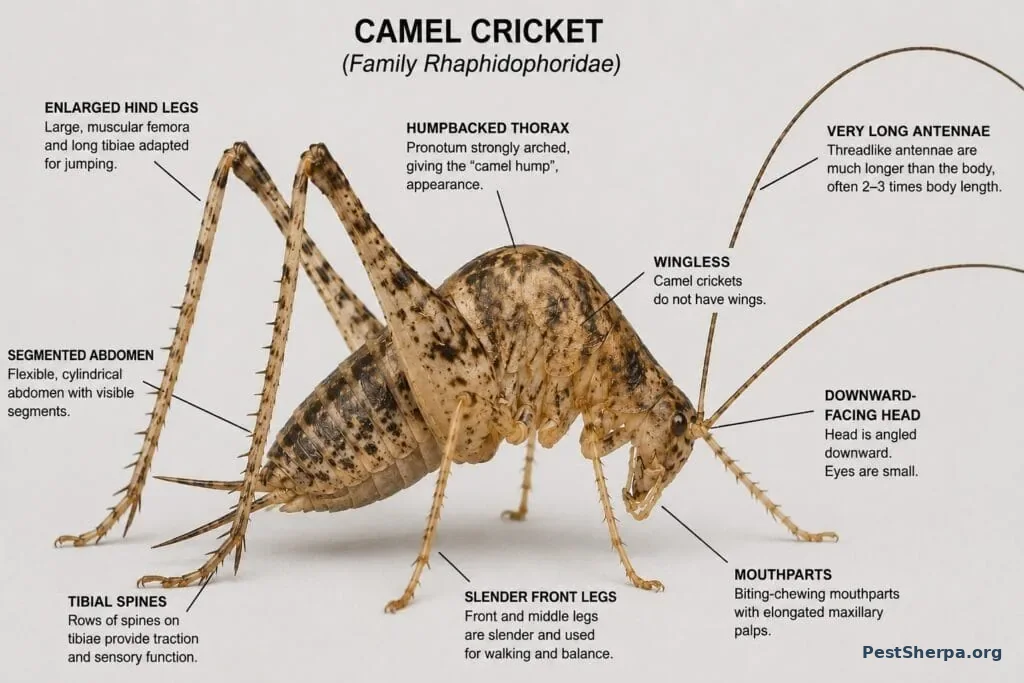
ILabeled camel cricket anatomy including antennae, humpbacked body, large hind legs.
Quick Assessment: Is This a Minor Nuisance or a Bigger Moisture Problem?
Use the pattern of sightings to decide how far to investigate.
| Situation | Severity | Best Next Step |
|---|---|---|
| One cricket in a living area | Low | Remove it and check nearby door sweeps, windows, or vents |
| A few crickets in a basement or garage | Low to moderate | Reduce clutter, check humidity, and inspect entry points |
| Frequent crickets in a crawl space | Moderate | Inspect for moisture, missing vapor barrier, poor ventilation, or foundation gaps |
| Dozens found repeatedly | Moderate to high | Look for outdoor harborage and indoor moisture sources supporting them |
| Crickets plus damp insulation, mold, standing water, or wood decay | High | Prioritize moisture correction and consider a building or pest inspection |
| Crickets entering from the same wall, door, or utility chase | Moderate | Seal entry points after checking for moisture and hidden gaps |
Where To Check for Camel Crickets
Start in the dampest, darkest, least-disturbed places first. Camel crickets often hide during the day and become more active at night, so a flashlight inspection after dark can be useful.
Indoor Inspection
- Basements: Check behind stored boxes, under shelving, around sump pits, near floor drains, and along foundation walls.
- Crawl spaces: Look near vents, vapor barrier gaps, damp soil, plumbing leaks, insulation, and foundation penetrations.
- Garages: Inspect corners, cardboard storage, door thresholds, utility penetrations, and damp items stored on the floor.
- Laundry and utility rooms: Check around washer connections, water heaters, floor drains, and pipe chases.
- Bathrooms: Look behind baseboards, under sinks, and near recurring moisture problems.
- Storage rooms: Check cardboard, fabric, paper, and clutter stored in humid areas.
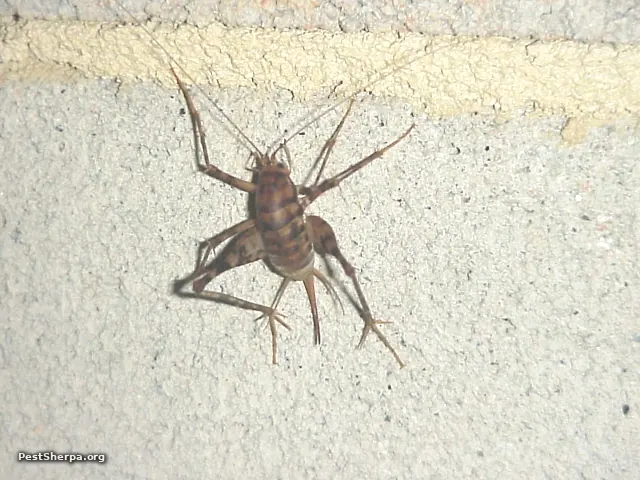
Exterior Inspection
- Mulch piled against the foundation
- Leaf litter, stones, logs, boards, and firewood close to the home
- Dense ivy, groundcover, weeds, or shrubs holding moisture against walls
- Downspouts discharging near the foundation
- Low spots where water collects after rain
- Gaps around doors, vents, utility lines, pipes, and sills
- Open crawl space vents, torn screens, or damaged weatherstripping
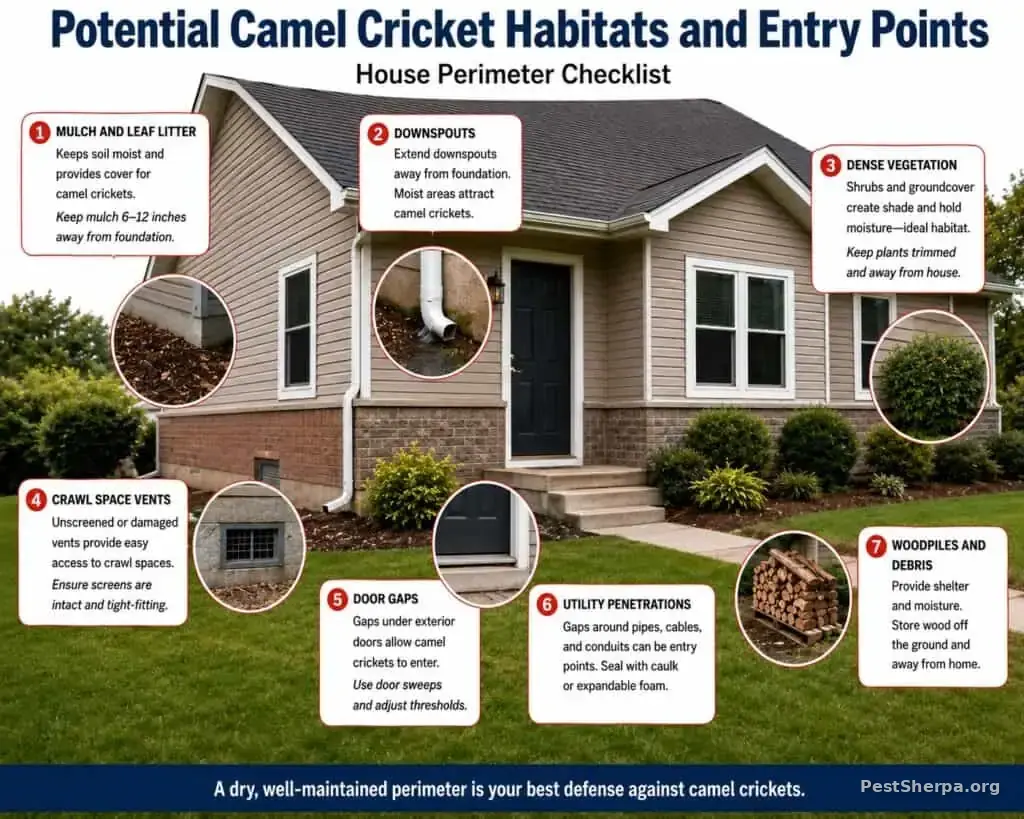
ICommon exterior camel cricket hiding places and entry points around a house.
Why Camel Crickets Suddenly Appeared
Sudden sightings often happen when conditions change. Camel crickets may move indoors or become more noticeable when outdoor habitats become too wet, too dry, too hot, or disturbed.
| Recent Change | Why It Can Trigger Camel Cricket Activity |
|---|---|
| Heavy rain | More moisture around the foundation can increase activity or push crickets from flooded hiding places |
| Hot, dry weather | Crickets may seek cooler, more humid indoor areas |
| New mulch or landscaping | Fresh organic material can hold moisture and create shelter |
| Basement or crawl space humidity increased | Damp indoor conditions become more suitable for crickets |
| Stored boxes or clutter added | More hiding places become available |
| Door, screen, vent, or weatherstripping damage | Entry becomes easier |
| Seasonal cooling in late summer or fall | Crickets may wander indoors while seeking shelter |
Seasonal Activity and Life Cycle
Camel crickets develop through simple metamorphosis: egg, nymph, and adult. They do not have a pupal stage. The young nymphs resemble adults but are smaller.
Depending on species and local conditions, camel crickets may overwinter as nymphs or adults. Adults may lay eggs in soil or protected material, and nymphs develop gradually as they molt. Moisture is especially important because camel crickets are strongly associated with humid shelter.
Indoors, camel cricket activity is often noticed in basements and crawl spaces during late summer, fall, rainy periods, or hot dry spells. In some homes, an ongoing crawl space moisture problem can make sightings seem less seasonal.
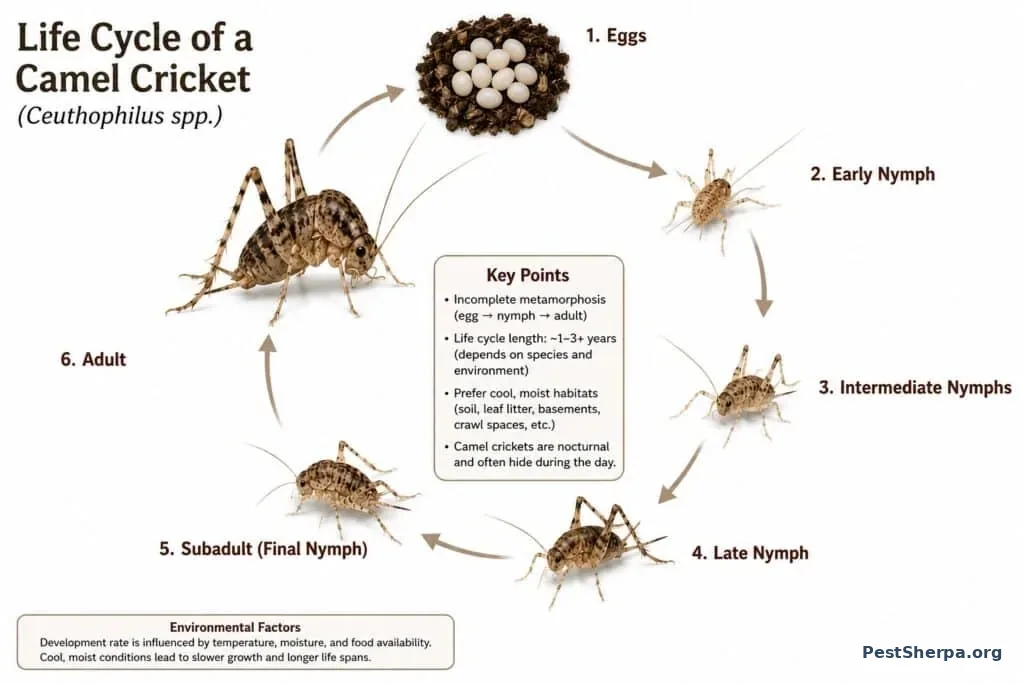
Camel cricket life cycle showing egg, nymph, and adult stages.
Common Sources, Attractants, and Hiding Places
Camel crickets are scavengers that feed on a variety of organic materials, including decaying plant matter, fungi, dead insects, and other debris. Around homes, the bigger attraction is usually the combination of moisture and shelter.
Outdoor Conditions That Support Camel Crickets
- Mulch, leaf litter, and damp organic debris
- Stones, pavers, boards, logs, and stacked firewood
- Dense vegetation or groundcover along the foundation
- Shaded soil that stays damp
- Poor drainage near the foundation
- Crawl space vents or foundation gaps near damp landscaping
Indoor Conditions That Support Camel Crickets
- High humidity
- Condensation on walls, pipes, or floors
- Damp cardboard, paper, fabric, or stored items
- Plumbing leaks or seepage
- Missing or damaged crawl space vapor barriers
- Dark, undisturbed clutter
What To Do About Camel Crickets
The most effective approach is to make the area less suitable for camel crickets and harder for them to enter.
1. Remove Indoor Crickets
- Vacuum visible crickets and dispose of the vacuum contents promptly.
- Use sticky monitoring traps in basements, garages, or crawl space access areas to learn where activity is highest.
- Reduce clutter so crickets have fewer hiding places.
2. Lower Moisture
- Use a dehumidifier in damp basements.
- Repair plumbing leaks and condensation problems.
- Improve crawl space ventilation or moisture control where appropriate.
- Install or repair crawl space vapor barriers when bare soil moisture is contributing.
- Keep stored items off damp floors when possible.
3. Improve Exterior Drainage and Habitat
- Extend downspouts away from the foundation.
- Correct low spots where water collects near the home.
- Pull mulch back from the foundation and avoid deep, constantly damp mulch layers.
- Move firewood, boards, stones, and debris away from exterior walls.
- Trim dense vegetation and groundcover touching the structure.
4. Seal Entry Points
- Install or repair door sweeps.
- Repair torn screens and damaged crawl space vent covers.
- Seal gaps around pipes, wires, utility lines, and foundation cracks.
- Check garage door seals and basement access doors.
5. Use Pesticides Carefully, If Used
Pesticides may reduce some activity, but they should not replace moisture correction, habitat reduction, and exclusion. If you use any pesticide product, read and follow the label exactly. Use only products labeled for the site and pest situation. Avoid unsafe applications around children, pets, food, drains, or poorly ventilated spaces.
What Does Not Work Well
| Approach | Why It Usually Falls Short |
|---|---|
| Spraying without fixing moisture | The damp conditions attracting crickets remain |
| Using bug bombs | They do not correct entry points, crawl space humidity, or outdoor harborage |
| Only killing visible crickets | More may enter from the same gaps or outdoor shelters |
| Ignoring mulch, debris, and firewood near the foundation | Outdoor hiding places continue supporting activity |
| Storing cardboard on damp floors | It provides shelter and can hold moisture |
| Assuming they are coming from drains | Camel crickets prefer damp shelter but are not drain-breeding flies |
How Long Will Camel Crickets Last?
A single camel cricket may disappear as soon as it is removed. Repeated activity can continue as long as the home provides moisture, hiding places, and entry points.
- One accidental invader: Often resolved immediately after removal.
- Basement or garage sightings: Usually improve after humidity, clutter, and entry points are addressed.
- Crawl space activity: May persist until moisture, vapor barrier, ventilation, and access gaps are corrected.
- Outdoor source near foundation: May continue until mulch, debris, vegetation, drainage, or woodpiles are adjusted.
Health, Damage, and Safety Notes
Camel crickets are not known for biting or stinging people. Their sudden jumping is defensive and can feel alarming, but it is not an attack. The long ovipositor on some females is used for laying eggs and should not be confused with a stinger.
They are generally considered nuisance pests. They may occasionally chew on damp or stored materials, including paper, cardboard, or fabrics, but serious household damage is uncommon. If fabrics, stored paper, or boxes are being damaged, inspect for moisture and also consider other pests that may be involved.
The more important health and safety concern is often the damp environment itself. Persistent humidity, condensation, moldy odors, or water intrusion can create broader indoor air quality and building-maintenance concerns. Addressing moisture helps reduce camel crickets and may also improve the condition of the space.
When Professional Help May Be Needed
Professional help may be worth considering when camel crickets are persistent or show up in large numbers. It may also help when they are tied to a moisture or crawl space problem that is hard to evaluate safely.
- Crickets appear in large numbers or keep returning after basic cleanup.
- The crawl space is wet, moldy, hard to access, or has damaged insulation.
- There are signs of water intrusion, standing water, or wood decay.
- You cannot locate entry points or the main activity area.
- You need help distinguishing camel crickets from roaches, house crickets, field crickets, or other insects.
- Pesticide use is being considered in a sensitive area, such as around pets, children, food storage, or confined crawl spaces.
Lookalikes and Common Misidentifications
Camel crickets are often mistaken for spiders, roaches, house crickets, field crickets, and other long-legged household pests. The wingless body, very long antennae, humpbacked shape, enlarged jumping legs, and lack of chirping are useful clues.
| Pest | How It Differs From Camel Crickets | Common Clue |
|---|---|---|
| House cricket | Usually has wings and can chirp. Camel crickets are wingless and silent. | Chirping indoors usually points away from camel crickets. |
| Field cricket | Usually darker, winged, and chirping. Camel crickets are humpbacked, wingless, and quiet. | Often noticed entering homes during late summer or fall. |
| Cockroach | Flatter body, faster running behavior, and no enlarged jumping legs like camel crickets. | Common confusion when a brown insect appears in basements, garages, kitchens, or bathrooms. |
| American cockroach | Larger, flatter, reddish brown, and winged. Camel crickets are humpbacked and wingless. | Can be confused with camel crickets in basements, garages, drains, or damp areas. |
| Smokybrown cockroach | Large, dark, glossy, and winged. Camel crickets lack wings and have a more arched body. | Both may be associated with humid outdoor harborage near homes. |
| Spider | Spiders have eight legs and no antennae. Camel crickets have six legs and very long antennae. | Camel crickets are often called spider crickets because of their long legs. |
| Centipede | Centipedes have many body segments and many legs. Camel crickets have six legs and jump when disturbed. | Both may appear in damp basements, bathrooms, crawl spaces, or garages. |
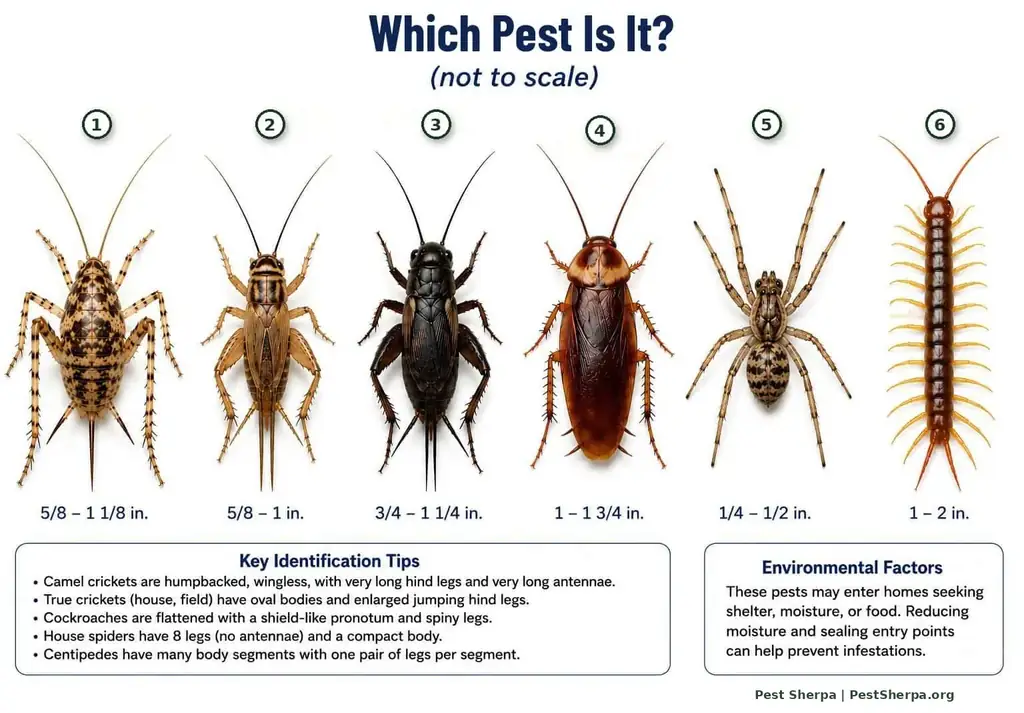
Which one do you see? Match the number:
- Camel cricket: humpbacked and wingless with very long hind legs and very long antennae, mottled tan and brown.
- House cricket: oval body, light yellowish-brown with dark bands across the head, and enlarged jumping hind legs.
- Field cricket: oval body, shiny black to dark brown, with enlarged jumping hind legs.
- American cockroach: flattened, reddish-brown body with a shield behind the head and spiny legs.
- House spider: eight legs, no antennae and a compact body.
- Centipede: many body segments with one pair of legs per segment.
Camel cricket compared with common lookalikes including house cricket, field cricket, cockroach, spider, and centipede.
FAQs About Camel Crickets
Do camel crickets bite?
Camel crickets are not known for biting people. They may jump suddenly when disturbed, which is usually what makes encounters feel alarming.
Do camel crickets chirp?
No. Camel crickets do not chirp. If you hear chirping indoors, house crickets or field crickets are more likely.
Why are camel crickets in my basement?
Basements often provide the cool, dark, humid conditions camel crickets prefer. Check for high humidity, water seepage, damp boxes, floor drains, cracks, and gaps around doors or utilities.
Why are camel crickets in my crawl space?
Crawl spaces can provide damp soil, darkness, organic debris, and easy access through vents or foundation gaps. A missing or damaged vapor barrier can make the space more attractive.
Are camel crickets dangerous to pets?
Camel crickets are generally nuisance insects. Pets may chase or eat them, but pesticide exposure is a bigger safety concern if products are used carelessly. Always keep pets away from traps or treated areas according to the product label.
Will camel crickets damage clothes or boxes?
They may occasionally chew damp or stored organic materials, including paper, cardboard, or fabrics, but major damage is uncommon. Moisture and storage conditions should be corrected if items are being affected.
Why do they jump toward me?
Camel crickets often jump unpredictably when startled. They are not trying to attack; they are escaping disturbance.
What is the fastest way to reduce camel crickets indoors?
Vacuum visible crickets, place sticky monitoring traps in activity areas, lower humidity, remove clutter, and seal obvious entry points. Long-term improvement usually depends on correcting moisture and outdoor harborage.
Do camel crickets mean my house is dirty?
No. Camel crickets are more strongly associated with moisture, darkness, shelter, and outdoor hiding places than general cleanliness. A clean home can still have camel crickets if a basement, garage, or crawl space stays damp.
References
- NC State Extension Publications: Camel Crickets
- University of Minnesota Extension: Crickets
- University of Minnesota Extension: Camel Cricket
- University of Maryland Extension: Crickets
- University of Maine Cooperative Extension: Camel Cricket
- Clemson Cooperative Extension: Camel Crickets
- BugGuide: Family Rhaphidophoridae, Camel Crickets
- PeerJ / PMC: Too Big to Be Noticed: Cryptic Invasion of Asian Camel Crickets in North American Houses
Bottom Line
Camel crickets are usually nuisance insects, but they are useful clues. When they keep appearing indoors, look for dampness, clutter, outdoor harborage, and entry gaps. Removing crickets helps in the moment, but the longer-term solution is making basements, crawl spaces, garages, and foundation areas less dark, damp, and sheltered.
This article was written by Greg Baumann, founder of Pest Sherpa, and reflects more than 40 years of professional pest management experience.
About the Author

Greg Baumann | Pest Control Expert
Greg Baumann is the founder of Pest Sherpa and a Pest Control Expert with more than 40 years of professional pest management experience. His articles combine decades of field experience, technical expertise, and science-based guidance to help homeowners identify pests correctly, understand real-world risks, and make informed pest management decisions.
Mission: Identify the pest. Understand the risk. Stop the problem. Prevent the comeback. Know when it’s time to call a professional.