
Argentine Ants: Identification, Why They Invade, and Control
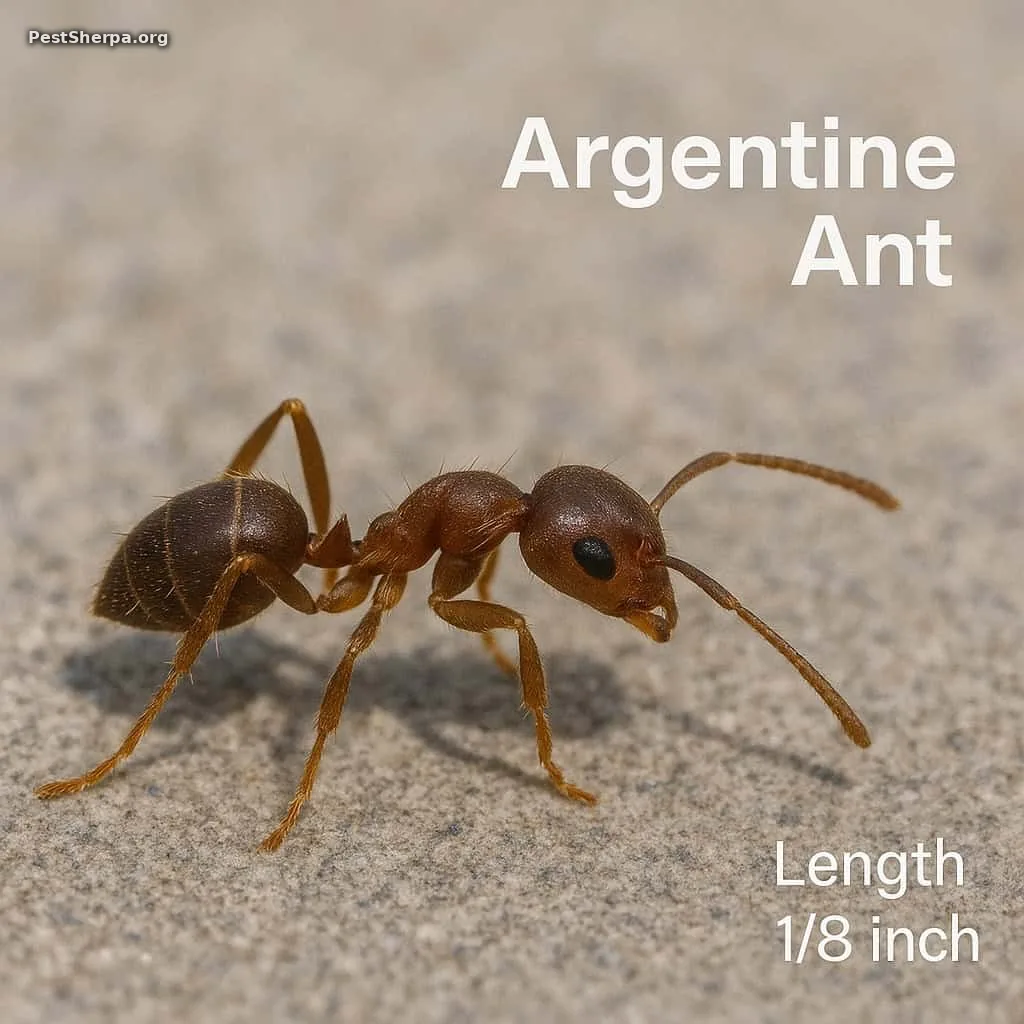
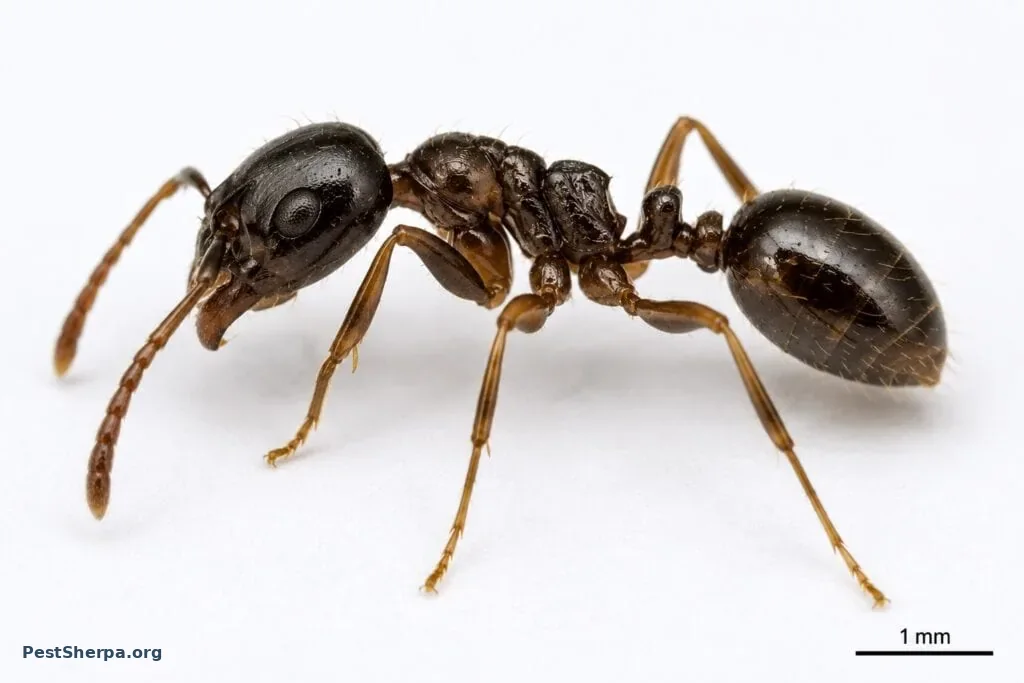
Updated for accuracy: Argentine ants (Linepithema humile) are small brown invasive ants that often trail in large numbers along foundations, sidewalks, mulch, irrigation lines, kitchens, bathrooms, and utility areas. They are mainly a nuisance and contamination-risk pest, not a structural wood pest.
TL;DR
Argentine ants are usually about 1/8 inch long, dull brown, same-sized workers, and often form heavy trails between outdoor nests and indoor food or water. The best control plan is accurate identification, outdoor-focused baiting, moisture reduction, sanitation, trail cleanup, and reducing honeydew-producing insects on nearby plants. Random spraying often gives short-term relief and can make control harder by scattering colonies or interrupting bait movement.
Direct Answer
Argentine ants are small invasive ants that usually enter homes from outdoor nest networks in soil, mulch, leaf litter, potted plants, and irrigated areas. They do not damage wood like termites or carpenter ants, but they can become persistent indoor nuisance pests because colonies may contain many queens and spread across large areas. Control works best when homeowners identify the ant correctly, avoid random spraying, place bait where ants are actively trailing, reduce moisture, and manage outdoor conditions that support the colony.
On This Page
- Quick Argentine Ant Identification
- Identification
- Why Argentine Ants Matter
- What To Do
- Common Mistakes
- Seasonal Activity
- When To Call a Pro
- Similar Pests
- Common Questions
- Authoritative References
- Summary
Quick Argentine Ant Identification
| Feature | Argentine Ant |
|---|---|
| Scientific Name | Linepithema humile |
| Size | About 1/8 inch |
| Color | Light to dark brown |
| Workers Same Size? | Yes |
| Forms Long Trails? | Very often |
| Damages Wood? | No |
| Common Nest Sites | Mulch, soil, leaf litter, potted plants, irrigation zones, stones, logs, and boards |
| Common Indoor Locations | Kitchens, bathrooms, utility rooms, sinks, dishwashers, pet food areas |
| Best First Step | Confirm identification and follow trails before treating |
Identification: What Argentine Ants Look Like
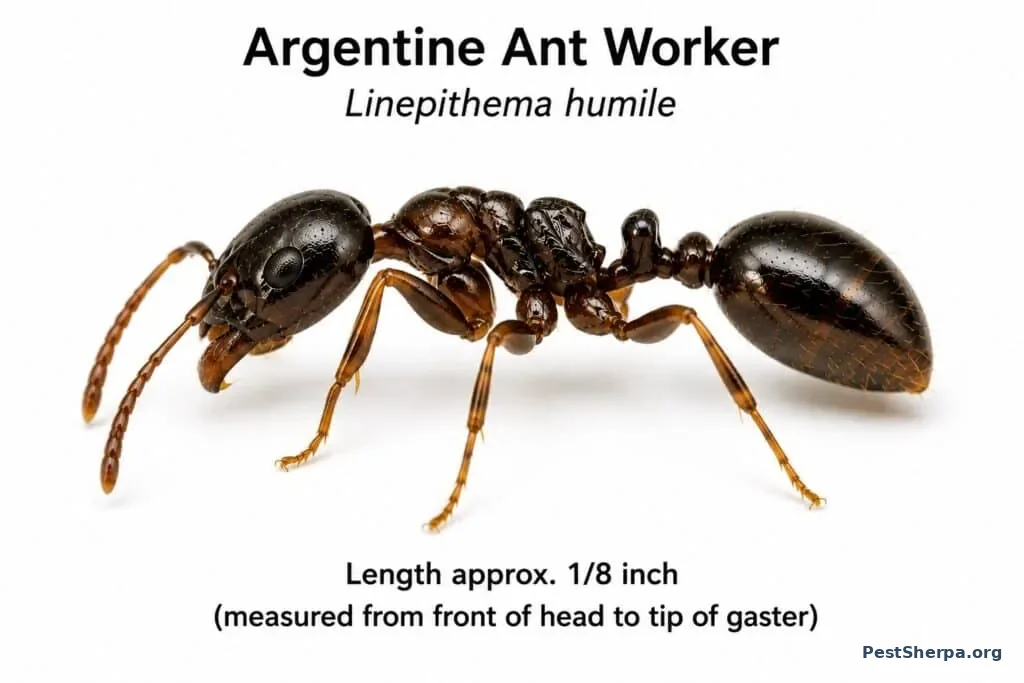
Argentine ants (Linepithema humile) are small, slender, light to dark brown ants. Workers are usually about 1/8 inch long and are mostly the same size. They are often noticed because of their strong trailing behavior rather than because of a single obvious nest.
Important identification clues include:
- Small brown workers that are mostly uniform in size.
- Long, well-defined trails along foundations, sidewalks, mulch, and interior edges.
- Activity around sinks, dishwashers, bathrooms, pet food, and food spills.
- Outdoor nesting in moist soil, mulch, leaf litter, potted plants, stones, boards, logs, and irrigation zones.
- Sudden indoor activity after rain, drought, or seasonal temperature changes.
- A faint musty odor when crushed, rather than the stronger rotten-coconut odor associated with odorous house ants.
What Homeowners Usually Notice First
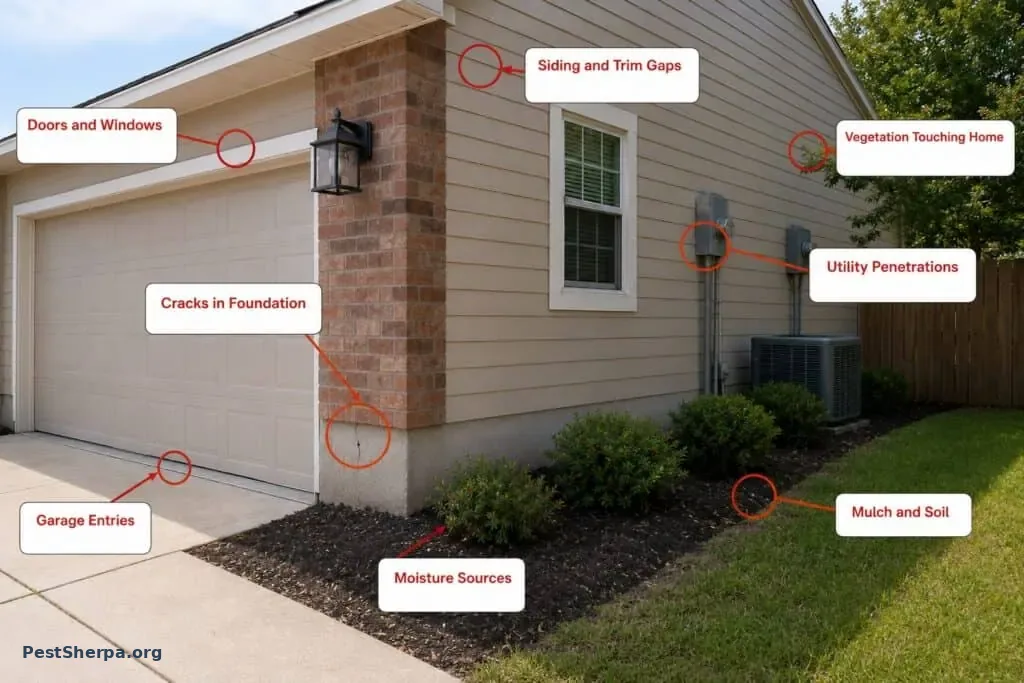
Most Argentine ant problems begin with a trail of small brown ants entering through a door threshold, window frame, plumbing penetration, slab edge, or foundation crack. Many homeowners first see activity around kitchen counters, pet food, dishwashers, bathroom sinks, laundry rooms, or outdoor irrigation areas.
After rain or during hot, dry weather, trails may suddenly appear indoors as colonies search for moisture and food.
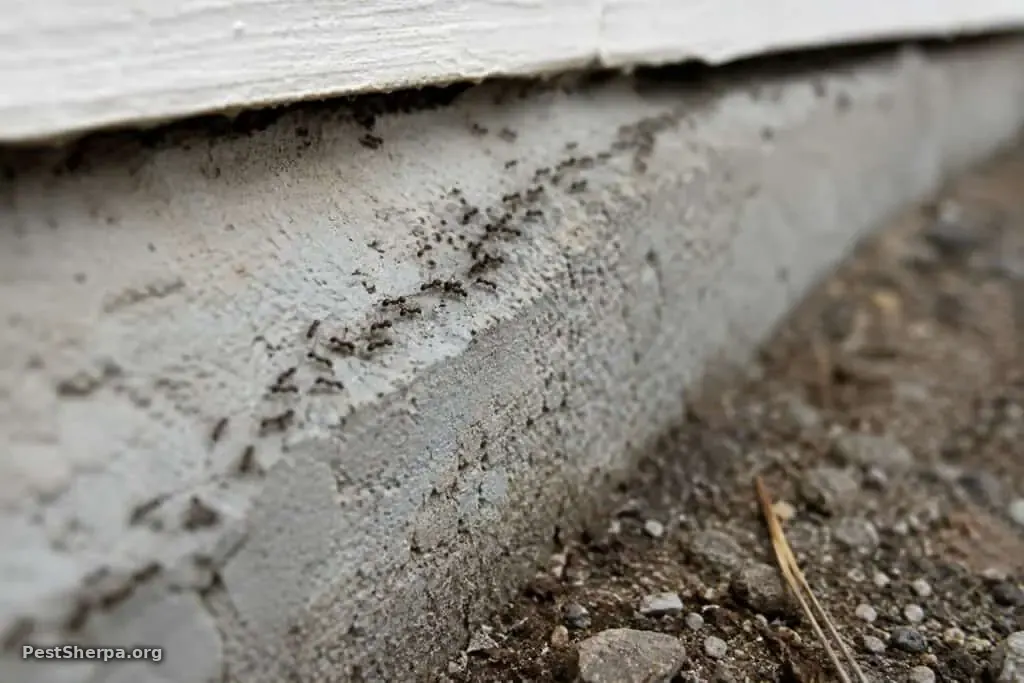
Argentine ants commonly nest outdoors under mulch, stones, boards, logs, potted plants, leaf litter, and other moisture-holding materials. A common pattern is that nest sites retain moisture even when the surrounding area dries.
What commonly misleads homeowners:
- Assuming every small brown ant is the same species.
- Confusing Argentine ants with odorous house ants, pavement ants, pharaoh ants, or small carpenter ant workers.
- Looking only indoors when the main nest network is often outside.
- Using sprays before confirming the species and trail pattern.
- Cleaning or spraying directly over bait placements before ants have time to feed.
For broader comparison, start with the Pest Sherpa ant identification guide.
Why Argentine Ants Matter
Can Argentine Ants Damage a House?
Argentine ants do not eat wood and do not cause structural damage like termites or carpenter ants.
Their primary impact is nuisance activity, food contamination risk, and persistent indoor invasion. Large populations may also protect aphids, scales, mealybugs, and other honeydew-producing insects that damage landscape plants.
Argentine ants are mostly a nuisance and sanitation pest around homes. They are not wood-destroying insects and should not be confused with carpenter ants or termites.
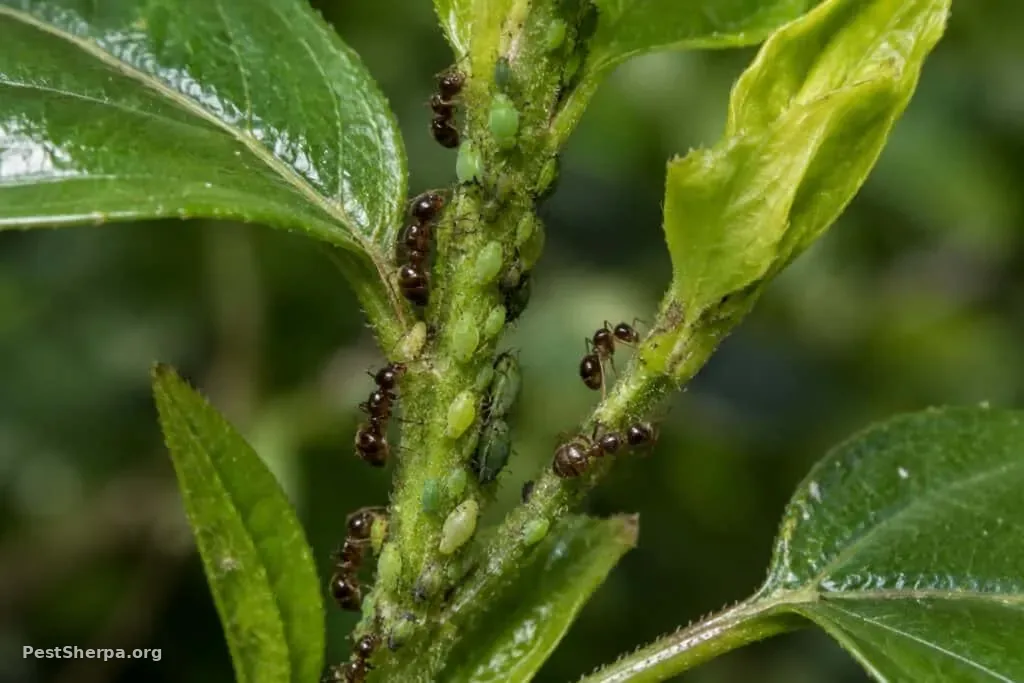
Argentine ants also protect honeydew-producing insects such as aphids, scales, mealybugs, and whiteflies. That can worsen plant problems because the ants defend those insects while feeding on their sugary honeydew.
Argentine ants are invasive in many regions. Their low aggression between related nests and their ability to maintain multiple queens can allow large colony networks to persist across neighboring properties, which is one reason infestations can feel endless.
What To Do: The DIY Steps That Actually Help
1. Confirm the Ant Before Treating
Different ants require different control tactics. A bait plan that helps with Argentine ants may be a poor fit for another species. If the ants are very tiny and showing up around hospitals, apartments, or sensitive indoor areas, compare them with pharaoh ants before spraying.
2. Follow Trails Back Toward the Source
Trace trails along baseboards, plumbing lines, windows, siding, foundation edges, mulch beds, patios, and irrigation zones. Argentine ant control usually works better when treatments focus on active trails and outdoor nest zones instead of random indoor spraying.
3. Use Bait Strategically
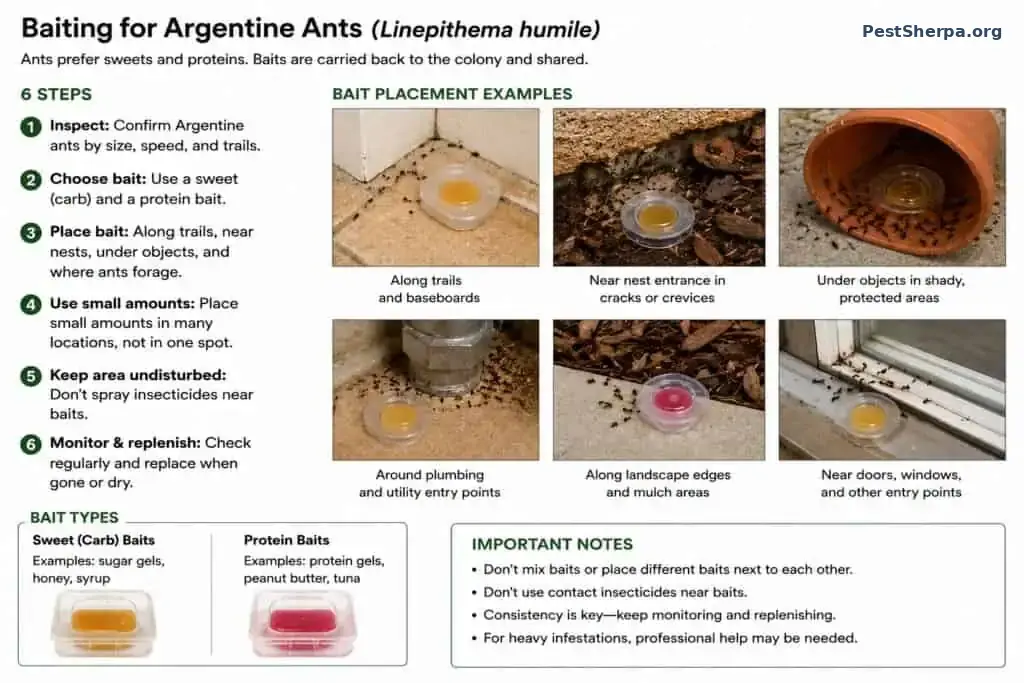
Use baits primarily outdoors when possible, placed near nests, trails, and edges where ants travel. Baits work only when ants accept and feed on them, so test small placements first. If ants ignore a bait, do not assume the strategy failed. They may need a different bait type, placement, or timing.
Do not contaminate bait with repellent sprays, cleaners, or strong odors. Avoid placing bait where children, pets, wildlife, or food can contact it. Always follow the product label.
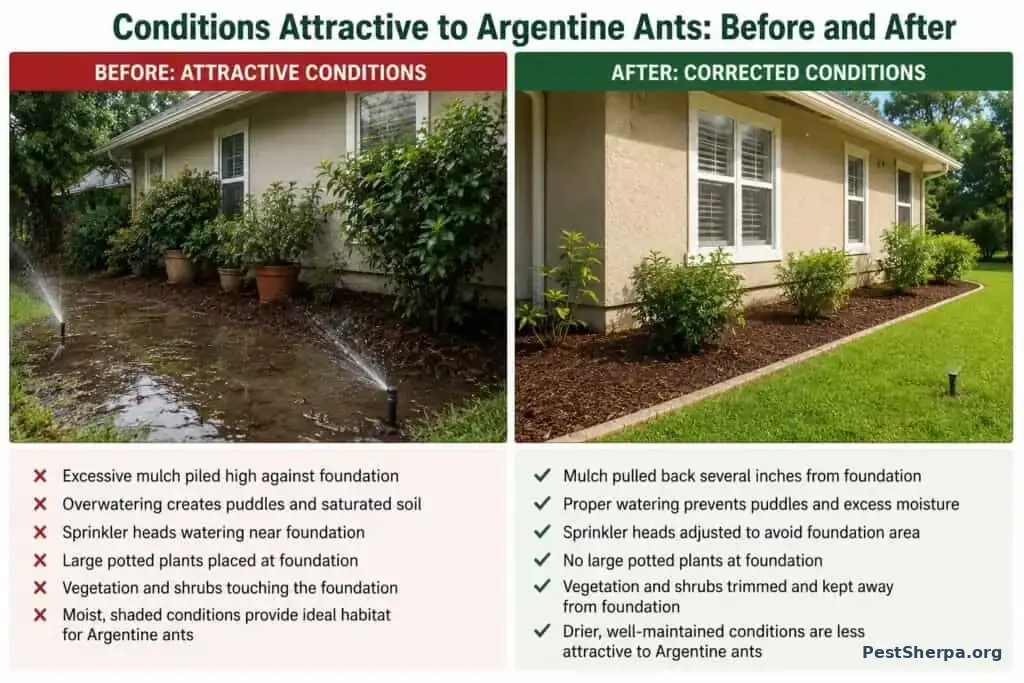
4. Reduce Moisture and Shelter
- Fix leaks and irrigation overspray.
- Improve drainage near the foundation.
- Pull mulch and leaf litter back from the structure.
- Move potted plants, boards, stones, and stored items away from exterior walls.
- Trim vegetation touching the house.
- Reduce clutter and moisture-holding debris around patios, walkways, and foundation edges.
5. Clean Trails Without Destroying the Bait Strategy
Use soapy water to wipe old indoor trails and remove food residue, but do not wipe away all active ants immediately after placing bait. Enough foragers must carry bait back to the colony for baiting to work.
6. Manage Honeydew Sources
Inspect shrubs, trees, and ornamentals near the home for aphids, scale insects, mealybugs, and whiteflies. Reducing honeydew sources can reduce the food supply supporting large Argentine ant populations.
Common Mistakes That Make Argentine Ant Infestations Worse
- Spraying trails before baiting.
- Using repellent sprays directly on active trails.
- Ignoring outdoor nesting areas.
- Leaving irrigation leaks, overspray, or damp mulch unresolved.
- Treating only indoors.
- Removing bait before ants have time to feed.
- Cleaning directly over fresh bait placements.
- Failing to manage aphids, scale insects, and other honeydew producers on landscape plants.
- Assuming one treatment will eliminate colony networks that extend across neighboring properties.
When Are Argentine Ants Most Active?
Argentine ants can remain active year-round in warm climates, but they are often most noticeable during drought, excessive rain, or seasonal temperature changes.
- Spring: Colonies expand and foraging increases.
- Summer: Moisture shortages often push ants indoors.
- Fall: Foraging may remain active in mild regions.
- Winter: Outdoor activity slows in cooler areas, but ants may continue indoors or in protected areas.
Indoor trails often increase when outdoor conditions become unfavorable. Heavy rain may flood nest sites, while hot and dry weather may push ants toward indoor moisture sources.
When To Call a Pro
Call a licensed pest professional when:
- Ants return repeatedly after baiting, sanitation, and moisture correction.
- Heavy trails are entering from multiple sides of the structure.
- Activity is tied to wall voids, slab edges, crawl spaces, irrigation systems, or inaccessible landscape nests.
- You live in multi-unit housing where colonies may span multiple units or shared exterior areas.
- You are unsure whether the ants are Argentine ants, odorous house ants, pavement ants, pharaoh ants, carpenter ants, or another species.
- DIY sprays appear to make the infestation spread or shift locations.
- Ants are affecting sensitive areas such as food storage, healthcare spaces, childcare areas, or commercial kitchens.
Expert Note: Argentine ants are one of the most persistent nuisance ants because multiple interconnected colonies may exist across neighboring properties. Successful control usually focuses on reducing population pressure rather than expecting a single treatment to eliminate every colony.
If you want help deciding whether the situation is still manageable or likely needs professional treatment, use Ask the Sherpa.
Similar Pests / Misidentification Comparison
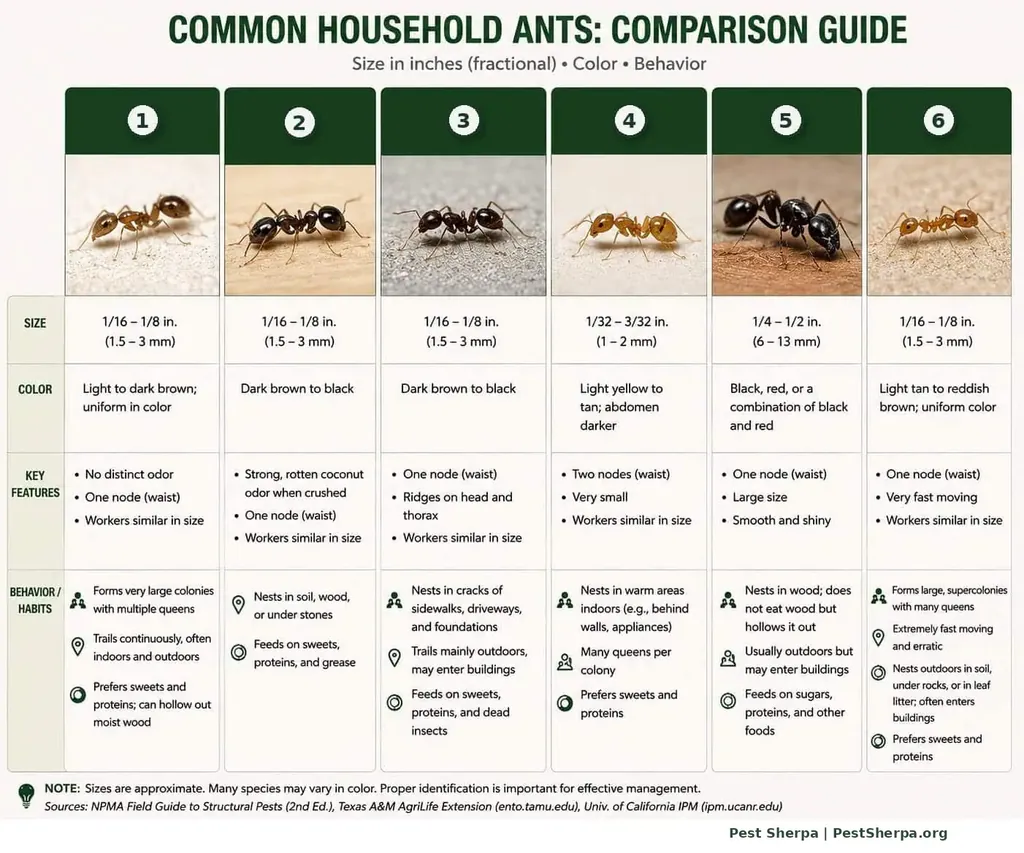
Which one do you see? Match the number:
- Argentine ant: 1/16 to 1/8 inch, light to dark brown, no distinct odor. Forms huge colonies with many queens and trails constantly.
- Odorous house ant: 1/16 to 1/8 inch, dark brown to black, with a rotten coconut smell when crushed.
- Pavement ant: 1/16 to 1/8 inch, dark brown to black, with fine ridges on the head and thorax. Nests in pavement cracks.
- Pharaoh ant: 1/32 to 3/32 inch, very small and light yellow to tan with a darker abdomen and two nodes on the waist.
- Carpenter ant: 1/4 to 1/2 inch, large, black or black and red. Hollows out wood but does not eat it.
- Tawny crazy ant: 1/16 to 1/8 inch, light tan to reddish-brown, moves very fast and erratically.
| Pest | Size | Color | Key Difference |
|---|---|---|---|
| Argentine Ant | About 1/8 inch | Light to dark brown | Same-sized workers; heavy, orderly trails; often tied to outdoor moisture. |
| Odorous House Ant | About 1/8 inch | Brown to black | Strong rotten-coconut odor when crushed. |
| Pavement Ant | About 1/8 inch | Dark brown to blackish | Often nests beneath sidewalks, slabs, driveways, and foundation cracks. |
| Pharaoh Ant | About 1/16 inch | Yellowish to light brown | Much smaller and lighter; indoor colonies can split when sprayed. |
| Carpenter Ant | About 1/4 to 1/2 inch | Black, red-black, or brown | Much larger workers; can excavate damp or damaged wood. |
| Tawny Crazy Ant | About 1/8 inch | Reddish brown to tawny | Fast, erratic movement instead of neat, orderly trails. |
Still unsure which ant species you are dealing with? Visit the complete Pest Sherpa ant identification guide.
Common Questions
Are Argentine ants dangerous?
Argentine ants are not considered structurally dangerous because they do not eat wood. Their main concerns are nuisance activity, food contamination risk, persistent indoor invasion, and their habit of protecting honeydew-producing plant pests.
Why do Argentine ants keep coming back?
Argentine ants often return because the main colony network is outdoors and may extend across multiple nesting sites. Indoor spraying may kill visible foragers without affecting the larger colony system outside.
Should I spray Argentine ant trails?
Random spraying is usually not the best first step. Repellent sprays can interrupt baiting, scatter activity, or move trails to new locations. Identification, trail tracing, bait placement, and moisture correction are usually better starting points.
What is the best bait for Argentine ants?
The best bait is the one the ants are actively accepting at that time. Argentine ants often feed on sugary baits, but preferences can change. Test small bait placements near active trails and watch whether ants feed before committing to a larger baiting plan.
Do Argentine ants live inside walls?
They can trail through wall voids or use protected indoor spaces, but many home infestations originate from outdoor nest networks. A proper inspection should follow trails both indoors and outdoors.
Do Argentine ants bite or sting?
Argentine ants do not sting. They are mainly nuisance invaders around food, water, and moisture sources rather than a biting or stinging threat around homes.
Related Pest Sherpa question:
Authoritative References
- UC IPM: Argentine Ant Identification
- UC IPM: Ant Management in Homes and Landscapes
- University of Georgia Extension: Argentine Ants
- UC Riverside Center for Invasive Species Research: Argentine Ant
- University of Florida IFAS Extension: Argentine Ant
- NC State Extension: Tips for Effective Ant Baiting
Summary
Argentine ants are small invasive ants that often become persistent nuisance pests around homes. They do not damage structural wood, but they can form heavy trails, invade kitchens and bathrooms, contaminate food areas, and support honeydew-producing insects on landscape plants.
The most effective homeowner approach is to identify the ants correctly, follow trails, use bait strategically, reduce moisture and shelter, clean food residues, and manage outdoor honeydew sources. Random spraying may provide quick visible relief, but it often fails to address the larger colony network. If activity persists or spreads across multiple areas, professional inspection and treatment planning are usually the better next step.
This article was written by Greg Baumann, founder of Pest Sherpa, and reflects more than 40 years of professional pest management experience.
About the Author

Greg Baumann | Pest Control Expert
Greg Baumann is the founder of Pest Sherpa and a Pest Control Expert with more than 40 years of professional pest management experience. His articles combine decades of field experience, technical expertise, and science-based guidance to help homeowners identify pests correctly, understand real-world risks, and make informed pest management decisions.
Mission: Identify the pest. Understand the risk. Stop the problem. Prevent the comeback. Know when it’s time to call a professional.