
Pantry Pest Guide: Identification, Risk, and What to Do
Pantry pests are moths and beetles of dried stored foods: cereal, flour, nuts, chocolate, spices, pet food, and birdseed. Most arrive already in a package; presence is not a dirty home. Identify the insect, find the source, then store what you keep in airtight glass, metal, or heavy plastic.
Not every tiny household beetle is a pantry pest. Larvae chewing wool, carpets, felt, or stored fabrics belong on the separate carpet beetle hub.
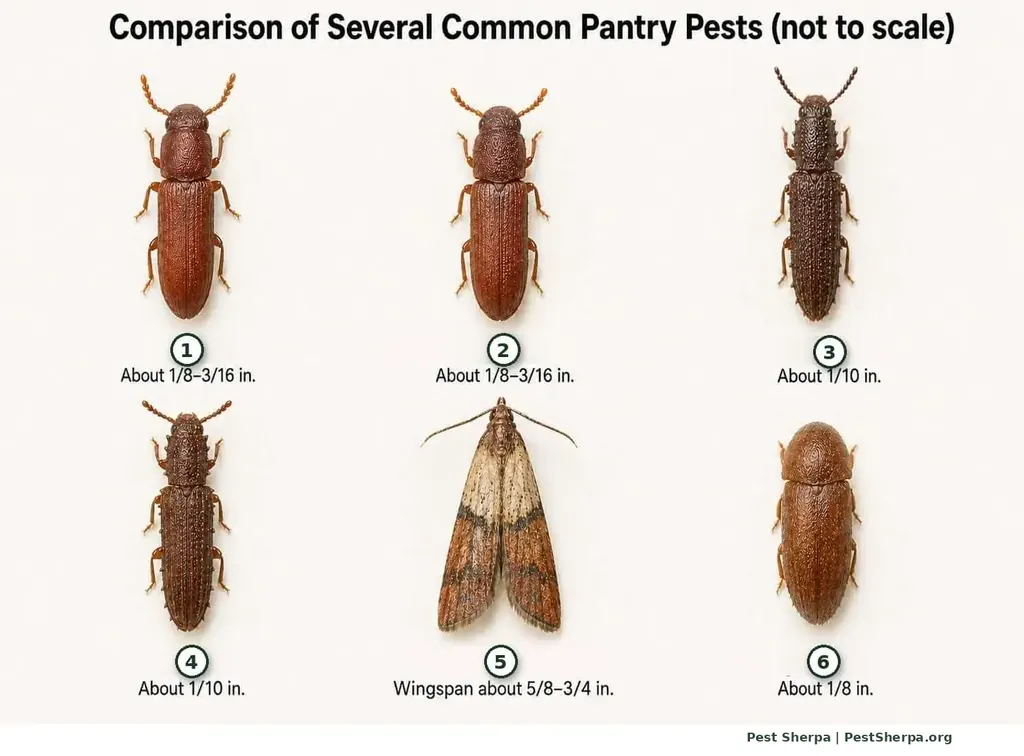
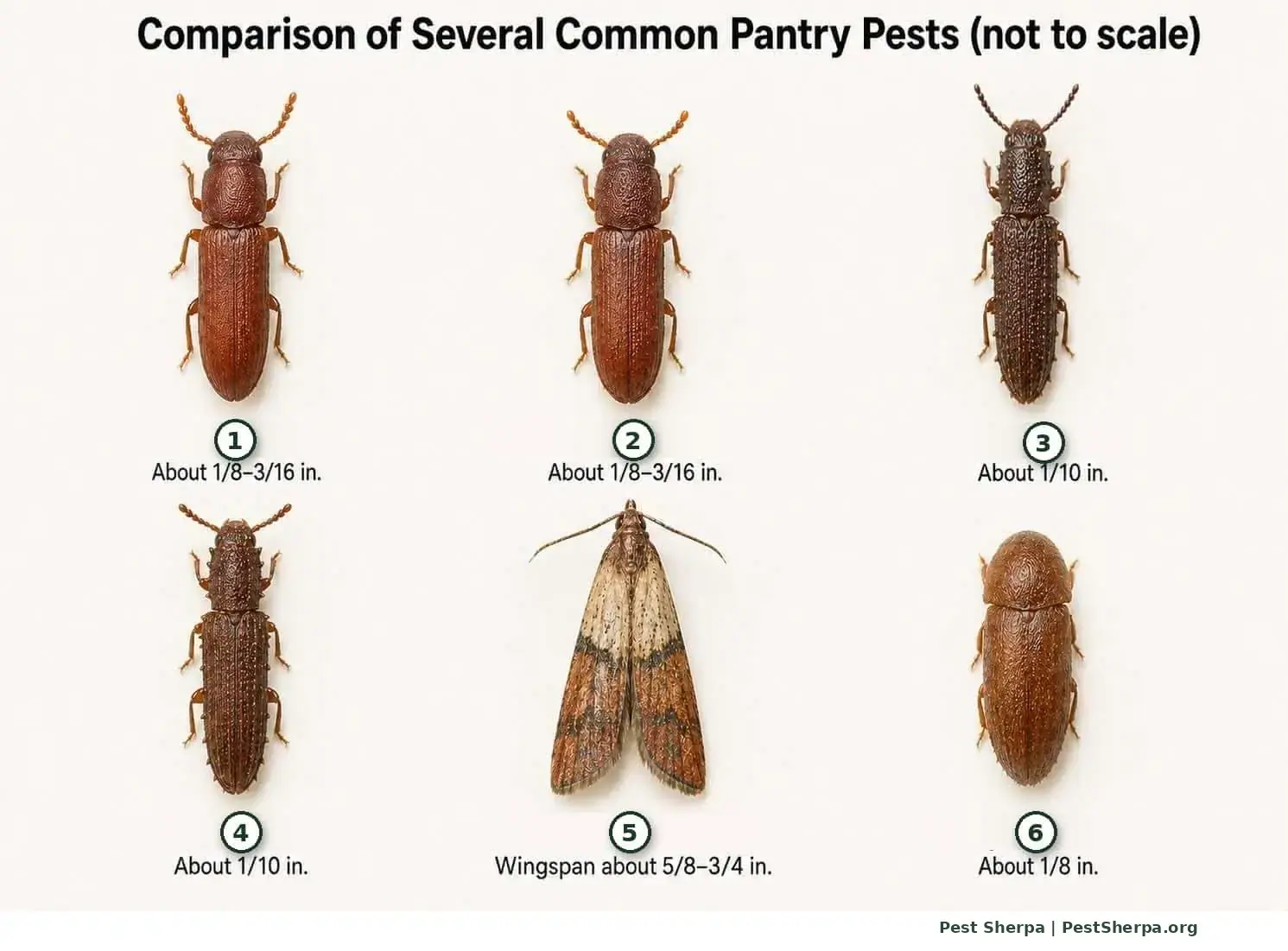
Which one did you find? Match the number:
- Red flour beetle: reddish-brown, about 1/8 to 3/16 inch. The antennae end in a distinct three-segment club.
- Confused flour beetle: looks almost the same as number 1, but the antennae thicken gradually toward the tip.
- Sawtoothed grain beetle: slim and dark brown, about 1/10 inch, with saw-like teeth along each side of the thorax.
- Merchant grain beetle: nearly the same as number 3, but with larger, more noticeable eyes.
- Indianmeal moth: a small moth with pale wing bases and reddish-copper outer wings. Wingspan about 5/8 to 3/4 inch.
- Drugstore beetle: small, oval and reddish-brown, about 1/8 inch, with the head tucked under the body.
Comparison of several common pantry pests (not to scale). Warehouse beetle is not in this grid; confused flour beetle and drugstore beetle have no species pages here.
TL;DR: Find the Source in the Food
- The infestation lives inside the food. Killing adults on a shelf does not stop eggs and larvae in the package.
- Indianmeal moth: coppery outer wings, silk webbing, larvae that wander to walls and ceilings to pupate.
- Small flat beetles in flour, cereal, nuts, or chocolate are grain beetles or flour beetles, not weevils. Weevils have a snout.
- Opened, long-stored packages and overlooked pet food or birdseed amplify the problem, not poor housekeeping.
- Traps monitor; they do not eradicate. Insecticides are not for the pantry.
Start here based on what you’re seeing:
- Coppery-winged moths, silk webbing, or wandering “white worms” in grain or pet food
- Flattened brown beetle on nuts, chocolate, or oilseeds
- Shiny reddish-brown beetles in flour or milled products
- Very flat beetle with six saw-like teeth on each side of the thorax
- Oval mottled beetle or hairy larva in pet food, spices, or high-protein dry goods
Pantry Pest Species Guides
Species pages for the pantry pest you actually have.
Indianmeal Moths: Identification, Pantry Sources, and What to Do
Merchant Grain Beetles: ID, Pantry Sources, and Control
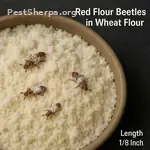
Red Flour Beetles: Identification, Pantry Sources, and Control
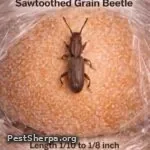
Sawtoothed Grain Beetles: Identification, Sources, and Control
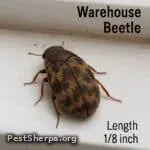
Warehouse Beetles: Identification, Sources, Risks, and Control
Quick Navigation
- How to Identify
- Moth vs beetle lookalikes
- Why It Matters
- What To Do
- What Fails
- When to Call a Professional
- Compare Species
- Prevention
- Common Questions
- References
How to Identify Pantry Pests
No food association? Have an expert identify it before treating it as a pantry pest.
Key Identification Factors
- Moth vs beetle larvae: moth larvae have three pairs of true legs plus extra leglike structures on the abdomen; beetle larvae are grublike and legless, or have only three pairs of legs near the head.
- Indianmeal moth: about 1/3 to 1/2 in; outer two-thirds of the wings coppery, inner third whitish-gray. Only larvae feed.
- Merchant and sawtoothed grain beetles: slender, flat, about 1/10 in, six saw-like teeth on each side of the thorax.
- Merchant vs sawtoothed: merchant has larger eyes and a smaller temple; sawtoothed has smaller eyes and a larger temple. UC: no need to split them for home management.
- Red flour beetle: shiny reddish-brown, about 1/8 to 3/16 in; antennae end abruptly in a 3-segmented club. May fly. Cannot attack sound grain.
- Warehouse beetle: oval, about 1/8 in, pale bands on dark wing covers; hairy larva with a tail of long hairs.
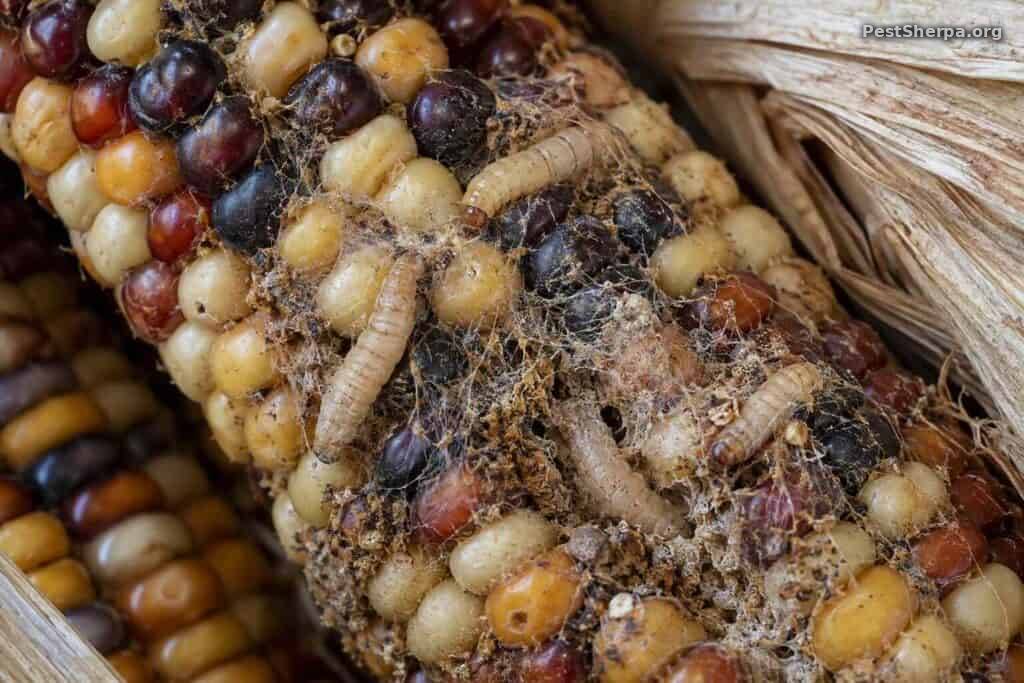
Indianmeal moth larvae and silk webbing on dried corn, the sign that the source is in the food.
Pantry moths vs pantry beetles (lookalike cues)
Greg Baumann insight: Start with what the insect is, then find the package. A coppery-winged moth, silk webbing, or creamy larvae climbing walls to pupate points to the Indianmeal moth; only the larvae feed. Tiny flat or oval beetles in flour, cereal, nuts, chocolate, or pet food are the beetle side of this hub: merchant and sawtoothed grain beetles, red flour beetle, and warehouse beetle. A slender beetle with a snout is a weevil in whole grain: same find-the-source cleanup, and we do not host a weevil species page here. Hairy larvae on wool or carpet belong on the carpet beetle guide, not a new pantry child page. [UC IPM] [University of Minnesota Extension] [UF/IFAS IN153]
| Cue | Indianmeal moth | Pantry beetles (merchant, sawtoothed, red flour, warehouse) |
|---|---|---|
| Adult | Small moth; outer two-thirds of the forewing coppery / reddish-brown; inner third whitish-gray | No moth wings. Flat saw-toothed beetles ~1/10 in; shiny reddish flour beetles; mottled oval warehouse beetle ~1/8 in |
| Who feeds | Larvae only: adults do not feed | Larvae and adults both feed in dry goods |
| Package signs | Silk webbing, frass, creamy larvae; contamination exceeds what they eat | Beetles in flour/cereal/nuts/pet food; flour-beetle odor taint possible; warehouse beetle hairs: discard infested food |
| Away from food | Mature larvae wander to walls and ceilings to pupate: easy to mis-locate the source | Often near packages and cupboard cracks; warehouse larvae seek new food |
| Traps / lights | Adults go to lights. Sex-pheromone traps catch males: monitor, do not eradicate; they will not pull beetles | Need beetle-labeled / multi-species monitoring if used; IMM-only lures miss them |
| First move | Pull dry goods for webbing (include pet food and birdseed). Discard sealed; vacuum; airtight what you keep | Same find-the-package program. Do not spray the pantry. Fabric/wool larvae → carpet beetle hub |
Common Misidentifications
- Clothes moths: about 1/4 in, gold, hide near fabric, usually not attracted to lights. Coppery kitchen moths that fly to lights are Indianmeal moths. Lures are not interchangeable.
- Weevils have a snout; larvae develop inside whole kernels. Merchant, sawtoothed, red flour, and warehouse beetles are not weevils.
- Fruit flies (~1/8 in, often red-eyed) belong with ripe produce and drains, not dry packaged goods.
- Warehouse vs khapra: related Trogoderma are hard to separate. Do not DIY-identify khapra. Submit to an expert. Warehouse beetles can fly; khapra cannot.
Why It Matters (Contamination, Not Disease)
This is contamination and wasted food, not disease. They contaminate more food than they eat. They do not bite, sting, or damage buildings. They are not known to transmit human pathogens.
Warehouse beetle hairs in food can irritate the mouth, esophagus, and digestive tract if eaten. Discard that food. Flour-beetle quinones can taint odor and taste; discard tainted product.
Traps monitor. They will not eliminate an infestation. Indianmeal moth sex-pheromone traps catch males, not females, and will not attract beetles.
Insecticides are not for the pantry. UC, Cornell, and Minnesota Extension do not recommend spraying. Sprays do not kill insects inside packages; food that contacts insecticide must be thrown away.
What To Do
Find the source → discard or temperature-treat → vacuum and wash → airtight storage → monitor.
Scenario 1: Indianmeal moth (webbing, wandering larvae, pet food/grain)
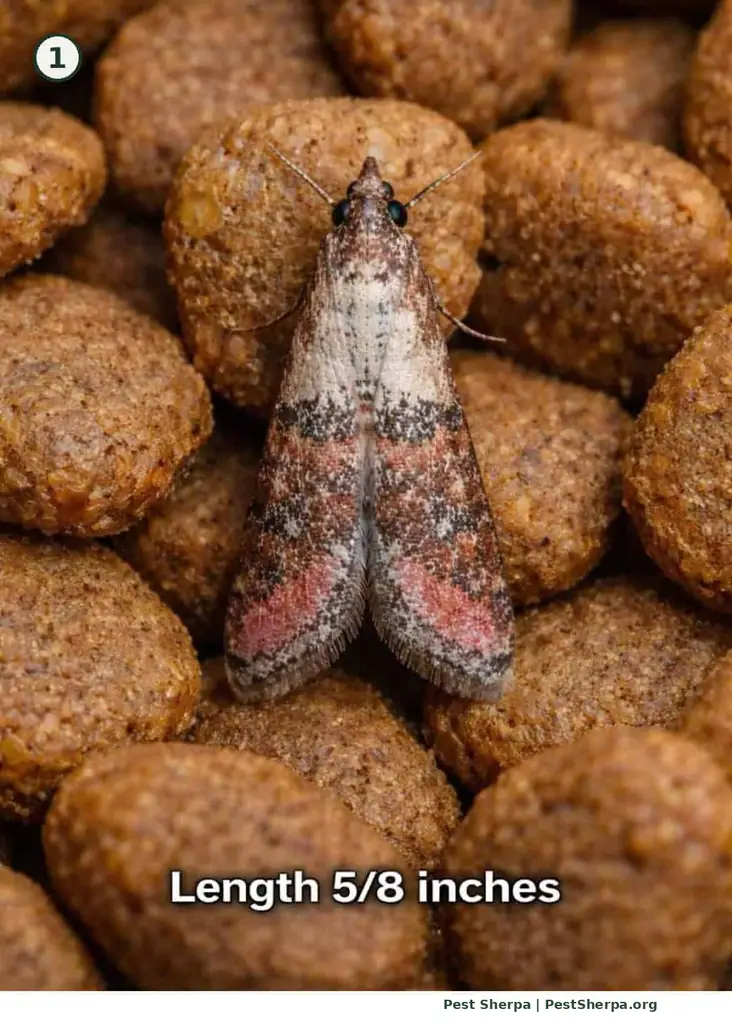
Which pest do you see? Match the number:
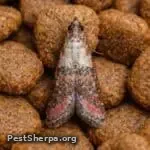
- Indianmeal moth: slender moth about 5/8 inch long; inner part of the wings pale gray, outer part coppery or reddish-brown. Larvae leave silk webbing in grain and pet food.
Adult Indianmeal moth on dry pet-food kibble; coppery outer two-thirds of the wings is the field mark.
Goal: Find every webbed package, including pet food and birdseed
- Pull all dry goods. Look for silk, frass, and larvae on walls and ceilings.
- Discard infested food in a sealed bag and take it out of the house.
- Moths can still fly up to three weeks after you discard the source; then you missed a package.
Scenario 2: Merchant grain beetle
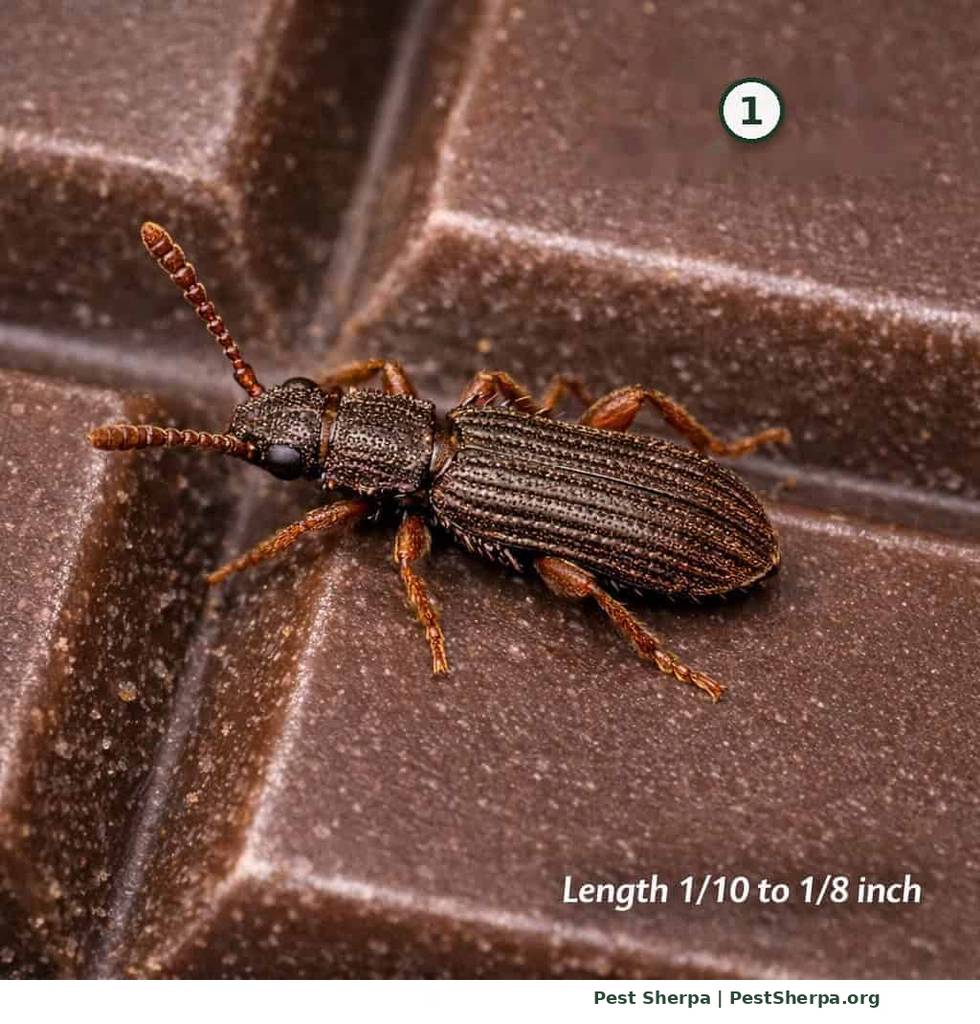
Which pest do you see? Match the number:
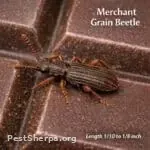
- Merchant grain beetle: flat, reddish-brown beetle 1/10 to 1/8 inch long with six saw-like teeth on each side of the thorax. Larger eyes than its close look-alike, the sawtoothed grain beetle.
Merchant grain beetle on chocolate; prefers oilseeds and nuts.
Goal: Locate the infested nuts, chocolate, or cereal, not spray the shelf
- Inspect opened packages first, then paper, thin cardboard, and thin plastic.
- Biology is nearly identical to sawtoothed; you do not need to separate them for home cleanup.
- Store remaining goods in glass, metal, or heavy plastic. Plastic bags are not adequate.
Scenario 3: Red flour beetle
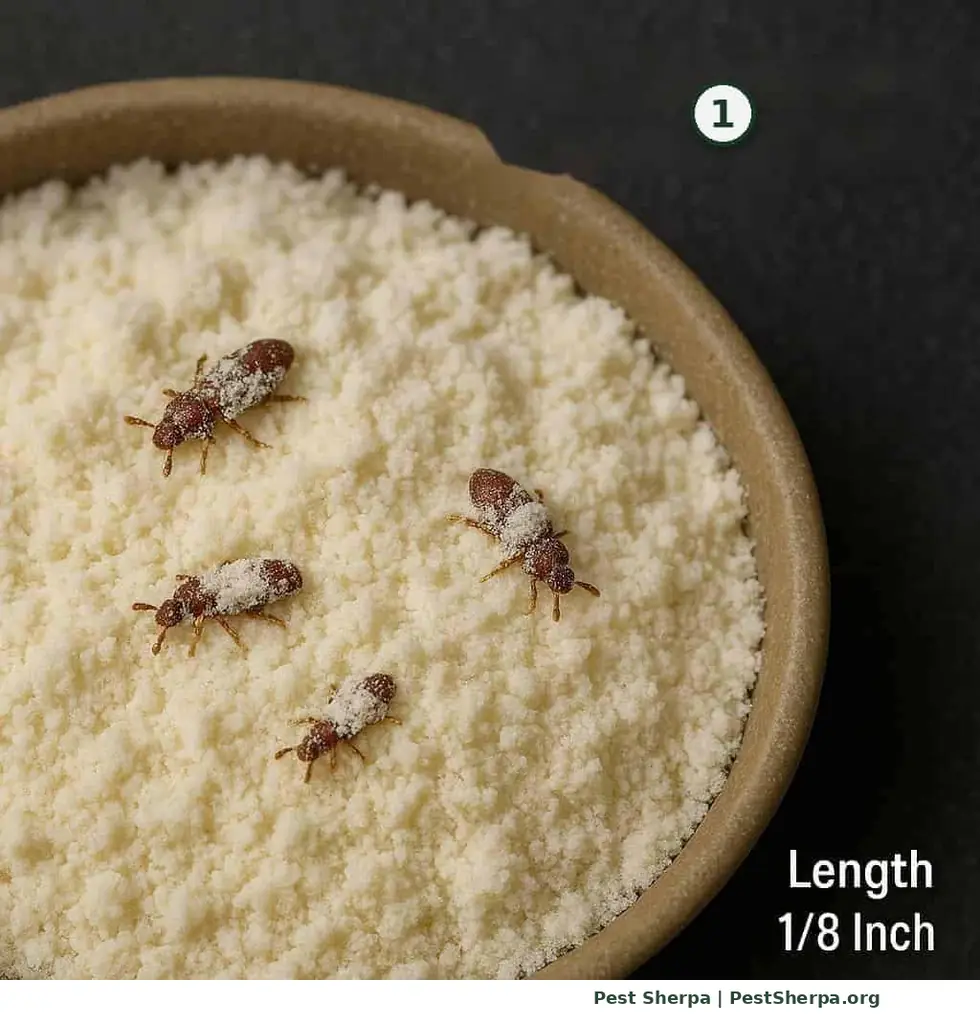
Which pest do you see? Match the number:
- Red flour beetle: reddish-brown, flat beetle about 1/8 inch long. The last three antenna segments form a sudden club. Often found in flour and leaves a gray tint and sharp odor.
Red flour beetles crawling in wheat flour; they cannot attack sound grain.
Goal: Remove infested milled products and stop the odor taint
- Search flour, cake mix, cereals, and other broken-grain products.
- Quinones can make food smell and taste bad. Discard it.
- They may fly. A three-segmented antennal club separates them from confused flour beetle (no species page here).
Scenario 4: Sawtoothed grain beetle
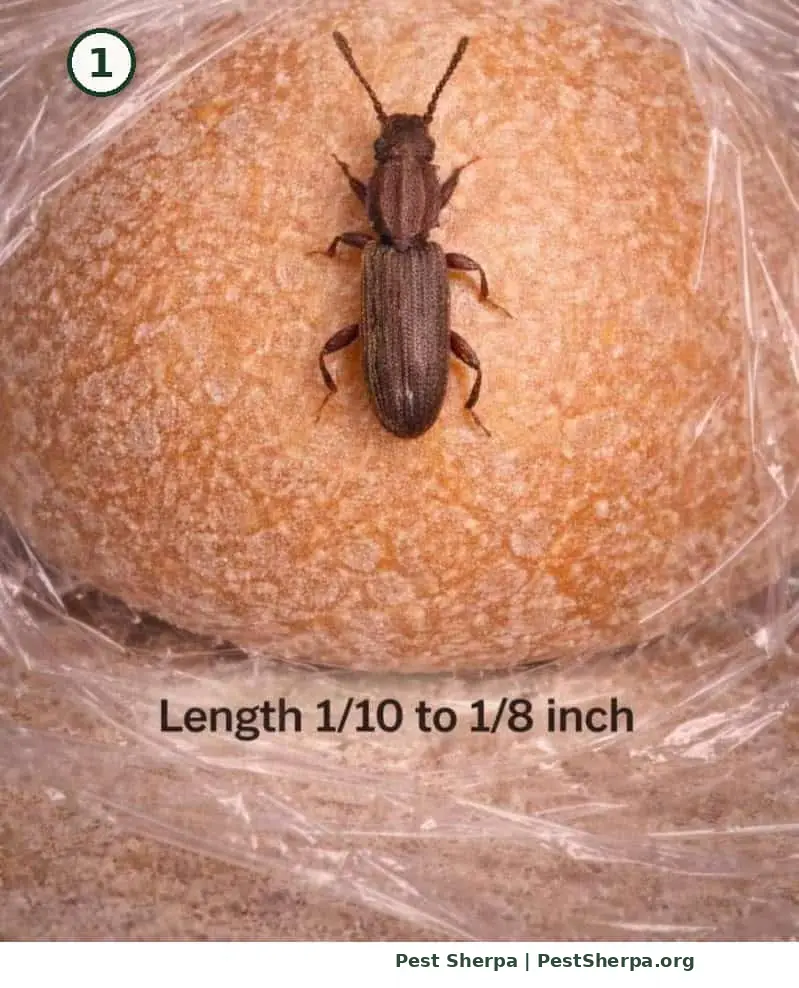
Which pest do you see? Match the number:
- Sawtoothed grain beetle: slim, flat, dark brown beetle 1/10 to 1/8 inch long with six saw-like teeth on each side of the thorax and small eyes.
Adult sawtoothed grain beetle on wrapped food, not an egg. Six saw-like teeth line each side of the thorax.
Goal: Find the source package; adults cannot fly and arrived in food
- Very flat; they hide in package folds and cupboard cracks.
- Cannot attack perfectly sound grain; often found with other insects.
- Vacuum cracks and shelf undersides; empty the vacuum outdoors.
Scenario 5: Warehouse beetle
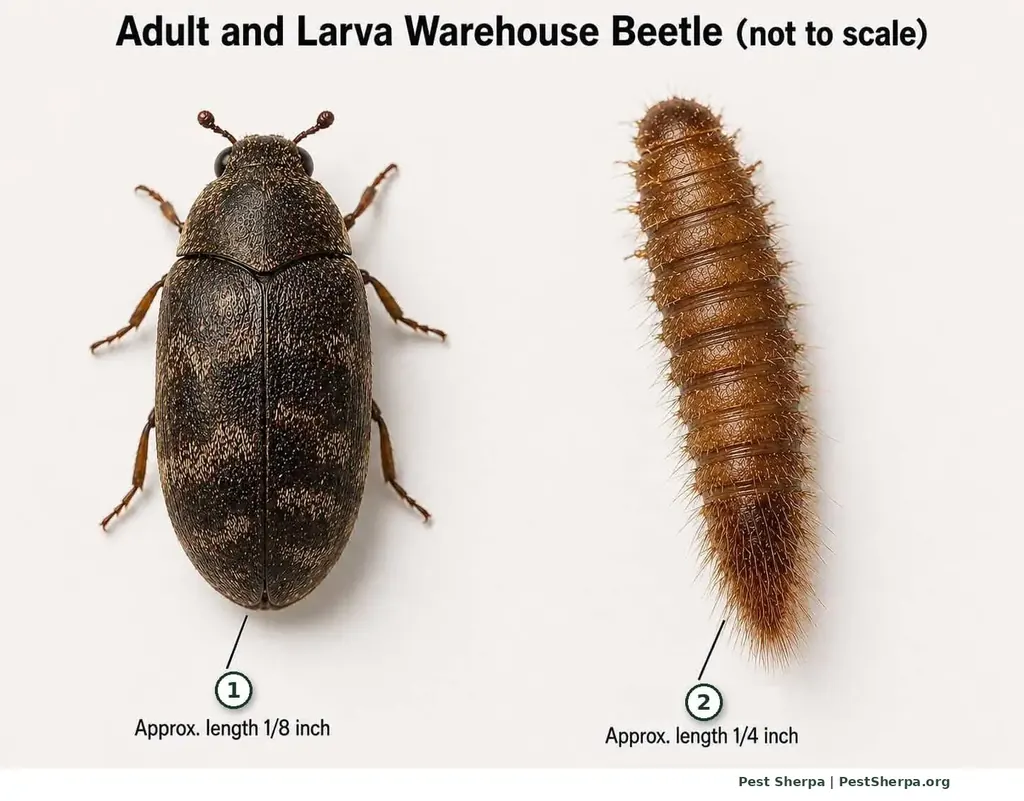
Which stage do you see? Match the number:
- Adult: small, oval beetle about 1/8 inch long, dark with mottled pale bands across the wing covers.
- Mature larva: hairy and banded brown with a tuft of long hairs at the tail end, about 1/4 inch long. The hairs can irritate skin, so do not handle it bare-handed.
Warehouse beetle adult and hairy larva (not to scale). Do not identify Trogoderma as khapra yourself.
Goal: Discard infested food because of irritating hairs; get expert ID if uncertain
- Wide food list, especially high-protein items (pet food, spices, fish meal).
- Mature larvae can diapause; activity can stall and resume.
- If you cannot confirm warehouse beetle, submit the specimen to an expert.
What Fails (Common Mistakes)
- Bay leaves, spearmint gum, or ultrasonic devices. Minnesota Extension: no evidence bay leaves or gum work.
- Spraying the pantry. UC, Cornell, and Minnesota Extension do not recommend it; sprays miss insects inside packages.
- Using pheromone traps as eradication.
- Treating without finding the infested package.
- Blending freeze times into one invented number.
When to Call a Professional
Greg Baumann insight: Most home pantry jobs are sanitation, discard, and airtight storage, not a spray ticket. Call when you cannot find the package after an honest cleanout, when moths keep appearing past the residual-adult window, when the source may be outside the kitchen cabinets, or when the beetle might be a Trogoderma you should not DIY-name. If the larvae are chewing wool or carpet instead of cereal, open the carpet beetle guide. [UMN Extension] [UC IPM]
- Insects continue after a full cleanout and you cannot find the source.
- Indianmeal moths still appear more than three weeks after you discarded infested food (UMN: longer usually means a missed package).
- Hidden sources: rodent nests, grain baits, pet food in the garage, birdseed, dried flowers, dead animals in voids (UC).
- Trogoderma identity is uncertain: submit specimens; do not DIY-identify khapra.
- Fabric pests mixed in: location can deceive. Wool, carpet, or stored clothing larvae → carpet beetles, not a new pantry species page.
Compare Common Pantry Pests
Species pages exist for these five, not for confused flour beetle, drugstore beetle, or grain weevils.
Indianmeal Moth
Coppery outer wings, silk webbing, wandering larvae. Only larvae feed.
Merchant Grain Beetle
Flat, six thoracic teeth; prefers nuts and oilseeds. Strong flier.
Red Flour Beetle
Shiny reddish-brown in flour and milled products. Quinones taint food.
Sawtoothed Grain Beetle
Same six thoracic teeth as merchant; smaller eyes, larger temple. Cannot fly.
Warehouse Beetle
Mottled oval adult; hairy larva. Discard infested food. Expert ID if Trogoderma is uncertain.
Prevention
- Storage: airtight glass, metal, or heavy plastic, not plastic bags. Ordinary kitchen canisters are often not tight enough.
- Rotation: use food in 2 to 4 months. First in, first out. Do not mix old and new lots. Inspect new goods; skip damaged packages. Check pet food, birdseed, spices, and garden seed.
- After a find: vacuum cracks and shelf undersides; empty the vacuum outdoors. Wash shelves with soap and water. Bleach or disinfectant will not prevent return.
- Freeze/heat: sources differ: some say 4 days at 0°F, others 7 to 14 days. Heat: some say 130°F for at least 30 minutes; others 130°F for 1 hour, or 140°F for 1 hour. Do not blend those into one recipe. Store infrequently used flour, spices, and grains in the freezer.
Find the source in the food, then lock the pantry down. University programs agree on the same spine already in this hub’s TL;DR: inspect every susceptible package (opened goods first, plus pet food, birdseed, spices, and forgotten bulk), discard what shows insects or webbing in a sealed bag taken outdoors, vacuum cupboard cracks and empty the vac outside, wash shelves with soap and water, and move sound food into airtight glass, metal, or heavy plastic, not ordinary bags. UC IPM and Cornell say insecticides do not belong in the pantry; sprays miss insects inside packages and can contaminate food you then have to throw away. Pheromone traps help you monitor; they do not replace finding the package, and Indianmeal moth lures will not pull grain or flour beetles. Rotate stock in a few months, do not mix old and new lots, and keep infrequently used flour or spices in the freezer if you can. Leave freeze and heat times attributed to their sources. Do not blend conflicting extension recipes into one number. [UC IPM] [Cornell IPM] [UMN Extension]
Common Questions
Are pantry pests a sign my house is dirty?
No. They usually arrive in an already-infested package. Long-stored opened food amplifies them.
Will eating one make me sick?
Unlikely; they are not known to spread disease. Discard warehouse-beetle-infested food (hairs can irritate if eaten). Flour-beetle quinones taint flavor.
Do I need to spray the pantry?
No. Find the package. UC, Cornell, and Minnesota Extension do not recommend insecticides in the pantry.
How do I tell a pantry moth from a pantry beetle?
Moths fly, show coppery outer wings, and leave silk webbing. See the Indianmeal moth guide. Beetles crawl in the product: start with merchant, sawtoothed, red flour, or warehouse. Use the moth-vs-beetle chart above. A snout means a weevil in whole grain: same cleanup; no weevil page here.
Could these be carpet beetles?
If larvae are on wool, carpets, felt, or stored fabrics, not in cereal or flour, use the separate carpet beetle hub.
References
- University of California IPM: Pantry Pests
- University of Florida IFAS: Indianmeal Moth
- University of Minnesota Extension: Pantry Pests
- Purdue Extension: E-37 Pantry Pests
- Cornell IPM: Pantry Pests
- Texas A&M AgriLife: Pantry and Fabric Pests in the Home
- Cornell IPM: Pantry Moths
- University of California IPM: Pantry Pests Quick Tips
This article was written by Greg Baumann, founder of Pest Sherpa, and reflects more than 40 years of professional pest management experience.
About the Author

Greg Baumann | Pest Control Expert
Greg Baumann is the founder of Pest Sherpa and a Pest Control Expert with more than 40 years of professional pest management experience. His articles combine decades of field experience, technical expertise, and science-based guidance to help homeowners identify pests correctly, understand real-world risks, and make informed pest management decisions.
Mission: Identify the pest. Understand the risk. Stop the problem. Prevent the comeback. Know when it’s time to call a professional.