
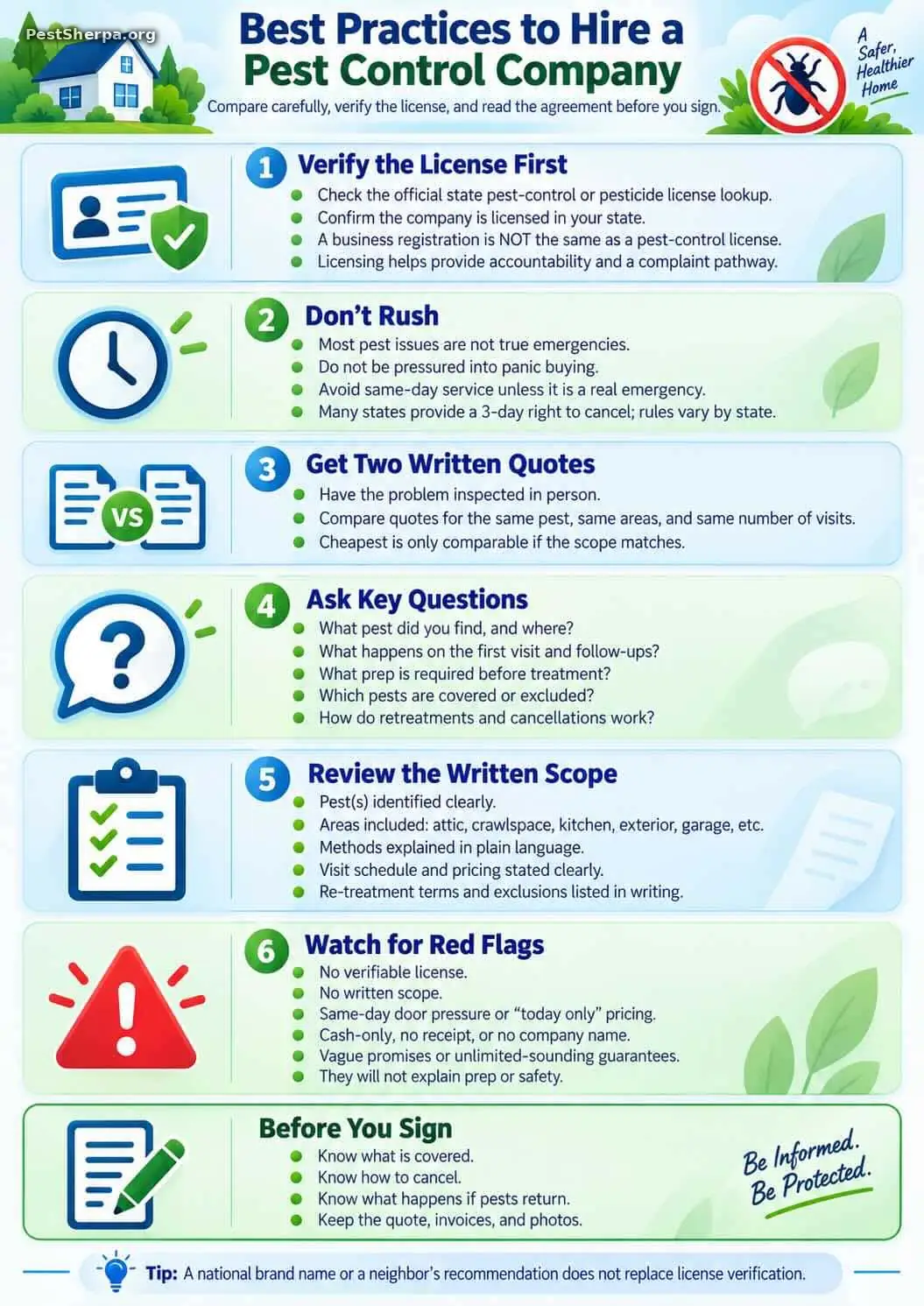
What to Look for When Hiring a Pro for Rodents (Mice and Rats)
Mice and rats are a building problem before they are a bait problem. While rats and mice are common building pests, mice are much more common in residential structures and will be the focus of this article, although the procedures apply to both. The Centers for Disease Control and Prevention (CDC) frames residential rodent work as seal up, trap up, and clean up safely. The National Pesticide Information Center (NPIC) and University of California Statewide IPM (UC IPM) put sanitation and exclusion first, trapping next, and rodenticides last. EPA pages on hiring and rodenticide restrictions reinforce licensing, IPM preference, and tamper-resistant bait stations when poison is used. This guide shows what a good hire looks like, and which gadgets to ignore.
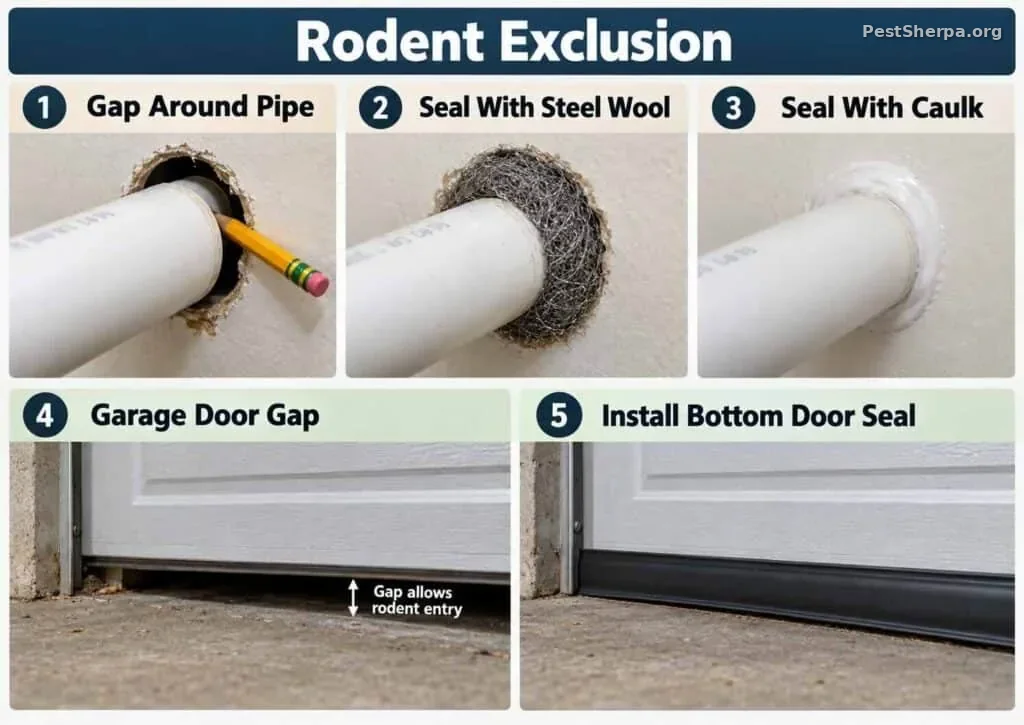
Simple steps can reduce chances of rodent entry
Confirm Rodents and Whether They Are Mice or Rats
EPA notes you may never see a rodent unless pressure is severe. Look for droppings near food storage, nesting material, chewed packaging, holes in walls or floors, and stale odors from hidden areas. UC IPM adds gnaw marks, smudge marks on beams and pipes, burrows near outside entry points (Norway rats), overhead runways (roof rats), and attic noises. CDC: mice can fit through a hole about the width of a pencil: roughly 1/4 inch (6 mm).
Use our rodent guide plus house mice, Norway rats, and roof rats. Species ID matters: UC IPM notes mice and small juvenile rats often will not trigger a rat-sized snap trap. Warmer weather alone will not reliably empty a basement. See Will mice leave my basement when it’s warmer? For disease context: Is hantavirus contagious from person to person?
DIY Versus Hiring a Professional
DIY is reasonable for light, accessible activity when you will seal entries and run enough traps. CDC trap guidance: set traps throughout; continue until there are no captures for a week and no new signs. UC IPM prefers trapping in homes when only a few mice are present. You see results and avoid indoor poison-odor problems. Most people, though, prefer to have a professional deal with a rodent issue.
Even for DIYers, eek professional help when rodents reached HVAC ducts (CDC cleanup), when infestation is heavy or a vacant structure is loaded with rodents, when electrical equipment appears damaged (NPIC), when roof rats travel utility lines (UC IPM), when trapping fails to resolve activity, or when you simply need licensed IPM help (EPA hire tips).
What Good Rodent Treatment Means
Lead with exclusion and snap traps
- Sanitation. Remove food, water, and harborage on an ongoing basis (EPA, CDC, UC IPM, NPIC).
- Exclusion / seal-up. Seal gaps larger than about 1/4 inch. UC IPM: plastic, rubber, vinyl, expandable foam, and wood alone are poor long-term plugs: rodents gnaw them. Prefer steel wool (often temporary), wire screen, sheet metal, hardware cloth, cement, and metal door sweeps (CDC seal-up; UC IPM).
- Snap traps first. CDC recommends traditional snap traps to control rodents. Some people prefer other traps as well, such as glue traps and live traps for DIY. Place traps against walls in a “T” with the baited end toward the wall. Pre-bait for neophobic rats. Rats are known to avoid new things placed in their foraging area such as traps. Use enough traps: UC IPM notes a heavily infested home may need a dozen or more, spaced about 10 to 20 feet for rats; mice seldom travel far, so space traps more tightly.
- Rodenticides last. NPIC: use rodenticides only as a last resort. CDC: consider poison bait stations for infestations that persist after trapping, or hire a pro. A pro knows the rules and how to ensure safe use of the bait. EPA consumer rules emphasize ready-to-use tamper-resistant bait stations (block/paste, not loose consumer pellets), with additional restrictions on second-generation anticoagulants for general consumers. Professionals must still secure stations where children, pets, or nontarget wildlife have access. Promptly remove carcasses to reduce secondary poisoning risk (EPA).
Gimmicks
- Ultrasonic, magnetic, or vibrational devices. UC IPM: ineffective or very limited for rats and mice in buildings; animals habituate; little evidence these devices drive established rodents out. Treat them as unsupported gimmicks, not banned products, just unsupported for control.
- Relying on cats or owls alone. UC IPM: predators cannot significantly control prolific rodents; outdoor pet feeding can attract rodents.
- Insecticide total release aerosols in or under homes. These are totally ineffective for rodents. UC IPM: not recommended around residences (fire and structural risks).
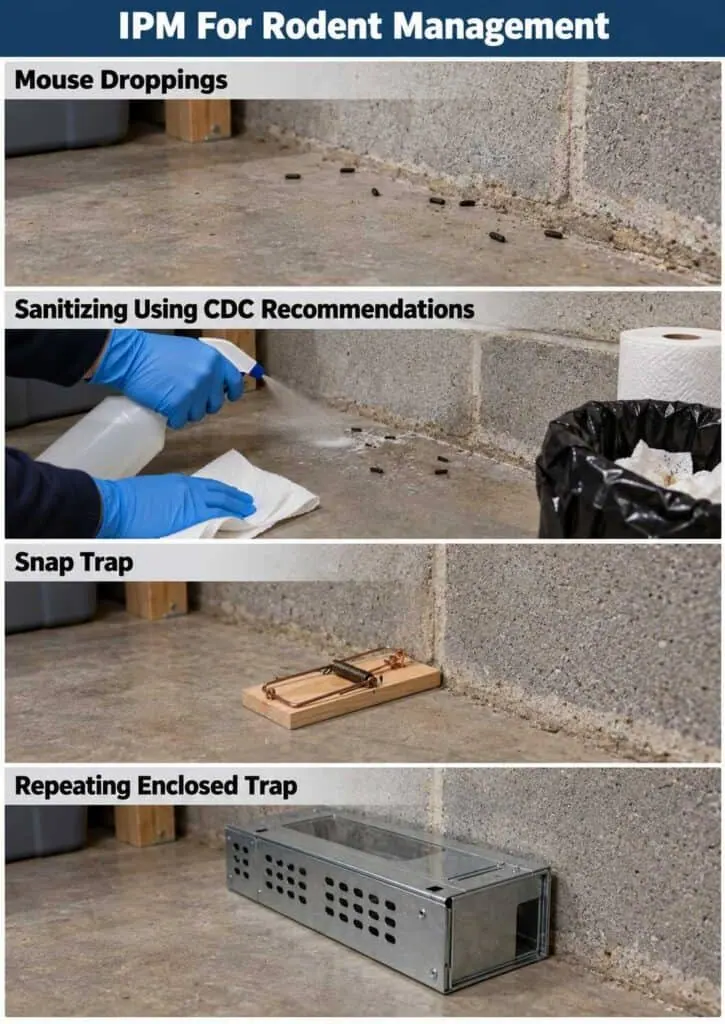
If you find rodent evidence an Integrated Pest Management process works well. Use bait (poison) only as a last resort indoors and always heed label warnings especially if there are children or pets in the household.
Credentials and Questions
EPA: firms offering pest control must be licensed by your state. Ask to see the license and prefer IPM experience. Write down product names and EPA registration numbers; request SDS information (EPA Do’s and Don’ts).
- Will you inspect and show me entry points with a sealing plan before pushing bait?
- Will trapping and exclusion come before rodenticides?
- If bait is used: tamper-resistant stations, label sites, and child/pet/wildlife protections?
- Are you licensed here, and may I see the license?
- What products (active ingredient + EPA Reg. No. if baiting) will you use?
- How will you handle carcass removal and follow-up monitoring?
- House mouse vs. Norway vs. roof rat plan, and attic/burrow experience?
- Any HVAC/duct involvement requiring specialists (CDC)?
- If the pest turns out to be another type of rodent and not a rat or mouse, ask if they can address the issue and control the pest. Ask about the biology of that pest and look it up on Pest Sherpa to verify that the professional understands the challenges.
Safety: Calm Disease Framing and Cleanup
Rodents can spread germs; prevention and safe cleanup reduce risk. If you become ill and may have had rodent exposure, talk to a healthcare provider and mention rodents (CDC). This is not medical advice.
CDC cleanup essentials: do not vacuum or sweep dry droppings or nests. That can aerosolize particles. Wear gloves; wet materials thoroughly with a disinfectant or a fresh bleach solution (CDC describes 1.5 cups household bleach per gallon of water, or about 1:9); soak about five minutes; wipe with paper towels; mop; wash gloves then hands. Air out closed buildings about 30 minutes before cleaning. Heavy infestations may need additional PPE (coveralls, goggles, HEPA respirator) and health-department guidance.
Comparing Bids, Service Day, and Follow-Up
A higher bid that includes exclusion labor and materials often ends the cycle cheaper than endless bait stations. Opened federal and Extension pages do not define a standard warranty length. Do not expect an “industry standard 30-day guarantee.” Get written scope: pests targeted, products and EPA Reg. Nos., which openings will be sealed, visit schedule, and what “re-treat” covers (failed exclusion vs. new entries you create).
Red flags
- Won’t show a state license.
- Pushes pesticide first; won’t inspect food, water, and entry sources.
- No exclusion plan; relies mainly on ultrasonics.
- Won’t name products or EPA registration numbers.
- Proposes loose bait accessible to kids or pets.
- One visit with no monitoring or carcass plan.
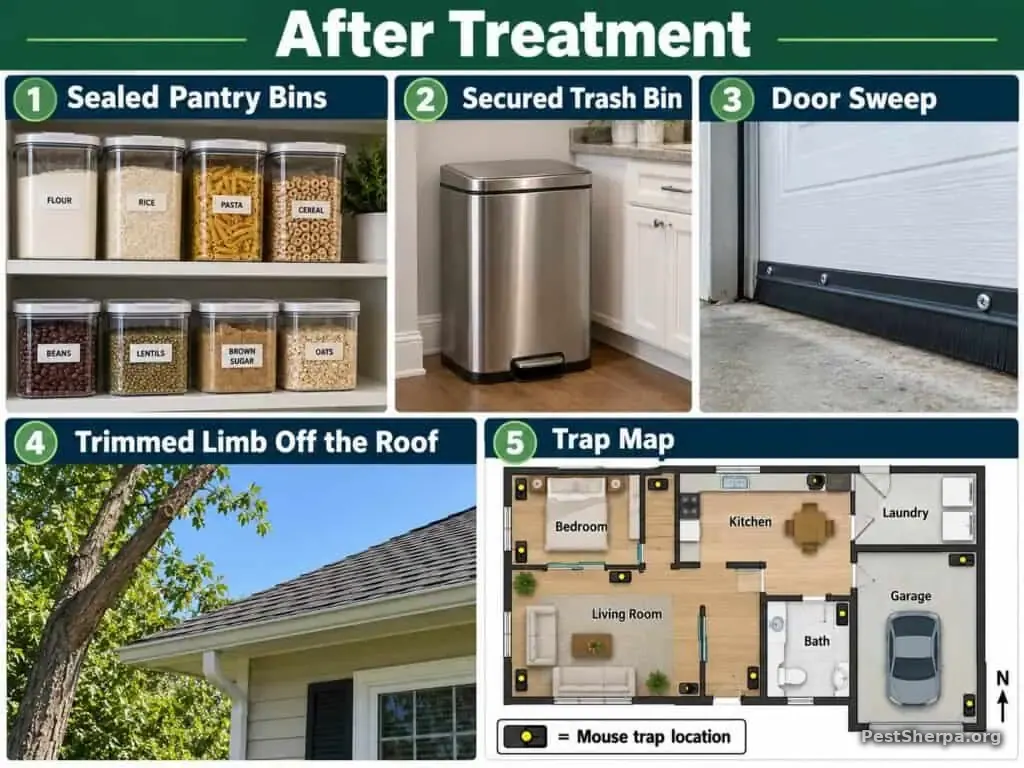
Successful pest management is an ongoing process and even after success, monitoring is needed.
Hiring Checklist: Rodents
- Confirm signs and species via the rodent guide. Make sure the technician verifies evidence of the pest.
- Lead with sanitation, exclusion, and snap traps; keep rodenticides last (NPIC/CDC/UC IPM).
- Skip ultrasonic gadgets (UC IPM).
- Follow CDC wet-cleaning, never dry-sweep droppings.
- Verify license; get products, sealing work, follow-ups, and any warranty terms in writing.
- Ask follow-ups at Ask the Sherpa.
Hire the contractor who finds the entry, catches the residents with traps, and closes the door: poison is a supporting actor and only if needed, not the star.
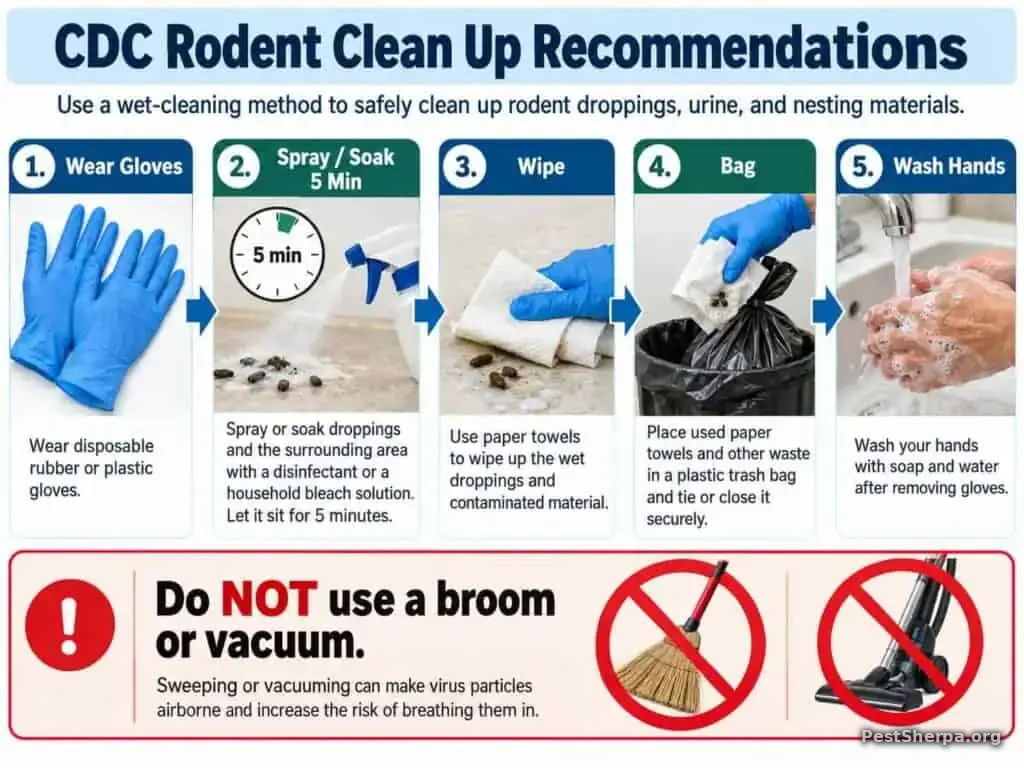
Centers for Disease Control and Prevention (CDC) suggests these steps to clean up rodent droppings or evidence. CDC also suggests that for heavy infestations, a respirator with HEPA filter should be used as well.
Sources & Further Reading
Selected public authorities used to check the hiring guidance above (not an exhaustive bibliography):
- CDC: Seal Up / Trap Up / Clean Up (Rodent Control)
- EPA: Tips for Hiring a Rodent Control Professional
- EPA: Restrictions on Rodenticide Products
- UC IPM: Rats
- UC IPM: House Mouse
This article was written by Greg Baumann, founder of Pest Sherpa, and reflects more than 40 years of professional pest management experience.
About the Author

Greg Baumann | Pest Control Expert
Greg Baumann is the founder of Pest Sherpa and a Pest Control Expert with more than 40 years of professional pest management experience. His articles combine decades of field experience, technical expertise, and science-based guidance to help homeowners identify pests correctly, understand real-world risks, and make informed pest management decisions.
Mission: Identify the pest. Understand the risk. Stop the problem. Prevent the comeback. Know when it’s time to call a professional.