
Hobo Spiders: Identification, Range, and the Necrosis Myth
Hobo spiders attract more fear than the evidence supports. They are genuine funnel weavers established in parts of western North America, and they startle people when fast-moving brown spiders appear in bathtubs or basements. This guide covers identification, geographic range, look-alike species, what the claims about necrotic wounds actually show, and practical exclusion.
Key Points
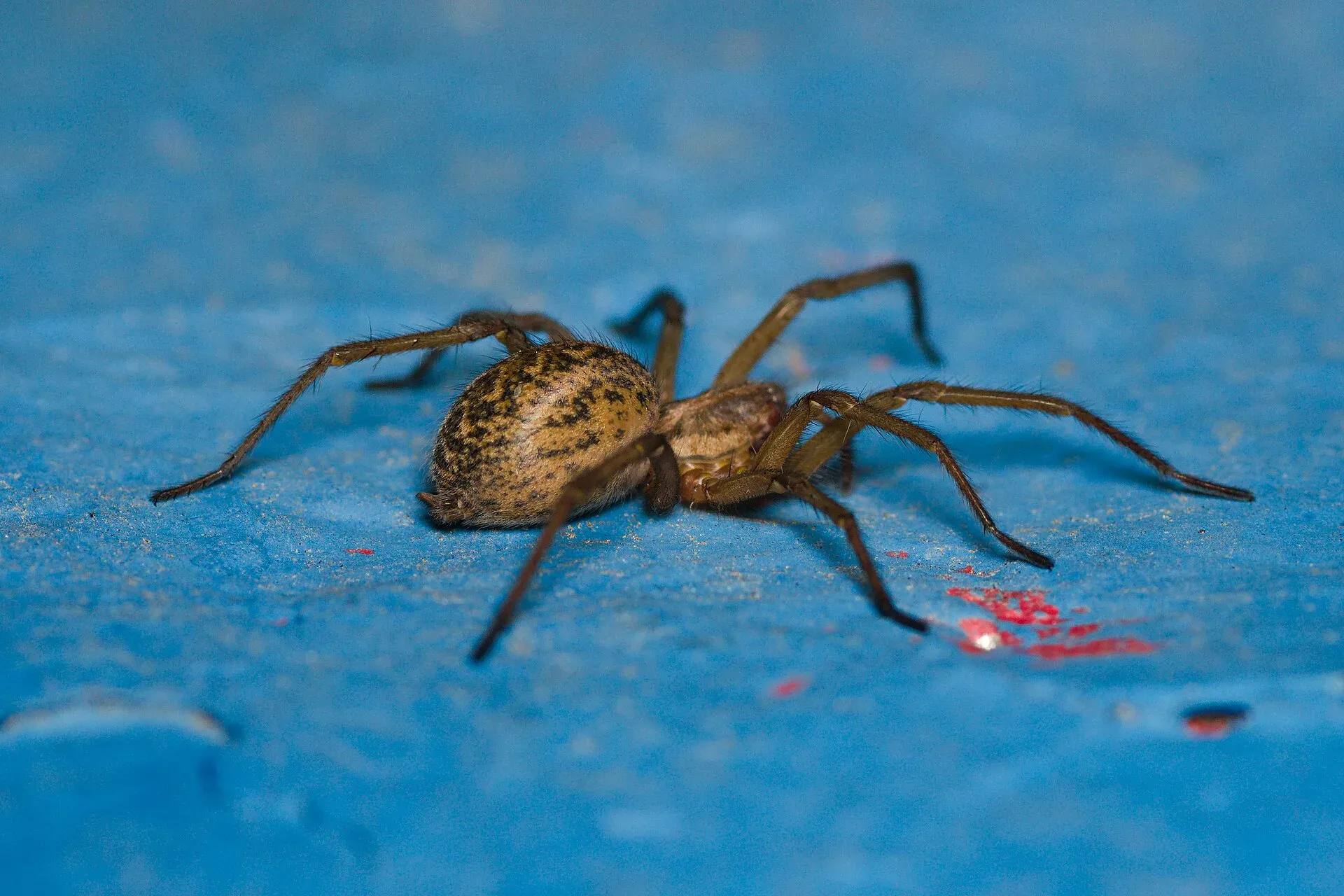
The hobo spider (Eratigena agrestis, formerly Tegenaria agrestis) is a European funnel weaver established in parts of the Pacific Northwest and intermountain West. It is brown and swift, often with chevron markings on the abdomen, and legs that usually lack strong dark bands. It builds a funnel web at ground level in and around structures.
For years, popular articles blamed hobo spiders for necrotic wounds, but the current evidence does not support that account. Extension and medical reviews regard the widows and the recluses as the primary medically important spiders in the United States, and the claims of necrosis from hobo spider bites have not held up.
Indoors, concentrate on exclusion, sticky traps, and vacuuming up wandering spiders, especially in late summer and fall when males are on the move. Spraying out of fear accomplishes less than sealing gaps and reducing clutter at floor level.
In This Guide
- Identification
- Where They Live
- Look-alikes
- Bites and the Necrosis Myth
- What To Do
- Prevention
- Frequently Asked Questions
- References
How to identify a hobo spider
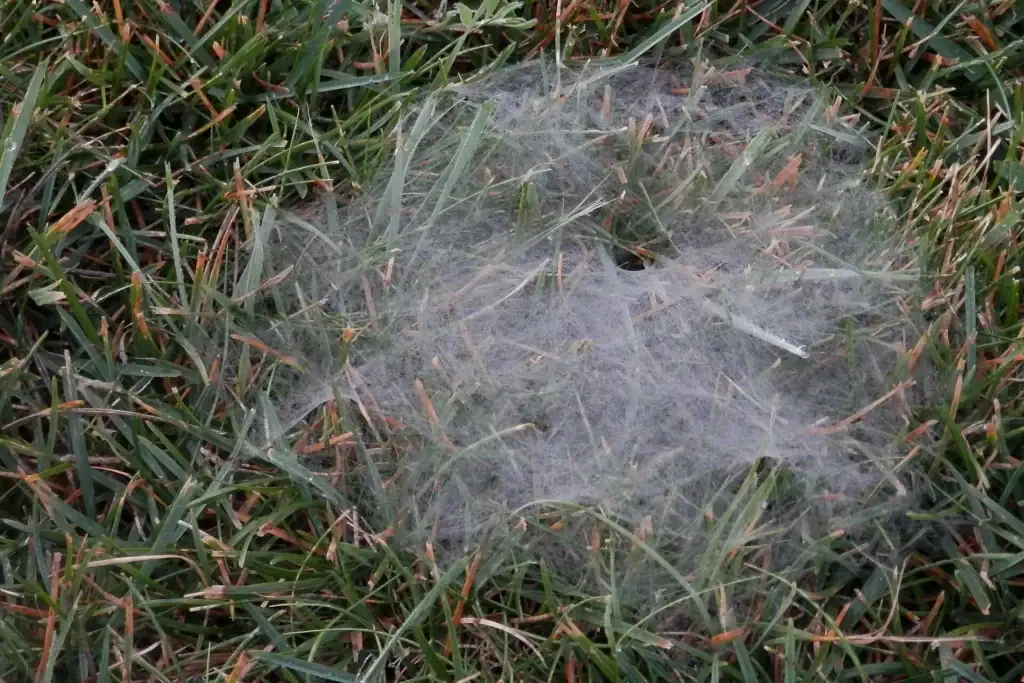
Hobo spiders are medium-sized brown funnel weavers. Body length ranges from roughly 1/4 to 5/8 inch depending on sex, and with the legs included they appear larger. The abdomen often shows a chevron or herringbone pattern, and, unlike many look-alikes, the legs usually lack distinct dark bands. Males have enlarged pedipalps. They build a sheet web with a funnel-shaped retreat in sheltered locations outdoors and occasionally in basements. [Utah State University Extension] [Washington State University Pestsense]
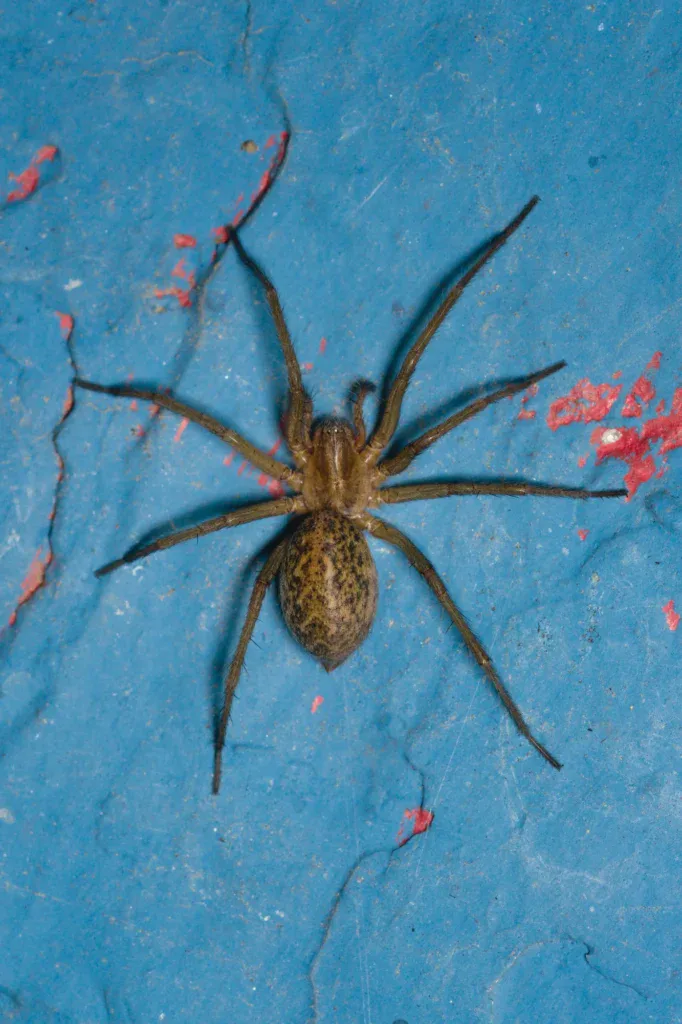
USU states plainly that nonspecialists misidentify these spiders constantly. Identifying a hobo spider with certainty often requires microscopic examination by a specialist. Featherlike hairs and other anatomical features can help identify funnel weavers, but distinguishing hobo spiders from closely related species generally requires examination of their reproductive structures. [Utah State University Extension]
| Feature | Hobo spider | Why homeowners get fooled |
|---|---|---|
| Web | Funnel / sheet with retreat | Grass spiders make similar outdoor funnels |
| Legs | Typically not boldly banded | People expect dramatic markings |
| Eyes | Eight eyes in two rows | Different from wolf spiders’ eye shine pattern |
| Climbing indoors | Poor on smooth surfaces; often ground level | Finding one in a tub is common and not proof of a ceiling nest |
Where hobo spiders live
Hobo spiders (Eratigena agrestis, formerly Tegenaria agrestis) are native to Europe, were detected in the Pacific Northwest in the 1930s, and are now established across parts of the Northwest and Intermountain West. Hobo spiders occur in parts of the Pacific Northwest and Intermountain West, including Washington, Oregon, Idaho, and northern Utah. Washington State University treats them as a common funnel weaver in parts of Washington. They are not a coast-to-coast household species. [Utah State University Extension] [Washington State University Pestsense]
If you live in the Southeast or the Midwest and are concerned about a brown spider in a shoe, begin with local range maps and the brown recluse guide, not with lore from the Pacific Northwest. Common names applied outside a species’ actual range create a great deal of unnecessary fear.
Indoors within the hobo spider’s range, wandering adults appear most often in late summer and fall, typically August through October, as males search for mates. They are frequently found at floor level, including in bathtubs and sinks, because smooth vertical surfaces are difficult for them to climb. [Utah State University Extension]
Look-alikes
- Giant house spider and domestic house spider: related funnel weavers that are frequently confused with hobo spiders in the Northwest. [Washington State University Pestsense]
- Grass spiders (Agelenopsis): build funnel webs in lawns and shrubs and share the general appearance of the family.
- Wolf spiders: hunters that build no capture funnel; they have a different eye pattern and are often larger.
- Brown recluse: a different family, with generally different geographical range, with a violin-shaped marking and six eyes; medically important within its range. See the Brown recluse guide.
- Yellow sac spider: pale and nocturnal, with different habits. See the Yellow sac guide.
For the broader range of spiders, see the spider guide, and consult the Joro spider guide if you are dealing with large orb weavers instead.
Bites and the necrosis myth
WSU states that recent research has not shown hobo spiders to be harmful to humans in the dramatic manner that older claims suggested. USU reports that there is no significant scientific evidence of a necrotic bite and notes that the CDC does not list hobo spiders among the spiders of major medical concern in the United States. A 2014 study of 33 verified spider bites in Oregon included one confirmed hobo spider bite. That bite caused temporary pain, redness, and muscle twitching, with symptoms resolving within 12 hours. No necrosis occurred in any of the documented bites. Although the number of confirmed hobo spider bites was small, the findings support other research questioning the spider’s reputation for causing serious wounds. [Washington State University Pestsense] [Utah State University Extension] [McKeown, Vetter, Hendrickson, Toxicon (2014)] [Gaver-Wainwright et al., Journal of Medical Entomology (2011)]
If you think a spider bit you
- Capture the spider for expert identification when you can.
- Wash the affected area with soap and water and apply a cold compress for discomfort or swelling. Seek medical attention if redness spreads, pain worsens, fever develops, or the wound does not improve. Difficulty breathing, throat swelling, or fainting requires emergency care. Do not assume an unexplained skin wound was caused by a spider unless the evidence supports that diagnosis.
- Do not diagnose necrotic arachnidism yourself on the basis of internet searches.
- Unexplained wounds have many causes, and misdiagnosis of recluse bites is a well-documented problem, even outside the hobo spider’s range. See the brown recluse guide.
- This is general information, not medical advice.
Greg’s tip: If someone shows you a photograph of a serious wound and attributes it to a hobo spider, ask whether the spider was caught and identified. Without that, the diagnosis is a guess.
What to do
- Remove individual spiders with a cup and a sheet of paper, or vacuum them and dispose of the bag contents. [Washington State University Pestsense]
- Sticky monitors placed along baseboards help map activity during the August through October peak. Fold the traps against the wall, and keep them away from children and pets. [Utah State University Extension]
- Concentrate on exclusion rather than fogging living spaces: door sweeps that actually seal, caulked foundation cracks, repaired screens, and less clutter.
- Outdoor perimeter sprays provide only temporary relief unless entry points are corrected, and WSU notes that spraying outdoors is usually a short-lived solution for this kind of spider.
- Reduce prey and harborage outdoors: tidy woodpiles and rock piles against the foundation, and keep basement window wells clear.
Small populations are often better tolerated than treated, since funnel weavers are predators. The goal is fewer surprise encounters in shoes and bedding, not a house free of every spider.
Prevention
For funnel weavers, door sweeps that actually meet the threshold, caulked foundation cracks, and repaired screens accomplish more than fogging a basement. WSU and USU both place exclusion and mechanical removal ahead of chemical treatment, and so do I. [WSU Pestsense] [USU Extension]
- Replace worn door sweeps and weatherstripping on every exterior door, including the basement bulkhead.
- Seal foundation and utility penetrations with an appropriate sealant. Screen weep holes in brick where building codes allow, but do not seal them, because they exist to let moisture escape from the wall.
- Keep window screens intact, and close the gaps around air conditioner sleeves.
- Reduce clutter at floor level indoors, since hobo spiders and their look-alikes hide in shoes, boxes, and fabric left on the floor.
- In hobo spider country, move beds slightly away from the walls and avoid bed skirts during the August through October peak.
- Shake out clothing left in piles on the floor, and keep children’s toys off basement floors overnight during the peak season.
- Tidy woodpiles, rock piles, and dense groundcover against the foundation so that funnel webs have fewer places to anchor outdoors.
- Use sticky monitors along baseboards to locate areas of concentrated activity, and then focus on those rooms rather than treating the entire house with aerosol.
Outside the western range, brown spiders found in homes are usually other species. Begin with your local extension office and the spiders hub rather than adopting folklore from the Pacific Northwest, and if you need context on recluses, use the brown recluse guide.
What not to do: do not wage chemical war on every relative of the Agelenidae in the yard. Do not attribute an unexplained wound to a hobo spider without the spider in hand. And do not fog bedrooms as a first step.
How the myth outran the data
Stories of necrotic spider bites spread because serious wounds are frightening and spiders are visible scapegoats. For a time, the medical literature itself amplified suspicion of the hobo spider, but later laboratory studies and research on verified bites did not support the idea of a uniquely dermonecrotic venom. Extension services within the spider’s actual range now lead with that correction. [Utah State University Extension] [Gaver-Wainwright et al., Journal of Medical Entomology (2011)] [McKeown, Vetter, Hendrickson, Toxicon (2014)]
WSU still asks people who have been bitten to bring the spider in for identification, which is the correct scientific practice regardless of species. Guessing from a photograph of a wound is how myths are perpetuated. [Washington State University Pestsense]
Home exclusion that works in funnel-weaver country
Funnel weavers enter through gaps. Garage side doors with daylight visible beneath them, crawlspace vents without screens, and foundation cracks are the usual points of entry. USU’s recommendations, which include door sweeps, screens, caulk, reduced clutter, and exterior treatment timed for May or June if you treat at all, represent standard integrated pest management. Chemical measures without exclusion lead only to repeated disappointment. [Utah State University Extension]
Basements with smooth painted walls produce what might be called the bathtub trap: spiders wander in at floor level and cannot climb out of tubs and sinks. The result can look like an infestation that appeared overnight, when it is really a combination of physics and the fall wandering season. Check for entry points at floor level first.
How to talk about risk without the myth
If someone in the household grew up with headlines about the “aggressive house spider,” show them the current language from WSU or USU rather than arguing from memory. Both now state that the dramatic claims of necrosis are not supported by solid evidence, and the CDC/NIOSH pages on spiders in the workplace focus on the risks from widows and recluses, not hobo spiders. [WSU Pestsense] [USU Extension] [CDC/NIOSH: Venomous Spiders at Work]
Pair that information with the brown recluse guide so the household understands which spiders genuinely warrant medical planning. For unidentified specimens, What Bug Is This? and Ask the Sherpa are far more reliable than social media threads.
Research on verified bites in Oregon (McKeown, Vetter, and Hendrickson, 2014) found mild, self-limiting effects in cases where the spider was actually confirmed as a hobo. That is the measured tone to adopt with neighbors and school nurses.
Inspection checklist for western basements
If you live where hobo spiders or giant house spiders occur, work through this list in late summer:
- Basement and garage door sweeps: no light should be visible beneath the door.
- Window wells: clear out leaves, and screen the wells if rodents and spiders are using them as entryways.
- Bathroom and laundry floors: place a sticky monitor in a corner for two weeks in September.
- Shoe racks and laundry on the floor: raise them or store them in containers.
- Firewood: inspect it before bringing it indoors, and shake out your gloves.
- Crawlspace entry: confirm that it is weatherstripped and latched.
- Household guidance: capture the spider for identification whenever a bite is suspected, wash the wound, and avoid diagnosing necrosis from internet searches.
If the monitors remain empty and you see only an occasional spider, tolerance combined with exclusion is sufficient. If you routinely find several large funnel weavers indoors every night during the peak season, tighten the seals and reduce outdoor harborage before you purchase a spray.
Common questions about hobo spiders
Do hobo spiders cause necrotic bites?
Hobo spiders can bite when trapped against the skin or handled, but their bites generally cause mild, temporary symptoms. Scientific investigations have not demonstrated that their venom causes tissue necrosis, despite earlier claims. on verified bites and extension reviews describe mild, self-limiting reactions, and many wounds attributed to hobo spiders have other causes.
Are hobo spiders dangerous?
Like most spiders, they are venomous, can bite if pressed against the skin, and may cause mild pain and redness. They are not regarded as medically important in the way that widows and recluses are.
Where do hobo spiders live?
They are established in parts of the Pacific Northwest and the Intermountain West, including areas of Washington, Oregon, Idaho, and Utah and neighboring regions. They are not found indoors nationwide.
Hobo spider vs brown recluse?
They are different animals with largely separate ranges. Recluses have six eyes arranged in pairs and a violin-shaped marking, while hobo spiders are funnel weavers with eight eyes and chevron patterns on the abdomen. Do not diagnose either one from an unexplained wound alone.
Why are they called aggressive house spiders?
The name stems from a mistranslation or misreading of the Latin agrestis, which means “of the fields,” not “aggressive.” They are not especially aggressive toward people.
How do I identify a hobo spider for sure?
Color alone is unreliable, and a dependable identification often requires examining the reproductive structures under magnification. When it matters, keep the spider and consult a diagnostic laboratory or an expert.
What should I do if I find one indoors?
Capture it under a cup or vacuum it, seal the entry points, reduce clutter, and place sticky monitors along the baseboards during the peak season in late summer and fall.
Send a photograph and your location to Ask the Sherpa if you need help distinguishing look-alikes.
References
- Washington State University Pestsense: Hobo Spider
- Utah State University Extension: Hobo Spider
- UC IPM Pest Notes: Hobo Spider
- McKeown, Vetter, Hendrickson, Toxicon (2014): Verified spider bites in Oregon
- Gaver-Wainwright et al., Journal of Medical Entomology (2011): Misdiagnosis of spider bites
- CDC/NIOSH: Venomous Spiders at Work
This article was written by Greg Baumann, founder of Pest Sherpa, and reflects more than 40 years of professional pest management experience.
About the Author

Greg Baumann | Pest Control Expert
Greg Baumann is the founder of Pest Sherpa and a Pest Control Expert with more than 40 years of professional pest management experience. His articles combine decades of field experience, technical expertise, and science-based guidance to help homeowners identify pests correctly, understand real-world risks, and make informed pest management decisions.
Mission: Identify the pest. Understand the risk. Stop the problem. Prevent the comeback. Know when it’s time to call a professional.