
Clothes Moths: Identification, Damage, and How to Get Rid of Them
You pull a wool sweater out of storage and find a scatter of small holes, or discover thin, grazed patches along the edge of a favorite rug beneath the couch. Clothes moths may be responsible, although carpet beetles can cause similar damage. These small insects are easy to overlook because they avoid light and prefer dark, undisturbed areas such as closets, storage boxes, and spaces beneath furniture. As a result, homeowners often discover the damage long before finding the insects.
The good news is that clothes moth infestations are usually manageable once you locate the source. This guide explains how to identify clothes moths, find where they are breeding, eliminate the damaging larvae and other life stages, and protect clothing, rugs, and other vulnerable materials without unnecessary pesticide applications or damage to fabrics.
Key Points
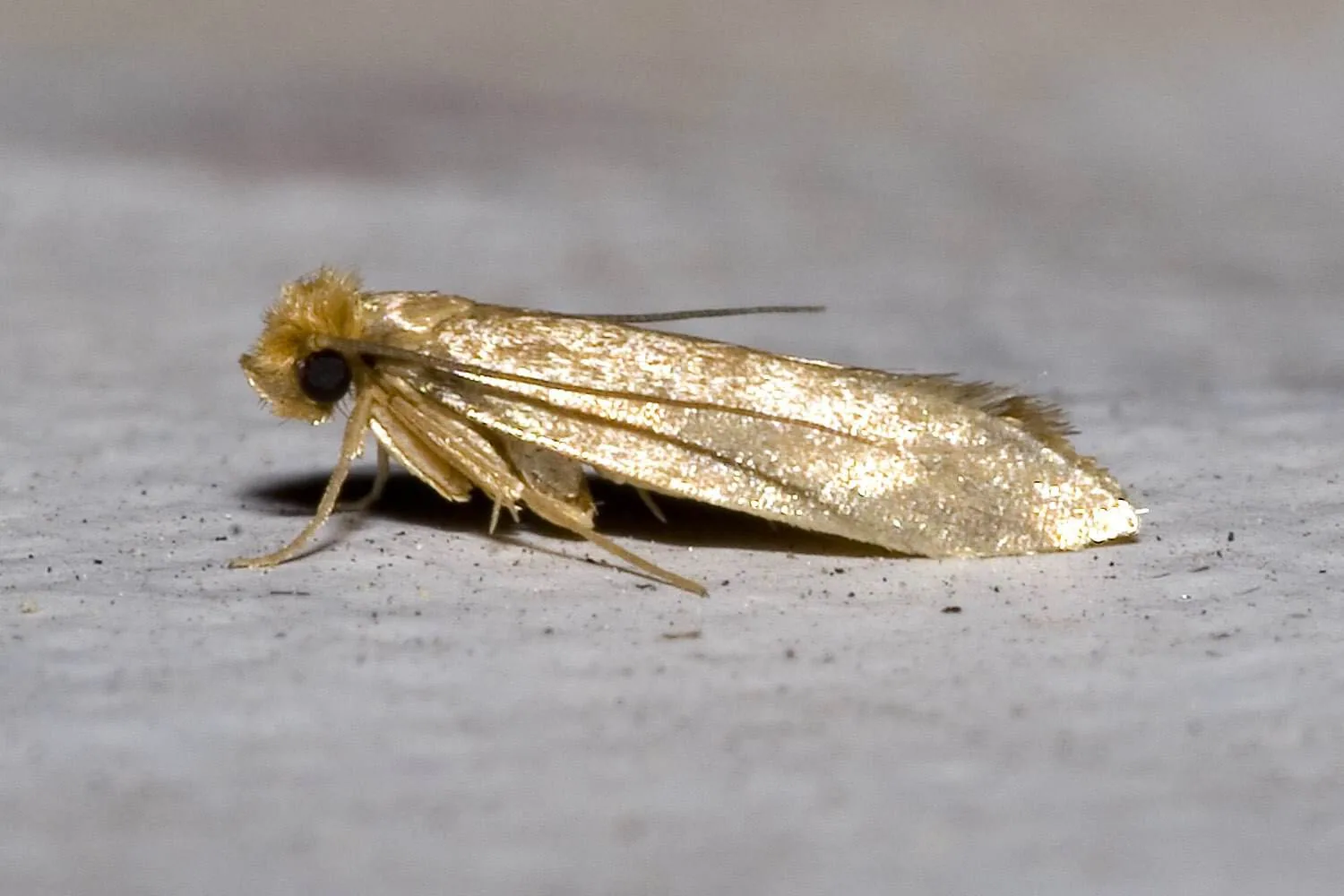
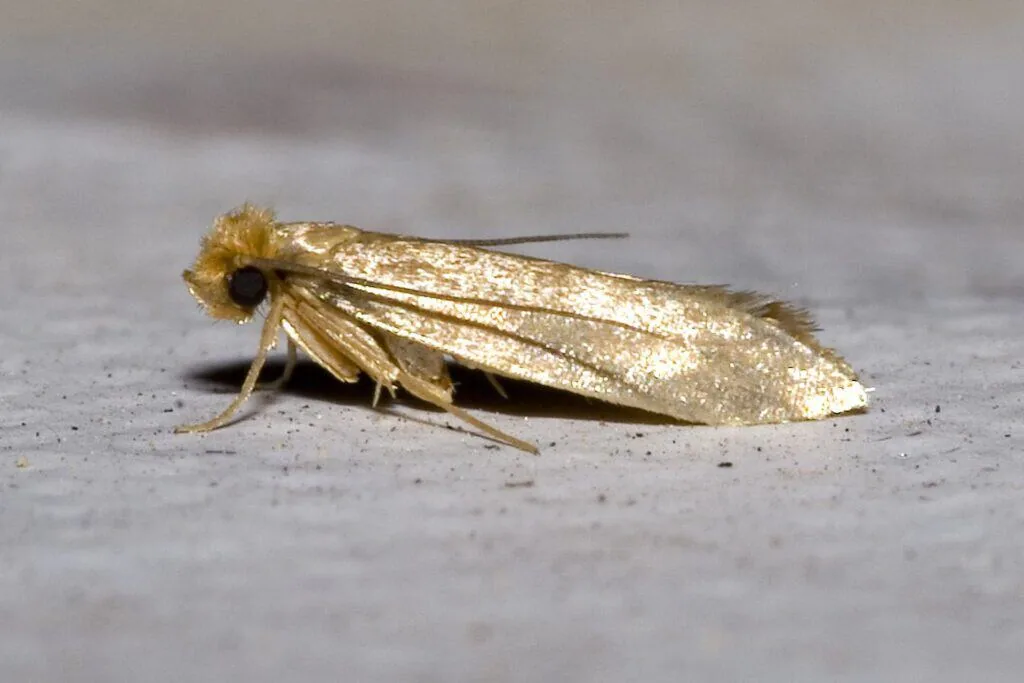
Two species cause most clothes moth damage in North America: the webbing clothes moth, which is more common, and the casemaking clothes moth. Adults are small, approximately 1/4 inch (6 mm) long at rest, with a wingspan of about 1/2 inch (13 mm). Webbing clothes moths are typically buff to golden, while casemaking clothes moths are somewhat browner and may have faint spots on their wings. Both avoid bright light and tend to remain in dark, undisturbed areas. Only the larvae damage fabrics. They primarily feed on animal-derived materials, including wool, fur, feathers, hair, and some felt, as well as susceptible silk, leather, and other animal-based products. Wool, fur, hair, and feathers contain keratin, a protein the larvae can digest.
Control begins with locating the source of the infestation. Common sources include stored wool clothing, carpets and rugs, upholstered furniture containing animal fibers, accumulated pet hair and lint, or abandoned bird and rodent nests. Infested items can often be treated by appropriate laundering, dry cleaning, freezing, or controlled heating, depending on the material. Thorough vacuuming removes accessible larvae, eggs, and debris, while storing clean, susceptible items in tightly sealed containers helps prevent reinfestation.
Pheromone traps are useful for detection and monitoring, but they do not eliminate an established infestation.Mothballs are pesticides that must be used only in tightly sealed storage containers and exactly as their labels direct. Cedar blocks and cedar-lined closets do not provide reliable, lasting protection. Damage resembling clothes moth feeding may also be caused by carpet beetles, whose larvae attack many of the same materials. Correct identification is essential before choosing a control method.
In This Guide
- How to Identify Clothes Moths
- Clothes Moths vs Pantry Moths vs Carpet Beetles
- Life Cycle
- What They Damage and Where
- Finding the Source
- How to Get Rid of Clothes Moths
- What Does Not Work
- Prevention and Storage
- When to Call a Professional
- What a Pro Visit Looks Like
- What It Costs
- Common Questions
- References
How to identify clothes moths
| Webbing clothes moth | Casemaking clothes moth | |
|---|---|---|
| Scientific name | Tineola bisselliella | Tinea pellionella |
| Adult | Uniform golden or buff-colored wings with a fringe of fine hairs; distinctive tuft of reddish-golden hairs on the head | Similar in size, but with browner wings bearing faint dark spots and lighter-colored head hairs |
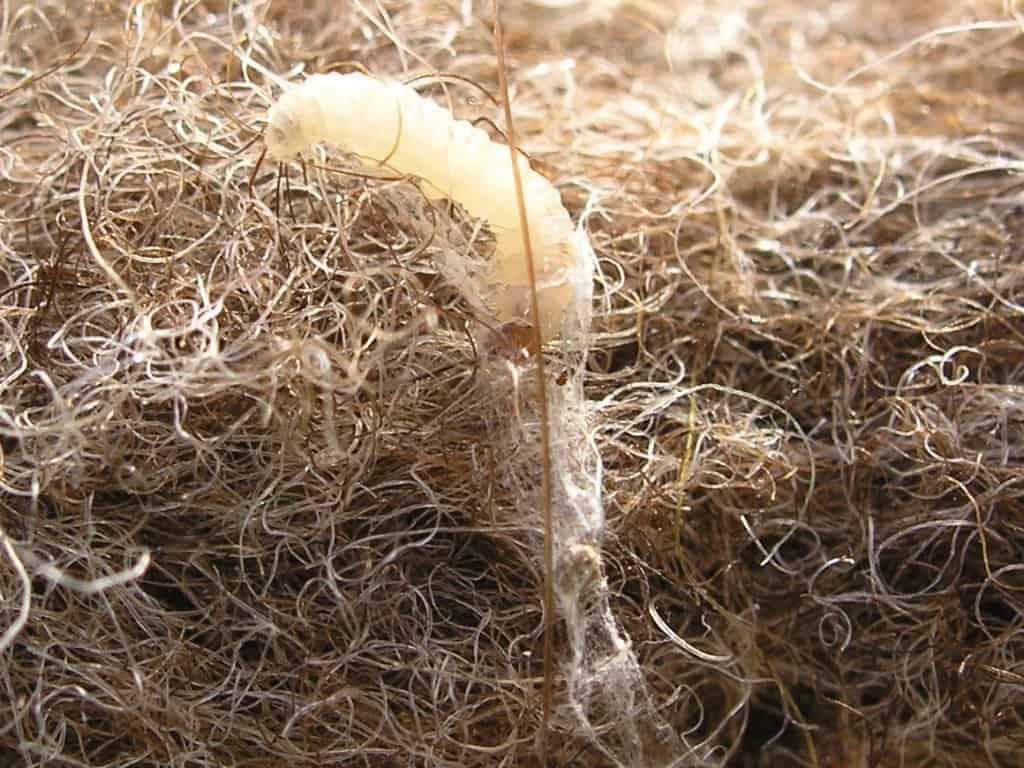
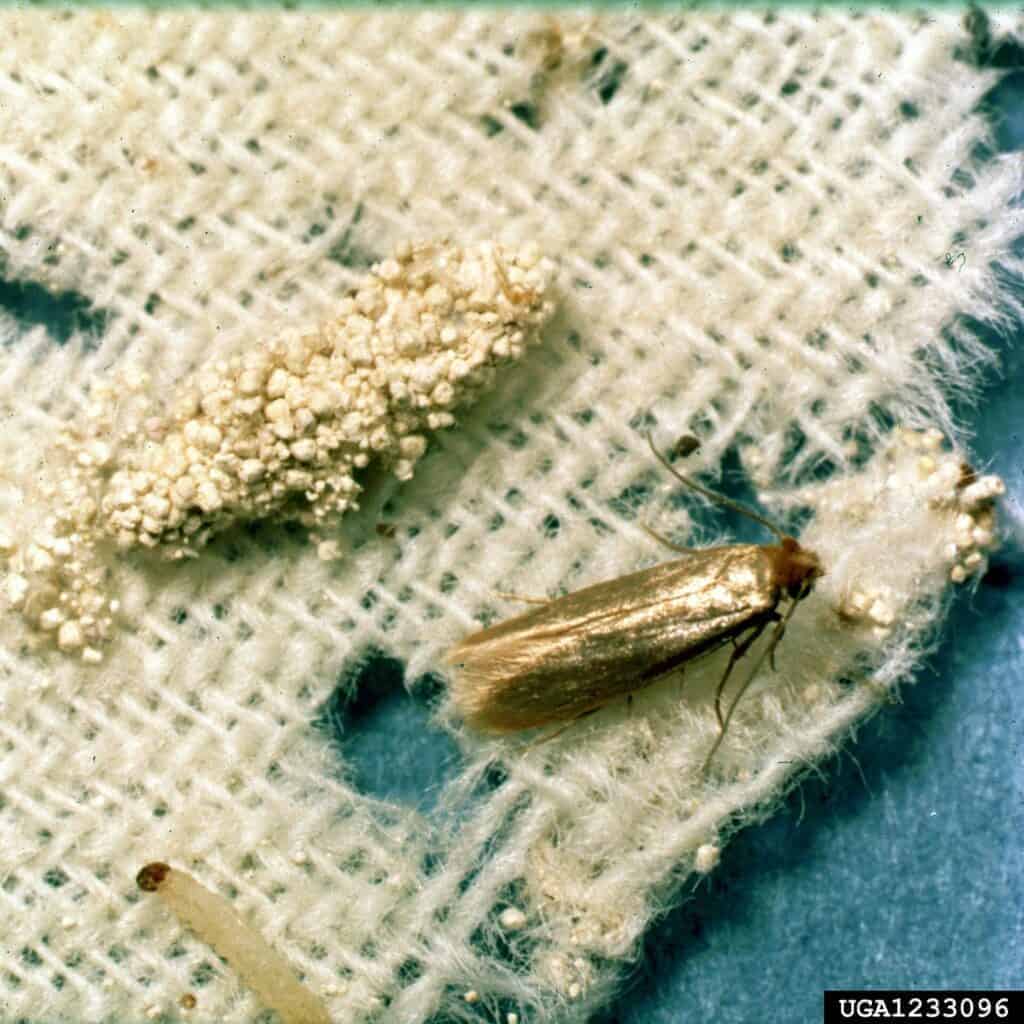
| Larva | Shiny, creamy-white caterpillar with a dark head, reaching approximately 1/2 inch (13 mm) long. Produces temporary silken feeding tubes or patches of webbing, which it leaves behind when moving to a new feeding location | Nearly identical in appearance, but lives inside a portable, tubular silken case that it enlarges as it grows. The case incorporates fibers from the material being eaten and often resembles its color |
| Signs | Silken webbing, temporary feeding tubes, fabric damage, and small fecal pellets that may resemble the color of the damaged fabric | Portable silken cases on infested materials or attached to walls, shelves, and other protected surfaces. Fabric damage and small fecal pellets may also be present |
| How common | The most commonly encountered clothes moth in the United States | Less common and generally of less economic importance, although infestations can still cause significant fabric damage |
Adults are weak fliers and are not attracted to lights. They tend to flutter erratically near the infested item rather than fly in a straight line across the room. Females lay 40 to 50 eggs and die after laying; adults do not feed and do no damage themselves.
Clothes moths vs pantry moths vs carpet beetles
| Pest | Where you see it | What it eats | Tell-tale sign |
|---|---|---|---|
| Clothes moths | Dark closets, storage areas, beneath furniture, and other undisturbed locations | Larvae feed primarily on animal-derived materials such as wool, fur, feathers, hair, felt, and susceptible silk or leather | Small buff or golden moths that avoid light; silken feeding tubes, webbing, or portable cases associated with damaged fabrics |
| Indianmeal moth and other pantry moths | Kitchens, pantries, and areas where dry foods are stored; adults may be seen flying in illuminated rooms | Larvae feed on grains, cereals, nuts, dried fruit, pet food, birdseed, and other stored products | Indianmeal moths have distinctive forewings that are pale gray near the body and coppery-brown toward the tips; silken webbing may be present in infested food |
| Carpet beetles | Adults often occur near windows; larvae hide along carpet edges, inside closets, beneath furniture, and in stored materials | Larvae feed on wool, fur, feathers, hair, and other animal-derived materials; adults generally feed on pollen or nectar, or may feed little | Small, hairy or bristly larvae, shed larval skins, and fabric damage; adults are small, oval to rounded beetles |
Clothes moths, pantry moths, and carpet beetles can look similar to an untrained observer, but the location of the infestation and the type of material being damaged provide useful clues.
Clothes moths damage animal-derived fabrics, pantry moths infest stored foods, and carpet beetle larvae may attack many of the same materials as clothes moth larvae.
If you find hairy larvae and shed skins rather than silken webbing or cases, read our guides to varied carpet beetles and black carpet beetles.
Life cycle
Female clothes moths attach their eggs to fabric fibers and other suitable materials using a sticky secretion. In warm conditions, the eggs typically hatch within 4 to 10 days.
The larval stage is responsible for the damage and is also the longest and most variable part of the life cycle. Depending on temperature, humidity, food quality, and other conditions, larvae may develop for approximately 35 days to 2½ years. During this period, they molt repeatedly as they grow.
When fully developed, larvae pupate before emerging as adults. Pupation typically lasts 8 to 10 days during summer conditions but may take 3 to 4 weeks during cooler winter conditions.
Heated buildings allow clothes moths to continue developing throughout the winter. Under favorable conditions, development from egg to egg commonly takes about four to six months, producing approximately two generations annually. Actual development times and the number of generations vary with environmental conditions.
Because larvae can remain concealed and continue feeding for extended periods, damage may become substantial before an infestation is discovered.
What they damage and where
Clothes moth larvae damage a variety of animal-derived materials, including wool clothing, blankets, rugs, carpets, upholstered furniture containing animal fibers, furs, and wool felt. Other susceptible items include felt pads and hammers in pianos, down-filled pillows and comforters, animal-bristle brushes, taxidermy mounts, and decorative objects containing animal hair or feathers.
They generally prefer dark, undisturbed locations where vulnerable materials remain stored for long periods. Clothing and blankets that are regularly used, cleaned, or handled are less likely to become infested. Similarly, rugs exposed to normal foot traffic and frequent vacuuming are less susceptible than protected areas beneath furniture or along edges.
Damage often develops in concealed locations, including beneath collars and cuffs, inside seams and folds, beneath upholstered furniture, and along carpet or rug edges.
Larvae may produce small holes or irregular patches where fibers have been grazed away. On furs and taxidermy mounts, hairs may be clipped near their bases, allowing clumps to detach and exposing the underlying hide.
Soiled fabrics are more attractive to clothes moth larvae than clean materials. Food stains, perspiration, body oils, and other residues can increase the likelihood of feeding, including on some blended fabrics that might otherwise be less susceptible.
Regular cleaning, inspection, and proper storage of vulnerable materials help reduce the risk of infestation.
Finding the source
The step I would never skip is the source search, because many unsuccessful clothes moth treatments result from overlooking an infested item or concealed breeding location. The primary source may be a wool scarf or felt hat at the back of a closet, an old rug in the basement, or an abandoned bird or squirrel nest in the attic.
Inspect the following locations carefully:
- Closets and storage containers. Examine wool, fur, silk, feathers, leather, and other susceptible materials. Pay particular attention to seams, folds, cuffs, collars, and items that have remained undisturbed.
- Rugs and carpets. Inspect edges, undersides, and areas beneath furniture. Where practical, carefully lift the edge of infested wall-to-wall carpeting from the tack strip to check for hidden activity.
- Upholstered furniture. Check beneath cushions, along seams, underneath furniture, and inside accessible areas containing animal fibers. Examine down pillows and comforters.
- Heating ducts and floor vents. Inspect accessible locations where pet hair, lint, feathers, and other organic debris accumulate.
- Attics, chimneys, and wall voids. Look for abandoned bird or rodent nests, dead animals, or accumulations of animal hair and feathers.
- Pheromone traps. Place clothes moth pheromone traps in closets and storage areas to detect activity. In larger areas, arrange traps in a grid and compare catches to help identify possible infestation sources. Webbing and casemaking clothes moths respond to different pheromones, so choose traps labeled for the species involved.
Pheromone traps are monitoring tools rather than complete treatments. A high catch suggests nearby activity but does not identify the exact location of the larvae. Continue inspecting susceptible materials until the source is located.
How to get rid of clothes moths
1. Sort and treat every susceptible item
Inspect infested clothing and other susceptible items stored nearby. Launder, dry clean, freeze, heat-treat, or discard items as appropriate for their condition and fabric composition.
Place heavily infested items in sealed bags before moving them through the house to avoid spreading larvae or other life stages.
Washable materials can often be treated by laundering for 20 to 30 minutes in water at least 120°F (49°C), provided the fabric can tolerate that temperature. A clothes dryer can also be effective when an appropriate heat setting and duration are used.
For wool garments, delicate fabrics, or items that cannot withstand hot washing, professional dry cleaning is often the better option.
Follow garment care instructions. Do not expose delicate materials to high temperatures that could cause shrinking, distortion, or other damage.
2. Freeze or heat what you cannot wash
Freezing and controlled heating can kill clothes moth eggs, larvae, pupae, and adults when the required temperatures are maintained long enough.
These methods can be particularly useful for valuable garments or other materials that should not be washed or treated with insecticides.
Freezing items safely
- Seal the item in a plastic bag or wrap it in polyethylene sheeting and secure the wrapping with tape. This helps prevent frost formation and condensation on the material.
- Hold the item at 0°F (−18°C) or colder for at least one week. A freezer capable of maintaining −20°F (−29°C) can kill all clothes moth life stages within 72 hours. Allow sufficient time for the entire item to reach the treatment temperature.
- After freezing, leave the item sealed while it returns to room temperature, usually for about 24 hours, before unwrapping.
- Handle frozen items carefully because some materials become brittle at low temperatures.
Controlled heating is another option. UC IPM describes exposing suitable infested materials to temperatures above 120°F (49°C) for at least 30 minutes. Effective treatment requires the infested portions of the item to reach the necessary temperature.
However, heat can damage wool, silk, leather, adhesives, and other delicate materials. Avoid placing valuable garments or furnishings in household ovens unless the method has been confirmed safe for the item. Professional heat treatment may be preferable for valuable or heat-sensitive objects.
Some upholstered furniture, mattresses, and pillows contain animal hair or feather stuffing that may support clothes moth larvae deep inside. Surface sprays cannot reliably penetrate these materials.
Specialized fumigation or other professional treatment may be necessary for heavily infested furnishings. Dry-ice fumigation is described in some university publications, but it involves hazards from extreme cold and concentrated carbon dioxide. It is best left to qualified professionals using appropriate procedures and equipment.
3. Vacuum hard
Thorough vacuuming is an important part of clothes moth control because it removes accessible eggs, larvae, pupae, adult moths, and debris that can support infestations.
Vacuum closet floors, baseboards, cracks and crevices, carpet edges, and areas beneath furniture. Pay particular attention to protected spaces where clothing, rugs, or other animal-fiber materials remain undisturbed.
Where accessible, vacuum beneath carpet edges and inside floor vents or heating duct openings where pet hair, lint, and other organic materials accumulate.
Immediately empty the vacuum outdoors into a sealed trash bag or remove and discard the vacuum bag. This prevents captured insects from remaining inside the home.
Vacuuming should accompany treatment of infested items because it may not reach larvae concealed deep within fabrics, upholstery, or other materials.
4. Spot-treat if needed
Insecticides can supplement cleaning and removal of infested materials, but they should not be the primary control method.
When necessary, products specifically labeled for clothes moths or fabric pests may be applied to permitted locations such as carpet edges, floor-wall junctions, cracks, and closet floors.
The product label determines where the insecticide can be used. A product labeled for flea treatment is not automatically appropriate for clothes moths unless its labeling permits the intended use.
Do not spray clothing, bedding, or other personal items unless the product is specifically labeled for that application. For most homeowners, laundering, dry cleaning, freezing, or other nonchemical treatment is preferable.
Some insecticide formulations contain oils or solvents that may stain silk, rayon, carpets, or other delicate materials. Where the label permits treatment, test an inconspicuous area first.
Avoid applying insecticides near food, open flames, or electrical equipment contrary to label directions.
What does not work
- Traps alone: Clothes moth pheromone traps primarily capture males. Although catches may reduce mating opportunities, traps do not eliminate the larvae already feeding on fabrics or reliably stop an established infestation.
- Mothballs in an open closet: Mothballs release pesticide vapors that must reach sufficient concentrations to kill clothes moths. In open closets, vapors escape into occupied areas and may not control larvae. Use mothballs only in sealed storage systems specifically permitted by the product label.
- Cedar alone: Aromatic cedar contains natural oils that may affect small larvae, but the oils lose potency over time, and larger larvae are less susceptible. Most cedar closets and chests do not maintain effective vapor concentrations. A tightly sealed storage container is more dependable than cedar itself.
- Herbal sachets: Lavender, rosemary, and other herbal products have limited evidence supporting reliable control of established clothes moth infestations. They should not replace inspection, cleaning, and protected storage.
- Spraying the moths you see: Killing visible adult moths does not remove the damaging larvae hidden in clothing, rugs, furniture, or other susceptible materials.
Prevention and storage
- Clean woolens before storage. Laundering or dry cleaning removes perspiration, food residues, and other materials that may encourage larval feeding. Appropriate cleaning also kills moth eggs and larvae.
- Use tightly sealed storage. Store clean, susceptible fabrics in sealed plastic bags, bins, or other containers that prevent moths from entering. Inspect containers and seals periodically.
- Use mothballs only as labeled. Mothballs containing naphthalene or paradichlorobenzene are pesticides. They must be used in the correct amount and only in storage containers specifically permitted by the label. Keep them away from children and pets, and never mix different mothball chemicals. Paradichlorobenzene can soften or damage certain plastics.
- Air and inspect stored woolens. Periodically inspect and brush susceptible garments, especially inside seams, folds, pockets, and collars. Brushing and disturbing fabrics can expose larvae and remove eggs or debris.
- Vacuum regularly. Clean beneath heavy furniture, along rug edges, inside closets, and around accessible vents to remove accumulated hair, lint, and possible infestation sources.
- Consider specialized storage for valuable furs. Commercial cold storage may provide additional protection for expensive garments or collections.
- Remove animal nesting materials. Abandoned bird and rodent nests can support clothes moth development. Arrange for safe removal once the animals are no longer present and removal is legally permitted.
When to call a professional
Professional assistance may be appropriate when:
- Clothes moths continue appearing after thorough inspection, cleaning, and treatment.
- Wool carpets, large rugs, or multiple rooms show evidence of infestation.
- Upholstered furniture, mattresses, or feather-filled items have infestations that cannot be reached through ordinary cleaning.
- Valuable heirlooms, textiles, collections, or taxidermy mounts are at risk.
- An infestation appears to originate from inaccessible animal nesting materials or carcasses in attics, chimneys, or wall voids.
For valuable or irreplaceable textiles, consider consulting a textile conservator or specialist experienced with the material before authorizing pesticide, heat, or fumigation treatments.
What a pro visit looks like
Professional clothes moth control should begin with identifying the species and locating the infestation source rather than automatically spraying the home.
The treatment may involve a combination of inspection, removal or treatment of infested materials, targeted insecticide applications where appropriate, and monitoring.
The inspection
The technician should inspect closets, stored fabrics, carpet and rug edges, upholstered furniture, accessible vents, and other suspected breeding locations.
The inspection should determine whether clothes moths, carpet beetles, or another pest caused the damage.
Pheromone traps may be used to identify activity and monitor infested locations. The technician should also ask which vulnerable materials have been stored, where they are located, and how long they have remained undisturbed.
Your prep before the visit
- Identify and make accessible stored woolens, furs, rugs, and other susceptible items.
- Launder, dry clean, freeze, or bag items as directed by the company before treatment.
- Vacuum accessible areas and discard vacuum contents outdoors.
- Clear access to closet floors, baseboards, rug edges, and suspected infestation sites.
- Tell the technician about valuable or delicate fabrics that should not be exposed to insecticides or heat.
The treatment
Depending on the infestation and the product labels, treatment may include:
- Targeted crack-and-crevice or carpet-edge treatments labeled for clothes moths or fabric pests.
- Treatment of accessible infested carpet areas, including edges and undersides, where the product label permits.
- Professional treatment or fumigation of heavily infested furniture, rugs, or feather-filled items when justified.
- Recommendations for laundering, dry cleaning, freezing, or safely disposing of infested belongings.
- Removal of accessible animal nesting material or referral to a qualified professional when nests or carcasses are involved.
The objective should be to eliminate the breeding sources while minimizing unnecessary pesticide applications.
Follow-up
Follow-up monitoring may include inspecting treated materials and checking species-appropriate pheromone traps over several weeks.
Declining trap catches and the absence of fresh larvae, webbing, or fabric damage indicate progress.
Continued catches may reflect emerging adults, moths entering from elsewhere, or an overlooked infestation source. The technician should investigate persistent activity rather than automatically repeating insecticide treatments.
Questions to ask before you book
- Have you confirmed that clothes moths, rather than carpet beetles, caused the damage?
- Which items should I clean, dry clean, freeze, or remove before treatment?
- What products or methods will you use, and are they appropriate for my fabrics?
- Will you inspect vents, attics, and concealed animal nesting materials if necessary?
- How will you confirm that the infestation has been eliminated?
Our guide to hiring a licensed pest control company explains licensing requirements, contracts, and service-selection tips.
What it costs
National consumer cost surveys generally do not provide reliable clothes moth-specific treatment prices. General pest-control service estimates can provide a starting point, but the actual cost depends on the amount of inspection, cleaning, treatment, and specialized handling required.
For example, treating one infested closet may be relatively straightforward, while treating a valuable rug, upholstered furniture, or a collection of wool garments can involve additional expense.
Our guide to what a general pest control visit costs provides broader national cost comparisons.
Typical national ranges
Published general pest-control estimates include:
- General pest-control service: approximately $172 on average, with a broad range of $50 to $500 (Angi, 2026).
- One-time exterminator visit: approximately $100 to $600 (HomeGuide, 2026).
- Specialized fumigation: priced separately and potentially substantially more expensive, depending on the item, treatment method, and facility.
These figures are not clothes moth-specific quotes and are based on data submitted by sources. These are not industry set prices. General pest-control services may not include treatment of rugs, furniture, valuable textiles, or concealed infestation sources. Ask.
Whole-structure fumigation is rarely if ever justified for an ordinary clothes moth infestation. Most professionals would laugh at the suggestion but it should be mentioned because I have heard of proposals for whole house fumigation. If specialized treatment is necessary, ask about alternatives such as treatment of individual items.
Get written estimates describing the inspection, treatment methods, preparation requirements, and follow-up services.
What moves the price
- The number of rooms, rugs, garments, or other items involved.
- Whether wool carpeting requires specialized treatment.
- The need for professional treatment of furniture, rugs, or valuable textiles or using a subcontractor because your pest control company does not treat for these pests.
- Dry cleaning, laundering, or textile conservation services, which are usually priced separately.
- Follow-up visits, monitoring, and investigation of continuing activity.
One-time job or ongoing plan
Many clothes moth infestations can be resolved through a thorough source inspection, appropriate treatment of infested items, cleaning, and preventive storage.
Ongoing professional monitoring may be useful for museums, textile collections, rug dealers, furriers, or properties with repeated infestations.
For a single infested closet or a small household problem, a long-term service contract is not usually necessary unless continued activity demonstrates a need.
Red flags in a quote
- Proposing whole-house insecticide spraying without locating the infestation source.
- Applying insecticides to clothing, bedding, or valuable textiles without a label permitting that specific use.
- Failing to distinguish clothes moths from carpet beetles or other fabric pests.
- Recommending an extended service contract for a limited infestation without explaining why.
- Offering treatment without a plan for cleaning infested items and monitoring afterward.
- Proposal for large scale fumigation. If this happens, get other quotes.
Ask for a written treatment plan identifying suspected infestation sources, items requiring cleaning or other treatment, proposed pesticide applications, and follow-up arrangements.
Common questions about clothes moths
How do I know if I have clothes moths or pantry moths?
Clothes moths are small, usually about 1/4 inch (6 mm) long at rest, and typically buff or golden. They prefer dark, undisturbed locations around stored animal-fiber materials and generally avoid bright light.
Pantry moths, such as the Indianmeal moth, are commonly noticed flying in kitchens and food-storage areas. Indianmeal moths have distinctive two-toned wings and develop in infested dry foods.
The location of larvae and the material being damaged are more reliable clues than adult moth behavior alone.
Do adult clothes moths eat clothes?
No. Adult clothes moths do not feed on fabrics. The damage is caused by their larvae.
Larvae primarily digest proteins in animal-derived materials. Wool, fur, hair, and feathers contain keratin, while susceptible silk and leather contain other proteins. These materials may be damaged by clothes moth larvae.
Will clothes moths eat cotton or polyester?
Clothes moth larvae do not normally feed on clean cotton or synthetic fibers such as polyester.
However, they may damage fabrics blended with wool or other animal fibers. Heavy food stains and other residues can also make otherwise less-susceptible materials attractive.
Carpeting made entirely of synthetic fibers is generally resistant to clothes moth feeding, although accumulated pet hair, lint, or other animal-derived debris may still support larvae.
Does freezing kill clothes moths?
Yes, when the entire infested item reaches a sufficiently low temperature for long enough.
University of Kentucky recommends holding sealed items at 0°F (−18°C) or colder for at least one week, or at −20°F (−29°C) for at least 72 hours.
Keep items wrapped or bagged while freezing and allow them to warm to room temperature before unwrapping to reduce condensation and damage.
Do cedar closets keep moths away?
Not reliably. Aromatic cedar contains oils that may affect small clothes moth larvae, but these oils decline in effectiveness over time and do not consistently control larger larvae.
Most cedar closets and chests are not sealed tightly enough to maintain effective concentrations.
Clean garments stored in tightly sealed containers provide more dependable protection.
Are mothballs safe to use in a closet?
Mothballs are pesticides containing active ingredients such as naphthalene or paradichlorobenzene. They can be hazardous when used incorrectly. Always read and follow the product label.
Use them only in properly sealed containers specifically permitted by the product label and at the labeled dosage. Do not scatter mothballs in open closets, drawers, or occupied areas where pesticide vapors can escape into living spaces.
Keep mothballs away from children and pets, and never mix different mothball chemicals. The easiest way to do this is to only buy one brand of mothballs, always checking to confirm identical active ingredients regardless.
Do pheromone traps get rid of clothes moths?
Pheromone traps help detect and monitor clothes moth activity by attracting and capturing male moths.
Although they can prevent some captured males from mating, they do not eliminate existing eggs or larvae in clothing and other materials.
Use the correct species-specific lure to help locate active infestations, then inspect, clean, freeze, dry clean, or otherwise treat the affected items.
How much does professional treatment cost?
Reliable national pricing specifically for clothes moth treatment is limited.
Angi’s October 2026 report estimates an average general pest-control service cost of approximately $172, with a broad range of $50 to $500. HomeGuide’s January 2026 report places one-time exterminator visits at approximately $100 to $600.
Specialized treatment of furniture, rugs, or valuable textiles is generally quoted separately. Request a written estimate identifying the services included.
This guide is part of our carpet beetles and fabric pests guide. If moths are coming from the kitchen, see the Indianmeal moth guide. Not sure what is eating your sweaters? Send a photo of the larvae or damage to Ask the Sherpa.
References
- University of California Agriculture and Natural Resources. Pest Notes: Clothes Moths. UC Statewide Integrated Pest Management Program, Publication 7435. UC IPM: Clothes Moths.
- University of Kentucky Department of Entomology. Clothes Moths. ENTFACT-609. Revised March 2026. University of Kentucky: Clothes Moths.
- University of Florida IFAS Extension. Clothes Moths. Publication ENY-223. University of Florida: Clothes Moths.
- Oregon State University Extension Service. Mothballs: Proper Use and Alternative Controls for Clothes Moths.Publication PNW 606. Oregon State University: Mothballs and Alternatives.
- U.S. Environmental Protection Agency. EPA-Registered Pesticide Product Label: Enoz Old Fashioned Moth Balls. March 16, 2026. EPA: Naphthalene Mothball Label.
- Angi. How Much Does Pest Control Cost? 2026 Data. Updated October 9, 2026. Angi: Pest Control Costs.
- HomeGuide. How Much Does Pest Control Cost? January 9, 2026. HomeGuide: Pest Control Prices.
This article was written by Greg Baumann, founder of Pest Sherpa, and reflects more than 40 years of professional pest management experience.
About the Author

Greg Baumann | Pest Control Expert
Greg Baumann is the founder of Pest Sherpa and a Pest Control Expert with more than 40 years of professional pest management experience. His articles combine decades of field experience, technical expertise, and science-based guidance to help homeowners identify pests correctly, understand real-world risks, and make informed pest management decisions.
Mission: Identify the pest. Understand the risk. Stop the problem. Prevent the comeback. Know when it’s time to call a professional.