
Pest Birds: Pigeons, Starlings, Sparrows, and Woodpeckers Around the Home
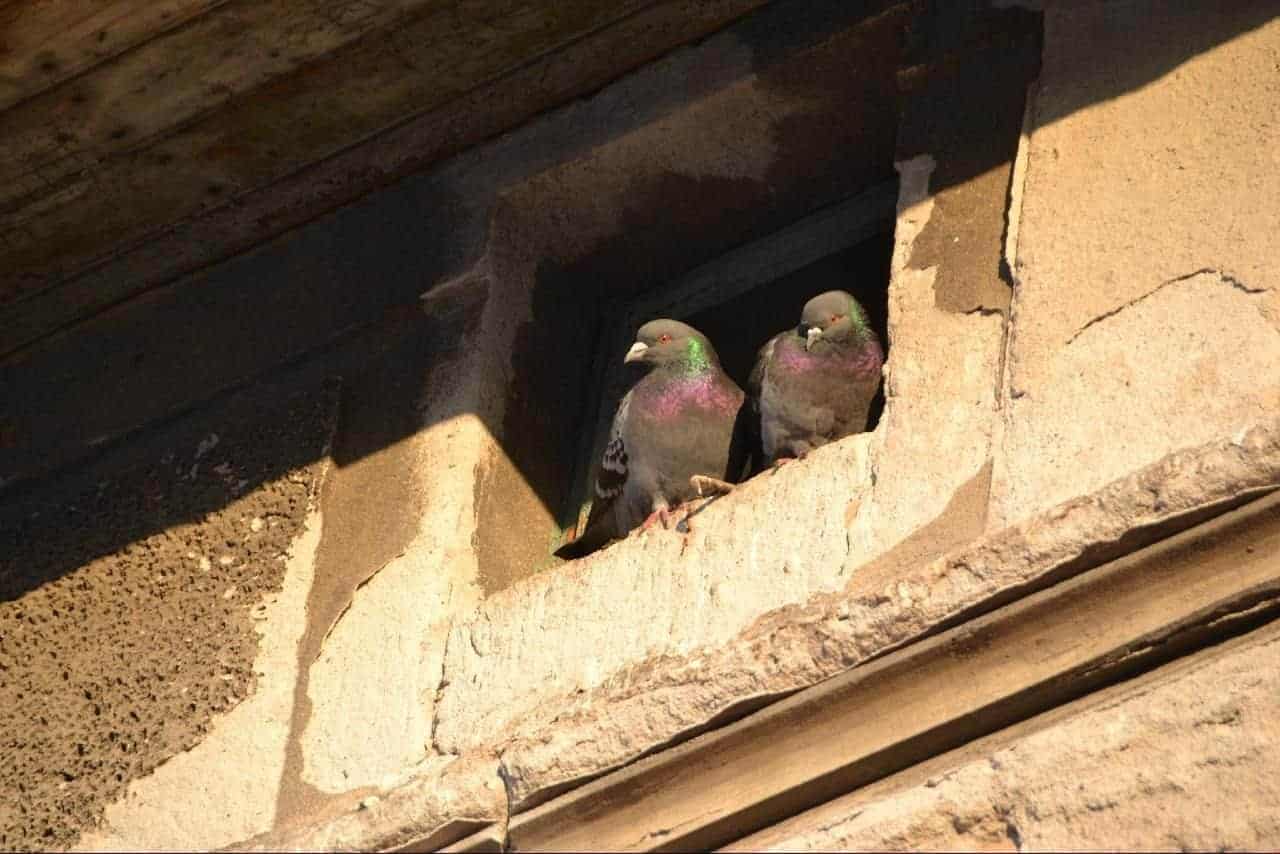
Birds become pests when they move from the outdoors to the house. Pigeons roost on ledges and coat them in droppings, house sparrows and starlings stuff dryer and bathroom vents with nesting material, and woodpeckers drill holes in cedar siding. The fixes I rely on are mostly physical: close the openings, change the surfaces, and remove what draws birds in. The complication is the law. Most native birds, their eggs, and their nests are federally protected, so knowing which bird you have decides what you can do and when.
Key Points
The Migratory Bird Treaty Act prohibits taking protected migratory birds, including their nests and eggs, without authorization from the U.S. Fish and Wildlife Service. The protected list covers more than 1,100 species. Feral pigeons, house sparrows, and European starlings are not protected under the act, because they are nonnative species or belong to families the treaties do not cover. [U.S. Fish and Wildlife Service] [U.S. Fish and Wildlife Service: 2025 Nest Memo] [Federal Register] [Internet Center for Wildlife Damage Management: Pigeons]
Fish and Wildlife Service guidance from January 2025 says an inactive nest, one with no viable eggs or nestlings, can be destroyed without a permit as long as no one keeps it. A nest becomes in use when the first egg is laid and stays in use until the young fledge and no longer depend on it. Destroying an in-use nest of a protected bird is illegal without a permit. [U.S. Fish and Wildlife Service: 2025 Nest Memo]
Exclusion is the long-term fix: 1/4-inch hardware cloth over vents and openings, netting over roosting and nesting areas, and ledge products or sloped surfaces where birds perch. Scare devices work briefly at best. Bird and bat droppings can spread the fungus that causes histoplasmosis, so clean droppings with protection. [Internet Center for Wildlife Damage Management: Pigeon Control Methods] [UC ANR Pests in the Urban Landscape] [CDC]
In This Guide
- Which Birds Cause Problems
- Signs and Damage
- Health Risks
- Bird Laws: What Is Protected and When Nests Can Go
- How to Get Rid of Pest Birds
- What Does Not Work
- When to Call a Licensed Professional
- What a Pro Visit Looks Like
- What It Costs
- Common Questions
- References
Which birds cause problems
| Bird | Federal status | Typical problems |
|---|---|---|
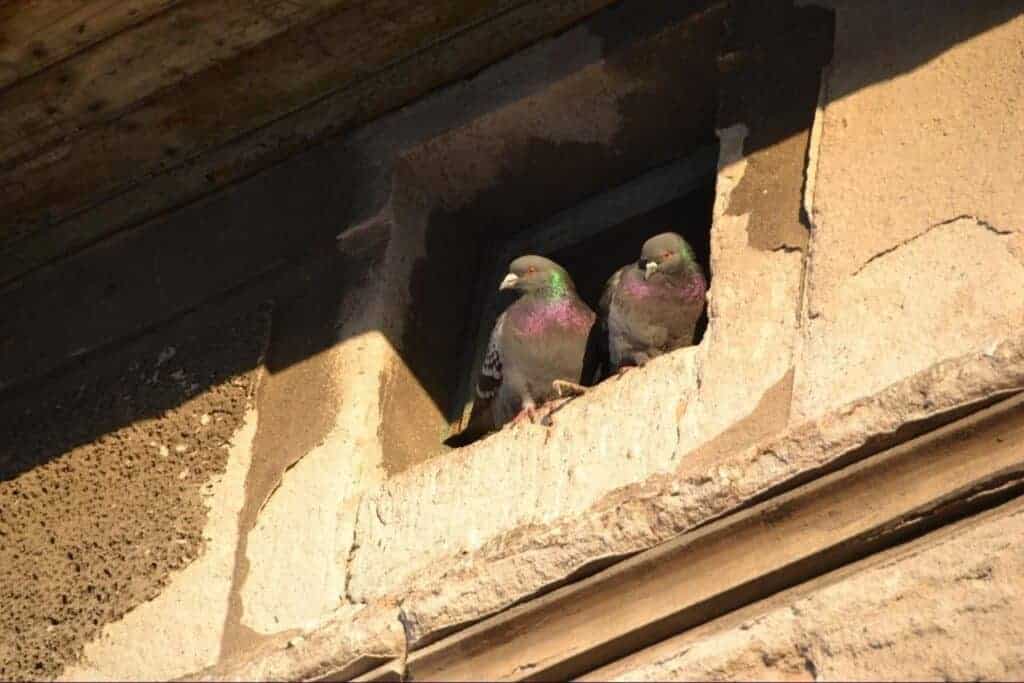
| Feral pigeon (rock pigeon) | Not protected by the MBTA | Roosting on ledges, roofs, and solar panels; heavy droppings; nesting under eaves and in lofts |
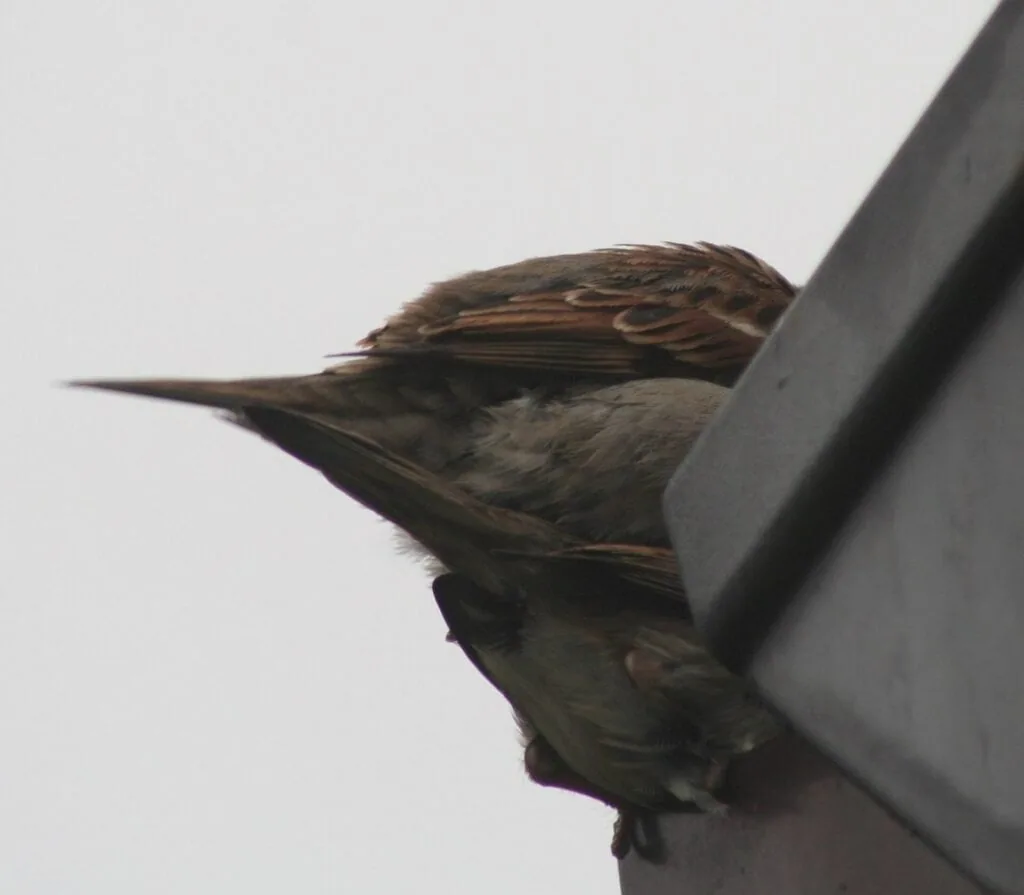
| House sparrow | Not protected by the MBTA | Nests in vents, gutters, signs, and building crevices |
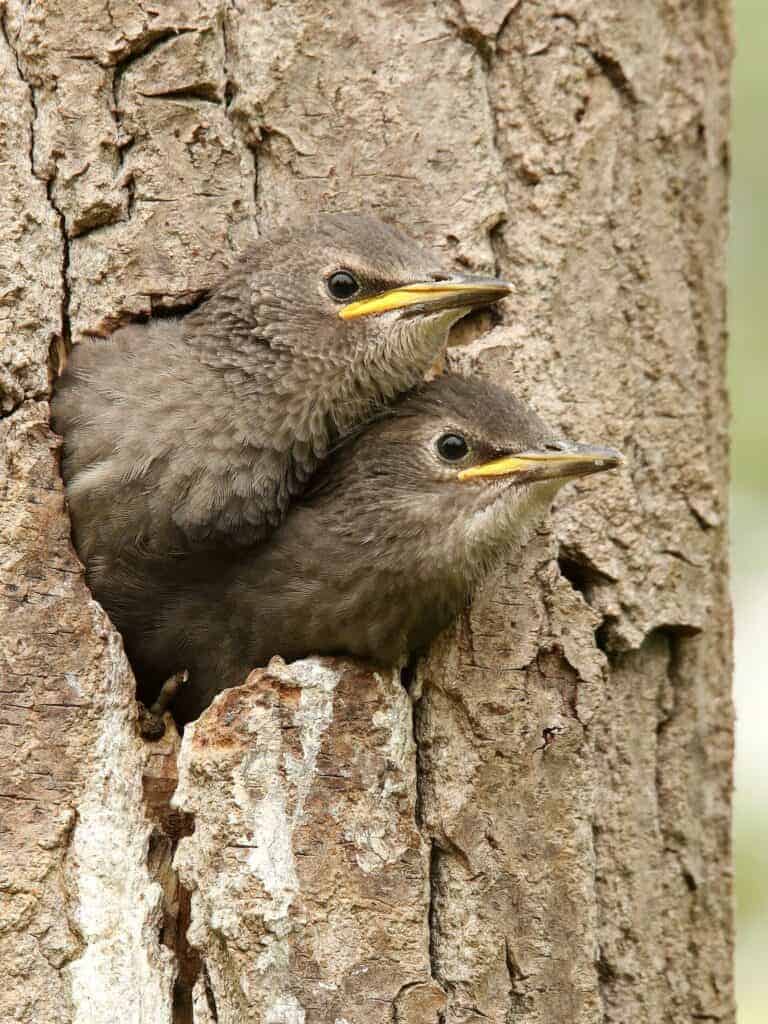
| European starling | Not protected by the MBTA | Nests in vents and cavities; large noisy flocks; droppings; glossy, nearly black plumage |
| Woodpeckers and flickers | Protected | Drumming and drilling holes in wood siding, eaves, and trim |
| Swallows, phoebes, and other native birds | Protected | Mud or cup nests on eaves, porches, and light fixtures |
Sources: [Federal Register] [Internet Center for Wildlife Damage Management: Pigeons] [UC IPM Pest Notes] [UC ANR Pests in the Urban Landscape]
ICWDM describes pigeons as about 12 inches long and 12 to 17 ounces, usually blue-gray with two black wing bars, a black tail band, a white rump, and red feet, though colors range from white to sooty black. They are larger than the native mourning dove, which is protected. Woodpeckers range from about 7 to 14 inches, with stout pointed beaks, stiff tail feathers, and two backward-pointing toes. [Internet Center for Wildlife Damage Management: Pigeons] [UC IPM Pest Notes]
Signs and damage
- Droppings building up on ledges, sills, roofs, decks, and solar panels.
- Nesting material sticking out of dryer, bath, and kitchen vents or gutters; a dryer that takes longer to dry clothes.
- Chirping in vents or walls, especially in spring.
- Rows of holes or a large cavity in wood siding, eaves, or trim; repeated drumming on siding, gutters, or chimney caps. UC IPM notes woodpeckers use buildings to search for food, to drum, and to nest. [UC IPM Pest Notes]
- Stained siding and clogged gutters below roosts.
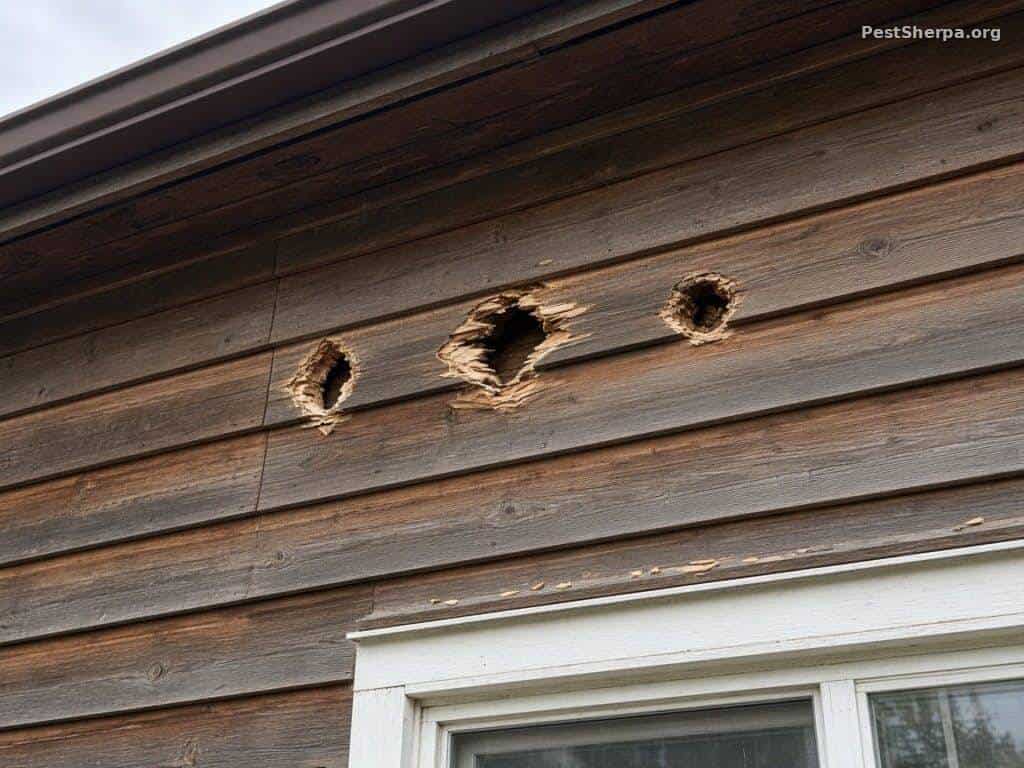
Woodpecker holes in siding can be a sign of insects in the wood. If you see holes along with sawdust or wood damage, rule out carpenter ants and other wood-boring insects.
Health risks
CDC explains that histoplasmosis is a lung infection caused by breathing in spores of the fungus Histoplasma, which lives in soil and spreads in bird and bat droppings that mix into soil. In the United States it occurs mainly in central and eastern states. Most people who breathe the spores do not get sick, but symptoms such as fever, cough, fatigue, chills, and chest pain can appear 3 to 17 days after exposure, and infections can be severe in people with weakened immune systems. [CDC]
When cleaning droppings or old nests, UC ANR recommends gloves, a dust mask, and coveralls. For heavy accumulations, step up to a properly fitted respirator, mist the droppings to keep dust down, and bag the waste. Abandoned nests can also carry mites and other parasites. [UC ANR Pests in the Urban Landscape]
Bird laws: what is protected and when nests can go
The Migratory Bird Treaty Act carries out U.S. treaties with Canada, Mexico, Japan, and Russia and prohibits taking protected migratory birds, which includes killing, capturing, selling, trading, and transporting them, without authorization. The 2004 Migratory Bird Treaty Reform Act limited protection to native species, and the Service’s 2020 list names rock pigeons among the nonnative birds the act does not cover. The same notice clarifies that house sparrows and European starlings belong to families that do not qualify for protection. [U.S. Fish and Wildlife Service] [Federal Register]
Nest rules under the 2025 FWS guidance
- In-use nest: contains viable eggs or nestlings. It stays in use until the young fledge and no longer depend on it. Destroying it requires a federal permit, which is issued only in special circumstances.
- Inactive nest: no viable eggs or nestlings, including nests still being built. It can be destroyed without a permit, as long as no one keeps the nest.
- Relocating a nest, even an inactive one, requires authorization because it means possessing the nest.
- You are responsible for making sure no birds, eggs, or nestlings are harmed. Colonial nesters such as swallows carry extra risk.
- Eagle nests and nests of threatened or endangered species have separate, stricter rules.
Summarized from FWS Migratory Bird Permit Memorandum MBPM-2-02 (2025).
States and cities add their own rules. ICWDM notes that most states do not protect feral pigeons but that some cities are bird sanctuaries protecting all species. Check state and local rules through your state fish and wildlife agency before any control. [Internet Center for Wildlife Damage Management: Pigeons]
How to get rid of pest birds
Identify the bird and the timing
UC ANR advises identifying the species and understanding its nesting season before doing anything. For protected birds, exclude before they arrive, while they are building a nest before eggs are laid, or after the young leave. [UC ANR Pests in the Urban Landscape] Check the state and local rules that apply where you live, too.
Close vents and openings
ICWDM recommends screening eaves, vents, windows, and other openings with 1/4-inch rust-proofed hardware cloth, and blocking access to lofts and attics with wood, metal, or mesh. Use vent covers designed for dryer vents so lint does not build up behind the screen. [Internet Center for Wildlife Damage Management: Pigeon Control Methods]
Net roosting and nesting areas
Netting is the most effective long-term fix for both pigeons and woodpeckers. UC IPM describes lightweight 3/4-inch mesh stretched from the eaves to a lower point on the building, or stretched over a damaged surface with at least 3 inches of space so birds cannot reach through. It must be pulled taut with no loose pockets that could trap birds, and sometimes a whole side of the building must be covered or the birds simply move over. ICWDM notes 1-inch UV-stabilized netting can last up to 10 years. [UC IPM Pest Notes] [UC ANR Pests in the Urban Landscape] [Internet Center for Wildlife Damage Management: Pigeon Control Methods]
Change the ledges
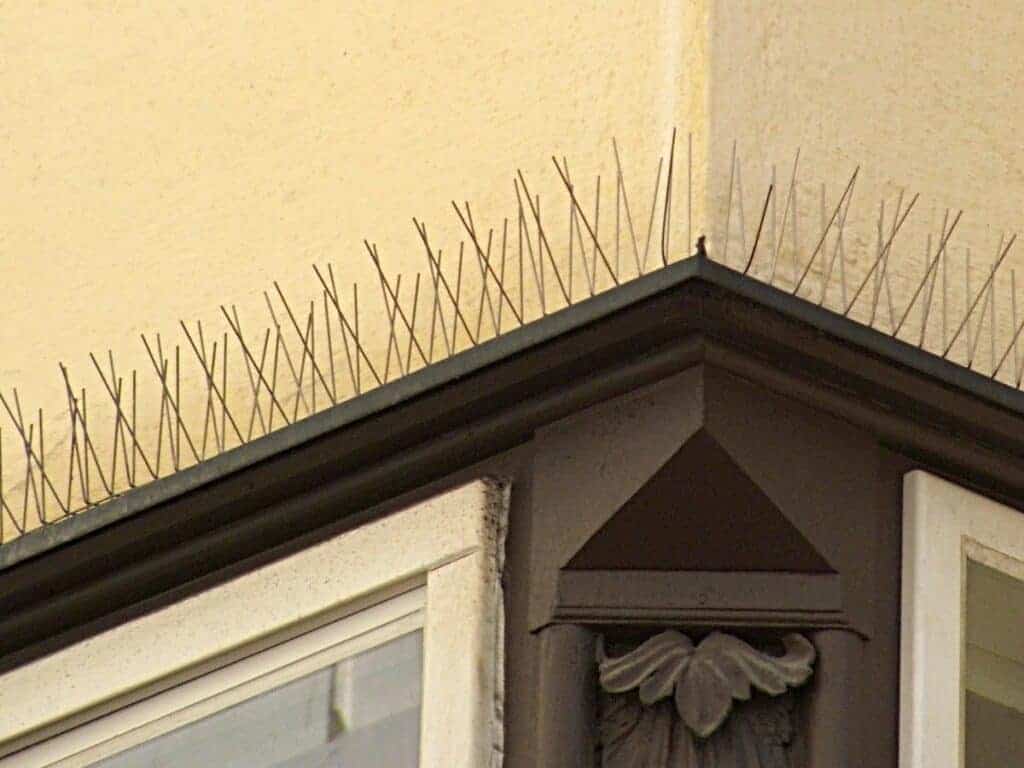
Pigeons stop roosting on ledges angled at 45 degrees or more. Sheet metal, wood, or other materials can be fastened to create the slope. Porcupine wire or spikes on sills, ledges, and roof peaks discourage landing, though birds sometimes cover them with debris and they need occasional cleaning. [Internet Center for Wildlife Damage Management: Pigeon Control Methods]
Remove food and water
Use feeders and seed that limit spillage, clean up spilled seed, keep pet food indoors, and secure garbage. Pigeons in particular settle where people feed them.
Woodpeckers on siding
Net the affected wall, fill visible holes with putty or replace damaged siding so the holes do not attract more drilling, and check the wood for insects. UC IPM reports that tested taste and odor repellents had little or no success, and sticky gels can stain surfaces and harm birds. [UC IPM Pest Notes]
What does not work
- Plastic owls and hawks: generally ineffective, especially for pigeons. Flags, foil, and reflective strips sometimes work briefly. [Internet Center for Wildlife Damage Management: Pigeon Control Methods]
- Odor repellents and mothballs: pigeons have a poor sense of smell, and mothballs used outside their label are illegal and unhealthy indoors. [Internet Center for Wildlife Damage Management: Pigeon Control Methods]
- Removing a nest with eggs of a protected bird: illegal without a permit, and the pair might rebuild right away.
- Ultrasonic devices: not a reliable fix for birds or other wildlife. See our article on whether ultrasonic repellents work. Birds have even been known to nest on top of them.
- Feeding birds near the problem area: pigeons stay where food is reliable.
When to call a licensed professional
- The problem is on a second story or roof, or needs netting across a large wall.
- Birds are nesting in an attic, chimney, or wall cavity.
- Droppings have built up enough to need cleanup with respiratory protection.
- You are not sure whether the bird or nest is protected.
- Woodpecker damage is extensive or tied to insect activity in the wood.
What a pro visit looks like
A good bird control visit starts with identifying the bird and the nesting status, because that decides what is legal.
The inspection
The technician identifies the species, checks whether any nest is in use, and inspects vents, eaves, gutters, ledges, solar panels, and attic openings. Expect a plan that covers removal of inactive nests, cleanup, and the exclusion that keeps birds off.
Your prep before the visit
- Note where birds land, roost, and nest, and at what time of day.
- Do not remove nests before the visit if you are not sure of the species.
- Clear access to the areas under roosts and to the attic.
- Keep children and pets away from droppings.
The treatment
- Removal of inactive nests and of nests of unprotected species.
- Vent covers and 1/4-inch hardware cloth over openings.
- Netting, spikes, wire, or sloped ledge covers on roosting areas.
- Droppings cleanup and sanitizing with respiratory protection.
Follow-up
Most jobs are one to two visits. Netting and ledge products should come with a workmanship warranty, and a check after the next nesting season is worth scheduling.
Questions to ask before you book
- What species is this, and is it protected?
- Is any nest in use, and how will you confirm that?
- What exclusion will you install, and how long will it last?
- Is droppings cleanup included, and what protection do your workers use?
- What does the warranty cover?
Our guide to hiring a wildlife professional explains how to vet a company.
What it costs
Bird work is priced by the number of nests, the size of the flock, and how much cleanup, netting, or other exclusion the building needs.
Bird jobs vary more than most; our cost guide lists bird and wildlife control costs so you can see where your quote falls. These are reported survey figures, not fixed or standard prices.
Typical national ranges
- One nest, removal only: $150 to $300; full service with cleanup and prevention: $250 to $750 (HomeGuide, 2025)[10]
- Major job with flock and repairs: $1,000 to $2,000 or more (HomeGuide, 2025)[10]
- Vent nest removal: $150 to $500 per vent (HomeGuide, 2025)[10]
- Bird removal: $100 to $300; pigeon control: $100 to $3,000 (Angi, 2026)[11]
These are national figures from consumer cost surveys, not quotes. Prices vary by region, home, and job, so treat them as a starting point for comparing written estimates.
What moves the price
- Species: protected birds may require waiting or permits.
- Location and height: attics, chimneys, and roof eaves cost more than garages or trees.
- Area of netting or linear feet of ledge product.
- Droppings cleanup and sanitizing.
- Repairs to vents, siding, insulation, or solar panel guards.
One-time job or ongoing plan
Nest removal alone is a one-time charge that often has to be repeated. Exclusion with netting, vent covers, or ledge products costs more up front but is the step that ends recurring nesting.
Red flags in a quote
- An offer to remove an in-use nest of a protected bird without mention of permits.
- Scare devices or decoys sold as the main solution.
- Netting installed loose or with gaps.
- No cleanup plan for heavy droppings.
Ask for removal, cleanup, and exclusion as separate line items.
Common questions about pest birds
Is it illegal to remove a bird’s nest?
It depends on the species and whether the nest is in use. The Migratory Bird Treaty Act protects more than 1,100 native bird species, their nests, and eggs. Under 2025 Fish and Wildlife Service guidance, an inactive nest with no viable eggs or nestlings can be destroyed without a permit as long as no one keeps it. An in-use nest of a protected species needs a permit. Pigeons, house sparrows, and European starlings are not protected by the act.
Are pigeons protected?
Feral pigeons (rock pigeons) are not protected by federal law, and most states do not protect them. Some cities are bird sanctuaries or have local rules, so check state and local laws before control.
Are woodpeckers protected?
Yes. Woodpeckers are protected under the Migratory Bird Treaty Act. They can be legally excluded with netting, but harming them or removing an in-use nest requires a federal permit, which is generally granted only when the birds threaten people or property.
Do plastic owls or reflective tape scare birds away?
Only briefly, if at all. Pigeons are less responsive to noise than most birds and stuffed or plastic raptors are generally ineffective. Flags, foil, and reflective strips may work for a short time. Exclusion with netting, mesh, or ledge products is the long-term fix.
Can bird droppings make you sick?
Yes. The fungus that causes histoplasmosis lives in soil and spreads in bird and bat droppings that mix into soil, mainly in central and eastern states. Most people who breathe in spores do not get sick, but some develop a pneumonia-like illness. Wear gloves, a respirator, and protective clothing when cleaning heavy droppings and keep them damp.
How do I get birds out of a dryer or bathroom vent?
If the nest belongs to a protected species and has eggs or young, wait until the young leave. Then remove the nest and install a vent cover rated for that vent. Do not run the dryer while the vent is blocked. House sparrow and starling nests can be removed at any time, and a clogged dryer vent is a fire risk, so clear and cover it promptly.
How much does bird nest removal cost?
HomeGuide’s October 2025 survey puts one nest with removal, cleanup, and prevention at $250 to $750. Removal only of an easy nest runs $150 to $300, and major flock jobs with repairs can reach $1,000 to $2,000 or more.[10]
This guide is part of our Nuisance Wildlife guide. If droppings in the attic are small and dark rather than white, see bats in the attic, and if the noise is in the walls by day, compare squirrels in the attic. Not sure what bird you have? Send a photo to Ask the Sherpa.
References
- U.S. Fish and Wildlife Service: Migratory Bird Treaty Act of 1918
- U.S. Fish and Wildlife Service: Migratory Bird Permit Memorandum MBPM-2-02, Authorizations to Take Migratory Bird Nests and Contents (January 15, 2025)
- Federal Register: List of Bird Species to Which the Migratory Bird Treaty Act Does Not Apply (April 16, 2020)
- Internet Center for Wildlife Damage Management: Pigeons
- Internet Center for Wildlife Damage Management: Pigeon Damage Control and Prevention Methods
- UC ANR Pests in the Urban Landscape: Excluding Migratory Birds from Buildings
- UC IPM Pest Notes: Woodpeckers
- CDC: About Histoplasmosis
- Association of Fish and Wildlife Agencies: U.S. State and Territorial Fish and Wildlife Agencies (member list)
- HomeGuide, How Much Does Bird Nest Removal Cost?, October 22, 2025
- Angi, How Much Does Wildlife Removal Cost? [2026 Data], updated September 9, 2026
This article was written by Greg Baumann, founder of Pest Sherpa, and reflects more than 40 years of professional pest management experience.
About the Author

Greg Baumann | Pest Control Expert
Greg Baumann is the founder of Pest Sherpa and a Pest Control Expert with more than 40 years of professional pest management experience. His articles combine decades of field experience, technical expertise, and science-based guidance to help homeowners identify pests correctly, understand real-world risks, and make informed pest management decisions.
Mission: Identify the pest. Understand the risk. Stop the problem. Prevent the comeback. Know when it’s time to call a professional.