
Squirrels in the Attic: Signs, Damage, and How to Get Them Out for Good
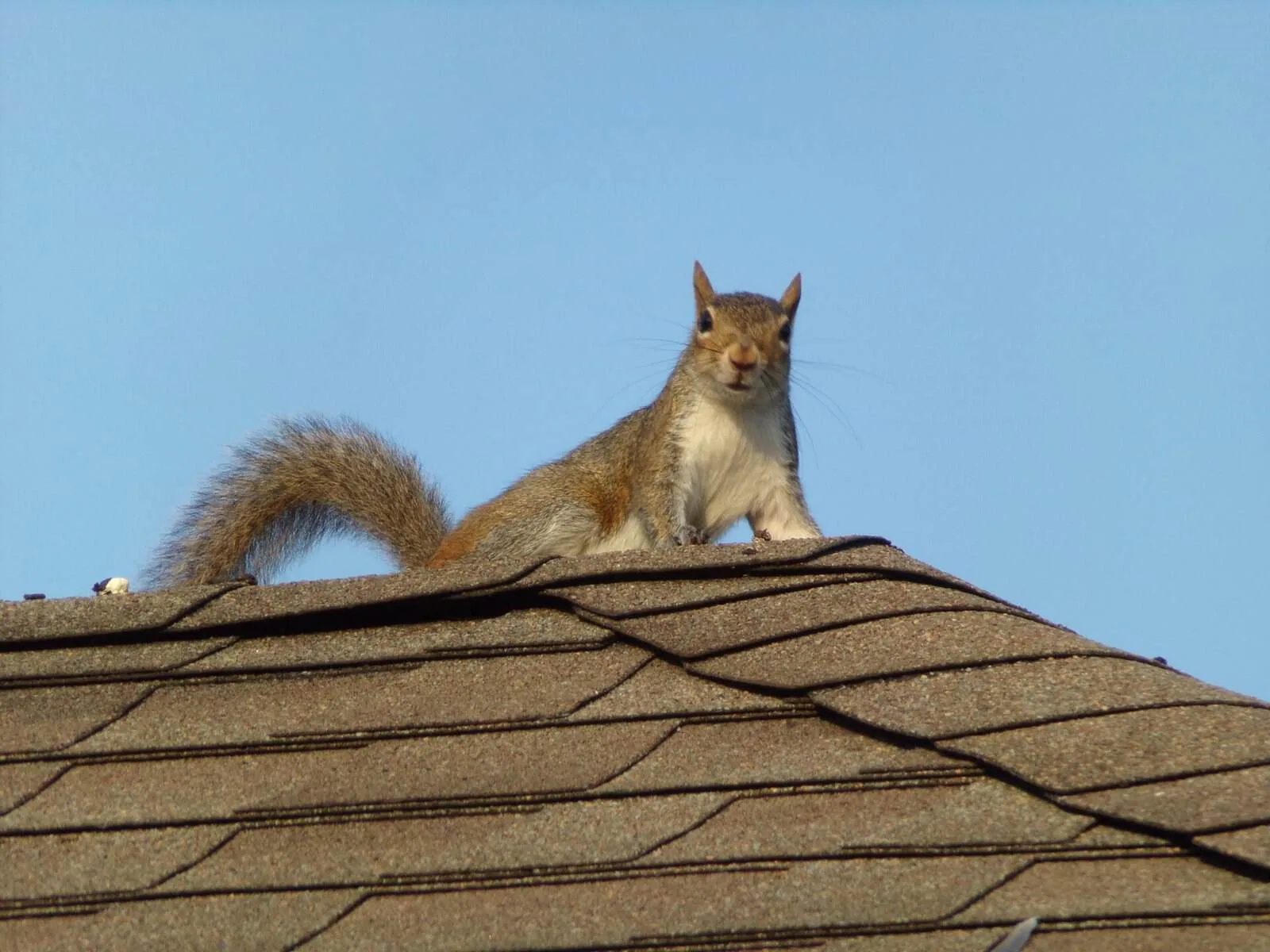
Scratching and scampering overhead in the early morning, a rounded hole chewed through a fascia board, or a squirrel disappearing beneath the edge of the roof: squirrels in the attic are among the most common wildlife problems homeowners encounter. They are not just noisy guests. Squirrels are rodents with continuously growing incisors, and once inside, they may gnaw wood, insulation, and electrical wiring. Getting them out requires careful inspection, appropriate timing, and durable repairs. I do not consider the job finished until the animals are gone and every potential entry point has been properly secured.
Key Points
The squirrels most commonly found in attics include eastern gray squirrels, fox squirrels, and red squirrels, which are active during daylight, and flying squirrels, which are primarily nocturnal. The species most likely to cause a problem depends on the region. Squirrels enter through damaged siding, gaps beneath eaves, broken vent screens, and openings where roof sections meet. They can enlarge existing gaps by gnawing and may create new entry holes in vulnerable wooden surfaces.
The most dependable long-term solution is exclusion. Identify all entry points, determine whether dependent young are present, and close secondary openings when it is safe to do so. A properly installed one-way door can allow mobile squirrels to leave through the remaining entrance. Once every animal has departed, permanently repair the opening with sheet metal, sturdy hardware cloth, or other gnaw-resistant materials. Trimming nearby branches approximately 6 to 8 feet (1.8 to 2.4 m) from the roof may reduce easy access, although squirrels can still jump considerable distances. UC IPM Pest Notes | ICWDM
Squirrel-control laws vary by state and species. Gray and fox squirrels are often regulated as game animals, while flying squirrels and certain other species may receive additional protection. ICWDM reports that no toxicants are registered for tree squirrel control. Relocating trapped squirrels is prohibited or restricted in some states. Check with your state wildlife agency before trapping or taking other control measures.
In This Guide
- Signs of Squirrels in the Attic
- Which Squirrels Get Into Attics
- Damage and Fire Risk
- Health Risks
- How to Get Squirrels Out of the Attic
- What Does Not Work
- Laws and Relocation
- When to Call Licensed Wildlife Control
- What a Pro Visit Looks Like
- What It Costs
- Common Questions
- References
Signs of squirrels in the attic
Daytime noise. Scurrying, scratching, rolling, and other movement during early morning or late afternoon may indicate gray, fox, or red squirrels. Noises primarily at night suggest flying squirrels, rats, mice, or other nocturnal wildlife. Activity patterns are useful clues but do not provide a conclusive identification.
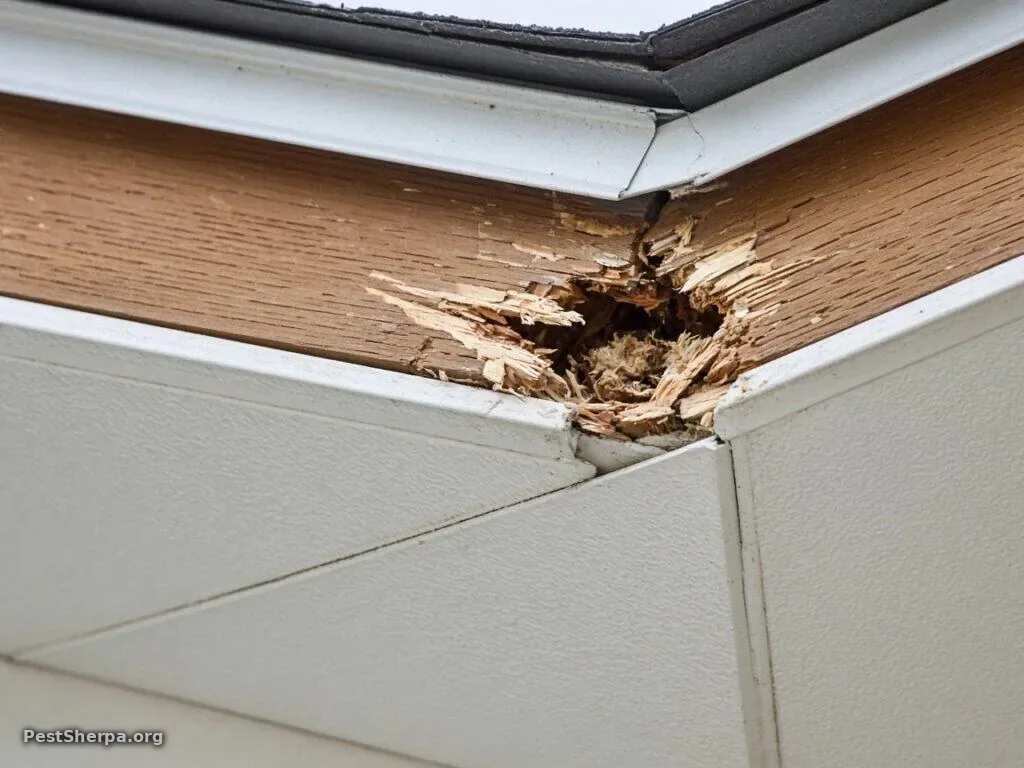
Chewed entry holes. Look for rounded or irregular gnawed openings in fascia boards, soffits, roof returns, gable vents, and places where roof sections overlap. Squirrels readily enlarge existing openings and may create new entrances in vulnerable wood. Openings may be near fences, branches, or utility lines that squirrels use to travel around the property.
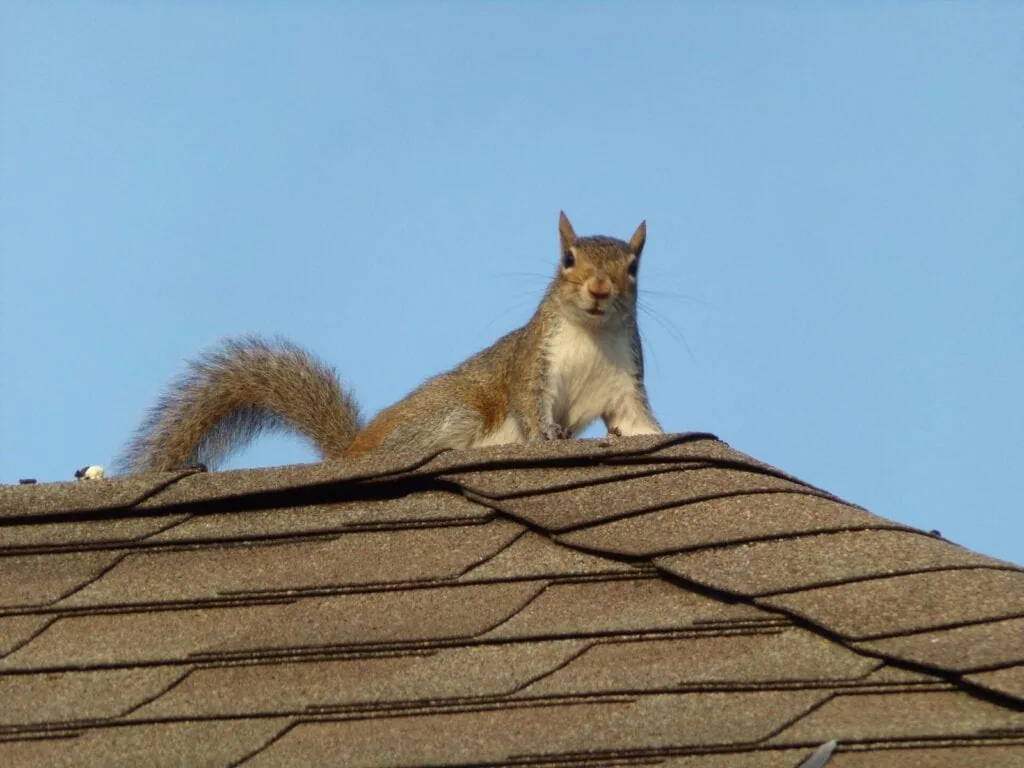
Squirrels on the roof. Watch rooflines and gutters during early morning and late afternoon. A squirrel repeatedly disappearing into the same opening is strong evidence of an active entry point.
Nests. Squirrels may construct nests from leaves, twigs, shredded insulation, and other available material. Attic nests are often located near protected spaces or entry points, although nest location varies.
Droppings and staining. Droppings may accumulate near nesting areas and commonly used travel routes. Heavy or prolonged activity can produce urine staining and contamination of insulation or other building materials. Droppings alone do not reliably distinguish squirrels from other rodents.
Chewed wiring or wood. Gnaw marks on rafters, trim, stored materials, and electrical cable insulation may indicate squirrel activity. Confirming the responsible species requires considering other evidence.
If noise is at night and you are not sure what is up there, compare our guides to signs of mice and bats in the attic.
Which squirrels get into attics
Several squirrel species may occupy attics, depending on geographic location and available habitat.
| Species | Typical adult size, including tail | Activity | Identification and habits |
|---|---|---|---|
| Eastern gray squirrel (Sciurus carolinensis) | Approximately 16 to 21 inches (41 to 53 cm); commonly around 1 to 1.5 pounds (0.45 to 0.68 kg) | Day | Common attic invader across much of the eastern United States; generally gray, sometimes black |
| Fox squirrel (Sciurus niger) | Approximately 18 to 27 inches (46 to 69 cm); commonly 1.5 to 2.5 pounds (0.7 to 1.1 kg) | Day | Larger and heavier-bodied; coloration varies, often with reddish or orange underparts |
| Red squirrel (Tamiasciurus hudsonicus) | Approximately 11 to 15 inches (28 to 38 cm); commonly 4 to 9 ounces (113 to 255 g) | Day | Small, reddish-brown squirrel often associated with coniferous forests |
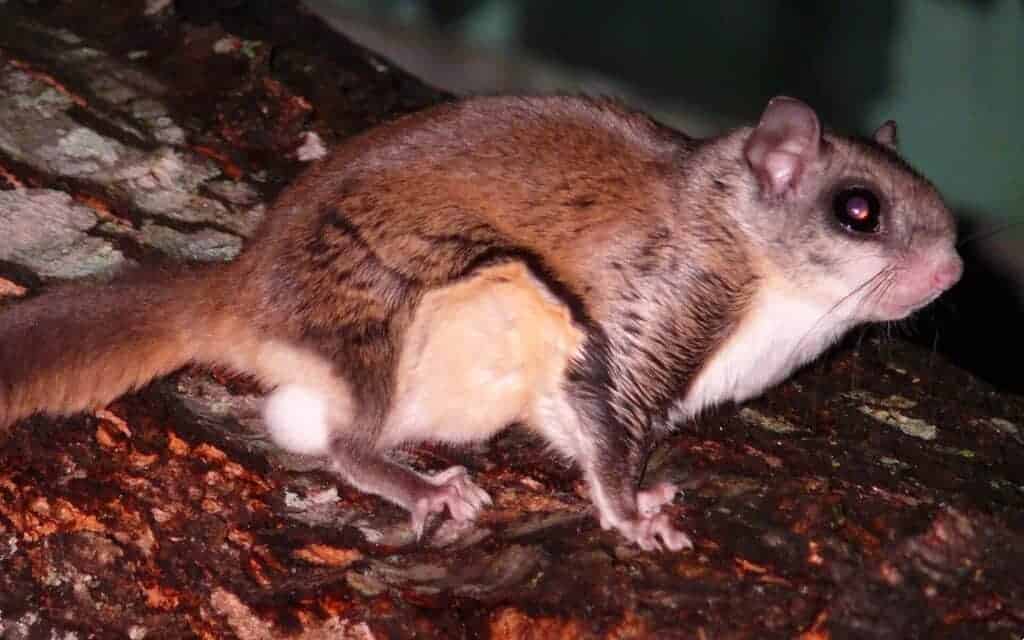
| Flying squirrels (Glaucomys species) | Approximately 8 to 12 inches (20 to 30 cm) for the southern species; northern flying squirrels are generally larger | Night | Possess a gliding membrane between the front and hind limbs; may nest communally, particularly during colder weather |
Measurements are approximate, and individuals vary. Local geographic range is important when identifying a species.
Eastern gray squirrels commonly produce one or two litters annually, depending on age, region, and environmental conditions. Breeding activity often peaks in winter and again during late spring or summer, with births occurring after a gestation period of approximately 44 days.
Litters commonly contain two to four young, although larger litters occur. Young remain dependent on the mother for several weeks and are generally weaned around 8 to 10 weeks of age.
As a result, dependent squirrels may be present in attics during spring and again in late summer or early fall.
Flying squirrel reproduction also varies by species and geography. Southern flying squirrels may produce two litters annually under favorable conditions, while northern flying squirrels more commonly have one litter. Flying squirrels sometimes gather in communal nesting groups during winter, which may make an infestation appear larger than expected.
These reproductive differences matter because adult squirrels may continue entering and leaving an attic while dependent young remain in a nest.
Damage and fire risk
Squirrels gnaw wood, siding, and roofline materials to enter attics or enlarge existing openings. Once inside, they may damage insulation, stored materials, and the protective insulation around electrical wiring.
Exposed or damaged electrical conductors can create shock hazards, short circuits, or conditions that increase the risk of fire. This does not mean every squirrel infestation will cause a fire, but suspected wiring damage should be taken seriously.
Squirrels may also damage outdoor communication cables, irrigation components, and utility equipment. On occasion, their activity around electrical distribution equipment can contribute to outages.
Inside attics, nesting materials and repeated animal activity may compress insulation, reduce its effectiveness, and contaminate it with urine or droppings. In severe cases, staining or odors may become apparent in living spaces.
If squirrels have occupied an attic for an extended period, inspect accessible areas for damaged insulation and building materials. A qualified electrician should evaluate suspected wiring damage, particularly where cables are visibly gnawed or exposed.
Do not handle exposed conductors or disturb damaged wiring yourself. Repairs and replacement of contaminated insulation should be planned after the animal problem has been resolved.
Health risks
Squirrels are not generally considered major sources of human infectious disease, but direct contact with wild squirrels, their nests, or contaminated materials presents potential health risks.
UC IPM identifies diseases associated with tree squirrels, including tularemia and ringworm, and notes that squirrels may carry fleas, mites, and other external parasites. The presence of a pathogen or parasite in a species does not mean every individual is infected or that there is a high risk to humans. As with any wildlife, exercise caution and keep a safe distance from the animal.
Squirrels also can bite or scratch when captured or handled.
Rabies is very uncommon in squirrels. CDC considers small rodents, including squirrels, to present a negligible rabies risk in ordinary circumstances. Nevertheless, any bite or scratch should be washed thoroughly, and medical advice should be sought to evaluate infection risk, wound care, and tetanus protection. Unusual animal behavior or concerning exposure circumstances may warrant consultation with public health officials. [CDC: Rabies]
Do not handle squirrels or nesting material with bare hands.
When removing old nesting material or droppings, avoid dry sweeping, brushing, or vacuuming contaminated debris with an ordinary household vacuum because these methods may disperse dust and biological material. Use appropriate gloves and respiratory protection when indicated, and follow safe wildlife-contamination cleanup procedures.
Extensive contamination, inaccessible nesting material, or insulation requiring removal may justify professional cleaning.
After the animals have left, fleas or other ectoparasites associated with nests may occasionally become noticeable indoors. See our flea guide if biting insects appear following a wildlife-removal project.
How to get squirrels out of the attic
Cut off the highway. Trim accessible branches approximately 6 to 8 feet (1.8 to 2.4 m) away from the roof when practical. This may eliminate convenient routes, although squirrels can leap or climb across substantial gaps.
Metal collars or guards may discourage climbing on isolated trees or poles, but their effectiveness depends on placement and whether alternative routes exist.
Slit plastic sleeves installed on suitable non-electrical support wires may discourage squirrel travel in some circumstances. Never modify electrical service wires or other utility equipment yourself. Contact the utility company about potential wildlife-access concerns.
Find every opening. Inspect the fascia, soffits, overlapping roof sections, vents, flashing, roof returns, and other vulnerable locations. Determine which openings are active by observing squirrels or using an appropriate monitoring method.
Seal the secondary openings. Close unused openings using sheet metal, suitable galvanized hardware cloth, or durable repairs that resist gnawing. UC IPM recommends 1/4-inch (6-mm) hardware cloth or sheet metal, while ICWDM also describes heavy 1/2-inch (13-mm) wire mesh for larger openings and repairs.
The mesh or metal must be securely attached to sound framing. Before sealing secondary openings, confirm that the remaining exit is accessible and that animals will not become trapped.
Install a one-way exit. When all squirrels, including young, are capable of leaving the attic, a correctly fitted one-way door can allow their departure while preventing reentry.
ICWDM describes an improvised excluder consisting of an approximately 18-inch (46-cm) section of 4-inch (10-cm) plastic pipe mounted over the opening and angled downward approximately 45 degrees.
However, an improvised device is not suitable for every entry configuration. Professionally designed one-way doors may be more reliable, especially where squirrels might chew around the barrier.
Confirm the attic is empty. Observe the entry point and monitor for continued activity over several days. A loosely placed newspaper plug can help reveal renewed passage, but a disturbed plug does not identify the animal, and an undisturbed plug does not prove that the attic is empty.
Inspect for dependent young and use more than one form of evidence before permanently sealing the opening.
Seal permanently. Once all squirrels have left, remove the exclusion device and close the entrance with metal flashing, sturdy wire mesh, or another suitable gnaw-resistant repair. Repair damaged fascia, soffits, vents, and surrounding wood.
Clean up. Remove nesting debris and contaminated insulation when necessary. Have suspected wiring damage inspected by an electrician before occupying or accessing affected areas normally.
Do not seal in the young
An adult squirrel repeatedly entering the same roof opening may be caring for dependent young inside.
Young squirrels may remain in a nest for weeks before they are capable of leaving independently. An adult observed exiting does not mean the attic is empty.
Look for repeated visits to a nesting location, listen for young vocalizing, and have the nesting area inspected where safe and accessible.
If dependent young are present, do not install a one-way door that prevents the mother from returning.
A qualified wildlife control operator may be able to remove the young safely and arrange appropriate handling or reunion with the mother. In other situations, exclusion may need to be delayed until the young can travel independently.
Do not attempt to handle a litter without knowing the species and local wildlife regulations.
Sealing dependent young inside can cause their deaths, while excluding a mother may provoke persistent attempts to reenter and additional damage to the roofline.
Permanent repairs should occur only after the entire family group has been accounted for.
Where trapping is lawful and appropriate, a professional may use cage or box traps near active travel routes.
Common baits include apple slices, nuts, and peanut butter. Trap selection, placement, and inspection frequency should follow state regulations, animal-welfare considerations, and site conditions.
Before setting a trap, determine how any captured squirrel may legally be handled. Relocation is not automatically permitted, and captured females may have dependent young.
What does not work
Poison: ICWDM reports that no toxicants are registered for controlling tree squirrels. Ordinary rodenticides labeled for rats or mice must not be used against squirrels unless a product label specifically authorizes that use. Poisoning wildlife can create additional hazards, including animals dying in inaccessible building cavities.
Ultrasonic devices, strobes, and scare products: Squirrels may initially react to unfamiliar sounds, lights, or activity, but they frequently become accustomed to repeated disturbances. UC IPM reports that frightening devices are generally ineffective as lasting solutions. See our article on whether ultrasonic repellents work.
Repellent sprays: Some taste or contact repellents are available for specific uses, such as protecting plants or discouraging gnawing. Their effectiveness varies, and they do not substitute for closing attic entry points.
Mothballs and ammonia: Mothballs are pesticides and must be used only according to their labels. Using them as general wildlife repellents in attics or wall cavities is not an appropriate or lawful application unless specifically authorized by the label. Ammonia may create irritating fumes and does not provide dependable squirrel exclusion.
Patching the hole while squirrels are inside: Trapped squirrels may gnaw new openings or become stranded within building cavities. Never permanently block a suspected active entry without confirming that all animals can leave.
Trapping without sealing: Removing one squirrel does not prevent another from exploiting the same accessible entrance. Durable exclusion is essential for lasting control.
Laws and relocation
Squirrel-control regulations vary by state, species, and circumstances.
Gray squirrels and fox squirrels are commonly managed as game animals, while flying squirrels and certain other tree squirrel species may be protected or subject to additional restrictions.
ICWDM emphasizes that legal requirements for trapping, killing, possessing, and relocating squirrels vary among jurisdictions.
California provides an example of why species identification matters. Under its wildlife regulations, eastern fox squirrels damaging property may be controlled under certain conditions without a permit. Gray squirrels damaging property generally require a permit issued by the California Department of Fish and Wildlife for control outside otherwise authorized activities.
California also restricts the transport and release of tree squirrels. Releasing a captured squirrel at another location without appropriate authorization may be unlawful.
Other states have different hunting seasons, nuisance-wildlife exceptions, trapping permits, and relocation requirements.
Do not assume that a homeowner’s right to exclude a squirrel from a building includes permission to trap and release it elsewhere.
ICWDM identifies no registered toxicants for tree squirrels, and using pesticides contrary to label directions is unlawful.
Before trapping or using lethal control methods, consult your state wildlife agency. A directory is available through the Association of Fish & Wildlife Agencies.
When to call licensed wildlife control
Consider hiring a qualified wildlife control professional when:
- The entry point is high on the roof, on a steep slope, or otherwise unsafe to access.
- Dependent young are present, or you cannot determine whether a nest contains young.
- Squirrels have damaged insulation or may have gnawed electrical wiring.
- An exclusion attempt has failed and squirrels have chewed new openings.
- Trapping is necessary, but state or local regulations restrict who may perform it.
- Several openings or inaccessible nesting areas make complete exclusion difficult.
If electrical wiring has been damaged or is suspected to be unsafe, a qualified electrician should inspect and repair it.
What a pro visit looks like
A proper squirrel-removal service is primarily an exercise in careful inspection, safe animal removal, and durable building repair.
An effective job should identify every potential entry point rather than concentrating only on the most obvious hole.
The inspection
The technician examines the roofline, including fascia boards, soffits, roof returns, ridge and gable vents, chimney flashing, and locations where roof sections meet.
Inside accessible attic areas, the technician checks for nests, dependent young, droppings, gnawed materials, and damaged insulation or wiring.
Expect the inspector to identify active and potential entry points and explain which openings require repairs.
Roof access should be performed using appropriate equipment and fall protection.
Your prep before the visit
- Record when you hear activity, distinguishing morning, afternoon, and nighttime noises.
- Do not seal or block suspected entry points before the inspection.
- Clear access to the attic hatch and move vehicles or stored items that could obstruct safe exterior inspection.
- Identify nearby trees, branches, and utility lines that squirrels may be using to reach the roof.
- Keep children and pets away from the affected attic area if there is visible damage or exposed wiring.
The treatment
Depending on the species, reproductive season, and legal requirements, treatment may include:
- Sealing inactive or secondary openings with sheet metal, properly attached hardware cloth, or other durable repairs.
- Installing a monitored one-way door over an active entrance after ruling out dependent young.
- Using appropriately selected traps where lawful and necessary.
- Professional removal and appropriate handling of dependent young when required.
- Permanently closing the final entrance after confirming that all animals have left.
- Repairing damaged roofline materials and arranging insulation cleanup or electrical repairs as needed.
Follow-up
Many attic exclusion jobs require at least two visits: an initial inspection and installation of control devices, followed by monitoring, removal of temporary equipment, and permanent repairs.
The exact number of visits depends on species, building condition, whether young are present, and the management method selected.
HomeGuide reports that some attic-removal packages include warranties of a year or longer, but coverage varies among companies.
Ask what the warranty covers, which repaired areas are included, and whether new entry points or animal-caused damage are excluded.
Questions to ask before you book
- How will you determine whether dependent young are present before installing a one-way door?
- Will you inspect and seal all vulnerable roofline openings or only the active entrance?
- What metal, mesh, and fastening methods will be used for permanent repairs?
- How will trapped squirrels be handled, and are those methods legal in this state?
- How long does the exclusion warranty last, and what does a return visit cost?
Our guide to hiring a wildlife professional provides additional questions for evaluating companies.
What it costs
Squirrel removal costs depend on the number of animals, the location and accessibility of their entrances, and how much exclusion, cleanup, and repair work is required.
HomeGuide’s February 2026 cost guide reports a general project range of approximately $200 to $1,500, with more extensive jobs sometimes exceeding that amount.
Compare estimates with the cost of wildlife removal by animal and service type, but distinguish basic animal removal from full attic exclusion and repair.
Typical national ranges
Published 2026 consumer-service estimates include:
- Squirrel removal: $300 to $600 on average, with a reported national average of $450 (HomeGuide).
- Attic removal with cleanup, minor repairs, and sealing: Approximately $500 to $1,500 or more (HomeGuide).
- Additional installed exclusion doors: Approximately $225 to $400 each (HomeGuide).
- Attic insulation replacement: Approximately $2 to $6 per square foot, depending on materials and installation requirements (HomeGuide).
- Squirrel removal: Approximately $250 to $450, with a reported national average of $300 (Angi, September 2026).
- Wildlife removal across species: Approximately $198 to $636 for most projects (Angi, September 2026).
These figures are published consumer pricing estimates, not standardized national averages based on identical scopes of work.
Costs may differ substantially according to location, site conditions, and whether the quoted price includes removal, permanent exclusion, sanitation, repairs, and follow-up.
HomeGuide, 2026 | Angi, 2026 | Angi Wildlife Costs
What moves the price
- Location: HomeGuide estimates attic removal at approximately $500 to $1,500, ceiling access jobs at $750 to $1,500, and chimney removal at $600 to $950.
- Entry points: The number of openings and the height or complexity of the roofline affect labor and equipment needs.
- Young squirrels: Dependent young may require careful removal, specialized handling, or delayed exclusion.
- Building repairs: Damaged fascia, soffits, vents, flashing, insulation, and electrical wiring can increase the cost.
- Warranty: The length and scope of any exclusion guarantee may affect pricing.
One-time job or ongoing plan
Many squirrel infestations can be resolved through a one-time removal and exclusion project when all entrances are identified and properly repaired.
However, new openings can develop through weathering, roof damage, or renewed animal activity.
Periodic inspection of roofline repairs, vents, and other vulnerable locations can reduce the need for repeated wildlife-removal services.
A written warranty on exclusion work may be more valuable than a low initial trapping price, especially when the work includes multiple roofline repairs.
Red flags in a quote
- The company proposes sealing only the active hole without inspecting the rest of the roofline.
- Poison is offered as a squirrel-control method.
- Relocation is offered without explaining applicable state wildlife regulations.
- There is no plan to determine whether dependent young are present.
- Temporary trapping is proposed without permanent exclusion.
- No written warranty or clear explanation of repair coverage is provided.
No reputable company would use these tactics, but wildlife removal can look like easy money to unlicensed or inexperienced workers, who may not know a license is required or may ignore the rule. Do not hand this work to handymen, home repair companies, or anyone else who lacks the required license.
Request separate line items for animal removal, exclusion materials, roofline repairs, and cleanup so competing estimates can be compared fairly.
Common questions about squirrels in the attic
How do I know it is squirrels and not rats or bats in the attic?
Activity timing is an important clue. Eastern gray, fox, and red squirrels are mainly active during the day, while flying squirrels, rats, and mice are primarily active at night.
Bats may be active at dusk and overnight, although their movement and sounds differ from those of larger rodents.
Gnawed openings, shredded nesting material, tracks, droppings, and direct observation help identify the animal. Noise alone is not conclusive.
Can squirrels in the attic cause a fire?
Yes. Squirrels can gnaw electrical cable insulation, creating exposed conductors or damaged wiring that may contribute to a fire or electrical fault.
The presence of squirrels does not mean a fire is inevitable, but suspected damage should be inspected by a qualified electrician.
Will squirrels leave the attic on their own?
Squirrels may leave temporarily to forage, but they can continue using a protected attic for shelter or nesting.
A mother with dependent young may return repeatedly to the same nesting location.
For lasting prevention, identify the active entrances, confirm that all squirrels can safely leave, use appropriate exclusion methods, and permanently repair the openings.
Can I trap squirrels and release them somewhere else?
That depends on state law, species, and the circumstances.
Some states restrict or prohibit transporting squirrels for release. California, for example, requires appropriate authorization for certain tree squirrel control and relocation activities.
Flying squirrels and other species may receive special protection in some jurisdictions.
Before setting a trap, contact your state wildlife agency and determine what may legally happen to the animal after capture.
Do mothballs, ammonia, or ultrasonic devices drive squirrels out?
These products are not dependable long-term solutions.
UC IPM reports that squirrels often become accustomed to frightening devices, including sound- and light-based products.
Some repellents may temporarily discourage gnawing or feeding, but they do not reliably remove squirrels from buildings.
Mothballs must be used only according to their pesticide labels and should not be placed in attics or other unapproved locations as wildlife repellents.
Can I use poison on squirrels?
ICWDM reports that no toxicants are registered for tree squirrel control. Mixing up your own poison bait for squirrels is illegal.
Rodenticides labeled for rats and mice must not be used against tree squirrels unless the product label explicitly authorizes that use.
Exclusion and properly authorized wildlife-control methods are preferable to attempting to poison squirrels in a building.
How much does it cost to get squirrels out of the attic?
HomeGuide’s February 2026 cost guide reports average squirrel removal prices of $300 to $600, with a national average of $450.
More complete attic jobs involving animal removal, cleanup, minor repairs, and sealing typically range from approximately $500 to $1,500 or more.
The final price depends on the number of animals, the building’s condition, access difficulties, and the scope of repairs.
This guide is part of our Nuisance Wildlife guide. If the noise occurs mainly at night, compare our guides to raccoons, roof rats, and signs of mice. If you are not sure about an entry hole you photographed, send the image to Ask the Sherpa.
References
- Penn State Extension: Tree Squirrels
- UC IPM Pest Notes: Tree Squirrels
- Internet Center for Wildlife Damage Management: Tree Squirrels
- Association of Fish and Wildlife Agencies: U.S. State and Territorial Fish and Wildlife Agencies (member list)
- HomeGuide, How Much Does Squirrel Removal Cost?, February 9, 2026
- Angi, How Much Does Wildlife Removal Cost? [2026 Data], updated September 9, 2026
This article was written by Greg Baumann, founder of Pest Sherpa, and reflects more than 40 years of professional pest management experience.
About the Author

Greg Baumann | Pest Control Expert
Greg Baumann is the founder of Pest Sherpa and a Pest Control Expert with more than 40 years of professional pest management experience. His articles combine decades of field experience, technical expertise, and science-based guidance to help homeowners identify pests correctly, understand real-world risks, and make informed pest management decisions.
Mission: Identify the pest. Understand the risk. Stop the problem. Prevent the comeback. Know when it’s time to call a professional.