
Signs of Mice in Your House: Droppings, Sounds, and Smells
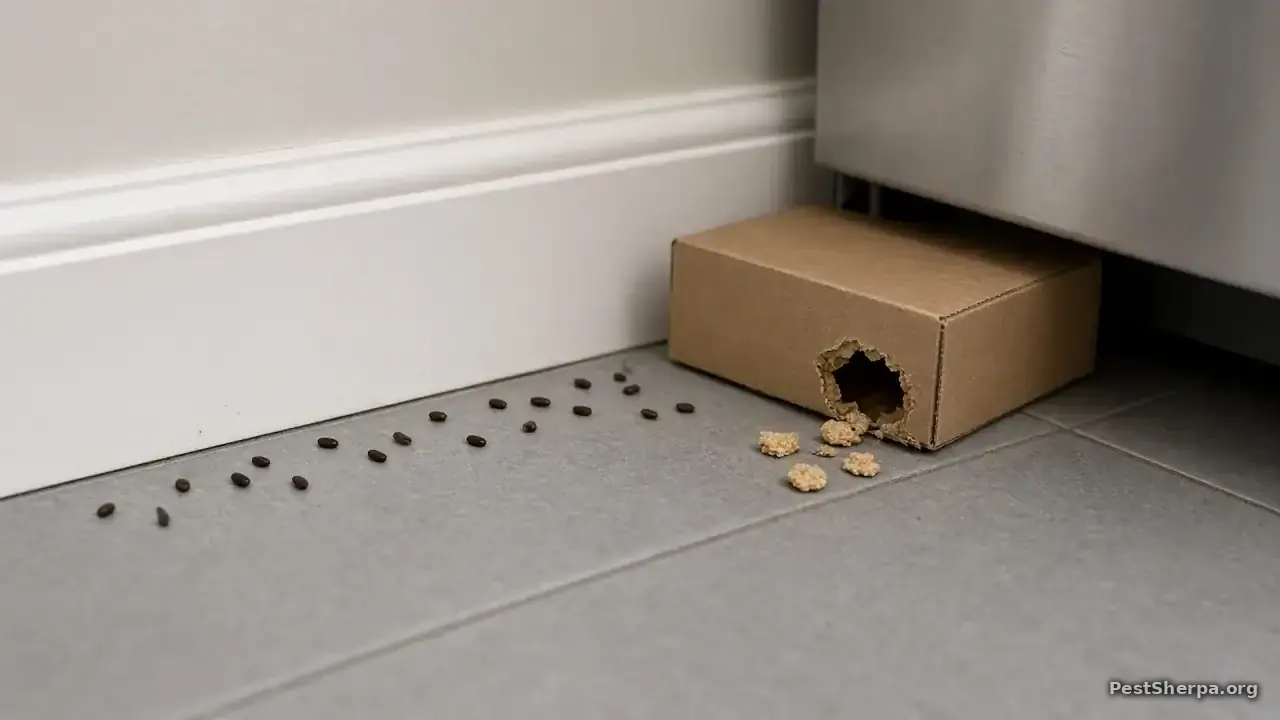
Finding droppings in a kitchen drawer or hearing scratching in the ceiling at night raises two questions fast: is it really mice, and how big is the problem? Here’s how I check for mice in a house, the same way I would on an inspection, plus what to do first and how to clean up without putting your health at risk. For this article, we’ll focus on the most common pest mouse, the house mouse.
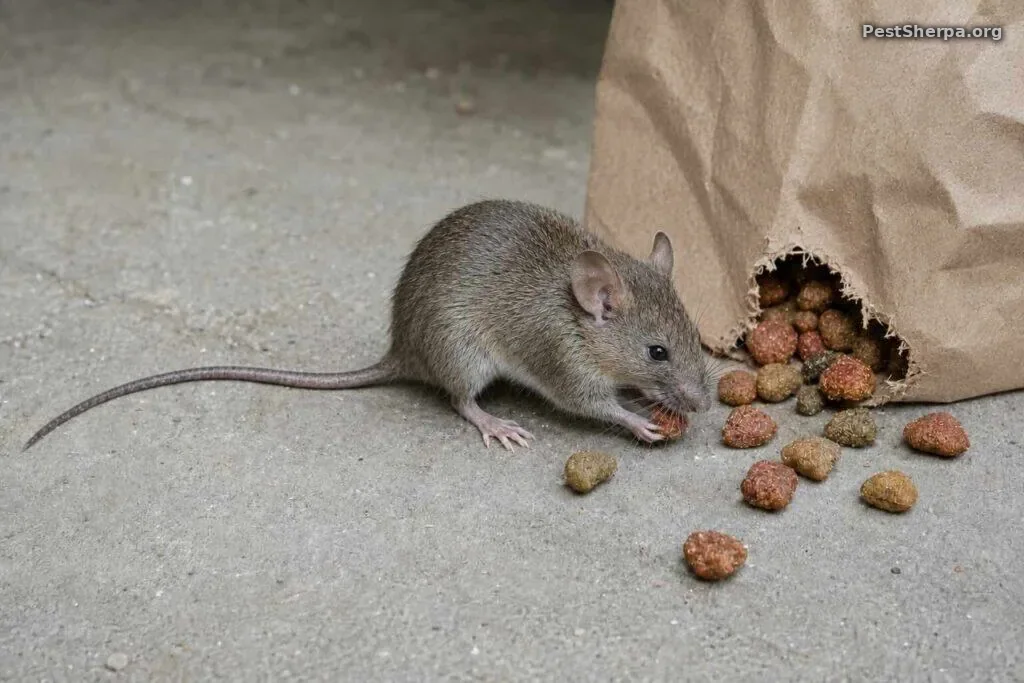
Mice will frequent any area that provides food, water, and shelter
Quick answer: the signs of mice in your house
- Droppings: small, dark, pointed at the ends, about 1/8 to 1/4 inch long. Look in drawers, cabinets, under sinks, behind appliances, and along walls.
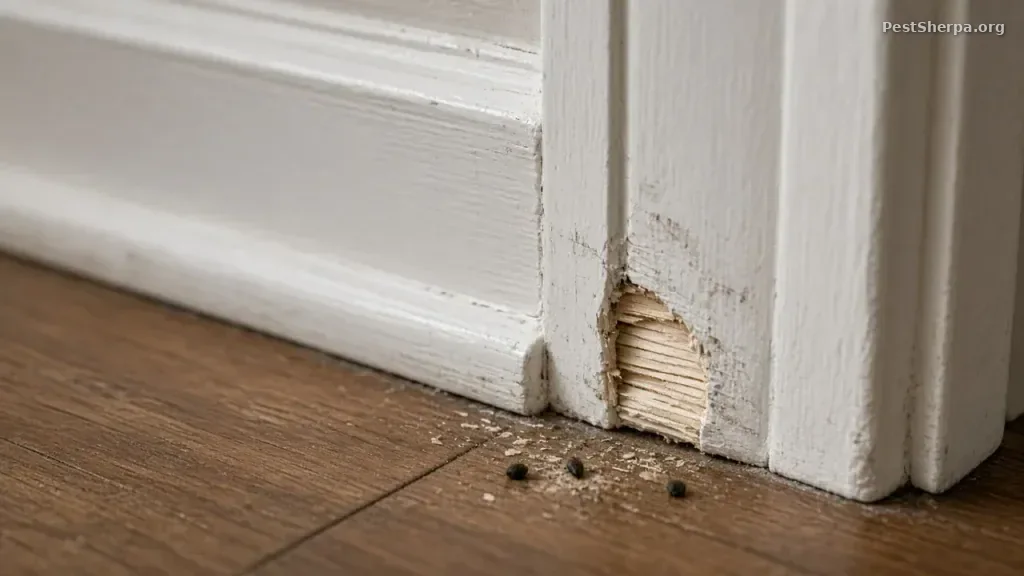
- Gnaw marks: fine, scratchy chew marks on food boxes, bags, pet food, wood, and plastic.
- Sounds: scratching or scurrying in walls, ceilings, or cabinets, mostly at night.
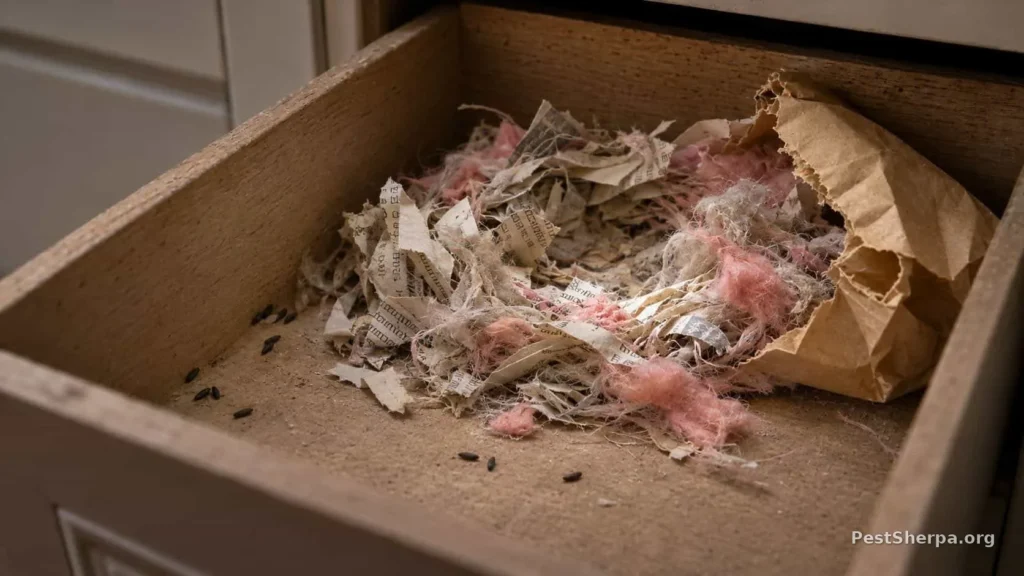
- Nests: wads of finely shredded paper, fabric, or insulation in quiet, hidden spots.
- Smell: a musky, stale odor that builds up when mice have been around a while.
- Tracks and smudges: tiny footprints in dust and faint dark marks along walls.
Bottom line: fresh droppings that come back after you clean up are the clearest sign mice are living in the house. Don’t sweep or vacuum them. See how to clean up safely.
Based on UC IPM, Cornell IPM, and CDC guidance cited in the References below.
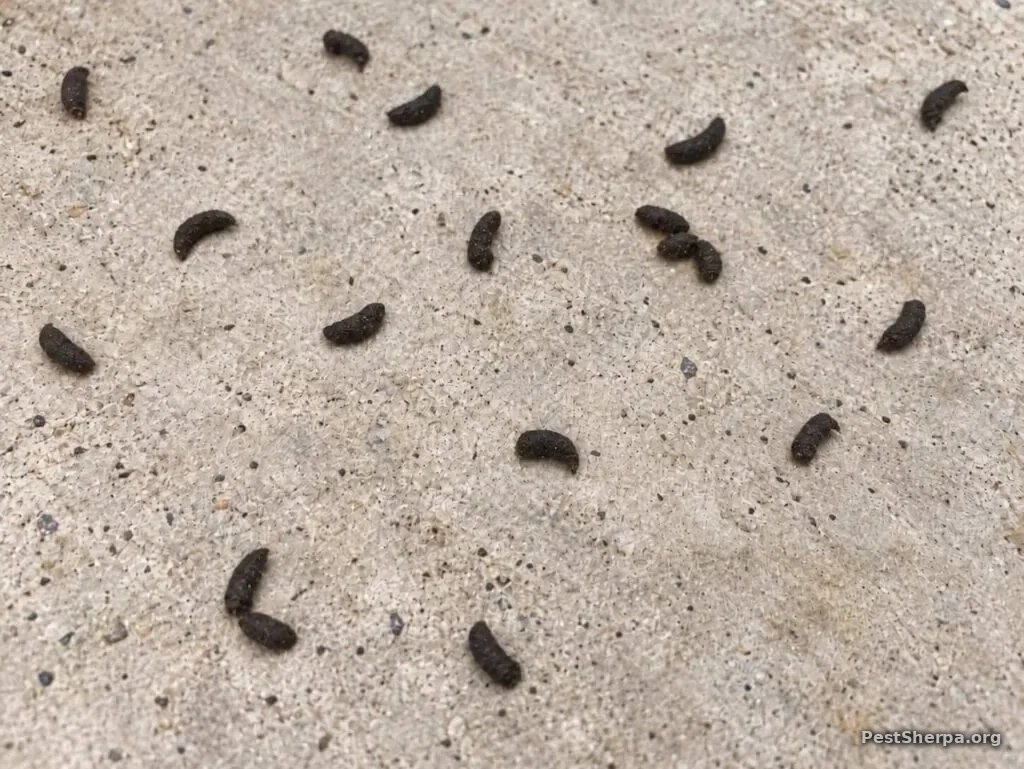
Droppings are frequently the first sign of an infestation by unwelcome mice
Mouse droppings: the sign you’ll find first
Droppings are usually the first thing people notice, and they tell you the most. House mouse droppings are small, dark, and shaped a lot like a grain of rice with pointed ends, about 1/8 to 1/4 inch long. Mice drop them as they travel, so they show up scattered along walls and routes rather than in one neat pile. [Cornell University NYS IPM] [University of California IPM]
- Where to look: kitchen drawers and cabinets, the pantry floor, under the sink, behind the stove and refrigerator, along baseboards, in the garage, and anywhere you store pet food or birdseed. Pet food dishes are also a frequent food source for mice.
- Fresh or old: fresh droppings are dark and look moist. Older ones dry out, turn dull or gray, and crumble. Judge by eye, not by touching them.
- Odd colors: droppings can be a different color depending on what the mouse ate. Green or red droppings can mean it has been eating rodent bait.
Greg’s Expert Tip: After you clean up a spot safely, check that same spot again in two or three days. New droppings mean you have mice living in the house right now. No new droppings after a week or two of trapping and sealing usually means you’re winning.
Mouse vs rat droppings (and roach droppings)
Size is the giveaway. If the droppings are bigger than a grain of rice, you’re probably dealing with rats, and that changes the traps, where you put them, and how you seal the house. [Cornell University NYS IPM] [University of California IPM]
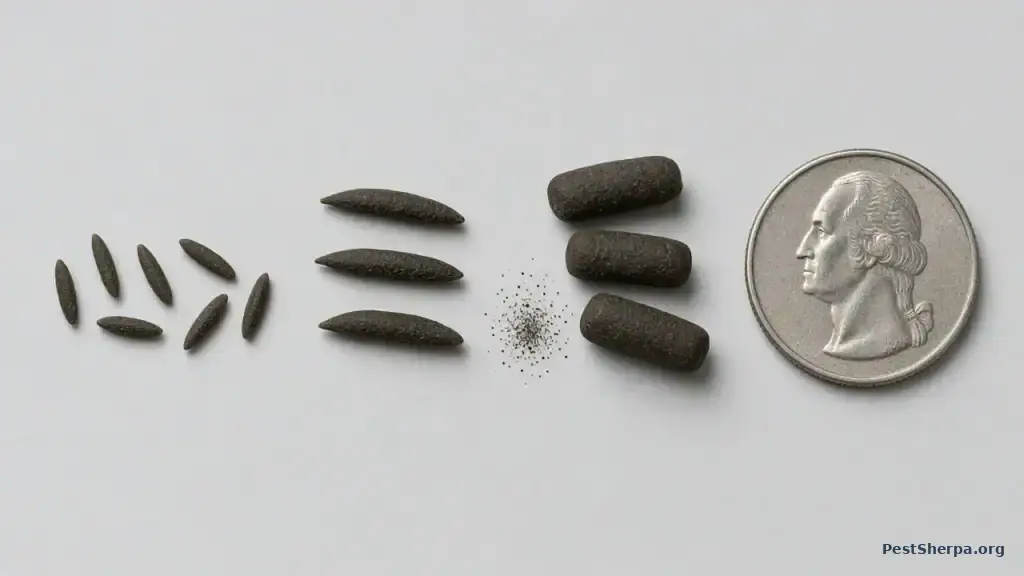
| What left it | Size | What it looks like | Where you usually find it |
|---|---|---|---|
| House mouse | 1/8 to 1/4 inch | Small, dark, pointed ends, like a grain of rice | Kitchens, drawers, cabinets, along walls |
| Deer mouse | About the same as a house mouse | Same general shape and size | Sheds, garages, cabins, barns, and closed-up buildings |
| Roof rat | About 1/2 inch | Larger and longer than mouse droppings | Up high: attics, upper floors, shelves, along pipes and wires |
| Norway rat | 3/4 inch to 1 inch | Large and thick, with blunt ends | Low: basements, crawlspaces, ground floors, near burrows |
| German cockroach | Tiny specks | Look like ground pepper or coffee grounds, often with dark smears | Cabinet hinges, corners, behind appliances |
Larger cockroaches, like the American cockroach, leave bigger droppings, but they have ridges running along the sides. Rodent droppings are smooth. [Cornell University NYS IPM] If the droppings are in a shed, cabin, or barn, think about deer mice. The CDC says the deer mouse spreads the most common hantavirus that causes illness in the United States, so cleanup matters even more there. [CDC] Woodrats leave their own clues, including big stick nests; see the pack rat guide.
Sounds: scratching in the walls or ceiling at night
Mice are most active at night, although you may see one in the daytime. [University of California IPM] The classic sign is light, quick scratching or scurrying inside a wall, above a ceiling, or in the back of a cabinet after the house goes quiet. Some people also hear faint gnawing.
- Light and quick: usually mice.
- Heavier thumps, running, or something rolling: more likely rats. See roof rats, which love attics.
- Attic noise early in the morning and around dusk: often squirrels, which are active in daylight. That’s a wildlife job; see hiring a pro for wildlife.
Smells: a musky, stale odor
House mice have a musky odor, and you notice it most when there are a lot of them or they have been in the house a long time. [University of California IPM] [University of Missouri Extension] It tends to be strongest in closed spaces like a pantry, a cabinet under the sink, or a closet. A sudden, sharp rotten smell in one spot can mean a mouse died in a wall or under a floor.
Gnaw marks and chewed packaging
Mice chew constantly. Look for small, ragged holes in cereal boxes, bags of rice or flour, pet food bags, and birdseed, plus scratchy marks on wood, plastic, and baseboard corners. A mouse leaves fine marks about 1 to 2 millimeters wide. Rat gnaw marks are much bigger, about 3.5 to 4 millimeters. [Cornell University NYS IPM] Rodents also chew on wiring and insulation, which is one more reason not to let a mouse problem ride.
Nests, tracks, and rub marks
House mouse nests are made from finely shredded paper, fabric, or other soft material, tucked into sheltered spots. [University of California IPM] Check the back of drawers, under the stove drawer, inside cabinet voids, in stored boxes, behind the washer and dryer, in the garage, and in attic or wall insulation.
- Tracks: in dust, mouse footprints look like a scatter of tiny dots. A rat’s print looks more like a small foot, and rats may leave a tail drag line between the prints. [Cornell University NYS IPM]
- Rub marks: faint dark smudges along walls, pipes, and openings where a rodent’s fur rubs over and over. They’re far more obvious with rats. [University of California IPM]
Greg’s Expert Tip: Not sure a path is active? Dust a very thin layer of flour or baby powder along the wall where you suspect traffic, away from kids and pets, and look the next morning. Tiny tracks through it tell you exactly where to set traps.
How mice get in
The CDC says a mouse can fit through a hole the width of a pencil, about 1/4 inch. [CDC] That’s why you can have mice in a house that looks tight. When you go looking, check:
- Under and behind kitchen cabinets, and around the pipes under sinks, the washer, and the water heater
- Around gas, water, cable, and electric lines where they come through walls
- Gaps under exterior doors and garage doors, and doors without good weatherstripping
- Dryer vents, foundation and crawlspace vents, and the gap between the foundation and siding
- The roofline, eaves, soffits, and attic vents
Fill small holes with steel wool and hold it in place with caulk, and use hardware cloth, sheet metal, or cement for bigger openings. [CDC] Rodents can chew through plastic, foam, wood, and caulk by themselves, so don’t count on foam alone. [University of California IPM]
What to do first
- Leave the droppings alone for now. Don’t sweep or vacuum them. Clean them up the safe way, below.
- Map where the activity is. Note every spot with droppings, gnawing, or nesting. That’s where traps go.
- Set snap traps, and enough of them. Put them along walls, behind objects, in dark corners, and where you found droppings, out of reach of kids and pets. A dab of peanut butter works fine.
- Take away the food. Store food in thick plastic, glass, or metal containers with tight lids, clean up crumbs, and don’t leave pet food out overnight.
- Seal the gaps. Steel wool plus caulk for small holes, hardware cloth or sheet metal for big ones.
- Skip the gadgets. Ultrasonic and electronic repellers don’t solve mouse problems. See my answer on whether ultrasonic repellers work.
If you use rodent bait, use it only in tamper-resistant bait stations, read and follow the label, and keep it away from children and pets (EPA). Inside the living space I prefer traps, because you know where the mouse ends up. Sources: UC IPM, CDC.
Clean up droppings safely (hantavirus and other risks)
Mouse droppings, urine, and nests aren’t just gross. House mice can carry diseases like salmonella, leptospirosis, and lymphocytic choriomeningitis, and mouse urine is a major allergen. [University of California IPM] Hantavirus is the one people worry about most. The CDC says you can get it by breathing in air that has been contaminated when fresh urine, droppings, or nesting material from an infected rodent gets stirred up. [CDC] You usually can’t tell which mouse left the mess, so clean every rodent mess like it matters. Here’s the CDC method in plain English: [CDC]
- Air it out. Open doors and windows for 30 minutes before you start, and stay out of the room while it airs out.
- Glove up. Wear rubber or plastic gloves.
- Soak, don’t sweep. Spray the droppings, urine, and nesting material with a household disinfectant or a fresh bleach solution (1 1/2 cups of bleach in 1 gallon of water) until they’re very wet. Let it soak for 5 minutes, or as long as the disinfectant label says.
- Wipe and bag. Pick it all up with paper towels and throw them away in a covered trash can. Bag dead mice and nests, and double bag them.
- Disinfect the area. Mop or wipe floors, counters, cabinets, and drawers with disinfectant.
- Wash up. Wash your gloved hands, take the gloves off, then wash your hands with soap and warm water.
Greg’s Expert Tip: Never mix bleach with ammonia or other cleaners. And if you’re facing a heavy infestation, a cabin or shed that has been closed up all winter, or droppings in your heating and cooling ducts, that’s the time to call a professional. The CDC recommends a pro for ductwork and extra protective gear for heavy infestations.
For the full story, read my hantavirus prevention guide and the Q&A is hantavirus contagious from person to person? If you get a fever, tiredness, and muscle aches in the weeks after cleaning up after rodents, see a doctor and tell them about the rodent exposure. [CDC] This is general guidance, not medical advice.
When to call a pro
Plenty of people handle a mouse or two themselves. I’d call a licensed pest control professional when:
- You keep finding fresh droppings after a week or two of trapping and sealing.
- You see signs in more than one room or on more than one floor.
- You can’t find or reach the entry points, especially up at the roofline or in the attic.
- The droppings are rat-sized, or you hear heavy movement in the walls or ceiling.
- There’s heavy contamination in insulation or ductwork, or a closed-up cabin or outbuilding to clean.
- Someone in the home has asthma or a weakened immune system, or is pregnant.
Before you hire anyone, read what to look for when hiring a pro for rodents (mice and rats). A good company inspects the whole house, seals entry points, and comes back to check results. For the bigger picture, see how professional pest control works.
Common questions about signs of mice
What do mouse droppings look like?
Mouse droppings are small, dark, and shaped like a grain of rice with pointed ends, about 1/8 to 1/4 inch long. You usually find them scattered along walls, in drawers and cabinets, under the sink, and near food or pet food. Rat droppings are much bigger, about 1/2 inch to 1 inch long.
How can I tell if I have mice or rats?
Start with the droppings. Mouse droppings are 1/8 to 1/4 inch long. Roof rat droppings are about 1/2 inch, and Norway rat droppings are 3/4 inch to 1 inch. Gnaw marks help too: a mouse leaves fine, scratchy marks about 1 to 2 millimeters wide, while a rat leaves grooves about 3.5 to 4 millimeters wide. Rats also leave darker, greasier rub marks along walls and beams.
Does one mouse mean I have an infestation?
Not always, but mice breed fast, so I treat one sighting as a reason to look closer. Check for droppings, gnawing, and nesting material. If you clean up safely and fresh droppings show up again in the same spots within a few days, you have mice living in the house, not just one passing through.
What do mice sound like in the walls or ceiling?
Light, quick scratching, scurrying, or a faint gnawing sound, mostly at night when mice are most active. Heavier thumps or rolling sounds point more toward rats. Noise in the attic early in the morning and around dusk is often squirrels, which are active in the daytime.
Can I vacuum or sweep up mouse droppings?
No. The CDC says not to sweep or vacuum rodent droppings, urine, or nesting material, because it can put virus particles into the air you breathe. Air out the room, wear gloves, soak the droppings with disinfectant or a bleach solution for 5 minutes, then wipe them up with paper towels and throw them away.
Will mice leave on their own when it warms up?
Usually not. Once mice have food, water, and a warm nest inside, they have little reason to leave, and they keep breeding. You have to remove them with traps and seal the gaps they used to get in, or call a professional to do it.
Keep learning
- Rodent Guide: mice and rats
- House mice: identification, droppings, risks, and control
- Deer mice: health risks and cleanup
- Norway rats: signs and damage
- Roof rats: signs and damage
- Pack rats (woodrats)
- Hantavirus prevention and rodent identification
- Q&A: Now that the weather is warmer, will mice leave my basement?
- Q&A: Do ultrasonic repellents work?
- What to look for when hiring a pro for rodents
Still not sure what you’re dealing with? Ask the Sherpa and tell me what you found and where. A clear photo of the droppings next to a coin helps a lot.
References
- CDC: How to Clean Up After Rodents
- CDC: How to Seal Up to Prevent Rodents
- CDC: Hantavirus Prevention
- CDC: About Hantavirus
- University of California IPM: House Mouse
- University of California IPM: Rats
- Cornell University NYS IPM: Mouse and Rat Biology and Behavior
- University of Missouri Extension: Controlling House Mice (G9442)
- EPA: Safely Use Rodent Bait Products
This article was written by Greg Baumann, founder of Pest Sherpa, and reflects more than 40 years of professional pest management experience.
About the Author

Greg Baumann | Pest Control Expert
Greg Baumann is the founder of Pest Sherpa and a Pest Control Expert with more than 40 years of professional pest management experience. His articles combine decades of field experience, technical expertise, and science-based guidance to help homeowners identify pests correctly, understand real-world risks, and make informed pest management decisions.
Mission: Identify the pest. Understand the risk. Stop the problem. Prevent the comeback. Know when it’s time to call a professional.