
How to Get Rid of Mice in the House: Trapping, Sealing, and Safe Cleanup
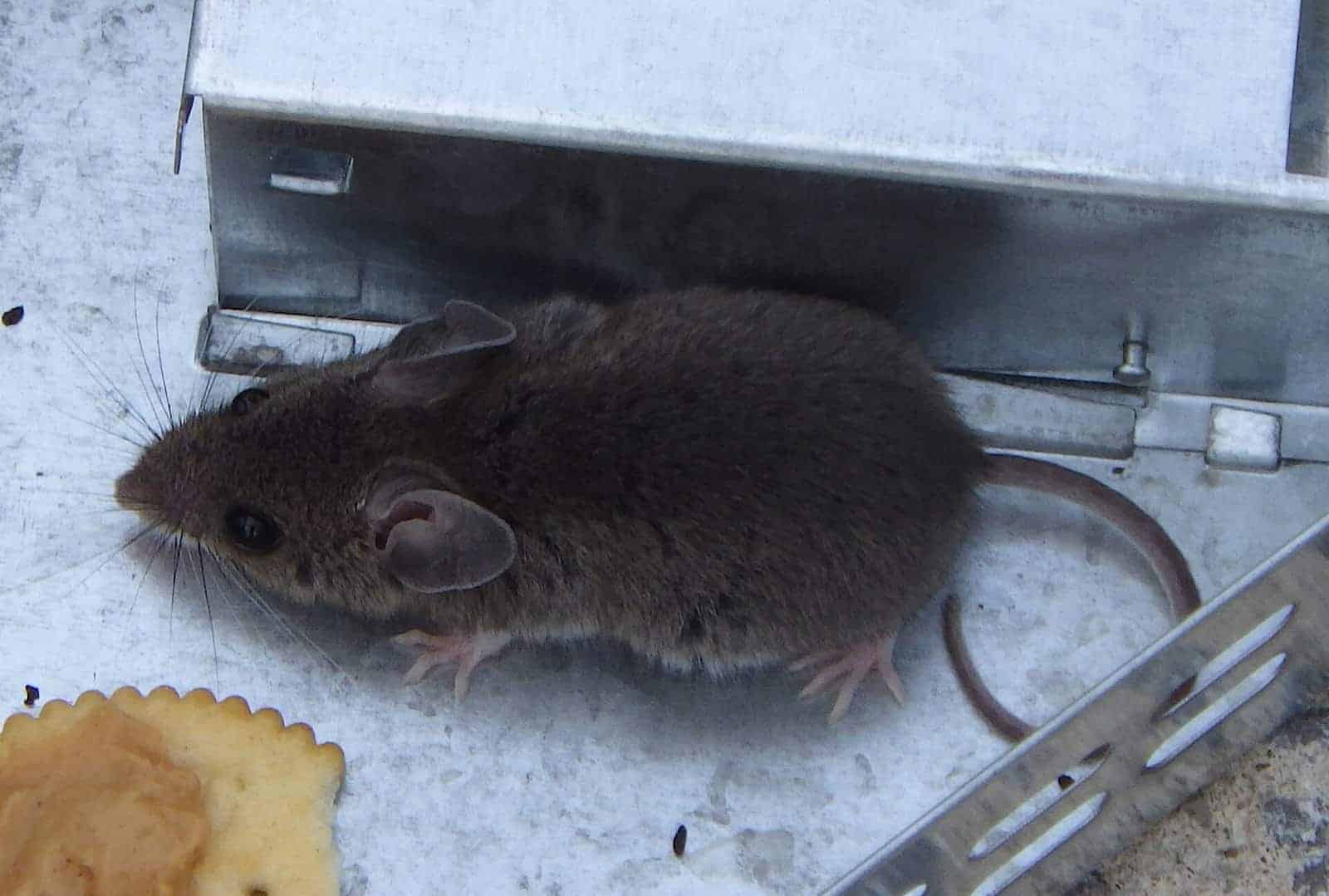
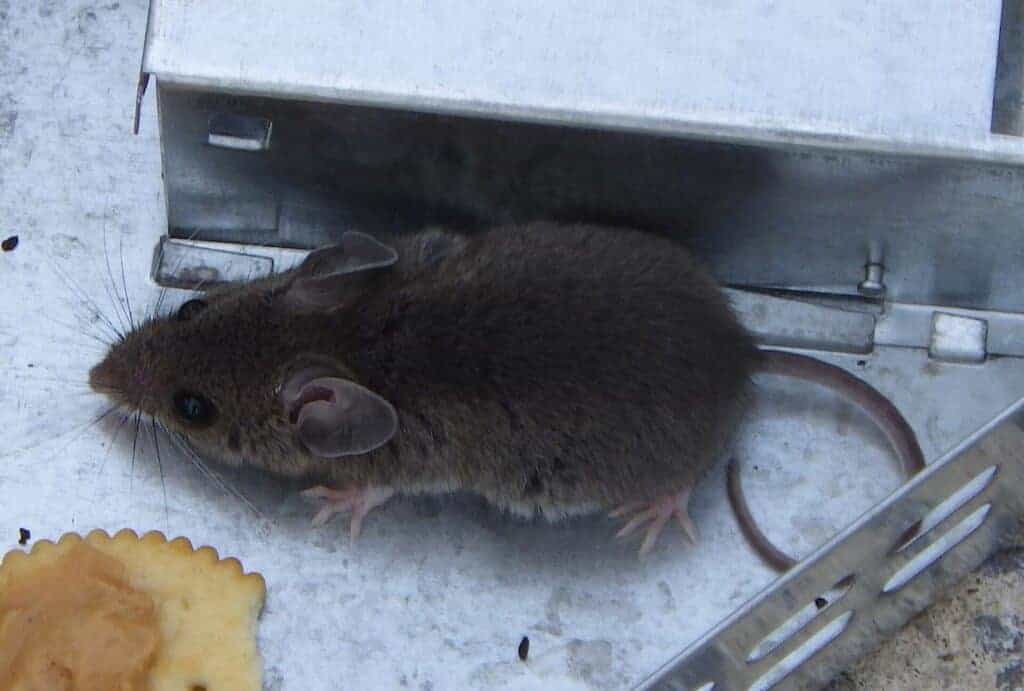
A few droppings in a kitchen drawer or scratching sounds inside a wall at night may be signs that mice have found a way into your home. House mice are well adapted to living near people, reproduce quickly when food and shelter are plentiful, and can squeeze through openings as small as 1/4 inch (6 mm).
Getting rid of mice requires three steps working together: reduce the population with properly placed traps, seal entry points to prevent more mice from entering, and remove accessible food, water, and shelter. These measures are more effective together than relying on any one method alone.
This guide explains each step, how to clean up mouse contamination safely, which popular remedies do not work, and what to expect from professional mouse control, including typical costs.
Key Points
Trapping is the first step I recommend for most homes. Use multiple mouse-sized snap traps placed along walls, behind objects, and near areas showing signs of mouse activity. Space traps no more than about 10 feet (3 m) apart in active areas, with closer spacing where activity is concentrated. Keep traps inaccessible to children and pets.
Exclusion is essential for lasting control. Seal openings as small as 1/4 inch (6 mm), including gaps around pipes, vents, doors, foundations, and utility lines. Use durable, chew-resistant materials such as metal flashing, appropriately sized metal screening, concrete, or other suitable rodent-resistant materials. Coarse steel wool can serve as a temporary plug but may rust or deteriorate over time.
Clean up safely and avoid ineffective remedies. The CDC recommends wearing rubber or plastic gloves, thoroughly wetting droppings and contaminated areas with an appropriate disinfectant or freshly prepared bleach solution, allowing at least five minutes of contact or following the disinfectant label, and removing the waste with paper towels. Never sweep or vacuum dry rodent droppings or nesting materials because this can release contaminated particles into the air. Wash your hands after removing gloves. Ultrasonic repellents and relocating live-trapped mice are not reliable long-term control methods.
In This Guide
- Quick Answer
- Confirm It Is Mice
- DIY Steps That Work
- Cleaning Up Safely
- What Fails
- What a Pro Visit Looks Like
- What It Costs
- Prevention
- Common Questions
- References
Quick answer
- Look for signs of mice, including droppings, fresh gnaw marks, tracks, nests made from shredded paper or other fibrous materials, and a characteristic musky odor.
- Set multiple mouse-sized snap traps along walls, behind objects, and wherever droppings or other signs of activity appear. Space traps no more than about 10 feet (3 m) apart in active areas, preferably closer where activity is concentrated.
- Bait traps with a small amount of food the mice are already eating, peanut butter, or nesting materials such as cotton or dental floss secured to the trigger.
- Seal openings as small as 1/4 inch (6 mm) with durable materials such as metal flashing, concrete, or appropriately sized metal screening. Coarse steel wool can serve as a temporary plug.
- Store food and garbage in tightly sealed, rodent-resistant containers. Feed pets only what they will eat at one time, and remove leftover food.
- Clean droppings and contaminated areas using gloves and an appropriate disinfectant. Thoroughly wet the material before wiping it up. Never sweep or vacuum dry rodent droppings or nesting materials.
- Check traps daily and continue monitoring for several weeks after the last capture. Keep entry points sealed and watch for fresh signs of activity.
Confirm it is mice
Look for droppings, fresh gnaw marks, and tracks that indicate rodent activity. Search behind stored boxes, inside drawers, in garages, and around woodpiles for nests made from finely shredded paper, fabric, insulation, or other fibrous materials. A characteristic musky odor may be noticeable in larger or long-standing infestations.
These signs suggest rodent activity, but identifying the species is important because mice, rats, and other small mammals require different management strategies. Our guide to signs of mice in your house shows common droppings, nesting materials, and damage.
House mice are among the most common rodents living inside homes; see our house mouse guide. In rural homes, cabins, sheds, and some suburban locations, deer mice may also enter buildings. Deer mice and certain related species are important reservoirs of hantaviruses, making safe cleanup essential.
Follow CDC rodent cleanup precautions whenever you encounter rodent droppings or nesting materials, even if you have not identified the species. See our deer mouse guide for additional identification and health information.
Rats require larger traps and somewhat different control methods. Start with our rodent guide if you are unsure which rodent is present.
Speed matters. When food and shelter are plentiful, house mice can reproduce throughout the year. Under favorable conditions, a female may produce 5 to 10 litters annually, typically containing about five or six young each. Their rapid reproduction makes early control important.
DIY steps that work
Trap enough, in the right places
Trapping is an effective first step for controlling mice in most homes, particularly when the infestation is relatively small. It avoids the use of rodenticides, lets you monitor your success, and allows you to remove captured mice rather than risk having poisoned rodents die inside walls or other inaccessible spaces.
Proper trap placement and using enough traps are more important than simply putting one or two traps in a room.
- Place traps where mice travel. Set mouse-sized snap traps behind objects, in dark corners, along walls, and wherever droppings, tracks, or gnaw marks indicate activity. Position traps so the trigger end faces the wall, perpendicular to the normal direction of travel. Traps may also be placed on shelves or ledges where mice are active, provided they are secured and inaccessible to children and pets. Traps can be placed in rodent bait stations (without bait added) if there is concern about unsightliness or safety. If using a professional service, work with the technician so that they understand your wishes.
- Use close spacing. House mice often remain within about 30 feet (9 m) of their nests and food sources. Space traps no more than about 10 feet (3 m) apart in active areas, placing them closer together where activity is concentrated.
- Set enough traps at once. Using several traps increases the likelihood of capturing mice quickly. Pairs of snap traps placed 1 to 2 inches (25 to 50 mm) apart can improve success because mice sometimes jump over individual traps.
- Choose sensitive snap traps. Mouse-sized traps with wide triggers generally provide better capture rates. Set the trigger according to the manufacturer’s instructions so it activates with minimal disturbance.
- Use only a small amount of bait. Try food the mice are already eating or a small amount of peanut butter. Cotton or dental floss secured to the trigger can also attract mice seeking nesting materials. Too much bait may allow mice to remove it without activating the trap. If bait dries out, use a small stick or pencil to trigger the trap so that it doesn’t suddenly snap while working on it, replace the bait, and reset.
- Inspect traps daily and handle captures safely. Keep traps inaccessible to children and pets. Wear rubber or plastic gloves when handling dead mice or contaminated traps. Follow CDC guidance for disinfecting, double-bagging, and disposing of dead rodents. Wash your hands thoroughly after removing gloves.
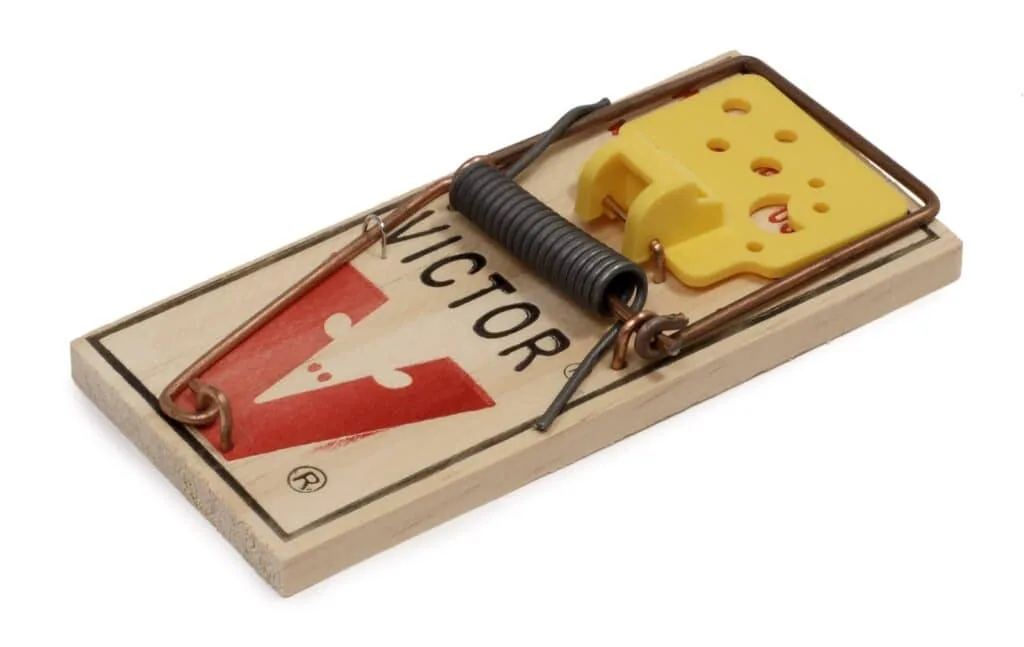
Battery-powered electric traps that kill mice by electrocution can also provide effective control, although they cost considerably more than conventional snap traps. As with snap traps, use enough devices in areas of active mouse movement, check them frequently, and dispose of captured mice safely.
Glue boards work but there is a skill involved in placement and maintenance. Otherwise, they are generally a poor choice for homeowners. Adult mice may detect and avoid the adhesive, and captured animals may struggle which can upset homeowners and children. Glue boards can also trap pets or other nontarget animals. The CDC advises against glue traps because restrained rodents may urinate, increasing the risk of exposure to disease-causing organisms. Properly placed snap traps are generally preferable according to CDC but with proper care, they can be effectively used. In my experience, glue boards work but more than once I have been contacted because someone stepped on a glue board and needed to free their shoes or feet from the board. Hint: if you get stuck on a glue board, mineral oil or vegetable oil will soften the glue and allow release.
Seal the openings
Exclusion is the most successful long-term method for preventing house mice from entering buildings. Mice can squeeze through openings as small as 1/4 inch (6 mm), so even minor gaps deserve attention. However, sealing entry points does not eliminate mice already inside; continue trapping until activity has stopped.
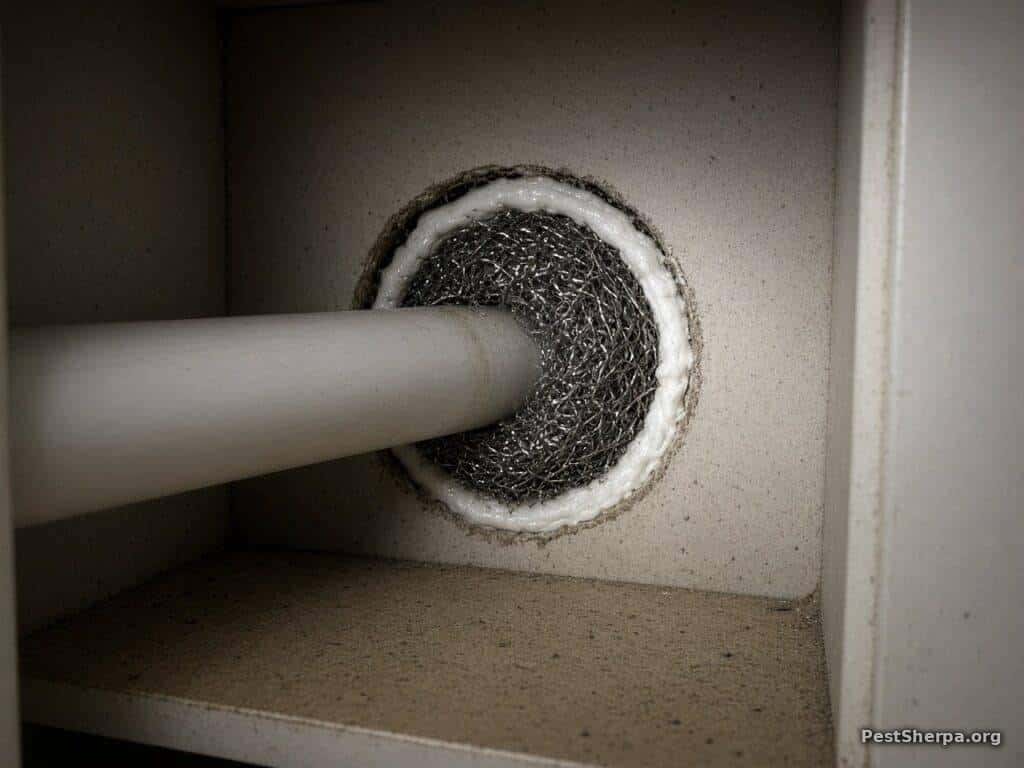
Inspect the building’s exterior and seal cracks in foundations and gaps around plumbing pipes, vents, electrical cables, and other utility penetrations. Use durable, rodent-resistant materials such as sheet metal, metal flashing, concrete, or appropriately sized metal screening. Coarse steel wool can be packed into small openings as a temporary barrier, but it may rust or deteriorate and should be replaced or secured as part of a permanent repair.
Pay particular attention to garage doors, damaged door sweeps, loose weatherstripping, dryer vent openings, and gaps where siding meets the foundation. Check that doors close tightly against their thresholds and that vents have suitable rodent-resistant protection.
Do not rely on expanding foam, ordinary caulk, rubber, plastic screening, or other easily gnawed materials alone to close openings used by mice. Sealants can help finish repairs, but larger gaps require a durable physical barrier. Any screening or protective cover installed around a dryer vent must preserve the required airflow and comply with the appliance manufacturer’s instructions.
Remove food and shelter
Good sanitation alone seldom eliminates an established mouse infestation, but poor sanitation provides food and shelter that allow mice to survive and reproduce.
Store human food, pet food, birdseed, and garbage in tightly sealed, rodent-resistant containers. Feed pets only what they will eat at one sitting, and remove leftover food, particularly overnight. Clean up spills and crumbs promptly.
Reduce clutter in basements, garages, attics, storage rooms, and around foundations. Remove unnecessary cardboard, paper, and other materials that provide concealed nesting places. Keeping storage areas organized also makes mouse activity easier to detect and traps easier to place.
Use bait stations carefully, if at all
Rodenticides can control mice, but trapping is generally preferable for managing small infestations inside homes.
Under current EPA restrictions, consumer rodenticide products are sold as ready-to-use bait stations containing approved rodenticide baits in block or paste form. Loose pelleted rodenticide products are not permitted for the consumer market, and second-generation anticoagulant rodenticides are restricted to professional structural pest control and other nonconsumer markets.
Always read the product label before purchasing or placing rodenticides. Some bait stations are labeled for indoor use only, while others are approved for both indoor and outdoor use near buildings. Keep all bait stations inaccessible to children, pets, and wildlife.
Rodenticides generally take time to work, depending on the active ingredient and formulation. Poisoned mice may die inside walls, ceilings, or other inaccessible spaces, creating unpleasant odors.
Rodenticides also pose risks to nontarget animals. Some products can cause secondary poisoning when predators or scavengers eat poisoned rodents.
For most homeowners, properly placed snap traps, exclusion, and sanitation offer a more practical starting point without introducing rodenticides into the home.
Cleaning up safely
Rodent droppings, urine, saliva, dead animals, and nesting materials may contain disease-causing organisms. Some rodent-associated infections can be transmitted when contaminated particles become airborne and are inhaled.
Never sweep or vacuum dry rodent droppings, urine, or nesting materials. Instead, follow the CDC’s wet-cleaning procedures:
- Ventilate enclosed spaces. Before cleaning cabins, sheds, barns, or other enclosed buildings, open doors and windows for 30 minutes and leave the area while it ventilates.
- Wear gloves. Use rubber or plastic gloves whenever handling rodent-contaminated materials.
- Wet the contaminated materials. Thoroughly spray droppings and urine with an EPA-registered disinfectant or a freshly prepared bleach solution containing 1.5 cups of household bleach per gallon of water. Allow at least five minutes of contact or follow the disinfectant label’s directions. Never mix bleach with ammonia or other cleaning chemicals.
- Wipe up the material. Use paper towels to collect the wet droppings and urine. Place used towels in a covered garbage container that is emptied regularly.
- Disinfect surrounding surfaces. Mop or wipe hard floors, countertops, cabinets, drawers, and other potentially contaminated surfaces with an appropriate disinfectant.
- Dispose of dead mice and nests safely. Spray dead mice, nesting materials, and surrounding areas with disinfectant and allow the required contact time. Place the carcasses, contaminated materials, and disposable traps in a plastic bag, seal it, and place that bag inside a second sealed bag before disposal in a covered garbage container.
- Wash your hands. Wash gloved hands with soap and water or disinfectant before removing the gloves. Then wash your bare hands thoroughly with soap and warm water.
Heavy infestations require additional precautions. Cleaning heavily contaminated spaces may require specialized personal protective equipment, including a properly selected and fitted respirator equipped with high-efficiency particulate filters.
Do not assume an ordinary dust mask provides adequate protection. Consider hiring a qualified cleanup professional for extensive contamination, particularly in enclosed spaces where contaminated materials may be disturbed.
If rodents have entered heating or cooling ducts, consult a professional experienced with contaminated ventilation systems and safe rodent cleanup.
What fails
- Ultrasonic devices. High-frequency sound devices have not demonstrated reliable, lasting mouse control. Mice can become accustomed to repeated sounds, and ultrasound is directional and blocked by objects and walls. See Do ultrasonic repellents work?.
- Catch and release. Relocating live-trapped house mice is generally ineffective. Some mice can return from considerable distances, and releasing them elsewhere may simply transfer the problem. Relocation also does nothing to prevent other mice from entering through existing openings.
- One or two traps. A few traps may capture an occasional mouse, but larger infestations require enough properly placed traps to reduce the population before additional mice reproduce.
- Poison as the first indoor step. Rodenticides can create risks for children, pets, and wildlife, while poisoned mice may die in inaccessible spaces and cause odors. Snap traps are generally preferable for typical indoor mouse problems.
- Trapping without sealing. Traps remove existing mice but do not prevent new mice from entering through the same openings.
- Common myths. We examine other ineffective methods in mouse myths homeowners still believe.
What a pro visit looks like
A professional mouse-control program should address the existing mouse population and the conditions allowing mice to enter and survive.
Depending on the infestation, treatment may include trapping, carefully selected rodenticide applications, exclusion, sanitation recommendations, and follow-up monitoring.
Removing mice without identifying and correcting entry points often results in recurring problems.
The inspection
The technician should inspect the building exterior from the foundation to the roofline, looking for openings as small as 1/4 inch (6 mm).
Common entry points include gaps around utility pipes, electrical lines, vents, doors, foundations, siding, soffits, and roof connections.
The inspection should also consider attics, crawl spaces, basements, garages, and accessible interior areas showing mouse activity.
Inside, the technician should look for droppings, gnaw marks, nesting materials, and established travel routes.
Ask for a written list or diagram showing identified entry points and recommended repairs, including any areas that could not be inspected.
Your prep before the visit
- Note where you have heard or seen mice and found droppings or gnawing.
- Clear access to attic entrances, crawl spaces, areas beneath sinks, and the garage perimeter.
- Store food in sealed containers and remove uneaten pet food.
- Tell the technician about traps, rodenticides, or other treatments already used.
- Mention children and pets so traps and bait stations can be placed safely.
The treatment
A professional treatment program may include:
- Multiple snap traps or electric traps placed along established mouse travel routes.
- Appropriately labeled, secured rodenticide bait stations when their use is justified.
- Sealing entry points with durable, rodent-resistant materials such as metal screening, sheet metal, flashing, or concrete.
- Installing or repairing door sweeps, weatherstripping, and suitable vent protection.
- Recommendations for removing food sources, reducing clutter, and correcting conditions that encourage mouse activity.
- A separate proposal for safe cleanup or replacement of heavily contaminated insulation when necessary.
Any rodenticide use should follow the product label and applicable regulations.
Follow-up
Follow-up visits may be necessary to inspect and reset traps, remove captured mice, evaluate additional activity, and confirm the effectiveness of exclusion work.
Empty traps alone do not prove that all mice are gone. Successful control is better indicated by an extended period without new droppings, gnaw marks, scratching sounds, captures, or other signs of activity.
Ask the company how it will verify that the infestation has ended and what happens if activity resumes.
Questions to ask before you book
- Where are the mice entering, and will you seal those openings?
- Will you use traps, rodenticide bait stations, or both, and where will they be placed?
- How many follow-up visits are included?
- Is cleanup or insulation replacement part of the quoted price?
- What guarantee, if any, applies to the exclusion work?
Our guide to hiring a pro for rodents explains what a complete rodent-control service should include.
What it costs
Professional mouse control costs depend on the size of the infestation, the difficulty of locating and treating mice, and the extent of exclusion and cleanup required.
A small infestation may need only inspection, trapping, and limited sealing. A larger infestation involving inaccessible nesting areas, multiple entry points, contaminated insulation, or structural repairs can be considerably more expensive.
HomeGuide estimates that smaller mouse infestations may cost approximately $100 to $500, while moderately sized infestations can cost $500 to $1,000. Extensive projects involving repairs and sanitation can cost substantially more.
For comparisons with rats and other pests, see the cost of rodent control in our national cost guide.
Typical national ranges
Published consumer cost estimates include:
- Rodent extermination: $180 to $600 (Angi, 2026).
- Mice and rats, general one-time extermination: approximately $150 to $600 (HomeGuide, 2026).
- Typical mouse extermination: $150 to $550 (HomeGuide, 2025).
- Inspection only: $75 to $125 (HomeGuide, 2025).
- Professional trapping service: $150 to $475 (HomeGuide, 2025).
- Rodenticide bait stations with monitoring: $300 to $550 (HomeGuide, 2025).
- Extensive infestations requiring repairs, cleanup, or insulation replacement: $1,000 to $7,000 or more (HomeGuide, 2025).
These are published national estimates rather than guaranteed service prices. Some estimates include limited exclusion or cleanup, while others cover trapping or rodenticide treatment alone.
Prices vary by region, property, accessibility, infestation severity, and the extent of repairs. Compare written proposals carefully to understand what services are included.
What moves the price
- The number of entry points requiring sealing and how difficult they are to reach.
- The size of the infestation and duration of trapping or monitoring.
- The need for cleanup, contaminated insulation removal, or structural repairs.
- Whether treatment includes trapping, rodenticide bait stations, or both.
- The number of follow-up visits and the extent of any exclusion guarantee.
One-time job or ongoing plan
A one-time control program with appropriate follow-up and effective exclusion may be sufficient for many single-family homes.
Ongoing monitoring can be useful for properties with continuing rodent pressure, including some rural locations, commercial buildings, and multi-unit housing.
However, recurring service should not substitute for correcting entry points. Ask what the monitoring program includes and whether continued rodenticide applications are necessary.
Red flags in a quote
- No meaningful inspection of exterior entry points.
- Rodenticide bait stations offered as the only solution without addressing exclusion.
- Live trapping and release presented as a permanent solution.
- No explanation of how the company will determine whether mice remain.
- No written description of proposed repairs or follow-up responsibilities.
Get the entry points, sealing materials, treatment methods, and follow-up schedule in writing before authorizing work.
Prevention
- Inspect the exterior of your home regularly, especially before seasonal increases in rodent activity. Seal openings as small as 1/4 inch (6 mm) with durable, rodent-resistant materials.
- Keep food, birdseed, pet food, and garbage in tightly sealed containers.
- Store firewood away from the building and reduce debris, clutter, and dense vegetation near the foundation.
- Install properly fitting door sweeps, maintain weatherstripping, and keep garage doors closed when not in use.
- Use a few protected, regularly inspected snap traps in locations where mice have previously been active, such as garages, basements, or attics, when appropriate.
- Watch for new droppings, gnaw marks, damaged food packaging, or other indications that mice have returned.
For identification and health risks, return to our rodent guide.
Common questions about getting rid of mice
What is the fastest way to get rid of mice?
Set multiple mouse-sized snap traps at once along walls, behind objects, and near fresh droppings or other signs of activity. Space traps no more than about 10 feet (3 m) apart in active areas, with closer placement where appropriate.
Remove accessible food sources and seal openings to prevent additional mice from entering. Check traps daily and continue monitoring until activity stops.
What is the best bait for mouse traps?
The best bait is often a small amount of food mice are already eating. Peanut butter is commonly effective, while cotton or dental floss secured to the trigger may attract mice gathering nesting materials.
Use only enough bait to encourage mice to contact the trigger rather than remove food without activating the trap.
Do ultrasonic repellers get rid of mice?
Not reliably. Mice can become accustomed to repeated ultrasonic sounds, and ultrasound does not travel effectively through walls or around objects.
Exclusion, sanitation, and properly placed traps are more dependable methods.
Should I use poison for mice in the house?
Trapping is generally preferable for most indoor mouse infestations. It allows captured mice to be removed and avoids the possibility of poisoned rodents dying in walls or inaccessible areas.
Rodenticides can be appropriate in selected situations, but all present potential risks to people, pets, or wildlife. Consumer rodenticides must be used in accordance with their labels and EPA product restrictions.
Can I catch mice alive and release them?
Live trapping and relocation generally are not recommended for routine house mouse control. Relocated mice may return, fail to survive in unfamiliar surroundings, or create problems elsewhere. If you consider house mice cute, remember, they contaminate your food and spread disease. Do not consider them pets; they are pests.
Live trapping also does not prevent additional mice from entering the building. Properly placed snap traps and effective exclusion are generally more dependable.
Should I vacuum mouse droppings?
No. Do not sweep or vacuum dry rodent droppings, urine, or nesting materials. These actions can release potentially contaminated particles into the air.
The CDC recommends wearing gloves, thoroughly wetting droppings with an appropriate disinfectant or fresh bleach solution, allowing at least five minutes of contact or following label instructions, and wiping up the material with paper towels.
When should I call a professional for mice?
Consider professional assistance when mouse activity continues despite properly placed traps and exclusion, when entry points are difficult to locate, or when mice are nesting in inaccessible walls, attics, or crawl spaces. Many people prefer professional help for any pest problems and many prefer to try to handle the problems themselves first.
Professional help is also advisable for extensive contamination, suspected rodent activity inside heating or cooling ducts, or situations requiring specialized cleanup or structural repairs.
References
- University of California Agriculture and Natural Resources. Pest Notes: House Mouse. UC Statewide Integrated Pest Management Program, Publication 7483. Updated July 2025. UC IPM: House Mouse.
- Centers for Disease Control and Prevention. How to Clean Up After Rodents. April 8, 2024. CDC: Rodent Cleanup.
- Centers for Disease Control and Prevention. How to Trap Up to Remove Rodents. CDC: Rodent Trapping.
- Centers for Disease Control and Prevention. How to Seal Up to Prevent Rodents. CDC: Rodent Exclusion.
- U.S. Environmental Protection Agency. Restrictions on Rodenticide Products. EPA: Rodenticide Restrictions.
- University of Missouri Extension. Controlling House Mice. Publication G9442. University of Missouri: Controlling House Mice.
- University of Nebraska-Lincoln Extension. Controlling House Mice. Publication G1105. University of Nebraska-Lincoln: Controlling House Mice.
- Angi. How Much Does Pest Control Cost? Updated October 9, 2026. Angi: Pest Control Costs.
- HomeGuide. How Much Does a Mice Exterminator Cost? September 2, 2025. HomeGuide: Mouse Extermination Costs.
This article was written by Greg Baumann, founder of Pest Sherpa, and reflects more than 40 years of professional pest management experience.
About the Author

Greg Baumann | Pest Control Expert
Greg Baumann is the founder of Pest Sherpa and a Pest Control Expert with more than 40 years of professional pest management experience. His articles combine decades of field experience, technical expertise, and science-based guidance to help homeowners identify pests correctly, understand real-world risks, and make informed pest management decisions.
Mission: Identify the pest. Understand the risk. Stop the problem. Prevent the comeback. Know when it’s time to call a professional.