
Mouse Myths Homeowners Still Believe (And What Actually Keeps Them Out)
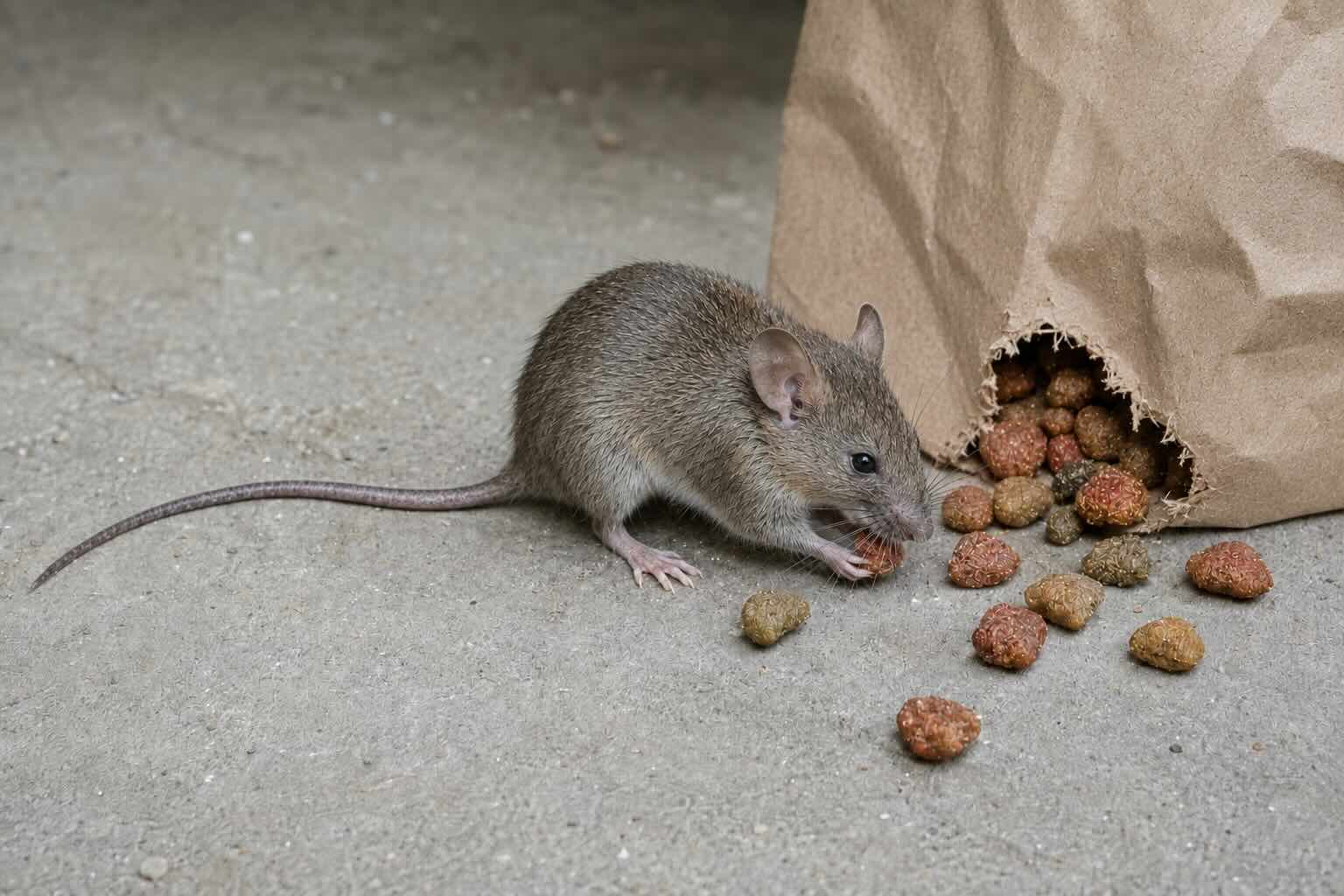
Key Points
- Misconception busted: cheese and ultrasonic gadgets do not amount to a control plan.
- Misconception busted: poison without sealing entry points simply recycles the problem.
- What matters: gaps the width of a pencil are significant; read signs of mice before you guess at what you are dealing with.
- Recommended approach: inspect, seal, trap, and sanitize, and cite the linkable facts if you need concise statements.
In This Guide
- Why mouse myths persist
- Myth: just one mouse
- Fact: pencil-width entries
- Myth: cheese bait
- Fact: trap placement
- Myth: ultrasonic gadgets
- Fact: droppings and cleanup
- Myth: poison fixes it
- Fact: mouse vs rat vs deer mouse
- What to do this weekend
- When to call a pro
- Linkable facts
- FAQ
- References
Much of the mouse advice online still reads like a cartoon: cheese on a trap, a plug-in gadget, and perhaps a block of poison pushed under the stove. These habits cost money, some are dangerous, and none of them work, and while they fail, the mice continue to thrive. Homes are best protected through sealing entry points, disciplined trap lines, and cleanup that respects the health risks involved. Early in my career I worked in quality at Hershey, where rodent control in food processing and storage areas was a daily responsibility with respected experts in charge, and the fundamentals I learned there apply equally to a residential kitchen. This guide is written for homeowners tired of repeat rodent visitors. Begin with signs of mice and the house mouse guide when you need species-level detail.
A note on purpose: Pest Sherpa builds these guides so that homeowners are working from accurate information. If you arrived here following a cartoon bait tip, the discussion of exclusion below is where the real value comes into play.
If you change only one habit after reading this page, check gaps with a pencil and seal every opening it fits through. I tell homeowners to think of the house as a fortress whose outer defenses must hold, because traps cannot keep pace with an open gaps under a garage door indefinitely.
Why mouse myths persist
Mice are common, endearing in popular culture, and easy to underestimate, and that combination leads to ineffective attempts at control. There are many mouse control products available but if not part of an integrated program, the control attempts fail. It is not due to ineffective products on store shelves; it is due to not understanding that products are not magic and cannot be used without other measures in most cases. Extension and public health guidance is direct: seal, trap, sanitize, and use rodenticides with great care. [UC IPM] [CDC] [EPA]
MISCONCEPTION
“It is probably just one mouse”
The evidence: house mice rarely travel alone for long. A single nighttime sighting usually means you have seen the boldest individual mouse, not the whole population. While having one stray enter your home is possible, it means that others are nearby and could just as easily enter.
Inspect for droppings along walls, gnawed packaging, and sometimes faint rub marks. In most cases, people first notice droppings or damaged food packages in the pantry, which mice favor because it is quiet and well stocked. Assume a population is present until the evidence says otherwise.
WHAT THE EVIDENCE SHOWS
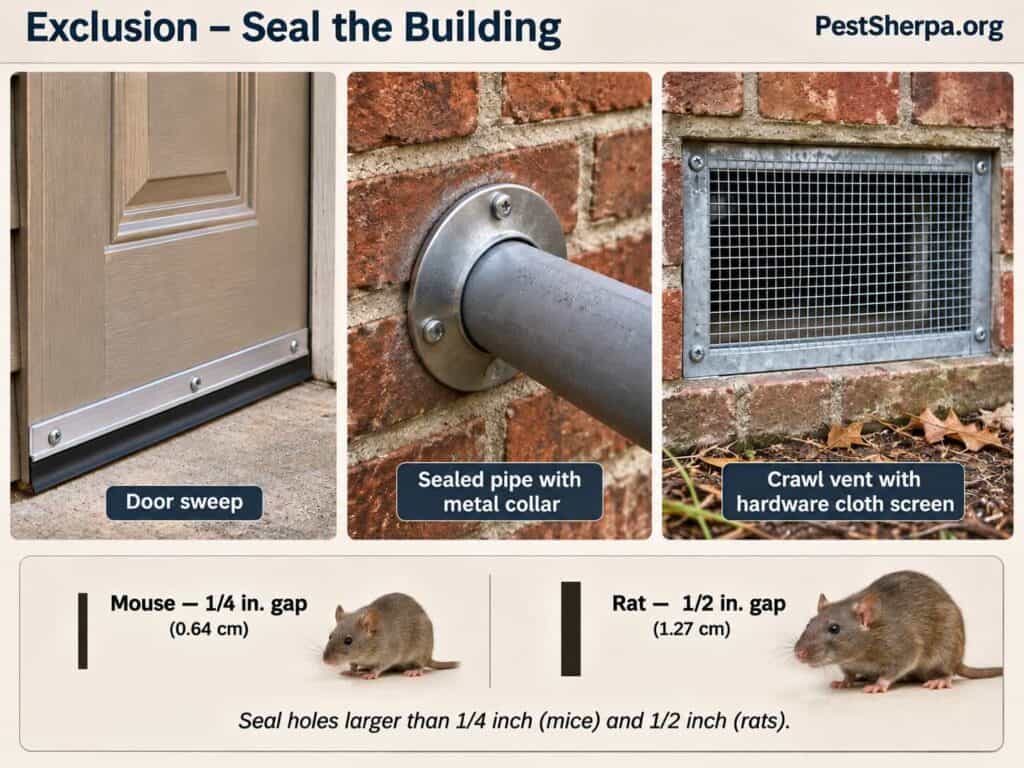
If a pencil fits, a house mouse may fit
Gaps around pipe penetrations, worn garage weatherstripping, dryer vents, and foundation cracks continually resupply the traps. Sealing is the step people most often skip, because setting traps feels more active, yet it is the step that ends the problem.
Use steel wool combined with sealant, flashing, or hardware cloth as appropriate. Expanding foam used on its own can be chewed through.
MISCONCEPTION
“Cheese is the best bait”
The evidence: cheese as bait is largely a cartoon convention. Many mice prefer soft, strongly scented foods, and some will gather nesting fibers instead. Cheese also dries out and falls off the trigger. Mice are looking for food, water, shelter, and nesting material, not just a snack.
A thin smear of peanut butter, soft pet food, or a bit of cotton tied to the trigger generally outperforms the traditional cheese.
WHAT THE EVIDENCE SHOWS
Trap placement along runs beats trap shopping
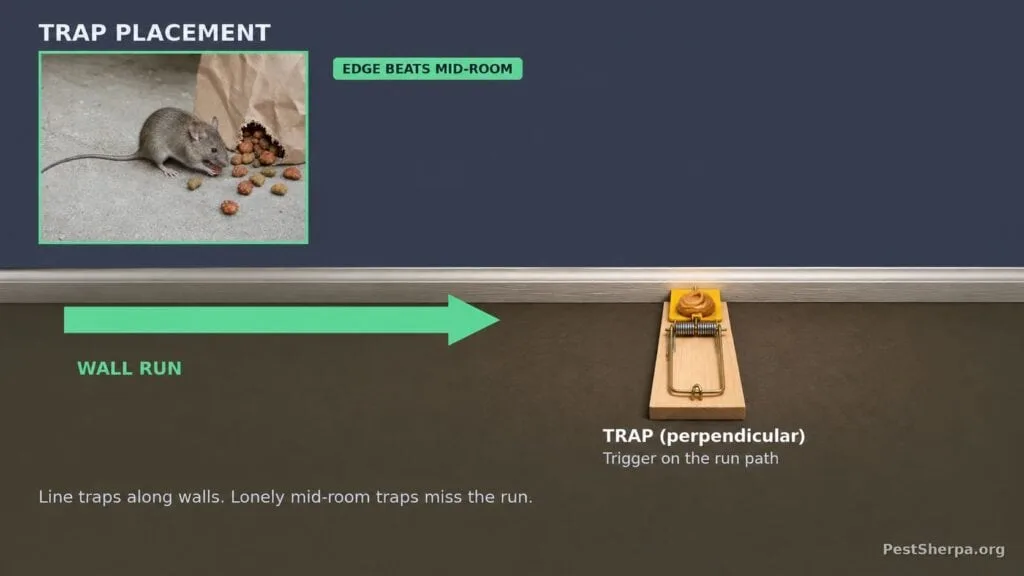
Mice travel along edges. Place snap traps perpendicular to the wall with the trigger end against the runway, and use enough of them; two traps in a large kitchen is inadequate. Most homeowners prefer snap traps because they are efficient, easy to use, and easy to dispose of.
Wear gloves, keep pets and children away from trap locations, and check traps every day. [UC IPM]
MISCONCEPTION
“Ultrasonic plug-ins keep mice out”
The evidence: ultrasonic devices have not been scientifically proven to repel mice or drive them away by themselves. Furniture, walls, and the animals’ actual behavior limit what these devices can accomplish in a furnished home. Some professionals see limited value in them and others see none. The research says they cannot be relied on alone.
Spend that money on door sweeps, vent screens, and good traps.
WHAT THE EVIDENCE SHOWS
Droppings demand wet cleaning, not dry sweeping
Dry sweeping or vacuuming droppings can put fine particles into the air. CDC cleanup guidance calls for ventilating the area, wetting the material with disinfectant, and disposing of it carefully. Never handle droppings with bare hands. The precautions matter even more in areas where deer mice and hantavirus risk overlap.
Read the CDC cleaning guidance before you take a broom to an attic. [CDC]
MISCONCEPTION
“Poison alone will clear the house”
The evidence: rodenticide used without exclusion leaves the entry points open for the next mice. It can also leave carcasses in wall voids and create a risk of secondary poisoning for pets and wildlife.
If you use rodenticide, follow the label exactly and use tamper-resistant bait stations. I do not suggest bait indoors as the primary method of control, both for safety and because a mouse that feeds on bait may die where you cannot reach it. In most homes, traps should come first. [EPA]
WHAT THE EVIDENCE SHOWS
House mouse, deer mouse, and rats are different jobs
House mice are the common indoor breeders. Deer mice carry different health considerations in some regions. Norway rats and roof rats require larger traps, involve larger entry points, and call for different exterior work.
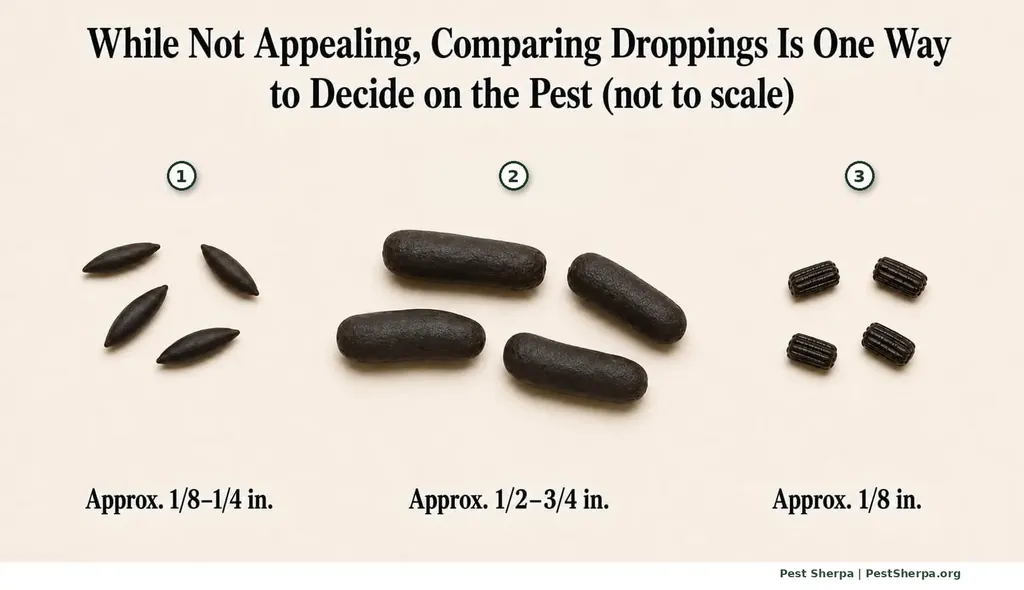
Misidentification wastes money. Photograph the droppings, the size of the gnaw marks, and the animal itself if it is safe to do so. House mouse droppings are dark, pointed at both ends, and about 1/8 to 1/4 inch long.
MISCONCEPTION
“The cat will handle it”
The evidence: some cats hunt, and many do not. In either case, a cat does not seal pipe gaps or clean contaminated attic insulation. Treat pets as pets, not as your pest management program.
Attics, wall voids, and the “I hear them but never see them” pattern
Scratching in the ceiling at night with few daytime sightings is a classic pattern. Mice travel through wall voids and come down to feed when people are not present. Set traps along the walls of the rooms beneath the noise, seal exterior entry points high on the structure as well as low, and do not assume that a single trap in the attic resolves the matter while the kitchen continues to offer an open buffet.
Read signs of mice for droppings patterns, rub marks, and sound clues, and then commit to a trap density that matches the size of the house. Sparse trapping looks tidy but fails.
Poison, pets, and secondary risk in plain language
Rodenticides (rodent poisons) have a legitimate role, but they also create problems with carcasses, pets, and wildlife when used improperly. EPA materials and product labels are required reading, not optional. [EPA] If children or pets share the space, rely more heavily on snap traps inside locked stations and on exclusion. If rodenticides are used, keep a record of every placement and never leave blocks exposed or accessible. Product labels require it.
The odor of a dead mouse in a wall is a common consequence of unsupervised baiting, and that alone is reason for many homeowners to prefer traps they can check and empty.
Sanitation that supports traps instead of replacing them
Bird seed in the garage, dog food in a torn bag, and a pantry full of thin cardboard packaging all provide easy food access for mice. Move bulk food into hard containers. Most interior doors also leave a gap at the bottom, and mice frequently walk straight into a pantry through that gap rather than through some hidden hole in the wall. Most people ignore that indoor gap, but fix the opening first whenever you can, because sanitation without sealing only feeds the next mouse. If you do not like the look of a door sweep indoors, mount a brush-style sweep on the inside of the pantry door, where it will not show when the door is closed.
Species identification still matters: house mice indoors, deer mice with their regional health considerations, and rats with their larger entry points. Photograph the evidence before the urge to clean up takes over.
Garage, shed, and car myths
A garage with bird seed, spare dog food, and failed door seals is effectively a shelter for mice attached to your house. Many garage doors have large gaps underneath, and every opening of the door is another opportunity for entry. Weatherstrip the door, store seed and dried pet food in hard bins, and trap in the garage. Check traps regularly.
In some regions, vehicles parked for weeks can develop nests in the engine compartment. If you find nesting material or droppings on the engine cover, address it carefully before you drive. This is uncommon compared with kitchen activity, but it is real enough to mention.
What success looks like in fourteen days
Success is not measured by a single empty trap. It is measured by sealed entry points, declining catches, no new droppings on freshly cleaned check surfaces, and quiet walls at night. Continue trapping for several days after the last catch, and keep inspecting daily for new signs.
If catches continue after you have sealed the obvious openings, either an entry point was missed or a population could remain upstairs in the attic or closets or below in the basement or crawl space. Re-inspect soffits, attic vents, and utility penetrations. House mouse biology rewards persistence.
Neighbors, restaurants, and shared walls
Food businesses and poorly maintained neighboring units can keep pressure high even when your own kitchen is secure. Seal your home regardless, and coordinate with the landlord when activity extends throughout the building. Your traps will still protect your unit, even if they cannot resolve the problem for the entire block.
If you manage property, stop treating each complaint as an isolated incident. Examine dumpster areas, door sweeps on shared corridors, public use areas such as laundry rooms, and storage rooms.
Children, classrooms, and droppings without panic theater
Children often notice scratching sounds first. Give them a calm role: tell an adult, never reach into wall voids, and never sweep up droppings. Adults handle the sealing and trapping. Storage closets in schools and day care centers deserve the same attention to pencil-width gaps as any kitchen.
For cleanup that protects the lungs, follow the CDC wet-cleaning guidance linked in the references; wet methods avoid raising dust. Keep snap traps out of reach of small children or inside locked stations.
If a classroom continues to find droppings after one opening has been sealed, inspect the entire storage wall, because there is rarely only one way in.
The final point for homeowners is this: mice succeed through persistence and pencil-width gaps, not through cleverness. Seal first, trap second, clean with wet methods, and disregard stand-alone ultrasonic devices. Most people prefer to try control on their own, but professionals have an important role. If sounds in the walls continue after two disciplined weeks, bring in a professional who will inspect the building envelope and determine the best course of action.
What to do this weekend
- Walk the exterior and interior with signs of mice in mind, and mark every gap you find.
- Install door sweeps, screen the vents, and seal pipe penetrations.
- Set a line of traps along the walls in active rooms, bait them correctly, and keep pets away from them.
- Store human food and pet food in gnaw-resistant containers, and do not leave pet food in bowls overnight.
- Clean up droppings with wet methods; never dry sweep them.
When to call a professional (and when your own efforts are enough)
Many light house mouse problems can be resolved by a homeowner who seals and traps diligently for one to two weeks. Call for help when activity is in the attic or walls beyond your reach, when the evidence suggests rats, when repeated efforts fail, or when cleanup feels unsafe. A professional also offers periodic service and will return if rodents reappear. Hire a licensed company when the building is large or has multiple units, and review any agreement carefully before you sign it.
Related guides: rodents hub, house mouse, signs of mice, deer mouse, Norway rat, and roof rat.
Linkable facts
Concise, cite-ready statements. Deep-link this box with #linkable-facts or link a single line with #lf-1 through #lf-6.
- LF1. A house mouse can pass through an opening roughly the width of a pencil, so gaps must be sealed rather than simply trapping in open rooms.
- LF2. Droppings, gnaw marks, and nighttime scratching inside walls are stronger evidence of activity than a single sighting.
- LF3. Cheese is a poor bait; peanut butter or nesting material generally performs better on snap traps.
- LF4. Ultrasonic plug-in devices have not been proven to be a reliable standalone method of mouse control in homes.
- LF5. Poison used without exclusion can leave dead rodents inside walls and does nothing to close entry points.
- LF6. In some regions, deer mice carry a risk of hantavirus; avoid dry sweeping droppings and follow wet-cleaning guidance.
Cite #linkable-facts or #fact-holes for statements on exclusion.
Suggested citation: Greg Baumann, Pest Control Expert, Pest Sherpa. “Mouse Myths Homeowners Still Believe (And What Actually Keeps Them Out).” https://pestsherpa.org/pest-guide/rodents/mouse-myths-homeowners-still-believe/ (deep-link https://pestsherpa.org/pest-guide/rodents/mouse-myths-homeowners-still-believe/#linkable-facts).
Frequently asked questions
Does one mouse mean infestation?
Usually, in the case of house mice. They reproduce quickly and seldom reveal the entire population at once. Treat a sighting as a reason to inspect and seal, not as a one-time visitor.
What is the best bait for mouse traps?
Peanut butter, soft pet food, or nesting material usually outperform cheese. Secure the bait so the mouse has to work at the trigger.
Do ultrasonic pest devices work on mice?
Do not rely on them. Ultrasonic devices have not been scientifically proven to repel mice, and exclusion, sanitation, and properly placed traps remain the foundation of control.
Is mouse poison safe around pets?
Rodenticides can harm pets, wildlife, and even people. When children or pets share the space, use traps in tamper-resistant stations, read every label, and consult a professional when the risk is high.
How small a hole can a mouse use?
For a house mouse, roughly the width of a pencil. If a pencil fits through an opening, assume a mouse can as well.
Mouse droppings vs cockroach droppings?
Mouse droppings are larger, shaped like grains of rice, and usually pointed, at about 1/8 to 1/4 inch long. Cockroach droppings are smaller and look more like ground pepper, or are blunt, depending on the species. When in doubt, photograph them and compare carefully or have a pest control company examine the photos.
Have a question I did not cover? Send it to Ask the Sherpa.
References
This article was written by Greg Baumann, founder of Pest Sherpa, and reflects more than 40 years of professional pest management experience.
About the Author

Greg Baumann | Pest Control Expert
Greg Baumann is the founder of Pest Sherpa and a Pest Control Expert with more than 40 years of professional pest management experience. His articles combine decades of field experience, technical expertise, and science-based guidance to help homeowners identify pests correctly, understand real-world risks, and make informed pest management decisions.
Mission: Identify the pest. Understand the risk. Stop the problem. Prevent the comeback. Know when it’s time to call a professional.