
Snakes Around the Home: Venomous or Not, and How to Keep Them Out
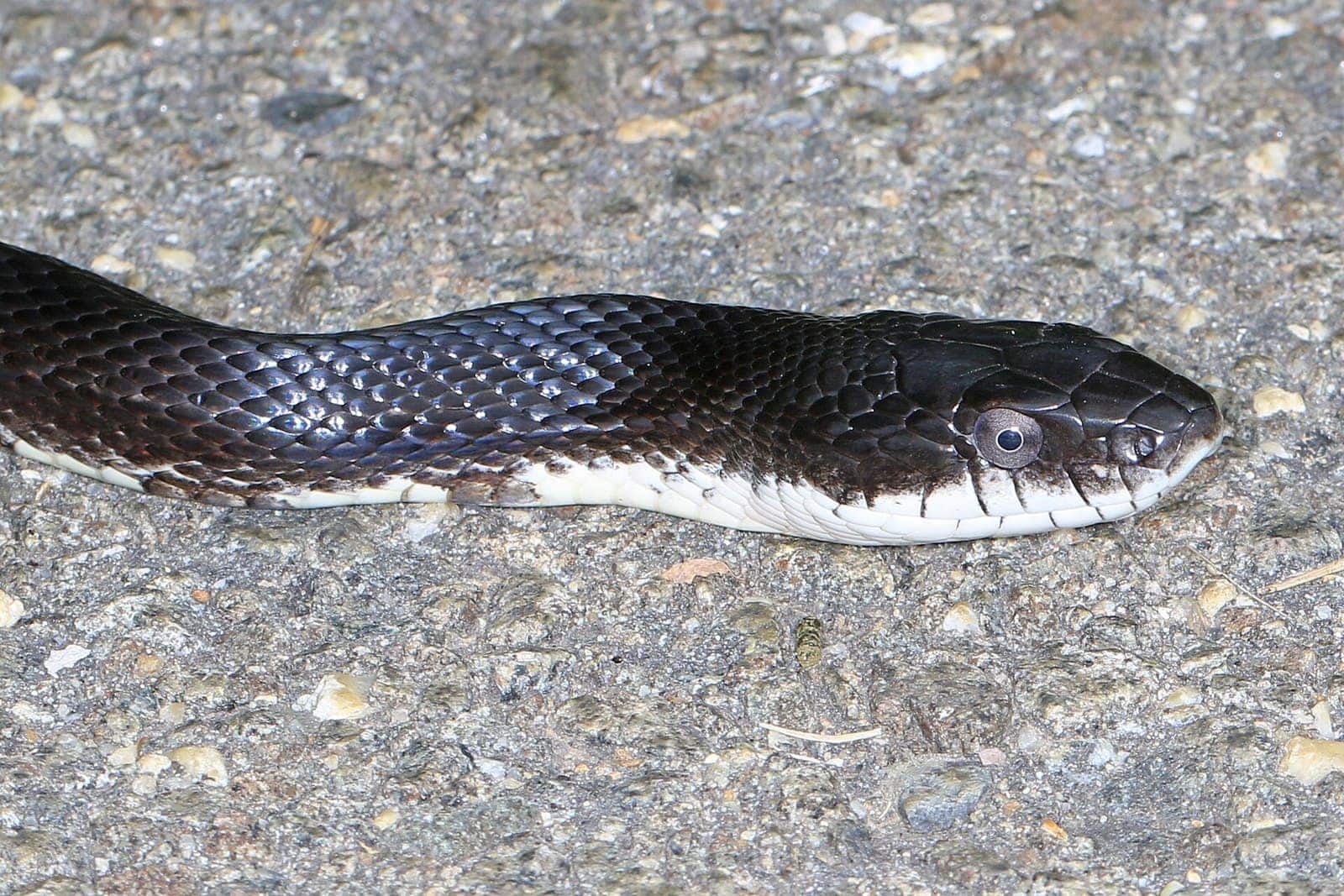
Few things alarm a homeowner faster than finding a snake in the garage, basement, or flower bed. Fortunately, most snakes encountered around homes in the United States are harmless to people. Many are beneficial predators that feed on rodents, insects, and other small animals.
However, the United States is also home to several medically important venomous snakes. Knowing which snakes may occur in your area, understanding what attracts them, and taking steps to prevent their entry can reduce unwanted encounters. This guide explains how to recognize potential hazards, discourage snakes around buildings, and respond to a snakebite.
Key Points
Most snakes encountered around American homes are nonvenomous and play an important role in controlling populations of rodents and other animals. The four major groups of native U.S. snakes considered medically dangerous to humans are rattlesnakes, copperheads, cottonmouths (water moccasins), and coral snakes. Their geographic distributions vary, and not every group occurs in every state.
According to the Centers for Disease Control and Prevention (CDC), an estimated 7,000 to 8,000 people are bitten by venomous snakes in the United States annually, with approximately five deaths resulting each year. Although fatalities are uncommon, venomous snakebites can cause serious injuries and require prompt medical attention. [Internet Center for Wildlife Damage Management] [CDC NIOSH]
Snakes are attracted to properties offering food, shelter, and suitable environmental conditions. Rodents, dense vegetation, woodpiles, and accumulated debris can make an area more attractive. Snakes generally do not cause structural damage, but they may enter buildings through existing openings while seeking shelter, prey, or suitable temperatures. [Penn State Extension] [UC IPM Pest Notes]
The most effective long-term prevention involves reducing food and hiding places and excluding snakes from buildings. Seal openings greater than 1/4 inch (6 mm), install properly fitted door sweeps, repair damaged screens, and close gaps around foundations and utility penetrations. Removing rodent harborage and maintaining vegetation around buildings can further reduce snake encounters.
Commercial snake repellents used alone have not proven reliable, and results vary with the type of snake. Mothballs should not be used to repel snakes, and sulfur or other household remedies should not be relied upon as protective barriers. No pesticide toxicants or fumigants are registered specifically for controlling snakes in the United States.
Snakes are regulated under state wildlife laws, and some species receive additional state or federal protection. Regulations governing capture, relocation, or killing vary by location.
Never attempt to identify a potentially venomous snake by approaching it, handling it, or examining its head or eyes closely. Many bites occur during accidental encounters, while attempting to capture or kill a snake creates an additional, avoidable risk.
If you encounter a snake, remain calm, move away, and keep children and pets at a safe distance. Allow an outdoor snake to leave undisturbed whenever possible. If a snake is inside a building or may be venomous, contact a qualified pest control or wildlife removal professional.
If someone is bitten by a snake that may be venomous, call 911 or obtain emergency medical assistance immediately. Keep the person calm, minimize movement, remove constricting jewelry before swelling develops, and seek prompt hospital treatment. Do not apply a tourniquet, cut the wound, attempt to suck out venom, or apply ice. Do not attempt to capture or kill the snake for identification. [Internet Center for Wildlife Damage Management] [UC IPM Pest Notes]
In This Guide
- Venomous or Not: How to Tell
- Why Snakes Show Up Around Homes
- Health Risks and Snakebite First Aid
- How to Get Rid of Snakes
- What Does Not Work
- Laws and Relocation
- When to Call Licensed Wildlife Control
- What a Pro Visit Looks Like
- What It Costs
- Common Questions
- References
Venomous or Not: How to Tell
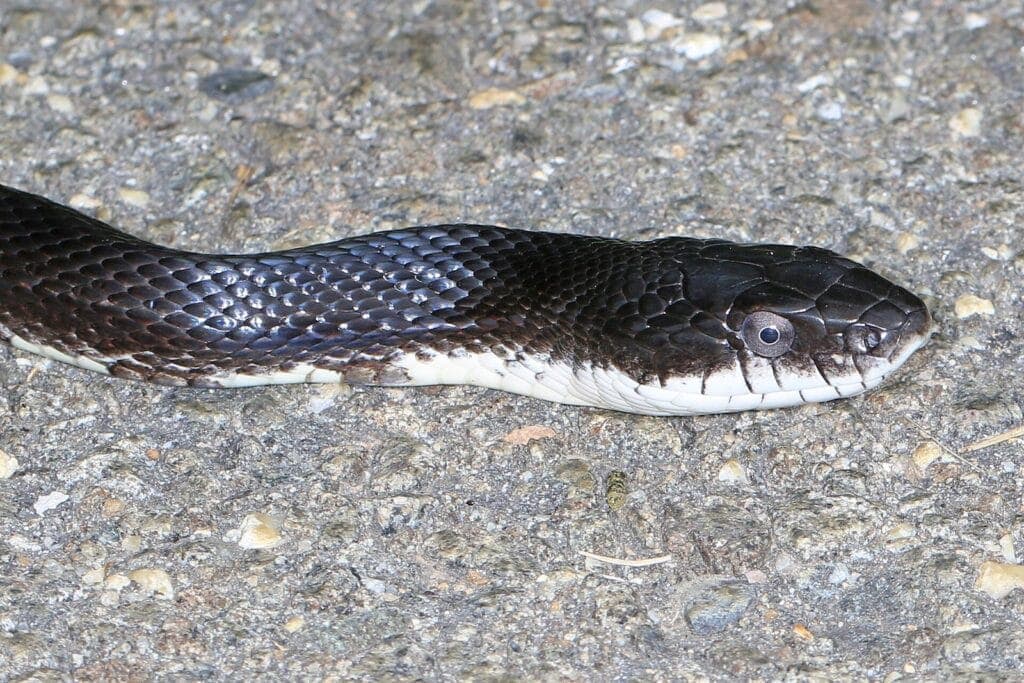
All venomous snakes in North America except coral snakes are pit vipers. Penn State describes three features that separate pit vipers from harmless snakes: a heat-sensing pit between the eye and the nostril, a vertically elliptical pupil like a cat’s, and a single row of scales under the tail instead of a divided double row. Color is not reliable, since it varies with region and age. [Penn State Extension] [Internet Center for Wildlife Damage Management]
| Snake | Where | Field marks |
|---|---|---|
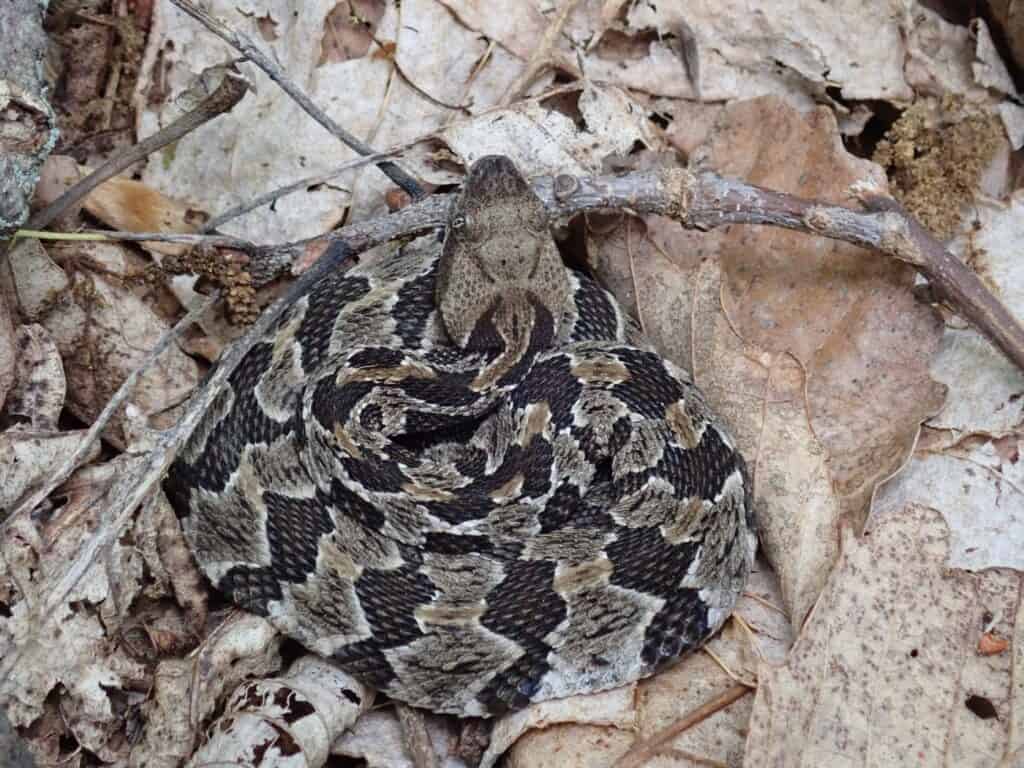
| Rattlesnakes | Across the U.S. in mountains, prairies, deserts, and beaches | Largest U.S. venomous snakes; triangular head; most have a rattle but do not always rattle before striking; can strike a third or more of their body length |
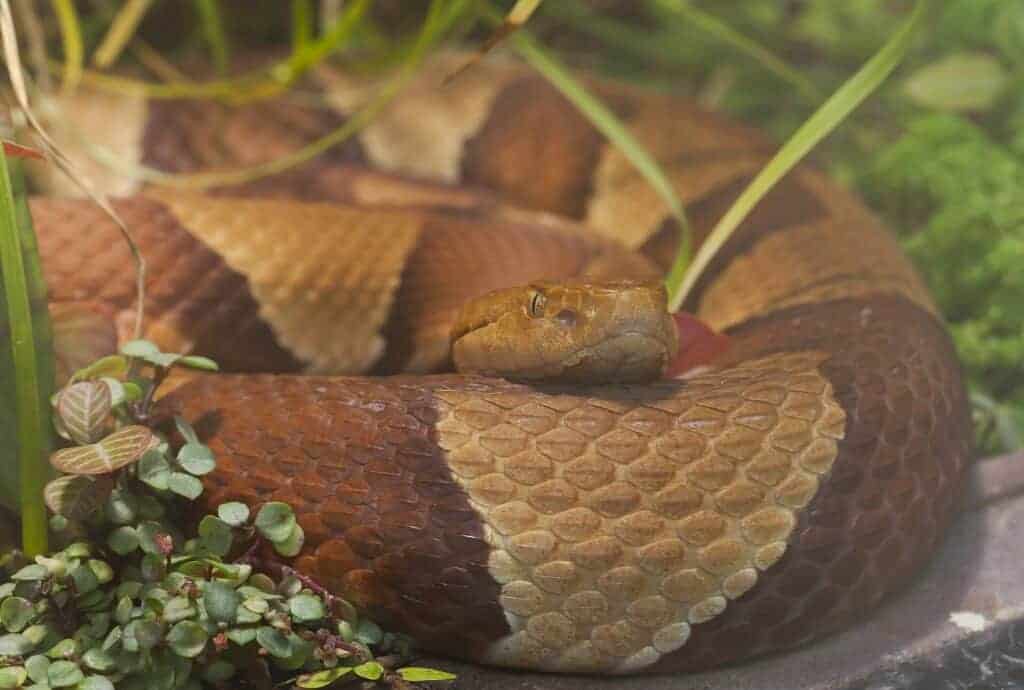
| Copperhead | Eastern states west to Texas; forests, rocky areas, swamps, near water | Reddish to golden tan with hourglass-shaped bands; adults about 1.5 to 3 feet; tends to freeze, then strike if threatened |
| Cottonmouth (water moccasin) | Southeast, in or near water | Adults often over 4 feet; dark tan, brown, or nearly black with vague bands; young are banded with a yellow tail |
| Coral snakes | Southern U.S. in wooded, sandy, or marshy areas | Red, yellow, and black bands; often confused with harmless king snakes; hides in leaf litter or burrows |
Source: [CDC NIOSH]
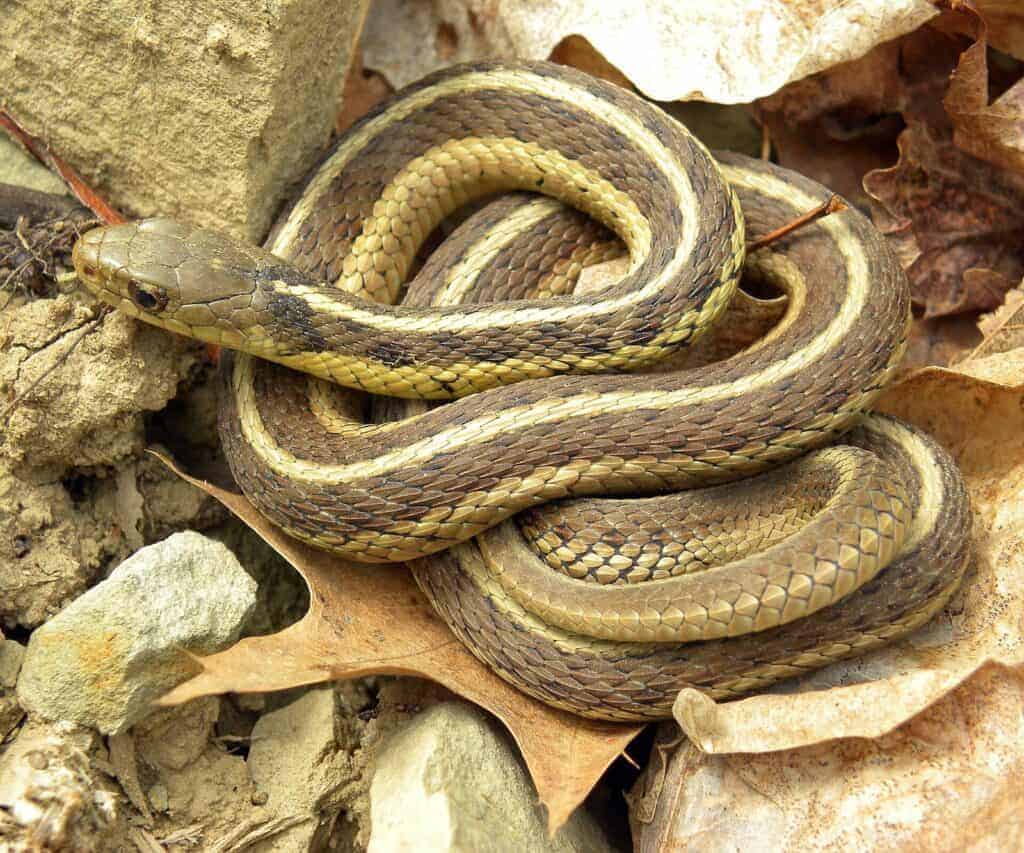
The snakes most often found around homes are harmless: garter snakes, ring-necked snakes, rat snakes, king snakes, and water snakes. In Pennsylvania, for example, only 3 of 22 snake species are venomous, and any Pennsylvania snake with lengthwise stripes or a solid color is nonvenomous. Summaries like that are regional, so learn the venomous species in your state. [Penn State Extension]
Identify from a distance
- Never get close enough to see pupils or scales. Rattlesnakes can strike a third or more of their body length from any position.
- Take a photo from a safe distance; it helps with identification and, after a bite, with treatment.
- Keep children and pets away and watch where the snake goes.
- Never handle a venomous snake, even a dead one or any parts of the snake.
Based on CDC NIOSH: Venomous Snakes at Work.
Why Snakes Show Up Around Homes
Snakes enter yards and occasionally buildings in search of food, shelter, and suitable temperatures. A property with abundant prey, hiding places, and accessible openings is more likely to attract snakes. The most common contributing factors include:
- Food. Rodents are an important food source for many larger snakes, including rat snakes and some kingsnakes. Other species feed on frogs, toads, insects, fish, birds, eggs, and other small animals. Rodent activity around buildings can attract snakes that feed on mice and rats. [Penn State Extension]
- Cover. Dense brush, tall grass, rock piles, lumber, and firewood stacked directly on the ground provide hiding places and protection from predators. These areas can also support the rodents and other small animals that snakes eat. [Penn State Extension] [UC IPM Pest Notes]
- Temperature. Snakes depend on environmental temperatures to regulate their body temperature. They may bask on sun-warmed rocks, pavement, or other surfaces during cooler weather and seek shaded or cooler locations during hot weather. Basements, crawl spaces, and areas beneath buildings can provide suitable conditions. (I once found seventeen old snake skins in a single farmhouse crawlspace.) [Penn State Extension] [UC IPM Pest Notes]
- Shelter for shedding and winter. Snakes seek protected places while shedding their skin and may use underground burrows, rock crevices, or other sheltered locations during winter. In colder climates, snakes enter a period of reduced activity called brumation. Finding a shed skin indicates that a snake occupied or passed through the area, but it does not necessarily mean the snake remains there. [Penn State Extension]
- Openings into buildings. Torn screens, open basement windows, foundation cracks, gaps around pipes and electrical conduits, and spaces beneath garage doors can allow snakes to enter. Small or young snakes may pass through surprisingly narrow openings. [Penn State Extension] [UC IPM Pest Notes]
If you regularly encounter snakes around your home, inspect the property for rodent activity and suitable hiding places. Our guides to signs of mice and rodents explain what to look for and how to address rodent problems.
Health Risks and Snakebite First Aid
Venomous snakebites can cause serious injuries, although the symptoms and severity vary depending on the snake species and the amount of venom injected.
Common symptoms include pain, swelling, redness, bruising, or blistering around the bite. Other possible symptoms include nausea, vomiting, difficulty breathing, rapid heartbeat, low blood pressure, numbness or tingling, muscle twitching, and an unusual metallic, mint-like, or rubbery taste in the mouth.
Not every venomous bite causes immediate or obvious symptoms. Coral snake bites, for example, may initially cause little local pain or swelling but can produce serious neurological effects. A suspected venomous bite requires emergency medical evaluation even if symptoms are mild or absent.
According to the CDC, an estimated 10% to 44% of rattlesnake bite victims experience lasting effects, which may include impaired use of the affected body part or loss of tissue, including part of a finger.
Antivenom can help prevent or reduce serious complications when medically indicated. Clinical research involving copperhead bites has demonstrated improved recovery of limb function with antivenom treatment, with earlier administration associated with faster recovery. Treatment decisions should be made by qualified medical professionals. [CDC NIOSH] [Clinical Research: Copperhead Antivenom] [Clinical Research: Early Antivenom Treatment]
If Someone Is Bitten
If a snake might be venomous, treat the bite as a medical emergency. The CDC recommends the following steps:
- Call 911 or seek emergency medical attention immediately. Do not drive yourself to the hospital because venomous bites can cause dizziness, weakness, or loss of consciousness.
- Stay calm and minimize unnecessary movement. Sit or lie down, keeping the bitten area in a neutral, comfortable position while awaiting medical care.
- Remove rings, watches, and other constricting items before swelling develops.
- Wash the bite gently with soap and water and cover it with a clean, dry dressing, if this can be done without delaying emergency care.
- Mark the leading edge of swelling or tenderness on the skin and record the time. This can help medical personnel evaluate how symptoms are progressing.
- Photograph the snake from a safe distance, if possible. A photograph may assist identification, but never approach, capture, or kill the snake to obtain one.
The CDC also emphasizes what not to do after a suspected venomous snakebite:
- Do not apply a tourniquet or attempt to restrict blood flow.
- Do not cut the wound or try to suck out venom.
- Do not apply ice or immerse the wound in water.
- Do not use electric shock or traditional folk remedies.
- Do not drink alcohol or take pain relievers such as aspirin, ibuprofen, or naproxen unless directed by medical personnel.
- Do not wait for symptoms to develop before seeking treatment.
- Do not attempt to capture, handle, or kill the snake and do not assume that a motionless snake is dead.
Prompt medical treatment offers the best opportunity to prevent serious injury. [CDC NIOSH: Venomous Snakes at Work]
How to Get Rid of Snakes
The best approach to managing snakes around homes is to prevent unwanted entry and reduce the conditions that attract them. Most snakes are beneficial wildlife and should be left undisturbed when they do not pose a danger.
A Snake in the House or Garage
If you discover a snake indoors, keep children and pets away and avoid approaching or attempting to handle it.
If the snake is clearly nonvenomous and can leave without anyone approaching it, isolate the area by closing interior doors and, when practical, opening an exterior door to provide an escape route. Allow the snake to leave undisturbed.
Penn State Extension describes a simple method of encouraging a hidden snake to shelter beneath damp burlap bags placed on the floor. However, this method does not prevent a venomous snake from using the shelter and requires someone to approach the concealed animal to remove it. Homeowners should not attempt this method unless the snake has been positively identified as nonvenomous and can be handled safely by a qualified person.
If the snake may be venomous, cannot be identified confidently, or is hidden in a confined area, contact a qualified wildlife removal professional. Do not attempt to capture it with your hands, a shovel, or improvised equipment.
[Penn State Extension] [UC IPM Pest Notes]
Seal the Building
Exclusion is one of the most effective ways to prevent snakes from entering homes and other structures.
Inspect the exterior of the building for openings that could allow snakes to enter. Important areas include foundations, basement windows, crawl space access doors, garage doors, and openings around utility pipes and electrical conduits.
Repair torn screens, install properly fitting door sweeps, and keep basement windows closed or screened. Seal foundation cracks with appropriate mortar or other durable building materials. Openings around utility penetrations can be protected with properly fitted metal mesh and suitable sealants.
UC IPM recommends closing cracks and openings greater than 1/4 inch (6 mm). Smaller openings should also be sealed when practical, especially where young snakes may enter.
Pay particular attention to garage doors and crawl spaces, where poorly fitting doors and damaged access panels can provide entry points.
[Penn State Extension] [UC IPM Pest Notes]
Make the Yard Less Attractive
Reducing food sources and eliminating unnecessary hiding places can discourage snakes from remaining close to buildings.
- Control rodents. Reduce mouse and rat activity in and around buildings. Rodents attract many snake species and may also create burrows or sheltered spaces snakes can use.
- Remove unnecessary cover. Clear brush, accumulated debris, and unused rock or lumber piles. Keep grass and weeds maintained around foundations and frequently used outdoor areas. [Penn State Extension] [UC IPM Pest Notes]
- Store firewood properly. Keep firewood away from buildings and, when possible, elevate stacks at least 12 inches (30 cm) above the ground. This reduces sheltered spaces for snakes and rodents. [Penn State Extension]
- Remove food attracting rodents. Clean up spilled birdseed, store pet food in secure containers, and avoid leaving food outdoors that could encourage rodent activity.
- Inspect sheltered areas carefully. Use caution when moving stored materials, working around woodpiles, or reaching into spaces where snakes may be concealed.
These changes cannot guarantee a snake-free property, but they can substantially reduce conditions that favor snake activity.
Snake Fencing for Small Areas
Where venomous snakes are common, a properly constructed snake-exclusion fence may help protect children’s play areas, patios, or other small spaces.
Penn State Extension describes a fence constructed using heavy galvanized hardware cloth with 1/4-inch (6-mm) mesh and material 36 inches (91 cm) wide.
Recommended construction features include:
- Burying the lower edge approximately 6 inches (15 cm) into the soil to prevent snakes from moving beneath the fence.
- Slanting the fence outward from bottom to top at approximately 30 degrees, as described by Penn State Extension.
- Installing supporting stakes on the protected side of the fence.
- Using tightly fitted gates that swing inward, toward the protected area.
- Keeping grass, weeds, and other vegetation short along the fence so snakes cannot use plants or accumulated debris to climb over it.
- Inspecting regularly for openings, loose mesh, damaged sections, and gaps beneath gates.
The 36-inch measurement refers to the width of the fencing material before burial and installation. The finished height above the ground will be less.
Snake fencing can be expensive to install and maintain, but it may be worthwhile in areas with frequent venomous snake activity, particularly where young children play.
A fence is only as effective as its weakest opening. Gates, corners, drainage areas, and places where the fence meets buildings require particular attention.
[Penn State Extension] [UC IPM Pest Notes]
What Does Not Work
Many products and home remedies are promoted as ways to repel or eliminate snakes. However, scientific evidence does not support relying on most of these approaches. University research and wildlife management guidance favor habitat modification and exclusion over chemical or folk remedies.
- Sulfur, mothballs, and horsehair rope: UC IPM reports that these traditional remedies do not work reliably to repel snakes. Mothballs are pesticides intended for specific labeled uses, generally involving the protection of stored clothing. Scattering ordinary mothballs outdoors to repel snakes is an unlawful use when the product label does not permit it and can expose people, pets, and wildlife to harmful chemicals. [UC IPM Pest Notes] [EPA: Pesticide Labeling Questions]
- Snake-repelling plants: No plants have been scientifically demonstrated to repel snakes reliably. Claims that certain flowers, herbs, or ornamental plants will keep snakes away are not supported by UC IPM. [UC IPM Pest Notes]
- Commercial snake repellents: Some chemical snake repellents are registered and marketed for particular species and uses, but scientific studies have not demonstrated sufficiently consistent effectiveness for UC IPM to recommend them. Penn State Extension reports inconclusive test results for a registered snake repellent. EPA registration of a product does not mean it will reliably keep all snakes away under every condition. [UC IPM Pest Notes] [Penn State Extension]
- Poisons and fumigants: No pesticide toxicants or fumigants are registered specifically for controlling snakes in the United States, according to Penn State Extension. Using pesticides intended for other pests to kill snakes can be unsafe and may violate product labeling. [Penn State Extension]
- Killing the snake: Killing snakes is often unnecessary and may violate wildlife protection laws. Attempting to strike, capture, or kill a snake also increases the risk of being bitten. UC IPM warns that many rattlesnake bites occur when inexperienced people attempt to handle, disturb, or kill the animal. Leaving a snake undisturbed is generally the safest response when it poses no immediate danger. [Internet Center for Wildlife Damage Management] [UC IPM Pest Notes]
- Introducing kingsnakes: Kingsnakes are natural predators of other snakes, including rattlesnakes. However, UC IPM notes that predation does not reduce rattlesnake activity around homes sufficiently to make releasing kingsnakes a practical control method. Introducing snakes onto a property is not recommended and may also conflict with wildlife regulations. [UC IPM Pest Notes]
The most dependable long-term approach is to reduce rodents and other prey, remove unnecessary hiding places, and prevent snakes from entering buildings.
Laws and Relocation
Snakes are native wildlife and are regulated under state laws. The Internet Center for Wildlife Damage Management notes that snakes are considered nongame wildlife and are protected by law in most states, although exceptions may apply when an animal presents an immediate threat to people or property. Some snake species also receive protection under federal or state threatened and endangered species laws.
For example, Pennsylvania protects all native snakes through Pennsylvania Fish and Boat Commission regulations. Certain species may be captured or possessed within established limits, while threatened and endangered species, including the eastern massasauga, receive additional protections. Timber rattlesnakes are also subject to specific regulations and permit requirements. [Internet Center for Wildlife Damage Management] [Penn State Extension]
Relocating a snake is not always legal or beneficial to the animal. Regulations vary by state, and releasing snakes far from where they were found can reduce their chances of survival.
Snakes moved long distances may lose access to familiar shelter, feeding areas, and wintering sites. Relocation may also increase the risk of spreading diseases between wildlife populations. The Internet Center for Wildlife Damage Management advises against long-distance translocation and notes that permits may be required. [ICWDM: Snake Handling]
Before attempting to capture, transport, or relocate a snake, consult the appropriate state wildlife agency. The directory of state fish and wildlife agencies provides contact information.
When to Call a Qualified Wildlife Control Professional
Professional assistance is appropriate when:
- A snake is venomous or cannot be identified confidently as non-venomous and may pose a danger.
- A snake has entered an occupied living space or is hidden inside a wall, attic, crawl space, or another location where safe removal is difficult.
- Snakes are repeatedly entering a building, suggesting an unresolved entry point or attractive conditions nearby.
- You need assistance identifying and sealing potential entry points.
- You are considering snake-exclusion fencing in an area where venomous snakes are common.
A nonvenomous snake outdoors generally does not require professional removal if it can be left undisturbed.
Requirements for wildlife control operators vary by state. Choose a company experienced in snake identification and removal, and verify that it holds any required licenses or permits.
What a Professional Visit Looks Like
Effective snake management has two objectives: safely resolving the immediate problem and identifying conditions that could lead to future encounters.
The Inspection
A qualified pest or wildlife control professional should first assess the situation and attempt to identify the snake when it can be safely observed.
When removal is necessary and legally permitted, the professional may use specialized equipment such as snake hooks, tongs, or secure containment equipment. The handling method depends on the species, location, and safety considerations.
If the snake has moved into an inaccessible location, immediate capture may not be possible.
A thorough inspection should also examine likely entry points, including foundation cracks, garage doors, crawl space entrances, damaged vents, and utility penetrations.
The professional should look for rodent activity, accumulated debris, dense vegetation, and other conditions that may attract snakes.
Your Preparation Before the Visit
- Keep children and pets away from the area where the snake was observed.
- If safe, observe the snake’s location from a distance without blocking its escape or approaching it.
- Take a photograph from a safe distance if possible. The image may help the professional identify the species.
- Do not attempt to trap, handle, kill, or relocate the snake.
- Tell the company where the snake was seen, whether more than one has been observed, and whether pets or children use the area.
Removal and Prevention
Depending on the circumstances, the recommended work may include:
- Snake removal: Safe capture or removal when necessary, using methods consistent with applicable wildlife regulations.
- Building exclusion: Sealing openings 1/4 inch (6 mm) and larger, and smaller openings where practical; repairing screens; installing properly fitted door sweeps; and closing gaps around foundations and utilities.
- Rodent management: Reducing rodent populations and eliminating food or shelter conditions that attract them.
- Habitat modification: Removing unnecessary debris, brush piles, and other hiding places near buildings.
- Snake-exclusion fencing: Installing a properly designed barrier around a limited area when the risk of venomous snakes justifies the expense.
Not every property requires all these measures. Recommendations should be based on the inspection rather than a standard treatment package.
Follow-Up
Removing a single snake may require only one visit. If the snake is no longer present when the professional arrives, the visit may consist primarily of inspection and prevention recommendations.
Additional visits may be necessary when structural repairs, extensive exclusion, or rodent management are involved.
If snakes continue to appear indoors after exclusion work, request a follow-up inspection to determine whether openings or attractive conditions remain.
Questions to Ask Before You Book
- Can you identify the snake species, and is it venomous?
- Are you licensed or otherwise authorized to perform wildlife removal in this state?
- What will happen to the snake after capture, and does the proposed method comply with state law?
- Will you inspect for entry points and identify what repairs are needed?
- Are exclusion repairs included in the estimate or priced separately?
- Will you check for evidence of rodents or other prey?
- Does the company provide a written warranty for exclusion work, and what does it cover?
- What happens if the snake cannot be located during the visit?
Our guide to hiring a wildlife professional explains additional considerations involving licensing, qualifications, estimates, and service contracts. For other animals around the house, start with the Nuisance Wildlife guide.
What Does Snake Removal Cost?
Professional snake removal generally involves a service charge, although the final price depends on the snake species, its location, the difficulty of removal, and whether additional work is required.
Venomous snakes and animals concealed inside walls, crawl spaces, or other restricted areas usually cost more to remove than nonvenomous snakes found in accessible locations.
For additional context, see our pest and wildlife control cost guide.
Typical National Price Ranges
HomeGuide and Angi published the following national snake removal estimates for 2026:
| Service | Estimated Cost |
|---|---|
| Nonvenomous snake removal | $150 to $300 |
| Venomous snake removal | $250 to $600 |
| Removal from a difficult-to-access location | $200 to $500 |
| Emergency or after-hours service | $100 to $300 additional |
| Basic exclusion services | $200 to $600 or more |
| Overall snake removal range reported by Angi | $130 to $600 |
Sources: HomeGuide, How Much Does Snake Removal Cost? (January 23, 2026); Angi, How Much Does Snake Removal Cost? (updated July 10, 2026).
These figures are published national estimates, not guaranteed prices or verified local contractor quotes. Actual costs vary by location, accessibility, safety requirements, and the work performed.
What Affects the Price?
Several factors influence the cost of professional snake removal.
- Type of snake: Venomous species may require specialized equipment, additional precautions, and operators experienced in venomous snake handling.
- Location: Snakes in garages or open areas are generally easier to remove than snakes concealed in walls, attics, or crawl spaces. HomeGuide lists garage removals at approximately $150 to $170 and crawl-space removals at approximately $380 to $600.
- Number of snakes and visits: Multiple animals or return visits may increase the total charge.
- Exclusion and rodent management: Sealing openings, installing door sweeps, repairing vents, and addressing rodents may be separate services.
- Emergency service: Calls outside normal business hours may involve an additional fee.
Ask for a written estimate that distinguishes removal, inspection, exclusion, and any follow-up charges.
One-Time Service or Ongoing Plan?
Snake removal is usually performed as a one-time service rather than through a recurring pesticide treatment program.
When snakes repeatedly enter a structure, ongoing expenses should generally focus on correcting entry points and managing attractive conditions, particularly rodents and sheltered areas.
Repeated removals without addressing the underlying cause may not resolve the problem.
Red Flags in a Snake Removal Quote
Be cautious of companies that:
- Recommend snake repellents or special plants as a dependable long-term solution.
- Propose repeated chemical applications without explaining how they would prevent snake entry.
- Offer removal without considering accessible entry points, rodents, or habitat conditions.
- Promise to relocate snakes without discussing applicable wildlife regulations.
- Guarantee that a property will remain completely snake-free.
- Pressure you to purchase an expensive recurring contract after finding a single harmless snake outdoors.
A reputable company should explain the reason for its recommendations and distinguish essential work from optional improvements.
If a nonvenomous snake is outdoors and poses no immediate danger, professional removal may be unnecessary. Leaving the snake undisturbed while improving exclusion and yard maintenance is often the more practical solution.
Common Questions About Snakes
How Can I Tell if a Snake Is Venomous?
The four major groups of native venomous snakes of medical concern in the United States are rattlesnakes, copperheads, cottonmouths, and coral snakes.
Rattlesnakes, copperheads, and cottonmouths are pit vipers. They have heat-sensing pits located between their eyes and nostrils. Coral snakes belong to a different family.
Certain characteristics, such as head shape, pupil shape, and coloration, may help trained observers identify particular species. However, these characteristics are not dependable stand-alone tests for homeowners. Some harmless snakes resemble venomous species, and not all venomous snakes share the same visible features.
Never approach a snake to examine its eyes, head, or tail. Photograph it from a safe distance if possible and seek identification from a qualified wildlife professional. [Internet Center for Wildlife Damage Management] [UC IPM Pest Notes]
What Should I Do if a Snake Bites Me?
If the snake may be venomous, call 911 or obtain emergency medical care immediately. Do not drive yourself.
The CDC recommends remaining calm, sitting or lying down with the bite in a neutral, comfortable position, removing rings and watches before swelling develops, gently washing the bite with soap and water, and covering it with a clean, dry dressing.
If practical, mark the leading edge of swelling or tenderness and record the time.
Do not apply a tourniquet, cut the wound, attempt to suck out venom, apply ice, drink alcohol, or take aspirin, ibuprofen, or naproxen unless directed by a medical professional.
Do not wait for symptoms before seeking treatment. [CDC NIOSH]
Do Mothballs or Sulfur Keep Snakes Away?
No. UC IPM reports that sulfur dust, mothballs, and horsehair rope have not demonstrated reliable effectiveness as snake repellents. No plants have been proven to repel snakes, and commercially available repellents have not shown sufficiently consistent performance to warrant UC IPM’s recommendation.
Ordinary mothballs are pesticides intended for labeled uses, primarily protecting stored clothing. Using them outdoors to repel snakes is not permitted under typical mothball product labeling and may expose people, pets, and wildlife to harmful vapors.
Habitat modification and building exclusion are more dependable preventive measures. [UC IPM Pest Notes] [National Pesticide Information Center]
Is It Legal to Kill a Snake in My Yard?
It depends on the species, your state, and the circumstances.
The Internet Center for Wildlife Damage Management notes that snakes are protected as nongame wildlife in most states, although exceptions may apply. Certain species receive additional state or federal protection.
Pennsylvania, for example, regulates all native snakes, with stricter restrictions applying to designated threatened and endangered species.
Check with your state wildlife agency before attempting to capture, kill, or relocate a snake.
Attempting to kill a snake also creates unnecessary bite risk. Leaving the animal undisturbed is generally the safest approach when it poses no immediate danger. [Internet Center for Wildlife Damage Management] [Penn State Extension]
Why Is There a Snake in My House?
Snakes may enter homes accidentally or while seeking food, shelter, or suitable temperatures.
Penn State Extension notes that small species may wander into buildings and become trapped. Larger rodent-eating snakes, including rat snakes, may enter structures where mice or rats are abundant.
Inspect the building for openings around foundations, doors, windows, and utilities. If rodent activity is present, addressing it and sealing entry points can reduce the likelihood of future snake encounters. [Penn State Extension]
A friend in the pest control business described getting a panic call from a homeowner who opened a silverware drawer in her kitchen. As she did, a snake raised its head from the drawer. Fortunately, it was a black rat snake and not venomous. Regardless, the homeowner had a serious scare.
Does Finding a Shed Snake Skin Mean a Snake Is Living There?
Not necessarily.
A shed skin indicates that a snake was present in the area, but it does not establish that the animal remains there.
Snakes often seek protected locations while shedding because their vision becomes temporarily impaired during the shedding process. After shedding, they may leave the location in search of food or other shelter.
If shed skins are repeatedly found indoors, inspect the area for potential entry points. [Penn State Extension]
How Much Does Professional Snake Removal Cost?
According to HomeGuide’s January 2026 national cost guide, snake removal generally ranges from $150 to $600.
Removal of nonvenomous snakes is estimated at $150 to $300, while venomous snake removal is estimated at $250 to $600. Basic exclusion work may cost $200 to $600 or more, depending on the repairs required.
Angi reports a national removal range of approximately $130 to $600.
These estimates are useful starting points, but actual prices depend on the species, location, accessibility, and service requirements. Request a written estimate before authorizing work.
[HomeGuide, 2026] [Angi, 2026]
Send your snake identification questions and photos to Ask the Sherpa.
References
- CDC NIOSH: Venomous Snakes at Work (reviewed September 23, 2026)
- Penn State Extension: Snakes
- Internet Center for Wildlife Damage Management: Snakes
- UC IPM Pest Notes: Rattlesnakes
- Association of Fish and Wildlife Agencies: U.S. State and Territorial Fish and Wildlife Agencies (member list)
- HomeGuide, How Much Does Snake Removal Cost?, January 23, 2026
- Angi, How Much Does Snake Removal Cost?, updated July 10, 2026
This article was written by Greg Baumann, founder of Pest Sherpa, and reflects more than 40 years of professional pest management experience.
About the Author

Greg Baumann | Pest Control Expert
Greg Baumann is the founder of Pest Sherpa and a Pest Control Expert with more than 40 years of professional pest management experience. His articles combine decades of field experience, technical expertise, and science-based guidance to help homeowners identify pests correctly, understand real-world risks, and make informed pest management decisions.
Mission: Identify the pest. Understand the risk. Stop the problem. Prevent the comeback. Know when it’s time to call a professional.