
Black Widow Spiders: Identification, Bite Symptoms, and Control
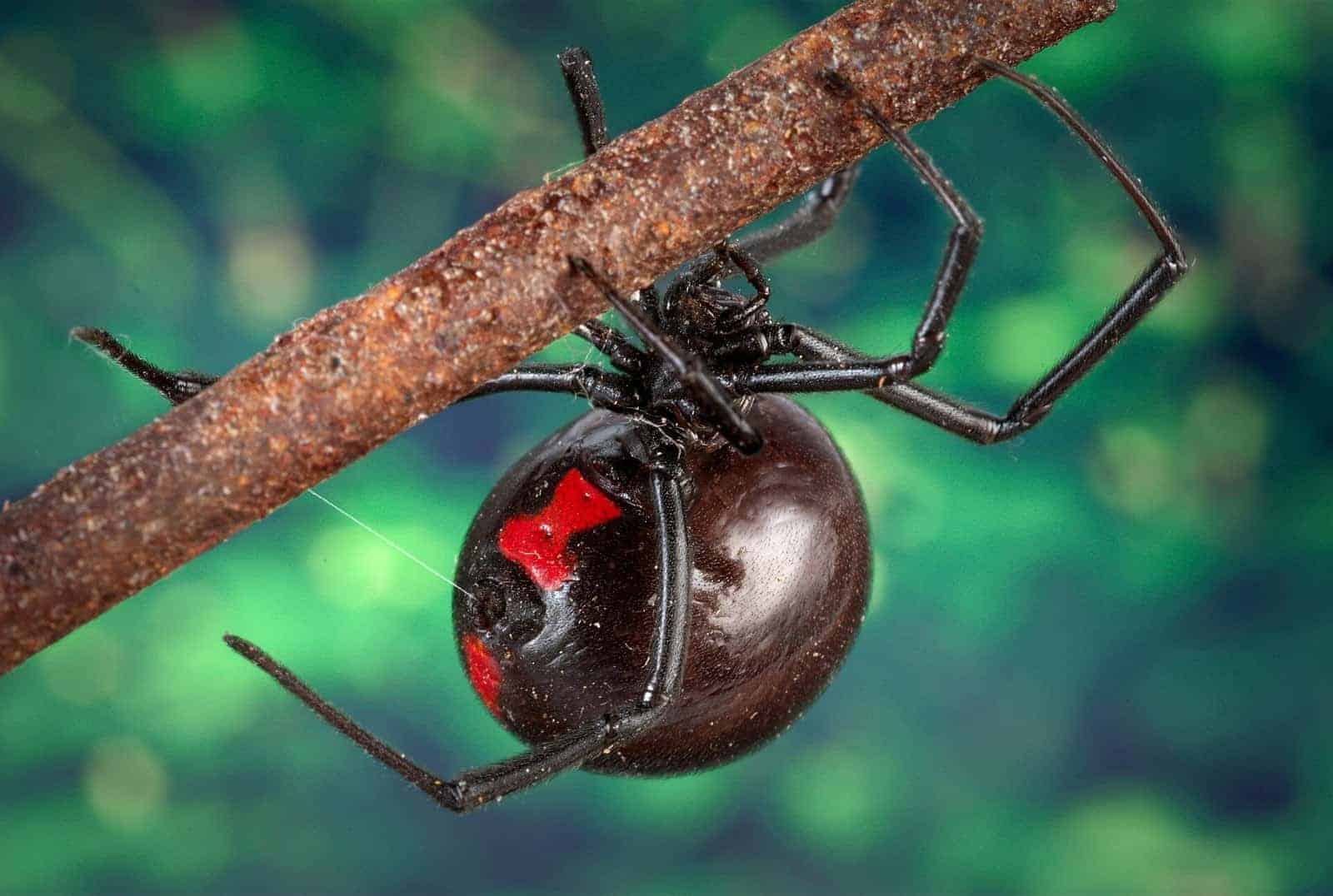
The black widow is one of the best-known spiders in America, and with good reason: the venom of an adult female contains a potent neurotoxin that can cause severe pain and muscle cramping. However, bites are uncommon, deaths are extremely rare, and these spiders generally avoid contact with people.
Black widows prefer sheltered, undisturbed locations outdoors, although they also inhabit garages, sheds, and other structures. This guide explains how to identify black widows, distinguish them from similar spiders, recognize bite symptoms, and reduce their presence around your home using practical, science-based methods.
Key Points
Black widows (Latrodectus species) occur across much of the United States, particularly in warmer regions. Adult females typically measure about 1/2 inch (13 mm) in body length, excluding their legs, and have a rounded abdomen. Mature females are usually glossy black with a red or reddish-orange hourglass marking underneath. Young spiders and males often have lighter coloring and distinctive stripes.
Black widows prefer sheltered, relatively undisturbed locations, including woodpiles, stone walls, garages, sheds, meter boxes, and outdoor furniture. Most bites occur when a spider is accidentally pressed against the skin while someone handles stored objects or reaches into a concealed space.
A bite may cause significant muscle pain, cramping, sweating, nausea, and other symptoms. Contact Poison Help at 1-800-222-1222 promptly for guidance following a suspected bite. Severe symptoms require emergency medical attention.
The best approach to reducing black widows is to remove unnecessary clutter, inspect potential hiding places, eliminate webs and egg sacs safely, and seal openings around buildings. Insecticides may be useful in selected situations but are not a substitute for habitat management.
In This Guide
- How to Identify a Black Widow
- Black Widow Species in the U.S.
- Brown Widows, False Widows, and Other Look-Alikes
- Egg Sacs and Life Cycle
- Where Black Widows Hide
- Black Widow Bites: Symptoms and First Aid
- How to Get Rid of Black Widows
- Prevention and Safe Habits
- What a Pro Visit Looks Like
- What It Costs
- Common Questions
- References
How to identify a black widow
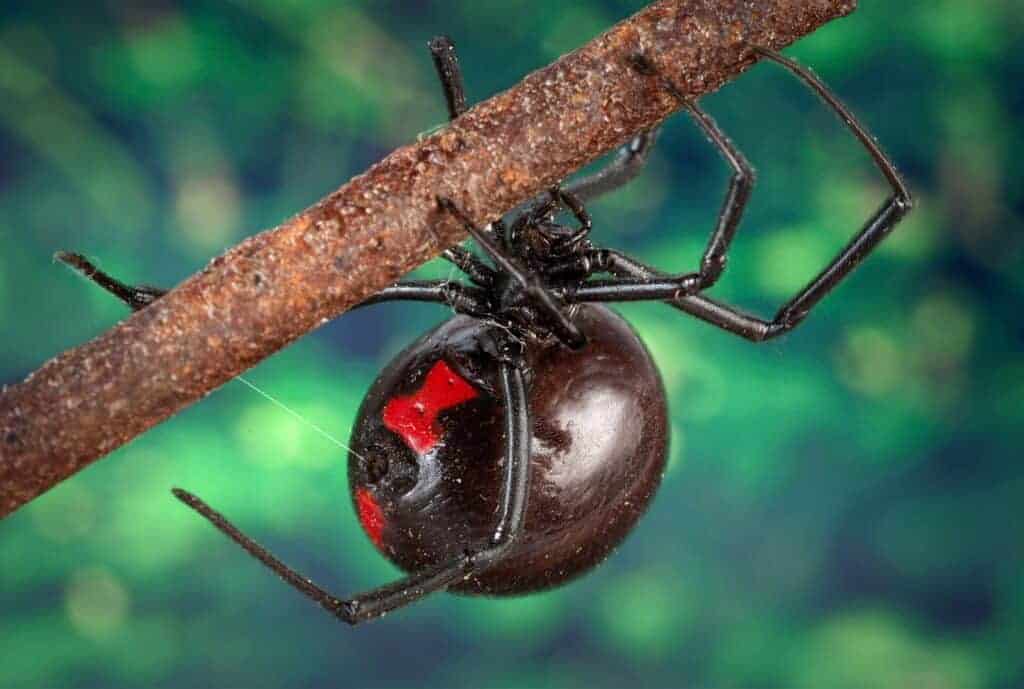
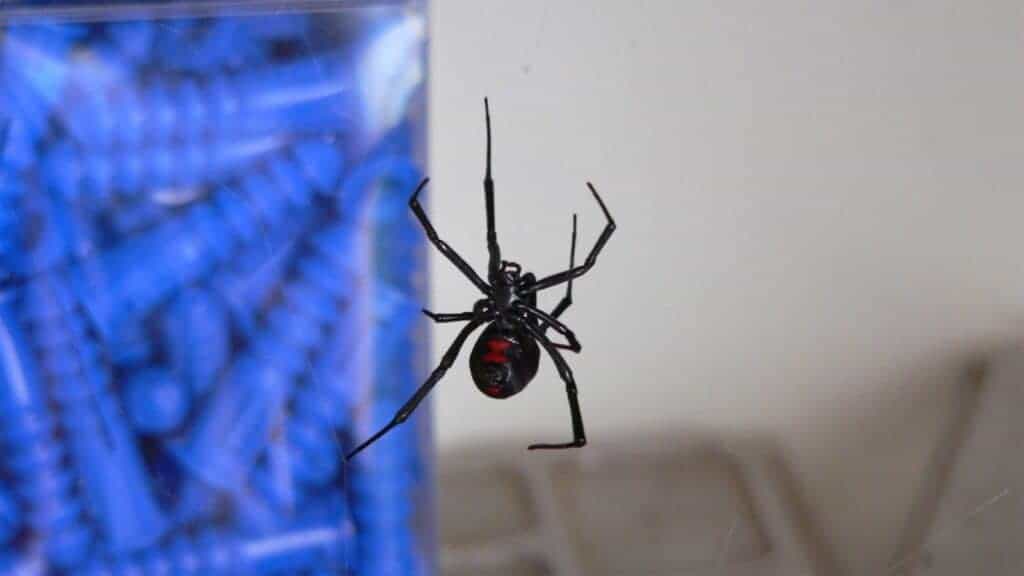
A mature female black widow typically measures about 1/2 inch (13 mm) in body length, excluding the legs. Her abdomen is rounded, often nearly spherical, and usually glossy black. The familiar red or reddish-orange hourglass marking appears on the underside of the abdomen.
However, the hourglass is not always perfectly formed. It may consist of two separate triangles, a triangle and a small bar, or less distinct reddish markings. In rare cases, the marking may be almost invisible or absent. Some well-fed females appear brownish or plum-colored because the abdomen has expanded.
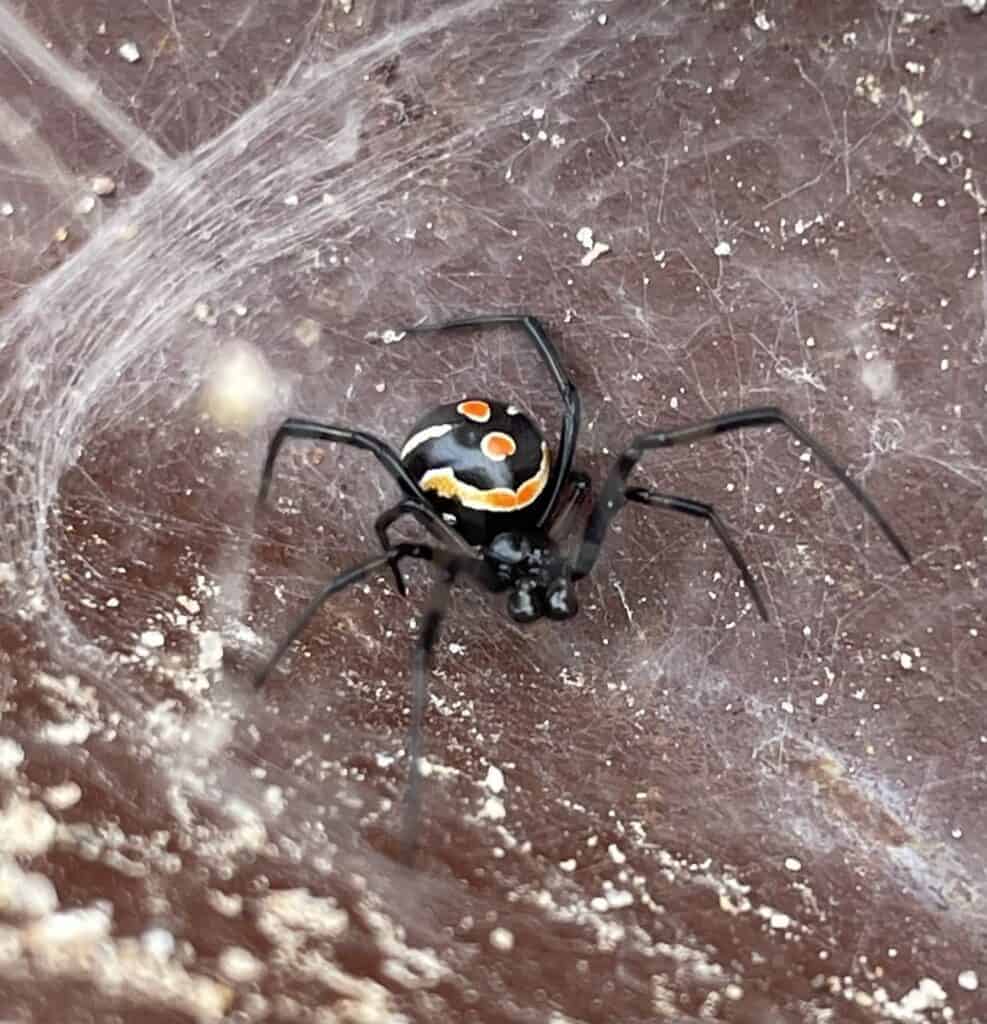
Young black widows look considerably different from mature females. Newly emerged spiderlings are pale, often whitish or tan, with darker markings. As they develop, they acquire combinations of cream, tan, gray, orange, and black markings. Longitudinal and diagonal stripes commonly appear on the abdomen.
Immature females gradually become darker through successive molts. Adult males remain much smaller and generally retain lighter, patterned coloration. Their abdomens are also proportionally smaller than those of adult females.
Black widows construct irregular, tangled cobwebs rather than the symmetrical, circular webs associated with orb-weaving spiders. Their silk is notably strong and includes sticky threads used to capture insects and other small arthropods.
The female usually remains hidden in a protected retreat during daylight and becomes more active after dusk. At night, she may hang upside down in the web, exposing the underside of her abdomen.
Black widow species in the U.S.
Several widow spider species occur in the United States. Three of the principal species commonly called black widows are:
- Southern black widow (Latrodectus mactans): Found primarily in the southeastern United States and other portions of the eastern and south-central regions.
- Northern black widow (Latrodectus variolus): Occurs mainly in the eastern United States, including parts of the Northeast and Midwest. The hourglass is frequently divided into separate markings.
- Western black widow (Latrodectus hesperus): Common in western North America, extending from portions of western Canada through the western United States into Mexico.
Their geographic ranges are not completely exclusive, and identification to species may require expert examination.
Other native widow species occur in particular regions, including the red widow (Latrodectus bishopi) in Florida. The non-native brown widow (Latrodectus geometricus) is another member of the genus and is discussed below.
For homeowners, distinguishing a true widow spider from a harmless look-alike is generally more important than identifying the exact black widow species.
Brown widows, false widows, and other look-alikes
Several spiders resemble black widows, particularly when immature black widows are compared with other cobweb spiders.
| Spider | Appearance | Medical significance |
|---|---|---|
| Adult female black widow | Usually glossy black with a red or reddish-orange hourglass underneath; approximately 1/2 inch long | Potentially serious bite |
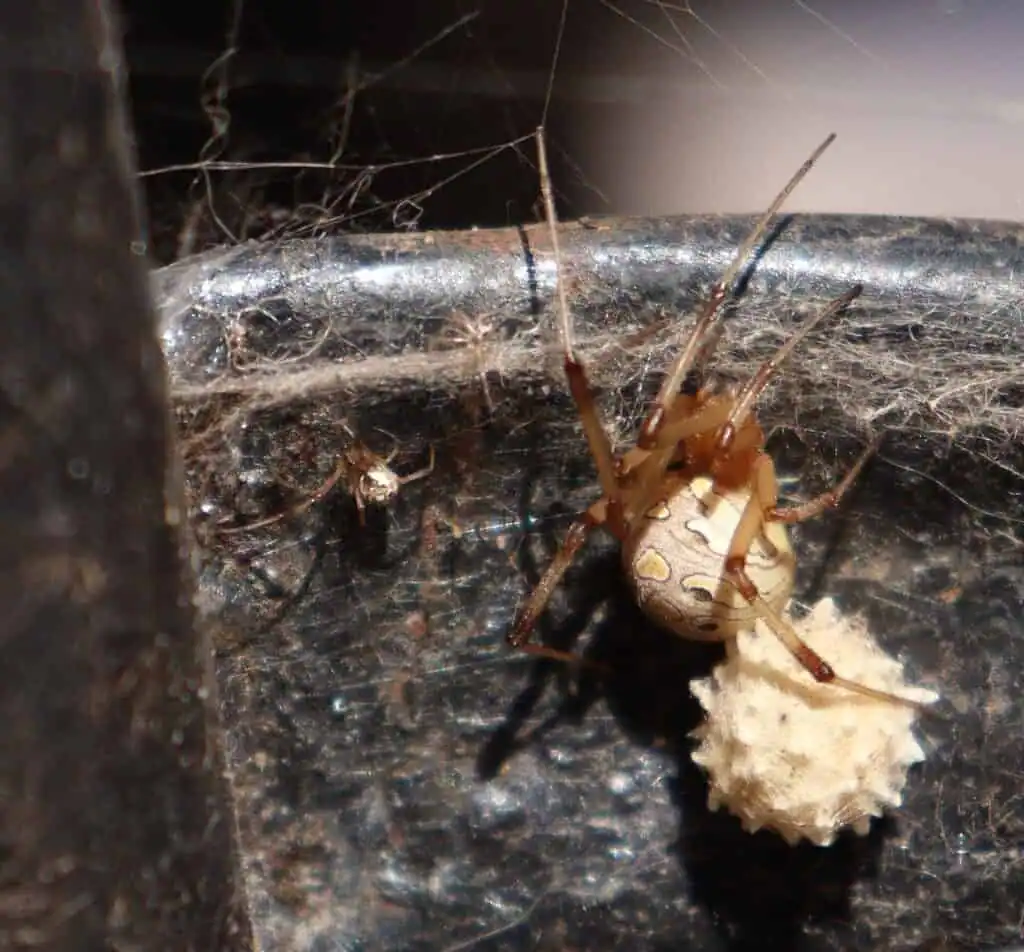
| Brown widow (L. geometricus) | Usually mottled tan, brown, or gray; occasionally very pale or dark; distinctive spiky egg sac | Bites generally cause less severe symptoms than black widow bites |
| False black widow (Steatoda grossa) | Usually chocolate brown to dark brown; lacks the red hourglass | Bites can be painful but serious effects are uncommon |
| Common house spider (Parasteatoda tepidariorum) | Usually mottled brown or gray with variable markings and banded legs | Not generally considered medically significant |
The brown widow has expanded its range across portions of the southern United States, including the Gulf Coast, Atlantic Coast, and Southern California.
The brown widow has expanded its range across portions of the southern United States, including the Gulf Coast, Atlantic Coast, and Southern California.
Although brown widows may resemble immature black widows, their egg sacs are particularly distinctive. Brown widow egg sacs have numerous small, pointed silk projections, giving them the appearance of a large pollen grain or miniature spiked ball.
Black widow egg sacs are generally smoother.
Brown widows tend to retreat or drop from their webs when disturbed. Their bites are generally associated with less severe symptoms than those of black widows, although individual reactions can vary.
False black widows belong to the same spider family, Theridiidae, but are members of the genus Steatoda, not Latrodectus. They often occupy similar sheltered environments and may be encountered indoors.
Because coloration varies and immature widows can closely resemble other species, identification should not rely on color alone.
Egg sacs and life cycle
Female black widows produce eggs enclosed within protective silk sacs. The appearance and number of eggs vary somewhat among species.
The western black widow typically produces a yellowish or cream-colored egg sac that may be rounded or somewhat teardrop-shaped. Its covering is tough and relatively smooth.
A western black widow female may produce approximately 300 eggs in a single sac. Under favorable conditions, she can produce more than 10 egg sacs after mating because females can store sperm.
These figures describe the western black widow and should not be assumed to apply equally to every widow species.
Spiderlings emerge from the egg sac and initially remain nearby. Young spiders eventually disperse, often using a process called ballooning. They release fine silk threads that can be carried by air currents, allowing them to move away from their original location.
This dispersal helps explain why black widows may return to suitable habitats even after existing spiders and egg sacs have been removed.
As spiderlings grow, they molt repeatedly before reaching adulthood. Development time and longevity depend on species, temperature, food availability, and environmental conditions.
Where black widows hide
Black widows favor protected locations that provide shelter, suitable web attachment points, and access to insect prey.
Common locations around homes include woodpiles, stacked lumber, stone walls, landscape timbers, debris piles, sheds, garages, barns, crawl spaces, and utility or water meter boxes.
They also occupy cracks, crevices, and openings around foundations, especially where insects regularly pass.
Many black widow webs are constructed near ground level, often within approximately three feet of the ground. However, this is not a strict limitation. Some spiders establish retreats higher on buildings, including eaves and other elevated sheltered locations.
Additional hiding places include the undersides of outdoor furniture, trash can handles, flowerpots with curled rims, picnic tables, children’s plastic toys, and playhouses with downward-facing openings.
Black widows are generally less common in regularly occupied living areas because suitable prey and undisturbed retreats are often limited. When found in buildings, they are more likely to occupy garages, storage areas, crawl spaces, and similar locations.
Their presence does not necessarily indicate poor housekeeping. However, accumulations of unused materials and clutter can provide additional hiding places.
Black widow bites: symptoms and first aid
Black widows are not aggressive spiders that actively pursue people. They generally retreat when disturbed and are most likely to bite when trapped against the skin or otherwise threatened.
Bites commonly occur when someone reaches into a concealed location, moves stored materials, or puts on gloves or clothing containing a spider.
Adult females account for the greatest medical concern because they can deliver sufficient venom to produce significant symptoms. Larger immature females may also be capable of medically important bites. Adult males are not generally considered a significant bite hazard.
Black widow venom contains neurotoxins, including alpha-latrotoxin, that interfere with normal nerve signaling.
The bite itself may cause immediate pain or feel like a minor pinprick. Some people initially notice little discomfort.
Symptoms may develop within minutes or over the next several hours. Possible effects include:
- Increasing pain around the bite and spreading muscle pain.
- Severe muscle cramping or rigidity, particularly involving the abdomen, chest, or back.
- Sweating, sometimes concentrated near the bite.
- Nausea, vomiting, or headache.
- Elevated blood pressure or a rapid heartbeat.
- Anxiety, restlessness, or weakness.
- Difficulty breathing in severe cases.
Severe abdominal muscle rigidity can sometimes resemble other medical emergencies, including appendicitis.
Unlike brown recluse envenomation, black widow envenomation primarily produces neurological and muscular effects rather than characteristic tissue necrosis.
If someone is bitten
- Remain calm and move away from the spider. Avoid unnecessary physical activity.
- Wash the bite area with soap and water.
- Apply a cold pack or ice wrapped in a cloth for short intervals to help relieve discomfort. Do not apply ice directly to the skin.
- Remove rings or tight jewelry if swelling may occur.
- Call Poison Help at 1-800-222-1222 promptly for individualized advice. Seek medical evaluation as directed, particularly if symptoms develop or the person is a child, an older adult, or medically vulnerable.
- Call 911 for difficulty breathing, collapse, seizures, or other life-threatening symptoms.
- If the spider can be photographed or safely collected without risking another bite, identification may help medical personnel. Do not attempt to capture it if doing so creates additional danger.
Do not cut the bite, attempt to suck out venom, or apply a tourniquet.
Medical treatment depends on symptom severity. Many bites can be managed with guidance from Poison Control and appropriate pain relief. More severe cases may require hospital treatment for pain, muscle spasms, and other complications.
Black widow antivenom is available for selected severe cases, although it is not routinely needed. Certain antivenom preparations can cause serious allergic reactions, so clinicians weigh the benefits and risks before administering them.
Most patients recover, often within a few days, although symptoms can occasionally persist longer.
Deaths from black widow bites are extremely rare in the United States. Young children, older adults, and individuals with significant underlying medical problems may be more vulnerable to severe effects.
How to get rid of black widows
Completely eliminating black widows from an outdoor property is generally impractical. New spiders can disperse into suitable habitats, even after existing spiders have been removed.
My goal on a black widow job is to reduce the number of spiders in locations where people are likely to encounter them, especially where hands, feet, and stored items come into contact with hidden retreats.
A practical approach begins with inspection, identification, habitat modification, and physical removal.
- Wear sturdy gloves when handling firewood, stored boxes, flowerpots, landscape materials, or debris. Inspect materials before lifting them and avoid reaching into concealed spaces.
- Remove unnecessary clutter, trash, discarded materials, and heavy vegetation immediately around foundations. Store firewood and lumber away from the house.
- Vacuum accessible spiders, webs, and egg sacs in garages, storage areas, and other suitable locations. Use a vacuum attachment to maintain distance from the spider. Dispose of collected material securely, preferably outdoors.
- Inspect suspected activity areas using a flashlight. Black widows are often more visible in their webs after dusk, but homeowners should avoid placing hands near webs or retreats. A professional may be preferable where access is difficult or multiple spiders are present.
- Store gloves, gardening clothing, and seasonal items in sealed containers or bags. Keep boxes off the floor when practical.
- Seal accessible cracks and openings around doors, windows, vents, and utility penetrations. Install properly fitted door sweeps and repair damaged screens.
- Reduce insect concentrations around buildings where practical, particularly near entrances and outdoor lighting.
Insecticides can supplement these measures when justified by the level of activity and the risk of human contact.
Some products containing pyrethrins or pyrethroids are labeled for spider control. However, effectiveness depends on the product, application method, contact with spiders, and access to protected hiding places.
Treatments should be directed toward appropriate, labeled locations rather than applied indiscriminately around the property.
UC IPM also describes research showing that certain water-based insecticide formulations did not significantly affect brown widow egg sacs, whereas some petroleum-based formulations penetrated the protective silk more effectively. This finding should not be generalized to every insecticide or widow species.
Always use an EPA-registered product according to its labeling. Never assume a product is suitable for every crack, void, surface, or outdoor location.
Habitat management and continued inspection are generally more important for lasting reductions than repeated spraying alone.
Prevention and safe habits
A few routine precautions can substantially reduce the likelihood of accidental encounters.
Shake out gloves, shoes, boots, and clothing that have been stored in garages, sheds, or outdoors before using them.
Inspect the undersides of outdoor furniture, children’s toys, playhouses, and flowerpots, especially when these items have remained undisturbed.
Avoid carrying spiders indoors on firewood, stored boxes, potted plants, and other outdoor materials.
Keep garages and storage spaces organized, and avoid accumulating unnecessary materials against walls or foundations.
Maintain door sweeps, screens, and seals around openings to reduce entry opportunities.
Consider adjusting exterior lighting to reduce concentrations of insects near doors and windows. Shielded lighting, warmer-colored bulbs, or relocating lights away from entrances may help reduce insect attraction.
When moving stored materials, use tools or reposition objects carefully rather than reaching blindly into concealed spaces.
These precautions are particularly important in areas where black widows are common and where children may encounter sheltered outdoor objects.
What a pro visit looks like
A professional black widow service should begin with accurate identification and an inspection of the areas where spiders are likely to contact people.
The emphasis should be on reducing exposure, identifying harborage, and correcting conditions that encourage recurring activity.
The inspection
The technician should confirm whether the spiders are black widows, brown widows, or another species.
The inspection should focus on garages, sheds, crawl spaces, basement storage areas, foundation openings, window wells, outdoor furniture, woodpiles, and other sheltered locations.
Webs, egg sacs, and spiders should be documented where possible. Sticky monitoring traps may help identify spider activity in suitable indoor locations, but they should be positioned to avoid accidental contact by children and pets.
Ask the technician to identify the specific areas where spiders are found and explain which environmental changes would help reduce future activity.
Your prep before the visit
- Move stored materials away from walls where practical, but do not disturb known spider hiding places without appropriate precautions.
- Provide access to garage perimeters, storage areas, and crawl space entrances.
- Follow the company’s instructions regarding pets, food, water dishes, and access to treatment areas.
- Record where spiders, webs, and egg sacs have been observed.
- Tell the technician about locations frequently used by children or pets.
The treatment
- Removal of webs and egg sacs with a vacuum or web brush.
- A labeled residual barrier treatment around door thresholds, garage and crawl space entrances, foundation vents, and the lower edge of siding.
- Targeted crack and crevice treatment indoors where spiders hide, rather than open spraying.
- Exclusion and lighting recommendations: door sweeps, screens, sealing gaps, and less attractive outdoor bulbs.
Follow-up
Barrier treatments wear off, so many companies schedule repeat exterior service during the warm months. Keep up with vacuuming and clutter control between visits; spraying without housekeeping gives only temporary relief.
Questions to ask before you book
- What species did you find, and does it matter for safety?
- What product will you apply, where, and how long will it last?
- Will you treat indoors, and if so, only in cracks and voids?
- What exclusion or habitat changes do you recommend?
- Is this a one-time visit or a contract, and can I cancel?
See how to hire a licensed pest control company for licensing, contracts, and red flags.
What it costs
Spider control is usually priced as general pest control. A widow job may cost more if garages, sheds, and woodpiles all need attention.
Before you accept a quote for widows, check it against current spider extermination prices from the two largest national cost surveys.
Typical national ranges
- Spider extermination: $100 to $500 (Angi, 2026)[6]
- General pest control visit: average $172; most pay $50 to $500 (Angi, 2026)[6]
- Spider treatment, one-time visit: $100 to $300 (HomeGuide, 2026)[7]
- One-time exterminator visit (all pests): $100 to $600 (HomeGuide, 2026)[7]
- Annual pest control plan: $300 to $900 (HomeGuide, 2026)[7]
- Quarterly visit on an ongoing plan: $100 to $300 per visit (Angi, 2026)[6]
These are national figures from consumer cost surveys, not quotes. Prices vary by region, home, and job, so treat them as a starting point for comparing written estimates.
What moves the price
- Home size and how much exterior perimeter must be treated.
- Clutter, woodpiles, and vegetation against the house.
- Whether garages, crawl spaces, sheds, or outbuildings are included.
- Whether the spider is medically important and needs a more thorough job.
- One-time service versus a seasonal or quarterly plan.
One-time job or ongoing plan
Black widows are a habitat problem, so expect a one-time cleanup and exterior treatment to help for a season but not forever. Homes with woodpiles, rock walls, or cluttered outbuildings in widow country often benefit from a quarterly exterior plan plus regular cleanup.
Red flags in a quote
- Indoor fogging or broadcast spraying of living spaces.
- No species identification before treatment.
- A long contract with no clear cancellation terms.
- Claims that one spray will keep spiders away permanently.
Ask for the species, the treatment areas, the product, and the visit schedule in writing.
Common questions about black widow spiders
How do I know if it is a black widow?
An adult female is about 1/2 inch long, shiny jet black, with a red hourglass on the underside of a round abdomen. The hourglass can be split into two spots, reduced to a small mark, or rarely absent. Young widows and males are tan or gray with white and sometimes red stripes and look very different.
Are black widow bites deadly?
Death in a healthy person is very rare, according to MedlinePlus. Young children, older adults, and people who are very ill are at greater risk. Bites are quite rare even where black widows are common, but any suspected bite deserves prompt medical advice.
What does a black widow bite feel like?
The bite itself may be painless or feel like a pinprick. Within 15 minutes to an hour, dull muscle pain can spread from the bite to the chest or abdomen, with cramping, rigidity, sweating, nausea, or high blood pressure.
What should I do if I am bitten?
Stay calm, wash the bite, apply ice wrapped in cloth, keep the limb still, and seek medical help right away. Call Poison Help at 1-800-222-1222 for guidance, or 911 for trouble breathing or severe symptoms. Bring the spider in a sealed container if you can do so safely.
Where do black widows hide?
In dark, dry, undisturbed spots, usually near the ground: woodpiles, stone walls, sheds, garages near doors and vents, meter boxes, outdoor furniture, plant pots, and clutter. They are seldom found in living areas of a home.
Is a brown widow as dangerous as a black widow?
No. UC IPM notes the brown widow’s bite is much milder, it typically drops and plays dead when disturbed, and it produces a distinctive spiky egg sac.
What is a false black widow?
Steatoda spiders in the same family. They are chocolate brown, never have red markings, live readily indoors, and have mild venom comparable to a yellowjacket sting.
How much does it cost to have black widows treated?
Angi’s October 2026 data puts spider extermination at $100 to $500,[6] and HomeGuide’s January 2026 data puts a one-time exterminator visit at $100 to $600.[7] Expect repeat exterior service where widows are common, because spiderlings re-infest treated areas.
This guide is part of our spider guide. Compare the common house spider, the brown recluse, and the jumping spiders that are sometimes mistaken for widows, or send a clear photo to Ask the Sherpa.
References
- UC IPM Pest Notes: Spiders (UC ANR Publication 7442)
- University of Kentucky Entomology, ENTFACT-623: Eliminating Spiders Around Homes and Buildings
- CDC NIOSH: Venomous Spiders at Work (updated September 28, 2026)
- UC IPM Pest Notes: Widow Spiders and Their Relatives (updated March 2017)
- MedlinePlus Medical Encyclopedia (U.S. National Library of Medicine): Black Widow Spider (reviewed July 1, 2025)
- Angi, How Much Does Pest Control Cost? [2026 Data], updated October 9, 2026
- HomeGuide, How Much Does an Exterminator Cost?, January 9, 2026
This article was written by Greg Baumann, founder of Pest Sherpa, and reflects more than 40 years of professional pest management experience.
About the Author

Greg Baumann | Pest Control Expert
Greg Baumann is the founder of Pest Sherpa and a Pest Control Expert with more than 40 years of professional pest management experience. His articles combine decades of field experience, technical expertise, and science-based guidance to help homeowners identify pests correctly, understand real-world risks, and make informed pest management decisions.
Mission: Identify the pest. Understand the risk. Stop the problem. Prevent the comeback. Know when it’s time to call a professional.