
Termite Facts That Change What You Look For (Plus the Flying-Ant Mix-Up)
Key Points
- Misconception solved: not every winged insect in spring is a termite, and not every ant swarmer is harmless.
- What matters: the waist, the antennae, and the wing lengths separate flying ants from termite swarmers within seconds.
- What matters: mud tubes, the type of frass, and moisture conditions tell you more than folklore. See signs of termites.
- Recommended approach: photograph swarmers, inspect the foundation, and use the linkable facts for citations.
In This Guide
- Why termite trivia fails homeowners
- Myth: flying ants vs termites
- Fact: 10-second ID checks
- Myth: new houses are safe
- Fact: mud tubes
- Myth: store spray cures colonies
- Fact: subterranean vs drywood
- Myth: no swarm means clear
- Fact: inspection vs treatment
- What to do this weekend
- When to call a pro
- Linkable facts
- FAQ
- References
Termite content online tends to favor species trivia and alarming statistics. Homeowners need something more practical: what to look for on the foundation this weekend, how to stop mislabeling every swarmer, and how an inspection differs from a treatment. I have spent a good part of my career teaching pest management professionals to make exactly these distinctions, and they are well within a homeowner’s reach. Use this guide together with signs of termites, termite inspection, and the termites hub.
A note on purpose: Pest Sherpa’s termite guides exist to prevent expensive mistakes. If you remember only the waist, the antennae, and the equal wings, you are already ahead of most of the misinformation that circulates each spring.
If you change only one habit after reading this page, save swarmers and wings before you clean up. An inspector cannot identify a specimen from a description.
Why termite trivia fails homeowners
Knowing that there are many termite species worldwide does not help you interpret a windowsill covered in wings. The useful facts are morphological, regional, and structural. [UC IPM] [Clemson HGIC] [Penn State Extension]
MISCONCEPTION
“Those spring swarming insects are just ants, so ignore them”
The evidence: some swarmers are ants, and some are termites. Ignoring the pile without a ten-second identification is how a colony gains another year of undisturbed feeding.
Save a few specimens in a clear bag and compare the waist, antennae, and wings before you sweep.
WHAT THE EVIDENCE SHOWS
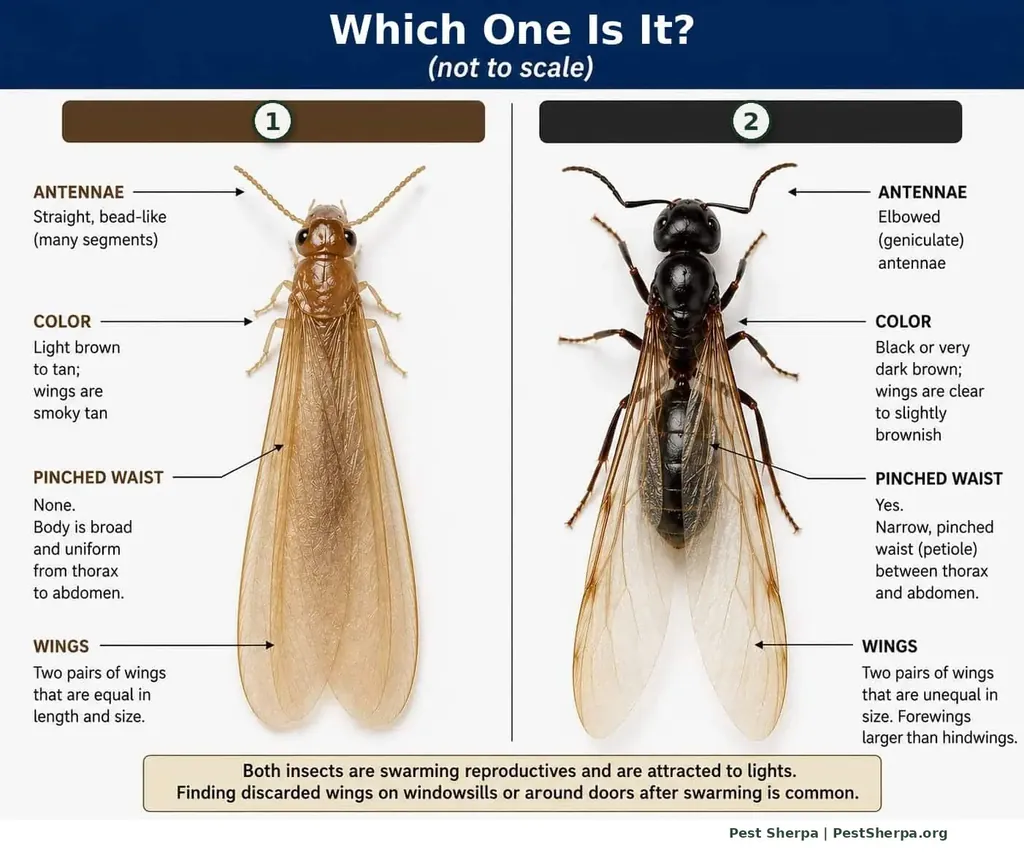
Flying ant vs termite: waist, antennae, wings
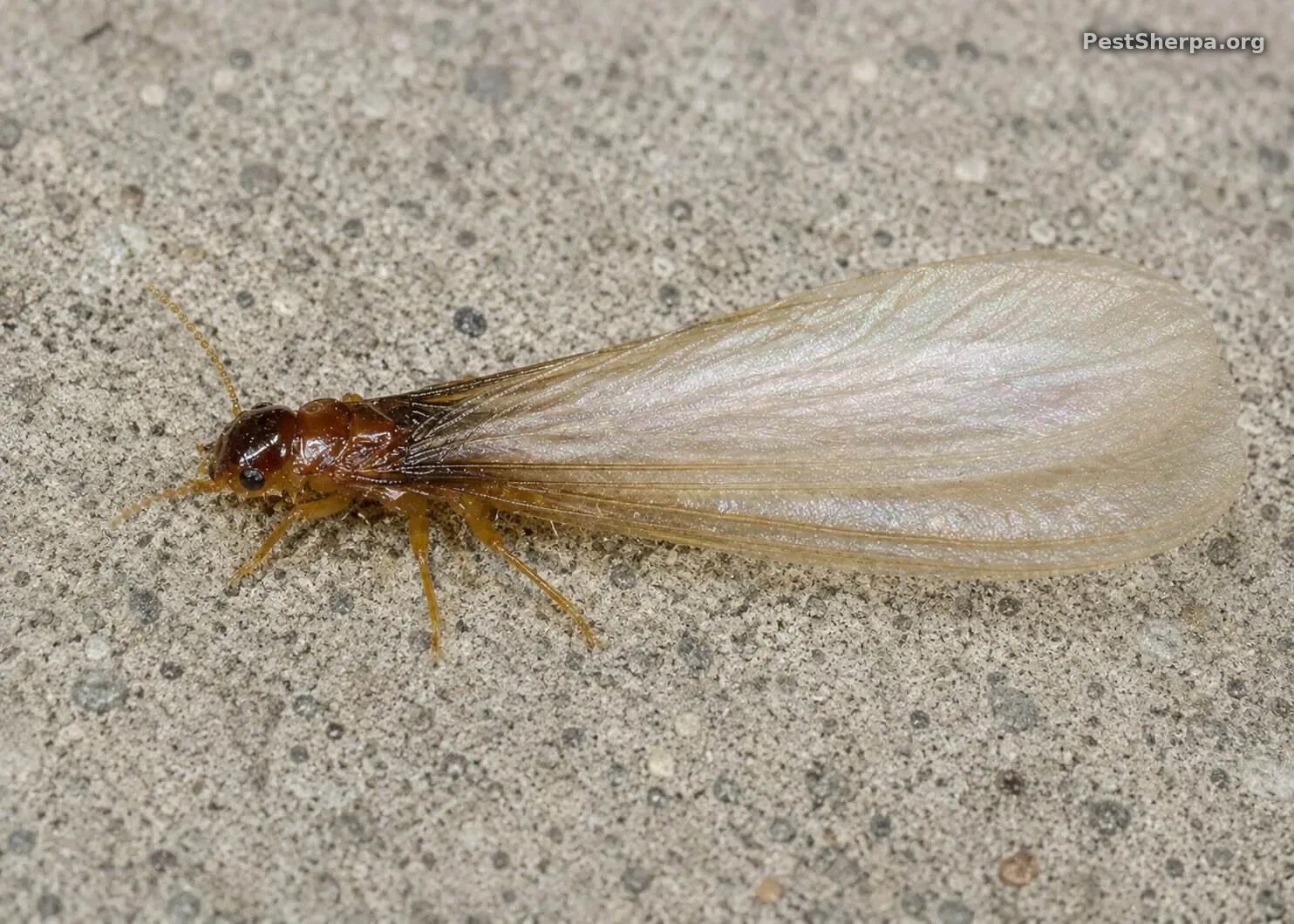
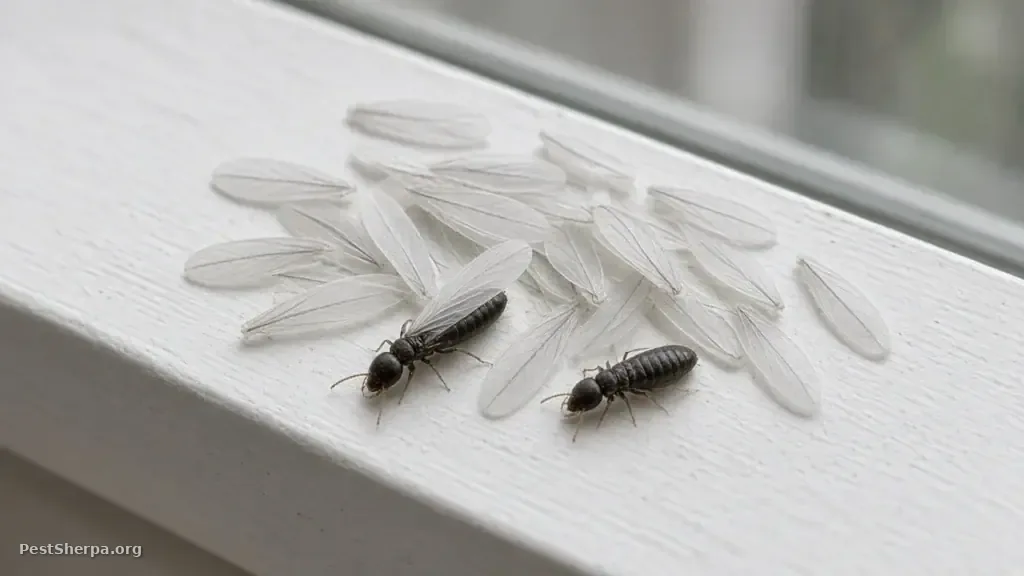
Termite swarmers have straight, bead-like antennae, a broad waist, and two pairs of wings of equal length. Flying ants have elbowed antennae, a pinched waist, and front wings that are larger than the hind wings.
This single check prevents the most expensive identification mistake a homeowner can make. If possible, photograph the specimens on graph paper for scale.
MISCONCEPTION
“New construction does not get termites”
The evidence: fresh lumber, changes in grading, irrigation, and wood-to-soil contact can all invite subterranean termite pressure around new construction. The age of the home is not what determines the risk.
WHAT THE EVIDENCE SHOWS
Mud tubes are a look-for, not a trivia answer
Subterranean termites build shelter tubes across foundations, piers, and other exposed surfaces. Mud tubes about the width of a pencil warrant a professional inspection even if you have never seen a swarm.
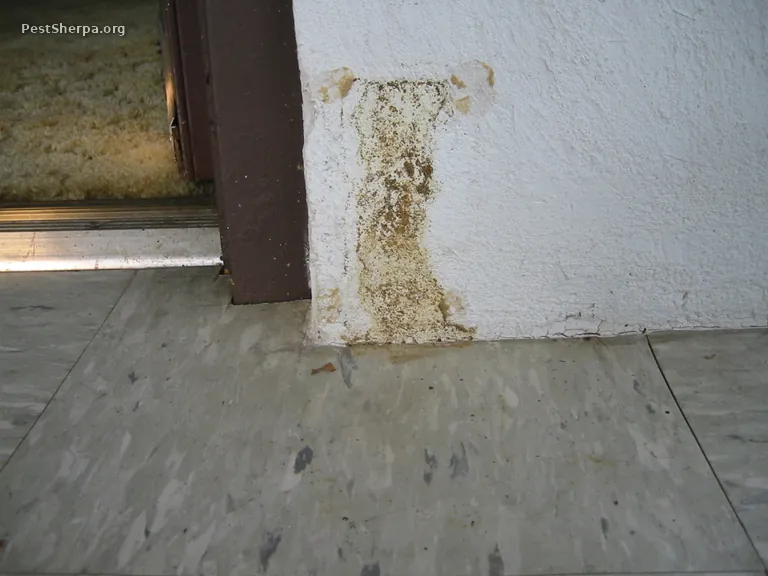
Pair your checks for tubes with moisture corrections: leaking hose bibs, clogged gutters, and mulch piled against the siding. [UC IPM] [Clemson HGIC]
MISCONCEPTION
“A hardware-store spray will kill the colony”
The evidence: spraying winged adults on a windowsill does not eliminate a subterranean colony in the soil or a drywood colony inside a beam.
Consumer products can create a false sense of security. Structural termite infestations are a problem of the whole system, not of the insects you happen to see.
WHAT THE EVIDENCE SHOWS
Subterranean vs drywood changes what you collect as evidence
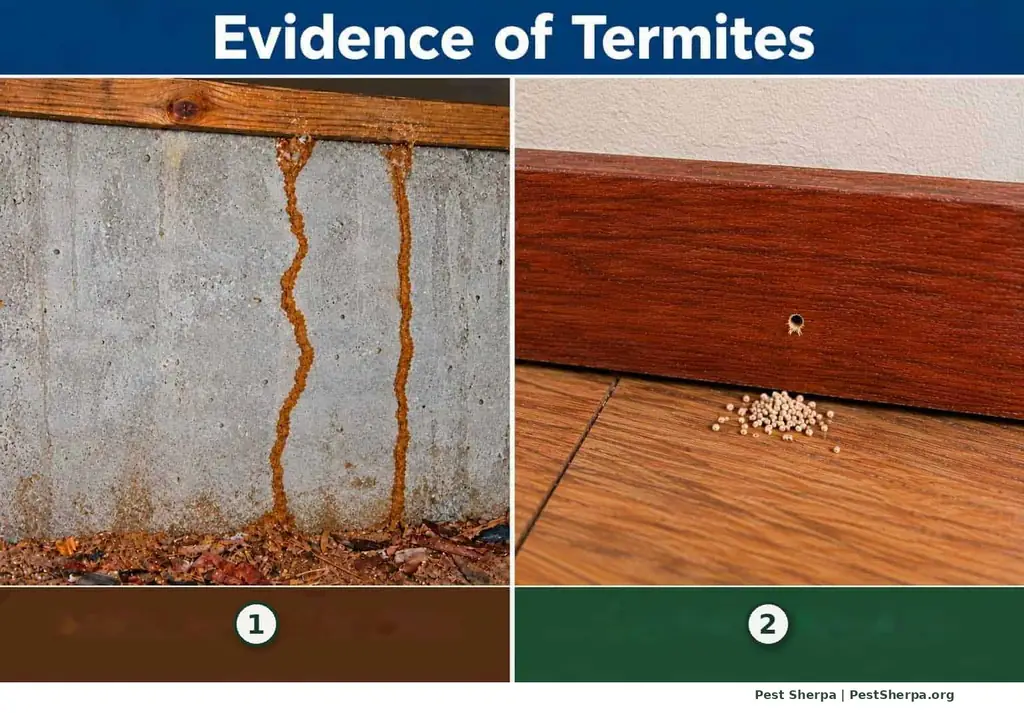
Eastern subterranean termites and related species generally require a moisture connection to the soil and leave mud tubes as evidence. Drywood termites live inside the wood itself and push out hard fecal pellets, known as frass, that resemble tiny seeds or grains of sand.
Formosan subterranean termites deserve particular respect within their range, because their colony size and foraging pressure can be extreme. Region matters. [UC IPM]
MISCONCEPTION
“No swarm this year means we are clear”
The evidence: swarming is seasonal and triggered by weather. A colony can damage wood without ever producing a visible swarm, so regular inspections remain important, especially in regions with heavy termite pressure.
WHAT THE EVIDENCE SHOWS
A WDI / real-estate inspection is not a treatment receipt
An inspection report documents visible evidence and conducive conditions in accessible areas. Treatment plans, monitoring stations, and warranties are separate services.
Read termite inspection so you understand what you are paying for. Ask specifically what was inaccessible, such as locked rooms, crawlspaces with low clearance, or finished walls.
WHAT THE EVIDENCE SHOWS
Damage costs and treatment costs are different conversations
Homeowners often confuse repair costs with the cost of a prevention contract. Use termite damage costs to understand repair costs, and rely on a licensed inspector for decisions about active infestations. National averages cannot price the conditions in your particular crawlspace.
What to photograph for a useful pro call
Professionals make better recommendations when they have visible evidence. Photograph swarmers beside a coin, piles of wings on windowsills, mud tubes with a tape measure in the frame, and any frass pellets on dark paper. Note the date, any recent rain, and whether the wings were found inside or outside. That record is far more useful than a vague voicemail saying you might have termites.
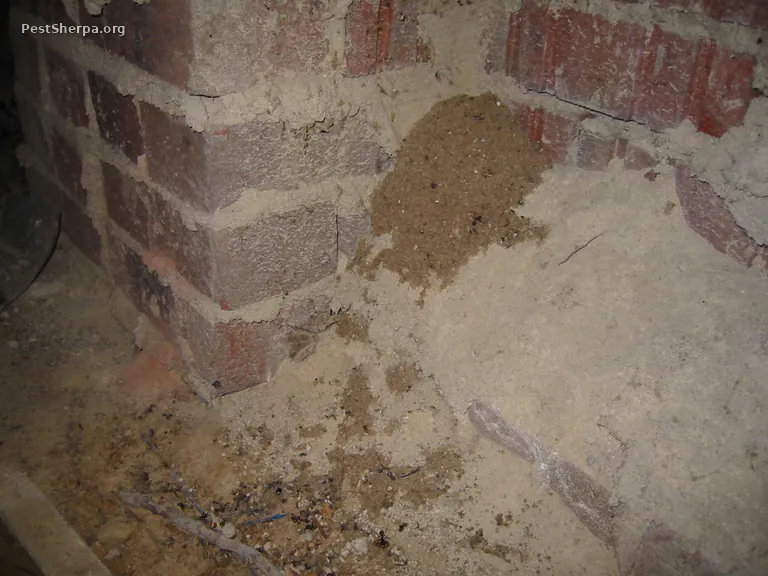
Bring the same record to any real estate transaction, and pair it with what a termite inspection includes so you understand the difference between an inspection report and a sales presentation. When a loan calls for a wood destroying insect report, usually the NPMA-33 or a state-mandated form, the lender will want a copy before closing. [VA Home Loans]
Conducive conditions you can fix before any contract
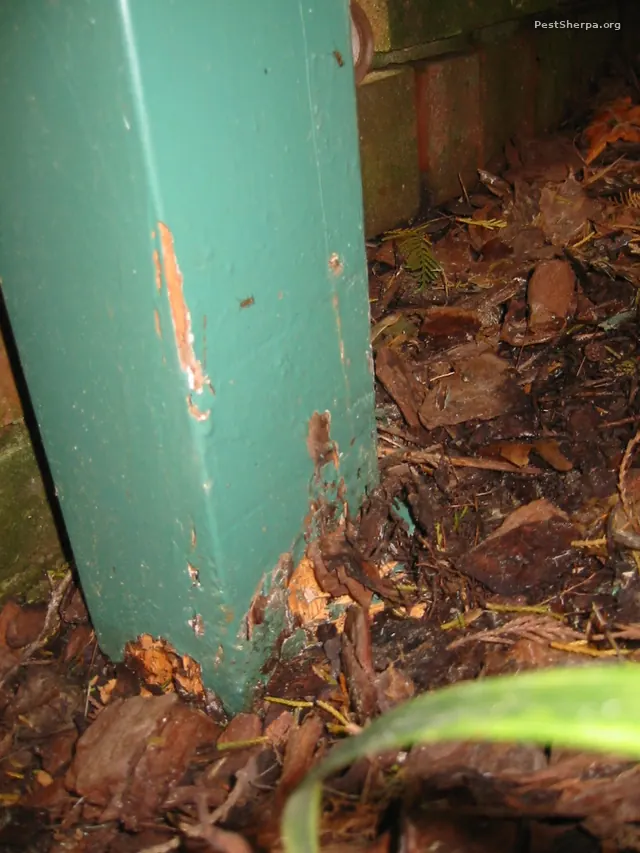
Wood-to-soil contact, chronic moisture from the roof or irrigation, dense mulch against the siding, and clogged gutters all invite subterranean termite activity. Correcting these conditions does not replace treatment when a colony is active, but it improves the odds of every treatment and the outcome of every inspection.
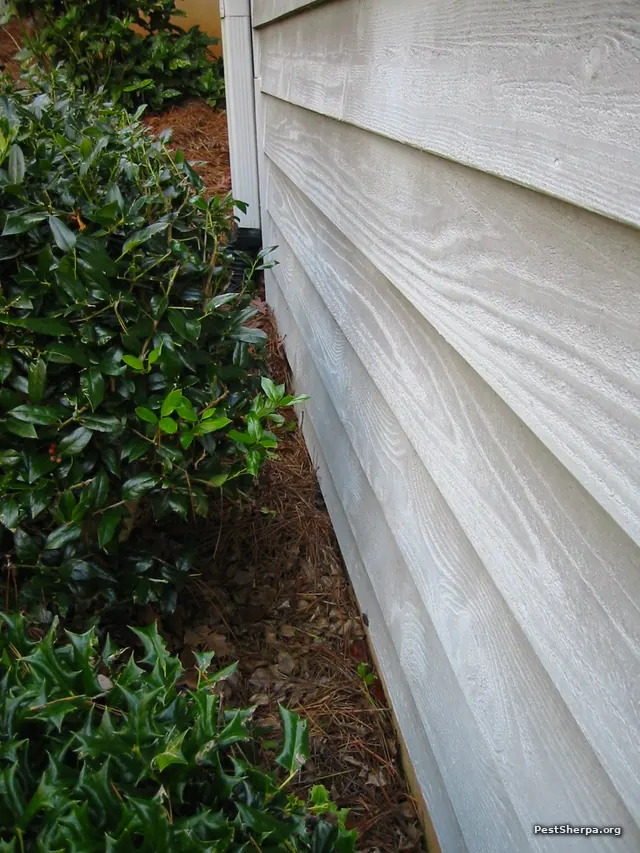
Regional species still determine how urgent the situation is. Formosan pressure along the Gulf Coast is a very different matter from a drywood problem in coastal Southern California or Florida. Use the termites hub to find the correct species guide after reading this guide.
Wings on the sill: cleanup without destroying evidence
Most people vacuum first and ask questions later. Before you clean up, save a teaspoon of wings and a few intact swarmers in a bag. Equal-length wings and a thick waist point to termites, and a pinched waist points to ants. Either way, you have preserved the evidence the inspector needs.
Monitoring stations are not decorations
In-ground monitoring and baiting systems help only if someone checks them on a regular schedule. A station that goes unchecked for two years is simply hardware in the landscaping. Ask any provider how often the stations are inspected and what happens when activity is found.
Liquid soil treatments, bait systems, and drywood treatments are different tools. Insist on an explanation tied to the species and the evidence, rather than a single product recommended for every house on the block.
Real-estate timing without getting bounced between vendors
In a real estate transaction, buyers receive a report, sellers become anxious, and agents want a clean result to close the deal unencumbered. Your responsibility is to read what the inspector could not access and which conducive conditions remain. Termite inspection explains that process, and the Damage cost pages inform the repair discussion once live insects have been addressed.
Do not let time pressure push you into a treatment you cannot explain in a single paragraph. If the salesperson cannot explain it clearly, pause before you sign.
DIY shelf products versus structural systems
Retail products can kill the exposed insects you see. Structural protection, by contrast, concerns the colony, the soil interface, the galleries in the wood, and the follow-up. If a bottle claims to replace a professional termite system for an entire house, remain skeptical. Even retail bait systems say to call a professional.
Learn the signs first with signs of termites, and then decide on an inspection. Skipping straight to do-it-yourself drilling videos is how homeowners end up with sill plates full of useless holes.
Crawlspaces, mulch, and the quiet month between swarm seasons
The months without swarmers are when homeowners stop looking, and they are also when mud tubes extend and moisture problems take hold. Walk the crawlspace after heavy rains, carrying a flashlight and a phone rather than a can of spray. I have inspected a great many crawlspaces for termites, including one beneath a century-old farmhouse reached through a hatch in a bedroom closet floor, and a methodical look with a good light reveals far more than most people expect.
Pull mulch back from the siding, correct any grading that directs water toward the foundation, and keep firewood stacked away from the house. These tasks are not glamorous, but they are how you reduce termite pressure without waiting for a spring swarm.
If the crawlspace is too tight or too wet to enter safely, record that limitation in your notes for the inspector. Hidden areas are where unexamined assumptions are most costly.
The final point for homeowners is this: termites reward people who examine foundations and moisture conditions during the quiet months, not only when wings appear in spring. Keep the flying ant checklist on your phone, save specimens before you vacuum, and choose inspections that explain their access limitations. Structural colonies are a problem of the whole system, and they should be treated that way.
What to do this weekend
- If swarmers appear, photograph them and save a few specimens before you clean up.
- Walk the foundation and the crawlspace access, looking for mud tubes and wood-to-soil contact.
- Check windowsills and light fixtures for discarded wings.
- Correct any irrigation that sprays the slab, and pull mulch back from the siding.
- Schedule a qualified inspection if you find tubes, frass, or confirmed swarmers, beginning with hiring a termite company.
When to call a professional (and when your own efforts are enough)
Homeowners can learn identification and reduce conducive conditions on their own, but confirming and treating a structural termite infestation is not a do-it-yourself project. Call a licensed termite professional if you find mud tubes, repeated indoor swarms, structural wood that sounds hollow, or if you face a real estate deadline. See inspection and hiring.
Related guides: hub, signs, eastern subterranean, drywood, Formosan, and damage costs.
Linkable facts
Concise, cite-ready statements. Deep-link this box with #linkable-facts or link a single line with #lf-1 through #lf-6.
- LF1. Termite swarmers have straight antennae, a thick waist, and wings of equal length; flying ants have elbowed antennae, a pinched waist, and unequal pairs of wings.
- LF2. Mud tubes on a foundation are a classic sign of subterranean termites, not random streaks of dirt.
- LF3. Drywood termites can infest sound wood without any contact with the soil; pellet-shaped frass is a key clue.
- LF4. A spring swarm can indicate a mature colony nearby, but the absence of a swarm does not prove that a structure is free of termites.
- LF5. A termite inspection for a real estate transaction (such as a WDI or NPMA-33 report) is not the same as a treatment contract.
- LF6. Moisture problems and wood-to-soil contact increase subterranean termite pressure around many homes in the United States.
Suggested citation: Greg Baumann, Pest Control Expert, Pest Sherpa. “Termite Facts That Change What You Look For (Plus the Flying-Ant Mix-Up).” https://pestsherpa.org/pest-guide/termites/termite-facts-that-change-what-you-look-for/ (deep-link https://pestsherpa.org/pest-guide/termites/termite-facts-that-change-what-you-look-for/#linkable-facts).
Frequently asked questions
How do I tell termites from flying ants?
Compare the waist, the antennae, and the wings. Termites have a thick waist, straight antennae, and wings of equal length. Ants have a pinched waist, elbowed antennae, and larger front wings. When in doubt, photograph the specimens and compare them carefully.
Do termites only live in dirty or old houses?
No. New homes are infested as well. Construction lumber, moisture, and landscaping create termite pressure regardless of a home’s age or condition.
Are mud tubes always termites?
Mud tubes about the width of a pencil on a foundation or in a crawlspace are a classic sign of subterranean termites. Confirm the finding with a qualified inspection rather than drawing conclusions from a single photograph online.
Can I treat termites with a store spray?
Consumer sprays rarely resolve a structural colony. Localized do-it-yourself treatments can miss the colony entirely and delay real protection, and serious infestations require professional systems.
What is the difference between drywood and subterranean termites?
Subterranean species typically maintain contact with the soil and build mud tubes. Drywood species live within the wood and produce distinctive fecal pellets. Their geographic ranges and treatment methods differ.
Does a termite inspection guarantee no termites?
No honest inspector claims to see through walls. An inspection report documents visible and accessible evidence along with conducive conditions, so ask what was and was not accessible.
Have a question I did not cover? Send it to Ask the Sherpa.
References
- USDA Forest Service: Subterranean Termites, Their Prevention and Control in Buildings (PDF)
- UC IPM: Termites
- Penn State Extension: Termites
- Clemson HGIC: Termite Control
This article was written by Greg Baumann, founder of Pest Sherpa, and reflects more than 40 years of professional pest management experience.
About the Author

Greg Baumann | Pest Control Expert
Greg Baumann is the founder of Pest Sherpa and a Pest Control Expert with more than 40 years of professional pest management experience. His articles combine decades of field experience, technical expertise, and science-based guidance to help homeowners identify pests correctly, understand real-world risks, and make informed pest management decisions.
Mission: Identify the pest. Understand the risk. Stop the problem. Prevent the comeback. Know when it’s time to call a professional.