
Bumblebees: Identification, When They Matter, and What to Do
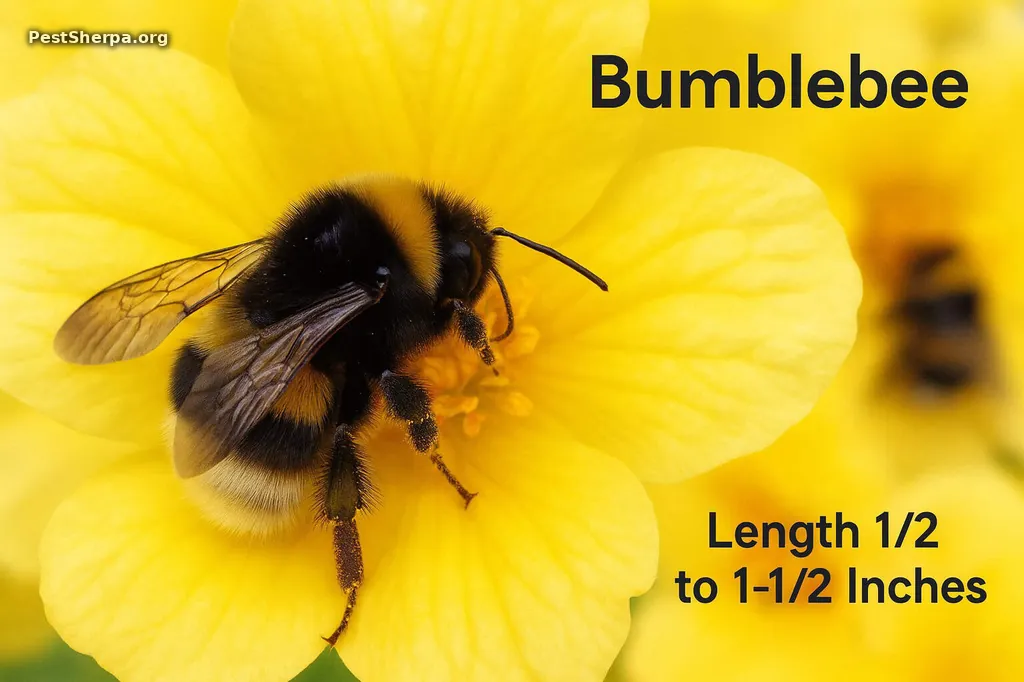
Bumblebees are beneficial pollinators that help gardens, wildflowers, and many food crops thrive. While they can sting if their nest is disturbed, most bumblebee colonies are seasonal and do not require treatment.
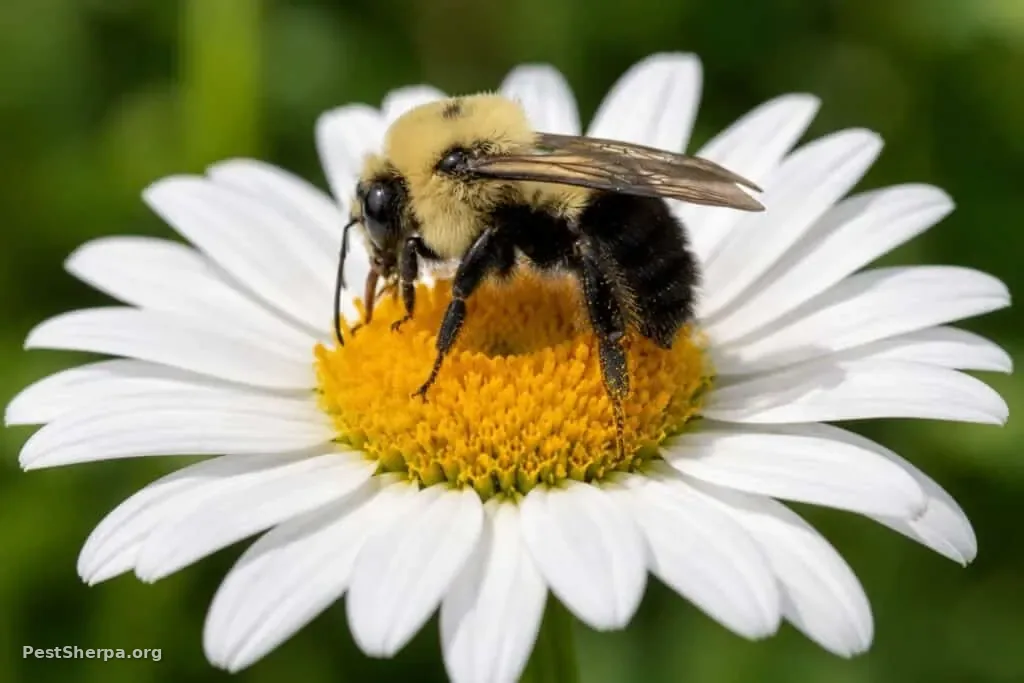
Bumblebees are important pollinators that are often mistaken for carpenter bees, honey bees, and yellowjackets.
Quick Take: Most bumblebee nests should be left alone. Consider professional help only when a nest creates a safety concern near people, pets, doorways, or living spaces.
TL;DR
Bumblebees are large, fuzzy pollinators that usually nest underground or inside existing cavities. Most colonies naturally die out at the end of the season and do not damage structures.
- Leave low-risk nests alone whenever possible.
- Keep children and pets away from active nest entrances.
- Do not seal or block active nests.
- Call a professional if the nest is inside a structure or someone has a severe sting allergy.
Jump to: Identification | Nesting | Similar Insects | Why It Matters | What To Do | When To Call a Pro | FAQ and Common Questions | References
How to Tell if It’s a Bumblebee
Usually Bumblebees
- Thick, fuzzy body
- Heavy, rounded appearance
- Flower-focused activity
- Visible pollen baskets on hind legs
- Nesting in a ground cavity, compost pile, shed void, wall gap, or similar protected space
Usually Not Bumblebees
- Smooth, shiny body
- Frequent visits to trash cans or outdoor food
- Aggressive scavenging around meat, sweets, or drinks
- Long dangling legs during flight
- Perfectly round holes drilled into wood
Identification: What Bumblebees Look Like
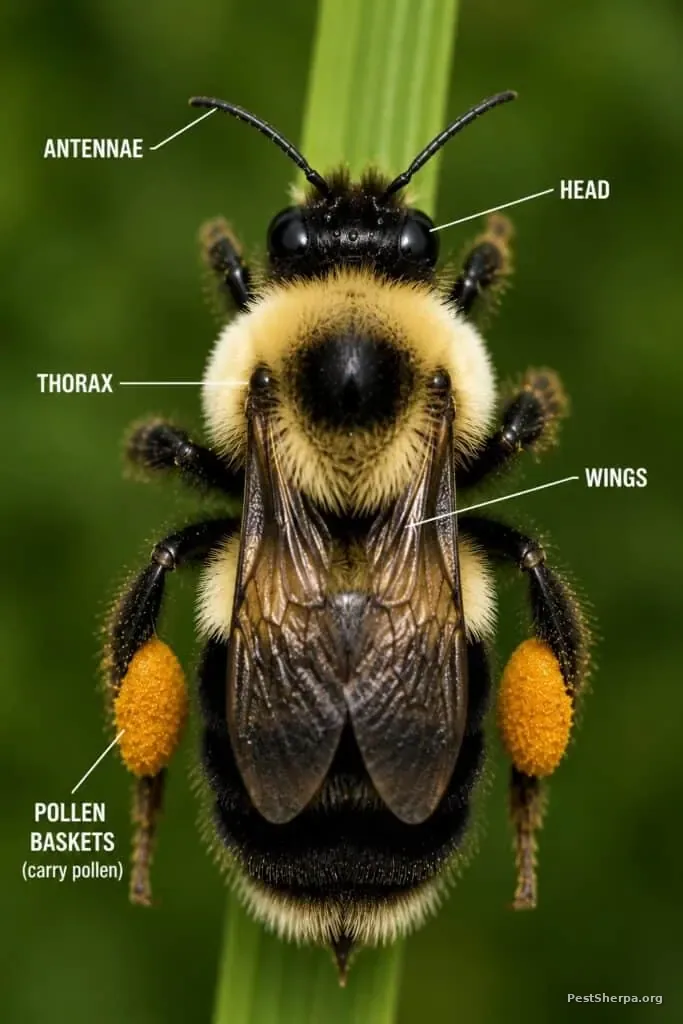
Bumblebees are social bees in the genus Bombus. Most species are larger, rounder, and hairier than honey bees. The University of Minnesota Bee Lab describes bumblebees as social bees with seasonal colony cycles that begin when queens emerge in spring.
Key Traits
- Large, robust body
- Dense body hair
- Black-and-yellow, black-and-orange, or other banded color patterns
- Loud buzzing flight
- Slow, deliberate flower-to-flower movement
- Seasonal colony activity
The strongest homeowner clue is the combination of a fuzzy body, flower-focused activity, and steady nest traffic from a protected opening. For broader comparison, see the bee and wasp identification guide.
Where Bumblebees Commonly Nest
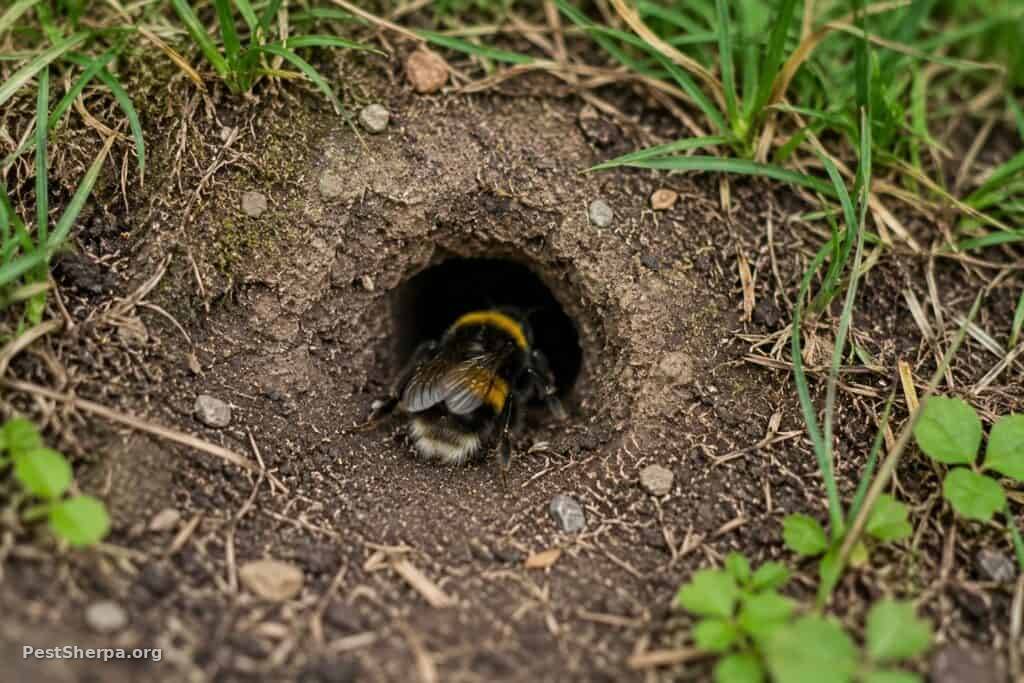
Many homeowners discover bumblebees by noticing workers entering and leaving a small opening in the ground.
Bumblebees usually use existing cavities instead of building exposed paper nests. According to the Xerces Society and Pollinator Partnership, bumblebee nests may occur underground, in compost, in rock piles, in hollow logs, near grass clumps, or in building wall and foundation voids.
Common nesting locations include:
- Abandoned rodent burrows
- Landscape voids
- Compost piles
- Under sheds
- Beneath decks or steps
- Foundation gaps
- Wall cavities
Bumblebee vs Similar Insects
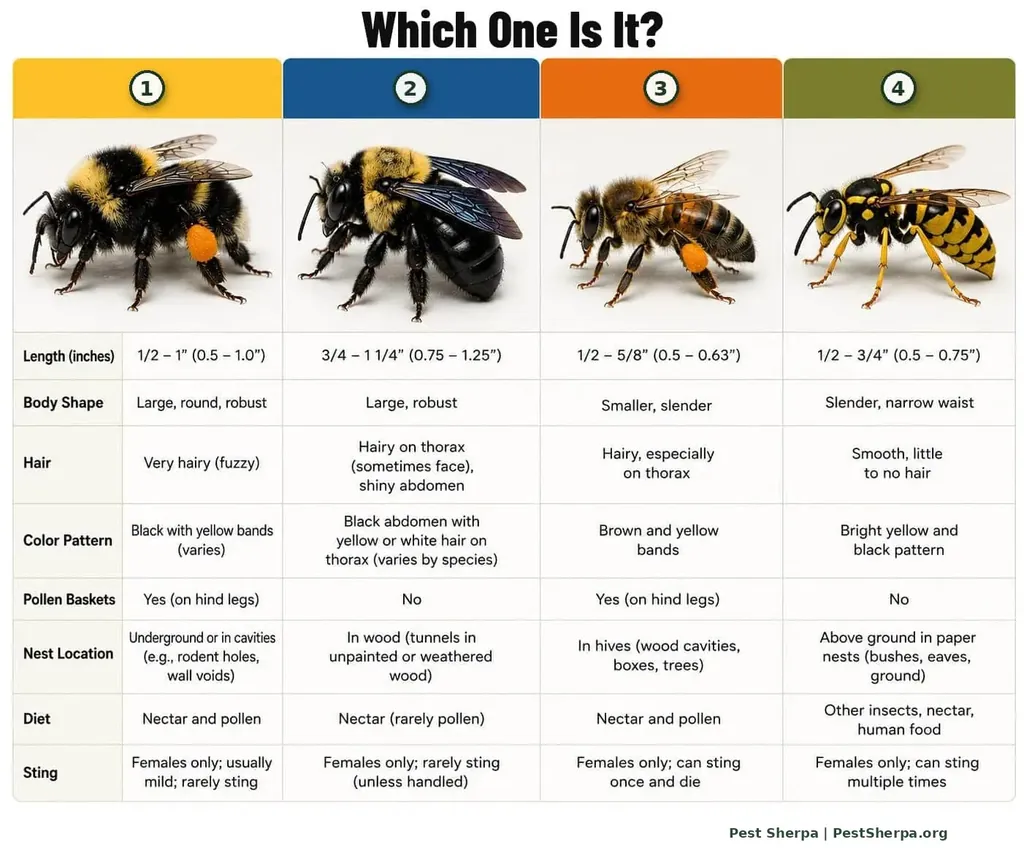
Which one do you see? Match the number:
- Bumblebee: 1/2 to 1 inch, large, round and very hairy, black with yellow bands. Nests underground or in cavities.
- Carpenter bee: 3/4 to 1 1/4 inch, large, with a hairy thorax and a shiny, mostly bare black abdomen. Bores tunnels in wood.
- Honeybee: 1/2 to 5/8 inch, smaller and slender, brown and yellow bands. Lives in hives.
- Yellowjacket: 1/2 to 3/4 inch, slender and smooth with little hair, bright yellow and black. Can sting many times.
| Feature | Bumblebee | Carpenter Bees | Honey Bees | Yellowjackets |
|---|---|---|---|---|
| Body Hair | Very hairy | Moderate | Hairy | Minimal |
| Abdomen | Hairy | Often shiny | Hairy | Smooth |
| Pollinator | Yes | Yes | Yes | Limited |
| Nests Underground | Often | No | Rarely | Often |
| Damages Wood | No | Yes | No | No |
| Visits Trash | Rarely | No | Rarely | Frequently |
| Aggression | Low to moderate | Low | Low | High near nest |
Common Lookalikes
- Carpenter bees: Large bees that may look similar in flight, but many have shiny, mostly hairless abdomens and may drill round holes into wood.
- Honey bees: Slimmer, more golden-brown bees that may form large perennial colonies in hives or wall voids.
- Yellowjackets: Smooth, fast wasps that often scavenge trash, meat, sweets, and outdoor food.
- Paper wasps: Slender wasps with long legs that often build open paper combs under eaves, railings, and porch ceilings.
- Hoverflies: Harmless fly mimics that hover in place and do not sting.
Why Bumblebees Matter
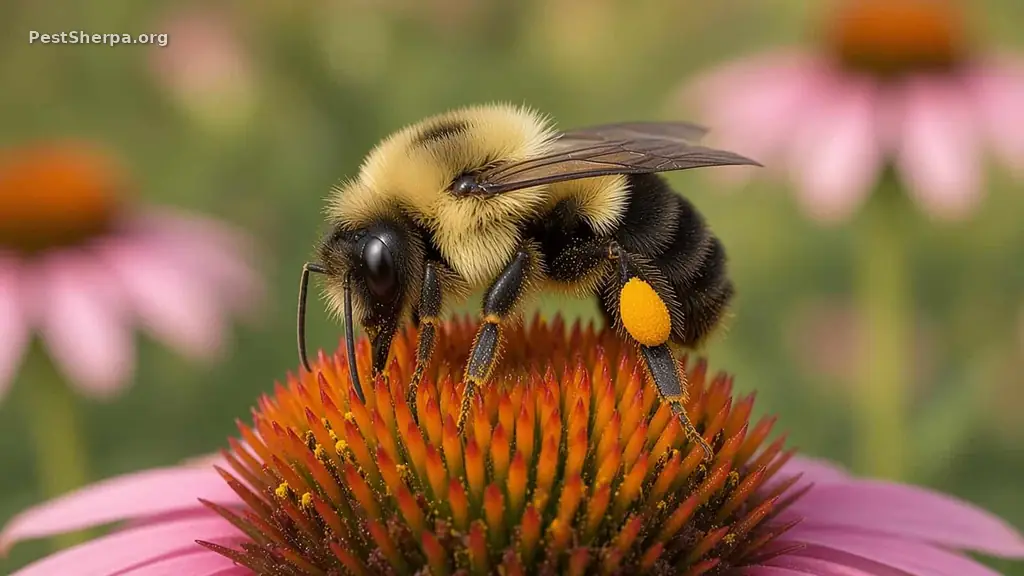
Bumblebees are primarily a beneficial pollinator and occasional sting-risk pest.
They are not wood-destroying insects, and a normal bumblebee nest does not chew framing or cause termite-like structural damage. The main concern is location.
A nest in the back corner of a yard is usually best left alone. A nest beside a door, patio, child play area, dog run, school entrance, or high-traffic walkway can become a safety issue.
Bumblebees can sting when squeezed, stepped on, or when their nest is disturbed. The U.S. EPA notes that bumblebees can sting more than once because their stingers do not lodge the way honey bee stingers do. The CDC/NIOSH also warns that stinging insects can cause severe allergic reactions in some people.
What To Do
Step 1: Confirm Identification
Many homeowners mistake yellowjackets, carpenter bees, honey bees, or hoverflies for bumblebees. Confirm the insect before treating.
Step 2: Evaluate Location
Ask:
- Is the nest near a doorway?
- Is it near children?
- Is it near pets?
- Is anyone allergic?
- Is the nest inside a wall, ceiling, or foundation void?
If the answer is no, leaving the nest alone is usually the best choice.
Step 3: Reduce Contact
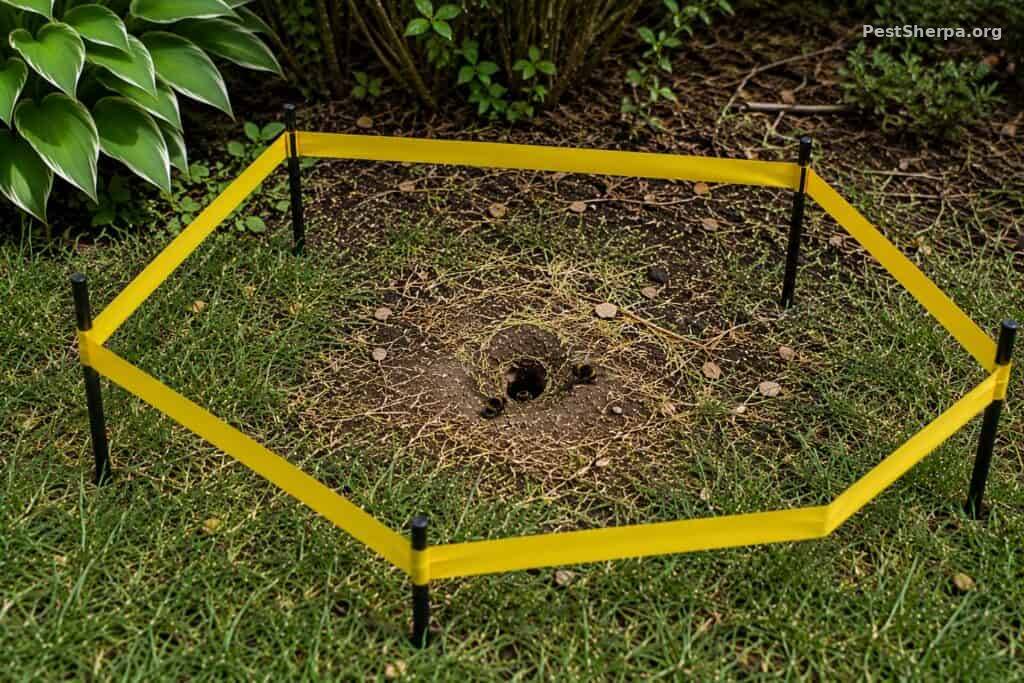
- Mark the area so people do not step on the nest entrance.
- Redirect foot traffic when possible.
- Keep pets and children away from the nest entrance.
- Avoid mowing, trimming, digging, or moving objects directly over the nest.
- Do not block the entrance while the colony is active.
Step 4: Avoid Common Mistakes
Do not:
- Pour liquids into entrances.
- Seal active nests.
- Spray flowers where bees are foraging.
- Disturb underground cavities.
- Assume every ground-nesting stinging insect is a bumblebee.
Random pesticide spraying around flowers, lawn edges, or nest entrances can harm pollinators and may not solve the safety issue. The National Pesticide Information Center recommends avoiding direct sprays on flowers, avoiding applications while pollinators are active, and always following pesticide label directions.
When Not To Treat
Many bumblebee nests should not be treated. Consider leaving the colony alone when:
- Nest activity is limited.
- The nest is away from structures.
- No allergy concerns exist.
- The nest is not in a high-traffic area.
- The season is nearing its end.
Because bumblebee colonies naturally decline after producing new queens, many low-risk situations resolve without intervention. The Bumblebee Conservation Trust notes that bumblebee nests do not last long and do not cause structural damage.
When To Call a Professional
Call a licensed professional or qualified local pollinator expert when:
- The nest is inside a wall.
- Bees are entering living areas.
- The nest is beside a doorway.
- The nest is near a patio, playground, school entrance, or dog area.
- A resident has a severe sting allergy.
- Identification is uncertain.
- Protected species may be involved.
The U.S. Fish & Wildlife Service lists the rusty patched bumble bee as federally endangered. If a protected species may be involved, identification should be handled carefully before any treatment decision.
If you are unsure what you are seeing, use Ask the Sherpa before taking action.
Seasonal Bumblebee Lifecycle
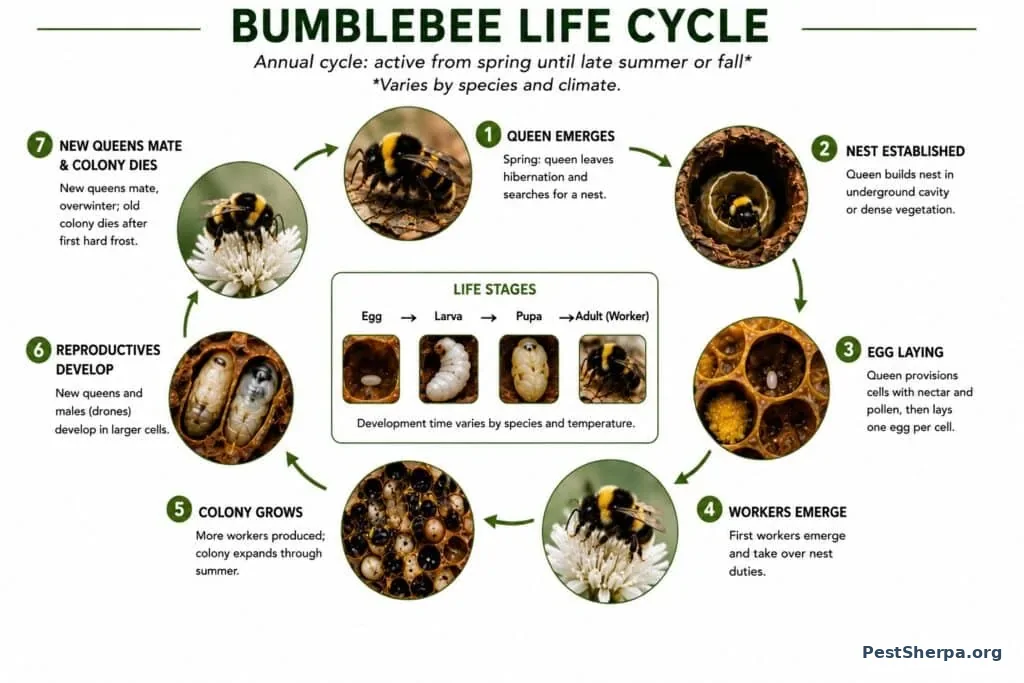
Bumblebee colonies are seasonal. A queen starts the nest in spring, workers build the colony through the warm season, and new queens are produced before the colony naturally declines. This is one reason low-risk nests are often best left alone.
Frequently Asked Questions and Common Questions
Are bumblebees aggressive?
Usually no. Most bumblebees focus on foraging and only defend the nest when threatened.
Can bumblebees sting more than once?
Yes. Unlike honey bees, bumblebees can sting multiple times.
Do bumblebees damage homes?
No. Bumblebees are not wood-destroying insects and do not chew structural wood.
Should I remove a bumblebee nest?
Only if the location creates a safety concern, the colony is inside a structure, or someone nearby has a severe sting allergy.
How long does a bumblebee colony last?
Most bumblebee colonies last one season and naturally decline after new queens are produced.
References
- University of Minnesota Bee Lab: Bumble Bees
- Xerces Society: Bumble Bees: Nesting and Overwintering
- Pollinator Partnership: What To Do When You Find a Bumble Bee Nest
- Bumblebee Conservation Trust: Bumblebee Nests
- U.S. EPA: Bees and Wasps IPM Guidance
- National Pesticide Information Center: Pollinator Protection
- CDC/NIOSH: Protecting Yourself from Stinging Insects
- U.S. Fish & Wildlife Service: Rusty Patched Bumble Bee
This article was written by Greg Baumann, founder of Pest Sherpa, and reflects more than 40 years of professional pest management experience.
About the Author

Greg Baumann | Pest Control Expert
Greg Baumann is the founder of Pest Sherpa and a Pest Control Expert with more than 40 years of professional pest management experience. His articles combine decades of field experience, technical expertise, and science-based guidance to help homeowners identify pests correctly, understand real-world risks, and make informed pest management decisions.
Mission: Identify the pest. Understand the risk. Stop the problem. Prevent the comeback. Know when it’s time to call a professional.