
Earwigs: Identification, Causes, and What To Do
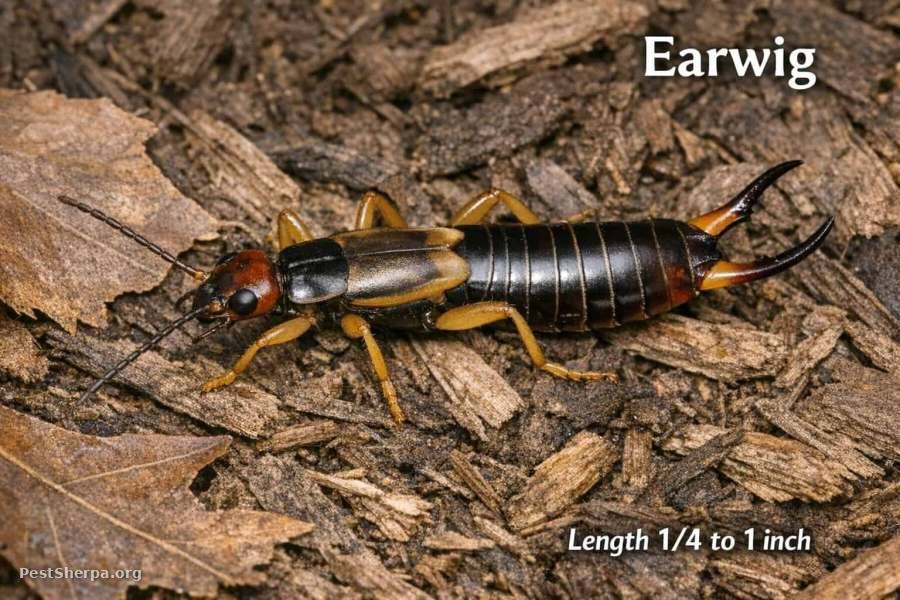
Earwigs are common outdoor insects that sometimes wander into homes, garages, basements, crawl spaces, bathrooms, and other damp areas. Their forceps-like pincers can look alarming, but earwigs are usually nuisance pests rather than structural pests.
Repeated indoor sightings often indicate moist outdoor harborage or entry points near the structure, although lighting, vegetation contact, and changing weather may also contribute. Earwigs rarely reproduce indoors, do not damage wood or buildings, and usually become a recurring problem only when outdoor conditions near the structure support them.
TL;DR
Earwigs are moisture-associated occasional invaders. A few indoors usually means they entered from outside through small gaps or were carried in with items such as plants, firewood, boxes, or garden materials. Repeated sightings usually point to damp mulch, leaf litter, poor drainage, dense ground cover, or other moist hiding places near the foundation.
The most effective long-term fix is habitat reduction: reduce excess moisture, pull mulch and debris back from the foundation, trim vegetation touching the structure, improve drainage, and seal obvious entry points. Indoor insecticides are usually unnecessary for occasional earwig sightings.
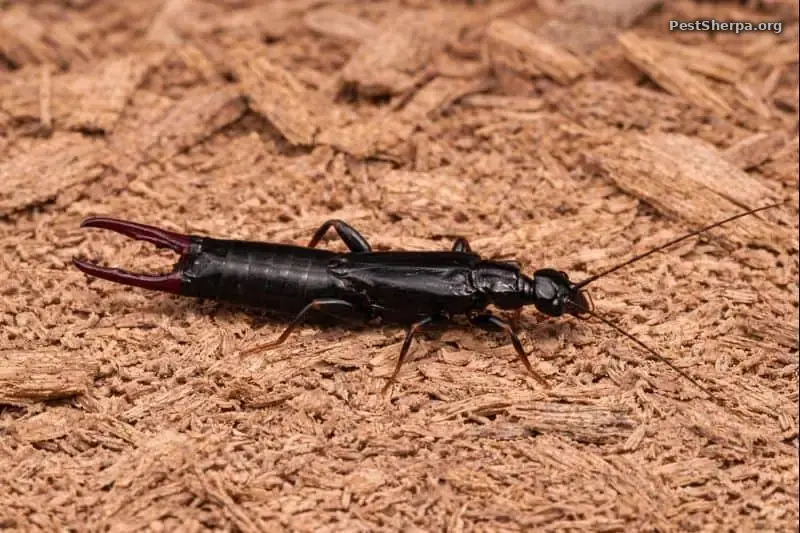
IAdult earwig with forceps-like pincers at the end of the abdomen.
Quick Navigation
- What Are Earwigs?
- Earwig Identification
- What Earwigs Mean Indoors
- Where Earwigs Hide
- Life Cycle and Seasonal Activity
- Feeding Habits and Garden Damage
- Source Investigation Checklist
- What To Do About Earwigs
- What Does Not Work Well
- When Professional Help May Be Needed
- Lookalikes and Similar Moisture Pests
- FAQs
- References
What Are Earwigs?
Earwigs are insects in the order Dermaptera. They have elongated, flattened bodies and a pair of pincer-like appendages, called cerci, at the end of the abdomen. Earwigs do not fly.
The European earwig is a common structural invader in many regions, while other species, including red-legged and striped earwigs, are important in parts of the South and Southwest. Earwigs usually live outdoors in cool, dark, moist places and become most noticeable when they move out of those hiding places at night.
From a household pest perspective, earwigs are best understood as occasional invaders. They normally live outside but may enter buildings when outdoor conditions become too wet, too dry, too hot, too cold, or crowded.
A common myth says earwigs crawl into human ears to lay eggs. Earwigs do not seek out people for this purpose. Rare accidental cases involving insects in ears can occur with many small insects, but the earwig name and the egg-laying myth should not be treated as normal earwig behavior.
Earwig Identification
Accurate identification matters because several moisture-associated pests can appear in the same areas. Earwigs are usually easy to recognize once you know what to look for.
- Body shape: elongated, narrow, and somewhat flattened
- Size: often about 1/4 inch to 1 inch long, depending on species and stage
- Color: pale brown, reddish-brown, dark brown, or nearly black
- Pincers: a pair of forceps-like cerci at the end of the abdomen
- Wings: short, leathery front wings may be present; many earwigs rarely fly
- Nymphs: smaller versions of adults, usually without fully developed wings
The pincers are the most recognizable feature. Male earwigs often have more curved or strongly arched cerci, while females usually have straighter, more parallel cerci. Earwigs do not sting or inject venom. They may pinch defensively, and larger males of some species can produce a painful pinch or minor skin abrasion.
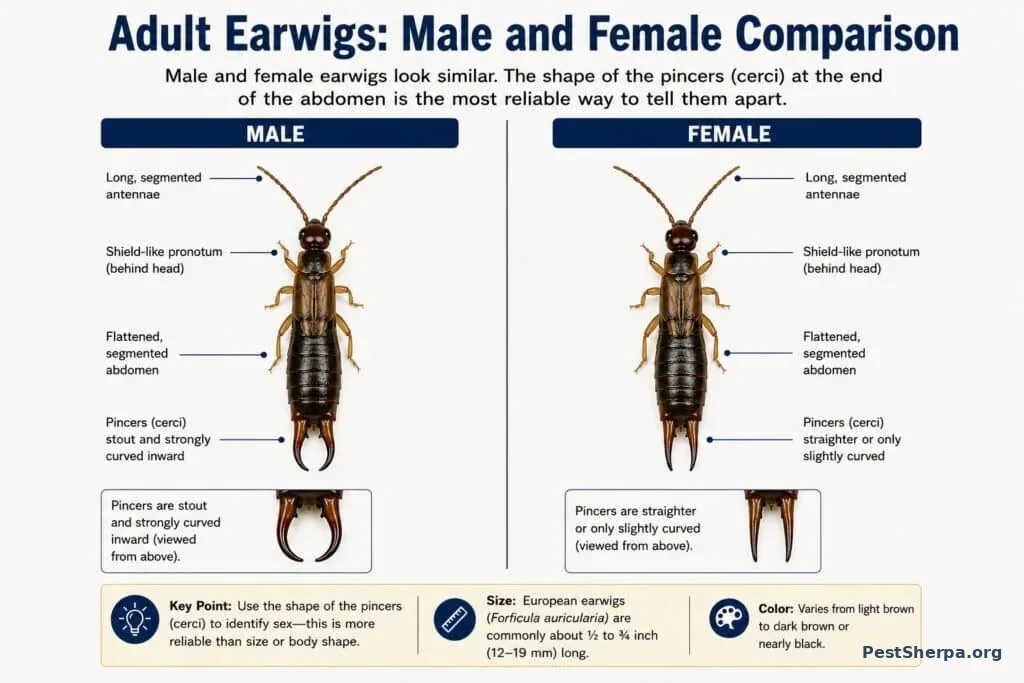
Male and female earwig adults showing pincers compared side by side.
What Earwigs Mean Indoors
Finding earwigs indoors usually says more about outdoor conditions than indoor infestation. They are attracted to protected, damp hiding places and may slip inside through gaps under doors, around plumbing, near foundation cracks, or through poorly sealed thresholds.
| What You See | What It Usually Means | First Area To Check |
|---|---|---|
| One earwig indoors | May have wandered in or been carried in | Doors, thresholds, boxes, plants, firewood |
| Several earwigs in a bathroom or basement | Moisture and entry points may be present | Plumbing gaps, floor drains, damp baseboards, foundation cracks |
| Earwigs near exterior doors | Outdoor harborage close to the structure | Mulch, leaf litter, door sweeps, porch edges |
| Earwigs in many rooms | Repeated outdoor entry or a moisture problem | Foundation perimeter, crawl space, basement, landscaping |
| Earwigs with plant damage outdoors | Garden feeding may be involved | Seedlings, flowers, soft fruit, mulch, ground cover |
Key point: Earwigs do not damage structural wood, do not eat buildings, and usually do not build indoor populations the way cockroaches, pantry pests, or some flies can. Recurring indoor sightings usually continue until outdoor harborages, moisture, and entry points are corrected.
Where Earwigs Hide
Earwigs are most active at night. During the day, they hide in tight, dark, damp locations where they are protected from drying out.
Common Outdoor Hiding Places
- Mulch beds
- Leaf litter
- Dense ground cover
- Under stones, boards, logs, and landscape timbers
- Under flowerpots, trays, and garden materials
- Inside cracks in soil or damp soil cavities
- Behind loose bark or decaying plant material
- Around irrigation leaks or poorly drained foundation areas
Common Indoor Areas
- Basements
- Crawl spaces
- Garages
- Bathrooms
- Laundry rooms
- Utility rooms
- Areas near exterior doors or sliding doors
Other moisture-associated pests may appear in some of the same places. If the insects are tiny, jumping, grayish, or soft-bodied, compare them with springtails. If they are rounded, segmented, and roll into a ball, compare them with pillbugs.
Earwig Life Cycle and Seasonal Activity
Earwigs develop by incomplete metamorphosis, which means they pass through three main stages:
- Egg
- Nymph
- Adult
Female earwigs lay eggs in protected soil chambers. A notable feature of earwig biology is maternal care: the female remains with the eggs, guards them, and helps keep them clean. After hatching, young nymphs stay near the female for a period before dispersing.
Earwig activity is generally seasonal, commonly occurring from spring through fall, but peak activity varies with species, climate, temperature, and moisture. some areas, Indoor sightings can increase during summer when outdoor conditions drive earwigs toward cooler, darker, or more humid shelter.
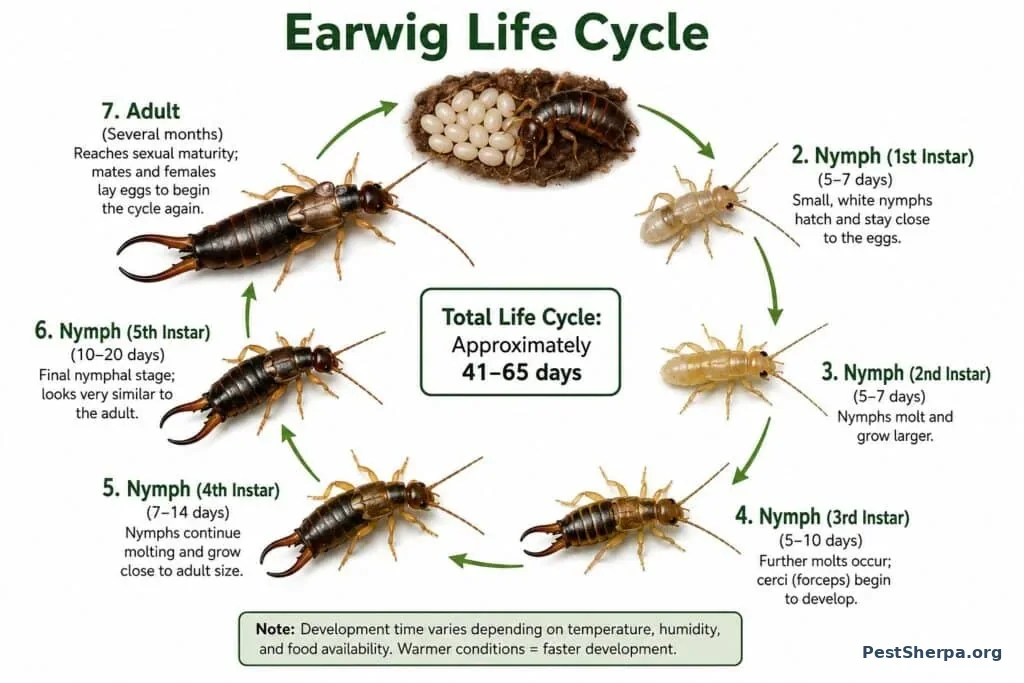
IEarwig life cycle from egg to nymph to adult.
Earwig Feeding Habits and Garden Damage
Earwigs are omnivorous scavengers. They feed on a mix of decaying plant material, fungi, algae, small insects, soft plant tissue, and sometimes other arthropods such as aphids.
In gardens, earwig feeding may show up as irregular holes in leaves, flowers, seedlings, and soft fruit. They are not always harmful, however, because they may also feed on some plant pests. The practical question is whether the amount of plant damage justifies action.
| Observation | Possible Meaning | What To Check |
|---|---|---|
| Irregular holes in flowers or seedlings | Earwigs may be feeding at night | Inspect after dark with a flashlight |
| Earwigs under pots or boards near damaged plants | Daytime shelter is nearby | Lift pots, boards, edging, and mulch carefully |
| Damage only on soft fruit touching soil or mulch | Earwigs may be using damp contact points | Improve spacing, harvest ripe fruit promptly, reduce hiding places |
| Plant damage but no earwigs found | Another pest may be responsible | Check for slugs, snails, caterpillars, beetles, or other feeders |
Because earwigs are night-active, daytime inspections can miss them. A simple nighttime inspection with a flashlight is often more useful than guessing from plant damage alone.
Earwig Source Investigation Checklist
Use this checklist to find the conditions that are supporting earwig activity. Start outdoors, especially near the rooms where earwigs are showing up indoors.
Step 1: Check Moisture Near the Foundation
- Look for clogged gutters or downspouts discharging near the foundation.
- Check for irrigation overspray, leaking spigots, or constantly damp soil.
- Look for low areas where water collects after rain.
Step 2: Inspect Mulch, Leaf Litter, and Ground Cover
- Pull back heavy mulch next to the foundation.
- Remove wet leaf piles, grass clippings, and decaying plant debris.
- Thin dense ground cover that stays damp against exterior walls.
Step 3: Lift Common Harborages
- Flowerpots and saucers
- Boards, stones, bricks, and pavers
- Landscape timbers and edging
- Stored garden materials
- Firewood stacked close to the house
Step 4: Inspect Entry Points
- Door sweeps and thresholds
- Garage door seals
- Foundation cracks
- Gaps around pipes, cables, and utility penetrations
- Basement windows, window wells, and crawl space vents
Step 5: Check Items Brought Indoors
Earwigs can hide in potted plants, cardboard boxes, firewood, garden tools, outdoor furniture, and other items stored in damp outdoor areas. Inspect or shake out these items before bringing them inside.
What To Do About Earwigs
Earwig control works best when it focuses on habitat, moisture, and exclusion rather than repeated indoor spraying.
1. Remove Indoor Earwigs Physically
Vacuuming, sweeping, or using a cup-and-paper method is usually enough for scattered indoor earwigs. Empty the vacuum or dispose of collected insects outdoors.
2. Reduce Moisture
- Repair leaking spigots, pipes, and irrigation heads.
- Redirect downspouts away from the foundation.
- Improve drainage in low, wet areas.
- Ventilate or dehumidify damp basements and crawl spaces when appropriate.
3. Reduce Outdoor Shelter
- Thin heavy mulch near the foundation.
- Remove wet leaves, grass clippings, and decaying organic debris.
- Store firewood, lumber, and garden materials away from exterior walls.
- Lift or move objects that create damp hiding spaces.
- Trim vegetation touching siding, doors, vents, or windows.
4. Seal Entry Points
Install or repair door sweeps, weatherstripping, garage door seals, screens, crawl space vent covers, and gaps around utility lines. Exclusion is especially useful when earwigs repeatedly appear near the same doorway, garage wall, basement window, or utility area.
5. Use Simple Traps Outdoors When Helpful
Rolled newspaper, cardboard tubes, short sections of hose, or other dark hiding traps can collect earwigs overnight. Place traps near problem garden beds or mulch areas, check them in the morning, and dispose of collected earwigs. This can help confirm where activity is concentrated.
6. Use Pesticides Carefully, If Used At All
Pesticides are not generally necessary for earwigs. Earwigs are outdoor insects and might occasionally wander indoors. Rarely will they prosper indoors and generally no pesticide use indoors for earwigs is good practice. If a pesticide is used, read and follow the label, and do not apply products in ways not listed on the label.
What Does Not Work Well
- Spraying insecticide indoors: This may kill visible earwigs but does not fix outdoor sources. Stray earwigs can be removed with a paper towel.
- Ignoring moisture: Earwigs need protected, damp hiding places, so moisture problems often keep the issue going.
- Leaving heavy mulch against the foundation: Mulch can provide shelter when it stays damp and deep.
- Assuming one earwig means infestation: A single earwig indoors may be accidental.
- Using foggers for occasional invaders: Foggers do not seal entry points or remove outdoor harborage and may create unnecessary pesticide exposure.
When Professional Help May Be Needed
Professional help may be worth considering when earwigs keep appearing despite moisture reduction and exclusion, when the source is unclear, or when the issue involves a crawl space, basement, drainage problem, rental property, school, commercial kitchen, healthcare site, or other sensitive setting.
A careful inspection should focus on where earwigs are entering, which outdoor conditions are supporting them, whether other moisture pests are also present, and whether any treatment is actually necessary.
Lookalikes and Similar Moisture Pests
Earwigs are distinctive because of their pincers, but they are often found in the same damp areas as other occasional invaders. Use the comparison below before choosing a control approach.
| Pest | How It Differs From Earwigs | Why It Matters |
|---|---|---|
| Springtails | Very small, often jump, no pincers | Usually points strongly to moisture |
| Pillbugs | Rounded, segmented, roll into a ball | Common in damp mulch, soil, and crawl spaces |
| Sowbugs | Segmented, flattened, no pincers, do not roll tightly into a ball like pillbugs | Moisture and decaying organic matter are usually involved |
| Millipedes | Many legs, cylindrical or rounded body, slow-moving | Often enter after wet weather or habitat disturbance |
| Centipedes | Longer legs, faster movement, predator body form | May indicate damp areas with other small arthropods |
| Slugs | Soft, legless, leave slime trails | Can cause plant damage that may be confused with insect feeding |
FAQs About Earwigs
Do earwigs crawl into ears?
Earwigs do not seek out human ears to lay eggs. The idea is an old myth. Accidental insect entry into an ear canal is possible with many small insects, but it is not normal earwig behavior.
Do earwigs bite or sting?
Earwigs do not sting. They can pinch defensively with their cerci if handled, but the pinch is usually minor.
Do earwigs damage houses?
No. Earwigs are not structural pests. They do not eat wood, damage framing, or create the kind of building damage associated with termites, carpenter ants, or wood-boring beetles.
Why am I finding earwigs in my bathroom?
Bathrooms can provide moisture and small gaps around plumbing or baseboards. Check for leaks, damp flooring, gaps around pipes, nearby exterior mulch, and entry points on the closest exterior wall.
Why do earwigs suddenly appear indoors?
Sudden indoor sightings often happen when outdoor conditions change or when many earwigs are living in mulch, leaf litter, or other damp shelter close to the building. Weather changes, irrigation, drought, heat, heavy rain, or disturbance of outdoor harborages can all make them more noticeable.
Do earwigs reproduce indoors?
Earwigs rarely establish long-term indoor infestations. They usually enter from outdoor harborages, so the best long-term response is to correct outdoor moisture, shelter, and entry points.
Are earwigs bad for gardens?
They can chew irregular holes in flowers, seedlings, leaves, and soft fruit, especially at night. They may also feed on other small pests, so garden action should be based on actual damage and nighttime confirmation rather than their presence alone.
What is the fastest way to reduce earwigs?
Remove visible indoor earwigs by vacuuming or sweeping, then focus outdoors: reduce damp mulch and debris, correct drainage, move stored materials away from the foundation, and seal entry points. Without those steps, new earwigs may keep entering.
References
- University of California Statewide Integrated Pest Management Program: Earwigs
- University of Minnesota Extension: Earwigs
- Penn State Extension: European Earwigs
- University of Minnesota Extension: Earwigs
- Cureus: Earwig Crawling in the Ear: Myth or Truth
This article was written by Greg Baumann, founder of Pest Sherpa, and reflects more than 40 years of professional pest management experience.
About the Author

Greg Baumann | Pest Control Expert
Greg Baumann is the founder of Pest Sherpa and a Pest Control Expert with more than 40 years of professional pest management experience. His articles combine decades of field experience, technical expertise, and science-based guidance to help homeowners identify pests correctly, understand real-world risks, and make informed pest management decisions.
Mission: Identify the pest. Understand the risk. Stop the problem. Prevent the comeback. Know when it’s time to call a professional.