
Silverfish: Identification, Signs, Moisture Sources, and What to Do
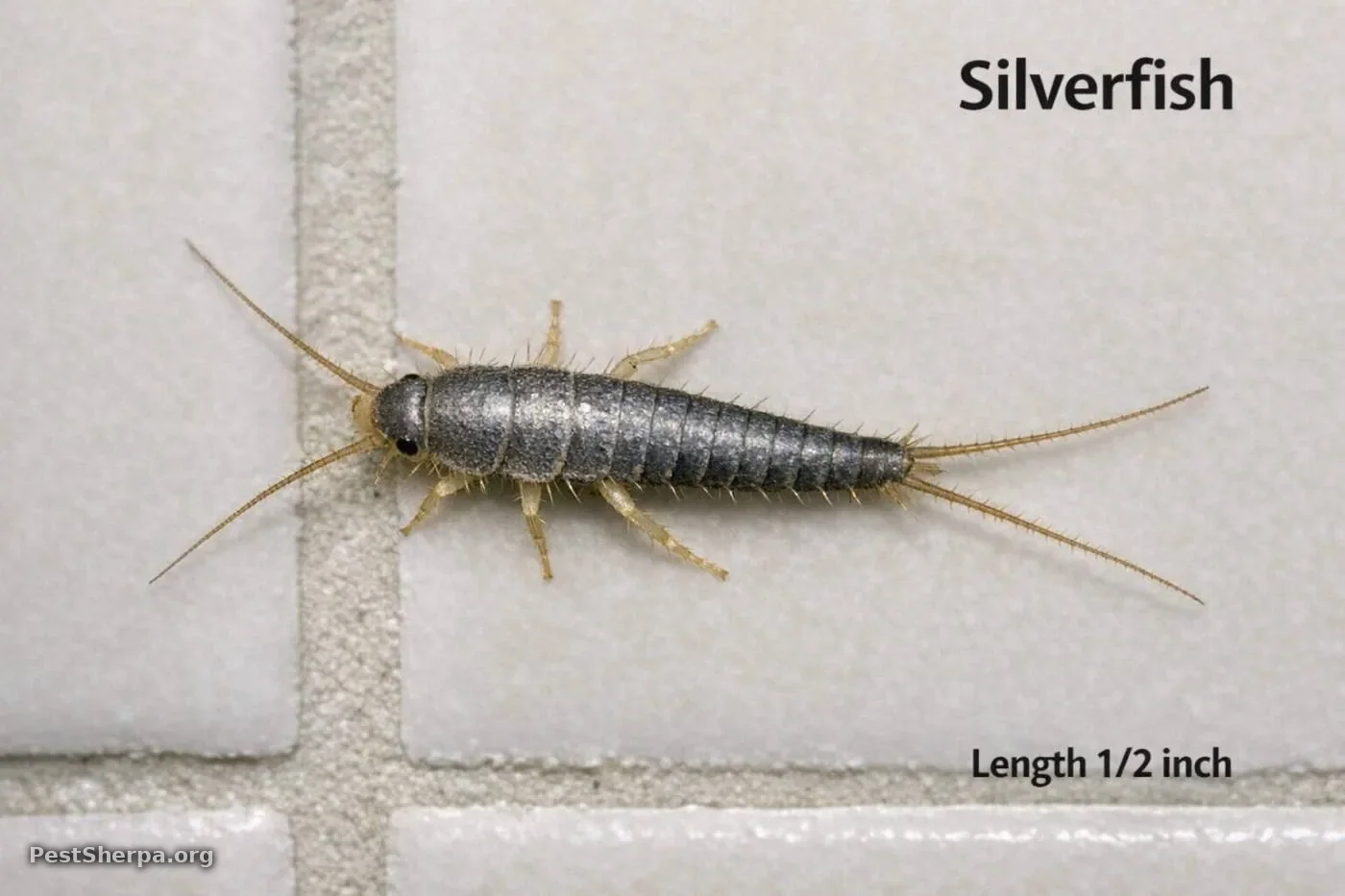
Silverfish are small, wingless insects that often show up in bathrooms, basements, laundry rooms, closets, attics, garages, and storage areas. They are usually more of a moisture-and-storage clue than an immediate emergency. A single silverfish may be incidental, but repeated sightings, damaged paper goods, shed skins, or activity in several rooms can mean the conditions inside the structure are supporting a hidden population.
Silverfish are not known for biting, stinging, or transmitting disease to people. The main concern is damage to paper, cardboard, book bindings, wallpaper paste, stored dry foods, fabrics, and other starch- or glue-containing materials. Long-term control depends on identification, moisture correction, better storage, sanitation, exclusion, monitoring, and cautious use of labeled products only when needed.
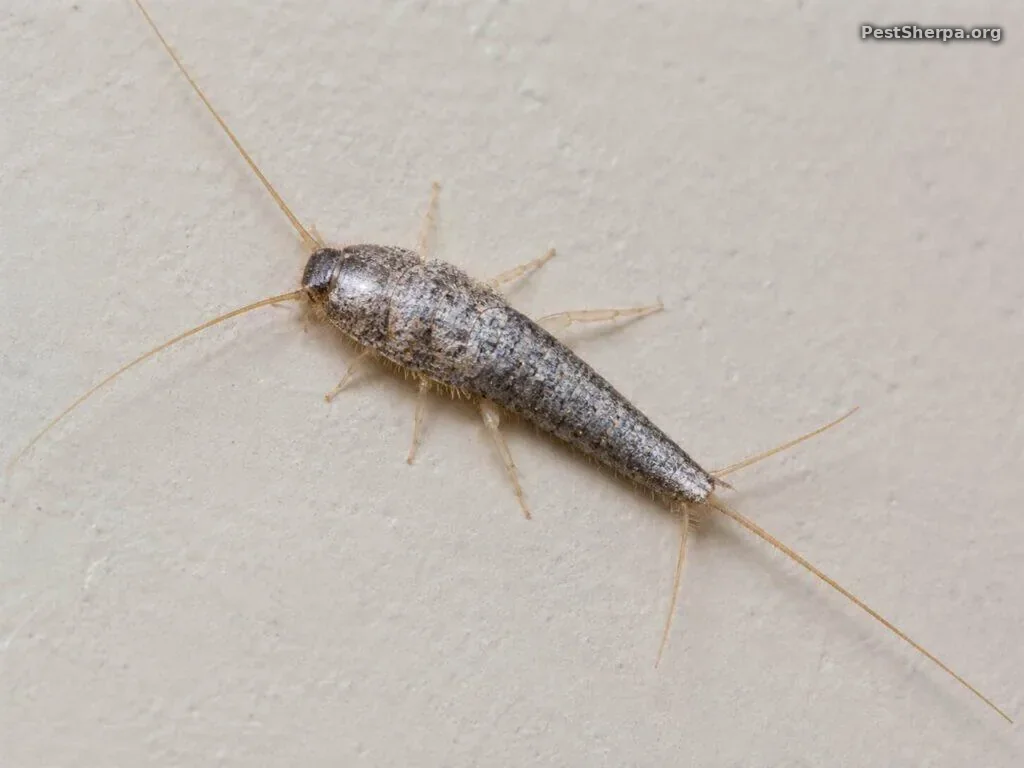
Adult silverfish showing long antennae, silvery body scales, and three tail-like filaments.
TL;DR
Silverfish usually mean there is a combination of moisture, hiding places, and starch-based food materials nearby. Look for damp storage areas, cardboard boxes, books, papers, wallpaper, laundry areas, plumbing condensation, and cracks or voids where insects can hide.
The best first steps are to confirm the insect, reduce humidity, fix leaks or condensation, remove unnecessary cardboard, store vulnerable papers and dry foods in sealed containers, vacuum hidden debris, and monitor activity. Pesticides are not always necessary and should never replace moisture correction or source reduction.
Quick Navigation
- Quick ID
- What Silverfish Mean in Your Home
- Identification
- Biology and Life Cycle
- Signs of Silverfish Activity
- Conditions That Encourage Silverfish
- Inspection and Source Investigation
- What To Do
- What Does Not Work Well
- How Long Silverfish Problems Last
- When Professional Help May Be Worth Considering
- Lookalikes and Common Misidentifications
- Frequently Asked Questions
- References
Quick ID: Is It a Silverfish?
| Feature | What To Look For |
|---|---|
| Body shape | Flattened, narrow, and tapered toward the rear |
| Color | Silvery, pearl gray, or gray depending on species and age |
| Wings | No wings |
| Antennae | Long, threadlike antennae at the front |
| Rear appendages | Three long tail-like filaments at the back |
| Movement | Fast, darting, fish-like movement when disturbed |
| Common locations | Bathrooms, basements, laundry rooms, closets, attics, bookshelves, cardboard boxes, and wall voids |
Quick rule: A small, wingless, silvery insect with three rear filaments is likely a silverfish or a close bristletail relative. If it is jumping, fuzzy, round-bodied, or has fewer than three tail-like filaments, compare it with the lookalikes section before deciding what to do.
What Silverfish Mean in Your Home
Silverfish are often a sign that a part of the building has moisture, shelter, and food materials they can use. They do not form colonies like ants or termites, but several may gather where conditions are favorable.
| What You See | What It May Mean |
|---|---|
| One silverfish in a sink or tub | May be an incidental sighting, especially if it fell into a smooth surface and could not climb out |
| Repeated sightings in the same room | Moisture, food, and hiding places may overlap nearby |
| Activity in stored boxes or books | Cardboard, paper, glue, dust, and undisturbed storage may be supporting activity |
| Silverfish plus paper or fabric damage | Feeding damage is possible, especially if damage is irregular or shallow |
| Silverfish in several rooms | There may be multiple harborages, hidden voids, or a broader humidity/storage issue |
Expert Insight: Silverfish control usually improves fastest when you treat the conditions, not just the insects. Moisture reduction, storage changes, and removing hidden debris often matter more than spraying visible insects.
Identification
Silverfish belong to the insect order Zygentoma. The name “silverfish” is sometimes used broadly for several similar bristletails found in buildings, while the common silverfish is often associated with Lepisma saccharina. Related indoor bristletails, including firebrats, look similar but prefer different conditions.
Adults are usually about one-quarter to one-half inch long, although size varies by species and age. They have flattened, carrot-shaped bodies that taper toward the rear, long antennae, and three tail-like appendages. Their bodies are covered with delicate scales that can create a silvery, gray, or pearly appearance.
Immature silverfish resemble smaller adults. They do not pass through a caterpillar-like or maggot-like stage. Young individuals are usually lighter in color and become more scaly as they grow.
Biology and Life Cycle
Silverfish develop directly resembling young adults. Their life cycle has three general stages:
- Egg
- Juvenile
- Adult
Females place eggs in protected cracks, crevices, and secluded areas. Development time varies widely by species, temperature, humidity, and food availability. In favorable conditions, development may take months; in cooler or less favorable conditions, it can take much longer.
Silverfish and related bristletails can be long-lived compared with many household insects. Adults may continue molting after maturity, which is unusual compared with many familiar insects. This long life span helps explain why activity may persist when moisture and harborage problems remain uncorrected.
Moisture is especially important. Common silverfish are often associated with damp or humid locations, while firebrats are more often associated with warmer areas such as furnace rooms, boiler rooms, hot water pipes, fireplaces, ovens, and warm attics.
Signs of Silverfish Activity
Silverfish are nocturnal and hide during the day, so damage or indirect evidence may be noticed before the insects themselves.
- Live silverfish seen at night
- Silverfish trapped in sinks, tubs, or smooth containers
- Irregular feeding marks on paper, cardboard, wallpaper, or fabrics
- Shallow surface scraping rather than clean round holes
- Yellowish stains on damaged materials
- Shed skins or loose scales near damaged items
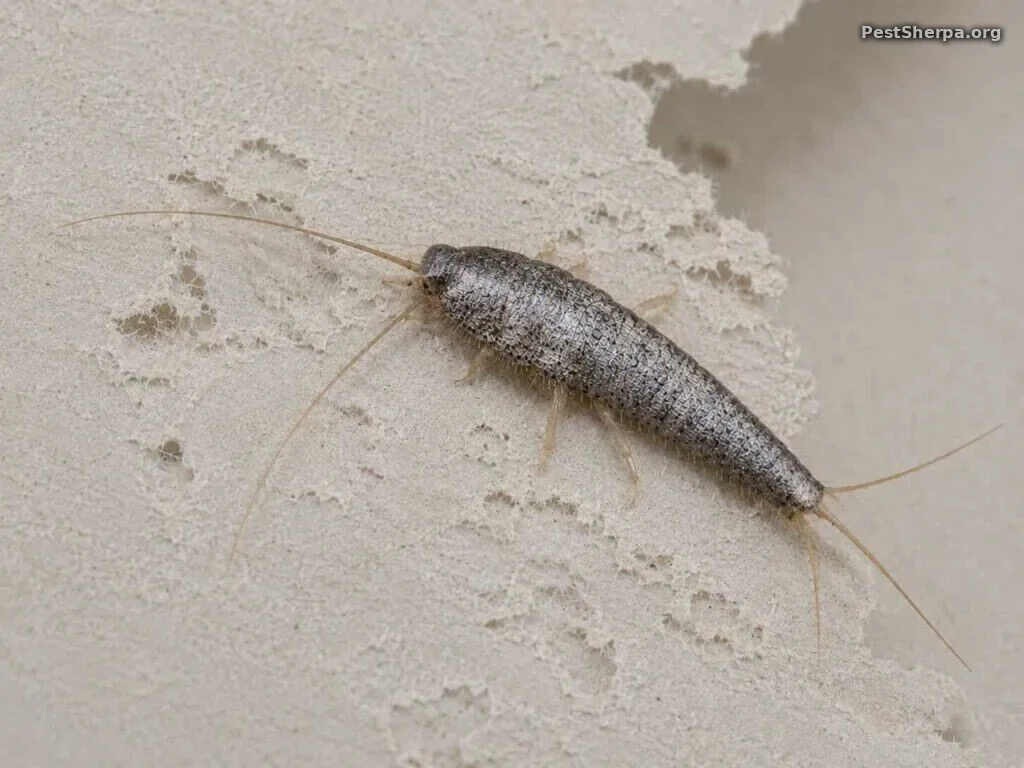
Irregular silverfish feeding damage and surface scraping on paper material.
Conditions That Encourage Silverfish
Silverfish problems are usually supported by a combination of moisture, shelter, and food. The most common contributing conditions include:
- High humidity in basements, crawl spaces, bathrooms, laundry rooms, or storage rooms
- Plumbing leaks, slow drips, or condensation on pipes
- Poor ventilation in closets, wall voids, attic spaces, or enclosed storage areas
- Cardboard boxes, old papers, books, stored documents, or wallpaper paste
- Stored dry foods such as flour, cereals, pasta, pet food, or grain-based products
- Dust, dead insects, lint, and organic debris in undisturbed cracks or storage areas
- Cracks, baseboard gaps, wall voids, hollow trim, and other protected hiding places
- Used boxes, furniture, books, papers, or stored items brought in from infested areas
Outdoor harborages can also contribute but the importance will vary by species of silverfish. Leaf litter, mulch, stacked firewood, debris piles, and damp areas near the foundation may support silverfish or other moisture-associated pests. If the insects you are seeing are very small and jump when disturbed, compare them with springtails. If they are rounder, gray, and crustacean-like, compare them with sowbugs.
Inspection and Source Investigation
Begin inspection where moisture, paper/cardboard, and hiding places overlap. A flashlight, sticky monitors, and careful movement of stored items can help reveal where activity is concentrated.
Step 1: Start Where You See Them
Inspect the room where silverfish are being found. Look behind baseboards, under sinks, around plumbing, near stored boxes, around closets, and beneath items that have not been moved for a long time.
Step 2: Check Moisture Sources
Look for leaking pipes, condensation, water stains, damp crawl spaces, wet insulation, poor bathroom ventilation, humid laundry areas, and moisture trapped behind stored items.
Step 3: Inspect Food and Storage Materials
Check cardboard boxes, stored books, old documents, wallpaper, paper bags, cereal boxes, flour, pet food, and other dry goods. If insects are inside dry food packages, also compare with stored-product pests such as red flour beetles.
Step 4: Look for Hidden Harborage
Silverfish hide in narrow spaces. Inspect cracks, crevices, wall void openings, utility penetrations, loose trim, attic storage, crawl space access points, hollow decorative beams, and gaps around shelving or cabinets.
Step 5: Use Monitoring Traps
Sticky monitors can help identify where activity is highest. Place them along walls, near storage areas, behind appliances, beneath sinks, and near suspected harborages. Traps are a monitoring tool, not a complete solution by themselves.
What To Do
1. Confirm the Pest
Make sure the insect has the key silverfish traits: no wings, long antennae, a flattened tapered body, fast movement, and three tail-like rear filaments. Use the lookalikes section if the insect is jumping, fuzzy, beetle-like, or associated with food packages.
2. Reduce Moisture
- Repair plumbing leaks and slow drips.
- Improve bathroom, basement, crawl space, laundry room, and attic ventilation where appropriate.
- Use a dehumidifier in areas that remain humid.
- Correct pipe condensation or damp wall/floor conditions.
- Avoid storing paper goods directly against damp floors or walls.
3. Improve Storage
- Replace unnecessary cardboard with sealed plastic storage containers when practical.
- Store important papers, books, keepsakes, and fabrics in dry, sealed containers.
- Keep flour, cereal, pasta, grains, and pet food in tight-lidded containers.
- Discard badly damaged or unnecessary infested materials.
4. Clean Hidden Debris
Vacuum dust, lint, dead insects, loose scales, shed skins, and food debris from cracks, shelves, closets, baseboards, and storage areas. Empty the vacuum or dispose of the bag after cleaning active areas.
5. Seal Movement Gaps
- Seal cracks and crevices along baseboards and trim.
- Close gaps around plumbing and utility penetrations.
- Repair damaged screens, door sweeps, or exterior gaps that allow pest entry.
- Reduce leaf litter, stacked cardboard, firewood, and debris next to the foundation.
6. Use Pesticides Carefully, If Needed
Pesticides are not always necessary for silverfish. If a pesticide is used, choose a product labeled for the pest and the treatment site, and read and follow the entire label. Avoid treating food-contact surfaces, dishes, utensils, children’s items, pet bedding, drains, vents, or areas where dusts or sprays could be disturbed into living spaces. Keep people and pets away from treated areas until the label allows reentry. Some pesticide treated bait papers are available which allows uses to avoid spraying.
Targeted crack-and-crevice approaches are generally more appropriate than broad spraying. Product labels vary, and this page does not provide mixing rates, application schedules, or restricted-use pesticide instructions.
What Does Not Work Well
- Spraying only the silverfish you see without correcting humidity or storage conditions
- Relying on foggers or “bug bombs” will not necessarily help especially for insects hiding inside cracks, voids, bookshelves, and boxes
- Leaving damp cardboard, papers, and clutter in place
- Using sticky traps as the only control method
- Treating drains when the insects are not drain pests
- Assuming every silverfish sighting means a severe infestation
The goal is to remove the conditions that allow silverfish to survive: moisture, shelter, and accessible food materials.
How Long Silverfish Problems Last
Silverfish problems may not disappear overnight, especially when insects are hidden in wall voids, storage areas, bookshelves, or attic and crawl space spaces. The timeline depends on how quickly the moisture, storage, and harborage issues are corrected.
| Situation | Expected Pattern |
|---|---|
| One incidental silverfish | May not indicate an ongoing problem |
| Moisture corrected and storage improved | Activity should gradually decline as conditions become less favorable |
| Damp storage and cardboard remain | Activity may continue or return |
| Hidden voids or attic/crawl space activity | Monitoring may be needed to identify remaining harborages |
| Widespread activity | May require a more systematic inspection and targeted management plan |
When Professional Help May Be Worth Considering
Many minor silverfish issues can be improved with moisture correction, cleaning, storage changes, and monitoring. Professional help may be worth considering when:
- Silverfish are appearing in multiple rooms or on multiple floors.
- Paper, books, stored items, or fabrics are being damaged.
- Activity continues after humidity and storage problems have been addressed.
- The source appears to be inside wall voids, attic spaces, crawl spaces, or inaccessible areas.
- The problem is in a museum, library, archive, commercial storage space, food-handling area, or other sensitive location.
- You are unsure whether the insect is a silverfish, firebrat, carpet beetle, pantry pest, or another household pest.
A good management plan should still focus on inspection, moisture correction, sanitation, exclusion, monitoring, and targeted treatment only where appropriate.
Lookalikes and Common Misidentifications
| Possible Lookalike | How It Differs | Why It Matters |
|---|---|---|
| Firebrats | Similar shape and three rear filaments, but often mottled gray or brown and associated with warmer areas | Control still involves harborage reduction, but warm mechanical areas may need more attention |
| Springtails | Usually smaller and may jump when disturbed | Often points strongly to moisture, wet soil, leaks, or damp building materials |
| Sowbugs | Gray, oval, segmented, crustacean-like body; no silvery tapered body or three tail filaments | Usually indicates damp outdoor or structural moisture conditions |
| Varied Carpet Beetles | Adults are small beetles; larvae are fuzzy or bristly and damage animal-based materials | Fabric damage may be from carpet beetles rather than silverfish |
| Red Flour Beetles | Small reddish-brown beetles associated with flour, grain, cereal, and pantry products | Food package activity may require pantry inspection rather than silverfish-focused control |
| Booklice | Tiny, pale insects often associated with damp paper, mold, or humidity; no three tail filaments | Usually points to humidity and mold/mildew conditions more than silverfish feeding damage |
Frequently Asked Questions
Are silverfish dangerous?
Silverfish are generally considered nuisance and damage pests, not dangerous pests. They are not known for biting, stinging, or spreading disease to people. The bigger concern is what they indicate: moisture, hidden harborages, and vulnerable paper, fabric, or stored food materials.
Does one silverfish mean I have an infestation?
No. One silverfish may be an incidental sighting, especially in a sink, tub, bathroom, basement, or laundry area. Repeated sightings, damage, shed skins, or activity in several areas is more meaningful.
Why do I find silverfish in the bathtub or sink?
Silverfish may enter smooth sinks or tubs while moving at night and then struggle to climb out. The drain is not always the source. Inspect nearby baseboards, plumbing penetrations, cabinets, wall gaps, laundry areas, and damp storage.
Do silverfish eat books?
They can damage books, paper, paper sizing, glue, paste, and bindings, especially in humid, undisturbed storage areas. Store valuable books and documents in dry conditions and avoid cardboard storage in damp rooms.
Do silverfish eat clothes?
Silverfish may damage some fabrics, especially if starch, perspiration, food residue, or sizing is present. If fabric damage is concentrated on wool, silk, feathers, fur, or other animal-based materials, compare with carpet beetles and clothes moths as well.
Will lowering humidity get rid of silverfish?
Lowering humidity can make an area less favorable and is one of the most important long-term steps. It works best when combined with removing cardboard clutter, protecting paper goods, cleaning hidden debris, sealing gaps, and monitoring activity.
Should I use a bug bomb for silverfish?
Bug bombs and foggers are usually a poor fit for silverfish because these insects hide in cracks, voids, bookshelves, boxes, and other protected areas. They also do not correct moisture or storage conditions. If a pesticide is used, read and follow the label and focus on labeled, targeted applications rather than broad treatment.
References
- Virginia Cooperative Extension: Silverfish and Firebrats
- University of Maryland Extension: Silverfish and Firebrats
- UC IPM: Silverfish and Firebrats
- UF/IFAS Extension: Silverfish Lepisma saccharina Linnaeus (Insecta: Zygentoma: Lepismatidae)
- University of Missouri Extension: Silverfish and Firebrats
- Ohio State University Extension Ohioline: Silverfish and Firebrats
This article was written by Greg Baumann, founder of Pest Sherpa, and reflects more than 40 years of professional pest management experience.
About the Author

Greg Baumann | Pest Control Expert
Greg Baumann is the founder of Pest Sherpa and a Pest Control Expert with more than 40 years of professional pest management experience. His articles combine decades of field experience, technical expertise, and science-based guidance to help homeowners identify pests correctly, understand real-world risks, and make informed pest management decisions.
Mission: Identify the pest. Understand the risk. Stop the problem. Prevent the comeback. Know when it’s time to call a professional.