

Lyme Disease: Causes, Symptoms, Treatment, and Public Health Response
This is a plain-language Lyme disease guide for anyone who just found a tick, and for the librarians, teachers, and health staff who point people to good information. It starts with exactly what to do after a tick bite, then covers what causes Lyme, the early signs to watch for, and how to keep ticks off you and out of your yard.
Found a tick or got bitten? What to do now
- Get it off now. Use clean, fine-tipped tweezers. Grab the tick as close to the skin as you can and pull straight out with steady, even pressure. Don’t twist or jerk it. Skip the petroleum jelly, nail polish, and matches.
- Clean up. Wash the bite and your hands with soap and water, rubbing alcohol, or hand sanitizer. Put the tick in a sealed bag or container, or wrap it in tape. Don’t crush it with your fingers. Then check the rest of your body for more ticks.
- Write it down. Note the date, where the bite was on your body, and where you most likely picked the tick up.
- Watch for 30 days. Early Lyme signs usually show up 3 to 30 days after a bite: an expanding rash (it is not always a bull’s-eye), fever, chills, headache, tiredness, or muscle and joint aches.
When to call a doctor: if you get a rash or fever in the weeks after a bite, or any of the signs above. Tell them when the bite happened and where you picked up the tick. A small red bump that shows up right away and fades in a day or two is common and is not a sign of Lyme disease.
Source: CDC, What to Do After a Tick Bite and Signs and Symptoms of Lyme Disease. This box is general guidance, not medical advice.
TL;DR: Lyme Disease Quick Answer
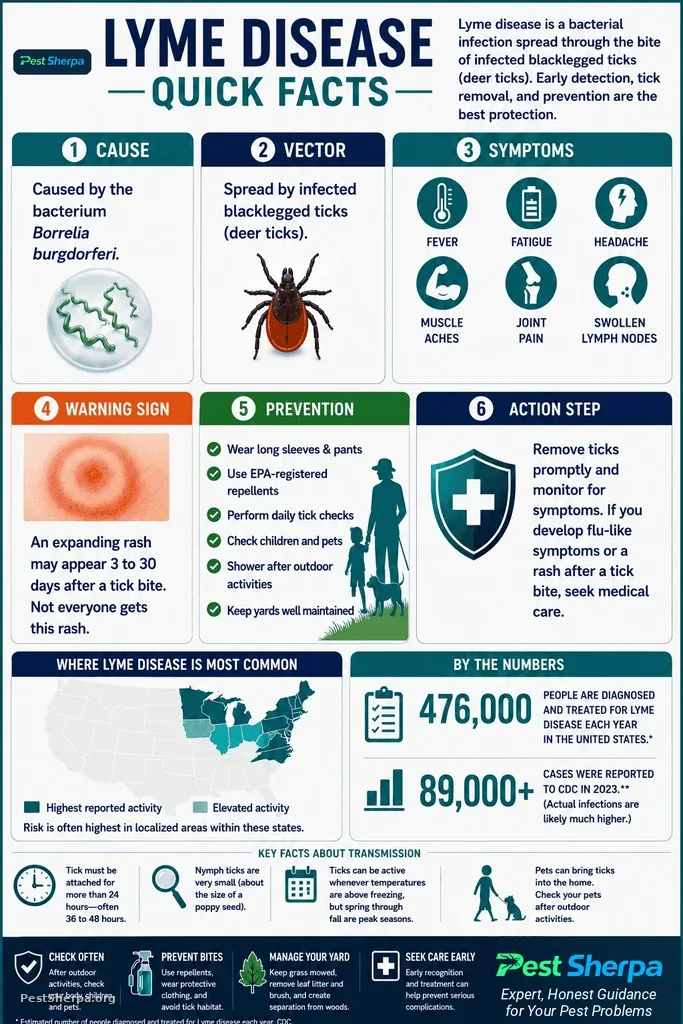
Lyme disease is a bacterial infection transmitted through the bite of infected blacklegged ticks, commonly called deer ticks. Early symptoms may include an expanding rash, fever, fatigue, headache, muscle aches, and joint pain. Not every person develops the classic bull’s-eye rash, so flu-like symptoms after possible tick exposure should be taken seriously.
For homeowners, the most important prevention steps are avoiding tick habitat, using appropriate repellents, checking the body after outdoor activity, inspecting pets, and removing attached ticks promptly with fine-tipped tweezers. Early recognition and medical evaluation help reduce the risk of long-term complications.
- Cause: Lyme disease is caused primarily by the bacterium Borrelia burgdorferi.
- Vector: In North America, it is spread mainly by infected blacklegged ticks, also called deer ticks.
- Common early signs: Expanding rash, fever, fatigue, headache, muscle aches, joint pain, and swollen lymph nodes.
- Important note: The rash may not appear in every case and may not always look like a perfect bull’s-eye.
- Risk reduction: Prompt tick removal, tick checks, repellents, protective clothing, and habitat reduction around the home can lower exposure risk.
What this means right now
As of November 10, 2026: Maine CDC reports 4,130 Lyme cases as of Nov 3, plus 1,261 anaplasmosis, 436 babesiosis, 32 hard tick relapsing fever, and 4 Powassan. Babesiosis, hard tick relapsing fever, Lyme, and Powassan are trending higher than at this point in record-setting 2025 (Maine CDC). Deer ticks can be active any day temperatures stay above freezing, including warmer winter days. Full Phase 3 VALOR results for the Pfizer and Valneva Lyme vaccine candidate (LB6V) showed 73.2% efficacy from 28 days after the fourth dose, but the primary endpoint just missed its statistical bar because cases were scarce (Healio / IDWeek). The candidate is under EMA review and is not available in the United States. Until a vaccine is on the shelf, fall still means full-body tick checks after outdoor time, trimmed yard edges, and EPA-registered repellent in wooded or leafy spots.
For librarians, teachers, and health educators
You’re welcome to link to this page from a library resource guide, classroom page, or community health handout. It is free to read with no signup. The tick bite steps at the top follow CDC guidance and are written to stand on their own, so they work as a printout. For the official version, share the CDC page What to Do After a Tick Bite.
Medical Disclaimer
This article is based on research from public health literature, pest management resources, and governmental health agencies. It is intended for educational and informational purposes only. The information presented here does not constitute medical advice, diagnosis, or treatment. Lyme disease and other tick-borne illnesses can present with symptoms that require professional medical evaluation. Anyone experiencing symptoms consistent with Lyme disease or who has concerns after a tick bite should consult a qualified healthcare professional.
What Is Lyme Disease?
Lyme disease is an infectious tick-borne illness caused primarily by the bacterium Borrelia burgdorferi. The infection spreads to humans through the bite of infected ticks, most commonly the blacklegged tick, also known as the deer tick.
Lyme disease is the most commonly reported vector-borne disease in the United States. Although reported case numbers help public health agencies track trends, actual diagnosed and treated infections are believed to be much higher than the official surveillance count.
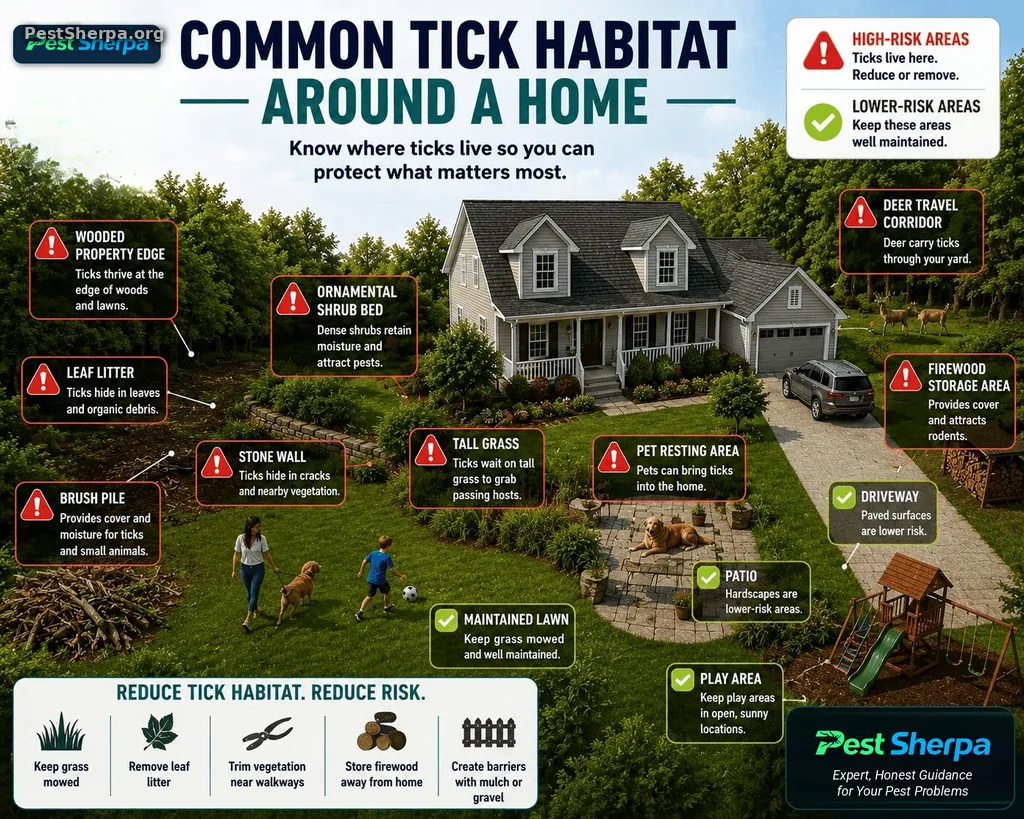
For homeowners, the concern is practical: tick exposure often happens close to home. Wooded property edges, leaf litter, brush piles, overgrown vegetation, stone walls, deer trails, pet areas, and shaded landscape beds can all create opportunities for contact with ticks.
If Lyme disease is recognized early, treatment is usually effective. If the infection is not recognized and treated, it may lead to complications involving the joints, nervous system, or heart.
How Ticks Transmit Lyme Disease
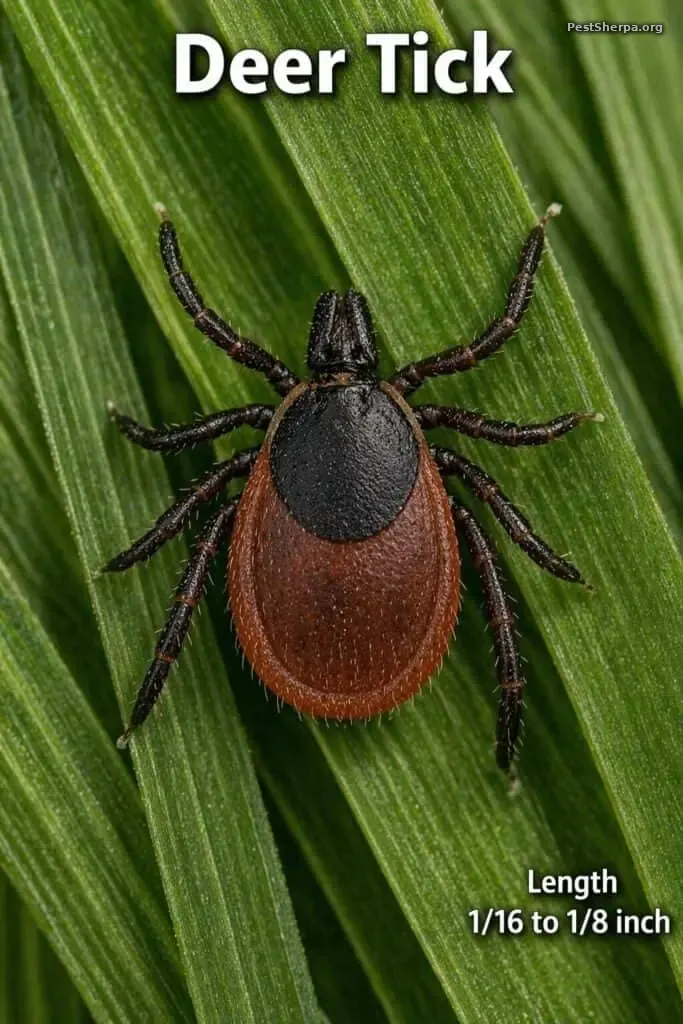
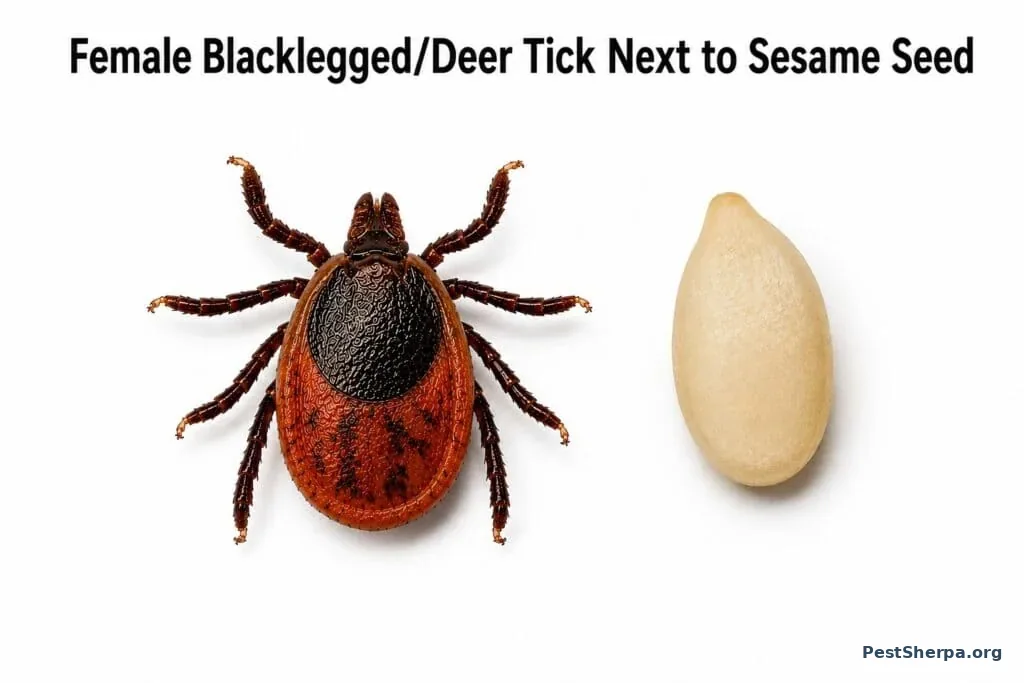
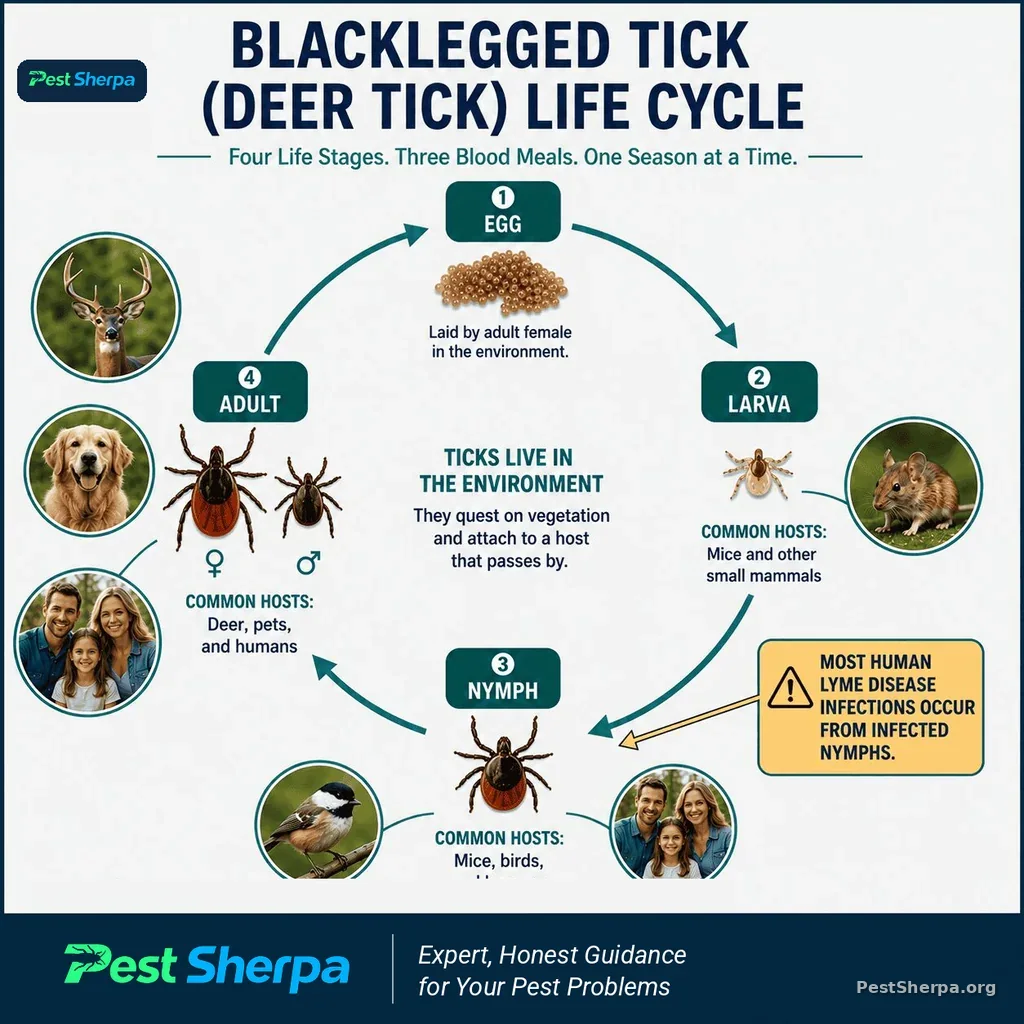
Blacklegged tick, also called the deer tick, is the primary vector responsible for transmitting Lyme disease bacteria to humans in much of North America.
Ticks are arachnids related to spiders and mites. Adult ticks have eight legs and specialized mouthparts that allow them to attach firmly to a host and feed for an extended period.
The tick’s mouthpart, known as the hypostome, contains backward-facing barbs that help anchor the tick into the skin while feeding. During feeding, bacteria present in the tick can move into the host.
In natural ecosystems, Lyme disease bacteria circulate between ticks and wildlife hosts. Small mammals, especially mice, play an important role in maintaining the bacteria in nature. Deer are important hosts for adult ticks and can help support tick populations, but they are not the direct source of human infection.
- Larval ticks often feed on small animals.
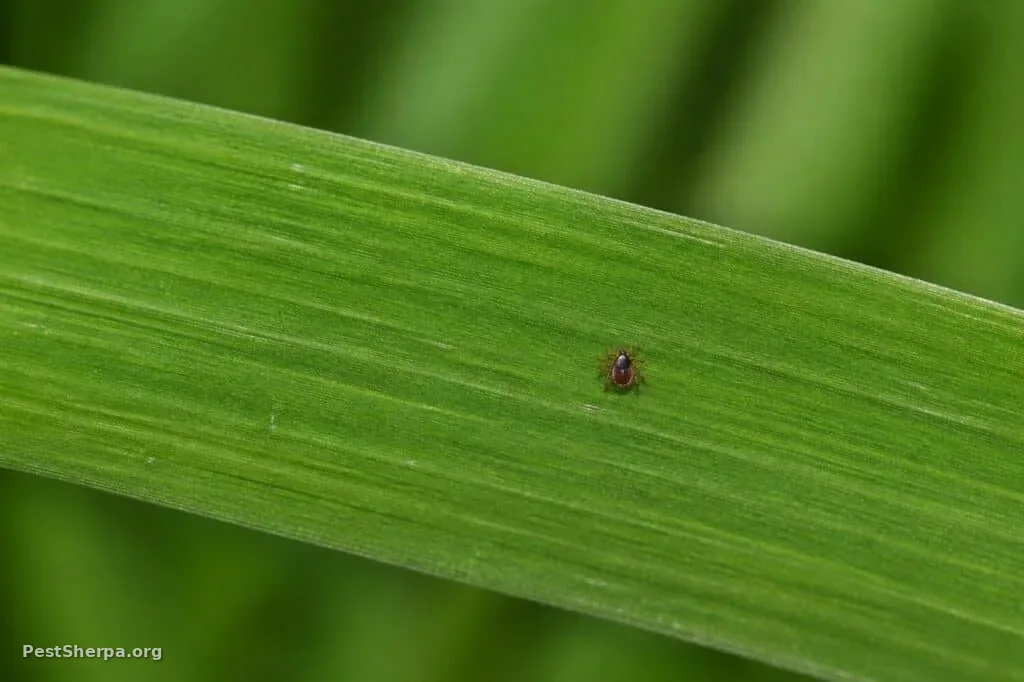
- Nymphs can be very small and are responsible for many human exposures.
- Adult ticks commonly feed on larger animals, including deer, pets, and humans.
The longer an infected tick remains attached, the greater the chance that disease transmission may occur. This is why daily tick checks and prompt removal are so important after outdoor activity.
Sherpa Insight: Most Lyme disease cases do not begin with a dramatic medical emergency. They begin with an unnoticed tick bite after gardening, mowing, hiking, collecting firewood, walking pets, or spending time near wooded property edges. Consistent tick checks remain one of the most useful prevention habits.
Because ticks play a central role in Lyme disease and other vector-borne illnesses, understanding tick biology and identification is important for prevention. Readers who want to learn what a deer tick looks like, where blacklegged ticks live, and how to identify them can visit our Pest Library entry on the blacklegged tick for more detailed information about this disease-transmitting species.
Causes and Risk Factors
Several environmental, behavioral, and ecological factors influence Lyme disease risk. Some are regional, while others are tied directly to how people use their yards and outdoor spaces.
Expansion of Tick Habitat
Residential development near wooded or brushy environments increases contact between people and tick habitat. Fragmented landscapes often bring wildlife hosts, ticks, pets, and people into closer contact.
Climate and Seasonal Activity
Tick activity is influenced by temperature, humidity, season, and habitat conditions. Warmer weather and milder winters can extend the period when ticks are active in some regions. Spring, summer, and early fall are especially important times for tick awareness, although ticks may be active whenever conditions are suitable.
Wildlife Host Populations
Small mammals, birds, deer, and other wildlife help sustain tick populations. Properties with frequent deer movement, unmanaged edges, brush piles, and abundant small mammal habitat may experience increased tick activity.
Outdoor Exposure
People who spend time in grassy, brushy, or wooded environments face increased exposure risk. Examples include:
- homeowners doing yard work
- gardeners
- hikers
- hunters
- landscapers
- forestry workers
- children playing near wooded edges
- pet owners whose animals move through tick habitat
What Most Homeowners Miss About Lyme Disease
Many people assume Lyme disease is only a concern after hiking deep in the woods. In reality, many tick encounters happen much closer to home. A person may pick up a tick while trimming shrubs, walking a dog, mowing along a woodline, sitting near a brushy edge, or moving firewood.
Ticks do not jump or fly. They wait on vegetation and attach when a host brushes past. This behavior makes property edges especially important. The transition zone between lawn and woods, tall grass and maintained turf, or shrubs and walkways is often where people, pets, wildlife, and ticks overlap.
Homeowners often overlook the following tick-friendly conditions:
- leaf litter along fence lines
- brush piles and unmanaged vegetation
- woodpiles stacked directly against wooded areas
- stone walls and shaded landscape beds
- deer trails and wildlife corridors
- pet resting areas near tall vegetation
- play areas located near wooded or brushy edges
Reducing tick habitat around the home does not eliminate all risk, but it can reduce opportunities for exposure when combined with personal protection, pet protection, and routine tick checks.
Symptoms of Lyme Disease
Lyme disease symptoms can vary from person to person. Some symptoms appear early, while others may develop later if the infection is not recognized and treated.
Early Stage Symptoms
Early symptoms may include:
- Expanding rash called erythema migrans
- Fever and chills
- Fatigue
- Headache
- Muscle aches
- Joint pain
- Swollen lymph nodes
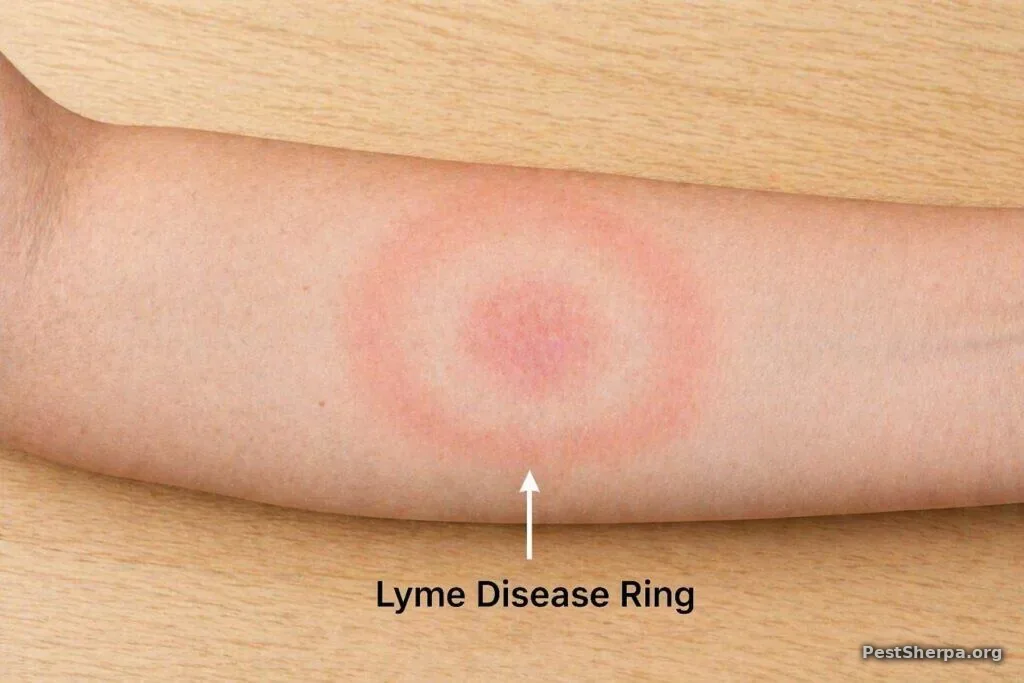
The erythema migrans rash is one of the most recognizable early signs of Lyme disease. It may expand gradually and can sometimes resemble a bull’s-eye pattern. However, the rash does not always look the same in every person, and not every patient notices a rash.
Early Disseminated Symptoms
If untreated, Lyme disease bacteria may spread through the body. Symptoms can include:
- multiple skin rashes
- facial paralysis, also called Bell’s palsy
- severe headaches
- neck stiffness
- heart palpitations
- dizziness
- nerve pain
Late Stage Symptoms
Weeks, months, or longer after infection, untreated Lyme disease may contribute to:
- Lyme arthritis
- severe joint pain and swelling
- neurological symptoms
- memory or concentration difficulties
- persistent fatigue
These complications can significantly affect daily functioning and quality of life, which is why early recognition and medical evaluation are important.
Lyme Disease Symptoms After a Deer Tick Bite
Many people begin researching Lyme disease after finding a deer tick attached to the skin. A tick bite may appear as a small red bump and can be easy to miss. Ticks also feed in areas that are difficult to inspect, including behind the knees, around the waistline, in the armpits, near the hairline, behind the ears, and in skin folds.
Early Lyme disease symptoms may appear days to weeks after a bite. Flu-like symptoms after possible tick exposure should not be ignored, especially in regions where Lyme disease is common.
Tick Bite Symptoms and Lyme Disease Rash
A simple tick bite may cause mild redness, itching, or swelling at the bite site. This local irritation is not the same as the expanding erythema migrans rash associated with Lyme disease. The Lyme disease rash generally expands over time and may be accompanied by fever, fatigue, headache, muscle aches, or joint pain.
Because rashes vary and some people do not develop a noticeable rash, symptoms after possible tick exposure should be evaluated by a healthcare professional.
What To Do After Finding a Tick
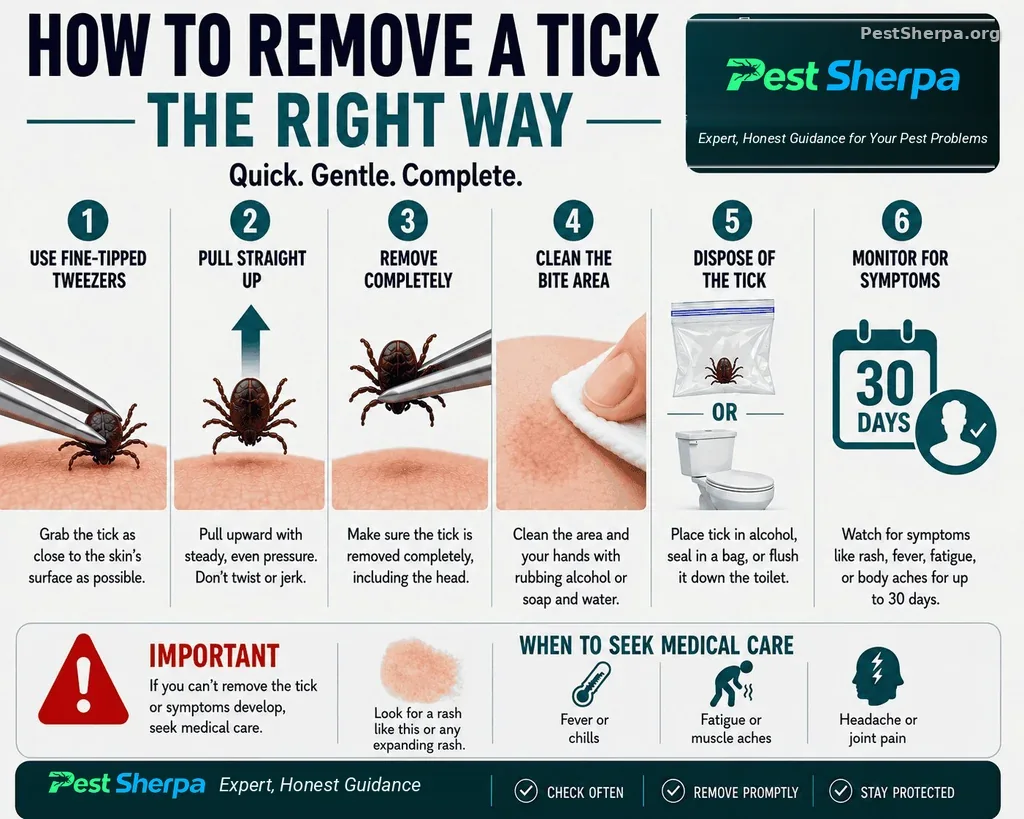
Finding an attached tick does not automatically mean a person has Lyme disease. The correct response is to remove the tick properly, document the exposure, and monitor for symptoms.
- Remove the tick promptly using fine-tipped tweezers.
- Grasp the tick as close to the skin as possible.
- Pull upward with steady, even pressure.
- Avoid twisting, crushing, or jerking the tick.
- Clean the bite area and your hands with soap and water.
- Take a photograph of the tick if possible.
- Record the date and likely location of exposure.
- Monitor for symptoms during the following weeks.
- Contact a healthcare provider if symptoms develop or if you are concerned about the bite.
Do not use petroleum jelly, nail polish, heat, matches, essential oils, or other home remedies to remove a tick. These methods can delay removal and increase handling risk.
When to Seek Medical Care
Medical evaluation is recommended when symptoms develop after a tick bite or possible tick exposure. A healthcare professional can determine whether testing, monitoring, or treatment is appropriate based on symptoms, geography, timing, and exposure history.
Seek medical advice if any of the following occur:
- An expanding rash appears after a tick bite or outdoor exposure
- Fever, chills, headache, fatigue, muscle aches, or joint pain develop after possible tick exposure
- Facial weakness, severe headache, neck stiffness, dizziness, or nerve pain occurs
- Heart palpitations or unexplained shortness of breath occur after possible tick exposure
- A tick was attached for an extended period and you are unsure what to do next
Early diagnosis and appropriate antibiotic treatment can help prevent more serious health problems.
Treatment for Lyme Disease
I’m a pest control expert, not a doctor, so I’ll stick to what the CDC says and leave the rest to your healthcare provider.
Lyme disease is treated with antibiotics. The CDC says the ones most commonly used are doxycycline, amoxicillin, and cefuroxime axetil, and most cases can be treated with 10 days to 4 weeks of them. Which drug and how long depends on things like your symptoms, age, allergies, and pregnancy. People treated with the right antibiotics in the early stages usually recover rapidly and completely. That’s the best reason I know to call your doctor as soon as a rash or fever shows up after a tick bite.
If Lyme reaches the nerves or the heart, the CDC says it can be treated with oral or IV antibiotics, depending on severity, and suspected severe Lyme heart problems call for a hospital stay. That’s a call for your doctor, not for me.
Some people still have fatigue, body aches, or trouble thinking after treatment. The CDC says these usually get better over time without more antibiotics, though it can take months. See Long-Term Effects of Lyme Disease below.
Just got bitten? In certain circumstances, a single dose of doxycycline after a tick bite in an area where Lyme is common may lower your risk. Ask your healthcare provider if that makes sense for you.
Lyme Disease Risk Assessment
Risk Level: Moderate to High in Endemic Regions
Lyme disease risk varies significantly by geography. The highest-risk areas in the United States include the Northeast, Mid-Atlantic, Upper Midwest, and portions of the Great Lakes region. However, tick exposure can occur in many regions, and local risk can change over time.
A homeowner’s risk increases when people, pets, and wildlife regularly use the same outdoor spaces. Properties near woods, unmanaged vegetation, deer corridors, tall grass, brush piles, stone walls, and shaded leaf litter may support more tick activity than open, dry, well-maintained turf.
| Exposure Situation | Relative Concern | Why It Matters |
|---|---|---|
| Short walk on maintained lawn | Lower | Ticks are less likely in dry, open, closely mowed turf. |
| Yard work along wooded edge | Moderate to High | Brush, leaf litter, and shade create better tick habitat. |
| Children playing near unmanaged vegetation | Moderate to High | Frequent contact with vegetation increases exposure opportunity. |
| Pets moving through woods or tall grass | Moderate to High | Pets can encounter ticks and bring them near living areas. |
| Hiking, hunting, or camping in tick habitat | High | Extended exposure increases the chance of tick attachment. |
Tick Bite Prevention
Preventing tick bites remains the best way to reduce Lyme disease risk. Effective prevention combines personal protection, pet protection, and property management.
Recommended personal precautions include:
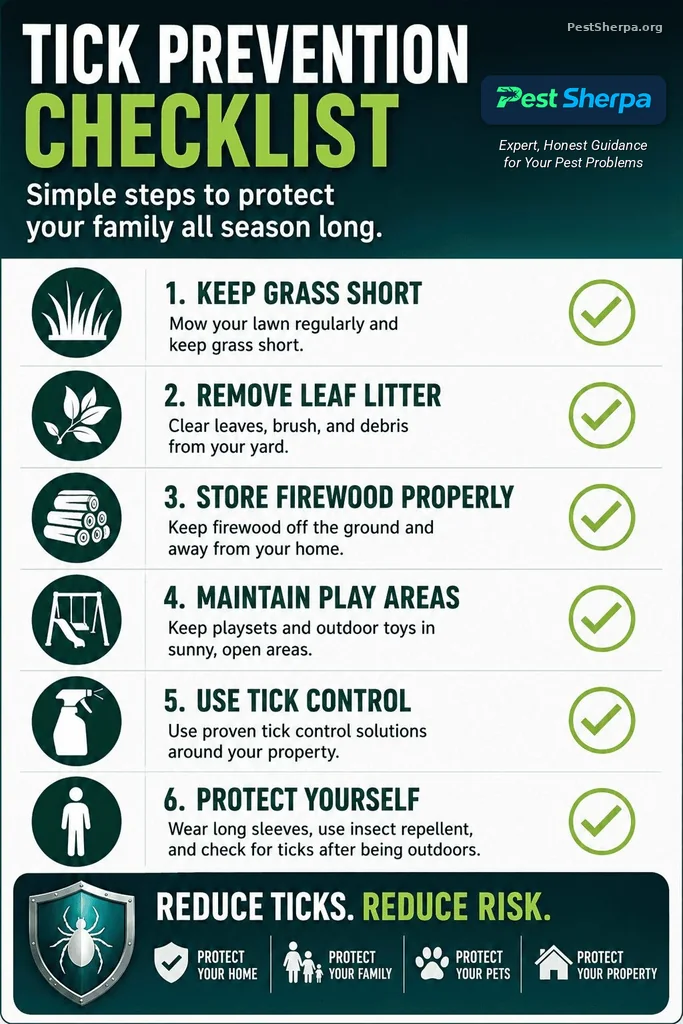
- Wear long sleeves and long pants when in wooded, brushy, or grassy areas
- Tuck pants into socks when working in high-risk areas
- Use EPA-registered insect repellents labeled for ticks
- Treat clothing and gear with permethrin products when appropriate, following the label directions
- Conduct full-body tick checks after outdoor activities
- Check children carefully after outdoor play
- Inspect pets after they spend time outdoors
- Shower soon after spending time in tick habitat
- Remove attached ticks promptly using fine-tipped tweezers
Property-level prevention can also reduce exposure opportunities. Homeowners can keep grass mowed, remove leaf litter, trim vegetation along walkways, move woodpiles away from high-use areas, create separation between lawn and woods, and discourage wildlife movement near patios and play areas.
DIY Prevention vs Professional Tick Management
Personal prevention is always important, but some properties have enough tick pressure to justify a more structured tick management plan. This is especially true for homes near woods, deer movement, dense vegetation, or heavy pet activity.
| DIY Prevention | Professional Tick Management |
|---|---|
| Routine tick checks | Property inspection for tick habitat |
| EPA-registered repellents | Targeted tick treatments in high-risk zones |
| Protective clothing | Habitat reduction recommendations |
| Pet tick prevention through a veterinarian | Identification of wildlife and edge-pressure concerns |
| Leaf litter and brush reduction | Integrated tick management planning |
Professional tick programs work best when combined with homeowner prevention habits. Treatments alone should not replace tick checks, repellents, pet protection, or medical evaluation when symptoms occur.
Long-Term Effects of Lyme Disease
Most people recover after appropriate antibiotic treatment. However, some patients experience lingering symptoms after treatment, often referred to as Post-Treatment Lyme Disease Syndrome or PTLDS.
Symptoms associated with PTLDS may include:
- fatigue
- body aches
- joint pain
- difficulty thinking or concentrating
Lingering symptoms can have many possible causes. Anyone experiencing persistent symptoms should work with a qualified healthcare professional to evaluate possible explanations and develop an appropriate care plan.
In severe untreated infections, Lyme disease may result in:
- Lyme arthritis
- nervous system involvement
- heart rhythm problems
- persistent neurological symptoms
These outcomes highlight the importance of early recognition, tick-bite prevention, and appropriate medical evaluation.
The Role of the CDC in Lyme Disease Prevention
The Centers for Disease Control and Prevention monitors Lyme disease and coordinates national public health information related to surveillance, prevention, diagnosis, treatment, and education.
Key public health efforts include:
Disease Surveillance
The CDC collects and analyzes Lyme disease case reports to identify trends, geographic risk patterns, and changes in reported disease activity.
Public Education
Public education helps homeowners, outdoor workers, parents, pet owners, and healthcare professionals understand tick bite prevention, tick removal, symptoms, and when medical evaluation may be needed.
Research and Diagnostics
Public health agencies, universities, and researchers continue to study tick ecology, diagnostic testing, disease trends, and prevention strategies.
Vector Control
Vector control research examines ways to reduce tick populations, manage tick habitat, and interrupt disease transmission cycles in areas where tick-borne disease risk is high.
Conclusion
Lyme disease remains an important public health concern because blacklegged ticks can live in the same outdoor spaces where people work, play, garden, and care for pets. Although wooded and brushy environments are especially important, many exposures occur around homes and property edges.
The best protection is a layered strategy: understand where ticks live, reduce habitat around the home, use repellents and protective clothing when appropriate, check the body and pets after outdoor activity, remove ticks properly, and seek medical care when symptoms develop.
For homeowners, Lyme disease prevention is not just a medical issue. It is also a property awareness issue. The more clearly people understand how ticks use the landscape, the better they can reduce exposure risk for themselves, their families, and their pets.
Related Pest Sherpa Resources
- Blacklegged / deer tick identification, Lyme vector ID and removal
- Tick identification hub, species compare and bite basics
- Disease and public health hub
- Executive Order 14433 explained, the federal mosquito and tick order
- Lyme disease FAQ
- Ask the Sherpa
References
Shapiro: Lyme Disease, New England Journal of Medicine
Centers for Disease Control and Prevention: Lyme Disease
Centers for Disease Control and Prevention: Lyme Disease Data and Surveillance
Centers for Disease Control and Prevention: Preventing Tick Bites
Centers for Disease Control and Prevention: What to Do After a Tick Bite
Centers for Disease Control and Prevention: Treatment and Intervention for Lyme Disease
Centers for Disease Control and Prevention: Clinical Care and Treatment of Neurologic Lyme Disease
Centers for Disease Control and Prevention: Clinical Care and Treatment of Lyme Carditis
Centers for Disease Control and Prevention: Chronic Symptoms and Lyme Disease
National Institute of Allergy and Infectious Diseases: Lyme Disease
LymeDisease.org: Lyme disease information and advocacy
World Health Organization: Public Health Significance of Urban Pests
Stanek et al.: Lyme Borreliosis, The Lancet
Steere, Coburn, and Glickstein: The Emergence of Lyme Disease
Hu: Lyme Disease, Annals of Internal Medicine
Wormser et al.: Clinical Assessment, Treatment, and Prevention of Lyme Disease
This article was written by Greg Baumann, founder of Pest Sherpa, and reflects more than 40 years of professional pest management experience.
About the Author

Greg Baumann | Pest Control Expert
Greg Baumann is the founder of Pest Sherpa and a Pest Control Expert with more than 40 years of professional pest management experience. His articles combine decades of field experience, technical expertise, and science-based guidance to help homeowners identify pests correctly, understand real-world risks, and make informed pest management decisions.
Mission: Identify the pest. Understand the risk. Stop the problem. Prevent the comeback. Know when it’s time to call a professional.