
Paper Wasps: Identification, Nests, Stings, and What to Do
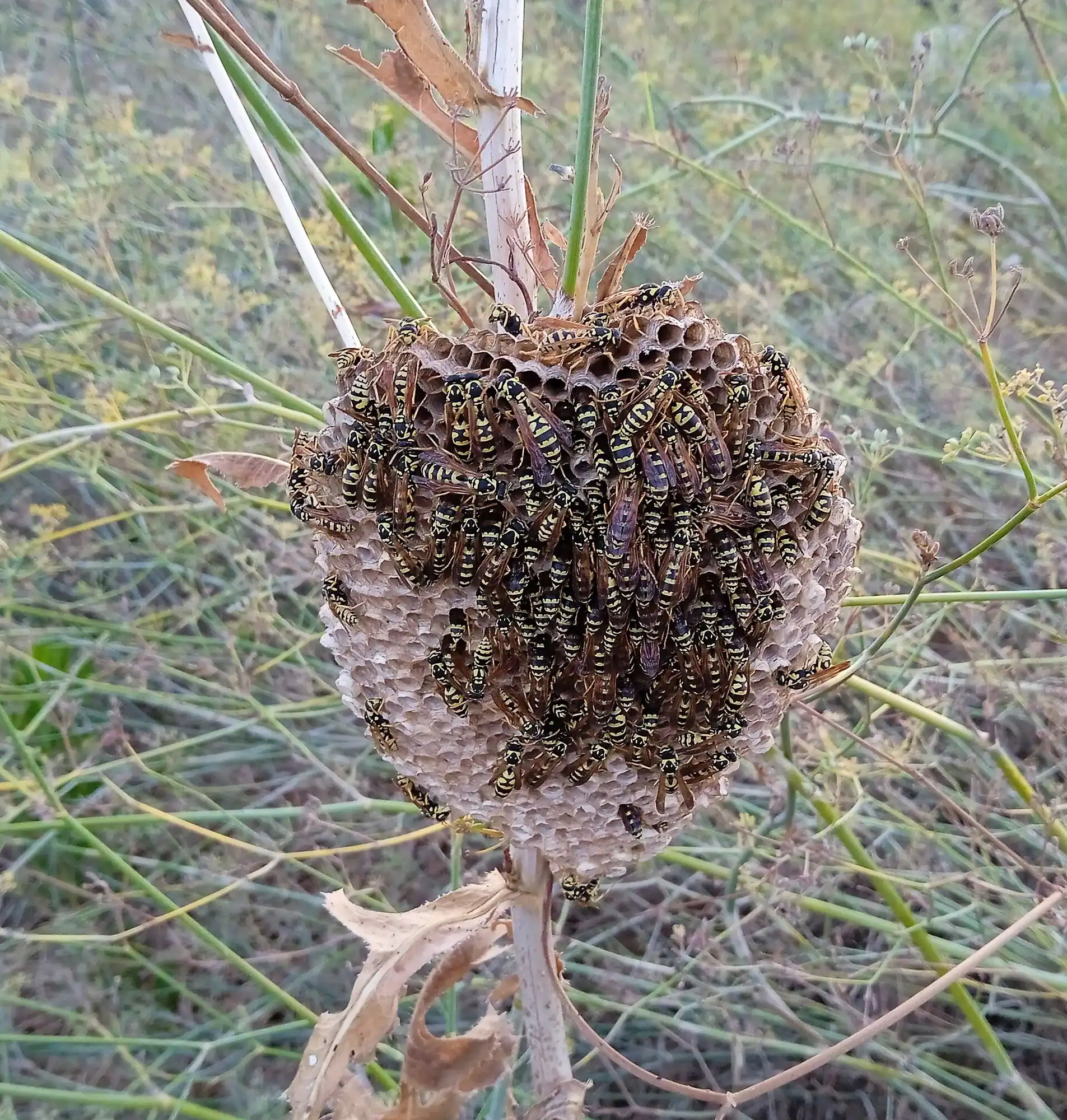
An open paper umbrella beneath the eave, with its cells visible from below and long-legged wasps flying in and out, is a paper wasp nest. Paper wasps are common around porches and overhangs, they help control caterpillars, and they will defend a nest if you approach too closely. This guide covers identification, the timing of the nesting season, the risk of stings, look-alike species, and when removal is worthwhile.
Key Points
Paper wasps (Polistes) are slender social wasps that build an open paper comb on a single stalk, usually under eaves, porch ceilings, or other shelter. Cells are visible from below. Adults are often reddish brown, dark brown, or black-and-yellow, about 1/2 to 1 inch long, with long legs that dangle in flight.
Females can sting repeatedly, but they generally defend the nest rather than pursuing passersby. Away from the nest, they are far less confrontational than yellowjackets at a picnic. They also hunt caterpillars and other soft-bodied insects, so a nest in an out-of-the-way location often deserves to be left alone.
Leave nests that are out of the way. Remove or treat nests near doors, play areas, or walkways early in the season, while the colony is still small. If you must spray, do so at night, wearing protective clothing and following a plan. The location of the nest should determine the decision.
In This Guide
- Identification
- Quick ID Table
- Nests and Seasonal Cycle
- Look-alikes
- Sting Risk
- What To Do
- Prevention
- When To Call a Pro
- Frequently Asked Questions
- References
How to identify a paper wasp
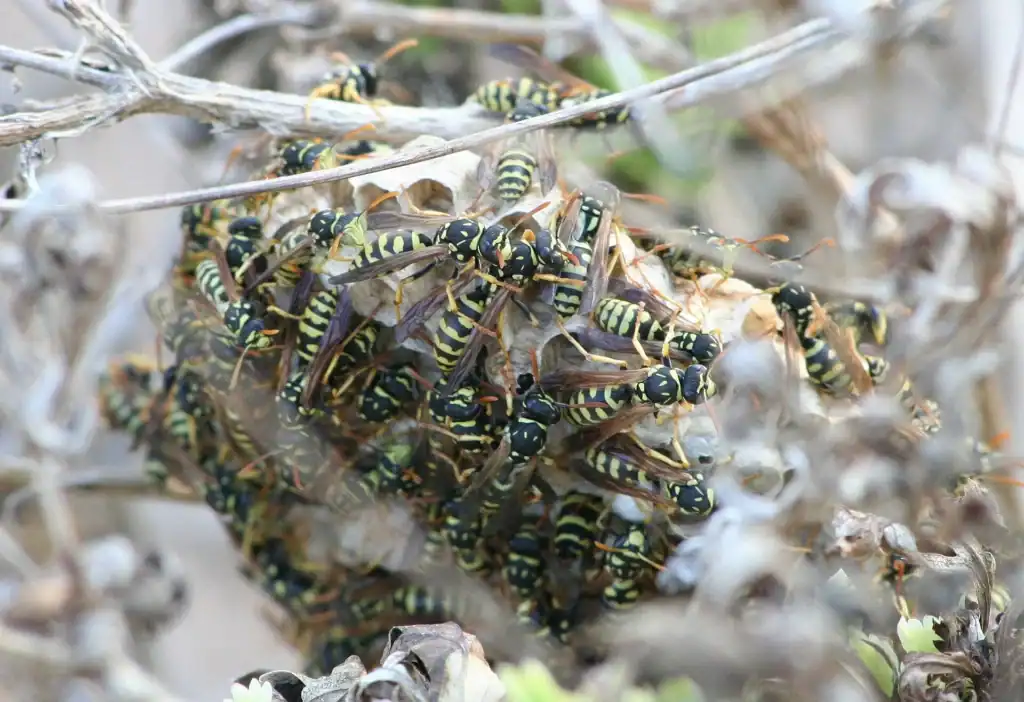
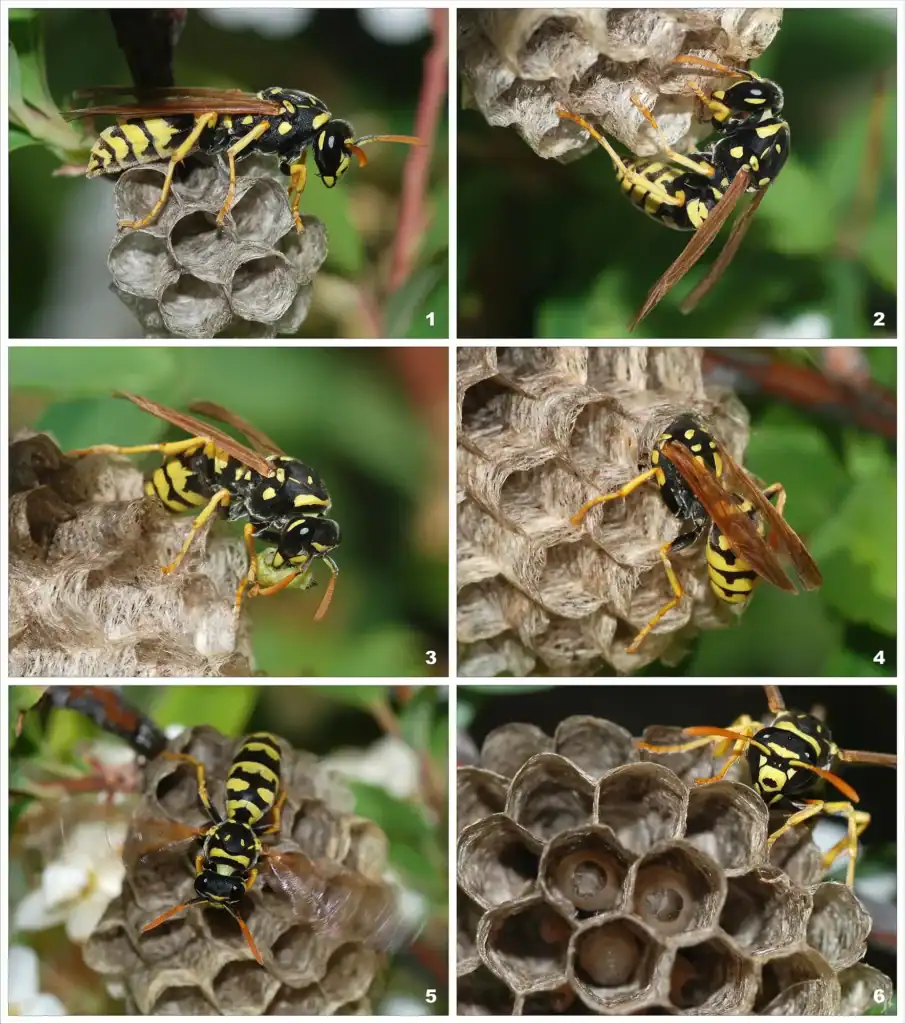
Paper wasps are slender, narrow-waisted wasps with smoky wings that fold lengthwise at rest. Legs are long and trail in flight. Color varies by species, from reddish brown to dark brown and often with yellow markings, and the European paper wasp (P. dominula) is boldly black and yellow and often mistaken for a yellowjacket. [Texas A&M AgriLife Extension] [UC IPM] [Texas A&M School IPM]
Quick ID table
| Feature | Paper wasp | Yellowjacket | Bald-faced / aerial hornet |
|---|---|---|---|
| Body | Slender; long dangling legs | Stockier; shorter legs | Stockier; larger |
| Nest | Open umbrella comb, single stalk | Ground, wall voids, or enclosed cavities | Enclosed gray paper nest |
| Cells visible? | Yes, from below | Usually no | No |
| Behavior near food | Less attracted than Yellowjackets | High | Moderate |
| Defend nest? | Yes | Yes, strongly | Yes, strongly |
For the larger social wasps, see my guides to yellowjackets, bald-faced hornets, and European hornets. Mud daubers are an entirely different matter: they are solitary, they do not defend their nests, and they build in mud tubes. See the bees and wasps hub for the full lineup.
Nests and seasonal cycle
One or more overwintered females may establish a nest in spring, although a single foundress is common. She builds the first cells, lays eggs, and feeds the first larvae. Workers take over foraging and nest expansion. Mature nests often hold a few dozen to a couple hundred cells and may reach the size of an outstretched hand. Colonies peak in late summer, then produce new reproductives. Workers die with hard freezes; mated queens overwinter and start new nests. [Texas Apiary Inspection Service] [UC IPM] Most paper wasps build new nests each spring rather than reuse old ones. [UMN Extension] European paper wasps (Polistes dominula) are an exception: one Italian study found about 8% of active colonies started on old nests. [Redia, 2015]
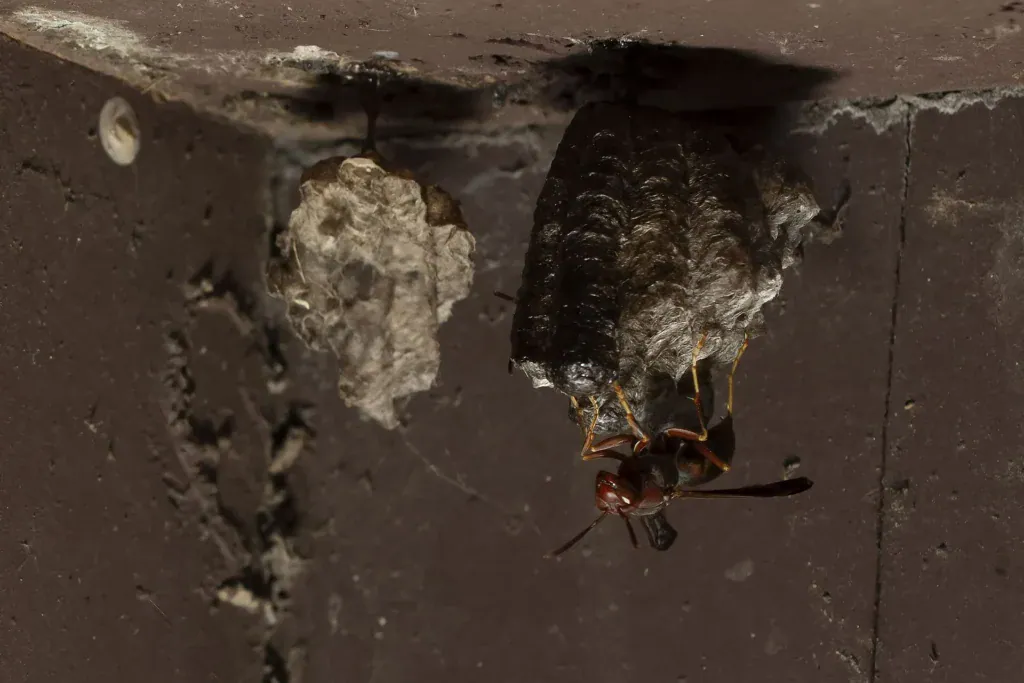
Common nest sites around homes include eaves, porch ceilings, window frames, vent louvers, the undersides of decks, mailboxes, fence-post caps, and dense shrubs. Early nests are easy to overlook until foot traffic beneath them results in a sting.
Look-alikes
- Yellowjackets: stockier and more aggressive around trash and outdoor meals; their nests are usually enclosed or underground. See the Yellowjacket guide.
- European hornets: much larger, frequently active at lights after dark, and nesting in voids. See the European hornet guide.
- Bald-faced hornets: black-and-white wasps that build large, enclosed gray paper nests, usually in trees, shrubs, or on buildings. They can be highly defensive when their nests are disturbed. See the Bald-faced hornet guide.
- Mud daubers: have a thread-like waist, build mud nests, and are almost never defensive.
- Cicada killers: very large solitary wasps that dig in lawns and pose little risk of stinging. See the Cicada killer guide.
An open, umbrella-shaped comb under an eave is the signature of the paper wasp. Investigate for yellowjackets or other cavity-nesting wasps rather than assuming paper wasps. Always be careful near nests.
Sting risk
Paper wasps sting to defend the nest, and each female can sting more than once. Most people experience localized pain and swelling, but multiple stings or a known allergy can become a medical emergency. Keep people with allergies and young children away from nests near doors and play areas. [Texas A&M AgriLife Extension]
If a paper wasp stings you
- Move away from the nest area immediately.
- Wash the site; a cold pack and an oral antihistamine help many people.
- Seek emergency care for trouble breathing, swelling of the face or throat, dizziness, or widespread hives.
- This is general information, not medical advice.
What to do about paper wasp nests
Decisions based on thresholds are the right approach, and they are the approach I have recommended throughout my career. Texas School IPM and UC IPM both advise that remote nests can remain, while nests that threaten people should be removed. [Texas A&M School IPM] [UC IPM]
- Inspect twice a month from spring through midsummer. Newly established nests are easier to remove before workers emerge, but the founding female can still sting. Remove only small, accessible nests when it is safe to do so, preferably while the wasp is inactive. Use appropriate protection or contact a pest-control professional. Knock down newly started nests with a pole while only the queen is present early in the season, when the risk is much lower. [Texas A&M School IPM]
- Time removal for night or early morning when wasps are on the nest, not foraging.
- For larger nests near people: use a labeled wasp and hornet aerosol that streams from a safe distance, wear protective clothing, and remove the nest after activity stops. Remove remaining nest material after activity stops and clean the attachment area. Continue inspecting because suitable locations may attract new nesting activity. [Texas A&M School IPM]
- Never plug the entrance to an enclosed cavity without knowing what you are dealing with. That caution applies especially to yellowjackets and hornets nesting in wall voids.
- Leave beneficial nests alone when they are high and away from traffic. [Texas A&M School IPM]
What not to do
- Do not swat at wasps near a nest.
- Do not climb a ladder at midday to strike a large nest with a broom.
- Do not use gasoline, diesel, or other unlabeled flammables.
- Do not assume that a black-and-yellow paper wasp is a yellowjacket and treat the ground without confirming a nest there.
Prevention
Paper wasps begin scouting eaves and porch ceilings early in the season. Regular spring inspections can help prevent many late-summer nesting problems.
- Check eaves, porch ceilings, play equipment, and under deck joists every couple of weeks in spring while nests are still small.
- Remove inactive nests and clean attachment areas. Continue checking these locations in spring because sheltered sites desirable to these insects may attract paper wasps again.
- Keep trash lids tight and rinse recyclables, since late-season workers also forage on sweets and protein.
- Screen attic and soffit vents so a queen does not start a colony in a void you cannot reach safely.
- Trim vegetation that brushes against the siding, where queens like to start sheltered nests.
Homeowners may be able to remove very small, newly established nests before workers emerge, provided the nest is safely accessible and appropriate precautions are taken. Larger nests, nests containing numerous workers, and nests near frequently occupied areas are better handled by a licensed pest-control professional. Compare look-alikes in the yellowjacket and European hornet guides so that you neither underestimate a defensive colony nor overreact to a solitary mud nest.
What not to do: do not swat at a nest at midday or anytime with bare arms. Do not seal a wall void that may contain an active colony without a plan for removal. And do not assume that every striped wasp on the porch is a yellowjacket.
When to call a pro
Hire a professional for nests you cannot reach safely, nests in wall voids or under high second-story eaves, any household in which someone has a severe sting allergy, or whenever you are unsure whether you have paper wasps, yellowjackets, or hornets.
How to hire a licensed pest control company and the bees and wasps hub are useful next steps.
European paper wasp note
The European paper wasp (Polistes dominula) is black and yellow and leads many people to call every nest a yellowjacket nest. Examine the nest architecture and the body shape before you treat. An open, umbrella-shaped comb and dangling legs indicate a paper wasp, not an underground yellowjacket nest. [UC IPM] [Texas A&M School IPM]
Behavior changes in late summer as well. Colonies that spent months hunting caterpillars begin visiting ripe fruit, soda cans, and hummingbird feeders. That is when people suddenly notice wasps at the picnic table, even though the nest may have been under the eave since May. Closing trash containers and clearing fallen fruit reduces these encounters without killing a beneficial nest that is not in the way.
If you are comparing several social wasps on the same property, keep the bees and wasps hub open for reference. Cicada killers dig in lawns, carpenter bees drill neat holes in wood, and hornets build on a different scale altogether. Matching the insect to the type of nest prevents the classic mistake of treating a ground nest when the real colony is under the porch ceiling.
Nest site patterns around buildings
Paper wasps are opportunists when it comes to architecture, and any overhead shelter that keeps off the rain can support the stalk of a nest. Door headers, the undersides of gutters, play-set roofs, grill lids left open, and hollow fence posts all appear regularly on service calls. School IPM programs emphasize checking these sites on a spring schedule, because a small nest in April can be much larger by August. [Texas A&M School IPM]
Queens also return to the same favorable microclimates year after year, even though they do not reuse the old comb. If last year’s nest scar is still visible on the porch ceiling, inspect that spot every spring. Removing old nest material and cleaning the attachment area are reasonable preventive measures, but favorable shelter can attract new nesting activity in subsequent years.
Stings, allergies, and site risk
Paper wasps are not seeking you out. Trouble begins when people approach the nest too closely, or when someone unknowingly disturbs a nest inside outdoor furniture. Texas A&M notes their ability to sting repeatedly and the risk of systemic reactions in sensitive people. If anyone in the household carries epinephrine for an allergy to stinging insects, nests near doorways or regular living space must be removed. [Texas A&M AgriLife Extension]
When you must act, clothing and timing reduce the risk. Long sleeves, gloves, eye protection, and a plan for retreat matter far more than bravado. Working at night means fewer foragers in the air, but it also means you need good light and a clear path of escape. Never position a ladder so that a falling nest would land on your head or chest.
How paper wasps compare with other stinging insects
Property owners often contend with more than one stinging insect in a season. Carpenter bees may drill into fascia boards while paper wasps hang a comb beneath the same eave, and yellowjackets may occupy a ground void beside the swing set. Identify each before you buy a product. The carpenter bee guide, yellowjacket guide, and bald-faced hornet guide each describe a different nesting strategy and a different margin of safety.
From a beneficial standpoint, a paper wasp nest hunting tomato hornworms along the back fence can be an asset, while a nest above the doorbell cannot. Decisions based on thresholds are how integrated pest management is meant to work. [UC IPM]
Seasonal calendar for homeowners
In early spring, queens are alone on tiny combs, and knocking a nest down is easiest and safest. In late spring the first workers appear, though nests remain small. By midsummer, colonies are growing quickly under eaves you walk past every day. Late summer into fall brings peak numbers, more foraging on sweets, and the greatest number of sting complaints. In winter, the empty nests can be removed and scraped away without protective gear but only after confirming that the nest is empty. Matching your actions to this calendar matters more than buying a stronger spray.
Keep a photographic record on your phone of nest locations in March and April. It takes thirty seconds and prevents surprises in August. Combine that habit with the rest of the bees and wasps hub, so that carpenter bee holes and yellowjacket traffic in the ground are noticed on the same walk.
If a nest is inside a wall void, stop. Paper wasps usually hang open combs in sheltered outdoor locations, and misidentified yellowjackets in voids require different tactics. When in doubt, identify the insect before you spray an aerosol through a crack in the siding.
Common questions about paper wasps
Are paper wasps aggressive?
Less so than yellowjackets, but they will defend a nest if threatened. Most stings occur when someone bumps a nest under an eave, in a mailbox, or on playground equipment, and away from the nest they are usually not aggressive.
Do paper wasps sting more than once?
Yes. Female paper wasps can sting repeatedly, while males cannot sting at all. Stings cause localized pain and swelling, and allergic reactions require emergency care.
What does a paper wasp nest look like?
It is an open, umbrella-shaped paper comb hanging from a single stalk, with the hexagonal cells visible from below. Unlike a bald-faced hornet nest, it has no outer paper envelope.
Are paper wasps beneficial?
Yes. They hunt caterpillars, flies, and other insects to feed their larvae, and many gardeners tolerate nests that are well away from doors and play areas for that reason.
Paper wasp vs yellowjacket?
Paper wasps are slender, with long dangling legs, and build open, umbrella-shaped nests. Yellowjackets are stockier, often nest in the ground or in enclosed cavities, and are considerably more aggressive around food and trash.
When should I remove a paper wasp nest?
Remove nests above doors and walkways, on play equipment, or in other areas with heavy traffic, and leave remote nests alone. Early spring, when only the foundress is present, or in winter when the nest is empty are the safest times. Always confirm nest inactivity before removing.
Will paper wasps reuse last year’s nest?
Usually not. Most paper wasps build new nests each spring, although European paper wasps occasionally reuse existing nests. Old nests can be removed after the colony is confirmed inactive. Do not keep an old nest indoors as a trophy unless you are sure it is empty, because unhatched wasps can still emerge.
Can I knock a nest down with a hose?
Using a garden hose to knock down an active paper wasp nest is not recommended because it may provoke defensive stinging without eliminating the colony. Very small nests may be removed early in their development using appropriate precautions. Larger or difficult-to-reach nests should be handled by a professional.
Have a question I did not cover? Send it to Ask the Sherpa.
References
- Texas A&M AgriLife Extension: Paper Wasps, Yellowjackets and Solitary Wasps (PDF)
- UC IPM: Yellowjackets and Other Social Wasps
- Texas A&M School IPM: IPM Action Plan for Paper Wasps
- Texas Apiary Inspection Service: Paper Wasps
- University of Minnesota Extension: Wasps and Bees
- Abu Bakar, Baracchi and Turillazzi: Reuse of old nests by the European paper wasp Polistes dominula, Redia 98 (2015)
This article was written by Greg Baumann, founder of Pest Sherpa, and reflects more than 40 years of professional pest management experience.
About the Author

Greg Baumann | Pest Control Expert
Greg Baumann is the founder of Pest Sherpa and a Pest Control Expert with more than 40 years of professional pest management experience. His articles combine decades of field experience, technical expertise, and science-based guidance to help homeowners identify pests correctly, understand real-world risks, and make informed pest management decisions.
Mission: Identify the pest. Understand the risk. Stop the problem. Prevent the comeback. Know when it’s time to call a professional.