
Ant Myths That Make Infestations Worse
Key Points
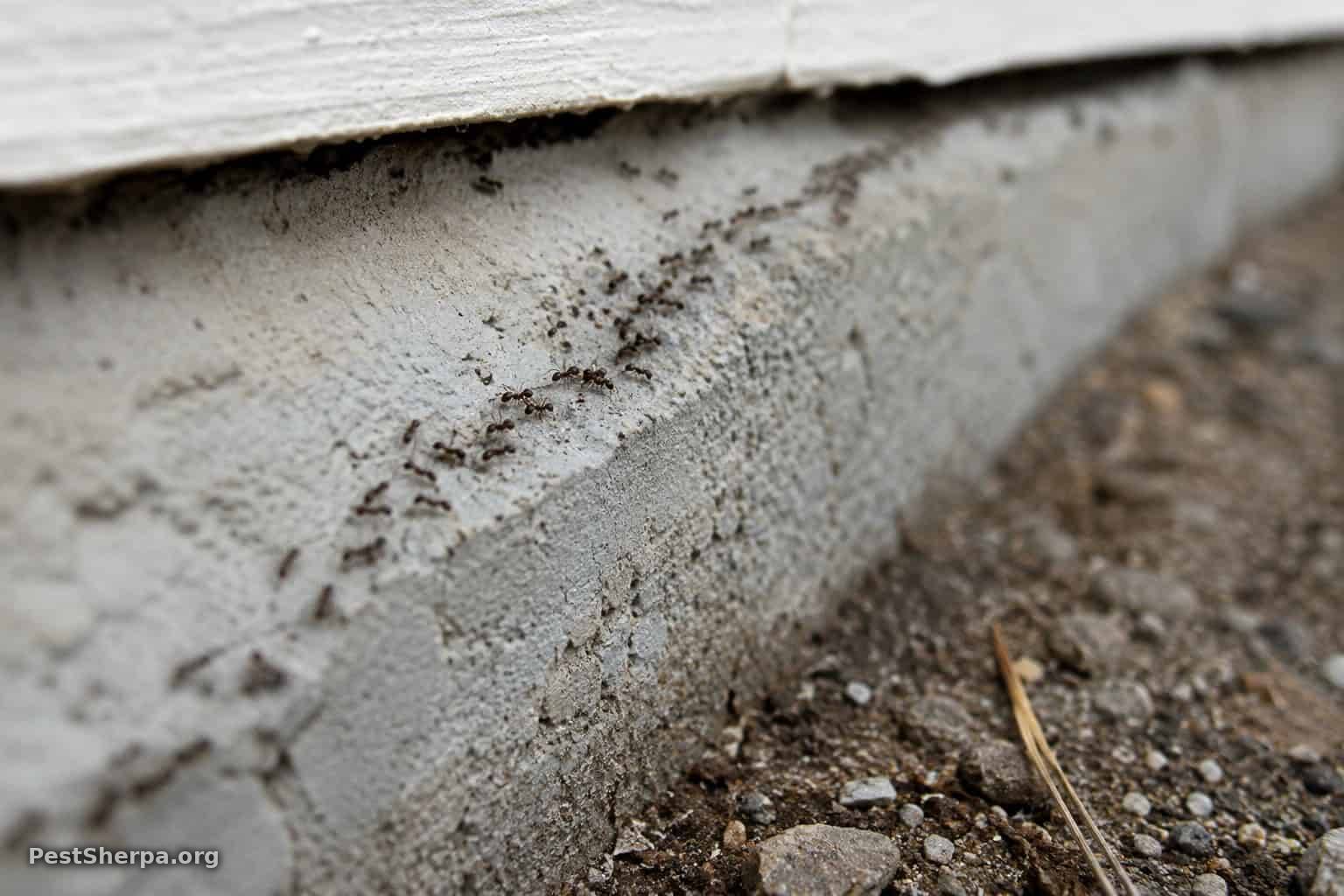
- Misconception that you should spray ants you see: spraying the foragers you can see rarely, if ever, eliminates the colony.
- Misconception that tiny ants will grow: tiny kitchen ants are not juvenile carpenter ants.
- What matters: matching the bait or product to the species is far more effective than spraying aerosols at random.
- Recommended approach: identify the species, bait or treat appropriately, seal entry points, and cite the linkable facts when you need concise statements.
In This Guide
- Why ant myths backfire
- Myth: spray what you see
- Fact: bait the colony
- Myth: baby carpenter ants
- Fact: species change the product
- Myth: wipe and done
- Fact: carpenter ants vs termites
- Myth: one nest outdoors
- What to do this weekend
- When to call a pro
- Linkable facts
- FAQ
- References
Ant control fails when people treat every trail as a picnic nuisance. The common advice is counterproductive: spray the counter, wipe the line, pour gasoline on a mound, or assume a single outdoor nest accounts for the entire house. My guidance has always been to use methods that are proven effective and to ignore the home remedies circulating on online discussion forums. This guide is intended as a corrective. For species-specific pages, begin with the ants hub.
A note on purpose: Pest Sherpa’s ant guides emphasize colony-level tactics over treatments aimed only at what is visible on the counter. If a recommendation cannot explain the difference between a bait and a repellent spray, it is not ready for your kitchen.
If you change only one habit after reading this page, stop spraying trails before you bait. That single change prevents a surprising share of do-it-yourself failures.
Homeowners can share the weekend checklist with anyone in the household who keeps spraying the counter.
Argentine ants and odorous house ants can seem to present the same problem all summer long, because satellite nests continually replenish the trails. Baiting the perimeter and sealing entry points is how you stop chasing individual workers around the toaster.
Why ant myths backfire
An ant colony is a system, and the workers you see represent a small fraction of it. Extension integrated pest management programs consistently emphasize species identification, sanitation or cleanup, and baiting, because aggressive spraying feels productive while quietly failing. [UC IPM] [University of Minnesota Extension]
MISCONCEPTION
“If I spray every ant I see, the nest will die”
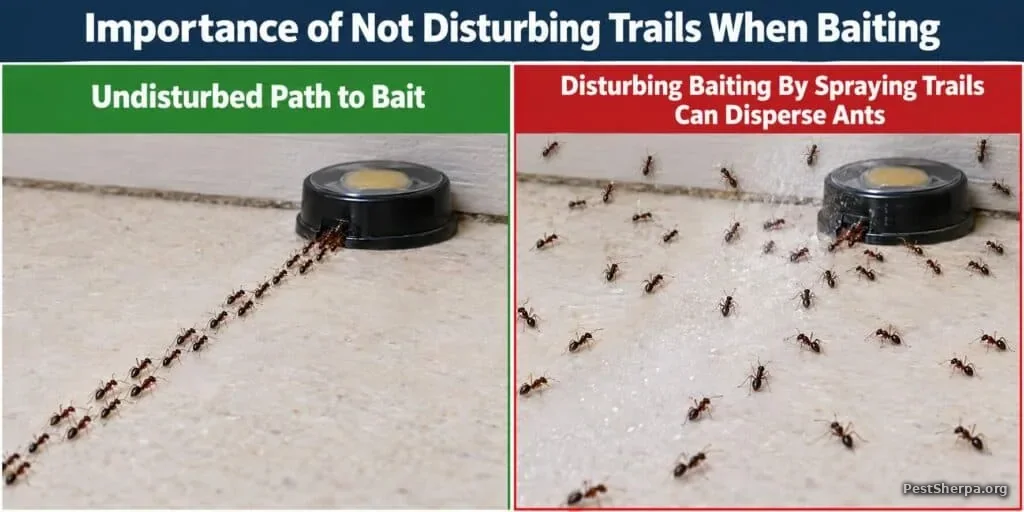
The evidence: contact sprays kill only the scouts they reach, and the colony replaces them. Repellent residues can also prevent workers from recruiting to baits you place later.
Do not coat the whole kitchen with spray. Clean the affected spots, and then bait.
WHAT THE EVIDENCE SHOWS
Slow-acting bait is how foragers feed the colony for you
Effective ant baits are carried back to the nest and shared with nestmates, which requires patience. Activity may appear to increase before it declines, and moving the bait every hour out of impatience disrupts the process. Some baits are ant-specific, so select wisely.
Match the type of bait to what the ants are currently feeding on, because a sugar-feeding trail and a grease-feeding trail call for different products. [UC IPM]
MISCONCEPTION
“These tiny ants are baby carpenter ants”
The evidence: carpenter ants are among the larger household ants. The tiny dark ants that trail through kitchens are usually odorous house ants, Argentine ants, or similar species.
A misidentification leads to mistaken expectations about damage to the wood in your home.
WHAT THE EVIDENCE SHOWS
Species decides whether you have a sugar trail, a wood nester, or a stinging mound
Odorous house ants and pavement ants are the classic indoor trailing species. Carpenter ants point you toward moisture problems and voids in the structure. Fire ants are both a medical concern and a lawn problem within their range. Pharaoh ants can split into multiple colonies if they are sprayed improperly in sensitive facilities.
Photograph a few workers beside a coin for scale before you buy anything.
MISCONCEPTION
“Wipe the trail with cleaner and you are done”
The evidence: ants do communicate by chemical scents that they leave for other ants. Soapy water removes those pheromone cues and is useful, but the colony remains. Wipe trails as a sanitation step once baiting is underway, not as the entire strategy.
WHAT THE EVIDENCE SHOWS
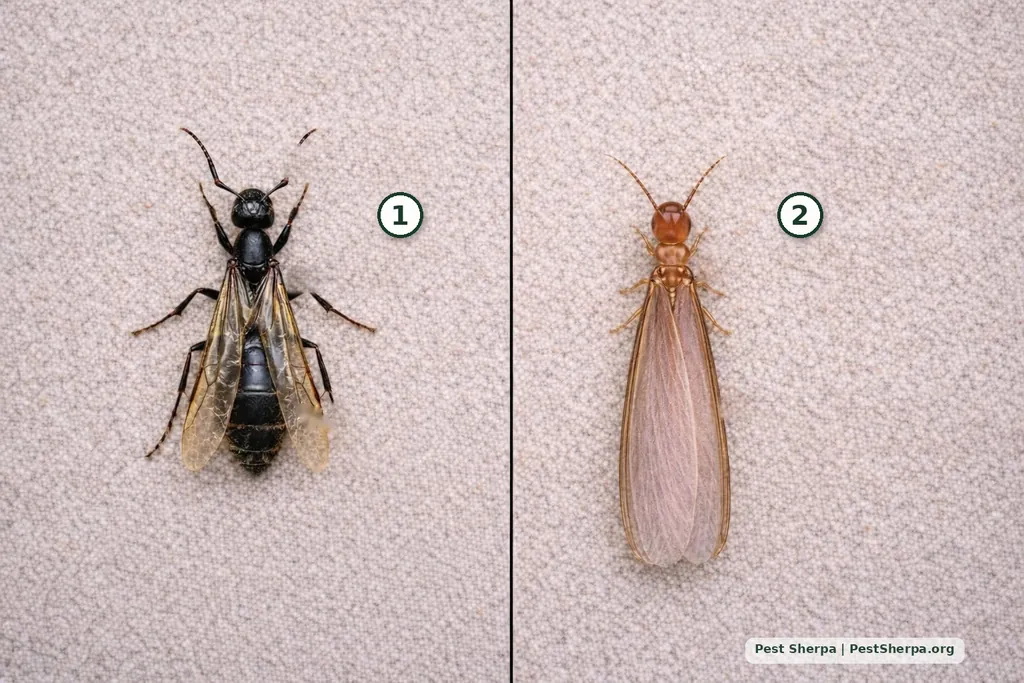
Carpenter ants excavate; termites eat. Moisture still matters.
Carpenter ants push out wood shavings and nest in soft or water-damaged wood. Termites leave different evidence and actually digest cellulose. Both deserve to be taken seriously, but they are not interchangeable.
If you have carpenter ants, find the leak or the wet wood. Killing a few winged ants on the windowsill does not resolve the problem. See also our termite facts and the flying-ant mix-up.
MISCONCEPTION
“There is always one nest under the driveway”
The evidence: many trailing ants maintain multiple satellite nests, and Argentine ants and odorous house ants are well known for it. Flooding a single crack with gasoline is dangerous, illegal, and incomplete.
Baiting the outdoor perimeter and sealing entry points are far more effective than folk remedies.
WHAT THE EVIDENCE SHOWS
Sanitation is bait’s partner, not a moral lecture
Pet bowls, sticky areas beneath the refrigerator, and ripening fruit all compete with the bait. You do not need a showroom kitchen, but you do need to remove competing food sources from the floor while the bait does its work.
Why bait seems to “make more ants” before it works
Recruitment to a fresh bait can increase for a day or two. That looks like failure, but it is often the opposite. Moving the bait, spraying around it, or wiping the trail every hour interrupts feeding, so give a properly chosen bait uninterrupted time unless the label or a professional advises otherwise.
If ants ignore a sugar bait, they may be seeking protein or grease at that time. Switch bait types rather than moving to another measure out of frustration. [UC IPM]
Outdoor perimeter thinking without gasoline folklore
Trim vegetation that touches the walls, keep mulch from burying the siding, and seal utility penetrations. Outdoor bait stations can reduce pressure from trailing species that nest in lawns and pavement cracks. Treating random cracks damages property and misses the satellite nests entirely.
Where fire ants occur, their mounds are a separate medical and turf problem, so follow fire ant guidance rather than habits developed for kitchen ants. Sightings of carpenter ants should prompt a search for moisture and voids, not simply a wipe of the trail. See Carpenter ants.
Pharaoh ants and why spraying can multiply your problem
Pharaoh ants are notorious for budding, in which a disturbed colony divides into several. They are a species for professionals, particularly in hospitals and other sensitive buildings. If the workers are tiny, pale, and trailing through warm indoor areas year-round, obtain an identification before you do any treatment.
Indoor trails after rain: what that usually means
Heavy rain floods shallow outdoor nests and drives trailing ants indoors along plumbing lines and thresholds. The surge can feel like a new infestation, but it is often a change in pressure. Continue baiting and sealing rather than assuming the problem has started over.
Odorous house ants are especially prone to this pattern. If a crushed ant gives off a smell resembling coconut, you are most likely dealing with the odorous house ant. Set your expectations accordingly: satellite nests, patience, and bait.
Kitchen geometry: where bait belongs
Place bait along the edges of the trail near the points where ants emerge from voids, such as window corners, sink cutouts, and dishwasher edges. Bait placed in the middle of the counter tends to be wiped away when the next meal is prepared. Keep competing sweets out of reach while the bait works.
If pets or small children share the space, use stations that limit access and follow the label precisely, because the label is the law. Homemade borax mixtures set out on open plates are how curious pets are harmed.
When ants protect aphids outdoors and then march inside
Some ants tend aphids on shrubs next to the house to collect their honeydew. Managing the plant pests and the ant trails together reduces pressure indoors. Prune branches that touch the siding, because a shrub in contact with the house is a direct route inside.
Pair your outdoor observations with the correct species page from the ants hub. “Sugar ant” is a nickname for many species and not a species name, and guessing based on that label is how people buy the wrong bait.
Bait stations, gel, and what "labeled for ants" really means
A product can kill ants on contact and still be a poor tool against the colony. Read the label to determine whether the product is a bait designed to be carried back to the nest, a contact insecticide, or a repellent perimeter spray. These products serve different purposes, and using the wrong one first can cause the right one to fail later.
Gel baits work well in cracks, stations are useful around pets, and granular outdoor baits help with some lawn-nesting species. Match the formulation to the location, and if the label does not cover your situation, return the product to the shelf.
Keep a simple log of the suspected species, the bait type, the rooms where it was placed, and what changed after three days. Written notes are more reliable than memory.
The final point for homeowners is this: ants punish random spraying and reward accurate identification combined with patient baiting. Wipe trails once the bait is working, prune the plant bridges, and stop assuming that every tiny worker is a juvenile carpenter ant. If trails keep returning from shared walls, or if you see the budding behavior typical of Pharaoh ants, bring in a professional before the problem fragments further.
What to do this weekend
- Photograph the ants and note whether they prefer sweets or greasy crumbs.
- Narrow down the likely species using the ants hub before you buy any spray.
- Place a labeled ant bait along the trails, keeping children and pets away as the label directs.
- Wipe the trails with soapy water once the bait has been accepted for a day or two.
- Seal obvious entry cracks at windows, pipe penetrations, and thresholds.
When to call a professional (and when your own efforts are enough)
Homeowner baiting resolves many kitchen ant trails. Call a professional for carpenter ant galleries, pharaoh ants in sensitive buildings, heavy pressure in multi-unit housing, or fire ant mounds near play areas. Our Hiring guidance helps you ask species-specific questions.
Related guides: hub, odorous house, pavement, carpenter, fire, Pharaoh, and Argentine.
Linkable facts
Concise, cite-ready statements. Deep-link this box with #linkable-facts or link a single line with #lf-1 through #lf-6.
- LF1. Killing visible ants without baiting the colony often makes trail activity appear worse the following day.
- LF2. Ant species differ: sugar-feeding trail ants, grease feeders, carpenter ants, and fire ants each require different tactics.
- LF3. Wiping a pheromone trail with soapy water helps only as part of a baiting plan, not as the entire plan.
- LF4. Carpenter ants excavate wood to nest; they do not eat wood as termites do, although moisture-damaged wood remains a concern.
- LF5. Applying repellent sprays throughout a kitchen can scatter trails and reduce bait acceptance.
- LF6. Tiny indoor ants are usually odorous house ants or similar trailing species, not “baby carpenter ants.”
Suggested citation: Greg Baumann, Pest Control Expert, Pest Sherpa. “Ant Myths That Make Infestations Worse.” https://pestsherpa.org/pest-guide/ants/ant-myths-that-make-infestations-worse/ (deep-link https://pestsherpa.org/pest-guide/ants/ant-myths-that-make-infestations-worse/#linkable-facts).
Frequently asked questions
Why do I get more ants after I spray?
Repellent sprays can break up trails and scatter foragers without eliminating the queens or the satellite nests, so activity may rebound or shift to a new location.
Are tiny ants baby carpenter ants?
Usually not. Carpenter ants are relatively large, and tiny kitchen ants are usually odorous house ants, Argentine ants, or similar species.
Should I wipe the ant trail?
Yes, with soapy water, once baiting is underway or as part of routine sanitation. Wiping alone, without a colony-level tactic, is only a temporary cosmetic measure.
Do carpenter ants eat wood like termites?
They excavate wood to build nests, particularly moist or damaged wood, but they do not digest it as termites do. Find and correct the moisture problem.
Are homemade sugar-borax baits always safe?
Homemade baits can help with some sugar-feeding species when mixed and placed carefully, but they can be hazardous to pets and children and ineffective against other species. Commercial ant baits with clear labels are the safer choice.
When are fire ants a different emergency?
Fire ants are stinging pests of medical importance that build mounds within their range. Do not treat them as you would kitchen sugar ants.
Have a question I did not cover? Send it to Ask the Sherpa.
References
- UC IPM: Ants
- USDA ARS: Fire ant and household insect research
- University of Minnesota Extension: Ants
This article was written by Greg Baumann, founder of Pest Sherpa, and reflects more than 40 years of professional pest management experience.
About the Author

Greg Baumann | Pest Control Expert
Greg Baumann is the founder of Pest Sherpa and a Pest Control Expert with more than 40 years of professional pest management experience. His articles combine decades of field experience, technical expertise, and science-based guidance to help homeowners identify pests correctly, understand real-world risks, and make informed pest management decisions.
Mission: Identify the pest. Understand the risk. Stop the problem. Prevent the comeback. Know when it’s time to call a professional.