
How to Get Rid of Ants in the House: Baits, Sealing, and Patience
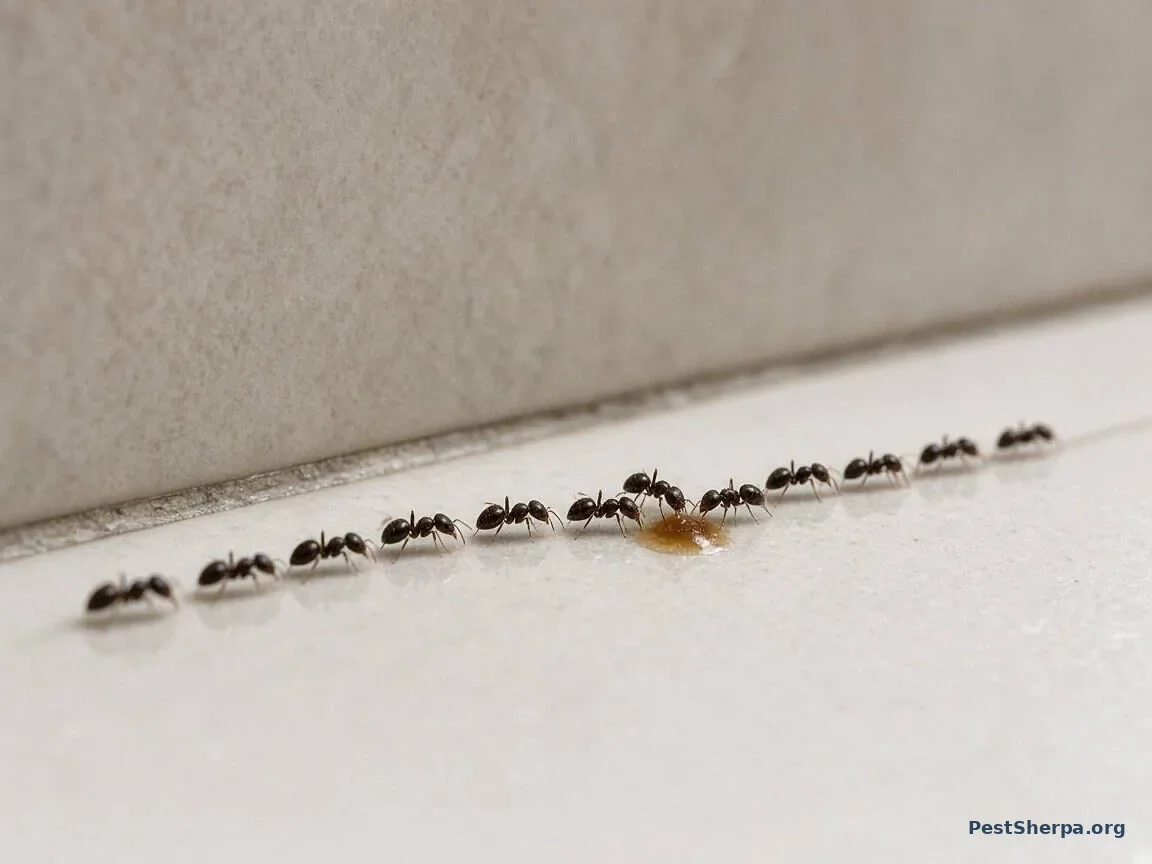
A line of ants across the kitchen counter is one of the most common pest problems in American homes, and one that is often mishandled. The natural reaction is to spray every ant in sight. Although a typical contact spray kills visible workers, it usually does little to eliminate the colony or its egg-laying queens. More ants may soon appear. The pest control industry typically refers to ants as one of the most difficult pests to control due to constant pressure from outdoors in certain times of the year.
Lasting control begins with identifying the ants and understanding where they are nesting. For most common household ants, the best approach combines removing food and water sources, cleaning up trails, sealing entry points, and using slow-acting baits when needed. Workers carry the bait back to the nest, where it can affect other colony members, including queens.
This guide explains each step, covers species that require a different approach, and explains when professional pest management is worth considering.
Key Points
Most ants entering homes nest outdoors and come inside searching for food, water, or shelter. Changes in weather can increase indoor activity. However, some species establish colonies inside buildings. Removing attractants, correcting moisture problems, and sealing entry points are the first steps in preventing infestations.
Baits are generally the preferred insecticide for many common household ants. Workers collect slow-acting bait and carry it back to their colony, where it can be shared with other ants, potentially including queens. Place appropriately labeled baits near active trails and nest openings, preferably outdoors when practical. Depending on the species, bait acceptance, and colony size, you may notice fewer ants within 5 to 10 days, but substantial control may take several weeks or longer. If ants ignore the bait, a different formulation or placement may be necessary.
Avoid routine indoor spraying and unnecessary perimeter treatments. Conventional contact sprays generally kill exposed workers without eliminating the colony. Spraying near bait stations can also interfere with bait acceptance and prevent workers from carrying the insecticide back to the nest. However, carefully targeted treatments, including properly labeled nonrepellent insecticides, may be appropriate for certain species or nesting situations.
Correct identification matters. Carpenter ants, Pharaoh ants, and fire ants require different management strategies. Pharaoh ants are particularly troublesome because some insecticide sprays can cause colonies to divide and spread, making an infestation worse. Persistent infestations or suspected indoor nesting may warrant professional identification and treatment.
In This Guide
- Quick Answer
- Identify the Ant First
- DIY Steps That Work
- What Fails
- What a Pro Visit Looks Like
- What It Costs
- Prevention
- Common Questions
- References
Quick answer
- Find what the ants are seeking and remove accessible food and water sources.
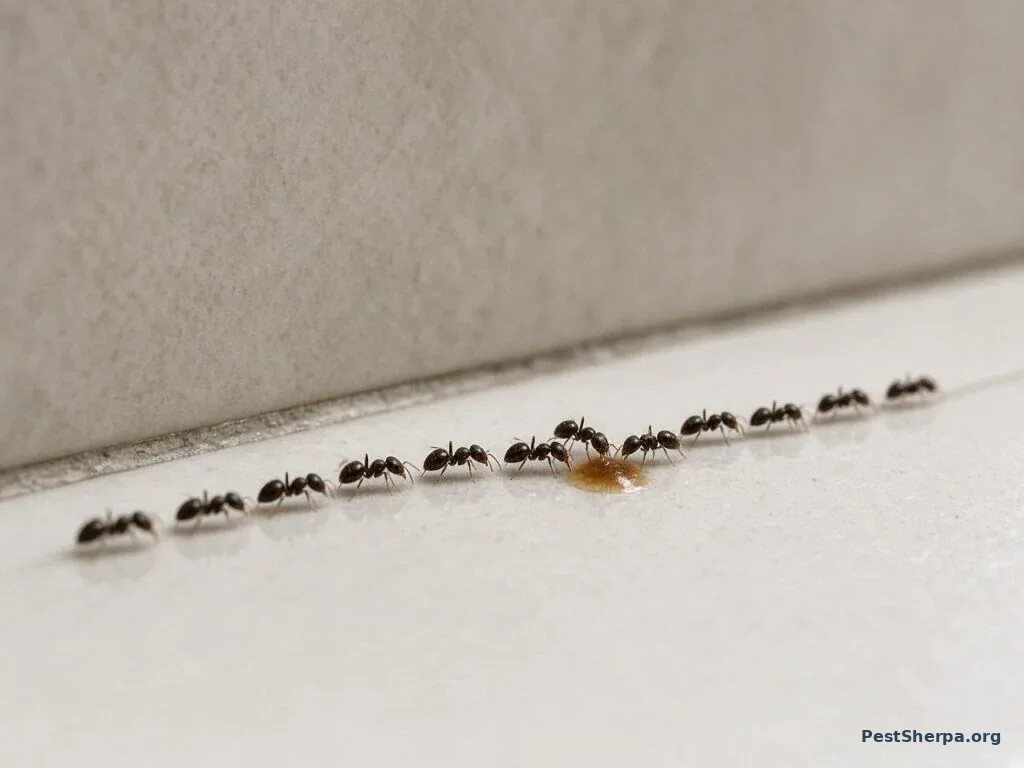
- Follow the ant trail to locate entry points. Then vacuum the ants or wipe the trail with soapy water to remove their scent trail.
- Seal cracks and openings where ants enter. If using bait, allow workers to collect it before permanently closing their access route.
- When baiting is necessary, place appropriately labeled bait stations outdoors near active trails and nest openings. Gel bait may also be placed at entry points or in cracks and crevices where permitted by the label.
- Do not spray insecticides near bait placements. Check stations regularly and refill or replace bait when necessary.
- Under favorable conditions, you may see fewer ants within 5 to 10 days, although colony control can take several weeks or longer. If ants ignore the bait, try another formulation or location.
Identify the ant first
Species matters because ants differ in what they eat, where they nest, and which baits they accept. Some ants prefer sweets, while others are attracted to proteins or fats. Food preferences may change with the season and the colony’s needs.
For example, odorous house ants commonly accept sweet baits, while thief ants are often attracted to greasy or fatty foods. Pharaoh ants may accept protein, fatty, or sweet baits, while many fire ant baits use oil-based attractants. Choosing an attractive bait is important for successful control.
| Ant | Typical signs | What it changes | Guide |
|---|---|---|---|
| Odorous house ant | Small, dark brown to black ants; often trail to sweets; odor resembling rotten coconut when crushed | Sweet baits are often effective, but preferences vary. Nests may be outdoors or indoors | Odorous house ants |
| Carpenter ant | Relatively large black or red-and-black ants; sometimes sawdust-like frass near nests | Inspect for moisture-damaged wood. Satellite nests may also occur in relatively dry wood or wall voids | Carpenter ants |
| Pharaoh ant | Very small, yellowish to light brown ants, frequently found in kitchens, bathrooms, and other warm indoor locations | Often nests indoors. Use appropriate baits; avoid sprays that may encourage colony budding | Pharaoh ants |
| Fire ants | Reddish ants with darker abdomens; soil mounds often found in lawns and landscaped areas; painful stings | Use fire ant-specific treatments, including appropriately labeled broadcast or individual mound baits. Avoid disturbing active mounds | Fire ants |
For other species and identification tips, see our ant guide or What Bug Is This?.
DIY steps that work
Clean the trail and the food
Many household ants deposit chemical scent trails, called pheromones, that help other workers locate food sources. Vacuuming ants or wiping their trails with soapy water removes foraging workers and disrupts these trails. Thorough cleaning can be as effective as a contact insecticide spray for temporarily removing ants indoors, although it does not eliminate the colony.
Before cleaning, follow the trail to determine where the ants are entering. If baiting is necessary, place bait where foraging workers can find it without spraying or disrupting their access.
Store sugar, syrup, honey, pet food, and other attractive foods in clean, tightly sealed containers. Wipe sticky residues from the outside of containers, clean up crumbs and grease, and promptly remove spilled food. Sealed containers are more effective than plastic bags or open packaging.
Empty garbage and food waste containers frequently and clean the bins to remove accumulated residues. Repair leaking faucets and pipes, eliminate standing water, and address other moisture sources that may attract ants.
Find the entry and seal it
Follow the ant trail back to where the ants enter the home. Ants commonly travel along edges, wires, and pipes, so inspect places where utility lines penetrate exterior walls. Check around foundations, doors, windows, plumbing, and other small openings.
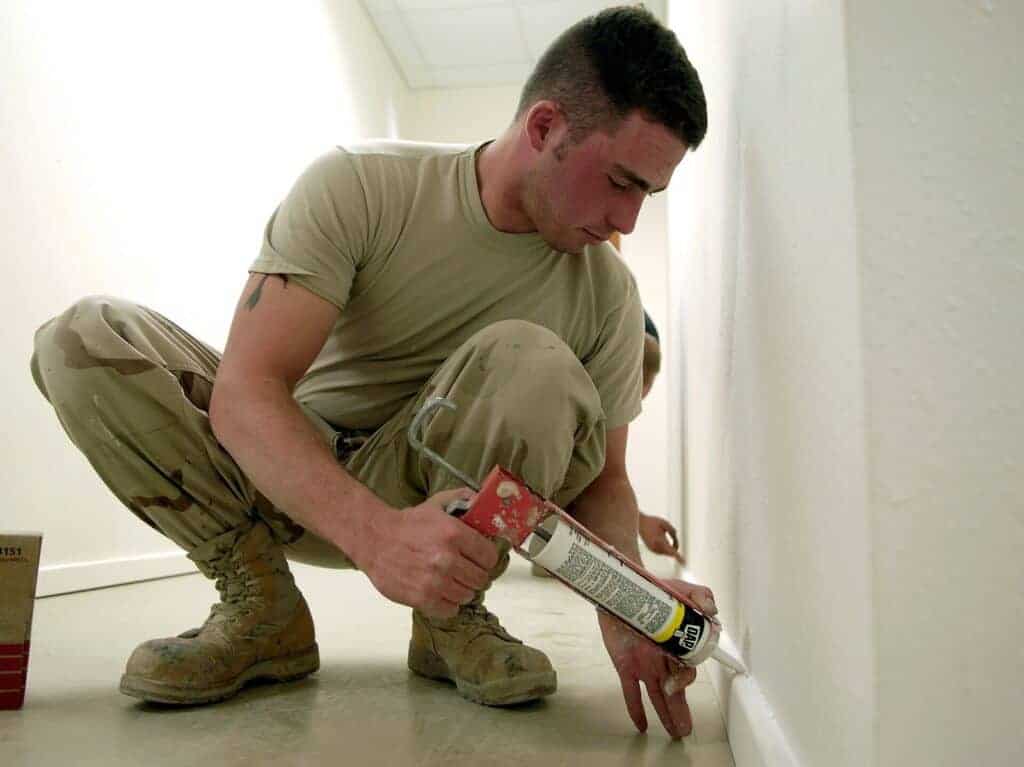
Seal cracks and openings with an appropriate caulk or other durable sealant. Petroleum jelly or tape can serve as a temporary barrier until a permanent repair is made.
If you are using bait, avoid sealing the ants’ only access route before workers have had an opportunity to collect and carry the bait back to their colony. Once baiting has reduced the activity, permanently seal the entry point.
In kitchens, bathrooms, and pantries, close accessible cracks and crevices around cabinets, baseboards, plumbing penetrations, and wall openings wherever practical. These repairs help prevent ants from entering or moving through concealed spaces.
Bait the colony
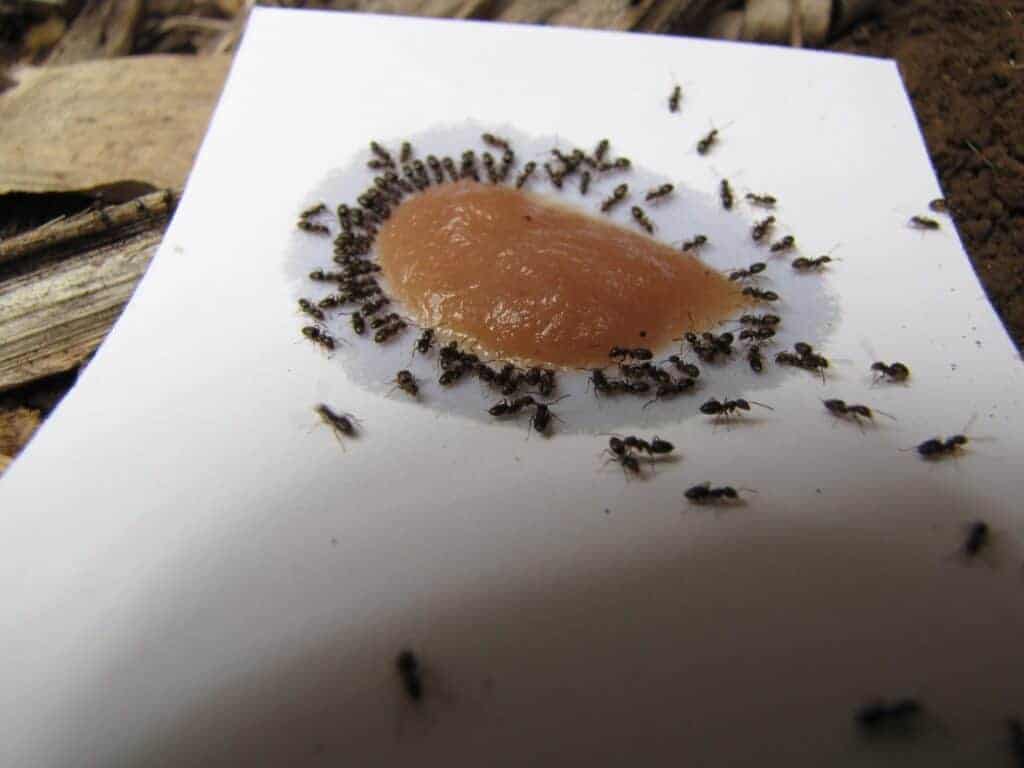
Ant baits combine an insecticide with an attractive food source, such as sugar, protein, or oil. Foraging workers collect the bait and carry it back to the nest, where it can be shared with other workers, larvae, and queens. The insecticide must act slowly enough to allow workers to return to the colony before they die. Properly selected and placed baits can suppress or eliminate colonies, although results vary by species, bait formulation, and colony size. Baiting does not always provide the relief that a homeowner desires.
- Place baits where ants are actively foraging. For most outdoor-nesting household ants, use appropriately labeled bait stations outdoors near nests, along trails, and beside edges where ants travel. Outdoor placement helps control ants before they enter buildings. Indoor baiting may be appropriate for species nesting inside structures or when outdoor entry points cannot be located. Follow product-label directions for all placements.
- Choose the right bait station. Prepackaged stations and stakes are convenient and help contain insecticides, making them practical for homeowners. Larger refillable stations may be more effective for extensive or persistent infestations because they hold more bait and can be maintained regularly. For severe Argentine ant infestations, research supports properly formulated liquid sugar-water baits containing 0.5 to 1 percent borate in refillable stations. Use only products labeled for the intended application rather than preparing homemade pesticide mixtures.
- Check the active ingredient. Common ant-bait ingredients include boric acid and other borates, fipronil, abamectin, and hydramethylnon. Select a product labeled for the target ants and intended location. The food attractant, concentration, and formulation are as important as the active ingredient.
- Do not confuse contact insecticides with baits. Some granular insecticides containing cyfluthrin or permethrin may resemble granular baits but kill exposed ants rapidly rather than allowing them to carry insecticide back to the colony. Check the product label to confirm that it is intended for ant baiting.
- Protect bait placements and keep them attractive. Do not spray insecticides on or near bait stations or active baiting trails. Keep bait stations inaccessible to children and pets, and inspect them regularly. Refill or replace bait when depleted, dried out, contaminated, or no longer attractive to ants.
- Adjust when ants ignore the bait. Move the station closer to active foraging trails or try a different formulation. Offering small amounts of two appropriately labeled bait types, such as a sweet bait and a protein- or oil-based bait, can help determine which one the ants prefer. Food preferences may change during the year, so a bait that worked previously may not always be accepted.
Manage sweet food sources outside
Ants climbing shrubs and trees next to the house are often collecting honeydew produced by aphids, soft scales, mealybugs, or whiteflies. They may also feed on flower nectar, ripening fruit, or fallen fruit. Managing honeydew-producing insects and removing fallen fruit can reduce ant activity near the house. Trim branches and shrubs that touch the building to eliminate convenient routes indoors.
If ants are nesting in a houseplant, take the plant outdoors. UC IPM recommends submerging the pot for at least 20 minutes in a solution of 1 to 2 tablespoons of insecticidal soap per quart of water, with the soil surface just covered by the solution. Before using this method, check that the insecticidal soap product is labeled for the intended use and suitable for the plant. Avoid using ordinary household detergents as substitutes.
What fails
- Spraying ants indoors. Conventional contact sprays may kill the ants you see, but generally do not eliminate their nest or prevent more ants from entering. Routine spraying also creates unnecessary pesticide exposure. Targeted applications may be appropriate in certain circumstances, but sanitation, exclusion, and baiting are usually preferable for common household ants.
- Perimeter sprays as the main plan. Conventional barrier sprays can temporarily reduce ants entering a home, but often kill only foraging workers without eliminating the colony. They may also interfere with baiting. Properly selected nonrepellent treatments can be useful in some situations, but perimeter spraying should not replace identification, sanitation, exclusion, and colony management.
- Fast-killing contact granules mistaken for bait. Contact insecticides that kill exposed workers rapidly generally do not provide the delayed action needed for workers to distribute bait throughout the colony. Choose products specifically labeled as ant baits when colony baiting is the goal.
- Spraying cleaners around bait. Cleaning ant trails helps temporarily remove foragers, but spraying cleaners or insecticides on bait stations and the trails leading to them can interfere with bait acceptance. Keep active baiting areas undisturbed.
- Popular myths. We cover common misconceptions and ineffective remedies in ant myths that make infestations worse.
What a pro visit looks like
If ants persist despite sanitation, exclusion, and properly selected baits, consider hiring a licensed pest management professional experienced in integrated pest management (IPM).
A qualified technician should identify the ant species, determine likely nesting locations, and select treatments based on the infestation. Depending on the circumstances, these may include baits, direct nest treatments, targeted applications of nonrepellent insecticides, or limited treatments in structural voids.
Professionals have access to specialized formulations, sometimes not marketed to homeowners directly, application equipment, and training that can help them treat difficult infestations while limiting unnecessary pesticide exposure. Ask about the proposed treatment strategy rather than assuming routine perimeter spraying is necessary.
The inspection
The technician should identify the ant species, follow trails to entry points and nesting areas, and inspect conditions that encourage infestations.
For carpenter ants, the inspection should include moisture problems, damaged wood, and potential nesting sites in walls, structural wood, or nearby trees.
For Pharaoh ants, the technician should consider concealed indoor nesting sites, including kitchens, bathrooms, wall voids, and other warm areas. Their multiple-queen colonies can spread through budding, making correct identification and treatment particularly important.
I recall one very difficult house which had a crawlspace and odorous house ants were finding their way into the kitchen. Baiting was not working quickly. Doing a crawl inspection, we found NINE active odorous house ant populations between insulation and the subfloor. We removed the ants physically by removing the insulation in those areas and the problem was solved. In this case, we were providing inspection, a “hunt till we find the source” strategy and provided control. The homeowner then asked for an application of a non-repellent ant treatment to prevent further ant intrusion.
Your prep before the visit
- Avoid spraying insecticides or removing all visible ant trails immediately before the inspection, so the technician can observe activity.
- Note where and when ants appear, the foods they visit, and any changes in activity.
- Provide access beneath sinks, around plumbing, and along the foundation.
- Tell the technician about previous treatments, including any baits or sprays used.
- Mention children and pets so pesticide placements can be selected appropriately.
The treatment
- Baits selected for the species and its feeding preferences, placed along active trails, near nests, or in indoor locations where appropriate.
- Targeted treatment of accessible nests rather than unnecessary widespread spraying.
- Properly labeled insecticide dusts or other formulations in wall voids or concealed nesting areas when justified.
- For carpenter ants, locating and treating nests, followed by recommendations to correct moisture conditions and repair damaged wood.
- For Pharaoh ants, a coordinated baiting program that avoids disruptive treatments likely to cause colony budding.
All pesticide treatments should follow product-label directions and applicable regulations.
Follow-up
Some bait treatments require several weeks or longer to produce substantial colony control. Depending on the species, infestation severity, and treatment method, the company may recommend monitoring, bait replacement, or a follow-up inspection.
Ask when results should become noticeable, how long control may take, and whether additional visits are included in the original price.
Questions to ask before you book
- What ant species do I have?
- Will you use baits, direct nest treatments, or perimeter sprays, and why?
- Where will pesticides be placed, and how will children and pets be protected?
- Is follow-up service included, and what happens if the ants return?
- If carpenter ants are present, is there moisture damage or wood deterioration I need to repair?
See how to hire a licensed pest control company for licensing, contract, and service-selection tips.
What it costs
Professional ant treatment is generally less expensive than managing many other structural pests, particularly when the infestation is limited and the nest is accessible.
A typical service may include an inspection and targeted bait or insecticide treatment. Sealing entry points, repairing damage, and follow-up visits may be included or charged separately.
Our guide compares what ant control costs with treatment costs for other common household pests.
Typical national ranges
Published consumer cost estimates provide these approximate ranges:
- Ant extermination: $100 to $500 for a relatively small infestation (Angi, 2026).
- Ant treatment, one-time visit: $200 to $300 for a typical home (Angi and HomeGuide).
- Severe ant infestation: approximately $800 to $1,400 or more, depending on the extent of treatment (HomeGuide).
- Quarterly pest control service: approximately $100 to $300 per visit for general pest management, although ant-specific plans may cost less (Angi, 2026).
These are published national estimates, not guaranteed prices or quotes. Costs vary by region, property size, species, infestation severity, and services included. Compare written estimates before hiring a company.
What moves the price
- Species: Carpenter ants, Pharaoh ants, and other difficult-to-manage species may require more time or specialized treatment than common nuisance ants.
- Nest location: Colonies inside walls, structural wood, or inaccessible areas can require additional inspection and treatment.
- Severity: Large infestations, multiple colonies, or recurring problems may require additional visits.
- Repairs: Moisture correction, sealing entry points, and repairing carpenter ant damage are often priced separately.
One-time job or ongoing plan
Many seasonal ant invasions can be managed with a one-time service combined with sanitation and exclusion. Persistent or recurring infestations may benefit from additional monitoring or an ongoing service agreement.
Before purchasing a recurring plan, ask what is included, whether repeated pesticide applications are necessary, and how the company will determine when treatment is warranted.
Red flags in a quote
- Routine monthly perimeter spraying proposed without identifying the ant species or explaining the need. It is common to do a general treatment for crawling pests but if you called specifically about ants, they should answer your questions and tell you about the ant you see.
- No effort to locate nesting areas or determine entry points. This is a perfect example of us not giving up and just figuring that the ants were all coming in from the back yard as described above in “The inspection.”
- Indiscriminate spraying of kitchen counters, food-preparation surfaces, or baseboards. This is a violation of the label and should be stopped. Pest control does not have to disrupt your life.
- No explanation of expected results, monitoring, or follow-up arrangements.
Ask the company to identify the ant species, proposed pesticide products, treatment locations, and any follow-up commitments in writing.
Prevention
- Inspect and seal common entry points before the season when ants typically invade. Use baits when activity indicates they are needed rather than applying them automatically.
- Keep counters, floors, and pet feeding areas free of crumbs, grease, and sugary spills.
- Store food in clean, tightly sealed containers.
- Trim branches and shrubs away from walls, siding, and rooflines.
- Manage honeydew-producing insects on nearby plants when necessary, and remove fallen fruit.
- Repair leaks, reduce excess moisture, and correct conditions that encourage carpenter ants or other moisture-associated species.
For identification and species-specific information, return to our ant guide.
Common questions about getting rid of ants
What is the fastest way to get rid of ants in the house?
For immediate relief, vacuum visible ants or wipe their trails with soapy water. Follow the trail to identify entry points, remove food sources, and seal accessible openings. When baiting is needed, place an appropriate bait along active trails without disrupting workers collecting it. You may notice fewer ants within 5 to 10 days, but complete colony control can take several weeks or longer.
Why are there more ants after I put out bait?
Ant baits attract foraging workers, which may recruit additional ants to the food source. Increased activity around a bait station can be normal and indicates that ants are finding the bait. However, it does not guarantee colony elimination. Avoid spraying the ants and allow them to transport the bait back to the nest.
Should I spray ants?
For most common household ant invasions, routine spraying is unnecessary. Contact sprays usually provide temporary relief by killing visible workers without eliminating the colony. Baiting, sanitation, and exclusion are generally better long-term approaches. Targeted insecticide treatments may be appropriate for particular species or nesting situations.
Do vinegar or peppermint oil get rid of ants?
A diluted vinegar solution can temporarily disrupt ant scent trails, much like washing with soapy water. However, it does not eliminate a colony. Peppermint oil and other essential oils have not demonstrated reliable, lasting control of household ant infestations. Some concentrated oils may also damage surfaces or pose risks to pets. For lasting control, identify the species, remove attractants, seal entry points, and use suitable baits when necessary.
Why won’t the ants take my bait?
Ant food preferences vary by species, season, and colony needs. Ants may prefer sweet foods at one time and protein or fatty foods at another. Try a different bait formulation or move the station closer to an active trail. Remove competing food sources, keep the bait fresh, and avoid contaminating it with sprays or cleaning products.
Are big black ants in the house a problem?
They could be carpenter ants, but several other ant species are also large and dark-colored. Carpenter ants may nest in moisture-damaged wood, relatively dry structural wood, insulation, or concealed voids. Look for coarse sawdust-like frass, recurring indoor activity, and moisture problems. Repeated sightings, especially during winter or the emergence of winged ants indoors, warrant professional inspection.
When should I call a pest control company for ants?
Consider professional help when ants persist despite properly selected baits and exclusion, when indoor nesting is suspected, or when carpenter ants or Pharaoh ants are involved. Professional help is also appropriate for extensive fire ant infestations or when stings present a particular health risk.
Ask the company to identify the species and explain its treatment approach, including baits, direct nest treatments, targeted insecticide applications, and follow-up monitoring.
References
- University of California Agriculture and Natural Resources. Pest Notes: Ants. UC Statewide Integrated Pest Management Program, Publication 7411. UC IPM: Ants.
- University of Minnesota Extension. Ants. University of Minnesota: Ant Identification and Management.
- University of Minnesota Extension. Carpenter Ants. University of Minnesota: Carpenter Ants.
- University of Georgia Cooperative Extension. Argentine Ants. Circular 926. University of Georgia: Argentine Ants.
- University of Tennessee Extension. Fire Ant Treatment Methods. University of Tennessee: Fire Ant Management.
- University of Tennessee Institute of Agriculture. Managing Pests Around the Home. Publication PB 1303. University of Tennessee: Managing Pests Around the Home.
- University of Kentucky Department of Entomology. Ant Control for Householders. University of Kentucky: Ant Control.
- Angi. How Much Does an Ant Exterminator Cost? 2026. Angi: Ant Exterminator Costs.
- HomeGuide. How Much Does an Ant Exterminator Cost? HomeGuide: Ant Exterminator Costs.
This article was written by Greg Baumann, founder of Pest Sherpa, and reflects more than 40 years of professional pest management experience.
About the Author

Greg Baumann | Pest Control Expert
Greg Baumann is the founder of Pest Sherpa and a Pest Control Expert with more than 40 years of professional pest management experience. His articles combine decades of field experience, technical expertise, and science-based guidance to help homeowners identify pests correctly, understand real-world risks, and make informed pest management decisions.
Mission: Identify the pest. Understand the risk. Stop the problem. Prevent the comeback. Know when it’s time to call a professional.